


362 Results
Form:
books
books
Actions:
Price:
$26.00
(available to order)
Summary:
Tour guides are a vital part of New York's raucous sidewalk culture, and, as "The Tour Guide" reveals, the tours they offer are as fascinatingly diverse - and eccentric - as the city itself. Visitors can take tours that cover Manhattan before the arrival of European settlers, the nineteenth-century Irish gangs of Five Points, the culinary traditions of Queens, the culture(...)
$26.00
(available to order)
Summary:
Tour guides are a vital part of New York's raucous sidewalk culture, and, as "The Tour Guide" reveals, the tours they offer are as fascinatingly diverse - and eccentric - as the city itself. Visitors can take tours that cover Manhattan before the arrival of European settlers, the nineteenth-century Irish gangs of Five Points, the culinary traditions of Queens, the culture(...)
Title:
The tour guide: walking and talking New York
Actions:
Price:
$26.00
(available to order)
Summary:
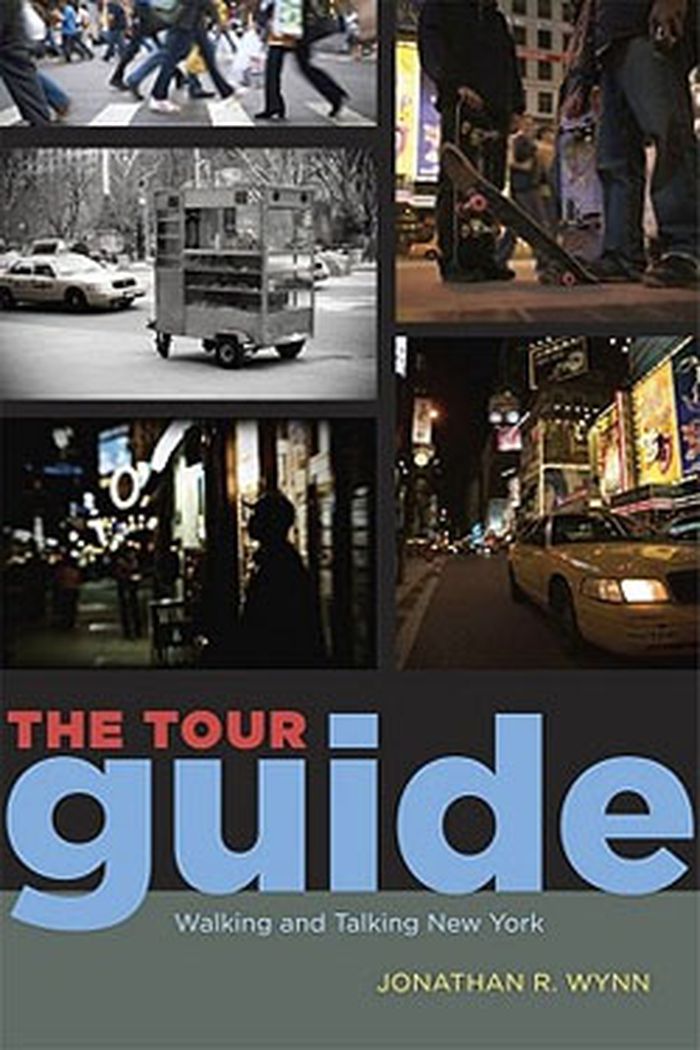
Tour guides are a vital part of New York's raucous sidewalk culture, and, as "The Tour Guide" reveals, the tours they offer are as fascinatingly diverse - and eccentric - as the city itself. Visitors can take tours that cover Manhattan before the arrival of European settlers, the nineteenth-century Irish gangs of Five Points, the culinary traditions of Queens, the culture of Harlem, or even the surveillance cameras of Chelsea - in short, there are tours to satisfy anyone's curiosity about the city's past or present. And the guides are as intriguing as the subjects, we learn, as Jonathan R. Wynn explores the lives of the people behind the tours, introducing us to office workers looking for a diversion from their desk jobs, unemployed actors honing their vocal skills, and struggling retirees searching for a second calling. Matching years of research with his own experiences as a guide, Wynn also lays bare the grueling process of acquiring an official license and offers a how-to guide to designing and leading a tour.
The tour guide: walking and talking New York
Actions:
Price:
$26.00
(available to order)
Summary:
Tour guides are a vital part of New York's raucous sidewalk culture, and, as "The Tour Guide" reveals, the tours they offer are as fascinatingly diverse - and eccentric - as the city itself. Visitors can take tours that cover Manhattan before the arrival of European settlers, the nineteenth-century Irish gangs of Five Points, the culinary traditions of Queens, the culture of Harlem, or even the surveillance cameras of Chelsea - in short, there are tours to satisfy anyone's curiosity about the city's past or present. And the guides are as intriguing as the subjects, we learn, as Jonathan R. Wynn explores the lives of the people behind the tours, introducing us to office workers looking for a diversion from their desk jobs, unemployed actors honing their vocal skills, and struggling retirees searching for a second calling. Matching years of research with his own experiences as a guide, Wynn also lays bare the grueling process of acquiring an official license and offers a how-to guide to designing and leading a tour.
Form:
books
books
Publication:
June 2011
June 2011
Subject:
City Guides
City Guides
Form:
audio
audio
Description:
1 online resource.
Author:
Subject:
Publication:
[Place of publication not identified] : Lateral Addition, 2018.
[Place of publication not identified] : Lateral Addition, 2018.
Title:
June 21, 2018 : Listening for Southwest Key in San Diego.
Actions:
Description:
1 online resource.
June 21, 2018 : Listening for Southwest Key in San Diego.
Actions:
Description:
1 online resource.
Form:
audio
audio
Publication:
[Place of publication not identified] : Lateral Addition, 2018.
[Place of publication not identified] : Lateral Addition, 2018.
Author:
Subject:
Form:
books
books
Actions:
Price:
$45.00
(available to order)
Summary:
The perimeter around the occupied Gaza Strip is formed by a sophisticated system of fences, forts and surveillance technologies. With each Israeli incursion, a military no-go area, or a "buffer zone," is established along Gaza's "borders," extending deep into Palestinian residential areas and farmlands— further compounding the Gaza Strip's isolation from the rest of(...)
$45.00
(available to order)
Summary:
The perimeter around the occupied Gaza Strip is formed by a sophisticated system of fences, forts and surveillance technologies. With each Israeli incursion, a military no-go area, or a "buffer zone," is established along Gaza's "borders," extending deep into Palestinian residential areas and farmlands— further compounding the Gaza Strip's isolation from the rest of(...)
Title:
Environmental warfare in Gaza: Colonial violence and new landscapes of resistance
Actions:
Price:
$45.00
(available to order)
Summary:
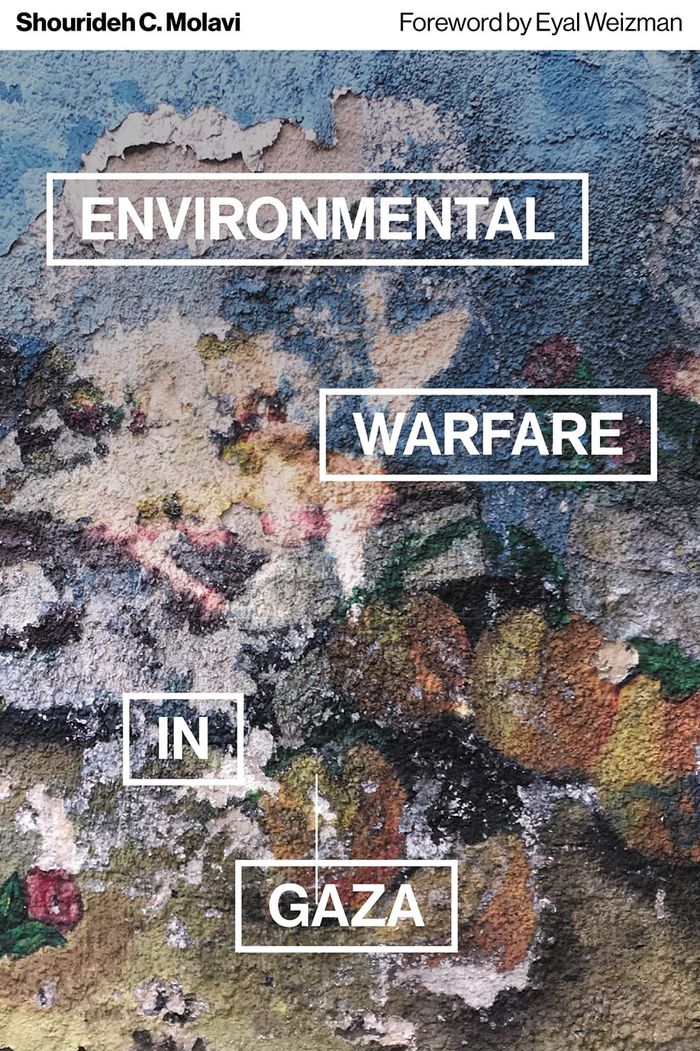
The perimeter around the occupied Gaza Strip is formed by a sophisticated system of fences, forts and surveillance technologies. With each Israeli incursion, a military no-go area, or a "buffer zone," is established along Gaza's "borders," extending deep into Palestinian residential areas and farmlands— further compounding the Gaza Strip's isolation from the rest of Palestine. Since 2014, the bulldozing of Palestinian lands by the Israeli occupation forces has been complemented by unannounced aerial spraying of military herbicides, extending the reach of Israeli violence into the realm of chemical warfare. Today, the spraying has destroyed entire swaths of arable land in Gaza, forcibly changing a once-lush Palestinian landscape, and providing the Israeli army with better visibility to fire at Palestinian targets with lethal force from a distance. This book is a vivid document of this latest stage of Israeli warfare, including original maps, images and visualisations which deepen our understanding of its environmental and human impact. It collects new documents, original archival materials, stills of drone footage, first-hand testimonies of farmers, organisers and protesters, and documents affected vegetation in Gaza as "silent witnesses" to Israeli settler-colonial violence.
Environmental warfare in Gaza: Colonial violence and new landscapes of resistance
Actions:
Price:
$45.00
(available to order)
Summary:
The perimeter around the occupied Gaza Strip is formed by a sophisticated system of fences, forts and surveillance technologies. With each Israeli incursion, a military no-go area, or a "buffer zone," is established along Gaza's "borders," extending deep into Palestinian residential areas and farmlands— further compounding the Gaza Strip's isolation from the rest of Palestine. Since 2014, the bulldozing of Palestinian lands by the Israeli occupation forces has been complemented by unannounced aerial spraying of military herbicides, extending the reach of Israeli violence into the realm of chemical warfare. Today, the spraying has destroyed entire swaths of arable land in Gaza, forcibly changing a once-lush Palestinian landscape, and providing the Israeli army with better visibility to fire at Palestinian targets with lethal force from a distance. This book is a vivid document of this latest stage of Israeli warfare, including original maps, images and visualisations which deepen our understanding of its environmental and human impact. It collects new documents, original archival materials, stills of drone footage, first-hand testimonies of farmers, organisers and protesters, and documents affected vegetation in Gaza as "silent witnesses" to Israeli settler-colonial violence.
Form:
books
books
Publication:
February 2024
February 2024
Subject:
Arch Middle East
Arch Middle East
Form:
books
books
Price:
$42.00
(available in store)
Summary:
Western society is being terrorized by fear. Whether concerning national security, road safety or the protection of public health, every form of risk is meant to be spread, accounted for or eradicated. The safety and security obsession is leaving behind ever more visible traces, especially in public space. Speed bumps, smoke-free zones and surveillance cameras serve a(...)
$42.00
(available in store)
Summary:
Western society is being terrorized by fear. Whether concerning national security, road safety or the protection of public health, every form of risk is meant to be spread, accounted for or eradicated. The safety and security obsession is leaving behind ever more visible traces, especially in public space. Speed bumps, smoke-free zones and surveillance cameras serve a(...)
Title:
Fear & space : the view of young designers in the Netherlands
Actions:
Price:
$42.00
(available in store)
Summary:
Western society is being terrorized by fear. Whether concerning national security, road safety or the protection of public health, every form of risk is meant to be spread, accounted for or eradicated. The safety and security obsession is leaving behind ever more visible traces, especially in public space. Speed bumps, smoke-free zones and surveillance cameras serve a society where prevention is the order of the day. This second book in the Group portraits series -a collaboration between the Netherlands architecture fund and the Netherlands foundation for visual arts, design and architecture (Fonds BKVB) - once again brings together four groups of young designers around a highly topical theme. As a sequel to the successful "City branding" book, this publication explores the various aspects of fear and prevention and considers the impact on contemporary urban space in four chapters. All the stops are pulled out: text, photography, research and design alternate in a thought-provoking sequence. This publication is the result of intensive research into the presence of fear in our Western society and the role that architecture might play herein. It is therefore an instrument for students, researchers, architects and policy-makers who are concerned with security issues.
Fear & space : the view of young designers in the Netherlands
Actions:
Price:
$42.00
(available in store)
Summary:
Western society is being terrorized by fear. Whether concerning national security, road safety or the protection of public health, every form of risk is meant to be spread, accounted for or eradicated. The safety and security obsession is leaving behind ever more visible traces, especially in public space. Speed bumps, smoke-free zones and surveillance cameras serve a society where prevention is the order of the day. This second book in the Group portraits series -a collaboration between the Netherlands architecture fund and the Netherlands foundation for visual arts, design and architecture (Fonds BKVB) - once again brings together four groups of young designers around a highly topical theme. As a sequel to the successful "City branding" book, this publication explores the various aspects of fear and prevention and considers the impact on contemporary urban space in four chapters. All the stops are pulled out: text, photography, research and design alternate in a thought-provoking sequence. This publication is the result of intensive research into the presence of fear in our Western society and the role that architecture might play herein. It is therefore an instrument for students, researchers, architects and policy-makers who are concerned with security issues.
Form:
books
books
Publication:
January 2005, Rotterdam
January 2005, Rotterdam
Subject:
Architectural Theory
Architectural Theory
Form:
books
books
Actions:
Price:
$42.00
(available to order)
Summary:
"The Unknown City" takes its place in the emerging architectural literature that looks beyond design process and buildings to discover new ways of looking at the urban experience. A multistranded contemplation of the notion of "knowing a place," it is about both the existence and the possibilities of architecture and the city. An important inspiration for the book is(...)
$42.00
(available to order)
Summary:
"The Unknown City" takes its place in the emerging architectural literature that looks beyond design process and buildings to discover new ways of looking at the urban experience. A multistranded contemplation of the notion of "knowing a place," it is about both the existence and the possibilities of architecture and the city. An important inspiration for the book is(...)
Subject:
Urban Theory
Urban Theory
Publication:
October 2002, Cambridge, Massachusetts
October 2002, Cambridge, Massachusetts
Title:
The unknown city : contesting architecture and social space
Actions:
Price:
$42.00
(available to order)
Summary:
"The Unknown City" takes its place in the emerging architectural literature that looks beyond design process and buildings to discover new ways of looking at the urban experience. A multistranded contemplation of the notion of "knowing a place," it is about both the existence and the possibilities of architecture and the city. An important inspiration for the book is the work of Henri Lefebvre, in particular his ideas on space as a historical production. Many of the essays also draw on the social critique and tactics of the Situationist movement. The international gathering of contributors includes art, architectural, and urban historians and theorists; urban geographers; architects, artists, and filmmakers; and literary and cultural theorists. The essays range from abstract considerations of spatial production and representation to such concrete examples of urban domination as video surveillance and Regency London as the site of male pleasure. Although many of the essays are driven by social, cultural, and urban theory, they also tell real stories about real places. Each piece is in some way a critique of capitalism and a thought experiment about how designers and city dwellers working together can shape the cities of tomorrow.
The unknown city : contesting architecture and social space
Actions:
Price:
$42.00
(available to order)
Summary:
"The Unknown City" takes its place in the emerging architectural literature that looks beyond design process and buildings to discover new ways of looking at the urban experience. A multistranded contemplation of the notion of "knowing a place," it is about both the existence and the possibilities of architecture and the city. An important inspiration for the book is the work of Henri Lefebvre, in particular his ideas on space as a historical production. Many of the essays also draw on the social critique and tactics of the Situationist movement. The international gathering of contributors includes art, architectural, and urban historians and theorists; urban geographers; architects, artists, and filmmakers; and literary and cultural theorists. The essays range from abstract considerations of spatial production and representation to such concrete examples of urban domination as video surveillance and Regency London as the site of male pleasure. Although many of the essays are driven by social, cultural, and urban theory, they also tell real stories about real places. Each piece is in some way a critique of capitalism and a thought experiment about how designers and city dwellers working together can shape the cities of tomorrow.
Form:
books
books
Publication:
October 2002, Cambridge, Massachusetts
October 2002, Cambridge, Massachusetts
Subject:
Urban Theory
Urban Theory
Form:
books
books
Actions:
Price:
$54.95
(available in store)
Summary:
Un nombre croissant d'artistes contemporains opte pour le mode de l'enquête. Plutôt que de « faire œuvre », ces artistes se soucient avant tout de documenter la violence d'État, l'effet des technologies répressives ou la destruction de l'environnement. En parallèle, des journalistes, des avocats et des activistes ont de plus en plus recours à des pratiques de(...)
$54.95
(available in store)
Summary:
Un nombre croissant d'artistes contemporains opte pour le mode de l'enquête. Plutôt que de « faire œuvre », ces artistes se soucient avant tout de documenter la violence d'État, l'effet des technologies répressives ou la destruction de l'environnement. En parallèle, des journalistes, des avocats et des activistes ont de plus en plus recours à des pratiques de(...)
Title:
L'art de la contre-enquête : Esthétiques de l'investigation, politiques de vérité
Actions:
Price:
$54.95
(available in store)
Summary:
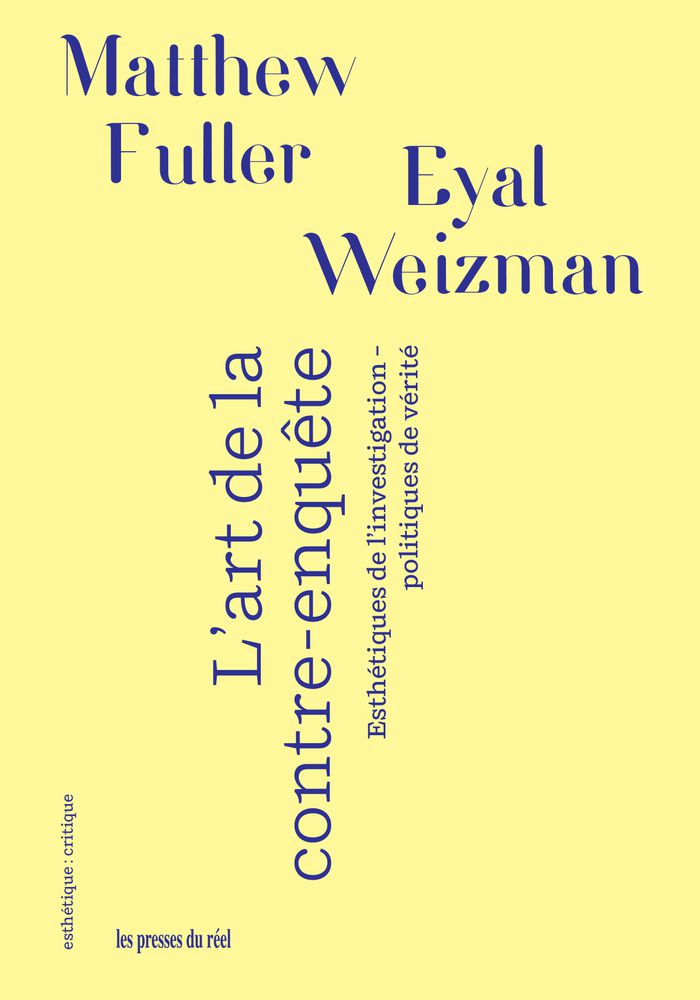
Un nombre croissant d'artistes contemporains opte pour le mode de l'enquête. Plutôt que de « faire œuvre », ces artistes se soucient avant tout de documenter la violence d'État, l'effet des technologies répressives ou la destruction de l'environnement. En parallèle, des journalistes, des avocats et des activistes ont de plus en plus recours à des pratiques de visualisation issues du domaine de l'art. En croisant vidéos amateurs, images satellites et témoignages, des contre-enquêtes voient le jour dont la dimension visuelle et esthétique a d'autant plus d'impact. Le livre donne à voir toute l'ampleur de cette nouvelle « esthétique d'investigation » : en mobilisant des stratégies éprouvées en art ou en architecture, il s'agit de montrer les torts subis et de faire émerger une vérité souvent inconfortable. Le travail mené depuis désormais de longues années par « Forensic Architecture » rejoint d'autres pratiques de contre-analyse citoyenne, afin de briser les monopoles d'État sur les technologies de surveillance et de contredire les récits officiels. Que ce soit dans l'atelier ou le laboratoire, la salle d'audience ou la galerie, en ligne ou dans la rue, cet art de la contre-enquête replace la vérité au cœur d'un souci partagé et tisse les liens d'un nouveau « sens commun ».
L'art de la contre-enquête : Esthétiques de l'investigation, politiques de vérité
Actions:
Price:
$54.95
(available in store)
Summary:
Un nombre croissant d'artistes contemporains opte pour le mode de l'enquête. Plutôt que de « faire œuvre », ces artistes se soucient avant tout de documenter la violence d'État, l'effet des technologies répressives ou la destruction de l'environnement. En parallèle, des journalistes, des avocats et des activistes ont de plus en plus recours à des pratiques de visualisation issues du domaine de l'art. En croisant vidéos amateurs, images satellites et témoignages, des contre-enquêtes voient le jour dont la dimension visuelle et esthétique a d'autant plus d'impact. Le livre donne à voir toute l'ampleur de cette nouvelle « esthétique d'investigation » : en mobilisant des stratégies éprouvées en art ou en architecture, il s'agit de montrer les torts subis et de faire émerger une vérité souvent inconfortable. Le travail mené depuis désormais de longues années par « Forensic Architecture » rejoint d'autres pratiques de contre-analyse citoyenne, afin de briser les monopoles d'État sur les technologies de surveillance et de contredire les récits officiels. Que ce soit dans l'atelier ou le laboratoire, la salle d'audience ou la galerie, en ligne ou dans la rue, cet art de la contre-enquête replace la vérité au cœur d'un souci partagé et tisse les liens d'un nouveau « sens commun ».
Form:
books
books
Publication:
October 2025
October 2025
Subject:
Art Theory
Art Theory
Form:
books
books
Actions:
Price:
$70.00
(available to order)
Summary:
Inspired by the rise of environmental psychology and increasing support for behavioral research after the Second World War, new initiatives at the federal, state, and local levels looked to influence the human psyche through form, or elicit desired behaviors with environmental incentives, implementing what Joy Knoblauch calls 'psychological functionalism.' Recruited by(...)
$70.00
(available to order)
Summary:
Inspired by the rise of environmental psychology and increasing support for behavioral research after the Second World War, new initiatives at the federal, state, and local levels looked to influence the human psyche through form, or elicit desired behaviors with environmental incentives, implementing what Joy Knoblauch calls 'psychological functionalism.' Recruited by(...)
Title:
The architecture of good behaviour
Actions:
Price:
$70.00
(available to order)
Summary:
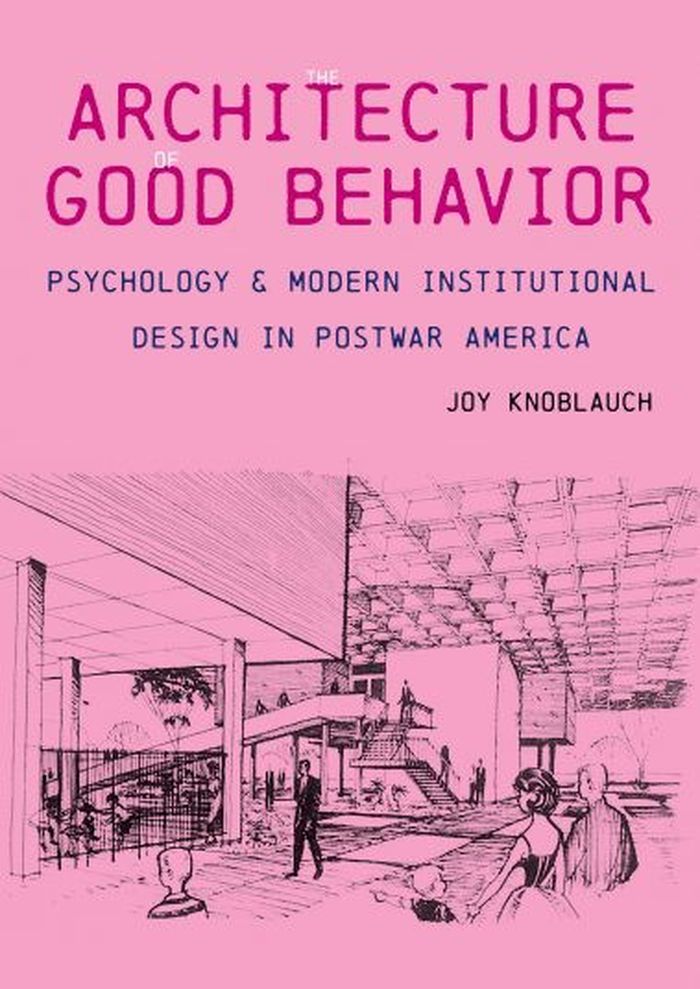
Inspired by the rise of environmental psychology and increasing support for behavioral research after the Second World War, new initiatives at the federal, state, and local levels looked to influence the human psyche through form, or elicit desired behaviors with environmental incentives, implementing what Joy Knoblauch calls 'psychological functionalism.' Recruited by federal construction and research programs for institutional reform and expansion — which included hospitals, mental health centers, prisons, and public housing—architects theorized new ways to control behavior and make it more functional by exercising soft power, or power through persuasion, with their designs. In the 1960s – 1970s era of anti-institutional sentiment, they hoped to offer an enlightened, palatable, more humane solution to larger social problems related to health, mental health, justice, and security of the population by applying psychological expertise to institutional design. In turn, Knoblauch argues, architects gained new roles as researchers, organizers, and writers while theories of confinement, territory, and surveillance proliferated. 'The Architecture of Good Behavior' explores psychological functionalism as a political tool and the architectural projects funded by a postwar nation in its efforts to govern, exert control over, and ultimately pacify its patients, prisoners, and residents.
The architecture of good behaviour
Actions:
Price:
$70.00
(available to order)
Summary:
Inspired by the rise of environmental psychology and increasing support for behavioral research after the Second World War, new initiatives at the federal, state, and local levels looked to influence the human psyche through form, or elicit desired behaviors with environmental incentives, implementing what Joy Knoblauch calls 'psychological functionalism.' Recruited by federal construction and research programs for institutional reform and expansion — which included hospitals, mental health centers, prisons, and public housing—architects theorized new ways to control behavior and make it more functional by exercising soft power, or power through persuasion, with their designs. In the 1960s – 1970s era of anti-institutional sentiment, they hoped to offer an enlightened, palatable, more humane solution to larger social problems related to health, mental health, justice, and security of the population by applying psychological expertise to institutional design. In turn, Knoblauch argues, architects gained new roles as researchers, organizers, and writers while theories of confinement, territory, and surveillance proliferated. 'The Architecture of Good Behavior' explores psychological functionalism as a political tool and the architectural projects funded by a postwar nation in its efforts to govern, exert control over, and ultimately pacify its patients, prisoners, and residents.
Form:
books
books
Publication:
June 2020
June 2020
Subject:
Architectural Theory
Architectural Theory
Form:
books
books
Actions:
Price:
$39.95
(available to order)
Summary:
Alternately lauded as the future of architecture or dismissed as pure folly, revolving buildings are a fascinating missing chapter in architectural history with surprising relevance to issues in contemporary architectural design. Rotating structures have been employed to solve problems and create effects that stationary buildings can't achieve. Rotating buildings offered(...)
$39.95
(available to order)
Summary:
Alternately lauded as the future of architecture or dismissed as pure folly, revolving buildings are a fascinating missing chapter in architectural history with surprising relevance to issues in contemporary architectural design. Rotating structures have been employed to solve problems and create effects that stationary buildings can't achieve. Rotating buildings offered(...)
Title:
Revolving Architecture: a history of buildings that rotate, swivel, and pivot
Actions:
Price:
$39.95
(available to order)
Summary:
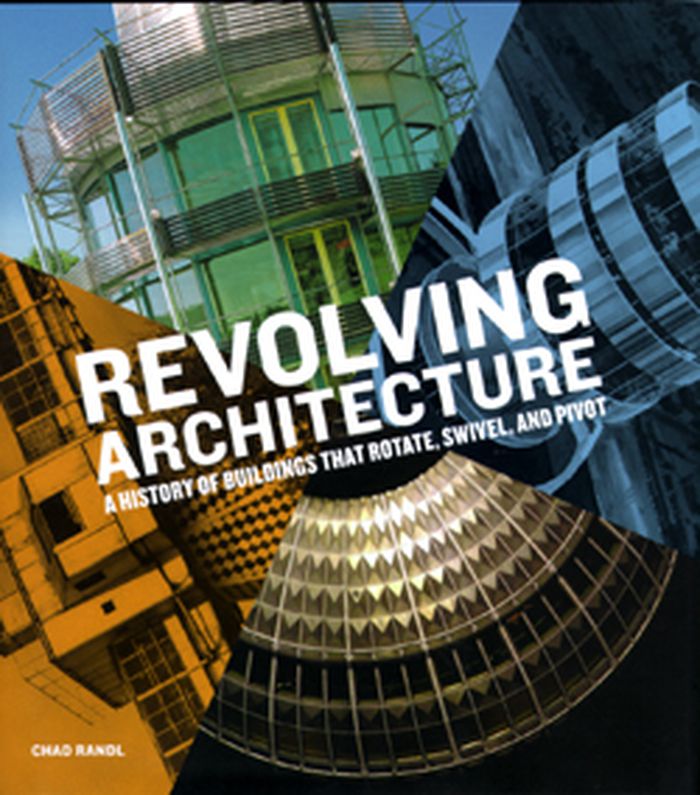
Alternately lauded as the future of architecture or dismissed as pure folly, revolving buildings are a fascinating missing chapter in architectural history with surprising relevance to issues in contemporary architectural design. Rotating structures have been employed to solve problems and create effects that stationary buildings can't achieve. Rotating buildings offered ever-changing vistas and made interior spaces more flexible and adaptable. They were used to impress visitors, treat patients, and improve the green qualities of a structure by keeping particular rooms in or out of the sun. The follow-up to his critically acclaimed book A-frame, Chad Randl's Revolving Architecture: A History of Buildings that Rotate, Swivel, and Pivot explores the history of this unique building type, investigating the cultural forces that have driven people to design and inhabit them. Revolving Architecture is packed with a variety of fantastic revolving structures such as a jail that kept inmates under a warden's constant surveillance, glamorous revolving restaurants, tuberculosis treatment wards, houses, theaters, and even a contemporary residential building whose full-floor apartments circle independently of each other. International examples from the late 1800s though the present demonstrate the variety and innovation of these dynamic structures.
Revolving Architecture: a history of buildings that rotate, swivel, and pivot
Actions:
Price:
$39.95
(available to order)
Summary:
Alternately lauded as the future of architecture or dismissed as pure folly, revolving buildings are a fascinating missing chapter in architectural history with surprising relevance to issues in contemporary architectural design. Rotating structures have been employed to solve problems and create effects that stationary buildings can't achieve. Rotating buildings offered ever-changing vistas and made interior spaces more flexible and adaptable. They were used to impress visitors, treat patients, and improve the green qualities of a structure by keeping particular rooms in or out of the sun. The follow-up to his critically acclaimed book A-frame, Chad Randl's Revolving Architecture: A History of Buildings that Rotate, Swivel, and Pivot explores the history of this unique building type, investigating the cultural forces that have driven people to design and inhabit them. Revolving Architecture is packed with a variety of fantastic revolving structures such as a jail that kept inmates under a warden's constant surveillance, glamorous revolving restaurants, tuberculosis treatment wards, houses, theaters, and even a contemporary residential building whose full-floor apartments circle independently of each other. International examples from the late 1800s though the present demonstrate the variety and innovation of these dynamic structures.
Form:
books
books
Publication:
July 2008, New York
July 2008, New York
Subject:
Engineering Structures
Engineering Structures
Form:
books
books
Actions:
Price:
$74.95
(available to order)
Summary:
The Unknown City takes its place in the emerging architectural literature that looks beyond design process and buildings to discover new ways of looking at the urban experience. A multistranded contemplation of the notion of "knowing a place," it is about both the existence and the possibilities of architecture and the city. An important inspiration for the book is the(...)
$74.95
(available to order)
Summary:
The Unknown City takes its place in the emerging architectural literature that looks beyond design process and buildings to discover new ways of looking at the urban experience. A multistranded contemplation of the notion of "knowing a place," it is about both the existence and the possibilities of architecture and the city. An important inspiration for the book is the(...)
Subject:
Urban Theory
Urban Theory
Publication:
June 2000, Cambridge, Mass.
June 2000, Cambridge, Mass.
Title:
The unknown city : contesting architecture and social space
Actions:
Price:
$74.95
(available to order)
Summary:
The Unknown City takes its place in the emerging architectural literature that looks beyond design process and buildings to discover new ways of looking at the urban experience. A multistranded contemplation of the notion of "knowing a place," it is about both the existence and the possibilities of architecture and the city. An important inspiration for the book is the work of Henri Lefebvre, in particular his ideas on space as a historical production. Many of the essays also draw on the social critique and tactics of the Situationist movement. The international gathering of contributors includes art, architectural, and urban historians and theorists; urban geographers; architects, artists, and filmmakers; and literary and cultural theorists. The essays range from abstract considerations of spatial production and representation to such concrete examples of urban domination as video surveillance and Regency London as the site of male pleasure. Although many of the essays are driven by social, cultural, and urban theory, they also tell real stories about real places. Each piece is in some way a critique of capitalism and a thought experiment about how designers and city dwellers working together can shape the cities of tomorrow.
The unknown city : contesting architecture and social space
Actions:
Price:
$74.95
(available to order)
Summary:
The Unknown City takes its place in the emerging architectural literature that looks beyond design process and buildings to discover new ways of looking at the urban experience. A multistranded contemplation of the notion of "knowing a place," it is about both the existence and the possibilities of architecture and the city. An important inspiration for the book is the work of Henri Lefebvre, in particular his ideas on space as a historical production. Many of the essays also draw on the social critique and tactics of the Situationist movement. The international gathering of contributors includes art, architectural, and urban historians and theorists; urban geographers; architects, artists, and filmmakers; and literary and cultural theorists. The essays range from abstract considerations of spatial production and representation to such concrete examples of urban domination as video surveillance and Regency London as the site of male pleasure. Although many of the essays are driven by social, cultural, and urban theory, they also tell real stories about real places. Each piece is in some way a critique of capitalism and a thought experiment about how designers and city dwellers working together can shape the cities of tomorrow.
Form:
books
books
Publication:
June 2000, Cambridge, Mass.
June 2000, Cambridge, Mass.
Subject:
Urban Theory
Urban Theory
Form:
books
books
Price:
$73.00
(available to order)
Summary:
Quel art, quelle action politique possibles dans une société vouée au marché ? À cette double question, certains artistes et activistes répondent d'un pas de côté : en dehors des disciplines instituées et des routines protestataires, ils inventent des manières d'agir et de créer qui se nouent à l'articulation de la vie, de la performance, de la fête et du jeu. De même que(...)
$73.00
(available to order)
Summary:
Quel art, quelle action politique possibles dans une société vouée au marché ? À cette double question, certains artistes et activistes répondent d'un pas de côté : en dehors des disciplines instituées et des routines protestataires, ils inventent des manières d'agir et de créer qui se nouent à l'articulation de la vie, de la performance, de la fête et du jeu. De même que(...)
Title:
Artivisme
Actions:
Price:
$73.00
(available to order)
Summary:
Quel art, quelle action politique possibles dans une société vouée au marché ? À cette double question, certains artistes et activistes répondent d'un pas de côté : en dehors des disciplines instituées et des routines protestataires, ils inventent des manières d'agir et de créer qui se nouent à l'articulation de la vie, de la performance, de la fête et du jeu. De même que le queer pose l'existence d'un troisième genre par delà féminin et masculin, de même l'artivisme suggère qu'il existe un troisième terme entre esthétique et politique. C'est l'art festif des collectifs décidés à réenchanter la vie, l'utopie des squats et des zones d'autonomie temporaire, la fronde libertaire des hackers et artistes du Net. Ce sont les détournements du Critical Art Ensemble, de Banksy et du Billboard Liberation Front, les sabotages joyeux de la guérilla pâtissière et des Yes Men, les infiltrations de JR, les performances de Steven Cohen ou Oreet Ashery, les prêches de Reverend Billy... Toutes ces pratiques, dont l'enjeu est d'opposer l'imagination et la créativité à l'ennui, la liberté d'action à la surveillance généralisée, la révolte collective au repli individuel, s'inscrivent dans une galaxie sans frontières...
Artivisme
Actions:
Price:
$73.00
(available to order)
Summary:
Quel art, quelle action politique possibles dans une société vouée au marché ? À cette double question, certains artistes et activistes répondent d'un pas de côté : en dehors des disciplines instituées et des routines protestataires, ils inventent des manières d'agir et de créer qui se nouent à l'articulation de la vie, de la performance, de la fête et du jeu. De même que le queer pose l'existence d'un troisième genre par delà féminin et masculin, de même l'artivisme suggère qu'il existe un troisième terme entre esthétique et politique. C'est l'art festif des collectifs décidés à réenchanter la vie, l'utopie des squats et des zones d'autonomie temporaire, la fronde libertaire des hackers et artistes du Net. Ce sont les détournements du Critical Art Ensemble, de Banksy et du Billboard Liberation Front, les sabotages joyeux de la guérilla pâtissière et des Yes Men, les infiltrations de JR, les performances de Steven Cohen ou Oreet Ashery, les prêches de Reverend Billy... Toutes ces pratiques, dont l'enjeu est d'opposer l'imagination et la créativité à l'ennui, la liberté d'action à la surveillance généralisée, la révolte collective au repli individuel, s'inscrivent dans une galaxie sans frontières...
Form:
books
books
Publication:
December 2010
December 2010
Subject:
Art Theory
Art Theory


