


12071 Results
Form:
books
books
Price:
$74.95
(available to order)
Summary:
Charles (1907-1978) and Ray (1912-1988) Eames’s residential architecture is defined by their human-centered approach to modernism. Their work demonstrates a deep commitment to structural clarity, user-centered functionality, and the intelligent use of prefabrication. Rather than focusing purely on aesthetics, the Eameses approached architecture as a form of(...)
$74.95
(available to order)
Summary:
Charles (1907-1978) and Ray (1912-1988) Eames’s residential architecture is defined by their human-centered approach to modernism. Their work demonstrates a deep commitment to structural clarity, user-centered functionality, and the intelligent use of prefabrication. Rather than focusing purely on aesthetics, the Eameses approached architecture as a form of(...)
Title:
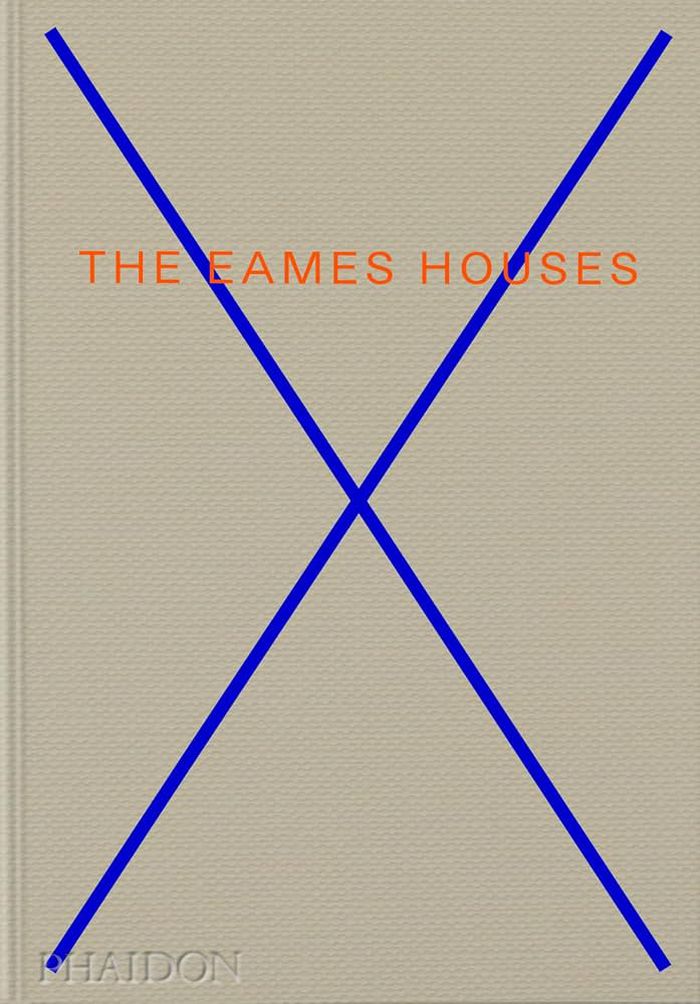
The Eames houses: Charles and Ray Eames residential architecture
Actions:
Price:
$74.95
(available to order)
Summary:
Charles (1907-1978) and Ray (1912-1988) Eames’s residential architecture is defined by their human-centered approach to modernism. Their work demonstrates a deep commitment to structural clarity, user-centered functionality, and the intelligent use of prefabrication. Rather than focusing purely on aesthetics, the Eameses approached architecture as a form of problem-solving, aiming to create flexible systems that offered a background for life and work in all its expressions. This book presents all eight houses they designed between 1945 and 1955, featuring sketches, drawings, letters, and photographs – many of which have never been published before – alongside newly produced diagrams and models that offer further insight into their design process.
The Eames houses: Charles and Ray Eames residential architecture
Actions:
Price:
$74.95
(available to order)
Summary:
Charles (1907-1978) and Ray (1912-1988) Eames’s residential architecture is defined by their human-centered approach to modernism. Their work demonstrates a deep commitment to structural clarity, user-centered functionality, and the intelligent use of prefabrication. Rather than focusing purely on aesthetics, the Eameses approached architecture as a form of problem-solving, aiming to create flexible systems that offered a background for life and work in all its expressions. This book presents all eight houses they designed between 1945 and 1955, featuring sketches, drawings, letters, and photographs – many of which have never been published before – alongside newly produced diagrams and models that offer further insight into their design process.
Form:
books
books
Publication:
June 2026
June 2026
Subject:
Architecture Monographs
Architecture Monographs
Form:
books
books
Price:
$39.95
(available to order)
Summary:
Beginning with agoraphobia and claustrophobia in the late nineteenth century, followed by shell shock and panic fear after World War I, phobias and anxiety came to be seen as the mental condition of modern life. They became incorporated into the media and arts, in particular the (...)
$39.95
(available to order)
Summary:
Beginning with agoraphobia and claustrophobia in the late nineteenth century, followed by shell shock and panic fear after World War I, phobias and anxiety came to be seen as the mental condition of modern life. They became incorporated into the media and arts, in particular the (...)
Title:
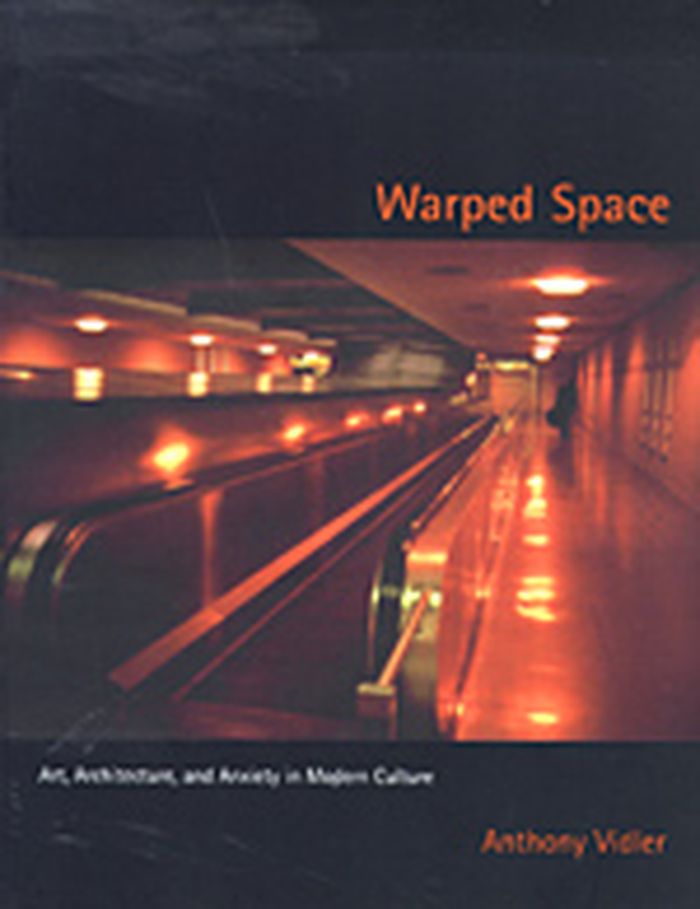
Warped space : art, architecture, and anxiety in modern culture
Actions:
Price:
$39.95
(available to order)
Summary:
Beginning with agoraphobia and claustrophobia in the late nineteenth century, followed by shell shock and panic fear after World War I, phobias and anxiety came to be seen as the mental condition of modern life. They became incorporated into the media and arts, in particular the spatial arts of architecture, urbanism, and film. This "spatial warping" is now being reshaped by digitalization and virtual reality. Anthony Vidler is concerned with two forms of warped space. The first, a psychological space, is the repository of neuroses and phobias. This space is not empty but full of disturbing forms, including those of architecture and the city. The second kind of warping is produced when artists break the boundaries of genre to depict space in new ways. Vidler traces the emergence of a psychological idea of space from Pascal and Freud to the identification of agoraphobia and claustrophobia in the nineteenth century to twentieth-century theories of spatial alienation and estrangement in the writings of Georg Simmel, Siegfried Kracauer, and Walter Benjamin. Focusing on current conditions of displacement and placelessness, he examines ways in which contemporary artists and architects have produced new forms of spatial warping. The discussion ranges from theorists such as Jacques Lacan and Gilles Deleuze to artists such as Vito Acconci, Mike Kelley, Martha Rosler, and Rachel Whiteread. Finally, Vidler looks at the architectural experiments of Frank Gehry, Coop Himmelblau, Daniel Libeskind, Greg Lynn, Morphosis, and Eric Owen Moss in the light of new digital techniques that, while relying on traditional perspective, have radically transformed the composition, production, and experience of architecture.
Warped space : art, architecture, and anxiety in modern culture
Actions:
Price:
$39.95
(available to order)
Summary:
Beginning with agoraphobia and claustrophobia in the late nineteenth century, followed by shell shock and panic fear after World War I, phobias and anxiety came to be seen as the mental condition of modern life. They became incorporated into the media and arts, in particular the spatial arts of architecture, urbanism, and film. This "spatial warping" is now being reshaped by digitalization and virtual reality. Anthony Vidler is concerned with two forms of warped space. The first, a psychological space, is the repository of neuroses and phobias. This space is not empty but full of disturbing forms, including those of architecture and the city. The second kind of warping is produced when artists break the boundaries of genre to depict space in new ways. Vidler traces the emergence of a psychological idea of space from Pascal and Freud to the identification of agoraphobia and claustrophobia in the nineteenth century to twentieth-century theories of spatial alienation and estrangement in the writings of Georg Simmel, Siegfried Kracauer, and Walter Benjamin. Focusing on current conditions of displacement and placelessness, he examines ways in which contemporary artists and architects have produced new forms of spatial warping. The discussion ranges from theorists such as Jacques Lacan and Gilles Deleuze to artists such as Vito Acconci, Mike Kelley, Martha Rosler, and Rachel Whiteread. Finally, Vidler looks at the architectural experiments of Frank Gehry, Coop Himmelblau, Daniel Libeskind, Greg Lynn, Morphosis, and Eric Owen Moss in the light of new digital techniques that, while relying on traditional perspective, have radically transformed the composition, production, and experience of architecture.
Form:
books
books
Publication:
April 2002, Cambridge, Mass.
April 2002, Cambridge, Mass.
Subject:
Architectural Theory
Architectural Theory
Form:
books
books
Price:
$45.95
(available to order)
Summary:
In a daring revisionist history of modern architecture, Mark Wigley opens up a new understanding of the historical avant-garde. He explores the most obvious, but least discussed, feature of modern architecture: white walls. Although the white wall exemplifies the stripping away of the decorative masquerade costumes worn by nineteenth-century buildings, Wigley argues that(...)
$45.95
(available to order)
Summary:
In a daring revisionist history of modern architecture, Mark Wigley opens up a new understanding of the historical avant-garde. He explores the most obvious, but least discussed, feature of modern architecture: white walls. Although the white wall exemplifies the stripping away of the decorative masquerade costumes worn by nineteenth-century buildings, Wigley argues that(...)
Title:
White walls, designer dresses : the fashioning of modern architecture
Actions:
Price:
$45.95
(available to order)
Summary:
In a daring revisionist history of modern architecture, Mark Wigley opens up a new understanding of the historical avant-garde. He explores the most obvious, but least discussed, feature of modern architecture: white walls. Although the white wall exemplifies the stripping away of the decorative masquerade costumes worn by nineteenth-century buildings, Wigley argues that modern buildings are not naked. The white wall is itself a form of clothing -- the newly athletic body of the building, like that of its occupants, wears a new kind of garment and these garments are meant to match. Not only did almost all modern architects literally design dresses, Wigley points out, their arguments for a modern architecture were taken from the logic of clothing reform. Architecture was understood as a form of dress design. Wigley follows the trajectory of this key subtext by closely reading the statements and designs of most of the protagonists, demonstrating that it renders modern architecture's relationship with the psychosexual economy of fashion much more ambiguous than the architects' endlessly repeated rejections of fashion would suggest. Indeed, Wigley asserts, the very intensity of these rejections is a symptom of how deeply they are embedded in the world of clothing. By drawing on arguments about the relationship between clothing and architecture first formulated in the middle of the nineteenth century, modern architects in fact presented a sophisticated theory of the surface, modernizing architecture by transforming the status of the surface. "White Walls, Designer Dresses" shows how this seemingly incidental clothing logic actually organizes the detailed design of the modern building, dictating a system of polychromy, understood as a multicolored outfit. The familiar image of modern architecture as white turns out to be the effect of a historiographical tradition that has worked hard to suppress the color of the surfaces of the buildings that it describes. Wigley analyzes this suppression in terms of the sexual logic that invariably accompanies discussions of clothing and color, recovering those sensuously colored surfaces and the extraordinary arguments about clothing that were used to defend them.
White walls, designer dresses : the fashioning of modern architecture
Actions:
Price:
$45.95
(available to order)
Summary:
In a daring revisionist history of modern architecture, Mark Wigley opens up a new understanding of the historical avant-garde. He explores the most obvious, but least discussed, feature of modern architecture: white walls. Although the white wall exemplifies the stripping away of the decorative masquerade costumes worn by nineteenth-century buildings, Wigley argues that modern buildings are not naked. The white wall is itself a form of clothing -- the newly athletic body of the building, like that of its occupants, wears a new kind of garment and these garments are meant to match. Not only did almost all modern architects literally design dresses, Wigley points out, their arguments for a modern architecture were taken from the logic of clothing reform. Architecture was understood as a form of dress design. Wigley follows the trajectory of this key subtext by closely reading the statements and designs of most of the protagonists, demonstrating that it renders modern architecture's relationship with the psychosexual economy of fashion much more ambiguous than the architects' endlessly repeated rejections of fashion would suggest. Indeed, Wigley asserts, the very intensity of these rejections is a symptom of how deeply they are embedded in the world of clothing. By drawing on arguments about the relationship between clothing and architecture first formulated in the middle of the nineteenth century, modern architects in fact presented a sophisticated theory of the surface, modernizing architecture by transforming the status of the surface. "White Walls, Designer Dresses" shows how this seemingly incidental clothing logic actually organizes the detailed design of the modern building, dictating a system of polychromy, understood as a multicolored outfit. The familiar image of modern architecture as white turns out to be the effect of a historiographical tradition that has worked hard to suppress the color of the surfaces of the buildings that it describes. Wigley analyzes this suppression in terms of the sexual logic that invariably accompanies discussions of clothing and color, recovering those sensuously colored surfaces and the extraordinary arguments about clothing that were used to defend them.
Form:
books
books
Publication:
October 2001, Cambridge, Mass.
October 2001, Cambridge, Mass.
Subject:
Architectural Theory
Architectural Theory
Form:
books
books
Price:
$90.00
(available to order)
Summary:
The influence of the award-winning Jordanian architect Rasem Badran is rapidly spreading throughout the developing world. His work involves the full spectrum from urban planning to individual residences. His work is human-scaled, responsive to its environment and meets the social and cultural requirements of the people who use it. For the first time, this volume(...)
$90.00
(available to order)
Summary:
The influence of the award-winning Jordanian architect Rasem Badran is rapidly spreading throughout the developing world. His work involves the full spectrum from urban planning to individual residences. His work is human-scaled, responsive to its environment and meets the social and cultural requirements of the people who use it. For the first time, this volume(...)
Title:
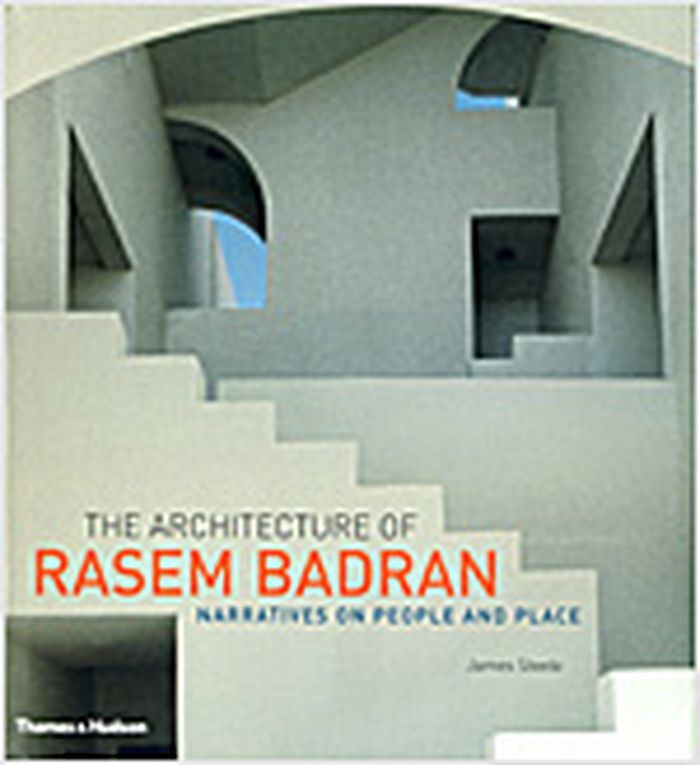
The architecture of Rasem Badran : narratives on people and place
Actions:
Price:
$90.00
(available to order)
Summary:
The influence of the award-winning Jordanian architect Rasem Badran is rapidly spreading throughout the developing world. His work involves the full spectrum from urban planning to individual residences. His work is human-scaled, responsive to its environment and meets the social and cultural requirements of the people who use it. For the first time, this volume provides an overview of the work of one who could be seen as the natural successor to the seminal Egyptian architect Hassan Fathy and brings together the architect’s own dramatic collection of drawings, plans and photographs, many seen here for the first time. A comprehensive chronology of Badran’s work completes a fascinating survey of this influential and revolutionary architect.
The architecture of Rasem Badran : narratives on people and place
Actions:
Price:
$90.00
(available to order)
Summary:
The influence of the award-winning Jordanian architect Rasem Badran is rapidly spreading throughout the developing world. His work involves the full spectrum from urban planning to individual residences. His work is human-scaled, responsive to its environment and meets the social and cultural requirements of the people who use it. For the first time, this volume provides an overview of the work of one who could be seen as the natural successor to the seminal Egyptian architect Hassan Fathy and brings together the architect’s own dramatic collection of drawings, plans and photographs, many seen here for the first time. A comprehensive chronology of Badran’s work completes a fascinating survey of this influential and revolutionary architect.
Form:
books
books
Publication:
June 2005, New York
June 2005, New York
Subject:
Architecture Monographs
Architecture Monographs
Form:
books
books
Actions:
Price:
$50.00
(available to order)
Summary:
"The Eyes of the Skin" has become a classic of architectural theory and consists of two extended essays. The first surveys the historical development of the ocular-centric paradigm in western culture since the Greeks and its impact on the experience of the world and the nature of architecture. The second examines the role of the other senses in authentic architectural(...)
$50.00
(available to order)
Summary:
"The Eyes of the Skin" has become a classic of architectural theory and consists of two extended essays. The first surveys the historical development of the ocular-centric paradigm in western culture since the Greeks and its impact on the experience of the world and the nature of architecture. The second examines the role of the other senses in authentic architectural(...)
Title:
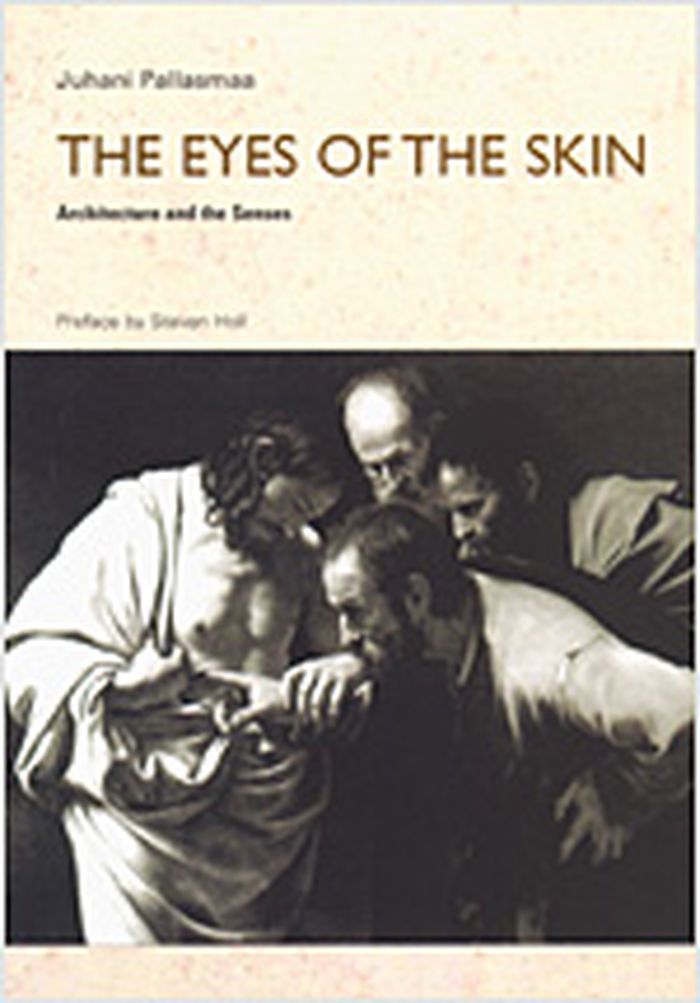
The eyes of the skin : architecture and the senses
Actions:
Price:
$50.00
(available to order)
Summary:
"The Eyes of the Skin" has become a classic of architectural theory and consists of two extended essays. The first surveys the historical development of the ocular-centric paradigm in western culture since the Greeks and its impact on the experience of the world and the nature of architecture. The second examines the role of the other senses in authentic architectural experiences, and points the way towards a multi-sensory architecture which facilitates a sense of belonging and integration. Since the book's first publication, interest in the role of the body and the senses has been emerging in both architectural philosophy and teaching. This new, revised and extended edition of this seminal work will not only inspire architects and students to design more holistic architecture, but will enrich the general reader's perception of the world around them. Preface by Steven Holl.
The eyes of the skin : architecture and the senses
Actions:
Price:
$50.00
(available to order)
Summary:
"The Eyes of the Skin" has become a classic of architectural theory and consists of two extended essays. The first surveys the historical development of the ocular-centric paradigm in western culture since the Greeks and its impact on the experience of the world and the nature of architecture. The second examines the role of the other senses in authentic architectural experiences, and points the way towards a multi-sensory architecture which facilitates a sense of belonging and integration. Since the book's first publication, interest in the role of the body and the senses has been emerging in both architectural philosophy and teaching. This new, revised and extended edition of this seminal work will not only inspire architects and students to design more holistic architecture, but will enrich the general reader's perception of the world around them. Preface by Steven Holl.
Form:
books
books
Publication:
April 2005, Chichester, England
April 2005, Chichester, England
Subject:
Architectural Theory
Architectural Theory
Form:
books
books
Price:
$68.95
(available to order)
Summary:
Russian artist El Lissitzky’s work spans painting, photography, theatrical and exhibition design, architecture, graphic design, typography, and literature. He was active in the Jewish cultural renaissance, formed an artists’ collective with Kazimir Malevich, was a key figure in the dissemination of early Soviet art in Western Europe, and designed propaganda for the Stalin(...)
$68.95
(available to order)
Summary:
Russian artist El Lissitzky’s work spans painting, photography, theatrical and exhibition design, architecture, graphic design, typography, and literature. He was active in the Jewish cultural renaissance, formed an artists’ collective with Kazimir Malevich, was a key figure in the dissemination of early Soviet art in Western Europe, and designed propaganda for the Stalin(...)
Title:
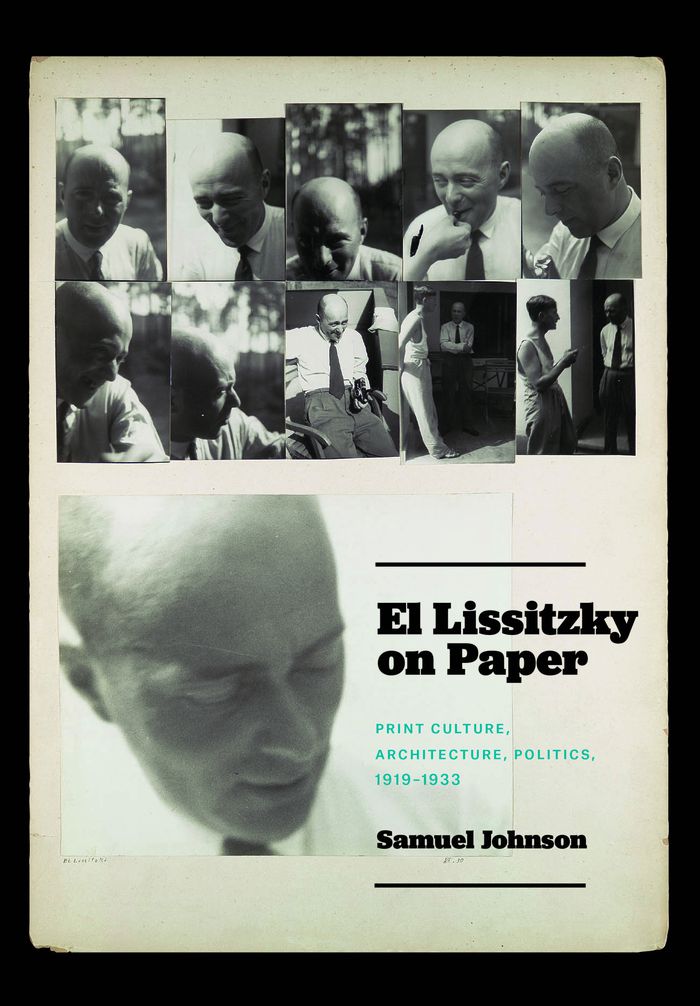
El Lissitzky on paper: Print culture, architecture, politics, 1919-1933
Actions:
Price:
$68.95
(available to order)
Summary:
Russian artist El Lissitzky’s work spans painting, photography, theatrical and exhibition design, architecture, graphic design, typography, and literature. He was active in the Jewish cultural renaissance, formed an artists’ collective with Kazimir Malevich, was a key figure in the dissemination of early Soviet art in Western Europe, and designed propaganda for the Stalin regime. With such a varied history and body of work, scholars have often struggled to identify the core principles that tied his diverse oeuvre together. With this book, Johnson presents a significant contribution to scholarship on this major artist, revealing new connections between Lissitzky’s work in architecture and visual art and bringing to light sources from largely unstudied Russian archives.
El Lissitzky on paper: Print culture, architecture, politics, 1919-1933
Actions:
Price:
$68.95
(available to order)
Summary:
Russian artist El Lissitzky’s work spans painting, photography, theatrical and exhibition design, architecture, graphic design, typography, and literature. He was active in the Jewish cultural renaissance, formed an artists’ collective with Kazimir Malevich, was a key figure in the dissemination of early Soviet art in Western Europe, and designed propaganda for the Stalin regime. With such a varied history and body of work, scholars have often struggled to identify the core principles that tied his diverse oeuvre together. With this book, Johnson presents a significant contribution to scholarship on this major artist, revealing new connections between Lissitzky’s work in architecture and visual art and bringing to light sources from largely unstudied Russian archives.
Form:
books
books
Publication:
May 2024
May 2024
Subject:
Architecture Monographs
Architecture Monographs
Form:
books
books
Price:
$102.00
(available in store)
Summary:
The second installment in the Dongola Architecture Series, dedicated to the great voices of contemporary architecture in the Arab culture, delves into the life and work of the distinguished Syrian architect and architecture historian Nasser Rabbat. This publication underscores the profound connection between Rabbat's upbringing in Syria during a period of significant(...)
$102.00
(available in store)
Summary:
The second installment in the Dongola Architecture Series, dedicated to the great voices of contemporary architecture in the Arab culture, delves into the life and work of the distinguished Syrian architect and architecture historian Nasser Rabbat. This publication underscores the profound connection between Rabbat's upbringing in Syria during a period of significant(...)
Title:
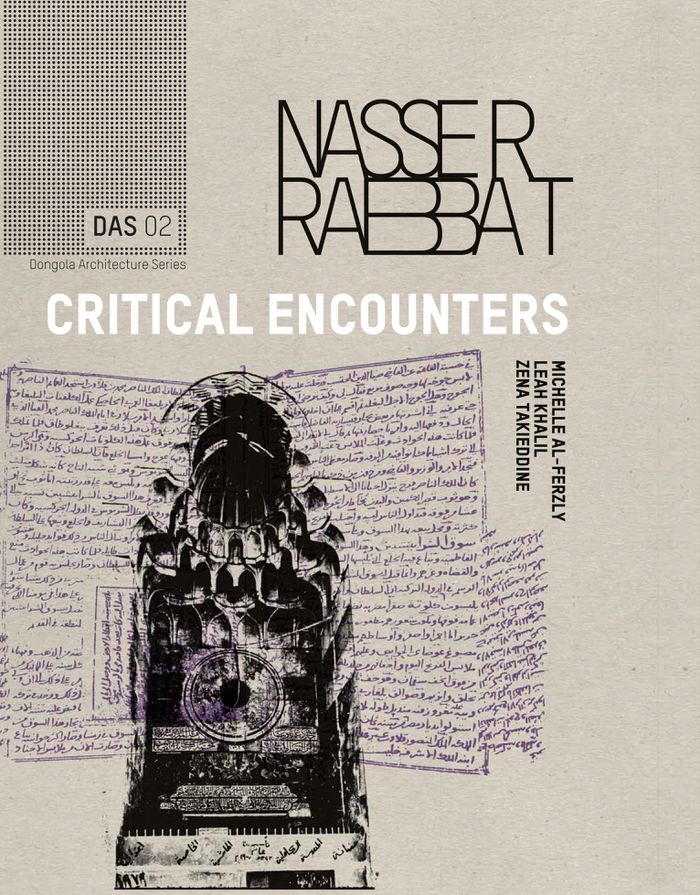
Nasser Rabbat: Critical encounters. Dongola Architecture Series DAS 02
Actions:
Price:
$102.00
(available in store)
Summary:
The second installment in the Dongola Architecture Series, dedicated to the great voices of contemporary architecture in the Arab culture, delves into the life and work of the distinguished Syrian architect and architecture historian Nasser Rabbat. This publication underscores the profound connection between Rabbat's upbringing in Syria during a period of significant political transformation and his development as a critical thinker and storyteller. His journey from a reluctant choice to study architecture to becoming a prominent figure as the Director of the Aga Khan Program for Islamic Architecture at MIT illustrates his unceasing commitment to expanding the horizons of historiography, particularly within the realm of non-Western voices. "Nasser Rabbat : Critical encounters" seeks to deepen our understanding of the urgency of history to enable the possibilities of questioning and reimagining dominant powers. Professor Rabbat's work presents a compelling account within the broader context of Arab thinkers actively reshaping their region's narrative and pushing for a more inclusive and diverse historical perspective.
Nasser Rabbat: Critical encounters. Dongola Architecture Series DAS 02
Actions:
Price:
$102.00
(available in store)
Summary:
The second installment in the Dongola Architecture Series, dedicated to the great voices of contemporary architecture in the Arab culture, delves into the life and work of the distinguished Syrian architect and architecture historian Nasser Rabbat. This publication underscores the profound connection between Rabbat's upbringing in Syria during a period of significant political transformation and his development as a critical thinker and storyteller. His journey from a reluctant choice to study architecture to becoming a prominent figure as the Director of the Aga Khan Program for Islamic Architecture at MIT illustrates his unceasing commitment to expanding the horizons of historiography, particularly within the realm of non-Western voices. "Nasser Rabbat : Critical encounters" seeks to deepen our understanding of the urgency of history to enable the possibilities of questioning and reimagining dominant powers. Professor Rabbat's work presents a compelling account within the broader context of Arab thinkers actively reshaping their region's narrative and pushing for a more inclusive and diverse historical perspective.
Form:
books
books
Publication:
March 2024
March 2024
Subject:
Architecture Monographs
Architecture Monographs
Form:
books
books
Actions:
Price:
$95.00
(available in store)
Summary:
A collection of architect Shigenori Uoya's works. Uoya conducts surveys and research on the transformation and current status of the structures of streets and city blocks in historical cities in Japan and abroad, focusing on Kyoto. He approaches architecture based on a temporal axis that extends from the past to the future, including the renovation of machiya and the(...)
$95.00
(available in store)
Summary:
A collection of architect Shigenori Uoya's works. Uoya conducts surveys and research on the transformation and current status of the structures of streets and city blocks in historical cities in Japan and abroad, focusing on Kyoto. He approaches architecture based on a temporal axis that extends from the past to the future, including the renovation of machiya and the(...)
Title:
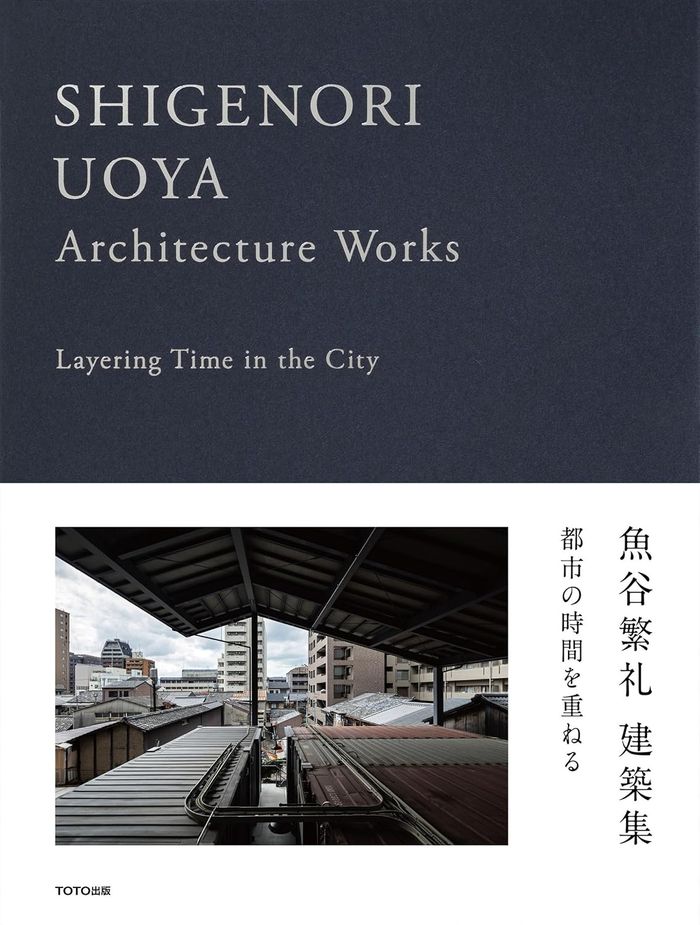
Shigenori Uoya Architecture works: layering time in the city
Actions:
Price:
$95.00
(available in store)
Summary:
A collection of architect Shigenori Uoya's works. Uoya conducts surveys and research on the transformation and current status of the structures of streets and city blocks in historical cities in Japan and abroad, focusing on Kyoto. He approaches architecture based on a temporal axis that extends from the past to the future, including the renovation of machiya and the reconstruction of cities. The book introduces Uoya's numerous works, including the Kakkyoyama Common Center for Gion Festival, which won the AIJ Prize in 2023, through photographs, drawings, essays, and diagrams, offering insights into the essence of his architecture.
Shigenori Uoya Architecture works: layering time in the city
Actions:
Price:
$95.00
(available in store)
Summary:
A collection of architect Shigenori Uoya's works. Uoya conducts surveys and research on the transformation and current status of the structures of streets and city blocks in historical cities in Japan and abroad, focusing on Kyoto. He approaches architecture based on a temporal axis that extends from the past to the future, including the renovation of machiya and the reconstruction of cities. The book introduces Uoya's numerous works, including the Kakkyoyama Common Center for Gion Festival, which won the AIJ Prize in 2023, through photographs, drawings, essays, and diagrams, offering insights into the essence of his architecture.
Form:
books
books
Publication:
June 2024
June 2024
Subject:
Architecture Monographs
Architecture Monographs
Form:
books
books
Price:
$79.00
(available to order)
Summary:
In "Albert Kahn Inc." Claire Zimmerman provides a history of second-wave industrialization associated with the growth and development of the United States auto industry and its global footprint. A forensic analysis of the "architects of Ford," the book theorizes how building and capitalism intersected in the case of twentieth-century industrial buildings, but also in(...)
$79.00
(available to order)
Summary:
In "Albert Kahn Inc." Claire Zimmerman provides a history of second-wave industrialization associated with the growth and development of the United States auto industry and its global footprint. A forensic analysis of the "architects of Ford," the book theorizes how building and capitalism intersected in the case of twentieth-century industrial buildings, but also in(...)
Title:
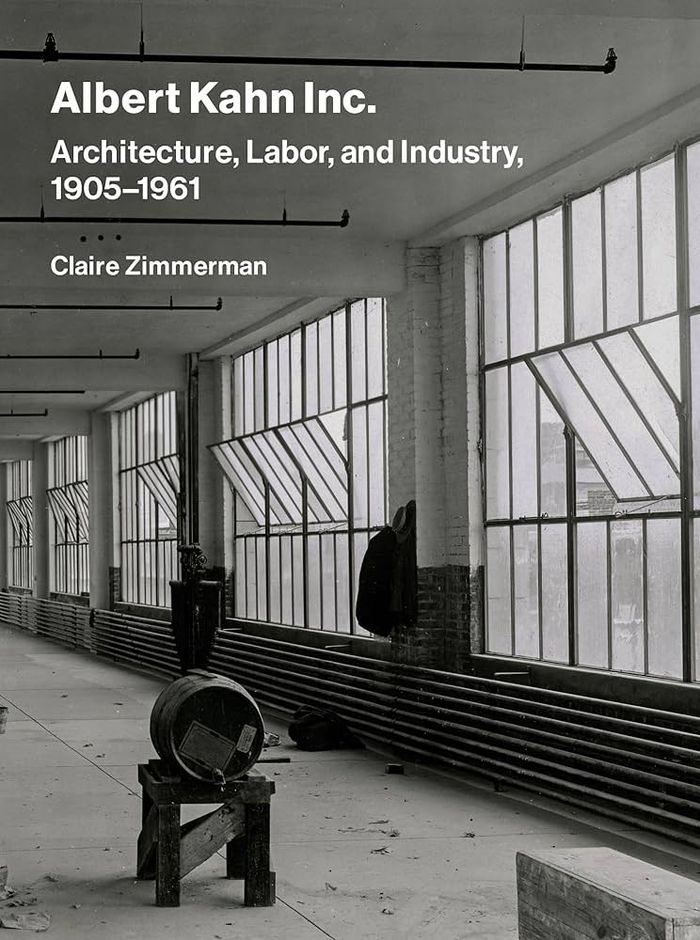
Albert Kahn Inc.: Architecture, labor, and industry, 1905-1961
Actions:
Price:
$79.00
(available to order)
Summary:
In "Albert Kahn Inc." Claire Zimmerman provides a history of second-wave industrialization associated with the growth and development of the United States auto industry and its global footprint. A forensic analysis of the "architects of Ford," the book theorizes how building and capitalism intersected in the case of twentieth-century industrial buildings, but also in other kinds of architecture and in the built environment writ large. Generally a marginal subject in histories of architecture, industrialism here exposes the expansionist modern project in Western architecture and culture, which was based on natural resource extraction and labor exploitation. With more than 140 full-color illustrations, the book combines an analysis of industrial architecture with compelling photographic evidence drawn from assorted archives.
Albert Kahn Inc.: Architecture, labor, and industry, 1905-1961
Actions:
Price:
$79.00
(available to order)
Summary:
In "Albert Kahn Inc." Claire Zimmerman provides a history of second-wave industrialization associated with the growth and development of the United States auto industry and its global footprint. A forensic analysis of the "architects of Ford," the book theorizes how building and capitalism intersected in the case of twentieth-century industrial buildings, but also in other kinds of architecture and in the built environment writ large. Generally a marginal subject in histories of architecture, industrialism here exposes the expansionist modern project in Western architecture and culture, which was based on natural resource extraction and labor exploitation. With more than 140 full-color illustrations, the book combines an analysis of industrial architecture with compelling photographic evidence drawn from assorted archives.
Form:
books
books
Publication:
August 2025
August 2025
Subject:
Architecture Monographs
Architecture Monographs
Form:
books
books
Actions:
Price:
$67.95
(available in store)
Summary:
In France no less than in Britain, the late 1960s saw a rebellion against the relentless anonymity of modernist planning. In the search for alternatives, Jean Renaudie showed an originality and a daring unrivalled up to this day. Conceived along structuralist principles, informed by research in molecular biology, his urban projects overturned the logic of the vast housing(...)
$67.95
(available in store)
Summary:
In France no less than in Britain, the late 1960s saw a rebellion against the relentless anonymity of modernist planning. In the search for alternatives, Jean Renaudie showed an originality and a daring unrivalled up to this day. Conceived along structuralist principles, informed by research in molecular biology, his urban projects overturned the logic of the vast housing(...)
Title:
A right to difference : the architecture of Jean Renaudie
Actions:
Price:
$67.95
(available in store)
Summary:
In France no less than in Britain, the late 1960s saw a rebellion against the relentless anonymity of modernist planning. In the search for alternatives, Jean Renaudie showed an originality and a daring unrivalled up to this day. Conceived along structuralist principles, informed by research in molecular biology, his urban projects overturned the logic of the vast housing estates that were being steamrolled across France by the State. In the place of uniform tower blocks, he designed developments in which every dwelling was unique. Diversity – the spanner in the works of mass production – was for him a moral obligation. No concession was made in the name of type, be it human or architectural. ‘The catalogue of forms is endless: until every shape has found its city, new cities will continue to be born. When the forms exhaust their variety and come apart, the end of cities begins.’ Italo Calvino, Invisible Cities
A right to difference : the architecture of Jean Renaudie
Actions:
Price:
$67.95
(available in store)
Summary:
In France no less than in Britain, the late 1960s saw a rebellion against the relentless anonymity of modernist planning. In the search for alternatives, Jean Renaudie showed an originality and a daring unrivalled up to this day. Conceived along structuralist principles, informed by research in molecular biology, his urban projects overturned the logic of the vast housing estates that were being steamrolled across France by the State. In the place of uniform tower blocks, he designed developments in which every dwelling was unique. Diversity – the spanner in the works of mass production – was for him a moral obligation. No concession was made in the name of type, be it human or architectural. ‘The catalogue of forms is endless: until every shape has found its city, new cities will continue to be born. When the forms exhaust their variety and come apart, the end of cities begins.’ Italo Calvino, Invisible Cities
Form:
books
books
Publication:
September 2004, London
September 2004, London
Subject:
Architecture Monographs
Architecture Monographs


