


12071 Results
Form:
books
books
Actions:
Price:
$35.95
(available to order)
Summary:
«L'architecture est une science» avai écrit Vitruve. Pourtant, la pensée architecturale ne s'exprime jamais comme telle, s'obligeant à faire appel à des domaines extérieurs comme la sociologie, la sémiologie ou l'économie. L'architecture doit donc définir ses propres axiomes et ses propres concepts en recherchant les bases scientifiques d'une véritable «archéologie». La(...)
$35.95
(available to order)
Summary:
«L'architecture est une science» avai écrit Vitruve. Pourtant, la pensée architecturale ne s'exprime jamais comme telle, s'obligeant à faire appel à des domaines extérieurs comme la sociologie, la sémiologie ou l'économie. L'architecture doit donc définir ses propres axiomes et ses propres concepts en recherchant les bases scientifiques d'une véritable «archéologie». La(...)
Title:
Sur l'espace architectural : essai d'épistémologie de l'architecture - nouvelle édition revue et corrigée
Actions:
Price:
$35.95
(available to order)
Summary:
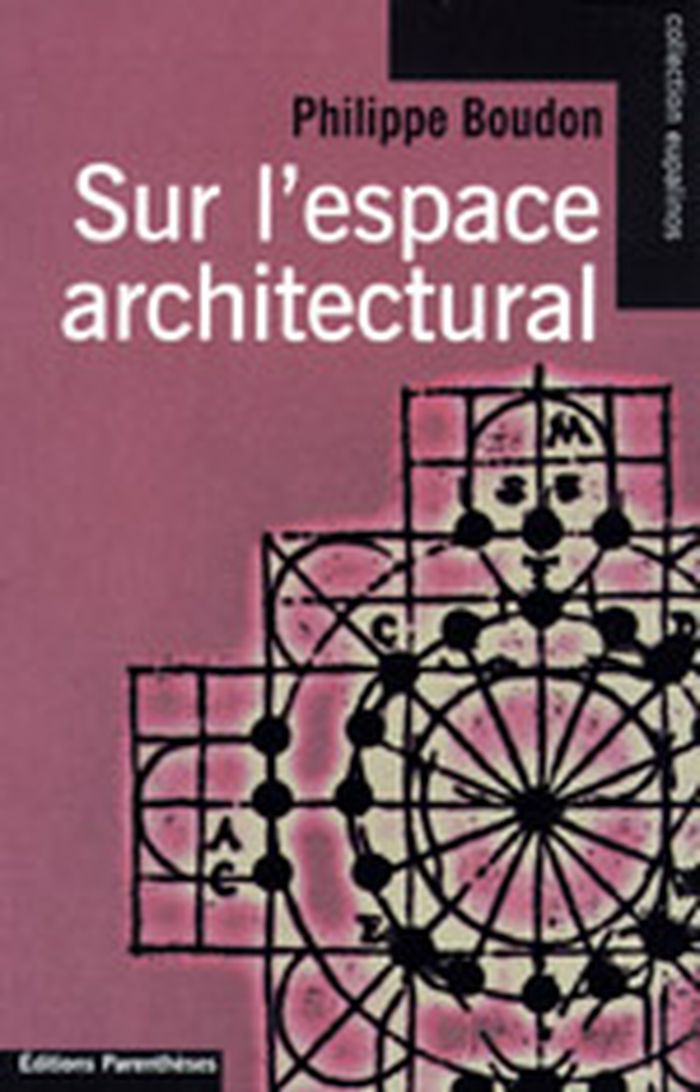
«L'architecture est une science» avai écrit Vitruve. Pourtant, la pensée architecturale ne s'exprime jamais comme telle, s'obligeant à faire appel à des domaines extérieurs comme la sociologie, la sémiologie ou l'économie. L'architecture doit donc définir ses propres axiomes et ses propres concepts en recherchant les bases scientifiques d'une véritable «archéologie». La construction théorique de cette discipline contribue ainsi à la définition de l'architecture comme «pensée de l'espace». Ce texte fondateur de Philippe Boudon est devenu un classique de la littérature architecturale. Dans cette nouvelle édition entièrement refondue, l'auteur donne l'intégralité de son texte d'origine en y ajoutant, pour chacune des parties, un commentaire critique et réactualisé.
Sur l'espace architectural : essai d'épistémologie de l'architecture - nouvelle édition revue et corrigée
Actions:
Price:
$35.95
(available to order)
Summary:
«L'architecture est une science» avai écrit Vitruve. Pourtant, la pensée architecturale ne s'exprime jamais comme telle, s'obligeant à faire appel à des domaines extérieurs comme la sociologie, la sémiologie ou l'économie. L'architecture doit donc définir ses propres axiomes et ses propres concepts en recherchant les bases scientifiques d'une véritable «archéologie». La construction théorique de cette discipline contribue ainsi à la définition de l'architecture comme «pensée de l'espace». Ce texte fondateur de Philippe Boudon est devenu un classique de la littérature architecturale. Dans cette nouvelle édition entièrement refondue, l'auteur donne l'intégralité de son texte d'origine en y ajoutant, pour chacune des parties, un commentaire critique et réactualisé.
Form:
books
books
Publication:
September 2002, Marseille
September 2002, Marseille
Subject:
Architectural Theory
Architectural Theory
Form:
books
books
Price:
$80.00
(available to order)
Summary:
Reyner Banham was a pioneer in arguing that technology, human needs, and environmental concerns must be considered an integral part of architecture. No historian before him had so systematically explored the impact of environmental engineering on the design of buildings and on the minds of architects. In this revision of his classic work, Banham has added considerable new(...)
$80.00
(available to order)
Summary:
Reyner Banham was a pioneer in arguing that technology, human needs, and environmental concerns must be considered an integral part of architecture. No historian before him had so systematically explored the impact of environmental engineering on the design of buildings and on the minds of architects. In this revision of his classic work, Banham has added considerable new(...)
Title:
The architecture of the well-tempered environment, second edition
Actions:
Price:
$80.00
(available to order)
Summary:
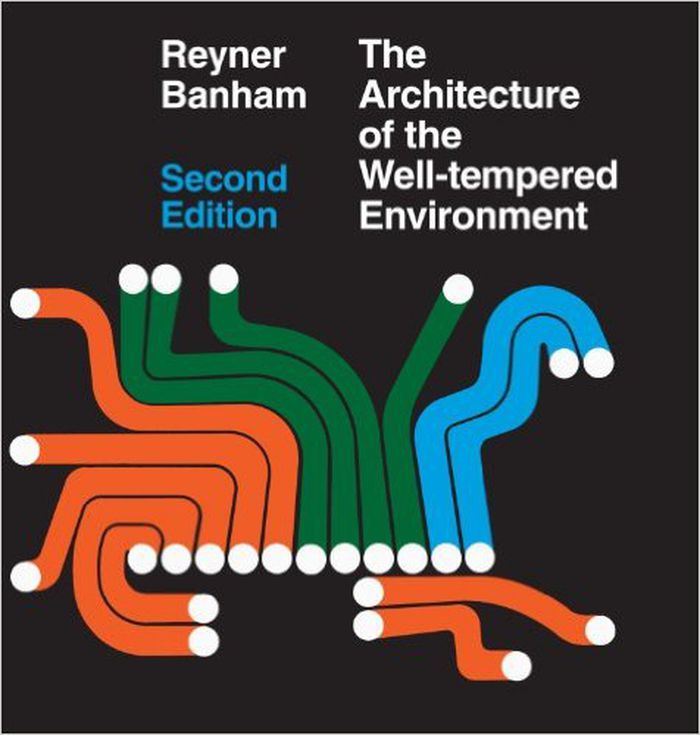
Reyner Banham was a pioneer in arguing that technology, human needs, and environmental concerns must be considered an integral part of architecture. No historian before him had so systematically explored the impact of environmental engineering on the design of buildings and on the minds of architects. In this revision of his classic work, Banham has added considerable new material on the use of energy, particularly solar energy, in human environments. Included in the new material are discussions of Indian pueblos and solar architecture, the Centre Pompidou and other high-tech buildings, and the environmental wisdom of many current architectural vernaculars.
The architecture of the well-tempered environment, second edition
Actions:
Price:
$80.00
(available to order)
Summary:
Reyner Banham was a pioneer in arguing that technology, human needs, and environmental concerns must be considered an integral part of architecture. No historian before him had so systematically explored the impact of environmental engineering on the design of buildings and on the minds of architects. In this revision of his classic work, Banham has added considerable new material on the use of energy, particularly solar energy, in human environments. Included in the new material are discussions of Indian pueblos and solar architecture, the Centre Pompidou and other high-tech buildings, and the environmental wisdom of many current architectural vernaculars.
Form:
books
books
Publication:
December 1984, Chicago, London
December 1984, Chicago, London
Subject:
Architectural Theory
Architectural Theory
Form:
books
books
Price:
$49.50
(available to order)
Summary:
Beginning with agoraphobia and claustrophobia in the late nineteenth century, followed by shell shock and panic fear after World War I, phobias and anxiety came to be seen as the mental condition of modern life. They became incorporated into the media and arts, in particular the (...)
$49.50
(available to order)
Summary:
Beginning with agoraphobia and claustrophobia in the late nineteenth century, followed by shell shock and panic fear after World War I, phobias and anxiety came to be seen as the mental condition of modern life. They became incorporated into the media and arts, in particular the (...)
Title:
Warped space : art, architecture, and anxiety in modern culture
Actions:
Price:
$49.50
(available to order)
Summary:
Beginning with agoraphobia and claustrophobia in the late nineteenth century, followed by shell shock and panic fear after World War I, phobias and anxiety came to be seen as the mental condition of modern life. They became incorporated into the media and arts, in particular the spatial arts of architecture, urbanism, and film. This "spatial warping" is now being reshaped by digitalization and virtual reality. Anthony Vidler is concerned with two forms of warped space. The first, a psychological space, is the repository of neuroses and phobias. This space is not empty but full of disturbing forms, including those of architecture and the city. The second kind of warping is produced when artists break the boundaries of genre to depict space in new ways. Vidler traces the emergence of a psychological idea of space from Pascal and Freud to the identification of agoraphobia and claustrophobia in the nineteenth century to twentieth-century theories of spatial alienation and estrangement in the writings of Georg Simmel, Siegfried Kracauer, and Walter Benjamin. Focusing on current conditions of displacement and placelessness, he examines ways in which contemporary artists and architects have produced new forms of spatial warping. The discussion ranges from theorists such as Jacques Lacan and Gilles Deleuze to artists such as Vito Acconci, Mike Kelley, Martha Rosler, and Rachel Whiteread. Finally, Vidler looks at the architectural experiments of Frank Gehry, Coop Himmelblau, Daniel Libeskind, Greg Lynn, Morphosis, and Eric Owen Moss in the light of new digital techniques that, while relying on traditional perspective, have radically transformed the composition, production, and experience of architecture.
Warped space : art, architecture, and anxiety in modern culture
Actions:
Price:
$49.50
(available to order)
Summary:
Beginning with agoraphobia and claustrophobia in the late nineteenth century, followed by shell shock and panic fear after World War I, phobias and anxiety came to be seen as the mental condition of modern life. They became incorporated into the media and arts, in particular the spatial arts of architecture, urbanism, and film. This "spatial warping" is now being reshaped by digitalization and virtual reality. Anthony Vidler is concerned with two forms of warped space. The first, a psychological space, is the repository of neuroses and phobias. This space is not empty but full of disturbing forms, including those of architecture and the city. The second kind of warping is produced when artists break the boundaries of genre to depict space in new ways. Vidler traces the emergence of a psychological idea of space from Pascal and Freud to the identification of agoraphobia and claustrophobia in the nineteenth century to twentieth-century theories of spatial alienation and estrangement in the writings of Georg Simmel, Siegfried Kracauer, and Walter Benjamin. Focusing on current conditions of displacement and placelessness, he examines ways in which contemporary artists and architects have produced new forms of spatial warping. The discussion ranges from theorists such as Jacques Lacan and Gilles Deleuze to artists such as Vito Acconci, Mike Kelley, Martha Rosler, and Rachel Whiteread. Finally, Vidler looks at the architectural experiments of Frank Gehry, Coop Himmelblau, Daniel Libeskind, Greg Lynn, Morphosis, and Eric Owen Moss in the light of new digital techniques that, while relying on traditional perspective, have radically transformed the composition, production, and experience of architecture.
Form:
books
books
Publication:
June 2000, Cambridge, Mass.
June 2000, Cambridge, Mass.
Subject:
Architectural Theory
Architectural Theory
Form:
books
books
Actions:
Price:
$63.00
(available to order)
Summary:
"Instrumental Form", the first monograph on Jones' practice, investigates seventeen projects in detail through descriptions, photographs, and drawings, interspersed with engaging essays written by Jones(...)
$63.00
(available to order)
Summary:
"Instrumental Form", the first monograph on Jones' practice, investigates seventeen projects in detail through descriptions, photographs, and drawings, interspersed with engaging essays written by Jones(...)
Title:
Instrumental form (Boss Architecture) : designs for words, buildings, machines
Actions:
Price:
$63.00
(available to order)
Summary:
"Instrumental Form", the first monograph on Jones' practice, investigates seventeen projects in detail through descriptions, photographs, and drawings, interspersed with engaging essays written by Jones himself. Also included is a chronology of Jones' projects.
Instrumental form (Boss Architecture) : designs for words, buildings, machines
Actions:
Price:
$63.00
(available to order)
Summary:
"Instrumental Form", the first monograph on Jones' practice, investigates seventeen projects in detail through descriptions, photographs, and drawings, interspersed with engaging essays written by Jones himself. Also included is a chronology of Jones' projects.
Form:
books
books
Publication:
January 1998, New York
January 1998, New York
Subject:
Architecture Monographs
Architecture Monographs
Form:
books
books
Price:
$71.95
(available to order)
Summary:
A collection of writings which outline the evolution of the environmental dimension of architectural theory and practice in the past twenty-five years. "The environmental tradition" deals with the transformation of the environmental design field which was brought about by the growth of energy awareness in the 1970's and 1980's. The book places environmental issues in the(...)
$71.95
(available to order)
Summary:
A collection of writings which outline the evolution of the environmental dimension of architectural theory and practice in the past twenty-five years. "The environmental tradition" deals with the transformation of the environmental design field which was brought about by the growth of energy awareness in the 1970's and 1980's. The book places environmental issues in the(...)
Title:
The environmental tradition : studies in the architecture of environment
Actions:
Price:
$71.95
(available to order)
Summary:
A collection of writings which outline the evolution of the environmental dimension of architectural theory and practice in the past twenty-five years. "The environmental tradition" deals with the transformation of the environmental design field which was brought about by the growth of energy awareness in the 1970's and 1980's. The book places environmental issues in the broader theoretical and historical context in architecture.
The environmental tradition : studies in the architecture of environment
Actions:
Price:
$71.95
(available to order)
Summary:
A collection of writings which outline the evolution of the environmental dimension of architectural theory and practice in the past twenty-five years. "The environmental tradition" deals with the transformation of the environmental design field which was brought about by the growth of energy awareness in the 1970's and 1980's. The book places environmental issues in the broader theoretical and historical context in architecture.
Form:
books
books
Publication:
January 1995, London
January 1995, London
Subject:
Green Architecture
Green Architecture
Form:
books
books
Price:
$79.50
(available to order)
Summary:
In a daring revisionist history of modern architecture, Mark Wigley opens up a new understanding of the historical avant-garde. He explores the most obvious, but least discussed, feature of modern architecture: white walls. Although the white wall exemplifies the stripping away of the decorative masquerade costumes worn by nineteenth-century buildings, Wigley argues that(...)
$79.50
(available to order)
Summary:
In a daring revisionist history of modern architecture, Mark Wigley opens up a new understanding of the historical avant-garde. He explores the most obvious, but least discussed, feature of modern architecture: white walls. Although the white wall exemplifies the stripping away of the decorative masquerade costumes worn by nineteenth-century buildings, Wigley argues that(...)
Title:
White walls, designer dresses : the fashioning of modern architecture
Actions:
Price:
$79.50
(available to order)
Summary:
In a daring revisionist history of modern architecture, Mark Wigley opens up a new understanding of the historical avant-garde. He explores the most obvious, but least discussed, feature of modern architecture: white walls. Although the white wall exemplifies the stripping away of the decorative masquerade costumes worn by nineteenth-century buildings, Wigley argues that modern buildings are not naked. The white wall is itself a form of clothing -- the newly athletic body of the building, like that of its occupants, wears a new kind of garment and these garments are meant to match. Not only did almost all modern architects literally design dresses, Wigley points out, their arguments for a modern architecture were taken from the logic of clothing reform. Architecture was understood as a form of dress design. Wigley follows the trajectory of this key subtext by closely reading the statements and designs of most of the protagonists, demonstrating that it renders modern architecture's relationship with the psychosexual economy of fashion much more ambiguous than the architects' endlessly repeated rejections of fashion would suggest. Indeed, Wigley asserts, the very intensity of these rejections is a symptom of how deeply they are embedded in the world of clothing. By drawing on arguments about the relationship between clothing and architecture first formulated in the middle of the nineteenth century, modern architects in fact presented a sophisticated theory of the surface, modernizing architecture by transforming the status of the surface. "White Walls, Designer Dresses" shows how this seemingly incidental clothing logic actually organizes the detailed design of the modern building, dictating a system of polychromy, understood as a multicolored outfit. The familiar image of modern architecture as white turns out to be the effect of a historiographical tradition that has worked hard to suppress the color of the surfaces of the buildings that it describes. Wigley analyzes this suppression in terms of the sexual logic that invariably accompanies discussions of clothing and color, recovering those sensuously colored surfaces and the extraordinary arguments about clothing that were used to defend them.
White walls, designer dresses : the fashioning of modern architecture
Actions:
Price:
$79.50
(available to order)
Summary:
In a daring revisionist history of modern architecture, Mark Wigley opens up a new understanding of the historical avant-garde. He explores the most obvious, but least discussed, feature of modern architecture: white walls. Although the white wall exemplifies the stripping away of the decorative masquerade costumes worn by nineteenth-century buildings, Wigley argues that modern buildings are not naked. The white wall is itself a form of clothing -- the newly athletic body of the building, like that of its occupants, wears a new kind of garment and these garments are meant to match. Not only did almost all modern architects literally design dresses, Wigley points out, their arguments for a modern architecture were taken from the logic of clothing reform. Architecture was understood as a form of dress design. Wigley follows the trajectory of this key subtext by closely reading the statements and designs of most of the protagonists, demonstrating that it renders modern architecture's relationship with the psychosexual economy of fashion much more ambiguous than the architects' endlessly repeated rejections of fashion would suggest. Indeed, Wigley asserts, the very intensity of these rejections is a symptom of how deeply they are embedded in the world of clothing. By drawing on arguments about the relationship between clothing and architecture first formulated in the middle of the nineteenth century, modern architects in fact presented a sophisticated theory of the surface, modernizing architecture by transforming the status of the surface. "White Walls, Designer Dresses" shows how this seemingly incidental clothing logic actually organizes the detailed design of the modern building, dictating a system of polychromy, understood as a multicolored outfit. The familiar image of modern architecture as white turns out to be the effect of a historiographical tradition that has worked hard to suppress the color of the surfaces of the buildings that it describes. Wigley analyzes this suppression in terms of the sexual logic that invariably accompanies discussions of clothing and color, recovering those sensuously colored surfaces and the extraordinary arguments about clothing that were used to defend them.
Form:
books
books
Publication:
December 1995, Cambridge, Mass.
December 1995, Cambridge, Mass.
Subject:
Architectural Theory
Architectural Theory
Form:
books
books
Price:
$40.00
(available in store)
Summary:
Virtuous situations from the industrial past and some ideas for the ‘climatic metropolis’ to come (cases of Brussels and Paris) compiles examples and projections that question the shape given to the city and territory at a moment of paradigm shift. The rapid evolution of climate change is leading to a clear state of emergency that is going to redefine the values and(...)
$40.00
(available in store)
Summary:
Virtuous situations from the industrial past and some ideas for the ‘climatic metropolis’ to come (cases of Brussels and Paris) compiles examples and projections that question the shape given to the city and territory at a moment of paradigm shift. The rapid evolution of climate change is leading to a clear state of emergency that is going to redefine the values and(...)
Title:
CENTRAL office for architecture and urbanism & Maxime Delvaux
Actions:
Price:
$40.00
(available in store)
Summary:
Virtuous situations from the industrial past and some ideas for the ‘climatic metropolis’ to come (cases of Brussels and Paris) compiles examples and projections that question the shape given to the city and territory at a moment of paradigm shift. The rapid evolution of climate change is leading to a clear state of emergency that is going to redefine the values and forms of our society and its territories. Several signs of a gradual paradigm shift have appeared and citizen voices are being raised against a social model that is at odds with the environment. Looking towards the past, a fascinated reading of a city’s ability to transform itself radically when necessary, is proposed. The change, generated by the race towards industrialization and social emancipation, forced metropolises such as Brussels and Paris to develop new urban functions and logics. This evolution took shape in territories that were not yet highly urbanized, but also within the city itself, in negotiation with the existing context. A series of 23 situations from the industrial age draws a panorama of virtuous examples, illustrating an assumed cohabitation between the urban fabric and the infrastructural, productive and energy needs at a precise moment of radical change in Paris and Brussels. The development of the ‘climatic metropolis’ must imperatively be based on design values and principles capable of generating a common vision. In this perspective, we propose some ideas for reflection formalized by projects tied to the built stories from the past, outlining potential situations of a new state to come for the European city.
CENTRAL office for architecture and urbanism & Maxime Delvaux
Actions:
Price:
$40.00
(available in store)
Summary:
Virtuous situations from the industrial past and some ideas for the ‘climatic metropolis’ to come (cases of Brussels and Paris) compiles examples and projections that question the shape given to the city and territory at a moment of paradigm shift. The rapid evolution of climate change is leading to a clear state of emergency that is going to redefine the values and forms of our society and its territories. Several signs of a gradual paradigm shift have appeared and citizen voices are being raised against a social model that is at odds with the environment. Looking towards the past, a fascinated reading of a city’s ability to transform itself radically when necessary, is proposed. The change, generated by the race towards industrialization and social emancipation, forced metropolises such as Brussels and Paris to develop new urban functions and logics. This evolution took shape in territories that were not yet highly urbanized, but also within the city itself, in negotiation with the existing context. A series of 23 situations from the industrial age draws a panorama of virtuous examples, illustrating an assumed cohabitation between the urban fabric and the infrastructural, productive and energy needs at a precise moment of radical change in Paris and Brussels. The development of the ‘climatic metropolis’ must imperatively be based on design values and principles capable of generating a common vision. In this perspective, we propose some ideas for reflection formalized by projects tied to the built stories from the past, outlining potential situations of a new state to come for the European city.
Form:
books
books
Publication:
July 2019
July 2019
Subject:
Architecture Monographs
Architecture Monographs
Form:
books
books
Actions:
Price:
$45.00
(available to order)
Summary:
This publication offers a renewed and radical theorization of the relations between capital and architecture. It explicates the theoretical gymnastics through which architecture legitimates its services to neoliberalism, examines the discipline’s production of platforms for happily compliant consumers, and challenges its entrepreneurial self-image. 'Critique of(...)
$45.00
(available to order)
Summary:
This publication offers a renewed and radical theorization of the relations between capital and architecture. It explicates the theoretical gymnastics through which architecture legitimates its services to neoliberalism, examines the discipline’s production of platforms for happily compliant consumers, and challenges its entrepreneurial self-image. 'Critique of(...)
Title:
Critique of architecture: essays on theory, autonomy, and political economy
Actions:
Price:
$45.00
(available to order)
Summary:
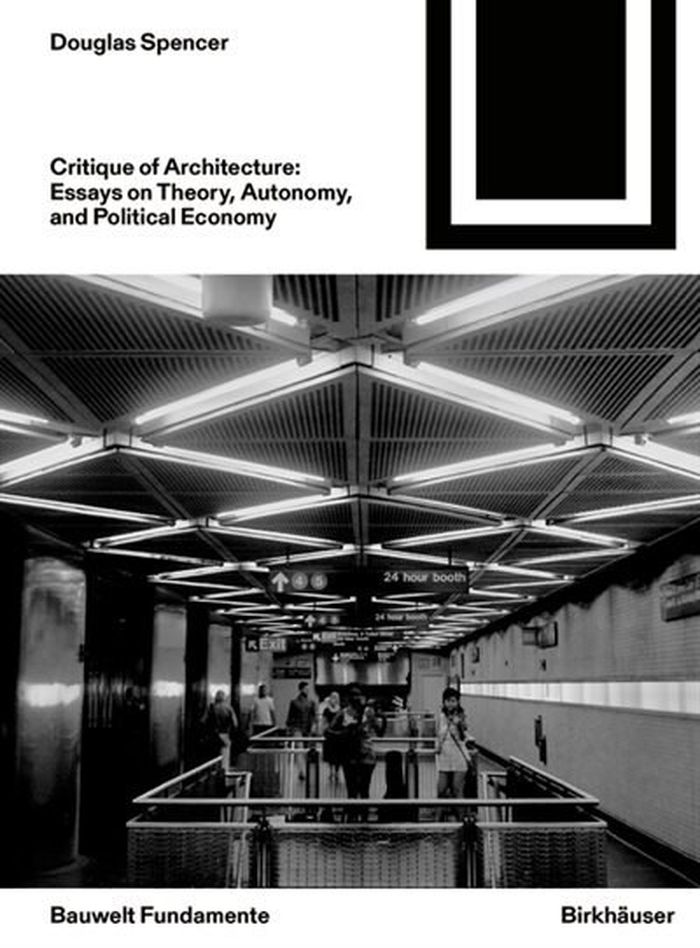
This publication offers a renewed and radical theorization of the relations between capital and architecture. It explicates the theoretical gymnastics through which architecture legitimates its services to neoliberalism, examines the discipline’s production of platforms for happily compliant consumers, and challenges its entrepreneurial self-image. 'Critique of Architecture' also addresses the discourse of autonomy, questioning its capacity to engage effectively with the terms and conditions of capitalism today, analyses the post-political turns of contemporary architecture theory, and reckons with the legacies and limitations of critical theory.
Critique of architecture: essays on theory, autonomy, and political economy
Actions:
Price:
$45.00
(available to order)
Summary:
This publication offers a renewed and radical theorization of the relations between capital and architecture. It explicates the theoretical gymnastics through which architecture legitimates its services to neoliberalism, examines the discipline’s production of platforms for happily compliant consumers, and challenges its entrepreneurial self-image. 'Critique of Architecture' also addresses the discourse of autonomy, questioning its capacity to engage effectively with the terms and conditions of capitalism today, analyses the post-political turns of contemporary architecture theory, and reckons with the legacies and limitations of critical theory.
Form:
books
books
Publication:
January 2021
January 2021
Subject:
Architectural Theory
Architectural Theory
Form:
books
books
Price:
$40.00
(available to order)
Summary:
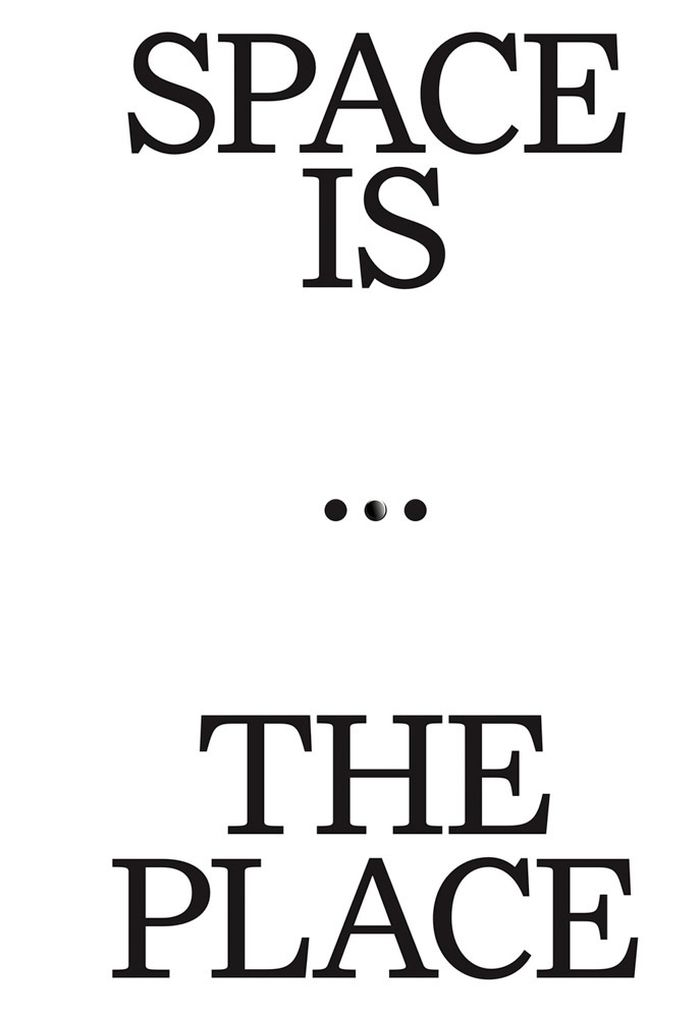
Space and place as topics of playful investigation and serious reflection This book looks at art that relates playfully to architecture, with contributions from artists, architects, designers and scholars including Franz Xaver Baier, Beatriz Colomina, Olafur Eliasson, Andrea Fraser, Bruce Nauman, Tom Sachs and more.
$40.00
(available to order)
Summary:
Space and place as topics of playful investigation and serious reflection This book looks at art that relates playfully to architecture, with contributions from artists, architects, designers and scholars including Franz Xaver Baier, Beatriz Colomina, Olafur Eliasson, Andrea Fraser, Bruce Nauman, Tom Sachs and more.
Title:
Space is the place: current reflections on art and architecture
Actions:
Price:
$40.00
(available to order)
Summary:
Space and place as topics of playful investigation and serious reflection This book looks at art that relates playfully to architecture, with contributions from artists, architects, designers and scholars including Franz Xaver Baier, Beatriz Colomina, Olafur Eliasson, Andrea Fraser, Bruce Nauman, Tom Sachs and more.
Space is the place: current reflections on art and architecture
Actions:
Price:
$40.00
(available to order)
Summary:
Space and place as topics of playful investigation and serious reflection This book looks at art that relates playfully to architecture, with contributions from artists, architects, designers and scholars including Franz Xaver Baier, Beatriz Colomina, Olafur Eliasson, Andrea Fraser, Bruce Nauman, Tom Sachs and more.
Form:
books
books
Publication:
February 2021
February 2021
Subject:
Architectural Theory
Architectural Theory
Form:
books
books

Actions:
Price:
$75.00
(available to order)
Summary:
A room’s acoustic character seems at once the most technical and the most mystical of concerns. Since the early Enlightenment, European architects have systematically endeavored to represent and control the propagation of sound in large interior spaces. Their work has been informed by the science of sound but has also been entangled with debates on style, visualization(...)
$75.00
(available to order)
Summary:
A room’s acoustic character seems at once the most technical and the most mystical of concerns. Since the early Enlightenment, European architects have systematically endeavored to represent and control the propagation of sound in large interior spaces. Their work has been informed by the science of sound but has also been entangled with debates on style, visualization(...)
Title:
Echo's chambers: architecture and the idea of acoustic space
Actions:
Price:
$75.00
(available to order)
Summary:
A room’s acoustic character seems at once the most technical and the most mystical of concerns. Since the early Enlightenment, European architects have systematically endeavored to represent and control the propagation of sound in large interior spaces. Their work has been informed by the science of sound but has also been entangled with debates on style, visualization techniques, performance practices, and the expansion of the listening public. Echo’s Chambers explores how architectural experimentation from the seventeenth through the mid-twentieth centuries laid the groundwork for concepts of acoustic space that are widely embraced in contemporary culture. It focuses on the role of echo and reverberation in the architecture of Pierre Patte, Claude-Nicolas Ledoux, Carl Ferdinand Langhans, and Le Corbusier, as well as the influential acoustic ideas of Athanasius Kircher, Richard Wagner, and Marshall McLuhan. Drawing on interdisciplinary theories of media and auditory culture, Joseph L. Clarke reveals how architecture has impacted the ways we continue to listen to, talk about, and creatively manipulate sound in the physical environment.
Echo's chambers: architecture and the idea of acoustic space
Actions:
Price:
$75.00
(available to order)
Summary:
A room’s acoustic character seems at once the most technical and the most mystical of concerns. Since the early Enlightenment, European architects have systematically endeavored to represent and control the propagation of sound in large interior spaces. Their work has been informed by the science of sound but has also been entangled with debates on style, visualization techniques, performance practices, and the expansion of the listening public. Echo’s Chambers explores how architectural experimentation from the seventeenth through the mid-twentieth centuries laid the groundwork for concepts of acoustic space that are widely embraced in contemporary culture. It focuses on the role of echo and reverberation in the architecture of Pierre Patte, Claude-Nicolas Ledoux, Carl Ferdinand Langhans, and Le Corbusier, as well as the influential acoustic ideas of Athanasius Kircher, Richard Wagner, and Marshall McLuhan. Drawing on interdisciplinary theories of media and auditory culture, Joseph L. Clarke reveals how architecture has impacted the ways we continue to listen to, talk about, and creatively manipulate sound in the physical environment.
Form:
books
books
Publication:
June 2021
June 2021
Subject:
Architectural Theory
Architectural Theory


