


5088 Results
Form:
books
books
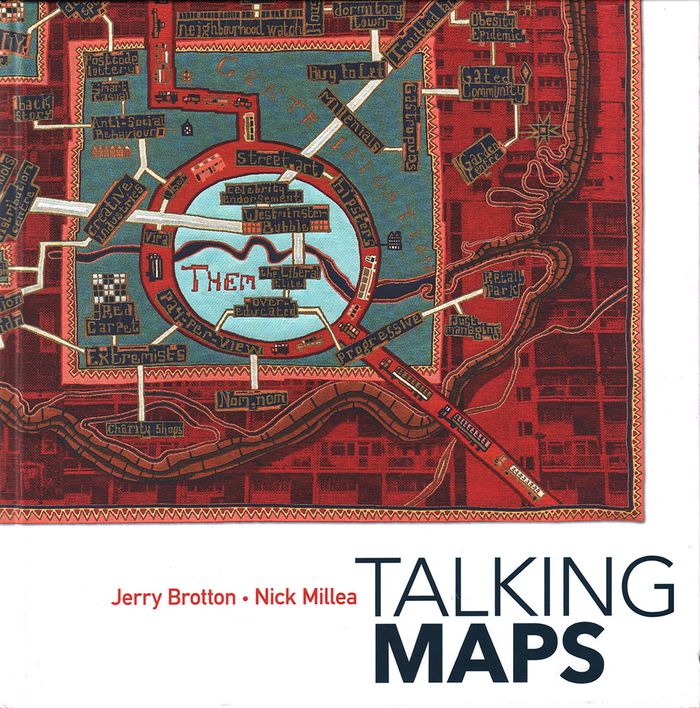
Title:
Talking maps
Talking maps
Actions:
Price:
$74.95
(available to order)
Summary:
Every map tells a story. Some provide a narrative for travelers, explorers, and surveyors or offer a visual account of changes to people’s lives and surroundings, while others tell imaginary tales, transporting us to fictional worlds created by writers and artists. In turn, maps generate more stories, taking users on new journeys in search of knowledge and adventure. By(...)
Subject:
Architectural Plans and Cartography
Architectural Plans and Cartography
Publication:
November 2019
November 2019
Title:
Talking maps
Actions:
Price:
$74.95
(available to order)
Summary:
Every map tells a story. Some provide a narrative for travelers, explorers, and surveyors or offer a visual account of changes to people’s lives and surroundings, while others tell imaginary tales, transporting us to fictional worlds created by writers and artists. In turn, maps generate more stories, taking users on new journeys in search of knowledge and adventure. By telling the stories behind the artifacts and those generated by them, "Talking Maps " reveals how each map is not just a tool for navigation but also a worldly proposal that helps us to understand who we are by describing where we are.
Form:
books
books
Publication:
November 2019
November 2019
Subject:
Architectural Plans and Cartography
Architectural Plans and Cartography
Form:
books
books
Title:
Design and truth
Design and truth
Actions:
Price:
$18.95
(available to order)
Summary:
From the ornate cathedrals of Renaissance Europe to the much-maligned Ford Edsel of the late 1950s, all products of human design communicate much more than their mere intended functions. Design holds both psychological and moral power over us, and these forces may be manipulated, however subtly, to surprising effect. In an argument that touches upon subjects as seemingly(...)
Title:
Design and truth
Actions:
Price:
$18.95
(available to order)
Summary:
From the ornate cathedrals of Renaissance Europe to the much-maligned Ford Edsel of the late 1950s, all products of human design communicate much more than their mere intended functions. Design holds both psychological and moral power over us, and these forces may be manipulated, however subtly, to surprising effect. In an argument that touches upon subjects as seemingly unrelated as the Japanese tea ceremony, Italian mannerist painting, and Thomas Jefferson’s Monticello plantation, Grudin turns his attention to the role of design in our daily lives, focusing especially on how political and economic powers impress themselves on us through the built environment.
Form:
books
books
Publication:
May 2011
May 2011
Subject:
Design Theory
Design Theory
Form:
books
books

Title:
Design and truth
Design and truth
Actions:
Price:
$28.95
(available to order)
Summary:
From the ornate cathedrals of Renaissance Europe to the much-maligned Ford Edsel of the late 1950s, all products of human design communicate much more than their mere intended functions. Design holds both psychological and moral power over us, and these forces may be manipulated, however subtly, to surprising effect. In an argument that touches upon subjects as seemingly(...)
Title:
Design and truth
Actions:
Price:
$28.95
(available to order)
Summary:
From the ornate cathedrals of Renaissance Europe to the much-maligned Ford Edsel of the late 1950s, all products of human design communicate much more than their mere intended functions. Design holds both psychological and moral power over us, and these forces may be manipulated, however subtly, to surprising effect. In an argument that touches upon subjects as seemingly unrelated as the Japanese tea ceremony, Italian mannerist painting, and Thomas Jefferson’s Monticello plantation, Grudin turns his attention to the role of design in our daily lives, focusing especially on how political and economic powers impress themselves on us through the built environment.
Form:
books
books
Publication:
April 2010
April 2010
Subject:
Design Theory
Design Theory
Form:
books
books

Actions:
Price:
$38.95
(available to order)
Summary:
Cities today have become portfolios of investment properties with token patches of green. The cost to live in a fortress-like luxury housing complex in London or Manhattan is so high that most of us can’t afford it. As the masses move to the suburbs, the construction industry responds by churning out clusters of the same barracks-style row houses, ensuring that, there(...)
Title:
Living complex: from zombie city to the New Communal
Actions:
Price:
$38.95
(available to order)
Summary:
Cities today have become portfolios of investment properties with token patches of green. The cost to live in a fortress-like luxury housing complex in London or Manhattan is so high that most of us can’t afford it. As the masses move to the suburbs, the construction industry responds by churning out clusters of the same barracks-style row houses, ensuring that, there too, one can live in utmost privacy and security. But what do these buildings say about us? Do they have anything to do with the way in which most people actually want to live?
Form:
books
books
Publication:
October 2015
October 2015
Subject:
Urban Theory
Urban Theory
Form:
books
books
Title:
Burtynsky : water
Burtynsky : water
Actions:
Price:
$150.00
(available to order)
Summary:
There is no life without water. Burtynsky's new book Water tells us the story of where water comes from, how we use it, distribute and waste it. Often using a bird's-eye perspective, the photographer shows us its remote sources, remarkable ancient step-wells and mass bathing rituals, the transformation of desert into cities with waterfronts on each doorstep, the(...)
Title:
Burtynsky : water
Actions:
Price:
$150.00
(available to order)
Summary:
There is no life without water. Burtynsky's new book Water tells us the story of where water comes from, how we use it, distribute and waste it. Often using a bird's-eye perspective, the photographer shows us its remote sources, remarkable ancient step-wells and mass bathing rituals, the transformation of desert into cities with waterfronts on each doorstep, the compromised landscapes of the American Southwest. Furthermore, Burtynsky explores the infrastructure of water management: the gigantic hydroelectric dams and terraced rice fields in the heart of China, the vast irrigation systems of America's bread basket and the use of aquaculture.
Form:
books
books
Publication:
September 2013
September 2013
Subject:
Photography monographs
Photography monographs
Form:
books
books
Actions:
Price:
$39.99
(available to order)
Summary:
We are living through a global catastrophe. Buildings affect how we feel, moment by moment, day by day. They have the power to lift us up and make us feel awestruck, playful, safe, and inspired, just as they can make us feel alienated and sad. But many of the places where we live, work, learn, and heal have become monotonous and disposable. We’re surrounded by cheap,(...)
Title:
Humanize: A maker's guide to designing our cities
Actions:
Price:
$39.99
(available to order)
Summary:
We are living through a global catastrophe. Buildings affect how we feel, moment by moment, day by day. They have the power to lift us up and make us feel awestruck, playful, safe, and inspired, just as they can make us feel alienated and sad. But many of the places where we live, work, learn, and heal have become monotonous and disposable. We’re surrounded by cheap, boring buildings that make people stressed, sick, and unhappy. In short, much of our world has been crafted in a way that is hostile to human experience. Now, drawing on his experience of the last thirty years in making bold, beautiful objects and buildings, Thomas Heatherwick offers both an informed critique of the inhumanity in most of today’s contemporary building design, and a rousing call for action. Looking through Heatherwick’s eyes, we see familiar landmarks and cityscapes around the world, from London, Paris, Barcelona, Singapore, New York, Vancouver, and beyond, both old and new, famous and obscure, to learn how places can either sap the life out of us—or nourish our senses and our psyche. The time has come, he says, to put emotion back at the heart of the design process, and the reasons to do so could not be more urgent. Design is not superficial: it has an impact upon economics, climate change, our mental and physical wellbeing—even the peace and cohesion of our societies.
Form:
books
books
Publication:
November 2023
November 2023
Subject:
Urban Theory
Urban Theory
Form:
books
books
Actions:
Price:
$39.95
(available to order)
Summary:
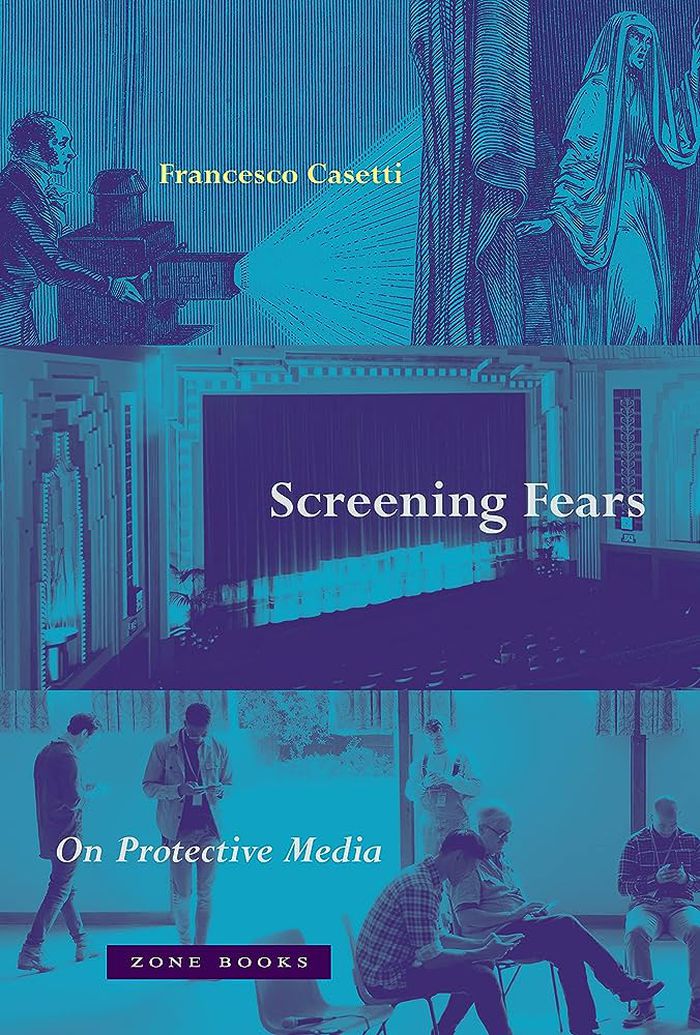
In this contribution to contemporary media studies, acclaimed theorist Francesco Casetti advances a provocative hypothesis: instead of being prostheses that expand or extend our perceptions, modern screen-based media are in fact apparatuses that shelter and protect us from exposure to the world. Rather than bringing us closer to external reality, dominant forms of visual(...)
Title:
Screening fears: On protective media
Actions:
Price:
$39.95
(available to order)
Summary:
In this contribution to contemporary media studies, acclaimed theorist Francesco Casetti advances a provocative hypothesis: instead of being prostheses that expand or extend our perceptions, modern screen-based media are in fact apparatuses that shelter and protect us from exposure to the world. Rather than bringing us closer to external reality, dominant forms of visual media function as barriers or enclosures that defend against the apparent threats and dangers that seem increasingly to surround us. Working with an original historical overview that begins with the Phantasmagoria of the late eighteenth century, then the shared interior spaces of the movie theater in the early to mid-twentieth century, and finally the solitary digital milieus of the present, Casetti traces the outlines of the protective 'bubbles' that disconnect us from our immediate surroundings. To be provided with a shield of immunity to the hazards and uncertainties of the world while experiencing them at a safe remove might seem a positive development. But, he asks, what if these media, instead of providing invulnerability, ensnare individuals in a suffocating enclosure? What if, in their effort to keep reality under control, they exercise a violence equal to that of the dangers they resist? In a dialectical exercise, and through a vivid range of cultural artifacts, ''Screening fears'' traces the emergence of modern protective media and the way they changed our forms of mediation with the world in which we live.
Form:
books
books
Publication:
August 2023
August 2023
Subject:
Critical Theory
Critical Theory
Form:
books
books
Price:
$34.00
(available to order)
Summary:
In November 2022, the first annual Alchemy Lecture took place at York University in Toronto, bringing four deep and agile writers from different geographies and disciplines into vibrant conversation on a topic of urgent relevance: humans and borders. Now, in these pages, that conversation is captured and expanded in insightful, passionate ways. Architect, artist, and(...)
Title:
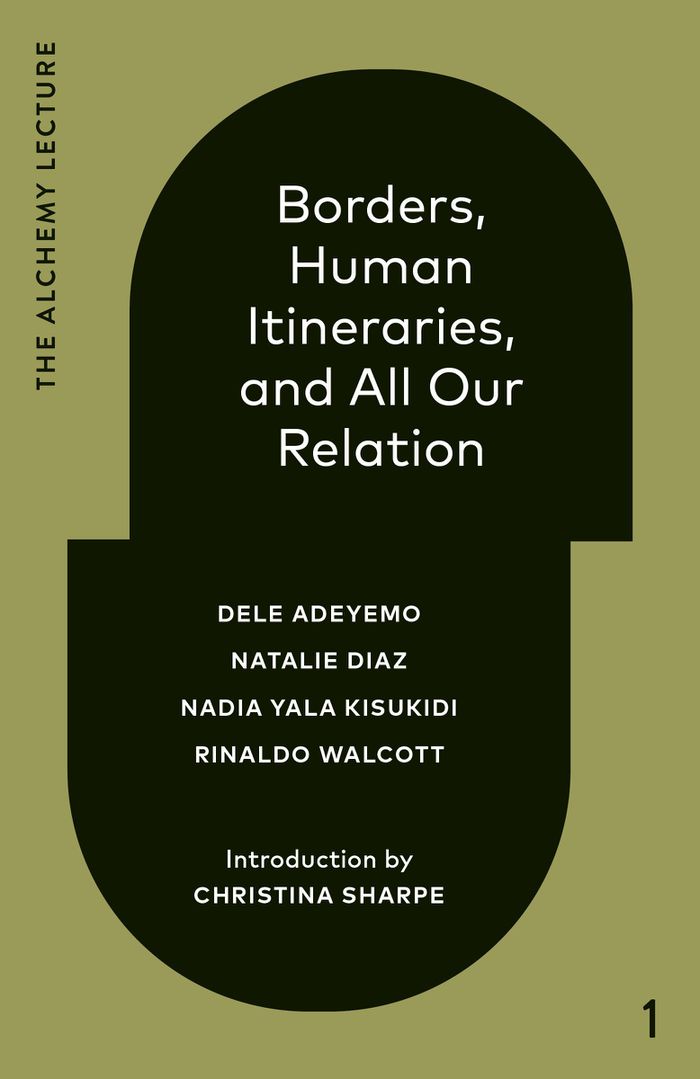
Borders, human itineraries, and all our relation. The alchemy lecture 1
Actions:
Price:
$34.00
(available to order)
Summary:
In November 2022, the first annual Alchemy Lecture took place at York University in Toronto, bringing four deep and agile writers from different geographies and disciplines into vibrant conversation on a topic of urgent relevance: humans and borders. Now, in these pages, that conversation is captured and expanded in insightful, passionate ways. Architect, artist, and urban theorist Dele Adeyemo (UK/Nigeria) calls attention to the complexity of Black infrastructures, questioning how “the environments that surround us condition the possibility of our being.” Poet Natalie Diaz (US/Mojave/Akimel O’otham) writes: “Like story, migration is the sensual movement of knowledge,” and asks, “What is the language we need to live right now?” Philosopher Nadia Yala Kisukidi (France) suggests there is no diasporic life “without the dynamics of fabulation, where we pass down, from generation to generation, the stories of our ancestors who walked barefoot for many months.” And cultural theorist Rinaldo Walcott (Canada) asks us to consider inheritances beyond white supremacist logics: “What might it mean to live a life, if we can’t risk desiring and working towards utopia?”
Form:
books
books
Publication:
October 2023
October 2023
Subject:
Social
Social
Form:
books
books
Title:
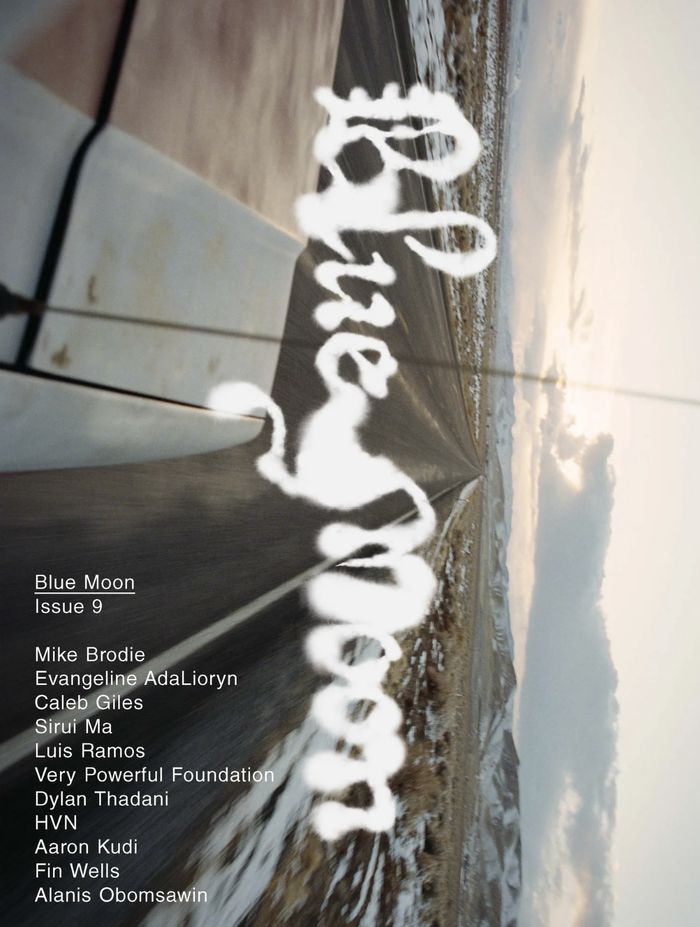
Blue Moon Issue 9
Blue Moon Issue 9
Actions:
Price:
$40.00
(available in store)
Summary:
Since its inception, Blue Moon has focused on investigating mysticism and spirituality in contemporary art. In this issue, these themes surface the most densely to date. In the four interviews, Mike Brodie, Alanis Obomsawin, HVN, and Evangeline AdaLioryn discuss their practices through their own definitions of spiritual experiences and the pathways they walk down. Each(...)
Subject:
Magazines
Magazines
Publication:
October 2025
October 2025
Title:
Blue Moon Issue 9
Actions:
Price:
$40.00
(available in store)
Summary:
Since its inception, Blue Moon has focused on investigating mysticism and spirituality in contemporary art. In this issue, these themes surface the most densely to date. In the four interviews, Mike Brodie, Alanis Obomsawin, HVN, and Evangeline AdaLioryn discuss their practices through their own definitions of spiritual experiences and the pathways they walk down. Each and every one is different, but ties to the unseeable and otherworldly weave throughout. It is poetic to see so many perspectives on what is greater than us, or at times, what seems null and void from the human experience. The feature subjects, Aaron Kudi, Caleb Giles, Sirui Ma, Fin Wells, Dylan Thadani, Luis Ramos, and the Very Powerful Foundation, give us glimpses into their worlds pointing to their positions as seekers, noticers, feelers and helpers as they process their experiences and vulnerably let us in. The 9th issue discusses freedom, faith, perseverance, protest, magic, and a myriad of other subjects formatted in a labyrinth of photo essays, interviews, and features. *Mike Brodie section folds out with 3 full page posters
Form:
books
books
Publication:
October 2025
October 2025
Subject:
Magazines
Magazines
Form:
books
books
Actions:
Price:
$29.95
(available to order)
Summary:
The Cold War was the war that never happened. Nonetheless, it spurred the most significant buildup of military contingency this country has ever known: from the bunkers of Greenbrier, West Virginia, to the "proving grounds" of Nevada, where entire cities were built only to be vaporized. The Cold War was waged on a territory that knew no boundaries but left few traces.(...)
Title:
Survival city : adventures among the ruins of atomic America
Actions:
Price:
$29.95
(available to order)
Summary:
The Cold War was the war that never happened. Nonetheless, it spurred the most significant buildup of military contingency this country has ever known: from the bunkers of Greenbrier, West Virginia, to the "proving grounds" of Nevada, where entire cities were built only to be vaporized. The Cold War was waged on a territory that knew no boundaries but left few traces. In this fascinating--and at turns frightening and comical--travelogue to the hidden battlefields of the Cold War, Tom Vanderbilt travels the Interstate (itself a product of the Cold War) to uncover the sites of Cold War architecture and reflect on their lasting heritage. In the process, Vanderbilt shows us what the Cold War landscape looked like, how architecture tried to adapt to the threat of mass destruction, how cities coped with the knowledge that they were nuclear targets, and finally what remains of the Cold War theater today, both its visible and invisible legacies. Ultimately, Vanderbilt gives us a deep look into our cultural soul, the dreams and fears that drove us for the last half of the 20th century.
Form:
books
books
Publication:
March 2002, New York
March 2002, New York
Subject:
Architectural Theory
Architectural Theory


