


365 Results
Form:
books
books
Actions:
Price:
$99.95
(available to order)
Summary:
Think plastic. Think inflatable PVC chairs and TV tables. It must be the 1960s, when radical furniture designs "popped" next to new art, traditional designs were recast with new materials, and the results were often mixed in one room. One of the boldest decades of design in the twentieth century, this a decade of contradictions in styles that Anne Bony has captured in(...)
$99.95
(available to order)
Summary:
Think plastic. Think inflatable PVC chairs and TV tables. It must be the 1960s, when radical furniture designs "popped" next to new art, traditional designs were recast with new materials, and the results were often mixed in one room. One of the boldest decades of design in the twentieth century, this a decade of contradictions in styles that Anne Bony has captured in(...)
Title:
Furniture & interiors of the 1960s
Actions:
Price:
$99.95
(available to order)
Summary:
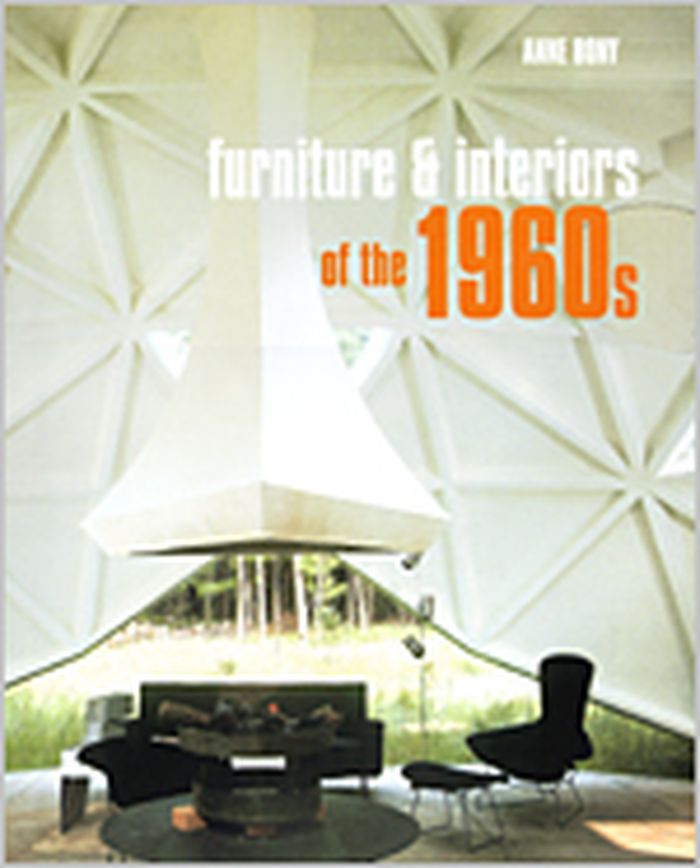
Think plastic. Think inflatable PVC chairs and TV tables. It must be the 1960s, when radical furniture designs "popped" next to new art, traditional designs were recast with new materials, and the results were often mixed in one room. One of the boldest decades of design in the twentieth century, this a decade of contradictions in styles that Anne Bony has captured in this book. "Furniture and interiors of the 1960s" pays homage to the vibrancy and buoyant energy of the decade's design trends and influences in 300 key designs that attract enormous interest and command unprecedented prices today. For the first time, America was leading a design revolution with Wendell Castle's Molar and Castle chairs, Estelle Lavergne's lucite furniture and the experiments of Ray and Charles Eames. Warren Planter, Hans Knoll, Harry Bertoia, Alexander Girard, and Robert Propst were world-ranked designers who pioneered new directions in furnishings and accessories that appeared in trendy homes and offices in Europe and Asia.
Furniture & interiors of the 1960s
Actions:
Price:
$99.95
(available to order)
Summary:
Think plastic. Think inflatable PVC chairs and TV tables. It must be the 1960s, when radical furniture designs "popped" next to new art, traditional designs were recast with new materials, and the results were often mixed in one room. One of the boldest decades of design in the twentieth century, this a decade of contradictions in styles that Anne Bony has captured in this book. "Furniture and interiors of the 1960s" pays homage to the vibrancy and buoyant energy of the decade's design trends and influences in 300 key designs that attract enormous interest and command unprecedented prices today. For the first time, America was leading a design revolution with Wendell Castle's Molar and Castle chairs, Estelle Lavergne's lucite furniture and the experiments of Ray and Charles Eames. Warren Planter, Hans Knoll, Harry Bertoia, Alexander Girard, and Robert Propst were world-ranked designers who pioneered new directions in furnishings and accessories that appeared in trendy homes and offices in Europe and Asia.
Form:
books
books
Publication:
May 2004, Paris
May 2004, Paris
Subject:
Interior Design
Interior Design
Form:
books
books
Actions:
Price:
$30.70
(available to order)
Summary:
'Television: Technology and Cultural Form' was first published in 1974, long before the dawn of multi-channel TV, or the reality and celebrity shows that now pack the schedules. Yet Williams' analysis of television's history, its institutions, programmes and practices, and its future prospects, remains remarkably prescient. Williams stresses the importance of(...)
$30.70
(available to order)
Summary:
'Television: Technology and Cultural Form' was first published in 1974, long before the dawn of multi-channel TV, or the reality and celebrity shows that now pack the schedules. Yet Williams' analysis of television's history, its institutions, programmes and practices, and its future prospects, remains remarkably prescient. Williams stresses the importance of(...)
Title:
Television: technology and cultural form
Actions:
Price:
$30.70
(available to order)
Summary:
'Television: Technology and Cultural Form' was first published in 1974, long before the dawn of multi-channel TV, or the reality and celebrity shows that now pack the schedules. Yet Williams' analysis of television's history, its institutions, programmes and practices, and its future prospects, remains remarkably prescient. Williams stresses the importance of technology in shaping the cultural form of television, while always resisting the determinism of McLuhan's dictum that 'the medium is the message'. If the medium really is the message, Williams asks, what is left for us to do or say? Williams argues that, on the contrary, we as viewers have the power to disturb, disrupt and to distract the otherwise cold logic of history and technology - not just because television is part of the fabric of our daily lives, but because new technologies continue to offer opportunities, momentarily outside the sway of transnational corporations or the grasp of media moguls, for new forms of self and political expression.
Television: technology and cultural form
Actions:
Price:
$30.70
(available to order)
Summary:
'Television: Technology and Cultural Form' was first published in 1974, long before the dawn of multi-channel TV, or the reality and celebrity shows that now pack the schedules. Yet Williams' analysis of television's history, its institutions, programmes and practices, and its future prospects, remains remarkably prescient. Williams stresses the importance of technology in shaping the cultural form of television, while always resisting the determinism of McLuhan's dictum that 'the medium is the message'. If the medium really is the message, Williams asks, what is left for us to do or say? Williams argues that, on the contrary, we as viewers have the power to disturb, disrupt and to distract the otherwise cold logic of history and technology - not just because television is part of the fabric of our daily lives, but because new technologies continue to offer opportunities, momentarily outside the sway of transnational corporations or the grasp of media moguls, for new forms of self and political expression.
Form:
books
books
Publication:
June 2003
June 2003
Subject:
Critical Theory
Critical Theory
Form:
books
books
Actions:
Price:
$45.95
(available to order)
Summary:
Cookery has never been so high on the agenda of Western popular culture. And yet the endlessly-multiplying TV shows, the obsessive interest in the provenance of ingredients, and the celebration of ‘radical’ experiments in gastronomy, tell us little about the nature of the culinary. Is it possible to maintain that cookery has a philosophical pertinence without merely(...)
$45.95
(available to order)
Summary:
Cookery has never been so high on the agenda of Western popular culture. And yet the endlessly-multiplying TV shows, the obsessive interest in the provenance of ingredients, and the celebration of ‘radical’ experiments in gastronomy, tell us little about the nature of the culinary. Is it possible to maintain that cookery has a philosophical pertinence without merely(...)
Title:
Collapse: philosophical research and development 2012: culinary materialism, volume VII
Actions:
Price:
$45.95
(available to order)
Summary:
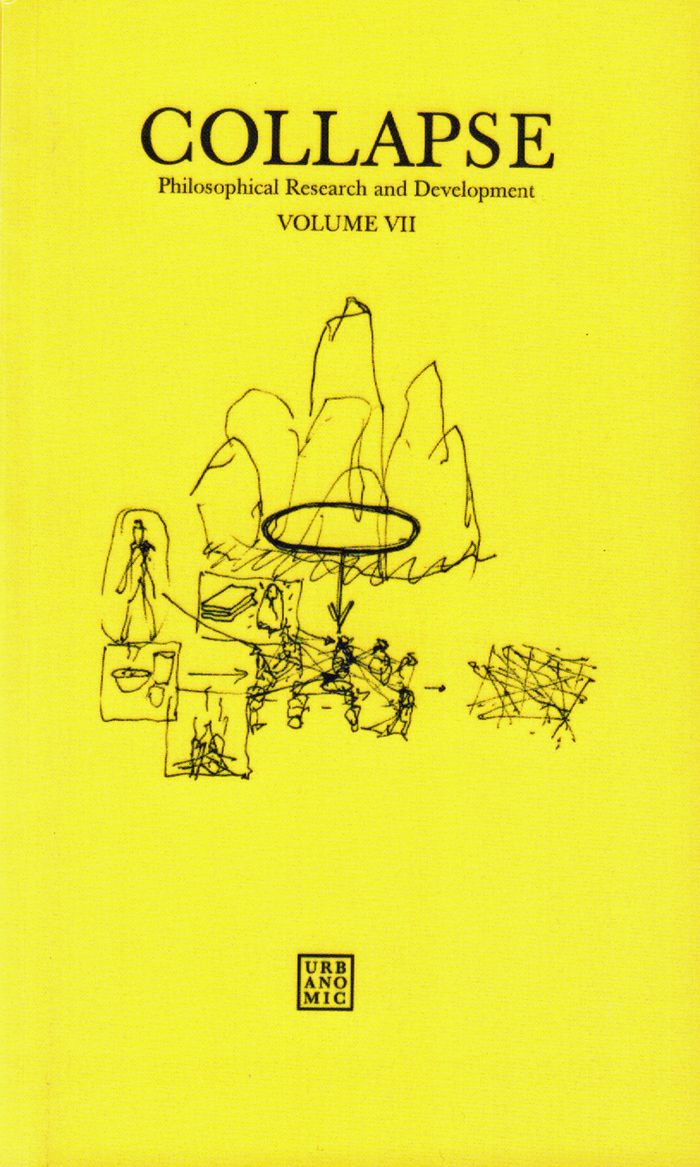
Cookery has never been so high on the agenda of Western popular culture. And yet the endlessly-multiplying TV shows, the obsessive interest in the provenance of ingredients, and the celebration of ‘radical’ experiments in gastronomy, tell us little about the nature of the culinary. Is it possible to maintain that cookery has a philosophical pertinence without merely appending philosophy to our burgeoning gastroculture? How might the everyday sense of the culinary be expanded into a philosophy of ‘culinary materialism’ wherein synthesis, experimentation, and operations of mixing and blending take precedence over analysis, subtraction and axiomatisation? Drawing on resources ranging from anthropology to chemistry, from hermetic alchemy to contemporary mathematics, "Collapse VII: culinary materialism" undertakes a trans-modal experiment in culinary thinking. A wide range of contributors including philosophers, chefs, artists, historians, and synaesthetes examine the cultural, industrial, physiological, alchemical and even cosmic dimensions of cookery, and propose new models of culinary thought for the future.
Collapse: philosophical research and development 2012: culinary materialism, volume VII
Actions:
Price:
$45.95
(available to order)
Summary:
Cookery has never been so high on the agenda of Western popular culture. And yet the endlessly-multiplying TV shows, the obsessive interest in the provenance of ingredients, and the celebration of ‘radical’ experiments in gastronomy, tell us little about the nature of the culinary. Is it possible to maintain that cookery has a philosophical pertinence without merely appending philosophy to our burgeoning gastroculture? How might the everyday sense of the culinary be expanded into a philosophy of ‘culinary materialism’ wherein synthesis, experimentation, and operations of mixing and blending take precedence over analysis, subtraction and axiomatisation? Drawing on resources ranging from anthropology to chemistry, from hermetic alchemy to contemporary mathematics, "Collapse VII: culinary materialism" undertakes a trans-modal experiment in culinary thinking. A wide range of contributors including philosophers, chefs, artists, historians, and synaesthetes examine the cultural, industrial, physiological, alchemical and even cosmic dimensions of cookery, and propose new models of culinary thought for the future.
Form:
books
books
Publication:
December 2012
December 2012
Subject:
Food
Food
Form:
books
books
Actions:
Price:
$16.95
(available to order)
Summary:
In Richard Prince's 1977 work Untitled (couple), difference mixes uncannily with sameness. We can't quite tell whether the shiny couple we see is human or android; their clothing seems curiously out of date. Why do they fascinate us? What is it about their typicality that produces an impression of strangeness? Michael Newman explores Prince's work and his revival of the(...)
$16.95
(available to order)
Summary:
In Richard Prince's 1977 work Untitled (couple), difference mixes uncannily with sameness. We can't quite tell whether the shiny couple we see is human or android; their clothing seems curiously out of date. Why do they fascinate us? What is it about their typicality that produces an impression of strangeness? Michael Newman explores Prince's work and his revival of the(...)
Title:
Richard Prince: untitled (couple)
Actions:
Price:
$16.95
(available to order)
Summary:
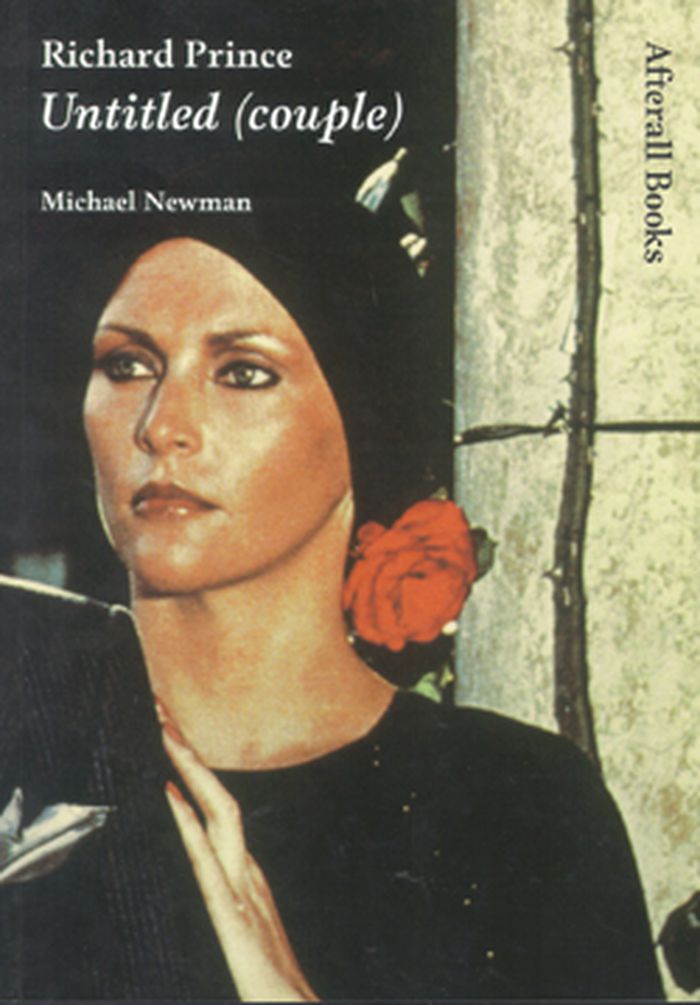
In Richard Prince's 1977 work Untitled (couple), difference mixes uncannily with sameness. We can't quite tell whether the shiny couple we see is human or android; their clothing seems curiously out of date. Why do they fascinate us? What is it about their typicality that produces an impression of strangeness? Michael Newman explores Prince's work and his revival of the image through photography—rephotographed reproduced photographs—after the impasses of conceptualism. Newman examines the relation of Prince's work to images appearing in illustrated magazines, advertising, and television during the artist's formative years and argues that the vintage TV series The Twilight Zone is crucial to understanding Prince's use of images in his work. Michael Newman is Associate Professor of Art History, Theory, and Criticism in the School of the Art Institute of Chicago. He has published in ArtForum, Art in America, Parachute, and other journals and is coeditor of the book Rewriting Conceptual Art.
Richard Prince: untitled (couple)
Actions:
Price:
$16.95
(available to order)
Summary:
In Richard Prince's 1977 work Untitled (couple), difference mixes uncannily with sameness. We can't quite tell whether the shiny couple we see is human or android; their clothing seems curiously out of date. Why do they fascinate us? What is it about their typicality that produces an impression of strangeness? Michael Newman explores Prince's work and his revival of the image through photography—rephotographed reproduced photographs—after the impasses of conceptualism. Newman examines the relation of Prince's work to images appearing in illustrated magazines, advertising, and television during the artist's formative years and argues that the vintage TV series The Twilight Zone is crucial to understanding Prince's use of images in his work. Michael Newman is Associate Professor of Art History, Theory, and Criticism in the School of the Art Institute of Chicago. He has published in ArtForum, Art in America, Parachute, and other journals and is coeditor of the book Rewriting Conceptual Art.
Form:
books
books
Publication:
January 1900, London
January 1900, London
Subject:
Art Theory
Art Theory
Form:
books
books
Price:
$36.95
(available to order)
Summary:
Cities, like the people that live in them, are subject to the attention economy. In ''The city authentic,'' author David A. Banks shows how cities are transforming themselves to appeal to modern desires for authentic urban living through the attention-grabbing tactics of social media influencers and reality-TV stars. Blending insightful analysis with pop culture, this(...)
$36.95
(available to order)
Summary:
Cities, like the people that live in them, are subject to the attention economy. In ''The city authentic,'' author David A. Banks shows how cities are transforming themselves to appeal to modern desires for authentic urban living through the attention-grabbing tactics of social media influencers and reality-TV stars. Blending insightful analysis with pop culture, this(...)
Title:
The city authentic: how the attention economy builds urban America
Actions:
Price:
$36.95
(available to order)
Summary:
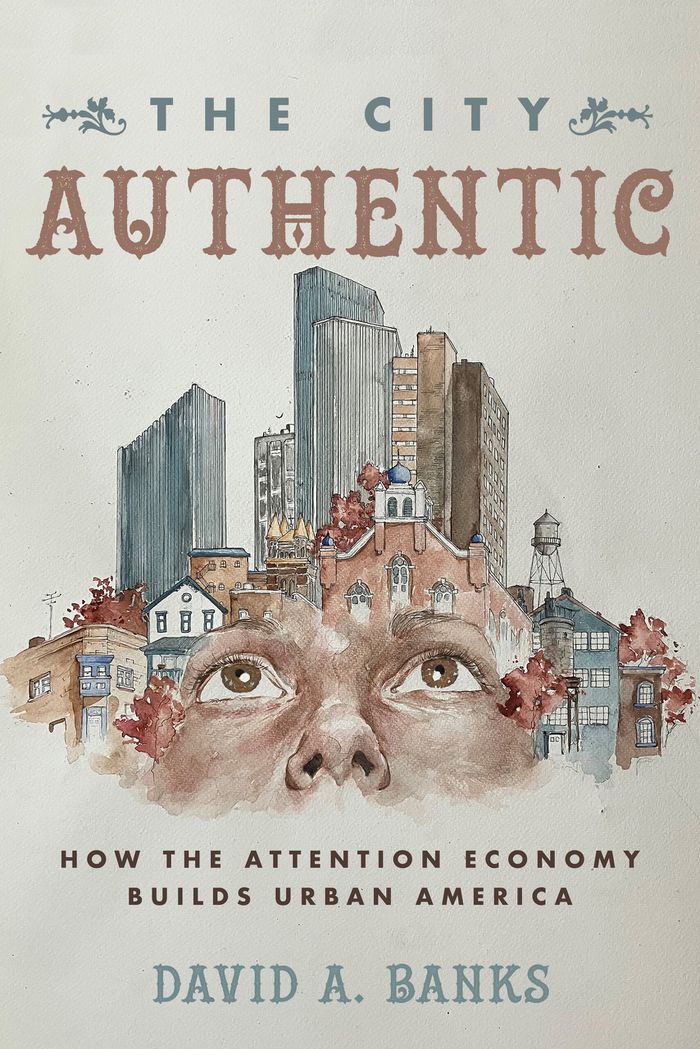
Cities, like the people that live in them, are subject to the attention economy. In ''The city authentic,'' author David A. Banks shows how cities are transforming themselves to appeal to modern desires for authentic urban living through the attention-grabbing tactics of social media influencers and reality-TV stars. Blending insightful analysis with pop culture, this engaging study of New York State’s Capital Region is an accessible glimpse into the social phenomena that influence contemporary cities. The rising economic fortunes of cities in the Rust Belt, Banks argues, are due in part to the markers of its previous decay—which translate into signs of urban authenticity on the internet. ''The city authentic'' unpacks the odd connection between digital media and derelict buildings, the consequences of how we think about industry and place, and the political processes that have enabled a new paradigm in urban planning. Mixing urban sociology with media and cultural studies, Banks offers a lively account of how urban life and development are changing in the twenty-first century.
The city authentic: how the attention economy builds urban America
Actions:
Price:
$36.95
(available to order)
Summary:
Cities, like the people that live in them, are subject to the attention economy. In ''The city authentic,'' author David A. Banks shows how cities are transforming themselves to appeal to modern desires for authentic urban living through the attention-grabbing tactics of social media influencers and reality-TV stars. Blending insightful analysis with pop culture, this engaging study of New York State’s Capital Region is an accessible glimpse into the social phenomena that influence contemporary cities. The rising economic fortunes of cities in the Rust Belt, Banks argues, are due in part to the markers of its previous decay—which translate into signs of urban authenticity on the internet. ''The city authentic'' unpacks the odd connection between digital media and derelict buildings, the consequences of how we think about industry and place, and the political processes that have enabled a new paradigm in urban planning. Mixing urban sociology with media and cultural studies, Banks offers a lively account of how urban life and development are changing in the twenty-first century.
Form:
books
books
Publication:
April 2023
April 2023
Subject:
Urban Theory
Urban Theory
Form:
books
books
Price:
$42.95
(available to order)
Summary:
The technological innovation and unprecedented physical growth of the cold war era permeated American life in every aspect and at every scale. From the creation of the military-industrial complex and the beginnings of suburban sprawl to the production of the ballpoint pen and the TV dinner, the artifacts of the period are as numerous and diverse as they are familiar. Over(...)
$42.95
(available to order)
Summary:
The technological innovation and unprecedented physical growth of the cold war era permeated American life in every aspect and at every scale. From the creation of the military-industrial complex and the beginnings of suburban sprawl to the production of the ballpoint pen and the TV dinner, the artifacts of the period are as numerous and diverse as they are familiar. Over(...)
Subject:
Architectural Theory
Architectural Theory
Publication:
April 2004, New York
April 2004, New York
Title:
Cold war hothouses : inventing postwar culture, from cockpit to Playboy
Actions:
Price:
$42.95
(available to order)
Summary:
The technological innovation and unprecedented physical growth of the cold war era permeated American life in every aspect and at every scale. From the creation of the military-industrial complex and the beginnings of suburban sprawl to the production of the ballpoint pen and the TV dinner, the artifacts of the period are as numerous and diverse as they are familiar. Over the past half-century, our awe at the advances of postwar society has softened to nostalgia, and our affection for its material culture has clouded our memories of the enormous spatial reorganizations and infrastructural transformations that changed American life forever. "Cold War Hot Houses" casts a clear, even playful, eye on this pivotal time in history, examining topics as diverse as the creation of the interstate highway system and the shopping centre, and the domestication of the national parks as well as the production of such seemingly mundane products as the drive-in theater, aluminum foil, and the king-size bed. The result is a vivid snapshot of American culture that still resonates today.
Cold war hothouses : inventing postwar culture, from cockpit to Playboy
Actions:
Price:
$42.95
(available to order)
Summary:
The technological innovation and unprecedented physical growth of the cold war era permeated American life in every aspect and at every scale. From the creation of the military-industrial complex and the beginnings of suburban sprawl to the production of the ballpoint pen and the TV dinner, the artifacts of the period are as numerous and diverse as they are familiar. Over the past half-century, our awe at the advances of postwar society has softened to nostalgia, and our affection for its material culture has clouded our memories of the enormous spatial reorganizations and infrastructural transformations that changed American life forever. "Cold War Hot Houses" casts a clear, even playful, eye on this pivotal time in history, examining topics as diverse as the creation of the interstate highway system and the shopping centre, and the domestication of the national parks as well as the production of such seemingly mundane products as the drive-in theater, aluminum foil, and the king-size bed. The result is a vivid snapshot of American culture that still resonates today.
Form:
books
books
Publication:
April 2004, New York
April 2004, New York
Subject:
Architectural Theory
Architectural Theory
Form:
books
books
Actions:
Price:
$45.00
(available to order)
Summary:
General Idea was founded in Toronto in 1969 by Felix Partz, Jorge Zontal and AA Bronson as a generic identity to free the artists "from the tyranny of individual genius." Under the leadership of their fictitious muse Miss General Idea, and inspired by William Burroughs' conception of the "image virus," the collective interrogated media image culture through now legendary(...)
$45.00
(available to order)
Summary:
General Idea was founded in Toronto in 1969 by Felix Partz, Jorge Zontal and AA Bronson as a generic identity to free the artists "from the tyranny of individual genius." Under the leadership of their fictitious muse Miss General Idea, and inspired by William Burroughs' conception of the "image virus," the collective interrogated media image culture through now legendary(...)
Title:
General idea: haute culture, a retrospective, 1969-1994
Actions:
Price:
$45.00
(available to order)
Summary:
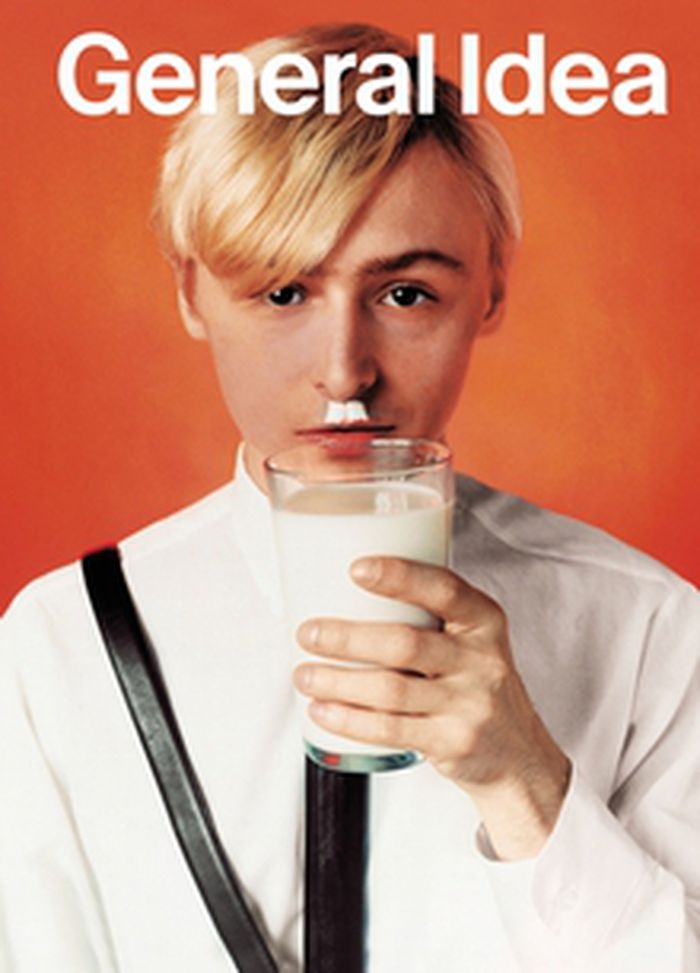
General Idea was founded in Toronto in 1969 by Felix Partz, Jorge Zontal and AA Bronson as a generic identity to free the artists "from the tyranny of individual genius." Under the leadership of their fictitious muse Miss General Idea, and inspired by William Burroughs' conception of the "image virus," the collective interrogated media image culture through now legendary projects like File magazine, as well as paintings, installations, sculptures, mail art, photographs, videos, ephemera, TV programs and even a beauty pageant. General Idea came to an end in 1994, when Partz and Zontal died of AIDS. Today General Idea can be seen to anticipate the later art collectives of the 1970s as well as aspects of Relational Aesthetics in the 1990s. This volume presents an overview of the Canadian collective''s bold mingling of reality and fiction and their frequently transgressive, parodic incursions upon both art and society. Including newly commissioned essays and reprinted texts, this volume is richly illustrated with documents and reproductions of the most significant projects realized by General Idea between 1969 and 1994. Exhibited at ARC/Musée d'art moderne de la Ville de Paris and the Art Gallery of Ontario, Toronto in 2011.
General idea: haute culture, a retrospective, 1969-1994
Actions:
Price:
$45.00
(available to order)
Summary:
General Idea was founded in Toronto in 1969 by Felix Partz, Jorge Zontal and AA Bronson as a generic identity to free the artists "from the tyranny of individual genius." Under the leadership of their fictitious muse Miss General Idea, and inspired by William Burroughs' conception of the "image virus," the collective interrogated media image culture through now legendary projects like File magazine, as well as paintings, installations, sculptures, mail art, photographs, videos, ephemera, TV programs and even a beauty pageant. General Idea came to an end in 1994, when Partz and Zontal died of AIDS. Today General Idea can be seen to anticipate the later art collectives of the 1970s as well as aspects of Relational Aesthetics in the 1990s. This volume presents an overview of the Canadian collective''s bold mingling of reality and fiction and their frequently transgressive, parodic incursions upon both art and society. Including newly commissioned essays and reprinted texts, this volume is richly illustrated with documents and reproductions of the most significant projects realized by General Idea between 1969 and 1994. Exhibited at ARC/Musée d'art moderne de la Ville de Paris and the Art Gallery of Ontario, Toronto in 2011.
Form:
books
books
Publication:
January 2011
January 2011
Subject:
Contemporary Art Monographs
Contemporary Art Monographs
Form:
books
books
Actions:
Price:
$42.95
(available in store)
Summary:
American visual artist and scholar Joseph Grigely (born 1956) here brings together writings, lectures, interviews and documentation of his work spanning 40 years. Deaf since the age of 10, his art and writing have long questioned and made use of various modes of communication—photographs, handwritten notes, lipreading, newspaper headlines, paintings and TV captions—to(...)
$42.95
(available in store)
Summary:
American visual artist and scholar Joseph Grigely (born 1956) here brings together writings, lectures, interviews and documentation of his work spanning 40 years. Deaf since the age of 10, his art and writing have long questioned and made use of various modes of communication—photographs, handwritten notes, lipreading, newspaper headlines, paintings and TV captions—to(...)
Title:
Joseph Grigely: Otherhow: Essays and documents on art and disability, 1985-2024
Actions:
Price:
$42.95
(available in store)
Summary:
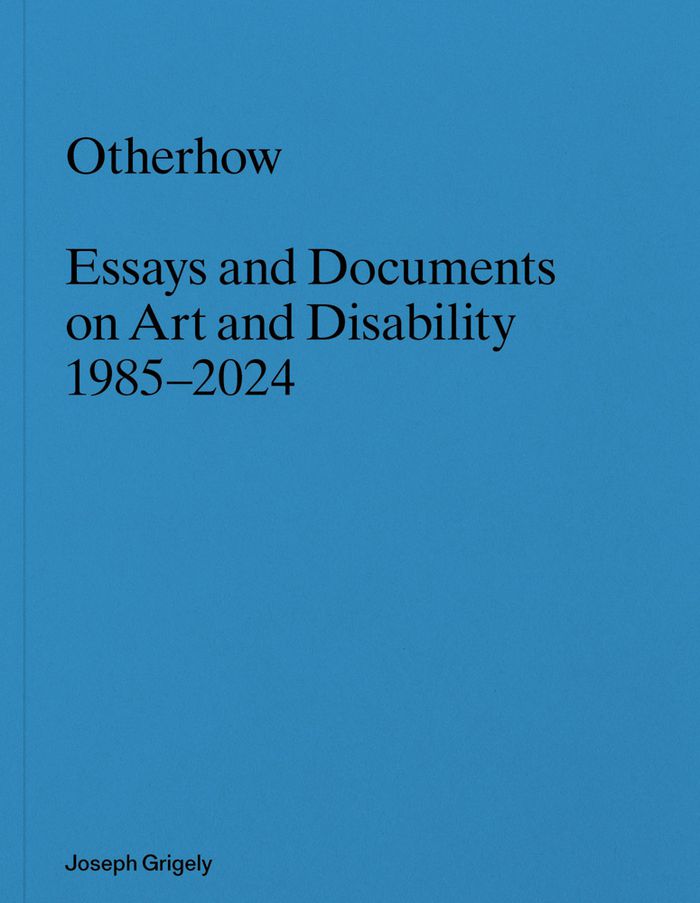
American visual artist and scholar Joseph Grigely (born 1956) here brings together writings, lectures, interviews and documentation of his work spanning 40 years. Deaf since the age of 10, his art and writing have long questioned and made use of various modes of communication—photographs, handwritten notes, lipreading, newspaper headlines, paintings and TV captions—to examine and scrutinize the ableism embedded in cultural and media production. ''Otherhow'' interrogates modes of access and analyzes how issues of accessibility and their resolution provide a benefit to everyone, not just the disabled. Chapters devoted to art, access and advocacy underpin the interconnected nature of these issues. Letters of complaint, faxes and emails, unpublished op-eds, exhibition proposals, statements on equality and access: each provides a glimpse into how Grigely’s work has been shaped by—or constructed from—the "tangled process" of opening access. The book is rounded out by a series of visual inventories: collections of images that document failures of access or, in the case of the obituaries, highlight those who had a disability or were activists working to establish greater access for those with disabilities.
Joseph Grigely: Otherhow: Essays and documents on art and disability, 1985-2024
Actions:
Price:
$42.95
(available in store)
Summary:
American visual artist and scholar Joseph Grigely (born 1956) here brings together writings, lectures, interviews and documentation of his work spanning 40 years. Deaf since the age of 10, his art and writing have long questioned and made use of various modes of communication—photographs, handwritten notes, lipreading, newspaper headlines, paintings and TV captions—to examine and scrutinize the ableism embedded in cultural and media production. ''Otherhow'' interrogates modes of access and analyzes how issues of accessibility and their resolution provide a benefit to everyone, not just the disabled. Chapters devoted to art, access and advocacy underpin the interconnected nature of these issues. Letters of complaint, faxes and emails, unpublished op-eds, exhibition proposals, statements on equality and access: each provides a glimpse into how Grigely’s work has been shaped by—or constructed from—the "tangled process" of opening access. The book is rounded out by a series of visual inventories: collections of images that document failures of access or, in the case of the obituaries, highlight those who had a disability or were activists working to establish greater access for those with disabilities.
Form:
books
books
Publication:
February 2026
February 2026
Subject:
Contemporary Art Monographs
Contemporary Art Monographs
Form:
journals and magazines
journals and magazines
Actions:
Price:
$44.95
(available in store)
Summary:
Walter Pichler foresaw the future nearly 60 years ago. His “TV-Helmet (Portable Living Room)” anticipated technologies akin to today’s cyber glasses. At the time, this vision was nothing short of revolutionary. Today, such concepts are not only a reality but have advanced significantly. Virtual and digital realities are now integral to designing, planning, and(...)
$44.95
(available in store)
Summary:
Walter Pichler foresaw the future nearly 60 years ago. His “TV-Helmet (Portable Living Room)” anticipated technologies akin to today’s cyber glasses. At the time, this vision was nothing short of revolutionary. Today, such concepts are not only a reality but have advanced significantly. Virtual and digital realities are now integral to designing, planning, and(...)
Title:
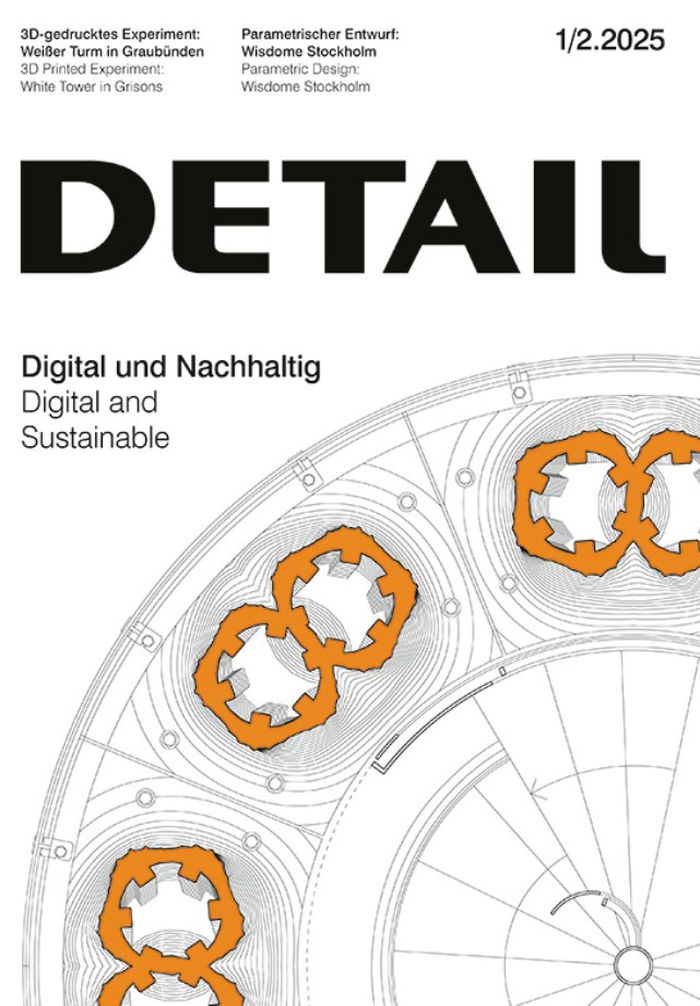
Detail 1/2 2025 : Digital and sustainable
Actions:
Price:
$44.95
(available in store)
Summary:
Walter Pichler foresaw the future nearly 60 years ago. His “TV-Helmet (Portable Living Room)” anticipated technologies akin to today’s cyber glasses. At the time, this vision was nothing short of revolutionary. Today, such concepts are not only a reality but have advanced significantly. Virtual and digital realities are now integral to designing, planning, and constructing spaces – far more than mere devices for experiencing them. Lengthy construction workflows, optimised designs, and the complex coordination of planning, cost control, and project management are increasingly digitalised. We can now program buildings to meet parametric specifications, construct homes using 3D printing, and create detailed 3D models of existing buildings to analyse them before renovation even begins. While landscape has transformed dramatically, digitalisation in architecture is clearly still in its early stages. To begin the year, this issue shines a spotlight on the digital present and future of architecture, exploring how digital tools can enhance sustainability. Our project documentations showcase an array of approaches, from digital material passports to parametric models and BIM applications for existing structures. Experts offer insight on the complexities of planning and construction processes.
Detail 1/2 2025 : Digital and sustainable
Actions:
Price:
$44.95
(available in store)
Summary:
Walter Pichler foresaw the future nearly 60 years ago. His “TV-Helmet (Portable Living Room)” anticipated technologies akin to today’s cyber glasses. At the time, this vision was nothing short of revolutionary. Today, such concepts are not only a reality but have advanced significantly. Virtual and digital realities are now integral to designing, planning, and constructing spaces – far more than mere devices for experiencing them. Lengthy construction workflows, optimised designs, and the complex coordination of planning, cost control, and project management are increasingly digitalised. We can now program buildings to meet parametric specifications, construct homes using 3D printing, and create detailed 3D models of existing buildings to analyse them before renovation even begins. While landscape has transformed dramatically, digitalisation in architecture is clearly still in its early stages. To begin the year, this issue shines a spotlight on the digital present and future of architecture, exploring how digital tools can enhance sustainability. Our project documentations showcase an array of approaches, from digital material passports to parametric models and BIM applications for existing structures. Experts offer insight on the complexities of planning and construction processes.
Form:
journals and magazines
journals and magazines
Publication:
January 2025
January 2025
Subject:
Magazines
Magazines
Form:
books
books

Actions:
Price:
$48.00
(available in store)
Summary:
Centering on a notion of nomadic space, this publication offers the first in-depth overview of the projects, photo archives, and architectural investigations of Sámi architect and artist Joar Nango, and includes a series of essays and conversations with long-time collaborators and discussion partners. Conceived as platforms that consciously create autonomous spaces in(...)
$48.00
(available in store)
Summary:
Centering on a notion of nomadic space, this publication offers the first in-depth overview of the projects, photo archives, and architectural investigations of Sámi architect and artist Joar Nango, and includes a series of essays and conversations with long-time collaborators and discussion partners. Conceived as platforms that consciously create autonomous spaces in(...)
Subject:
Contemporary Art Monographs
Contemporary Art Monographs
Publication:
April 2024
April 2024
Title:
Joar Nango: Girjegumpi, The Sámi Architectural Library
Actions:
Price:
$48.00
(available in store)
Summary:
Centering on a notion of nomadic space, this publication offers the first in-depth overview of the projects, photo archives, and architectural investigations of Sámi architect and artist Joar Nango, and includes a series of essays and conversations with long-time collaborators and discussion partners. Conceived as platforms that consciously create autonomous spaces in which Sámi and indigenous cultures can grow, Nango's projects seek encounters and open processes, developing new forms of expression and alliance with non-Sámi contexts. Often developed in collaboration with practitioners from a range of fields including architecture, art, theory, and crafts, Nango's practice operates between institutional and public spaces. Featured projects include ongoing discursive social platforms such as the mobile Sámi architecture library Girjegumpi, a series of films and conversations titled ''Post-Capitalist Architecture TV'', image archives documenting contemporary expressions of Sámi architectural principles in Northern Scandinavia and beyond, and European Everything, first presented at documenta 14, for which Nango traveled by van along the borders of Europe from his home in Tromsø, Northern Norway to Athens in Greece, mapping the fringe and the excluded of this political and cultural terrain.
Joar Nango: Girjegumpi, The Sámi Architectural Library
Actions:
Price:
$48.00
(available in store)
Summary:
Centering on a notion of nomadic space, this publication offers the first in-depth overview of the projects, photo archives, and architectural investigations of Sámi architect and artist Joar Nango, and includes a series of essays and conversations with long-time collaborators and discussion partners. Conceived as platforms that consciously create autonomous spaces in which Sámi and indigenous cultures can grow, Nango's projects seek encounters and open processes, developing new forms of expression and alliance with non-Sámi contexts. Often developed in collaboration with practitioners from a range of fields including architecture, art, theory, and crafts, Nango's practice operates between institutional and public spaces. Featured projects include ongoing discursive social platforms such as the mobile Sámi architecture library Girjegumpi, a series of films and conversations titled ''Post-Capitalist Architecture TV'', image archives documenting contemporary expressions of Sámi architectural principles in Northern Scandinavia and beyond, and European Everything, first presented at documenta 14, for which Nango traveled by van along the borders of Europe from his home in Tromsø, Northern Norway to Athens in Greece, mapping the fringe and the excluded of this political and cultural terrain.
Form:
books
books
Publication:
April 2024
April 2024
Subject:
Contemporary Art Monographs
Contemporary Art Monographs


