


6245 Results
Form:
textual records
textual records
Actions:
Reference number:
ARCH260011
Description:
Bound proposals labelled ''Permanent Files'': Village Lake Louise, Jericho Beach Recreation, UBC Transportation, Law Courts, Robson Square, Simon Fraser University Ice Skating facility and planning, SFU Student Housing, Systems Studies Vancouver, Urban Development Standards, Vancouver Study report South East quadrant, Vancouver City College, Victoria Inner Harbour Study, Museum of Anthropology, False Creek, West Seattle Freeway design report
ARCH260011
Description:
Bound proposals labelled ''Permanent Files'': Village Lake Louise, Jericho Beach Recreation, UBC Transportation, Law Courts, Robson Square, Simon Fraser University Ice Skating facility and planning, SFU Student Housing, Systems Studies Vancouver, Urban Development Standards, Vancouver Study report South East quadrant, Vancouver City College, Victoria Inner Harbour Study, Museum of Anthropology, False Creek, West Seattle Freeway design report
People:
Date:
1971-1973
1971-1973
Title:
Permanent files for various projects
Actions:
ARCH260011
Description:
Bound proposals labelled ''Permanent Files'': Village Lake Louise, Jericho Beach Recreation, UBC Transportation, Law Courts, Robson Square, Simon Fraser University Ice Skating facility and planning, SFU Student Housing, Systems Studies Vancouver, Urban Development Standards, Vancouver Study report South East quadrant, Vancouver City College, Victoria Inner Harbour Study, Museum of Anthropology, False Creek, West Seattle Freeway design report
Permanent files for various projects
Actions:
ARCH260011
Description:
Bound proposals labelled ''Permanent Files'': Village Lake Louise, Jericho Beach Recreation, UBC Transportation, Law Courts, Robson Square, Simon Fraser University Ice Skating facility and planning, SFU Student Housing, Systems Studies Vancouver, Urban Development Standards, Vancouver Study report South East quadrant, Vancouver City College, Victoria Inner Harbour Study, Museum of Anthropology, False Creek, West Seattle Freeway design report
Form:
textual records
textual records
Date:
1971-1973
1971-1973
People:
Level of archival description:
Project
Project
Title:
Proyecto Alameda
Proyecto Alameda
Actions:
Reference number:
AP142.S1.D239
Description:
File documents an unexecuted project for an office building in Mexico City, Mexico. Aldo Rossi's proposal was part of an urban planning project for Reichmann International that included proposals by Charles Correa, Kuwabara, Payne, McKenna, Blumberg Architects, Legorreta Arquitectos, Maki and Associates, and Carlos G. Mijares Bracho. Material in this file was produced in 1994. File contains conceptual drawings, design development drawings, and presentation drawings. File also contains textual records, including drawings and photographs.
AP142.S1.D239
Description:
File documents an unexecuted project for an office building in Mexico City, Mexico. Aldo Rossi's proposal was part of an urban planning project for Reichmann International that included proposals by Charles Correa, Kuwabara, Payne, McKenna, Blumberg Architects, Legorreta Arquitectos, Maki and Associates, and Carlos G. Mijares Bracho. Material in this file was produced in 1994. File contains conceptual drawings, design development drawings, and presentation drawings. File also contains textual records, including drawings and photographs.
People:
Date:
1994
1994
Title:
Proyecto Alameda
Actions:
AP142.S1.D239
Description:
File documents an unexecuted project for an office building in Mexico City, Mexico. Aldo Rossi's proposal was part of an urban planning project for Reichmann International that included proposals by Charles Correa, Kuwabara, Payne, McKenna, Blumberg Architects, Legorreta Arquitectos, Maki and Associates, and Carlos G. Mijares Bracho. Material in this file was produced in 1994. File contains conceptual drawings, design development drawings, and presentation drawings. File also contains textual records, including drawings and photographs.
Proyecto Alameda
Actions:
AP142.S1.D239
Description:
File documents an unexecuted project for an office building in Mexico City, Mexico. Aldo Rossi's proposal was part of an urban planning project for Reichmann International that included proposals by Charles Correa, Kuwabara, Payne, McKenna, Blumberg Architects, Legorreta Arquitectos, Maki and Associates, and Carlos G. Mijares Bracho. Material in this file was produced in 1994. File contains conceptual drawings, design development drawings, and presentation drawings. File also contains textual records, including drawings and photographs.
Level of archival description:
File 239
File 239
Date:
1994
1994
People:
Form:
events
events
Title:
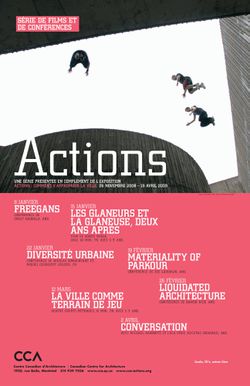
Liquidated Architecture
Liquidated Architecture
Actions:
Description:
American urban planner and designer Damon Rich examines the links among politics, architecture, and history. His research analyses the evolution of the real estate market – foreclosures, mortgages, construction and zoning. He is also a collaborator of the Center for Urban Pedagogy (CUP), an organization based in Brooklyn that studies movements within cities and their(...)
American urban planner and designer Damon Rich examines the links among politics, architecture, and history. His research analyses the evolution of the real estate market – foreclosures, mortgages, construction and zoning. He is also a collaborator of the Center for Urban Pedagogy (CUP), an organization based in Brooklyn that studies movements within cities and their(...)
Location:
Paul Desmarais Theatre
Paul Desmarais Theatre
Date:
26 February 2009
26 February 2009
Title:
Liquidated Architecture
Actions:
Description:
American urban planner and designer Damon Rich examines the links among politics, architecture, and history. His research analyses the evolution of the real estate market – foreclosures, mortgages, construction and zoning. He is also a collaborator of the Center for Urban Pedagogy (CUP), an organization based in Brooklyn that studies movements within cities and their(...)
Liquidated Architecture
Actions:
Description:
American urban planner and designer Damon Rich examines the links among politics, architecture, and history. His research analyses the evolution of the real estate market – foreclosures, mortgages, construction and zoning. He is also a collaborator of the Center for Urban Pedagogy (CUP), an organization based in Brooklyn that studies movements within cities and their(...)
Form:
events
events
Date:
26 February 2009
26 February 2009
Location:
Paul Desmarais Theatre
Paul Desmarais Theatre
Form:
photographs
photographs
Actions:
Reference number:
DR2001:0005:140
Description:
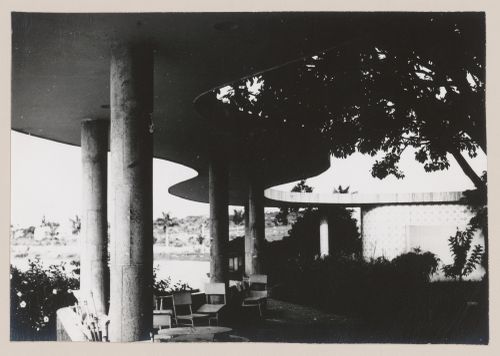
This building is also known as Ball House or Reference Center for Urbanism, Architecture and Design.
DR2001:0005:140
Description:
This building is also known as Ball House or Reference Center for Urbanism, Architecture and Design.
People:
Date:
1953-1954
1953-1954
Title:
View of Casa Do Baile, Pampulha, Belo Horizonte, Brazil
Actions:
DR2001:0005:140
Description:
This building is also known as Ball House or Reference Center for Urbanism, Architecture and Design.
View of Casa Do Baile, Pampulha, Belo Horizonte, Brazil
Actions:
DR2001:0005:140
Description:
This building is also known as Ball House or Reference Center for Urbanism, Architecture and Design.
Form:
photographs
photographs
Date:
1953-1954
1953-1954
People:
Form:
photographs
photographs
Actions:
Reference number:
DR2001:0005:142
Description:
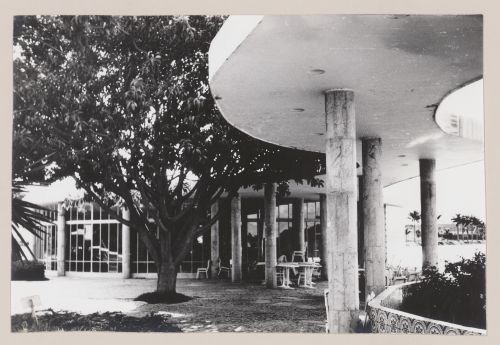
This building is also known as Ball House or Reference Center for Urbanism, Architecture and Design.
DR2001:0005:142
Description:
This building is also known as Ball House or Reference Center for Urbanism, Architecture and Design.
People:
Date:
1953-1954
1953-1954
Title:
View of Casa Do Baile, Pampulha, Belo Horizonte, Brazil
Actions:
DR2001:0005:142
Description:
This building is also known as Ball House or Reference Center for Urbanism, Architecture and Design.
View of Casa Do Baile, Pampulha, Belo Horizonte, Brazil
Actions:
DR2001:0005:142
Description:
This building is also known as Ball House or Reference Center for Urbanism, Architecture and Design.
Form:
photographs
photographs
Date:
1953-1954
1953-1954
People:
Form:
photographs
photographs

Actions:
Reference number:
DR2001:0005:235
Description:
This building is also known as Ball House or Reference Center for Urbanism, Architecture and Design.
DR2001:0005:235
Description:
This building is also known as Ball House or Reference Center for Urbanism, Architecture and Design.
People:
Date:
1943-1954
1943-1954
Title:
View of Casa Do Baile, Pampulha, Belo Horizonte, Brazil
Actions:
DR2001:0005:235
Description:
This building is also known as Ball House or Reference Center for Urbanism, Architecture and Design.
View of Casa Do Baile, Pampulha, Belo Horizonte, Brazil
Actions:
DR2001:0005:235
Description:
This building is also known as Ball House or Reference Center for Urbanism, Architecture and Design.
Form:
photographs
photographs
Date:
1943-1954
1943-1954
People:
Form:
photographs
photographs

Actions:
Reference number:
DR2001:0005:236
Description:
This building is also known as Ball House or Reference Center for Urbanism, Architecture and Design.
DR2001:0005:236
Description:
This building is also known as Ball House or Reference Center for Urbanism, Architecture and Design.
People:
Date:
1953-1954
1953-1954
Title:
View of Casa Do Baile, Pampulha, Belo Horizonte, Brazil
Actions:
DR2001:0005:236
Description:
This building is also known as Ball House or Reference Center for Urbanism, Architecture and Design.
View of Casa Do Baile, Pampulha, Belo Horizonte, Brazil
Actions:
DR2001:0005:236
Description:
This building is also known as Ball House or Reference Center for Urbanism, Architecture and Design.
Form:
photographs
photographs
Date:
1953-1954
1953-1954
People:
Form:
textual records
textual records
Reference number:
ARCH153474
Description:
Correspondence with different foundations (CBS, NEH, NY Community Trust, Graham, etc.) Folder Operating and Development [1981]; - Minutes of the Operating Committee and relating correspondence with different foundations - Exhibitions budgets, March 16, 1981 - Several letters to PDE from foundations (grants received & refused) - Procedures to keep track of donators and destination of received grants - NEH - Audit report, June 4, 1980 - Open Plan Fall 1980, Lecturers Various documents from the Executive Committee Development Committee Report to Executive Committee, April 15, 1981 Folder [Development Committee] - Recommendations for a Development Program for the Institute, Aug. 31, 1981 - Report to the Board of Trustees, 22 Jan. 1981 - Report of the Development Committee to Charles Gwathmey - Correspondence with foundations (grants received and refused) - Status report, Jan. 13, 1981 - Grant Application to FIPSE for Advanced Design Study Program - Correspondence with various foundations - Memo to PDE from C. Gwathmey concerning Plan for Development 1980-1981 - Deadlines for Federal Grants - Folder Development Workbook, November 1980 - Correspondence of Letty H. Simon, Director of Development - Development Priorities - Proposed Budget for FY 81 - List of catalogue purchasers, May 12, 1980 - NEA : Request for Proposals for a Television Series on Architecture, January 1980
ARCH153474
Description:
Correspondence with different foundations (CBS, NEH, NY Community Trust, Graham, etc.) Folder Operating and Development [1981]; - Minutes of the Operating Committee and relating correspondence with different foundations - Exhibitions budgets, March 16, 1981 - Several letters to PDE from foundations (grants received & refused) - Procedures to keep track of donators and destination of received grants - NEH - Audit report, June 4, 1980 - Open Plan Fall 1980, Lecturers Various documents from the Executive Committee Development Committee Report to Executive Committee, April 15, 1981 Folder [Development Committee] - Recommendations for a Development Program for the Institute, Aug. 31, 1981 - Report to the Board of Trustees, 22 Jan. 1981 - Report of the Development Committee to Charles Gwathmey - Correspondence with foundations (grants received and refused) - Status report, Jan. 13, 1981 - Grant Application to FIPSE for Advanced Design Study Program - Correspondence with various foundations - Memo to PDE from C. Gwathmey concerning Plan for Development 1980-1981 - Deadlines for Federal Grants - Folder Development Workbook, November 1980 - Correspondence of Letty H. Simon, Director of Development - Development Priorities - Proposed Budget for FY 81 - List of catalogue purchasers, May 12, 1980 - NEA : Request for Proposals for a Television Series on Architecture, January 1980
People:
Date:
1980-1982
1980-1982
Title:
C. IAUS - Administrative 5. Development. 1980-1982
Actions:
ARCH153474
Description:
Correspondence with different foundations (CBS, NEH, NY Community Trust, Graham, etc.) Folder Operating and Development [1981]; - Minutes of the Operating Committee and relating correspondence with different foundations - Exhibitions budgets, March 16, 1981 - Several letters to PDE from foundations (grants received & refused) - Procedures to keep track of donators and destination of received grants - NEH - Audit report, June 4, 1980 - Open Plan Fall 1980, Lecturers Various documents from the Executive Committee Development Committee Report to Executive Committee, April 15, 1981 Folder [Development Committee] - Recommendations for a Development Program for the Institute, Aug. 31, 1981 - Report to the Board of Trustees, 22 Jan. 1981 - Report of the Development Committee to Charles Gwathmey - Correspondence with foundations (grants received and refused) - Status report, Jan. 13, 1981 - Grant Application to FIPSE for Advanced Design Study Program - Correspondence with various foundations - Memo to PDE from C. Gwathmey concerning Plan for Development 1980-1981 - Deadlines for Federal Grants - Folder Development Workbook, November 1980 - Correspondence of Letty H. Simon, Director of Development - Development Priorities - Proposed Budget for FY 81 - List of catalogue purchasers, May 12, 1980 - NEA : Request for Proposals for a Television Series on Architecture, January 1980
C. IAUS - Administrative 5. Development. 1980-1982
Actions:
ARCH153474
Description:
Correspondence with different foundations (CBS, NEH, NY Community Trust, Graham, etc.) Folder Operating and Development [1981]; - Minutes of the Operating Committee and relating correspondence with different foundations - Exhibitions budgets, March 16, 1981 - Several letters to PDE from foundations (grants received & refused) - Procedures to keep track of donators and destination of received grants - NEH - Audit report, June 4, 1980 - Open Plan Fall 1980, Lecturers Various documents from the Executive Committee Development Committee Report to Executive Committee, April 15, 1981 Folder [Development Committee] - Recommendations for a Development Program for the Institute, Aug. 31, 1981 - Report to the Board of Trustees, 22 Jan. 1981 - Report of the Development Committee to Charles Gwathmey - Correspondence with foundations (grants received and refused) - Status report, Jan. 13, 1981 - Grant Application to FIPSE for Advanced Design Study Program - Correspondence with various foundations - Memo to PDE from C. Gwathmey concerning Plan for Development 1980-1981 - Deadlines for Federal Grants - Folder Development Workbook, November 1980 - Correspondence of Letty H. Simon, Director of Development - Development Priorities - Proposed Budget for FY 81 - List of catalogue purchasers, May 12, 1980 - NEA : Request for Proposals for a Television Series on Architecture, January 1980
Form:
textual records
textual records
Date:
1980-1982
1980-1982
People:
Form:
events
events
Actions:
Keyword(s):
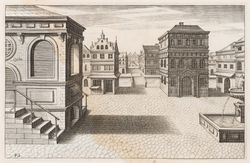
Visiting Scholar, Christopher Heuer, Guidebooks to Chaos, The Grotesque Renaissances, Hans Vredeman de Vries, The City Rehearsed, Urban Design, Architectural Imaginary, Visiting Scholar Seminar
Visiting Scholar, Christopher Heuer, Guidebooks to Chaos, The Grotesque Renaissances, Hans Vredeman de Vries, The City Rehearsed, Urban Design, Architectural Imaginary, Visiting Scholar Seminar
Date:
13 July 2006
13 July 2006
Form:
events
events
Date:
13 July 2006
13 July 2006
Level of archival description:
Project
Project
Reference number:
AP140.S2.SS1.D51
Description:
File documents an unexecuted project for the regional government (wilaya) headquarters in Skikda, Algeria. Material in this file was produced between 1975 and 1978. File contains several conceptual and design development drawings for alternative schemes for site layout and buildings. File also contains photographs of site and of models, and textual records including reprographic copies of a 1977 proposal by Italian architectural firm Gregotti Associati for the same site and urban planning studies by Italian engineering firm IN.CO. S.p.A..
AP140.S2.SS1.D51
Description:
File documents an unexecuted project for the regional government (wilaya) headquarters in Skikda, Algeria. Material in this file was produced between 1975 and 1978. File contains several conceptual and design development drawings for alternative schemes for site layout and buildings. File also contains photographs of site and of models, and textual records including reprographic copies of a 1977 proposal by Italian architectural firm Gregotti Associati for the same site and urban planning studies by Italian engineering firm IN.CO. S.p.A..
People:
Date:
1975-1978
1975-1978
Title:
Administrative Headquarters, Skikda, Algeria
Actions:
AP140.S2.SS1.D51
Description:
File documents an unexecuted project for the regional government (wilaya) headquarters in Skikda, Algeria. Material in this file was produced between 1975 and 1978. File contains several conceptual and design development drawings for alternative schemes for site layout and buildings. File also contains photographs of site and of models, and textual records including reprographic copies of a 1977 proposal by Italian architectural firm Gregotti Associati for the same site and urban planning studies by Italian engineering firm IN.CO. S.p.A..
Administrative Headquarters, Skikda, Algeria
Actions:
AP140.S2.SS1.D51
Description:
File documents an unexecuted project for the regional government (wilaya) headquarters in Skikda, Algeria. Material in this file was produced between 1975 and 1978. File contains several conceptual and design development drawings for alternative schemes for site layout and buildings. File also contains photographs of site and of models, and textual records including reprographic copies of a 1977 proposal by Italian architectural firm Gregotti Associati for the same site and urban planning studies by Italian engineering firm IN.CO. S.p.A..
Level of archival description:
File 51
File 51
Date:
1975-1978
1975-1978
People:


