


354 Results
Form:
books
books
Price:
$26.99
(available to order)
Summary:
In the late 2000s human society entered a new urban epoch in which the majority of human beings live in cities. Whilst the city has historically been viewed as the foundation of democracy and citizenship, the geo-political spaces of modern cities are widely misunderstood despite their key role in shaping contemporary global society. How and why have cities become the(...)
Title:
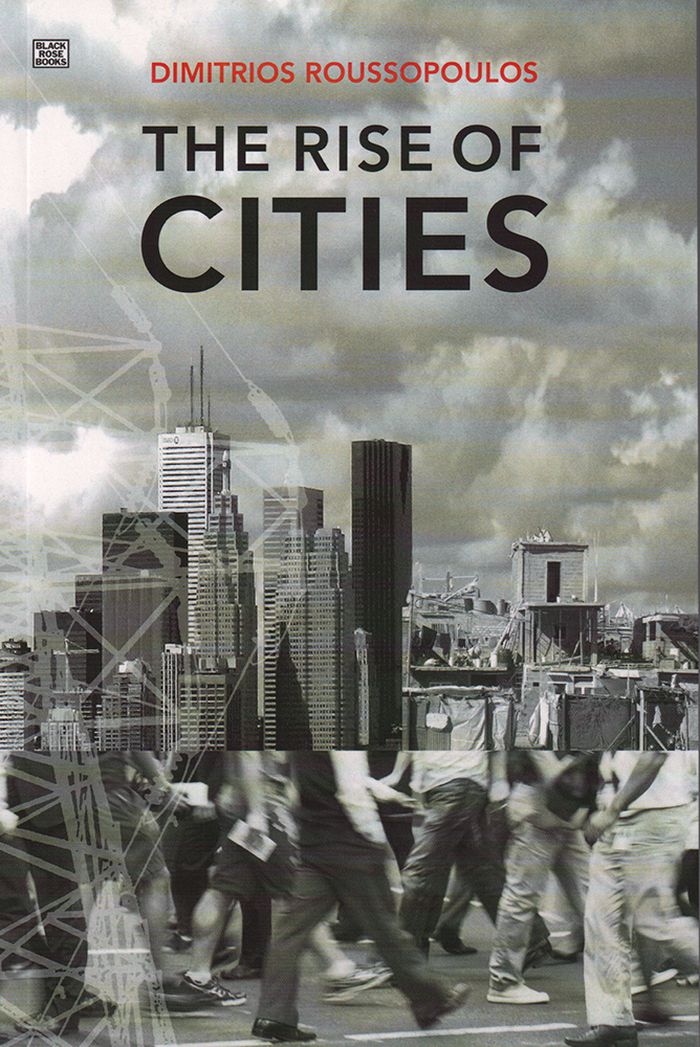
Rise of cities: Montréal, Toronto, Vancouver and other cities
Actions:
Price:
$26.99
(available to order)
Summary:
In the late 2000s human society entered a new urban epoch in which the majority of human beings live in cities. Whilst the city has historically been viewed as the foundation of democracy and citizenship, the geo-political spaces of modern cities are widely misunderstood despite their key role in shaping contemporary global society. How and why have cities become the command centres of the world economy? Does globalization menace cities as we know them? Are cities able to exercise democratic control and strategic choice when multinational corporate competition increasingly limits the importance of place? The Rise of Cities offers intriguing responses to these questions by analyzing how cities coalesce, develop and thrive, and how they can remake themselves for better for worse. Examining key issues such as the parasitic relationships cities have with Nature, the webs of trade and immigration they rely on to survive, and the spatial structure of the contemporary metropolis, the contributors develop a startling outline of cities in crisis and demonstrate why the State has failed, and must fail, to end the urban crisis. These themes are explored through a variety of concrete, real-world examples of the challenges of urban politics: metropolitan governance, urban redevelopment policy, housing problems, grass roots activism and urban planning. In the background looms the spectre of neo-liberal globalization, with the development of influential world cities related to the emergence of modern telecommunications, the growth of multinational corporations and the generation of a world economy with an increased movement of cultural symbols and artifacts across national borders.
Form:
books
books
Publication:
June 2017
June 2017
Subject:
Architecture in Canada
Architecture in Canada
Form:
books
books
Price:
$38.00
(available to order)
Summary:
Fifty years after the British annexed the Punjab and made Lahore its provincial capital, the city—once a prosperous Mughal center that had long since fallen into ruin—was transformed. British and Indian officials had designed a modern, architecturally distinct city center adjacent to the old walled city, administered under new methods of urban governance. In Making(...)
Title:
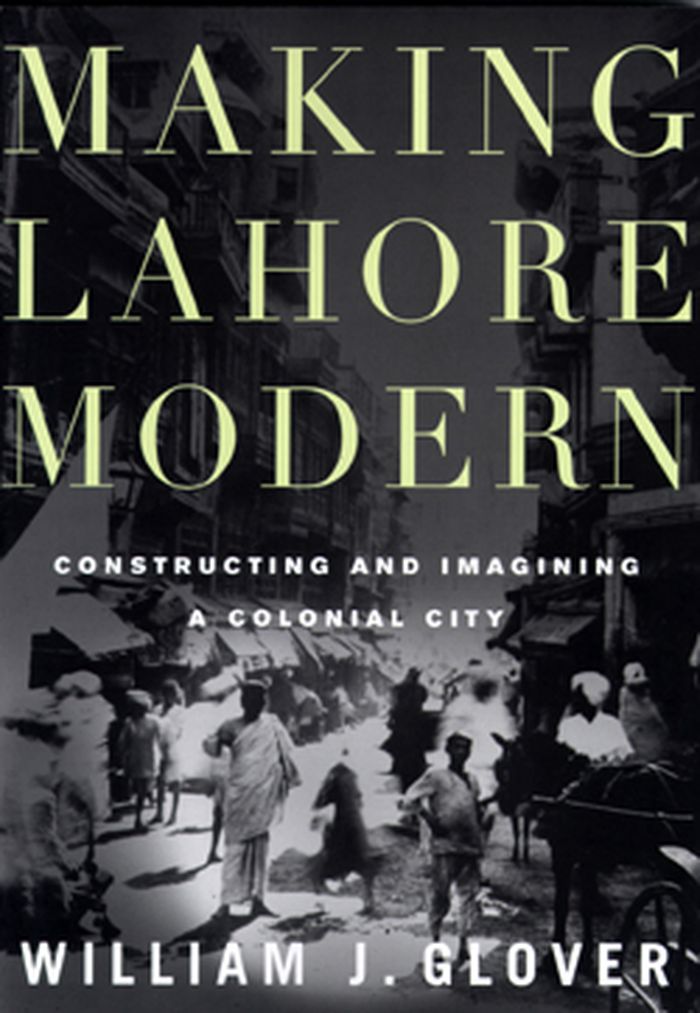
Making Lahore Modern: constructing and imagining a colonial city
Actions:
Price:
$38.00
(available to order)
Summary:
Fifty years after the British annexed the Punjab and made Lahore its provincial capital, the city—once a prosperous Mughal center that had long since fallen into ruin—was transformed. British and Indian officials had designed a modern, architecturally distinct city center adjacent to the old walled city, administered under new methods of urban governance. In Making Lahore Modern, William J. Glover investigates the traditions that shaped colonial Lahore. In particular, he focuses on the conviction that both British and Indian actors who implemented urbanization came to share: that the material fabric of the city could lead to social and moral improvement. This belief in the power of the physical environment to shape individual and collective sentiments, he argues, links the colonial history of Lahore to nineteenth-century urbanization around the world. Glover highlights three aspects of Lahore’s history that show this process unfolding. First, he examines the concepts through which the British understood the Indian city and envisioned its transformation. Second, through a detailed study of new buildings and the adaptation of existing structures, he explores the role of planning, design, and reuse. Finally, he analyzes the changes in urban imagination as evidenced in Indian writings on the city in this period. Throughout, Glover emphasizes that colonial urbanism was not simply imposed; it was a collaborative project between Indian citizens and the British. Offering an in-depth study of a single provincial city, Glover reveals that urban change in colonial India was not a monolithic process and establishes Lahore as a key site for understanding the genealogy of modern global urbanism. William J. Glover is associate professor of architecture at the University of Michigan.
Form:
books
books
Publication:
January 1900, Miineapolis, London
January 1900, Miineapolis, London
Subject:
Urban Theory
Urban Theory
Form:
books
books
Price:
$37.50
(available to order)
Summary:
Although the seemingly apocalyptic scale of the World Trade Center disaster continues to haunt people across the globe, it is only the most recent example of a city tragically wounded. Cities are, in fact, perpetually caught up in cycles of degeneration and renewal. As with the WTC, from time to time these cycles are severely ruptured by a sudden, unpredictable event.(...)
Title:
Wounded cities : destruction and reconstruction in a globalized world
Actions:
Price:
$37.50
(available to order)
Summary:
Although the seemingly apocalyptic scale of the World Trade Center disaster continues to haunt people across the globe, it is only the most recent example of a city tragically wounded. Cities are, in fact, perpetually caught up in cycles of degeneration and renewal. As with the WTC, from time to time these cycles are severely ruptured by a sudden, unpredictable event. In the wake of recent terrorist activities, this timely book explores how urban populations are affected by "wounds" inflicted through violence, civil wars, overbuilding, drug trafficking, and the collapse of infrastructures, as well as "natural" disasters such as earthquakes. Mexico City, New York, Beirut, Belfast, Bangkok and Baghdad are just a few examples of cities riddled with problems that undermine, on a daily basis, the quality of urban life. What does it mean for urban dwellers when the infrastructure of a city collapses – transport, communication grids, heat, light, roads, water, and sanitation? What are the effects of foreign investment and huge construction projects on urban populations and how does this change the "look" and character of a city? How does drug trafficking intersect with class, race, and gender, and what impact does it have on vulnerable urban communities? How do political corruption and mafia networks distort the built environment? Drawing on in-depth case studies from across the globe, this book answers these intriguing questions through its rigorous consideration of changing global and national contexts, social movements, and corrosive urban events. Adopting a "grass roots up" approach, it places emphasis on people’s experiences of uneven development and inequality, their engagement with memory in the face of continual change, and the relevance of political activism to bettering their lives. It is especially attentive to the historical interaction of particular cities with wider political and economic forces, as these interactions have shaped local governance over time. Imagining each city as a "body politic", the authors consider its capacity both to mediate local conflict and to broach the healing of wounds.
Form:
books
books
Publication:
August 2003, Oxford
August 2003, Oxford
Subject:
Urban Theory
Urban Theory
Form:
audio
audio
Description:
1 online resource.
Author:
Subject:
Publication:
[Place of publication not identified] : Lateral Addition, 2018.
[Place of publication not identified] : Lateral Addition, 2018.
Title:
June 21, 2018 : Listening for Southwest Key in San Diego.
Actions:
Description:
1 online resource.
June 21, 2018 : Listening for Southwest Key in San Diego.
Actions:
Description:
1 online resource.
Form:
audio
audio
Publication:
[Place of publication not identified] : Lateral Addition, 2018.
[Place of publication not identified] : Lateral Addition, 2018.
Author:
Subject:


