


13362 Results
Form:
events
events

Title:
Mapping Rural Montréal
Mapping Rural Montréal
Actions:
Description:
On a tour of downtown Montréal, San Francisco-based artist Amy Franceschini shows participants ‘rural’ sites and activities and questions the dichotomy of country and city. Franceschini founded Futurefarmers, a collaborative and experimental studio that addresses ecological issues, as well as the online magazine, Atlas. Inspired by the exhibition Actions: What You Can Do(...)
On a tour of downtown Montréal, San Francisco-based artist Amy Franceschini shows participants ‘rural’ sites and activities and questions the dichotomy of country and city. Franceschini founded Futurefarmers, a collaborative and experimental studio that addresses ecological issues, as well as the online magazine, Atlas. Inspired by the exhibition Actions: What You Can Do(...)
Date:
4 April 2009
4 April 2009
Title:
Mapping Rural Montréal
Actions:
Description:
On a tour of downtown Montréal, San Francisco-based artist Amy Franceschini shows participants ‘rural’ sites and activities and questions the dichotomy of country and city. Franceschini founded Futurefarmers, a collaborative and experimental studio that addresses ecological issues, as well as the online magazine, Atlas. Inspired by the exhibition Actions: What You Can Do(...)
Mapping Rural Montréal
Actions:
Description:
On a tour of downtown Montréal, San Francisco-based artist Amy Franceschini shows participants ‘rural’ sites and activities and questions the dichotomy of country and city. Franceschini founded Futurefarmers, a collaborative and experimental studio that addresses ecological issues, as well as the online magazine, Atlas. Inspired by the exhibition Actions: What You Can Do(...)
Form:
events
events
Date:
4 April 2009
4 April 2009
Form:
events
events
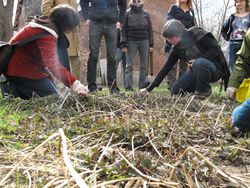
Title:
Foraging in Montréal
Foraging in Montréal
Actions:
Description:
Chicago-based artist and forager Nance Klehm leads a foraging and tea-making expedition. Foraging is the practice of collecting plants that grow wild in urban and rural areas. Participants identify and collect edible plants growing in Montreal and then make tea from the foraged ingredients. Inspired by the exhibition Actions: What You Can Do With the City (2008), the CCA(...)
Chicago-based artist and forager Nance Klehm leads a foraging and tea-making expedition. Foraging is the practice of collecting plants that grow wild in urban and rural areas. Participants identify and collect edible plants growing in Montreal and then make tea from the foraged ingredients. Inspired by the exhibition Actions: What You Can Do With the City (2008), the CCA(...)
Date:
18 April 2009
18 April 2009
Title:
Foraging in Montréal
Actions:
Description:
Chicago-based artist and forager Nance Klehm leads a foraging and tea-making expedition. Foraging is the practice of collecting plants that grow wild in urban and rural areas. Participants identify and collect edible plants growing in Montreal and then make tea from the foraged ingredients. Inspired by the exhibition Actions: What You Can Do With the City (2008), the CCA(...)
Foraging in Montréal
Actions:
Description:
Chicago-based artist and forager Nance Klehm leads a foraging and tea-making expedition. Foraging is the practice of collecting plants that grow wild in urban and rural areas. Participants identify and collect edible plants growing in Montreal and then make tea from the foraged ingredients. Inspired by the exhibition Actions: What You Can Do With the City (2008), the CCA(...)
Form:
events
events
Date:
18 April 2009
18 April 2009
Level of archival description:
Sub-series
Sub-series
Title:
Domestic Commissions
Domestic Commissions
Reference number:
CI001.S1.D2
Description:
Hubert and Charles Rohault de Fleury received domestic commissions for both urban housing -hôtel particuliers and apartment houses- and rural dwellings -châteaux, country houses and estates. Hubert also executed designs for furniture and garden pavilions. Hubert' work is characterized by restrained classical exteriors and luxurious Empire style interiors; both Charles' exteriors and interiors, especially those for Hôtels Sauvage and Soltykoff, reflect the exuberance of the Second Empire. The CCA albums include drawings from all stages of the design process but with an emphasis on design development drawings. Hubert's albums contain cost calculations and estimates, notes and letters. In general, the drawings by Charles are from a more developed phase of design than Hubert's; Hubert's commissions are more varied than Charles'. The austere classicism of Hubert's domestic work reflects the prevailing taste of the day and reveals the strong influence of his teacher, Jean Nicholas Louis Durand. The compostional effect of the houses' façades relies on the shape and rhythm of the fenestration and the geometric division by string courses and occasionally, pilasters. Columns are used infrequently as is decorative stonework. The plans are symmetrical and modular. This approach to design is especially evident in the series of proposals for a country house for comte Treilhard (DR1974:0002:034:001-082) and in a group of unidentified designs for houses (DR1974:0002:035:001-034), all of which illustrate an emphasis on plan in the design process and a distinct approach to the composition of the elevations, both derived from Durand. Hubert's domestic work was also influenced by Palladio (see especially DR1974:0002:038:001-029). The interiors and furniture designed by Hubert are typical of the Empire style (1). The drawings in the CCA collection illustrate the materials, palette and ornamental motifs of the period. The garden structures in Hubert's albums are more fanciful than his houses and are either Rustic, Chinoiserie or classical in style (2). His garden designs follow the contemporary French trend for "jardins anglais" with winding paths and naturalistic placement of the vegetation, sometimes in combination with more formal French gardens (3). One of the most comprehensively documented domestic project by Hubert is the Rohault de Fleury House (12-14 rue d'Aguesseau; 1824). The CCA collection contains an interesting series of preliminary drawings for alternate proposals for this house, a number of highly finished wash drawings (including the interior decorative scheme) for the final scheme (DR1974:0002:011:001-08) and several earlier (ca. 1806) proposals (DR1974:0002:035:001-034). The Domaine de la Vallée album (DR1974:0002:025:001-059) is notable for the range of subject matter included as well as for the insights into the character of a working country estate in the nineteenth century. The proposed modifications encompassed both functional (a bridge, a levee, granaries and stables) and aesthetic improvements, such as ornamental garden temples. The renovation of the house also exhibits both functional and aesthetic improvements. (1) Examples of Hubert's interiors and furniture can be found in albums, DR1974:0002:007:001-068, DR1974:0002:011:001-089, DR1974:0002:025:001-059, DR1974:0002:030:001-065 and DR1974:0002:035:001-034. (2) The best examples of his pavilions are found in album, DR1974:0002:038:001-029 with other examples in albums, DR1974:0002:025:001-059, DR1974:0002:030:001-065 and DR1974:0002:035:001-034. (3) Examples are found in albums, DR1974:0002:035:001-034 and DR1974:0002 :025:001-059. Also of note are drawings, DR1974:0002:007:007 and DR1974:0002:007:068.
CI001.S1.D2
Description:
Hubert and Charles Rohault de Fleury received domestic commissions for both urban housing -hôtel particuliers and apartment houses- and rural dwellings -châteaux, country houses and estates. Hubert also executed designs for furniture and garden pavilions. Hubert' work is characterized by restrained classical exteriors and luxurious Empire style interiors; both Charles' exteriors and interiors, especially those for Hôtels Sauvage and Soltykoff, reflect the exuberance of the Second Empire. The CCA albums include drawings from all stages of the design process but with an emphasis on design development drawings. Hubert's albums contain cost calculations and estimates, notes and letters. In general, the drawings by Charles are from a more developed phase of design than Hubert's; Hubert's commissions are more varied than Charles'. The austere classicism of Hubert's domestic work reflects the prevailing taste of the day and reveals the strong influence of his teacher, Jean Nicholas Louis Durand. The compostional effect of the houses' façades relies on the shape and rhythm of the fenestration and the geometric division by string courses and occasionally, pilasters. Columns are used infrequently as is decorative stonework. The plans are symmetrical and modular. This approach to design is especially evident in the series of proposals for a country house for comte Treilhard (DR1974:0002:034:001-082) and in a group of unidentified designs for houses (DR1974:0002:035:001-034), all of which illustrate an emphasis on plan in the design process and a distinct approach to the composition of the elevations, both derived from Durand. Hubert's domestic work was also influenced by Palladio (see especially DR1974:0002:038:001-029). The interiors and furniture designed by Hubert are typical of the Empire style (1). The drawings in the CCA collection illustrate the materials, palette and ornamental motifs of the period. The garden structures in Hubert's albums are more fanciful than his houses and are either Rustic, Chinoiserie or classical in style (2). His garden designs follow the contemporary French trend for "jardins anglais" with winding paths and naturalistic placement of the vegetation, sometimes in combination with more formal French gardens (3). One of the most comprehensively documented domestic project by Hubert is the Rohault de Fleury House (12-14 rue d'Aguesseau; 1824). The CCA collection contains an interesting series of preliminary drawings for alternate proposals for this house, a number of highly finished wash drawings (including the interior decorative scheme) for the final scheme (DR1974:0002:011:001-08) and several earlier (ca. 1806) proposals (DR1974:0002:035:001-034). The Domaine de la Vallée album (DR1974:0002:025:001-059) is notable for the range of subject matter included as well as for the insights into the character of a working country estate in the nineteenth century. The proposed modifications encompassed both functional (a bridge, a levee, granaries and stables) and aesthetic improvements, such as ornamental garden temples. The renovation of the house also exhibits both functional and aesthetic improvements. (1) Examples of Hubert's interiors and furniture can be found in albums, DR1974:0002:007:001-068, DR1974:0002:011:001-089, DR1974:0002:025:001-059, DR1974:0002:030:001-065 and DR1974:0002:035:001-034. (2) The best examples of his pavilions are found in album, DR1974:0002:038:001-029 with other examples in albums, DR1974:0002:025:001-059, DR1974:0002:030:001-065 and DR1974:0002:035:001-034. (3) Examples are found in albums, DR1974:0002:035:001-034 and DR1974:0002 :025:001-059. Also of note are drawings, DR1974:0002:007:007 and DR1974:0002:007:068.
People:
Date:
1802-[1840]
1802-[1840]
Title:
Domestic Commissions
CI001.S1.D2
Description:
Hubert and Charles Rohault de Fleury received domestic commissions for both urban housing -hôtel particuliers and apartment houses- and rural dwellings -châteaux, country houses and estates. Hubert also executed designs for furniture and garden pavilions. Hubert' work is characterized by restrained classical exteriors and luxurious Empire style interiors; both Charles' exteriors and interiors, especially those for Hôtels Sauvage and Soltykoff, reflect the exuberance of the Second Empire. The CCA albums include drawings from all stages of the design process but with an emphasis on design development drawings. Hubert's albums contain cost calculations and estimates, notes and letters. In general, the drawings by Charles are from a more developed phase of design than Hubert's; Hubert's commissions are more varied than Charles'. The austere classicism of Hubert's domestic work reflects the prevailing taste of the day and reveals the strong influence of his teacher, Jean Nicholas Louis Durand. The compostional effect of the houses' façades relies on the shape and rhythm of the fenestration and the geometric division by string courses and occasionally, pilasters. Columns are used infrequently as is decorative stonework. The plans are symmetrical and modular. This approach to design is especially evident in the series of proposals for a country house for comte Treilhard (DR1974:0002:034:001-082) and in a group of unidentified designs for houses (DR1974:0002:035:001-034), all of which illustrate an emphasis on plan in the design process and a distinct approach to the composition of the elevations, both derived from Durand. Hubert's domestic work was also influenced by Palladio (see especially DR1974:0002:038:001-029). The interiors and furniture designed by Hubert are typical of the Empire style (1). The drawings in the CCA collection illustrate the materials, palette and ornamental motifs of the period. The garden structures in Hubert's albums are more fanciful than his houses and are either Rustic, Chinoiserie or classical in style (2). His garden designs follow the contemporary French trend for "jardins anglais" with winding paths and naturalistic placement of the vegetation, sometimes in combination with more formal French gardens (3). One of the most comprehensively documented domestic project by Hubert is the Rohault de Fleury House (12-14 rue d'Aguesseau; 1824). The CCA collection contains an interesting series of preliminary drawings for alternate proposals for this house, a number of highly finished wash drawings (including the interior decorative scheme) for the final scheme (DR1974:0002:011:001-08) and several earlier (ca. 1806) proposals (DR1974:0002:035:001-034). The Domaine de la Vallée album (DR1974:0002:025:001-059) is notable for the range of subject matter included as well as for the insights into the character of a working country estate in the nineteenth century. The proposed modifications encompassed both functional (a bridge, a levee, granaries and stables) and aesthetic improvements, such as ornamental garden temples. The renovation of the house also exhibits both functional and aesthetic improvements. (1) Examples of Hubert's interiors and furniture can be found in albums, DR1974:0002:007:001-068, DR1974:0002:011:001-089, DR1974:0002:025:001-059, DR1974:0002:030:001-065 and DR1974:0002:035:001-034. (2) The best examples of his pavilions are found in album, DR1974:0002:038:001-029 with other examples in albums, DR1974:0002:025:001-059, DR1974:0002:030:001-065 and DR1974:0002:035:001-034. (3) Examples are found in albums, DR1974:0002:035:001-034 and DR1974:0002 :025:001-059. Also of note are drawings, DR1974:0002:007:007 and DR1974:0002:007:068.
Domestic Commissions
CI001.S1.D2
Description:
Hubert and Charles Rohault de Fleury received domestic commissions for both urban housing -hôtel particuliers and apartment houses- and rural dwellings -châteaux, country houses and estates. Hubert also executed designs for furniture and garden pavilions. Hubert' work is characterized by restrained classical exteriors and luxurious Empire style interiors; both Charles' exteriors and interiors, especially those for Hôtels Sauvage and Soltykoff, reflect the exuberance of the Second Empire. The CCA albums include drawings from all stages of the design process but with an emphasis on design development drawings. Hubert's albums contain cost calculations and estimates, notes and letters. In general, the drawings by Charles are from a more developed phase of design than Hubert's; Hubert's commissions are more varied than Charles'. The austere classicism of Hubert's domestic work reflects the prevailing taste of the day and reveals the strong influence of his teacher, Jean Nicholas Louis Durand. The compostional effect of the houses' façades relies on the shape and rhythm of the fenestration and the geometric division by string courses and occasionally, pilasters. Columns are used infrequently as is decorative stonework. The plans are symmetrical and modular. This approach to design is especially evident in the series of proposals for a country house for comte Treilhard (DR1974:0002:034:001-082) and in a group of unidentified designs for houses (DR1974:0002:035:001-034), all of which illustrate an emphasis on plan in the design process and a distinct approach to the composition of the elevations, both derived from Durand. Hubert's domestic work was also influenced by Palladio (see especially DR1974:0002:038:001-029). The interiors and furniture designed by Hubert are typical of the Empire style (1). The drawings in the CCA collection illustrate the materials, palette and ornamental motifs of the period. The garden structures in Hubert's albums are more fanciful than his houses and are either Rustic, Chinoiserie or classical in style (2). His garden designs follow the contemporary French trend for "jardins anglais" with winding paths and naturalistic placement of the vegetation, sometimes in combination with more formal French gardens (3). One of the most comprehensively documented domestic project by Hubert is the Rohault de Fleury House (12-14 rue d'Aguesseau; 1824). The CCA collection contains an interesting series of preliminary drawings for alternate proposals for this house, a number of highly finished wash drawings (including the interior decorative scheme) for the final scheme (DR1974:0002:011:001-08) and several earlier (ca. 1806) proposals (DR1974:0002:035:001-034). The Domaine de la Vallée album (DR1974:0002:025:001-059) is notable for the range of subject matter included as well as for the insights into the character of a working country estate in the nineteenth century. The proposed modifications encompassed both functional (a bridge, a levee, granaries and stables) and aesthetic improvements, such as ornamental garden temples. The renovation of the house also exhibits both functional and aesthetic improvements. (1) Examples of Hubert's interiors and furniture can be found in albums, DR1974:0002:007:001-068, DR1974:0002:011:001-089, DR1974:0002:025:001-059, DR1974:0002:030:001-065 and DR1974:0002:035:001-034. (2) The best examples of his pavilions are found in album, DR1974:0002:038:001-029 with other examples in albums, DR1974:0002:025:001-059, DR1974:0002:030:001-065 and DR1974:0002:035:001-034. (3) Examples are found in albums, DR1974:0002:035:001-034 and DR1974:0002 :025:001-059. Also of note are drawings, DR1974:0002:007:007 and DR1974:0002:007:068.
Level of archival description:
File 2
File 2
Date:
1802-[1840]
1802-[1840]
People:
Level of archival description:
Sub-series
Sub-series
Reference number:
CI001.S2.D4
Description:
The CCA collection includes albums of drawings for some of Charles Rohault de Fleury's most important public architectural projects, built and unbuilt. They provide valuable insight into his design development process, construction techniques, and flexibility regarding building types and styles, as well as illuminating the larger issues of urban planning and the complex interaction between architect, contractor, and entrepreneur in mid-19th century France. The neo-Moorish Hippodrome National (DR1974:0002:017:001-060) - an ephemeral structure constructed of a wood frame with canvas sheathing- was built adjacent to the Place de l'Étoile in 1845 and destroyed in 1856. The documents and drawings in the album provide a highly detailed and complete overview of the project from the study of historical models to contract drawings. Written documentation, including cost estimates, a contract, daily accounts of construction, entrepreneur's accounts, and correspondence with the principal contractor, is particularly revealing of the working procedures on a large commercial project. In 1855 Charles and Auguste Joseph Pellechet constructed the Chambre des Notaires on the newly transformed Place du Chatelet - the intended centre point of Haussmann's 'Nouveau Paris' (1). The CCA album contains primarily transfer lithographed working and contract drawings signed by the entrepreneurs and/or contractors (DR1974:0002:022:001-021). The plans reflect Charles' sensitive integration of iron and masonry construction, which allowed for abundant fenestration on the side facades, while maintaining the traditional aspects of character and solidity required in a prominent urban building. Charles' approach to the design of more utilitarian structures is indicated in his album of competition drawings for a municipal slaughterhouse submitted to the city of Saint-Germain-en-Laye, 1846-1847 (DR1974:0002:023:001-012). His interpretation of the written programme (included in the album) and the resulting design, is strongly influenced by his father's previous slaughterhouse projects, as well as his own for La Villete, 1835-1836 (see DR1974:0002:014:001-104 in Hubert Rohault de Fleury's Public and Urban Architecture (file CI001.S3.D1)). The pared down Neoclassical style of the slaughterhouse is typical of both Charles and Hubert's utilitarian structures. Charles' largest public urban project outside of Paris was for an unexecuted Hôtel de Prefecture (Departement de la Vienne) and Hôtel de Ville for the city of Poitiers, 1859-1860 (DR1974:0002:020:001-050). The project for the Louis XIIIth style Hotel de Prefecture is fairly complete and includes many working drawings, while the Francis Ist style Hotel de Ville is much less developed and consists primarily of unbound sketches and finished drawings. A site plan indicates that Charles intended the Hôtel de Prefecture and Hôtel de Ville to be located nearly opposite each other and connected by a major thoroughfare. The placement of both structures in the western quarter of the city probably reflects an earlier urban renewal plan proposed by the architects Morandiere et Compaing in 1849. The Hôtel de Prefecture (1864-1868) and Hotel de Ville (1869-1876) were eventually built after designs by Antoine Guerinot, in the same style, and on sites close to those proposed by Charles. Drawings and engravings of antique and contemporary theatres, fountains, honorific monuments, and large public projects by other architects are collected in album DR1974:0002:010:001-048 for reference purposes (some of these may have been collected by his father Hubert). (1) David Van Zanten, "Building Paris: Architectural Institutions and the Transformation of the French Capital, 1830-1870" (Cambridge, Eng.: Cambridge University Press, 1994), p. 235 and pp. 233-241 for the development of the Place du Chatelet.
CI001.S2.D4
Description:
The CCA collection includes albums of drawings for some of Charles Rohault de Fleury's most important public architectural projects, built and unbuilt. They provide valuable insight into his design development process, construction techniques, and flexibility regarding building types and styles, as well as illuminating the larger issues of urban planning and the complex interaction between architect, contractor, and entrepreneur in mid-19th century France. The neo-Moorish Hippodrome National (DR1974:0002:017:001-060) - an ephemeral structure constructed of a wood frame with canvas sheathing- was built adjacent to the Place de l'Étoile in 1845 and destroyed in 1856. The documents and drawings in the album provide a highly detailed and complete overview of the project from the study of historical models to contract drawings. Written documentation, including cost estimates, a contract, daily accounts of construction, entrepreneur's accounts, and correspondence with the principal contractor, is particularly revealing of the working procedures on a large commercial project. In 1855 Charles and Auguste Joseph Pellechet constructed the Chambre des Notaires on the newly transformed Place du Chatelet - the intended centre point of Haussmann's 'Nouveau Paris' (1). The CCA album contains primarily transfer lithographed working and contract drawings signed by the entrepreneurs and/or contractors (DR1974:0002:022:001-021). The plans reflect Charles' sensitive integration of iron and masonry construction, which allowed for abundant fenestration on the side facades, while maintaining the traditional aspects of character and solidity required in a prominent urban building. Charles' approach to the design of more utilitarian structures is indicated in his album of competition drawings for a municipal slaughterhouse submitted to the city of Saint-Germain-en-Laye, 1846-1847 (DR1974:0002:023:001-012). His interpretation of the written programme (included in the album) and the resulting design, is strongly influenced by his father's previous slaughterhouse projects, as well as his own for La Villete, 1835-1836 (see DR1974:0002:014:001-104 in Hubert Rohault de Fleury's Public and Urban Architecture (file CI001.S3.D1)). The pared down Neoclassical style of the slaughterhouse is typical of both Charles and Hubert's utilitarian structures. Charles' largest public urban project outside of Paris was for an unexecuted Hôtel de Prefecture (Departement de la Vienne) and Hôtel de Ville for the city of Poitiers, 1859-1860 (DR1974:0002:020:001-050). The project for the Louis XIIIth style Hotel de Prefecture is fairly complete and includes many working drawings, while the Francis Ist style Hotel de Ville is much less developed and consists primarily of unbound sketches and finished drawings. A site plan indicates that Charles intended the Hôtel de Prefecture and Hôtel de Ville to be located nearly opposite each other and connected by a major thoroughfare. The placement of both structures in the western quarter of the city probably reflects an earlier urban renewal plan proposed by the architects Morandiere et Compaing in 1849. The Hôtel de Prefecture (1864-1868) and Hotel de Ville (1869-1876) were eventually built after designs by Antoine Guerinot, in the same style, and on sites close to those proposed by Charles. Drawings and engravings of antique and contemporary theatres, fountains, honorific monuments, and large public projects by other architects are collected in album DR1974:0002:010:001-048 for reference purposes (some of these may have been collected by his father Hubert). (1) David Van Zanten, "Building Paris: Architectural Institutions and the Transformation of the French Capital, 1830-1870" (Cambridge, Eng.: Cambridge University Press, 1994), p. 235 and pp. 233-241 for the development of the Place du Chatelet.
People:
Date:
[1840-1860]
[1840-1860]
Title:
Public and Urban Architecture
CI001.S2.D4
Description:
The CCA collection includes albums of drawings for some of Charles Rohault de Fleury's most important public architectural projects, built and unbuilt. They provide valuable insight into his design development process, construction techniques, and flexibility regarding building types and styles, as well as illuminating the larger issues of urban planning and the complex interaction between architect, contractor, and entrepreneur in mid-19th century France. The neo-Moorish Hippodrome National (DR1974:0002:017:001-060) - an ephemeral structure constructed of a wood frame with canvas sheathing- was built adjacent to the Place de l'Étoile in 1845 and destroyed in 1856. The documents and drawings in the album provide a highly detailed and complete overview of the project from the study of historical models to contract drawings. Written documentation, including cost estimates, a contract, daily accounts of construction, entrepreneur's accounts, and correspondence with the principal contractor, is particularly revealing of the working procedures on a large commercial project. In 1855 Charles and Auguste Joseph Pellechet constructed the Chambre des Notaires on the newly transformed Place du Chatelet - the intended centre point of Haussmann's 'Nouveau Paris' (1). The CCA album contains primarily transfer lithographed working and contract drawings signed by the entrepreneurs and/or contractors (DR1974:0002:022:001-021). The plans reflect Charles' sensitive integration of iron and masonry construction, which allowed for abundant fenestration on the side facades, while maintaining the traditional aspects of character and solidity required in a prominent urban building. Charles' approach to the design of more utilitarian structures is indicated in his album of competition drawings for a municipal slaughterhouse submitted to the city of Saint-Germain-en-Laye, 1846-1847 (DR1974:0002:023:001-012). His interpretation of the written programme (included in the album) and the resulting design, is strongly influenced by his father's previous slaughterhouse projects, as well as his own for La Villete, 1835-1836 (see DR1974:0002:014:001-104 in Hubert Rohault de Fleury's Public and Urban Architecture (file CI001.S3.D1)). The pared down Neoclassical style of the slaughterhouse is typical of both Charles and Hubert's utilitarian structures. Charles' largest public urban project outside of Paris was for an unexecuted Hôtel de Prefecture (Departement de la Vienne) and Hôtel de Ville for the city of Poitiers, 1859-1860 (DR1974:0002:020:001-050). The project for the Louis XIIIth style Hotel de Prefecture is fairly complete and includes many working drawings, while the Francis Ist style Hotel de Ville is much less developed and consists primarily of unbound sketches and finished drawings. A site plan indicates that Charles intended the Hôtel de Prefecture and Hôtel de Ville to be located nearly opposite each other and connected by a major thoroughfare. The placement of both structures in the western quarter of the city probably reflects an earlier urban renewal plan proposed by the architects Morandiere et Compaing in 1849. The Hôtel de Prefecture (1864-1868) and Hotel de Ville (1869-1876) were eventually built after designs by Antoine Guerinot, in the same style, and on sites close to those proposed by Charles. Drawings and engravings of antique and contemporary theatres, fountains, honorific monuments, and large public projects by other architects are collected in album DR1974:0002:010:001-048 for reference purposes (some of these may have been collected by his father Hubert). (1) David Van Zanten, "Building Paris: Architectural Institutions and the Transformation of the French Capital, 1830-1870" (Cambridge, Eng.: Cambridge University Press, 1994), p. 235 and pp. 233-241 for the development of the Place du Chatelet.
Public and Urban Architecture
CI001.S2.D4
Description:
The CCA collection includes albums of drawings for some of Charles Rohault de Fleury's most important public architectural projects, built and unbuilt. They provide valuable insight into his design development process, construction techniques, and flexibility regarding building types and styles, as well as illuminating the larger issues of urban planning and the complex interaction between architect, contractor, and entrepreneur in mid-19th century France. The neo-Moorish Hippodrome National (DR1974:0002:017:001-060) - an ephemeral structure constructed of a wood frame with canvas sheathing- was built adjacent to the Place de l'Étoile in 1845 and destroyed in 1856. The documents and drawings in the album provide a highly detailed and complete overview of the project from the study of historical models to contract drawings. Written documentation, including cost estimates, a contract, daily accounts of construction, entrepreneur's accounts, and correspondence with the principal contractor, is particularly revealing of the working procedures on a large commercial project. In 1855 Charles and Auguste Joseph Pellechet constructed the Chambre des Notaires on the newly transformed Place du Chatelet - the intended centre point of Haussmann's 'Nouveau Paris' (1). The CCA album contains primarily transfer lithographed working and contract drawings signed by the entrepreneurs and/or contractors (DR1974:0002:022:001-021). The plans reflect Charles' sensitive integration of iron and masonry construction, which allowed for abundant fenestration on the side facades, while maintaining the traditional aspects of character and solidity required in a prominent urban building. Charles' approach to the design of more utilitarian structures is indicated in his album of competition drawings for a municipal slaughterhouse submitted to the city of Saint-Germain-en-Laye, 1846-1847 (DR1974:0002:023:001-012). His interpretation of the written programme (included in the album) and the resulting design, is strongly influenced by his father's previous slaughterhouse projects, as well as his own for La Villete, 1835-1836 (see DR1974:0002:014:001-104 in Hubert Rohault de Fleury's Public and Urban Architecture (file CI001.S3.D1)). The pared down Neoclassical style of the slaughterhouse is typical of both Charles and Hubert's utilitarian structures. Charles' largest public urban project outside of Paris was for an unexecuted Hôtel de Prefecture (Departement de la Vienne) and Hôtel de Ville for the city of Poitiers, 1859-1860 (DR1974:0002:020:001-050). The project for the Louis XIIIth style Hotel de Prefecture is fairly complete and includes many working drawings, while the Francis Ist style Hotel de Ville is much less developed and consists primarily of unbound sketches and finished drawings. A site plan indicates that Charles intended the Hôtel de Prefecture and Hôtel de Ville to be located nearly opposite each other and connected by a major thoroughfare. The placement of both structures in the western quarter of the city probably reflects an earlier urban renewal plan proposed by the architects Morandiere et Compaing in 1849. The Hôtel de Prefecture (1864-1868) and Hotel de Ville (1869-1876) were eventually built after designs by Antoine Guerinot, in the same style, and on sites close to those proposed by Charles. Drawings and engravings of antique and contemporary theatres, fountains, honorific monuments, and large public projects by other architects are collected in album DR1974:0002:010:001-048 for reference purposes (some of these may have been collected by his father Hubert). (1) David Van Zanten, "Building Paris: Architectural Institutions and the Transformation of the French Capital, 1830-1870" (Cambridge, Eng.: Cambridge University Press, 1994), p. 235 and pp. 233-241 for the development of the Place du Chatelet.
Level of archival description:
File 4
File 4
Date:
[1840-1860]
[1840-1860]
People:
Form:
events
events
Actions:
Description:
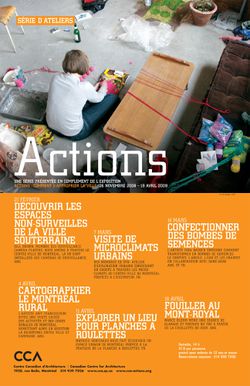
Bill Brown leads participants on a guided tour through Montréal’s underground city, pointing out the locations of surveillance cameras and discussing the role of surveillance in public space. Brown is a member of Surveillance Camera Players, a New York City-based group that maps surveillance cameras in urban spaces. In conjunction with the exhibition Actions: What You Can(...)
Bill Brown leads participants on a guided tour through Montréal’s underground city, pointing out the locations of surveillance cameras and discussing the role of surveillance in public space. Brown is a member of Surveillance Camera Players, a New York City-based group that maps surveillance cameras in urban spaces. In conjunction with the exhibition Actions: What You Can(...)
Location:
Complexe Desjardins
Complexe Desjardins
Date:
21 February 2009
21 February 2009
Title:
Discovering the Unmonitored Underground City
Actions:
Description:
Bill Brown leads participants on a guided tour through Montréal’s underground city, pointing out the locations of surveillance cameras and discussing the role of surveillance in public space. Brown is a member of Surveillance Camera Players, a New York City-based group that maps surveillance cameras in urban spaces. In conjunction with the exhibition Actions: What You Can(...)
Discovering the Unmonitored Underground City
Actions:
Description:
Bill Brown leads participants on a guided tour through Montréal’s underground city, pointing out the locations of surveillance cameras and discussing the role of surveillance in public space. Brown is a member of Surveillance Camera Players, a New York City-based group that maps surveillance cameras in urban spaces. In conjunction with the exhibition Actions: What You Can(...)
Form:
events
events
Date:
21 February 2009
21 February 2009
Location:
Complexe Desjardins
Complexe Desjardins
Form:
events
events
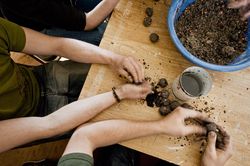
Title:
Making Seed Bombs
Making Seed Bombs
Actions:
Description:
Montréal-based artist Gina Badger shows workshop participants how to make seed-bombs – balls of dirt, clay, water, and seeds that can be used to start gardens in the city. The workshop is presented in collaboration with DARE-DARE (Centre de diffusion d’art multidisciplinaire de Montréal). In conjunction with the exhibition Actions: What You Can Do With the City (2008),(...)
Montréal-based artist Gina Badger shows workshop participants how to make seed-bombs – balls of dirt, clay, water, and seeds that can be used to start gardens in the city. The workshop is presented in collaboration with DARE-DARE (Centre de diffusion d’art multidisciplinaire de Montréal). In conjunction with the exhibition Actions: What You Can Do With the City (2008),(...)
Date:
14 March 2009
14 March 2009
Title:
Making Seed Bombs
Actions:
Description:
Montréal-based artist Gina Badger shows workshop participants how to make seed-bombs – balls of dirt, clay, water, and seeds that can be used to start gardens in the city. The workshop is presented in collaboration with DARE-DARE (Centre de diffusion d’art multidisciplinaire de Montréal). In conjunction with the exhibition Actions: What You Can Do With the City (2008),(...)
Making Seed Bombs
Actions:
Description:
Montréal-based artist Gina Badger shows workshop participants how to make seed-bombs – balls of dirt, clay, water, and seeds that can be used to start gardens in the city. The workshop is presented in collaboration with DARE-DARE (Centre de diffusion d’art multidisciplinaire de Montréal). In conjunction with the exhibition Actions: What You Can Do With the City (2008),(...)
Form:
events
events
Date:
14 March 2009
14 March 2009
Form:
exhibitions
exhibitions
Actions:
Description:
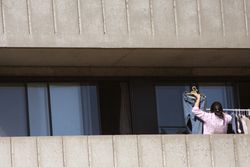
An Atlas. A Bricolage. A Compendium of different elements and strategies for understanding the city. ABC : MTL is an urban abecedary and open-source initiative that maps contemporary Montreal in a diversity of ways and media. Over ninety contributions including photography, music videos, sculptures and installations, drawings, models, workshops, lectures, and performances(...)
An Atlas. A Bricolage. A Compendium of different elements and strategies for understanding the city. ABC : MTL is an urban abecedary and open-source initiative that maps contemporary Montreal in a diversity of ways and media. Over ninety contributions including photography, music videos, sculptures and installations, drawings, models, workshops, lectures, and performances(...)
Location:
Main galleries
Main galleries
Date:
13 November 2012 to 31 March 2013
13 November 2012 to 31 March 2013
Title:
ABC : MTL – A Self-Portrait of Montréal
Actions:
Description:
An Atlas. A Bricolage. A Compendium of different elements and strategies for understanding the city. ABC : MTL is an urban abecedary and open-source initiative that maps contemporary Montreal in a diversity of ways and media. Over ninety contributions including photography, music videos, sculptures and installations, drawings, models, workshops, lectures, and performances(...)
ABC : MTL – A Self-Portrait of Montréal
Actions:
Description:
An Atlas. A Bricolage. A Compendium of different elements and strategies for understanding the city. ABC : MTL is an urban abecedary and open-source initiative that maps contemporary Montreal in a diversity of ways and media. Over ninety contributions including photography, music videos, sculptures and installations, drawings, models, workshops, lectures, and performances(...)
Form:
exhibitions
exhibitions
Date:
13 November 2012 to
31 March 2013
13 November 2012 to
31 March 2013
Location:
Main galleries
Main galleries
Form:
exhibitions
exhibitions
Title:
Speed Limits
Speed Limits
Actions:
Description:
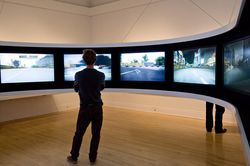
Speed Limits addresses the pivotal role played by speed in modern life: from art to architecture and urbanism to graphics and design to economics to the material culture of the eras of industry and information. It marks the centenary of the foundation of the Italian Futurist movement, whose inaugural manifesto famously proclaimed “that the world’s magnificence has been(...)
Speed Limits addresses the pivotal role played by speed in modern life: from art to architecture and urbanism to graphics and design to economics to the material culture of the eras of industry and information. It marks the centenary of the foundation of the Italian Futurist movement, whose inaugural manifesto famously proclaimed “that the world’s magnificence has been(...)
Location:
Main galleries
Main galleries
Date:
20 May 2009 to 8 November 2009
20 May 2009 to 8 November 2009
Title:
Speed Limits
Actions:
Description:
Speed Limits addresses the pivotal role played by speed in modern life: from art to architecture and urbanism to graphics and design to economics to the material culture of the eras of industry and information. It marks the centenary of the foundation of the Italian Futurist movement, whose inaugural manifesto famously proclaimed “that the world’s magnificence has been(...)
Speed Limits
Actions:
Description:
Speed Limits addresses the pivotal role played by speed in modern life: from art to architecture and urbanism to graphics and design to economics to the material culture of the eras of industry and information. It marks the centenary of the foundation of the Italian Futurist movement, whose inaugural manifesto famously proclaimed “that the world’s magnificence has been(...)
Form:
exhibitions
exhibitions
Date:
20 May 2009 to
8 November 2009
20 May 2009 to
8 November 2009
Location:
Main galleries
Main galleries
Form:
events
events
Description:
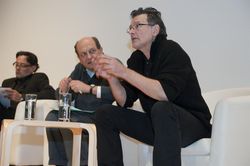
A conversation between Jean-Philippe Vassal of Lacaton Vassal architects, Paris, France, and Giancarlo Mazzanti of Mazzanti Arquitectos, Bogotá, Colombia, moderated by CCA Director and Chief Curator Mirko Zardini. The 2011 edition considers the role of architectural interventions that address social issues through projects of various scales and typologies. Urgency series(...)
A conversation between Jean-Philippe Vassal of Lacaton Vassal architects, Paris, France, and Giancarlo Mazzanti of Mazzanti Arquitectos, Bogotá, Colombia, moderated by CCA Director and Chief Curator Mirko Zardini. The 2011 edition considers the role of architectural interventions that address social issues through projects of various scales and typologies. Urgency series(...)
Date:
17 November 2011
17 November 2011
Title:
Urgency 2011: Jean-Philippe Vassal and Giancarlo Mazzanti
Actions:
Description:
A conversation between Jean-Philippe Vassal of Lacaton Vassal architects, Paris, France, and Giancarlo Mazzanti of Mazzanti Arquitectos, Bogotá, Colombia, moderated by CCA Director and Chief Curator Mirko Zardini. The 2011 edition considers the role of architectural interventions that address social issues through projects of various scales and typologies. Urgency series(...)
Urgency 2011: Jean-Philippe Vassal and Giancarlo Mazzanti
Actions:
Description:
A conversation between Jean-Philippe Vassal of Lacaton Vassal architects, Paris, France, and Giancarlo Mazzanti of Mazzanti Arquitectos, Bogotá, Colombia, moderated by CCA Director and Chief Curator Mirko Zardini. The 2011 edition considers the role of architectural interventions that address social issues through projects of various scales and typologies. Urgency series(...)
Form:
events
events
Date:
17 November 2011
17 November 2011
Form:
events
events
Actions:
Description:
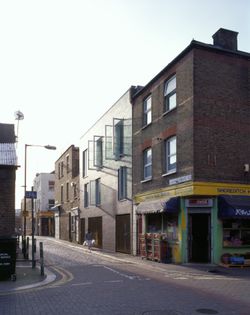
British architect Stephen Taylor speaks about his work and the CCA exhibition Some Ideas on Living in London and Tokyo by Stephen Taylor and Ryue Nishizawa (2008). The exhibition marks the first North American presentation of residential projects by Stephen Taylor and Ryue Nishizawa and reveals their distinctive solutions to the challenges of building homes in existing(...)
British architect Stephen Taylor speaks about his work and the CCA exhibition Some Ideas on Living in London and Tokyo by Stephen Taylor and Ryue Nishizawa (2008). The exhibition marks the first North American presentation of residential projects by Stephen Taylor and Ryue Nishizawa and reveals their distinctive solutions to the challenges of building homes in existing(...)
Location:
Paul Desmarais Theatre
Paul Desmarais Theatre
Date:
15 May 2008
15 May 2008
Title:
Stephen Taylor: Some Ideas on Living
Actions:
Description:
British architect Stephen Taylor speaks about his work and the CCA exhibition Some Ideas on Living in London and Tokyo by Stephen Taylor and Ryue Nishizawa (2008). The exhibition marks the first North American presentation of residential projects by Stephen Taylor and Ryue Nishizawa and reveals their distinctive solutions to the challenges of building homes in existing(...)
Stephen Taylor: Some Ideas on Living
Actions:
Description:
British architect Stephen Taylor speaks about his work and the CCA exhibition Some Ideas on Living in London and Tokyo by Stephen Taylor and Ryue Nishizawa (2008). The exhibition marks the first North American presentation of residential projects by Stephen Taylor and Ryue Nishizawa and reveals their distinctive solutions to the challenges of building homes in existing(...)
Form:
events
events
Date:
15 May 2008
15 May 2008
Location:
Paul Desmarais Theatre
Paul Desmarais Theatre


