


402 Results
Form:
books
books
Actions:
Price:
$35.95
(available to order)
Summary:
Collaborateur puis associé, propagateur de ses idées, André Wogenscky (1916-2004) a longtemps été dans l'ombre de la haute stature de Le Corbusier. Il participe et mène à bien de grands projets corbuséens (unités d'habitation de Marseille et de Rezé) puis en terminera d'autres comme à Firminy. Bien que fortement inspiré par l'esprit et l'humanisme du maître, Wogenscky(...)
$35.95
(available to order)
Summary:
Collaborateur puis associé, propagateur de ses idées, André Wogenscky (1916-2004) a longtemps été dans l'ombre de la haute stature de Le Corbusier. Il participe et mène à bien de grands projets corbuséens (unités d'habitation de Marseille et de Rezé) puis en terminera d'autres comme à Firminy. Bien que fortement inspiré par l'esprit et l'humanisme du maître, Wogenscky(...)
Title:
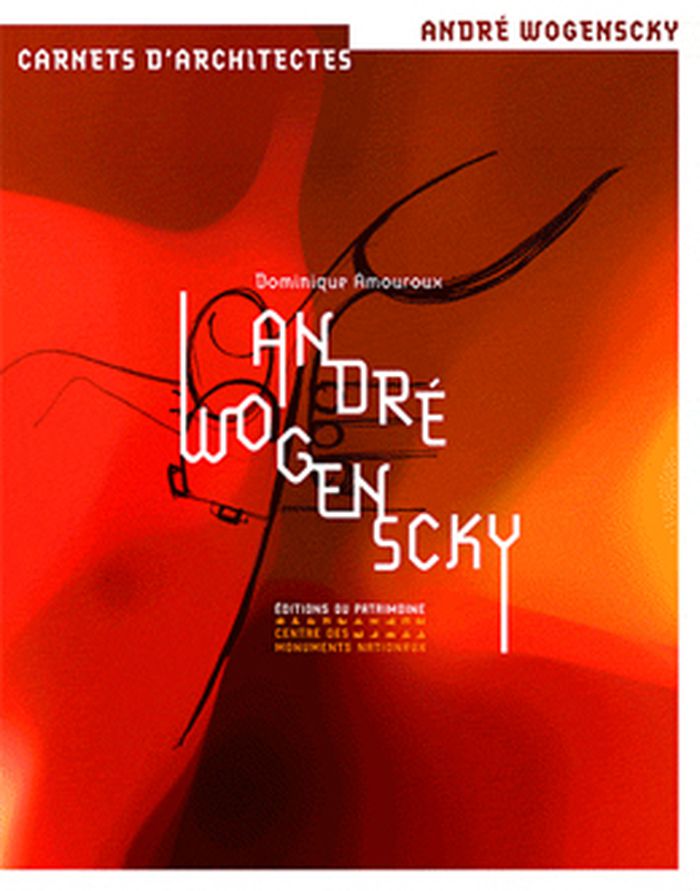
Carnets d'architectes : André Wogenscky
Actions:
Price:
$35.95
(available to order)
Summary:
Collaborateur puis associé, propagateur de ses idées, André Wogenscky (1916-2004) a longtemps été dans l'ombre de la haute stature de Le Corbusier. Il participe et mène à bien de grands projets corbuséens (unités d'habitation de Marseille et de Rezé) puis en terminera d'autres comme à Firminy. Bien que fortement inspiré par l'esprit et l'humanisme du maître, Wogenscky développe dès 1955 une oeuvre architecturale propre marquée par des bâtiments emblématiques en France (maison de la culture de Grenoble, préfecture des Hauts-de-Seine) et des projets de grande ampleur au Proche-Orient et au Japon. Il accorde une attention extrême aux paysages, aux usages, aux perceptions spatiales et colorées qui stimulent la vie et modifie le quotidien, car pour lui "Tout en architecture est dicté par l'homme, pour l'homme. ".
Carnets d'architectes : André Wogenscky
Actions:
Price:
$35.95
(available to order)
Summary:
Collaborateur puis associé, propagateur de ses idées, André Wogenscky (1916-2004) a longtemps été dans l'ombre de la haute stature de Le Corbusier. Il participe et mène à bien de grands projets corbuséens (unités d'habitation de Marseille et de Rezé) puis en terminera d'autres comme à Firminy. Bien que fortement inspiré par l'esprit et l'humanisme du maître, Wogenscky développe dès 1955 une oeuvre architecturale propre marquée par des bâtiments emblématiques en France (maison de la culture de Grenoble, préfecture des Hauts-de-Seine) et des projets de grande ampleur au Proche-Orient et au Japon. Il accorde une attention extrême aux paysages, aux usages, aux perceptions spatiales et colorées qui stimulent la vie et modifie le quotidien, car pour lui "Tout en architecture est dicté par l'homme, pour l'homme. ".
Form:
books
books
Publication:
May 2012
May 2012
Subject:
Architecture Monographs
Architecture Monographs
Form:
books
books
Holdings:
Description:
232 pages : illustrations (some color) ; 24 cm
Description:
232 pages : illustrations (some color) ; 24 cm
Title:
Concrete : a seven-thousand-year history / Reese Palley.
Actions:
Holdings:
Description:
232 pages : illustrations (some color) ; 24 cm
Concrete : a seven-thousand-year history / Reese Palley.
Actions:
Holdings:
Description:
232 pages : illustrations (some color) ; 24 cm
Form:
books
books
Publication:
New York : The Quantuck Lane Press, 2010.
New York : The Quantuck Lane Press, 2010.
Form:
books
books
Actions:
Holdings:
Description:
271 pages, 1 unnumbered page : illustrations (chiefly color), facsimiles, color map, portraits (some color) ; 32 cm
Description:
271 pages, 1 unnumbered page : illustrations (chiefly color), facsimiles, color map, portraits (some color) ; 32 cm
Author:
- Richard William Hill, Hila Peleg -- Jesse Wente -- Doreen Manuel -- Karrmen Crey -- Alexandra Juhasz -- Richard William Hill, Cheryl L'Hirondelle, Joseph Naytowhow -- Ursula Johnson -- Elizabeth A. Povinelli -- Loretta Todd -- Richard Fung -- Robert Verrall -- Richard William Hill -- Lisa Steele -- Jessica L. Horton -- Monique Nolett-Ille -- Jason Ryle -- Alanis Obomsawin, Monika Kin Gagnon -- Alanis Obomsawin.,
- Hill, Richard William, 1967-,
- Peleg, Hila,,
- Obomsawin, Alanis. Works. Selections.,
- Gagnon, Monika Kin, 1961-,
- Nolett, Daniel G.,,
- Haus der Kulturen der Welt,,
- Vancouver Art Gallery,,
- University of Toronto. Art Museum,
(See more)
Subject:
- Obomsawin, Alanis Criticism and interpretation.,
- Obomsawin, Alanis,
- Motion picture producers and directors Canada.,
- Indigenous peoples Civil rights Canada.,
- Indigenous peoples Civil rights Canada Pictorial works.,
- Indigenous peoples in motion pictures.,
- Indigenous peoples in motion pictures Exhibitions.,
- Minority women activists Exhibitions.,
- Indigenous films.,
- Documentary films.,
- Producteurs et réalisateurs de cinéma Canada.,
- Autochtones Droits Canada.,
- Autochtones au cinéma.,
- Films autochtones.,
- Documentaires.,
- Autochtones Droits Canada Ouvrages illustrés.,
- Autochtones au cinéma Expositions.,
- Femmes activistes issues des minorités Expositions.,
- Indigenous peoples Civil rights,
- Motion picture producers and directors,
- Canada,
- exhibition catalogs.,
- Exhibition catalogs.,
- Illustrated works.,
- Catalogues d'exposition.,
- Ouvrages illustrés.
(See more)
Publication:
Munich ; New York : Prestel, [2022], ©2022
Munich ; New York : Prestel, [2022], ©2022
Title:
Alanis Obomsawin : lifework / edited by Richard William Hill, Hila Peleg, and Haus der Kulturen der Welt.
Actions:
Holdings:
Description:
271 pages, 1 unnumbered page : illustrations (chiefly color), facsimiles, color map, portraits (some color) ; 32 cm
Alanis Obomsawin : lifework / edited by Richard William Hill, Hila Peleg, and Haus der Kulturen der Welt.
Actions:
Holdings:
Description:
271 pages, 1 unnumbered page : illustrations (chiefly color), facsimiles, color map, portraits (some color) ; 32 cm
Form:
books
books
Publication:
Munich ; New York : Prestel, [2022], ©2022
Munich ; New York : Prestel, [2022], ©2022
Author:
- Richard William Hill, Hila Peleg -- Jesse Wente -- Doreen Manuel -- Karrmen Crey -- Alexandra Juhasz -- Richard William Hill, Cheryl L'Hirondelle, Joseph Naytowhow -- Ursula Johnson -- Elizabeth A. Povinelli -- Loretta Todd -- Richard Fung -- Robert Verrall -- Richard William Hill -- Lisa Steele -- Jessica L. Horton -- Monique Nolett-Ille -- Jason Ryle -- Alanis Obomsawin, Monika Kin Gagnon -- Alanis Obomsawin.,
- Hill, Richard William, 1967-,
- Peleg, Hila,,
- Obomsawin, Alanis. Works. Selections.,
- Gagnon, Monika Kin, 1961-,
- Nolett, Daniel G.,,
- Haus der Kulturen der Welt,,
- Vancouver Art Gallery,,
- University of Toronto. Art Museum,
(See more)
Subject:
- Obomsawin, Alanis Criticism and interpretation.,
- Obomsawin, Alanis,
- Motion picture producers and directors Canada.,
- Indigenous peoples Civil rights Canada.,
- Indigenous peoples Civil rights Canada Pictorial works.,
- Indigenous peoples in motion pictures.,
- Indigenous peoples in motion pictures Exhibitions.,
- Minority women activists Exhibitions.,
- Indigenous films.,
- Documentary films.,
- Producteurs et réalisateurs de cinéma Canada.,
- Autochtones Droits Canada.,
- Autochtones au cinéma.,
- Films autochtones.,
- Documentaires.,
- Autochtones Droits Canada Ouvrages illustrés.,
- Autochtones au cinéma Expositions.,
- Femmes activistes issues des minorités Expositions.,
- Indigenous peoples Civil rights,
- Motion picture producers and directors,
- Canada,
- exhibition catalogs.,
- Exhibition catalogs.,
- Illustrated works.,
- Catalogues d'exposition.,
- Ouvrages illustrés.
(See more)
Form:
books
books
Actions:
Price:
$58.95
(available to order)
Summary:
The theme of the first Rotterdam International Architecture Biennial was mobility--as it relates to the city and the landscape, and the design culture that comes with it. Held between May and July 2003, the biennial brought together numerous universities, architects, urbanists, spatial planners and designers to swap experiences and discuss new strategies for giving shape(...)
$58.95
(available to order)
Summary:
The theme of the first Rotterdam International Architecture Biennial was mobility--as it relates to the city and the landscape, and the design culture that comes with it. Held between May and July 2003, the biennial brought together numerous universities, architects, urbanists, spatial planners and designers to swap experiences and discuss new strategies for giving shape(...)
Subject:
Museums and Universal Exhibitions
Museums and Universal Exhibitions
Publication:
August 2003, Rotterdam
August 2003, Rotterdam
Title:
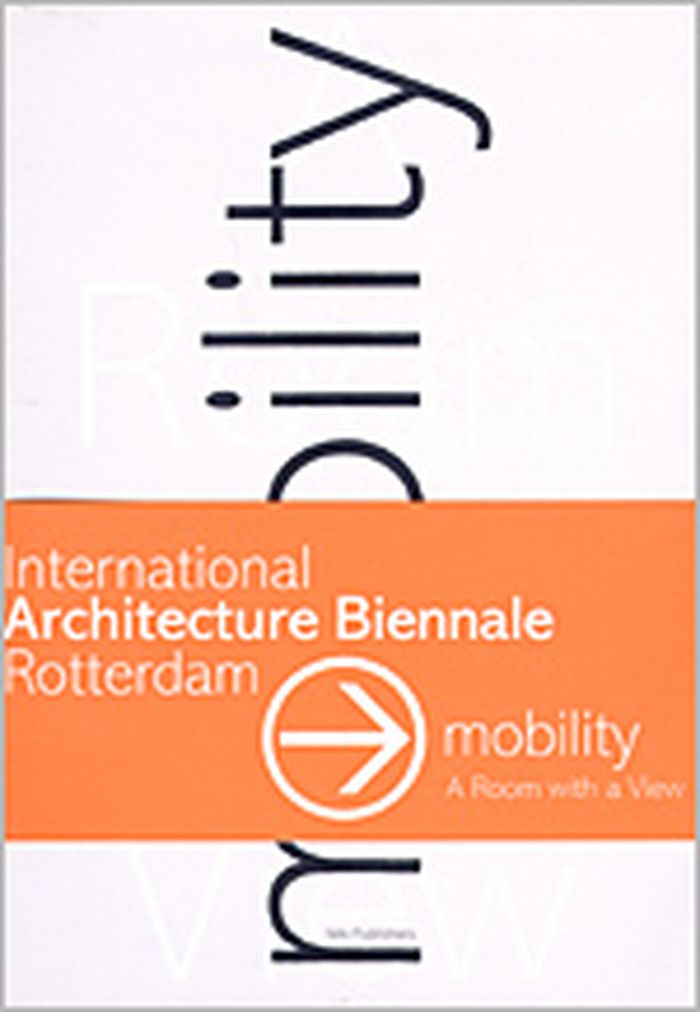
Mobility : a room with a view. International Architecture Biennale Rotterdam.
Actions:
Price:
$58.95
(available to order)
Summary:
The theme of the first Rotterdam International Architecture Biennial was mobility--as it relates to the city and the landscape, and the design culture that comes with it. Held between May and July 2003, the biennial brought together numerous universities, architects, urbanists, spatial planners and designers to swap experiences and discuss new strategies for giving shape to (car) mobility. This unique book shows the results of this international research in its various forms: statistics, photography, text, visual collage and design proposals. These together give a tangible and insightful look at the mobile cultures found in a wide range of cities and countries, from Mexico City, Hong Kong and Guangzhou, to Djakarta, Budapest, the Ruhr Valley, Beirut, Los Angeles, Tokyo, Peking and Holland. The aim of the publication is twofold. On the one hand, to understand infrastructures and motorway culture by studying their different cultural and geographical contexts. On the other, to draw up an agenda for the future, one that establishes the role to be played by various design disciplines. This research and publication endeavor is the fruit of a collaboration between the universities of Wuppertal, Aachen, Berlin, California, Monterrey (Mexico), Tokyo, Hong Kong, Peking, Beirut, Budapest, Bandung and Delft.
Mobility : a room with a view. International Architecture Biennale Rotterdam.
Actions:
Price:
$58.95
(available to order)
Summary:
The theme of the first Rotterdam International Architecture Biennial was mobility--as it relates to the city and the landscape, and the design culture that comes with it. Held between May and July 2003, the biennial brought together numerous universities, architects, urbanists, spatial planners and designers to swap experiences and discuss new strategies for giving shape to (car) mobility. This unique book shows the results of this international research in its various forms: statistics, photography, text, visual collage and design proposals. These together give a tangible and insightful look at the mobile cultures found in a wide range of cities and countries, from Mexico City, Hong Kong and Guangzhou, to Djakarta, Budapest, the Ruhr Valley, Beirut, Los Angeles, Tokyo, Peking and Holland. The aim of the publication is twofold. On the one hand, to understand infrastructures and motorway culture by studying their different cultural and geographical contexts. On the other, to draw up an agenda for the future, one that establishes the role to be played by various design disciplines. This research and publication endeavor is the fruit of a collaboration between the universities of Wuppertal, Aachen, Berlin, California, Monterrey (Mexico), Tokyo, Hong Kong, Peking, Beirut, Budapest, Bandung and Delft.
Form:
books
books
Publication:
August 2003, Rotterdam
August 2003, Rotterdam
Subject:
Museums and Universal Exhibitions
Museums and Universal Exhibitions
Form:
books
books
Actions:
Price:
$22.95
(available in store)
Summary:
In this journey, Pedro Bandeira takes us to Arcosanti, the city of Paolo Soleri. In a tale about the experience of driving the American interior by car, avoiding cities and “collecting nature parks and deserts”, Pedro Bandeira wanders between the desert and the meaning of the trip. On the way, he finds Arcosanti, exploring the experimental city isolated in Arizona,(...)
$22.95
(available in store)
Summary:
In this journey, Pedro Bandeira takes us to Arcosanti, the city of Paolo Soleri. In a tale about the experience of driving the American interior by car, avoiding cities and “collecting nature parks and deserts”, Pedro Bandeira wanders between the desert and the meaning of the trip. On the way, he finds Arcosanti, exploring the experimental city isolated in Arizona,(...)
Title:
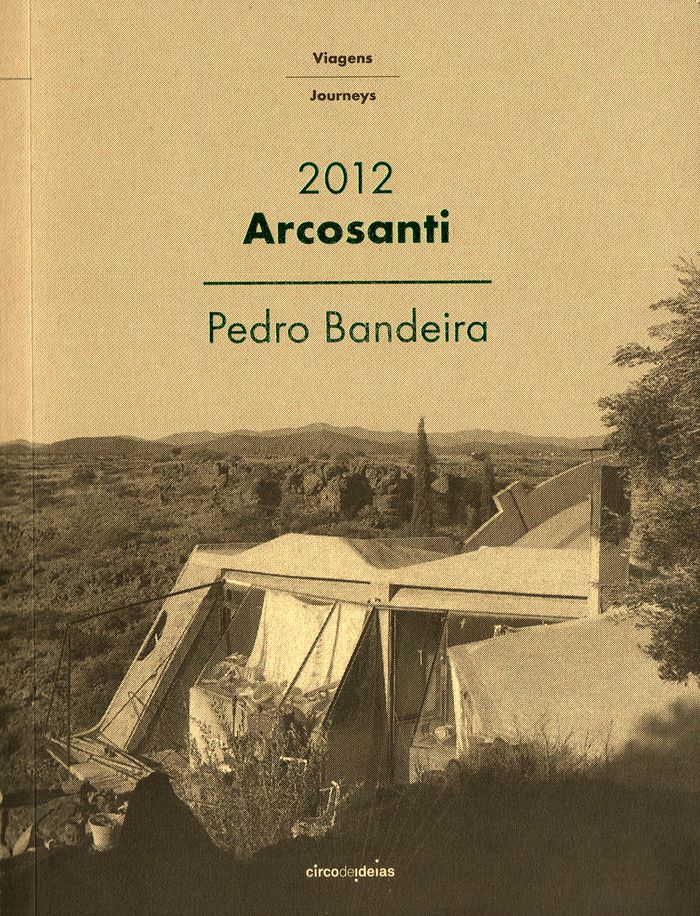
Arcosanti, 2012. Viagens / Journeys
Actions:
Price:
$22.95
(available in store)
Summary:
In this journey, Pedro Bandeira takes us to Arcosanti, the city of Paolo Soleri. In a tale about the experience of driving the American interior by car, avoiding cities and “collecting nature parks and deserts”, Pedro Bandeira wanders between the desert and the meaning of the trip. On the way, he finds Arcosanti, exploring the experimental city isolated in Arizona, revealing it in the negatives of the Kodak 35mm black-and-white film, uncovering the level of detail of Soleri's architecture, "capable of taming the various reinforced concrete masses" but also the "pragmatic informality" with which time and the community that lives there occupied the place. The book is part of the collection Journeys whose aim is to construct a map of emotions from unique journeys undertaken by recognised personalities from the architectural culture. A tour around the various continents, but also the universe of its authors.
Arcosanti, 2012. Viagens / Journeys
Actions:
Price:
$22.95
(available in store)
Summary:
In this journey, Pedro Bandeira takes us to Arcosanti, the city of Paolo Soleri. In a tale about the experience of driving the American interior by car, avoiding cities and “collecting nature parks and deserts”, Pedro Bandeira wanders between the desert and the meaning of the trip. On the way, he finds Arcosanti, exploring the experimental city isolated in Arizona, revealing it in the negatives of the Kodak 35mm black-and-white film, uncovering the level of detail of Soleri's architecture, "capable of taming the various reinforced concrete masses" but also the "pragmatic informality" with which time and the community that lives there occupied the place. The book is part of the collection Journeys whose aim is to construct a map of emotions from unique journeys undertaken by recognised personalities from the architectural culture. A tour around the various continents, but also the universe of its authors.
Form:
books
books
Publication:
November 2017
November 2017
Subject:
Situationism
Situationism
Form:
books
books
Actions:
Price:
$27.95
(available in store)
Summary:
Dans cette synthèse historique sur la place du vélo à Montréal, Simon Lord démontre que la métropole québécoise a bel et bien une culture cycliste et que celle-ci ne date pas d’hier. De l’arrivée du premier vélocipède au Québec en 1868 à l’avènement du BIXI et du Réseau express vélo (REV), il s’applique à dessiner le contour de la pratique cycliste sur l’île et à en(...)
$27.95
(available in store)
Summary:
Dans cette synthèse historique sur la place du vélo à Montréal, Simon Lord démontre que la métropole québécoise a bel et bien une culture cycliste et que celle-ci ne date pas d’hier. De l’arrivée du premier vélocipède au Québec en 1868 à l’avènement du BIXI et du Réseau express vélo (REV), il s’applique à dessiner le contour de la pratique cycliste sur l’île et à en(...)
Title:
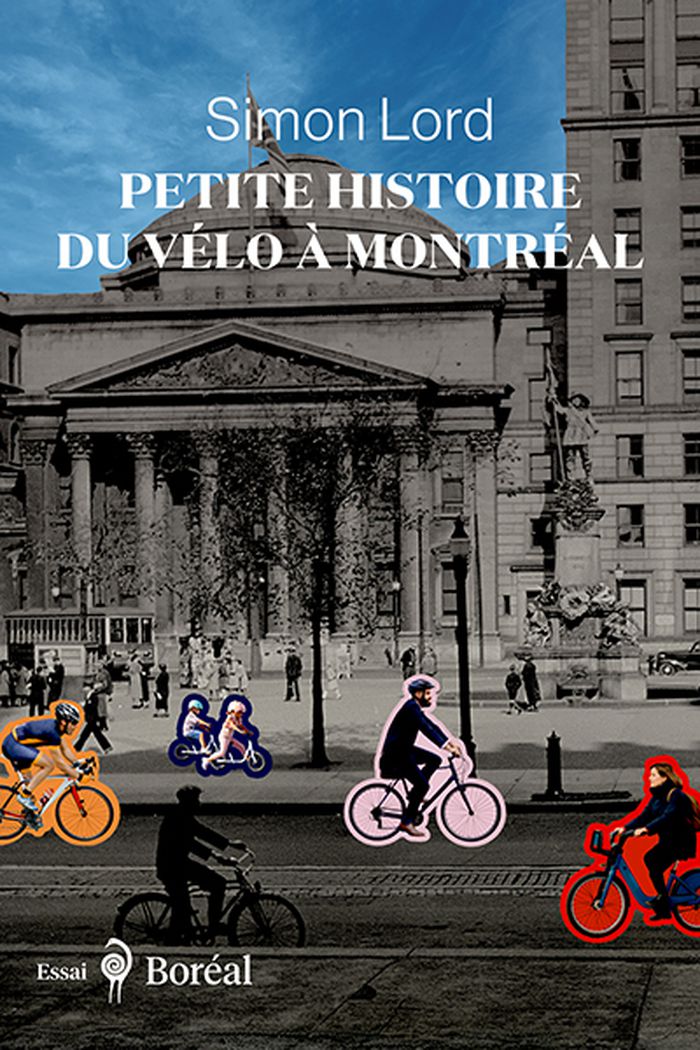
Petite histoire du vélo à Montréal
Actions:
Price:
$27.95
(available in store)
Summary:
Dans cette synthèse historique sur la place du vélo à Montréal, Simon Lord démontre que la métropole québécoise a bel et bien une culture cycliste et que celle-ci ne date pas d’hier. De l’arrivée du premier vélocipède au Québec en 1868 à l’avènement du BIXI et du Réseau express vélo (REV), il s’applique à dessiner le contour de la pratique cycliste sur l’île et à en retracer les hauts et les bas au gré des époques, en s’appuyant sur de nombreuses sources journalistiques et historiques ainsi que sur les grands projets d’urbanisation qui ont fait de Montréal la ville qu’elle est aujourd’hui. Entre machine sportive préférée de la grande bourgeoisie et symbole de modernité, jouet pour enfants et moyen de transport populaire, outil de travail et emblème de la contre-culture, le vélo à Montréal a une longue histoire, aussi mouvementée que fascinante, qui s’est écrite en opposition et en résistance à la place grandissante accordée à l’automobile à partir du milieu du XXe siècle. Car au-delà de sa commodité, de ses vertus pour la santé et l’environnement, et du plaisir qu’il génère, la question centrale que pose le vélo depuis cent cinquante ans peut se résumer ainsi : comment souhaite-t-on naviguer et donc habiter la ville ?
Petite histoire du vélo à Montréal
Actions:
Price:
$27.95
(available in store)
Summary:
Dans cette synthèse historique sur la place du vélo à Montréal, Simon Lord démontre que la métropole québécoise a bel et bien une culture cycliste et que celle-ci ne date pas d’hier. De l’arrivée du premier vélocipède au Québec en 1868 à l’avènement du BIXI et du Réseau express vélo (REV), il s’applique à dessiner le contour de la pratique cycliste sur l’île et à en retracer les hauts et les bas au gré des époques, en s’appuyant sur de nombreuses sources journalistiques et historiques ainsi que sur les grands projets d’urbanisation qui ont fait de Montréal la ville qu’elle est aujourd’hui. Entre machine sportive préférée de la grande bourgeoisie et symbole de modernité, jouet pour enfants et moyen de transport populaire, outil de travail et emblème de la contre-culture, le vélo à Montréal a une longue histoire, aussi mouvementée que fascinante, qui s’est écrite en opposition et en résistance à la place grandissante accordée à l’automobile à partir du milieu du XXe siècle. Car au-delà de sa commodité, de ses vertus pour la santé et l’environnement, et du plaisir qu’il génère, la question centrale que pose le vélo depuis cent cinquante ans peut se résumer ainsi : comment souhaite-t-on naviguer et donc habiter la ville ?
Form:
books
books
Publication:
May 2026
May 2026
Subject:
Architecture de Montréal
Architecture de Montréal
Form:
books
books

Actions:
Price:
$63.50
(available to order)
Summary:
From its invention in Europe at the end of the nineteenth century, the automobile crisscrossed the world, completely took over the cities, and became a feature of daily life. Considered basic to the American lifestyle, the car reflected individualism, pragmatism, comfort, and above all modernity. In Latin America, it served as a symbol of distinction, similar to jewelry(...)
$63.50
(available to order)
Summary:
From its invention in Europe at the end of the nineteenth century, the automobile crisscrossed the world, completely took over the cities, and became a feature of daily life. Considered basic to the American lifestyle, the car reflected individualism, pragmatism, comfort, and above all modernity. In Latin America, it served as a symbol of distinction, similar to jewelry(...)
Title:
The cultural life of the automobile: roads to modernity
Actions:
Price:
$63.50
(available to order)
Summary:
From its invention in Europe at the end of the nineteenth century, the automobile crisscrossed the world, completely took over the cities, and became a feature of daily life. Considered basic to the American lifestyle, the car reflected individualism, pragmatism, comfort, and above all modernity. In Latin America, it served as a symbol of distinction, similar to jewelry or fine clothing. In The Cultural Life of the Automobile, Guillermo Giucci focuses on the automobile as an instrument of social change through its "kinetic modernity" and as an embodiment of the tremendous social impact of technology on cultural life. Material culture--how certain objects generate a wide array of cultural responses--has been the focus of much scholarly discussion in recent years. The automobile wrought major changes and inspired images in language, literature, and popular culture. Focusing primarily on Latin America but also covering the United States, Europe, Asia, and Africa, Giucci examines how the automobile was variously adapted by different cultures and how its use shaped and changed social and economic relationships within them. At the same time, he shows how the "automobilization" of society became an essential support for the development of modern individualism, and the automobile its clearest material manifestation.
The cultural life of the automobile: roads to modernity
Actions:
Price:
$63.50
(available to order)
Summary:
From its invention in Europe at the end of the nineteenth century, the automobile crisscrossed the world, completely took over the cities, and became a feature of daily life. Considered basic to the American lifestyle, the car reflected individualism, pragmatism, comfort, and above all modernity. In Latin America, it served as a symbol of distinction, similar to jewelry or fine clothing. In The Cultural Life of the Automobile, Guillermo Giucci focuses on the automobile as an instrument of social change through its "kinetic modernity" and as an embodiment of the tremendous social impact of technology on cultural life. Material culture--how certain objects generate a wide array of cultural responses--has been the focus of much scholarly discussion in recent years. The automobile wrought major changes and inspired images in language, literature, and popular culture. Focusing primarily on Latin America but also covering the United States, Europe, Asia, and Africa, Giucci examines how the automobile was variously adapted by different cultures and how its use shaped and changed social and economic relationships within them. At the same time, he shows how the "automobilization" of society became an essential support for the development of modern individualism, and the automobile its clearest material manifestation.
Form:
books
books
Publication:
August 2012
August 2012
Subject:
Transportation, Tourism, Migration
Transportation, Tourism, Migration
Form:
books
books
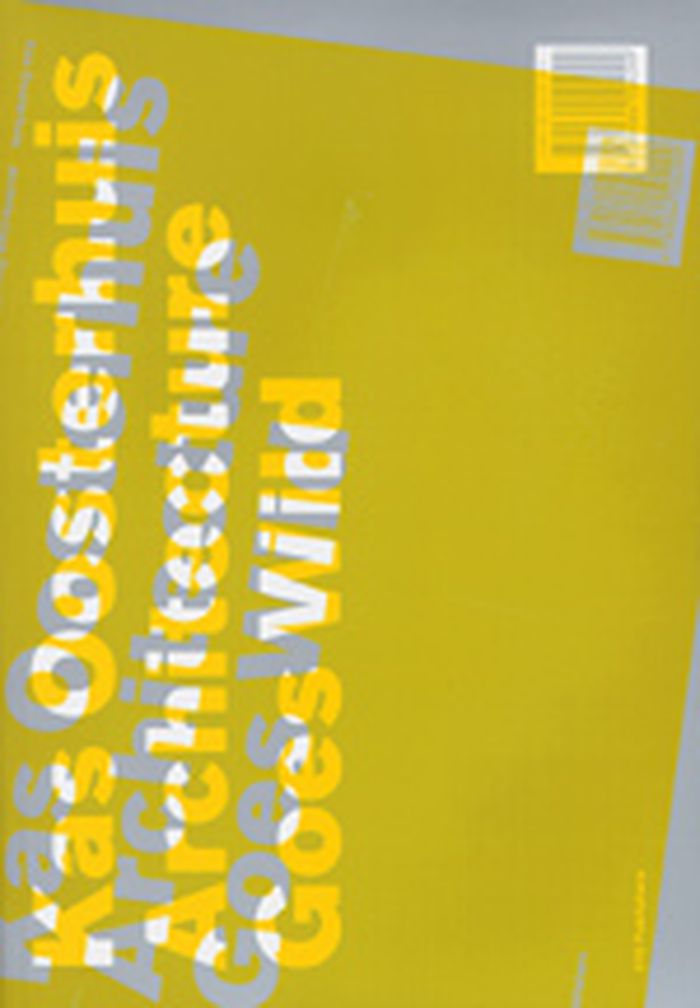
Title:
Architecture goes wild
Architecture goes wild
Actions:
Price:
$29.95
(available to order)
Summary:
In his writings, architect Kas Oosterhuis bridges the gap between theory and practice. His observations are based on the principle of concrete science fiction. He is convinced that every construct - hardware or software - that can be formulated as a consistent set of rules is realizable within the social constraints of our present-day culture. In his essay(...)
$29.95
(available to order)
Summary:
In his writings, architect Kas Oosterhuis bridges the gap between theory and practice. His observations are based on the principle of concrete science fiction. He is convinced that every construct - hardware or software - that can be formulated as a consistent set of rules is realizable within the social constraints of our present-day culture. In his essay(...)
Title:
Architecture goes wild
Actions:
Price:
$29.95
(available to order)
Summary:
In his writings, architect Kas Oosterhuis bridges the gap between theory and practice. His observations are based on the principle of concrete science fiction. He is convinced that every construct - hardware or software - that can be formulated as a consistent set of rules is realizable within the social constraints of our present-day culture. In his essay 'Space_Time_Volume' Kas Oosterhuis places himself in the local and temporary delamination point between the micro- and macroworlds. He speculates on a seamless continuity of these worlds where the instrumental human position is only one of many possible positions. Our perception of the universe is based on observations made by instruments. Language is seen as such an instrument. In 'Wild Bodies' Oosterhuis asserts that all true architecture inevitably will be programmed to perform in real time. This point of view is based on the observation that traditional fixed and static architecture is a highly unlikely state among all possible ones. An architectural construct is regarded as a body with real-time behaviour that is always in motion. Computer programs speak the new instrumental language in which potential new worlds are described. 'Automotive Styling' declares the human driver of the automobile to be the voluntary prisoner of the physical car-road communications network. In 'Vectorial Bodies' the human driver is nothing less than fuzzy software programming the car to lead it to his destinations. There is no place for romantic ideas such as freedom of movement, but there is the overwhelming desire of carbon-based life forms to exchange data with industrial and digital life forms.
Architecture goes wild
Actions:
Price:
$29.95
(available to order)
Summary:
In his writings, architect Kas Oosterhuis bridges the gap between theory and practice. His observations are based on the principle of concrete science fiction. He is convinced that every construct - hardware or software - that can be formulated as a consistent set of rules is realizable within the social constraints of our present-day culture. In his essay 'Space_Time_Volume' Kas Oosterhuis places himself in the local and temporary delamination point between the micro- and macroworlds. He speculates on a seamless continuity of these worlds where the instrumental human position is only one of many possible positions. Our perception of the universe is based on observations made by instruments. Language is seen as such an instrument. In 'Wild Bodies' Oosterhuis asserts that all true architecture inevitably will be programmed to perform in real time. This point of view is based on the observation that traditional fixed and static architecture is a highly unlikely state among all possible ones. An architectural construct is regarded as a body with real-time behaviour that is always in motion. Computer programs speak the new instrumental language in which potential new worlds are described. 'Automotive Styling' declares the human driver of the automobile to be the voluntary prisoner of the physical car-road communications network. In 'Vectorial Bodies' the human driver is nothing less than fuzzy software programming the car to lead it to his destinations. There is no place for romantic ideas such as freedom of movement, but there is the overwhelming desire of carbon-based life forms to exchange data with industrial and digital life forms.
Form:
books
books
Publication:
March 2001, Rotterdam
March 2001, Rotterdam
Subject:
Architectural Theory
Architectural Theory
Form:
books
books
Actions:
Holdings:
Description:
x, 390 pages ; 23 cm
Description:
x, 390 pages ; 23 cm
Subject:
- Kimmerer, Robin Wall, 1953-,
- Kimmerer, Robin Wall,
- Indian philosophy North America.,
- Ethnoecology.,
- Philosophy of nature.,
- Human ecology Philosophy.,
- Nature Effect of human beings on.,
- Human-plant relationships.,
- Botany Philosophy.,
- Potawatomi Indians Biography.,
- Potawatomi Indians Social life and customs.,
- Indians of North America.,
- Philosophy.,
- Botany.,
- Nature Essays.,
- Nature Plants General.,
- Science Life Sciences Botany.,
- Indians, North American,
- Nature,
- Native peoples Ecology.,
- Ethnoécologie.,
- Philosophie de la nature.,
- Écologie humaine Philosophie.,
- Êtres humains Influence sur la nature.,
- Relations humain-plante.,
- Potawatomi Biographies.,
- Potawatomi Mœurs et coutumes.,
- Peuples autochtones Amérique du Nord.,
- Philosophie.,
- Botanique.,
- philosophy.,
- botany.,
- SCIENCE Life Sciences Botany.,
- SOCIAL SCIENCE Ethnic Studies Native American Studies.,
- NATURE Essays.,
- NATURE Plants General.,
- Indian philosophy.,
- Potawatomi Indians.,
- Indigenes Volk,
- Naturphilosophie,
- Naturverständnis,
- Ökologie,
- Botanik,
- Potawatomi,
- North America,
- Biographies.,
- Autobiography,
- autobiographies (literary genre),
- Autobiographies.
(See more)
Publication:
Minneapolis, Minnesota : Milkweed Editions, 2013., ©2013
Minneapolis, Minnesota : Milkweed Editions, 2013., ©2013
Title:
Braiding sweetgrass / Robin Wall Kimmerer.
Actions:
Holdings:
Description:
x, 390 pages ; 23 cm
Braiding sweetgrass / Robin Wall Kimmerer.
Actions:
Holdings:
Description:
x, 390 pages ; 23 cm
Form:
books
books
Publication:
Minneapolis, Minnesota : Milkweed Editions, 2013., ©2013
Minneapolis, Minnesota : Milkweed Editions, 2013., ©2013
Subject:
- Kimmerer, Robin Wall, 1953-,
- Kimmerer, Robin Wall,
- Indian philosophy North America.,
- Ethnoecology.,
- Philosophy of nature.,
- Human ecology Philosophy.,
- Nature Effect of human beings on.,
- Human-plant relationships.,
- Botany Philosophy.,
- Potawatomi Indians Biography.,
- Potawatomi Indians Social life and customs.,
- Indians of North America.,
- Philosophy.,
- Botany.,
- Nature Essays.,
- Nature Plants General.,
- Science Life Sciences Botany.,
- Indians, North American,
- Nature,
- Native peoples Ecology.,
- Ethnoécologie.,
- Philosophie de la nature.,
- Écologie humaine Philosophie.,
- Êtres humains Influence sur la nature.,
- Relations humain-plante.,
- Potawatomi Biographies.,
- Potawatomi Mœurs et coutumes.,
- Peuples autochtones Amérique du Nord.,
- Philosophie.,
- Botanique.,
- philosophy.,
- botany.,
- SCIENCE Life Sciences Botany.,
- SOCIAL SCIENCE Ethnic Studies Native American Studies.,
- NATURE Essays.,
- NATURE Plants General.,
- Indian philosophy.,
- Potawatomi Indians.,
- Indigenes Volk,
- Naturphilosophie,
- Naturverständnis,
- Ökologie,
- Botanik,
- Potawatomi,
- North America,
- Biographies.,
- Autobiography,
- autobiographies (literary genre),
- Autobiographies.
(See more)
Form:
books
books
Actions:
Holdings:
Description:
249 pages ; 23 cm
Description:
249 pages ; 23 cm
Subject:
Publication:
[Victoria, British Columbia] : RMB, Rocky Mountain Books, [2015], ©2015
[Victoria, British Columbia] : RMB, Rocky Mountain Books, [2015], ©2015
Title:
Storm warning : water and climate security in a changing world / Robert William Sandford.
Actions:
Holdings:
Description:
249 pages ; 23 cm
Storm warning : water and climate security in a changing world / Robert William Sandford.
Actions:
Holdings:
Description:
249 pages ; 23 cm
Form:
books
books
Publication:
[Victoria, British Columbia] : RMB, Rocky Mountain Books, [2015], ©2015
[Victoria, British Columbia] : RMB, Rocky Mountain Books, [2015], ©2015


