


3790 Results
Form:
books
books
Actions:
Price:
$34.95
(available to order)
Summary:
Leland and Jane Stanford built Stanford University as a memorial to their son, Leland Stanford Jr. The original 1891 campus, conceived by Frederick Law Olmsted and executed by architects Shepley, Rutan and Coolidge, balances architecture, landscapes, and the (...)
Subject:
Commercial interiors, Building types
Commercial interiors, Building types
Publication:
April 1999, New York
April 1999, New York
Title:
Stanford University : the campus guide
Actions:
Price:
$34.95
(available to order)
Summary:
Leland and Jane Stanford built Stanford University as a memorial to their son, Leland Stanford Jr. The original 1891 campus, conceived by Frederick Law Olmsted and executed by architects Shepley, Rutan and Coolidge, balances architecture, landscapes, and the natural surroundings in a composition of classic formal beauty. Stanford is a model of university design, from the nineteenth-century Memorial Court and Main Quad to twentieth-century buildings and restorations that respect the historic campus while contributing to modern design. This architectural tour offers an insider's view of the most interesting buildings on campus and around town, from the historic designs of Memorial Court and Hoover Tower to twentieth-century interpretations of Stanford's red-tile-roof tradition in Antoine Predock's Allen Center for Integrated Systems and Polshek and Partners' Cantor Center for Visual Arts at Stanford University. It includes the work of Frank Lloyd Wright, Arthur Erickson, William Turnbull, James Ingo Freed, Sir Norman Foster, and Polshek.
Form:
books
books
Publication:
April 1999, New York
April 1999, New York
Subject:
Commercial interiors, Building types
Commercial interiors, Building types
Form:
books
books
Price:
$24.95
(available to order)
Summary:
Pour Michel Desvigne, Grand Prix de l'urbanisme 2011, le paysage initie la recomposition urbaine, notamment celle des grands territoires, telle sa récente intervention sur le plateau de Saclay. Il remet au goût du jour les enseignements du plus grand paysagiste américain, Frederick Law Olmsted, pour refonder une pensée du projet durable à la bonne échelle, mêlant(...)
Title:
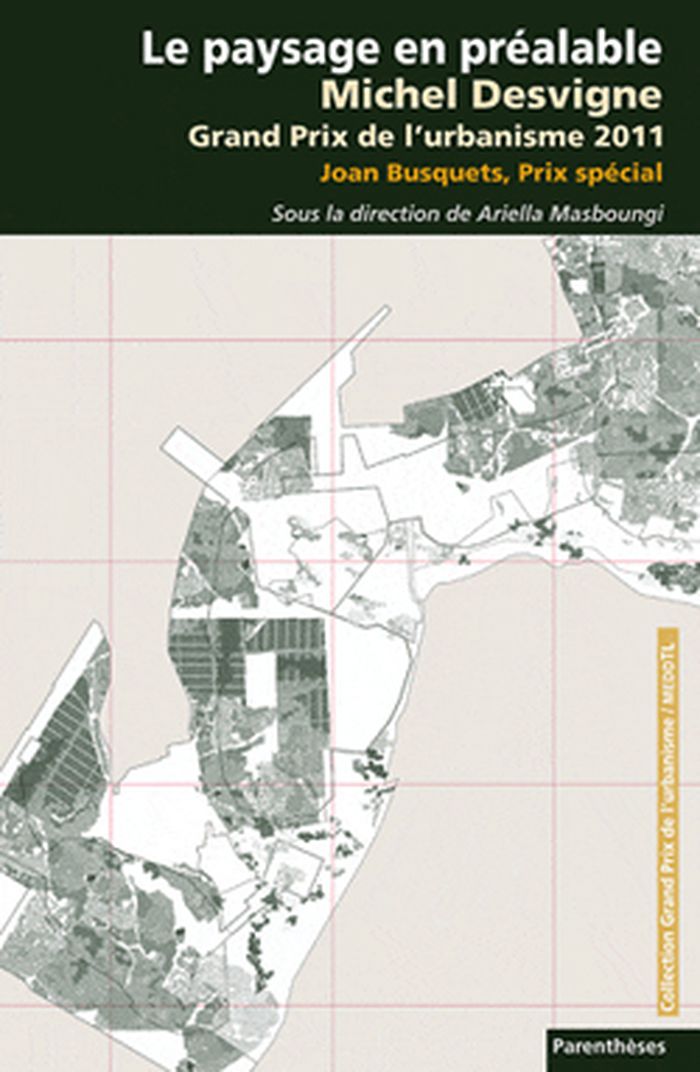
Le paysage en préalable : Michel Desvigne, Grand Prix de l'urbanisme 2011
Actions:
Price:
$24.95
(available to order)
Summary:
Pour Michel Desvigne, Grand Prix de l'urbanisme 2011, le paysage initie la recomposition urbaine, notamment celle des grands territoires, telle sa récente intervention sur le plateau de Saclay. Il remet au goût du jour les enseignements du plus grand paysagiste américain, Frederick Law Olmsted, pour refonder une pensée du projet durable à la bonne échelle, mêlant l'existant et l'artifice, réunissant les conditions du lien entre hommes, espaces et fonctions. De plus, il développe un mode d intervention multiscalaire : jardins, parcs (Millenium à Londres), plans directeurs (entrée de ville à Montpellier), recompositions territoriales (rive droite de la Garonne à Bordeaux), places urbaines (à Dallas, à Anvers, à Marseille) ou ensemble des espaces publics (Lyon Confluence). Joan Busquets, Prix spécial, élargit à l'échelle européenne l'expérience barcelonaise qui a fondé l'urbanisme sur la recomposition de l'espace public, incluant les infrastructures lourdes et la création de nouvelles centralités. Deux approches qui ouvrent la voie de l'urbanisme contemporain durable, posant le paysage en préalable.
Form:
books
books
Publication:
March 2012
March 2012
Subject:
Urban Theory
Urban Theory
Form:
books
books
Actions:
Holdings:
Description:
xiii, 459 pages : illustrations (some color), maps (some color) ; 29 cm
Description:
xiii, 459 pages : illustrations (some color), maps (some color) ; 29 cm
Author:
Subject:
Publication:
Boston : Pearson, ©2012.
Boston : Pearson, ©2012.
Title:
Urbanization : an introduction to urban geography / Paul L. Knox, Linda McCarthy.
Actions:
Holdings:
Description:
xiii, 459 pages : illustrations (some color), maps (some color) ; 29 cm
Urbanization : an introduction to urban geography / Paul L. Knox, Linda McCarthy.
Actions:
Holdings:
Description:
xiii, 459 pages : illustrations (some color), maps (some color) ; 29 cm
Form:
books
books
Publication:
Boston : Pearson, ©2012.
Boston : Pearson, ©2012.
Author:
Subject:
Form:
books
books
Title:
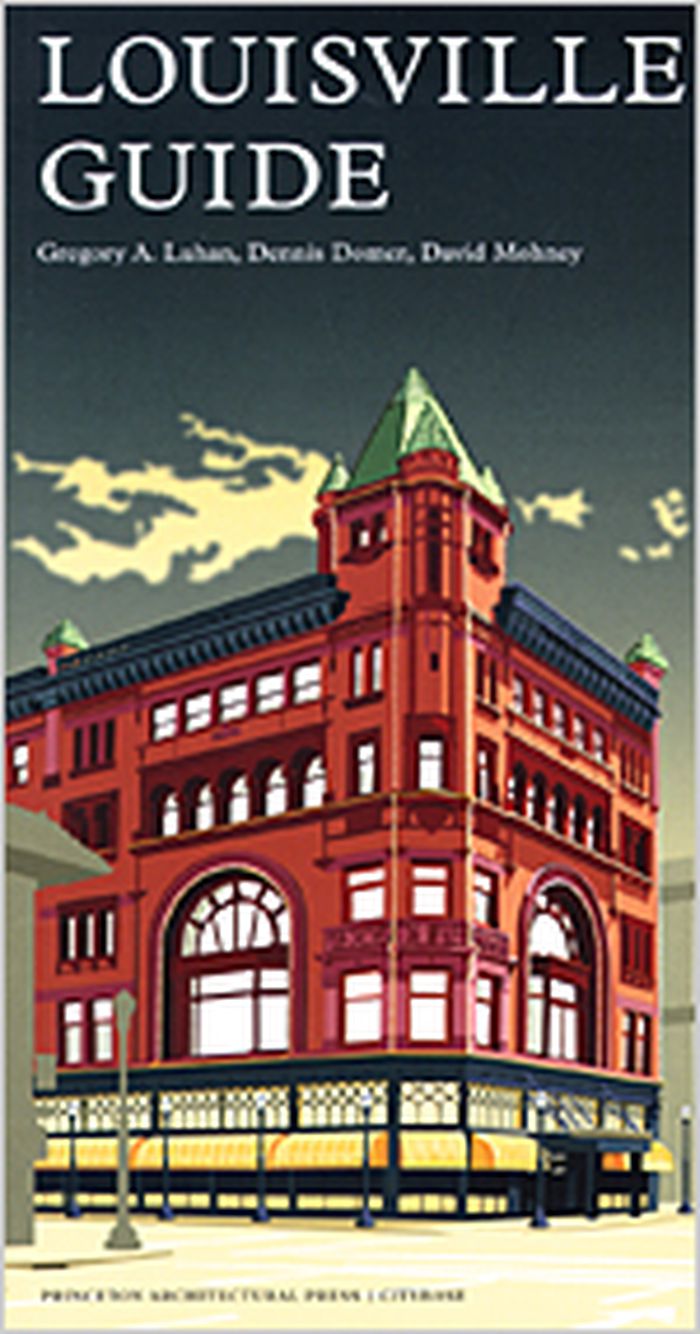
Louisville guide
Louisville guide
Actions:
Price:
$27.95
(available to order)
Summary:
Louisville is one of the overlooked gems of American architecture, a city of Southern charm and grace with a catalogue of buildings by such masters as D.H. Burnham, Bruce Goff, and Herb Greene. An important destination for people interested in everything from colonial to postmodern architecture, this riverfront city is historically rich, while being beautifully planned(...)
Subject:
City Guides
City Guides
Publication:
August 2004, New York
August 2004, New York
Title:
Louisville guide
Actions:
Price:
$27.95
(available to order)
Summary:
Louisville is one of the overlooked gems of American architecture, a city of Southern charm and grace with a catalogue of buildings by such masters as D.H. Burnham, Bruce Goff, and Herb Greene. An important destination for people interested in everything from colonial to postmodern architecture, this riverfront city is historically rich, while being beautifully planned with a boulevard and park system designed by Frederick Law Olmsted. The Louisville Guide takes readers on a journey through the city, describing its most notable buildings while providing a complete overview of its architectural history. Essays by Louisville scholars Grady Clay and Edie Bingham add colour and life to the story of the city and its makers. From Carrére and Hastings's Memorial Hall to Michael Graves's Humana Building, The Louisville Guide offers visitors and residents alike never-before published scholarship of the city's rich architectural heritage. At the University of Kentucky, Gregory A. Luhan is an Assistant Professor and David Mohney is the Dean of the College of Architecture, while Dennis Domer is Helen Edwards Abell Chair in Historic Preservation.
Form:
books
books
Publication:
August 2004, New York
August 2004, New York
Subject:
City Guides
City Guides
Form:
books
books
Actions:
Price:
$25.00
(available to order)
Summary:
Translates by Thomas Goddard Bergin and Max Harold Fisch. A bold new translation of a masterpiece of early social science that has found enthusiasts among such artists and scholars as James Joyce and Harold Bloom. Although Vico lived his whole life as an obscure academic in Naples, his New Science is an astonishingly ambitious attempt to provide a comprehensive(...)
Title:
The new science of Giambattista Vico
Actions:
Price:
$25.00
(available to order)
Summary:
Translates by Thomas Goddard Bergin and Max Harold Fisch. A bold new translation of a masterpiece of early social science that has found enthusiasts among such artists and scholars as James Joyce and Harold Bloom. Although Vico lived his whole life as an obscure academic in Naples, his New Science is an astonishingly ambitious attempt to provide a comprehensive science of all human society by decoding the history, mythology, and law of the ancient world. It argues that the key to true understanding lies in accepting that the customs and emotional lives of the Greeks and Romans, Egyptians, Jews, and Babylonians were utterly different from our own. In examining these huge themes, Vico offers countless fresh insights into topics ranging from physics to politics, money to monsters, and family structures to the Flood. Deeply influential since the dawn of Romanticism, the New Science even inspired the framework for Joyce's Finnegans Wake. This powerful new translation makes it clear why this work marked a turning-point in humanist thinking as significant as Newton's contemporary revolution in physics.
Form:
books
books
Publication:
January 1984, Ithaca, London
January 1984, Ithaca, London
Subject:
Critical Theory
Critical Theory
Form:
books
books
Actions:
Price:
$9.98
(available to order)
Summary:
John Soane (17531837) was one of the most influential and original of all English architects. In this lavishly illustrated biography, Gillian Darley places Soane's life and buildings side by side, examining both. Born the son of a bricklayer, Soane was a self-made man, egotistic, irascible, with encyclopedic interests. He built himself a remarkable town house that he(...)
Title:
John Soane : an accidental romantic
Actions:
Price:
$9.98
(available to order)
Summary:
John Soane (17531837) was one of the most influential and original of all English architects. In this lavishly illustrated biography, Gillian Darley places Soane's life and buildings side by side, examining both. Born the son of a bricklayer, Soane was a self-made man, egotistic, irascible, with encyclopedic interests. He built himself a remarkable town house that he filled with treasures and left in trust to the nation. By 1800 he was rich and successful, designing both private houses for powerful clients and public works. Consummate at securing patronage, he was the personal architect to two prime ministers. He was architect to the Bank of England, to Chelsea Hospital, and to the United Grand Lodge of Freemasons. He designed the Dulwich Art Gallery, the first purpose-built art gallery in Britain. Possessed throughout his life by a dream to rebuild the Houses of Parliament, he developed many visionary schemes. Late in life, he built the new Law Courts at Westminster and many of the premises for the growing departments of state.
Form:
books
books
Publication:
August 2000, New Haven
August 2000, New Haven
Subject:
Architecture Monographs
Architecture Monographs
Form:
books
books
Actions:
Price:
$33.95
(available to order)
Summary:
The ubiquitous nature and political attraction of the concept of order has to be understood in conjunction with the idea of police. Since its first publication, this book has been one of the most powerful and wide-ranging critiques of the police power. Neocleous argues for an expanded concept of police, able to account for the range of institutions through which(...)
Title:
A critical theory of police power
Actions:
Price:
$33.95
(available to order)
Summary:
The ubiquitous nature and political attraction of the concept of order has to be understood in conjunction with the idea of police. Since its first publication, this book has been one of the most powerful and wide-ranging critiques of the police power. Neocleous argues for an expanded concept of police, able to account for the range of institutions through which policing takes place. These institutions are concerned not just with the maintenance and reproduction of order, but with its very fabrication, especially the fabrication of a social order founded on wage labour. By situating the police power in relation to both capital and the state and at the heart of the politics of security, the book opens up into an understanding of the ways in which the state administers civil society and fabricates order through law and the ideology of crime. The discretionary violence of the police on the street is thereby connected to the wider administrative powers of the state, and the thud of the truncheon to the dull compulsion of economic relations.
Form:
books
books
Publication:
January 2021
January 2021
Subject:
Social
Social
Form:
books
books
Price:
$42.00
(available to order)
Summary:
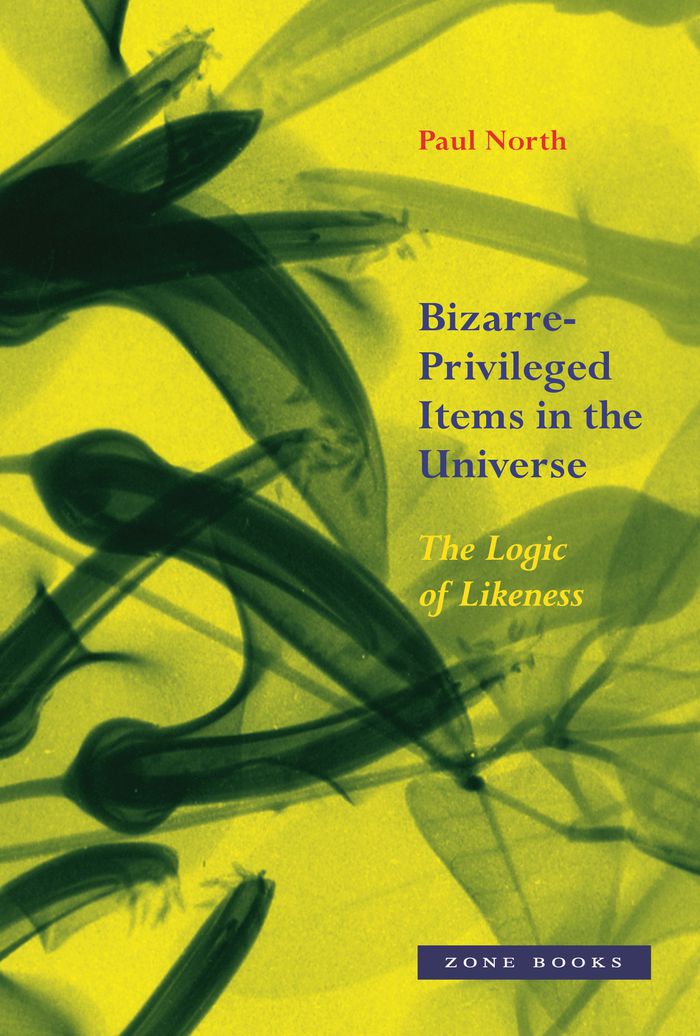
A butterfly is like another butterfly. A butterfly is also like a leaf and at the same time like a paper airplane, an owl’s face, a scholar flying from book to book. The most disparate things approach one another in a butterfly, the sort of dense nodule of likeness that Roger Caillois once proposed calling a 'bizarre-privileged item.' In response, critical theorist Paul(...)
Title:
Bizarre-privileged items in the universe: the logic of likeness
Actions:
Price:
$42.00
(available to order)
Summary:
A butterfly is like another butterfly. A butterfly is also like a leaf and at the same time like a paper airplane, an owl’s face, a scholar flying from book to book. The most disparate things approach one another in a butterfly, the sort of dense nodule of likeness that Roger Caillois once proposed calling a 'bizarre-privileged item.' In response, critical theorist Paul North proposes a spiritual exercise: imagine a universe made up solely of likenesses. There are no things, only traits acting according to the law of series, here and there a thick overlap that appears 'bizarre.' Centuries of thought have fixated on the concept of difference. This book offers a theory that begins from likeness, where, at any instant, a vast array of series proliferates and remote regions come into contact. 'Bizarre-Privileged Items in the Universe' follows likenesses as they traverse physics and the physical universe; evolution and evolutionary theory; psychology and the psyche; sociality, language, and art. Divergent sources from an eccentric history give shape to a new trans-science, 'homeotics.'
Form:
books
books
Publication:
March 2021
March 2021
Subject:
Critical Theory
Critical Theory
Form:
books
books
Price:
$88.00
(available to order)
Summary:
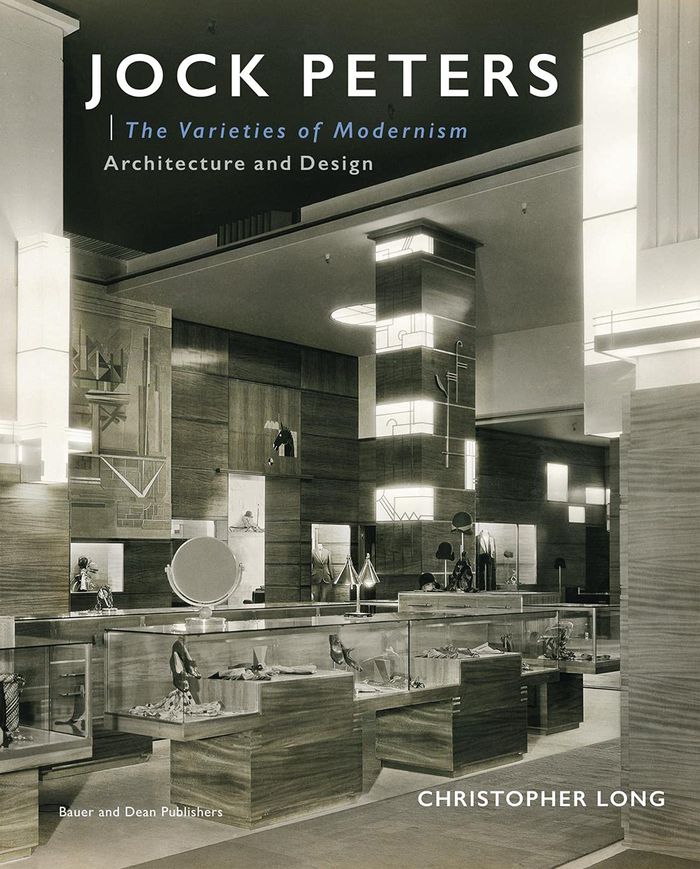
Scholar and historian Christopher Long turns his attention to the little-known German-born architect and designer Jock Peters (1889–1934). Long's engaging study introduces us to the modernist's architectural work in Hamburg, Germany, before World War I, and also to Peters's work created after he immigrated to America in 1922. Most notable are his interiors for the(...)
Title:
Jock Peters: Architecture and design. The varieties of Modernism
Actions:
Price:
$88.00
(available to order)
Summary:
Scholar and historian Christopher Long turns his attention to the little-known German-born architect and designer Jock Peters (1889–1934). Long's engaging study introduces us to the modernist's architectural work in Hamburg, Germany, before World War I, and also to Peters's work created after he immigrated to America in 1922. Most notable are his interiors for the once-famous Hollander department store in New York City and for Bullock's Wilshire in Los Angeles (the building was recently restored by Southwestern Law School). Both projects brought him international recognition. Peters also designed a dynamic sales office building for the short-lived Maddux Air Lines, as well as stores and houses for the developer William Lingenbrink, a major supporter of the burgeoning modernism in Southern California. Aside from his architectural work, Peters designed film sets for Famous Players-Lasky (later Paramount Pictures), working in the famed art department of Hans Dreier. Despite his early death, Peters managed to leave his mark on the modernist landscape in Southern California at a time when the new style was just emerging.
Form:
books
books
Publication:
October 2021
October 2021
Subject:
Modernism
Modernism
Form:
books
books
Actions:
Price:
$29.95
(available to order)
Summary:
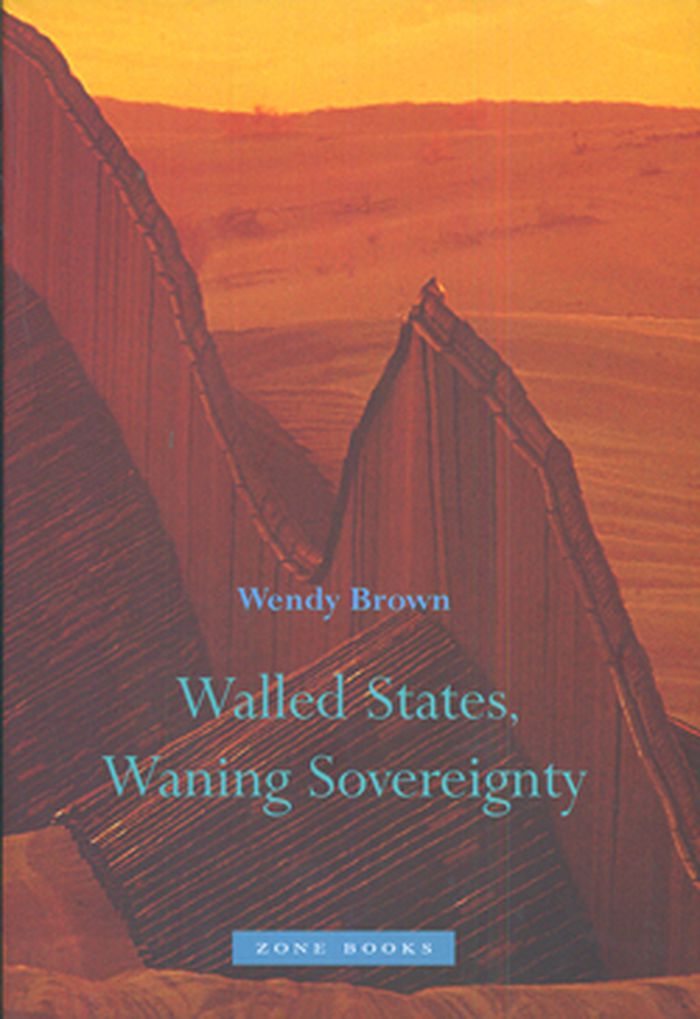
In Walled States, Waning Sovereignty, Wendy Brown considers the recent spate of wall building in contrast to the erosion of nation-state sovereignty. Drawing on classical and contemporary political theories of state sovereignty in order to understand how state power and national identity persist amid its decline, Brown considers both the need of the state for legitimacy(...)
Title:
Walled states, waning sovereignty
Actions:
Price:
$29.95
(available to order)
Summary:
In Walled States, Waning Sovereignty, Wendy Brown considers the recent spate of wall building in contrast to the erosion of nation-state sovereignty. Drawing on classical and contemporary political theories of state sovereignty in order to understand how state power and national identity persist amid its decline, Brown considers both the need of the state for legitimacy and the popular desires that incite the contemporary building of walls. The new walls—dividing Texas from Mexico, Israel from Palestine, South Africa from Zimbabwe—consecrate the broken boundaries they would seem to contest and signify the ungovernability of a range of forces unleashed by globalization. Yet these same walls often amount to little more than theatrical props, frequently breached, and blur the distinction between law and lawlessness that they are intended to represent. But if today's walls fail to resolve the conflicts between globalization and national identity, they nonetheless project a stark image of sovereign power. Walls, Brown argues, address human desires for containment and protection in a world increasingly without these provisions. Walls respond to the wish for horizons even as horizons are vanquished.
Form:
books
books
Publication:
October 2010
October 2010
Subject:
Architectural Theory
Architectural Theory


