


3790 Results
Form:
books
books
Price:
$18.99
(available to order)
Summary:
Ferruccio Vitale is America's forgotten landscape architect. Though his works like Skylands and Longwood Gardens are well known, his name has been eclipsed by his contemporary, Frederick Law Olmsted, Jr. Yet Vitale's influence on the modern direction of landscape design and his promotion of it as a profession is arguably more significant than Olmsted's. His unique designs(...)
Title:
Ferruccio Vitale : landscape architect of the country place Era
Actions:
Price:
$18.99
(available to order)
Summary:
Ferruccio Vitale is America's forgotten landscape architect. Though his works like Skylands and Longwood Gardens are well known, his name has been eclipsed by his contemporary, Frederick Law Olmsted, Jr. Yet Vitale's influence on the modern direction of landscape design and his promotion of it as a profession is arguably more significant than Olmsted's. His unique designs and philosophy, which challenged the then-dominant pictorial mode of landscape architecture, influenced generations of followerss, and is still felt today. Vitale (1875-1933) developed his rationale designs, based on the principles of composition from the fine arts and architecture, in both civic commissions and, most notably, at the country estates of captains of industry and finance, such as Rodman Wanamaker, Pierre S. DuPont, Solomon R. Guggenheim, and Condé Nast. He introduced an idealized and abstracted type of formal design that created beautiful spaces, structured large sites, and reflected informal and relaxed plant compositions. "Ferruccio Vitale" tours over 40 of his masterworks, photographed by some of the best landscape photographers of the time, including Samuel Gottscho. It recounts the compelling story of a life in the twentieth century, influenced by immigrant dreams, social clubs, and professional connections, and its culmination in some of the greatest landscapes of the 20th century.
Form:
books
books
Publication:
November 2001, New York
November 2001, New York
Subject:
Gardens
Gardens
Form:
books
books
Price:
$42.95
(available to order)
Summary:
“All too often,” wrote disabled architect Ronald Mace, “designers don’t take the needs of disabled and elderly people into account.” Building Access investigates twentieth-century strategies for designing the world with disability in mind. Commonly understood in terms of curb cuts, automatic doors, Braille signs, and flexible kitchens, Universal Design purported to create(...)
Title:
Building access: universal design and the politics of disability
Actions:
Price:
$42.95
(available to order)
Summary:
“All too often,” wrote disabled architect Ronald Mace, “designers don’t take the needs of disabled and elderly people into account.” Building Access investigates twentieth-century strategies for designing the world with disability in mind. Commonly understood in terms of curb cuts, automatic doors, Braille signs, and flexible kitchens, Universal Design purported to create a built environment for everyone, not only the average citizen. But who counts as “everyone,” Aimi Hamraie asks, and how can designers know? Blending technoscience studies and design history with critical disability, race, and feminist theories, Building Access interrogates the historical, cultural, and theoretical contexts for these questions, offering a groundbreaking critical history of Universal Design. Hamraie reveals that the twentieth-century shift from “design for the average” to “design for all” took place through liberal political, economic, and scientific structures concerned with defining the disabled user and designing in its name. Tracing the co-evolution of accessible design for disabled veterans, a radical disability maker movement, disability rights law, and strategies for diversifying the architecture profession, Hamraie shows that Universal Design was not just an approach to creating new products or spaces, but also a sustained, understated activist movement challenging dominant understandings of disability in architecture, medicine, and society.
Form:
books
books
Publication:
November 2017
November 2017
Subject:
Architectural Theory
Architectural Theory
Form:
books
books

Actions:
Price:
$51.00
(available to order)
Summary:
How much do criminal acts and their representation in cinema, literature and music really have in common? Is the execution of crime in everyday life as appealing or as inspired as creative artists have made it seem since, say, Arthur Conan Doyle’s Professor Moriarty? Does the film industry continue to learn from the real-life Mafia, or have the imaginings of scriptwriters(...)
Title:
Crime: a series of interviews
Actions:
Price:
$51.00
(available to order)
Summary:
How much do criminal acts and their representation in cinema, literature and music really have in common? Is the execution of crime in everyday life as appealing or as inspired as creative artists have made it seem since, say, Arthur Conan Doyle’s Professor Moriarty? Does the film industry continue to learn from the real-life Mafia, or have the imaginings of scriptwriters had their own effect on organized crime? And what experience do these people who mold our perceptions of crime and criminals have of the real thing? This remarkable book is the first to explore our images of crime by interviewing those involved on, in and around all sides of the law, both real and fictional, and often somewhere in between. Through a series of exclusive interviews with artists, authors and actors such as Ben Affleck, David Cronenberg, Elmore Leonard, Viggo Mortensen, Ice-T, David Mamet and Takeshi Kitano, as well as real life bank robbers, gangsters and current prison inmates, editor Alix Lambert (artist, photographer of Russian prisoners’ tattoos and writer for HBO’s Deadwood) explores the gaps and overlaps between real crime and its representation in the arts, each commenting on and assessing the impact of the other.
Form:
books
books
Publication:
June 2008, London
June 2008, London
Subject:
Art Theory
Art Theory
Form:
books
books
Actions:
Price:
$28.95
(available to order)
Summary:
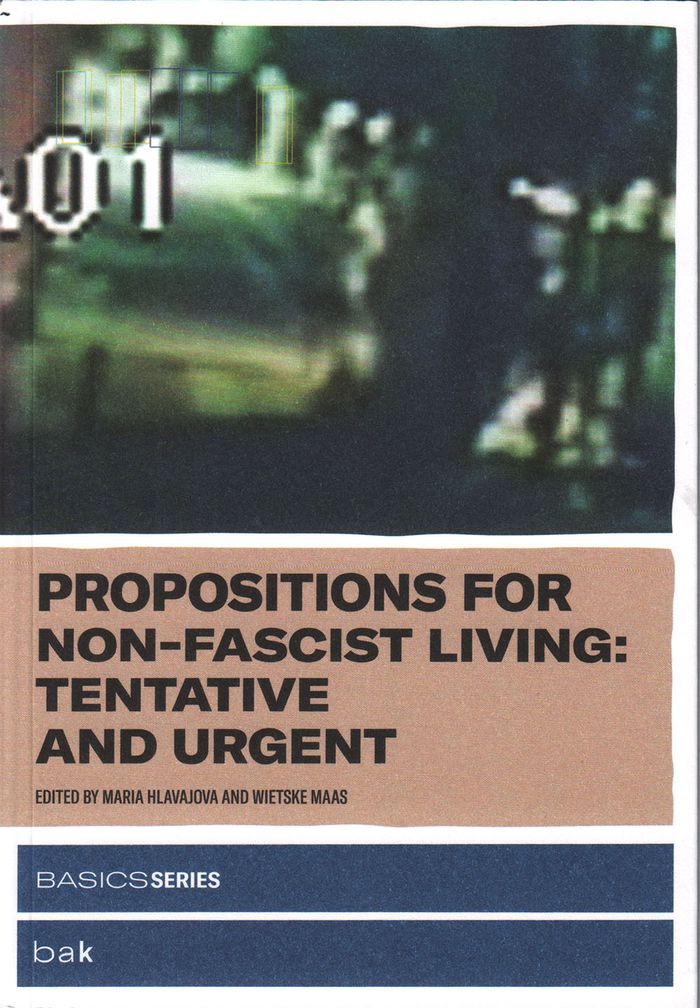
“Propositions for Non-Fascist Living” begins from the urgent need to model a world decidedly void of fascisms during a time when the rise of contemporary fascisms threatens the very foundations of a possibility for common life. Borrowing from Michel Foucault's notion of “non-fascist living” as an “art of living counter to all forms of fascism,” including that “in us all…(...)
Title:
Propositions for non-fascist living: tentative and urgent
Actions:
Price:
$28.95
(available to order)
Summary:
“Propositions for Non-Fascist Living” begins from the urgent need to model a world decidedly void of fascisms during a time when the rise of contemporary fascisms threatens the very foundations of a possibility for common life. Borrowing from Michel Foucault's notion of “non-fascist living” as an “art of living counter to all forms of fascism,” including that “in us all… the fascism that causes us to love power, to desire the very thing that dominates and exploits us,” the book addresses the practice of “living” rather than the mere object of life. Artists, theorists, activists, and scholars offer texts and visual essays that engage varied perspectives on practicing life and articulate methods that support multiplicity and difference rather than vaunting power and hierarchy. Architectural theorist Eyal Weizman, for example, describes an “unlikely common” in gathering evidence against false narratives; art historian and critic Sven Lütticken develops a non-fascist proposition drawn from the intersection of art, technology, and law; philosopher Rosi Braidotti explores an ethics of affirmation and the practices of dying. “Propositions for Non-Fascist Living” is the first in a BASICS series of readers from BAK, “basis voor actuele kunst”, Utrecht, engaging some of the most urgent problems of our time through theoretically informed and politically driven artistic research and practice.
Form:
books
books
Publication:
December 2019
December 2019
Subject:
Critical Theory
Critical Theory
Form:
books
books
Price:
$47.50
(available to order)
Summary:
In times where global matters such as the climate, currencies and places of residence become increasingly volatile, the urban public space we live in is an area where power, identity and belonging are negotiated. Cities have always been melting pots of history, society, art and politics, which is why the way a city is shaped tells us a lot about the people who live in it.(...)
Title:
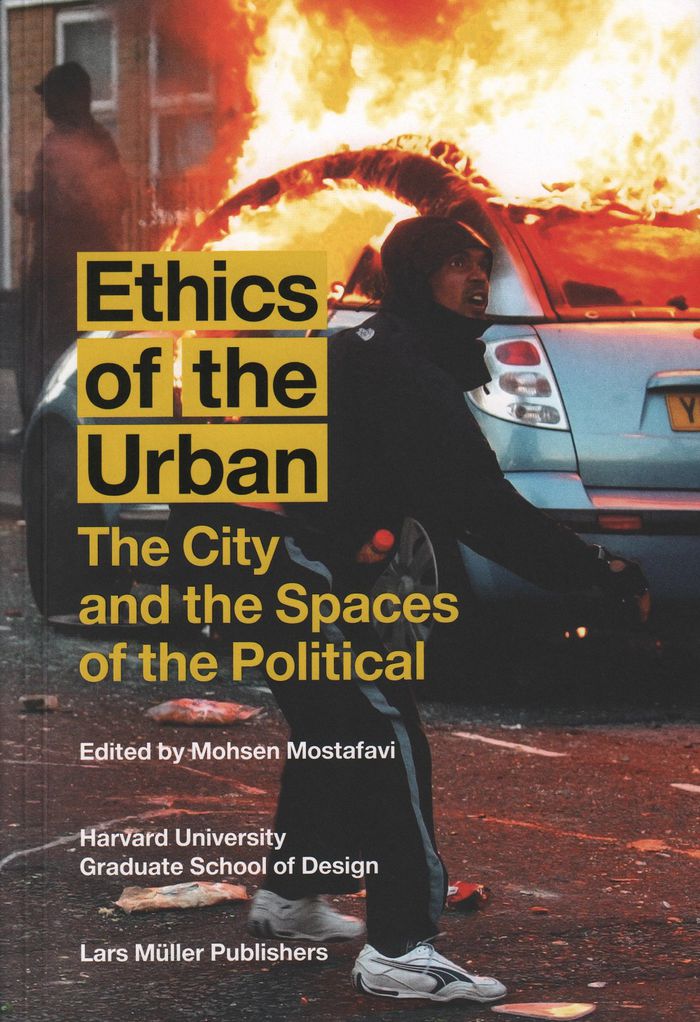
Ethics of the urban: the city and the spaces of the political
Actions:
Price:
$47.50
(available to order)
Summary:
In times where global matters such as the climate, currencies and places of residence become increasingly volatile, the urban public space we live in is an area where power, identity and belonging are negotiated. Cities have always been melting pots of history, society, art and politics, which is why the way a city is shaped tells us a lot about the people who live in it. With contributors from a variety of fields, Ethics of the Urban discusses these urban spaces of the political. "How do we move about the city?", "How does memory of the past inspire the future of cities?" and "What makes a city a home?" are only some of the many questions that Ethics of the Urban addresses. The publication gathers experts from history, sociology, art, political theory, planning, law and design to emphasize the complexity of the meaning that urban space has today. Urban spaces are on one hand political spaces, since buildings, streets and people moving around all mirror political decisions in one way or another. On the other hand, the urban space is also a designed space, conceptualized, planned and sometimes gentrified. Complimented by stunning photography, Ethics of the Urban is a vibrant intellectual journey straight into the bone marrow of every contemporary city around the globe.
Form:
books
books
Publication:
March 2017
March 2017
Subject:
Urban Theory
Urban Theory
Form:
books
books
Title:
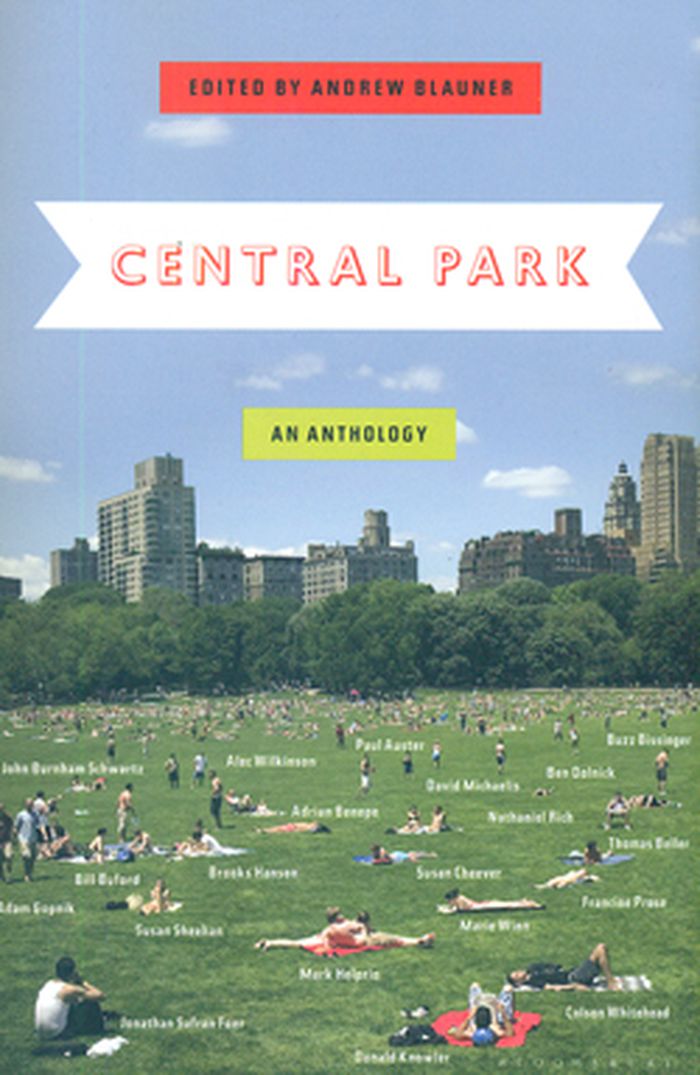
Central park : an anthology
Central park : an anthology
Actions:
Price:
$18.00
(available to order)
Summary:
In a city where people can live sixty-three thousand to a square mile, Central Park is an escape, adventure, meditation, memory, and amusement, and this anthology, comprising the work of some of New York's literary luminaries, is a charming 21-essay tribute to what is probably the most closely watched and monitored 843 acres on Earth. Marie Winn pens a funny letter to(...)
Title:
Central park : an anthology
Actions:
Price:
$18.00
(available to order)
Summary:
In a city where people can live sixty-three thousand to a square mile, Central Park is an escape, adventure, meditation, memory, and amusement, and this anthology, comprising the work of some of New York's literary luminaries, is a charming 21-essay tribute to what is probably the most closely watched and monitored 843 acres on Earth. Marie Winn pens a funny letter to Holden Caulfield about what happens to the park's ducks in winter; Bill Buford tries sleeping there one night; and Nathaniel Rich gives the sentimental history of an annual Thanksgiving touch-football game (the "Turkey-Lurkey Bowl"). Othersa Susan Cheever, Colson Whitehead, Adam Gopnik, and Paul Auster among thema fish for carp, run past Jackie Kennedy, befriend goats at the zoo, and explore the place "where nature is so beautifully and spectacularly kept on a leash." But it wasn't always so: the masterpiece of Frederick Law Olmstead and Calvert Vaux was, at times, a "municipal embarrassment," the site of muggings, murders, anda rumor had ita "a nightmarish water fountain that dribbled raw sewage into the mouths of toddlers." It's clear, by the collection's range, that there must be at least as many Central Parks as there are annual visitors and that's close to 40 million.
Form:
books
books
Publication:
March 2012
March 2012
Subject:
Architectural Theory
Architectural Theory
Form:
books
books
Actions:
Holdings:
Description:
421 pages : illustrations ; 34 cm
Description:
421 pages : illustrations ; 34 cm
Author:
Subject:
Publication:
New York, NY : Vendome Press : Distributed in the USA and Canada by Rizzoli International Publications through St. Martin's Press, 2002.
New York, NY : Vendome Press : Distributed in the USA and Canada by Rizzoli International Publications through St. Martin's Press, 2002.
Title:
Great altarpieces : Gothic and Renaissance / Caterina Virdis Limentani, Mari Pietrogiovanna.
Actions:
Holdings:
Description:
421 pages : illustrations ; 34 cm
Great altarpieces : Gothic and Renaissance / Caterina Virdis Limentani, Mari Pietrogiovanna.
Actions:
Holdings:
Description:
421 pages : illustrations ; 34 cm
Form:
books
books
Publication:
New York, NY : Vendome Press : Distributed in the USA and Canada by Rizzoli International Publications through St. Martin's Press, 2002.
New York, NY : Vendome Press : Distributed in the USA and Canada by Rizzoli International Publications through St. Martin's Press, 2002.
Author:
Subject:
Form:
books
books
Title:
The subversive seventies
The subversive seventies
Actions:
Price:
$33.95
(available in store)
Summary:
A thought-provoking reconsideration of how the revolutionary movements of the 1970s set the mold for today's activism. The 1970s was a decade of "subversives". Faced with various progressive and revolutionary social movements, the forces of order--politicians, law enforcement, journalists, and conservative intellectuals--saw subversives everywhere. From indigenous peasant(...)
Title:
The subversive seventies
Actions:
Price:
$33.95
(available in store)
Summary:
A thought-provoking reconsideration of how the revolutionary movements of the 1970s set the mold for today's activism. The 1970s was a decade of "subversives". Faced with various progressive and revolutionary social movements, the forces of order--politicians, law enforcement, journalists, and conservative intellectuals--saw subversives everywhere. From indigenous peasant armies and gay liberation organizations, to anti-nuclear activists and Black liberation militants, subversives challenged authority, laid siege to the established order, and undermined time-honored ways of life. Every corner of the left was fertile ground for subversive elements, which the forces of order had to root out and destroy--a project they pursued with zeal and brutality. In "The subversive seventies", Michael Hardt sets out to show that popular understandings of the political movements of the seventies--often seen as fractious, violent, and largely unsuccessful--are not just inaccurate, but foreclose valuable lessons for the political struggles of today. While many accounts of the 1970s have been written about the regimes of domination that emerged throughout the decade, Hardt approaches the subversive from the perspectives of those who sought to undermine the base of established authority and transform the fundamental structures of society. In so doing, he provides a novel account of the theoretical and practical projects of liberation that still speak to us today, too many of which have been all but forgotten.
Form:
books
books
Publication:
September 2023
September 2023
Subject:
Social
Social
Form:
books
books
Actions:
Price:
$45.95
(available to order)
Summary:
In his new book, critical theorist Mark Neocleous engages in a sustained critique of the theory and practice of pacification. Combining philosophical analysis with historical detail, Neocleous analyses the development of pacification as a key concept through which capitalist modernity has been organised, offering readers the first book that treats pacification as an(...)
Title:
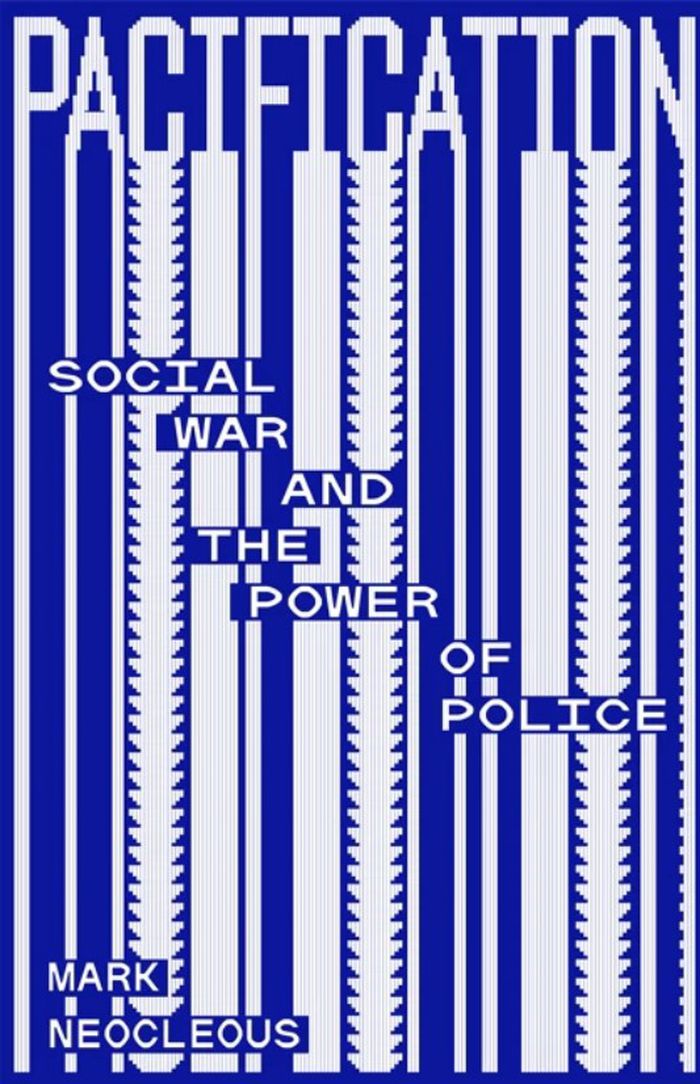
Pacification: Social war and the power of police
Actions:
Price:
$45.95
(available to order)
Summary:
In his new book, critical theorist Mark Neocleous engages in a sustained critique of the theory and practice of pacification. Combining philosophical analysis with historical detail, Neocleous analyses the development of pacification as a key concept through which capitalist modernity has been organised, offering readers the first book that treats pacification as an important concept in the history of state power and capitalism. Neocleous’s approach is fourfold, examining pacification as social warfare carried out through the ideology of peace; as a form of social police carried out through mechanisms of security; as law and order exercised through the permanent wars of class society; and as the myriad practices of power designed to counter insurgency. Making use of official documents of state, the writings of counterinsurgency thinkers and the ideas perpetuated by practitioners of counterrevolution, the book unravels the complex ways through which pacification generates new forms of social war and new modes of policing that reproduce capitalist order and fabricate obedient subjects. Through expansive accounts of war and police, and engaging with a range of topics from debt to death, from stasis to civil war, and from the police kettle to the politics of fear, the book offers a provocative analysis of the ways in which state and capital combine to build a pacified social order.
Form:
books
books
Publication:
February 2025
February 2025
Subject:
Social
Social
Form:
journals and magazines
journals and magazines
Title:
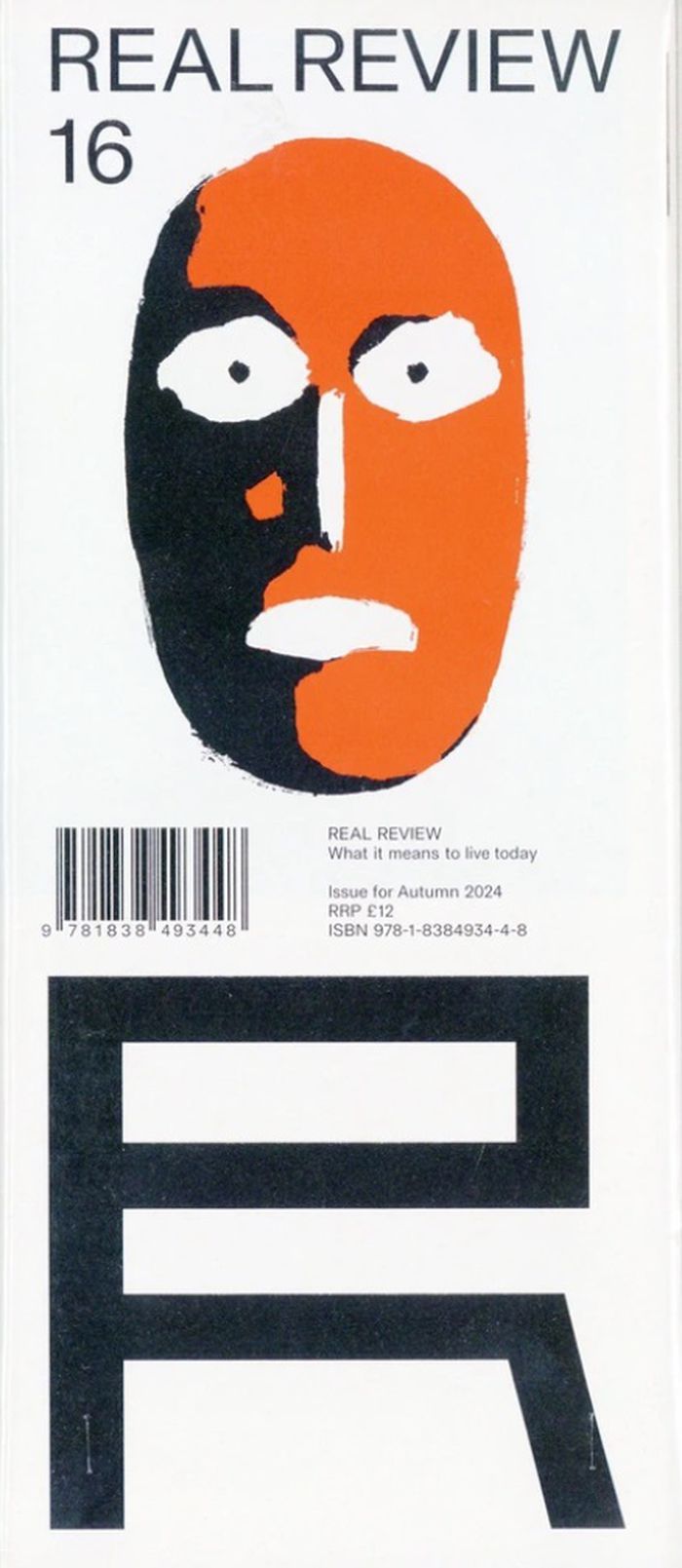
Real Review 16 Autumn 2024
Real Review 16 Autumn 2024
Actions:
Price:
$26.00
(available in store)
Summary:
There is no snow on Mount Fuji. Any hack will tell you the phase change is here, the restructuring of the world is underway. That would be a relief, like a broken fever. But they are wrong. We are still waiting. This period is merely the static on the skin, the rising pressure and building tension before the impending climax of a deluge. We live under a lavender sky,(...)
Title:
Real Review 16 Autumn 2024
Actions:
Price:
$26.00
(available in store)
Summary:
There is no snow on Mount Fuji. Any hack will tell you the phase change is here, the restructuring of the world is underway. That would be a relief, like a broken fever. But they are wrong. We are still waiting. This period is merely the static on the skin, the rising pressure and building tension before the impending climax of a deluge. We live under a lavender sky, silver and green; this is the time of unsettled air, heavy with that metallic smell of the earth. Soon the wind will awake, driving the rain forward like a cloud of smoke. The tremendous powers by which our lives are encompassed are stirring. How can we prepare for this transformation? We interview professor Jonathan White on the future as a political idea. Artist Dozie Kanu presents a flyer for higher education, while Opioid Crisis Lookbook speculates on semiotics. Peter Saville reviews the mood with Jack Self, who reviews voice notes, moral killing, and the Star Trek universe. Isabelle Bucklow binge-watches tech demos. Satoshi Fujiwara captures law enforcement hardware. Ruba Al-Sweel reviews the non-commercial image, while Martina Rocca and Izzy Farmiloe review the production of culture. Carmen Winant documents the last safe abortion, Felix Mcnamara writes notes on minutiae, John Sunyer attends a run club, plus much more.
Form:
journals and magazines
journals and magazines
Publication:
March 2025
March 2025
Subject:
Magazines
Magazines


