


6055 Results
Form:
drawings, textual records, photographs
drawings, textual records, photographs
Reference number:
DR1988:0015:001-029
Description:
Part of a miscellaneous group of visual and textual documents collected by Oswald Mathias Ungers, apparently to represent the work of artists/architects in Die gläserne Kette. Primarily formal studies and other material relating to projects for buildings but also includes biographical material. Includes 17 drawings, 12 photographs, 9 prints, and 4 sheets of text. Most of the drawings are studies of architectonic massing of forms, a few are identified by project name, such as "Das Maler Haus" (the Painter's house) and the Christian Science Cathedral. Design of the subject of the photograph, drawing, or reproduction is attributed to Carl Krayl, following Ungers's attributions, unless otherwise stated. Many of the works in this group are inscribed with the name "Krayl" in blue ball-point pen; this might be the hand-writing of Frau L. Krayl who wrote the note on DR1988:0015:026 R/V. The photographs DR1988:0015:001 to DR1988:0015:006 are of the same model. Tim Benson has suggested that the model is a competition entry for changes to Alexanderplatz, Berlin (Shubert). DR1988:0015:007 to DR1988:0015:009 illustrate different views of the same plaster model. DR1988:0015:010 appears to be a photograph of a model for "Das Maler Haus", which is represented by the prints DR1988:0015:024 and DR1988:0015:025.
DR1988:0015:001-029
Description:
Part of a miscellaneous group of visual and textual documents collected by Oswald Mathias Ungers, apparently to represent the work of artists/architects in Die gläserne Kette. Primarily formal studies and other material relating to projects for buildings but also includes biographical material. Includes 17 drawings, 12 photographs, 9 prints, and 4 sheets of text. Most of the drawings are studies of architectonic massing of forms, a few are identified by project name, such as "Das Maler Haus" (the Painter's house) and the Christian Science Cathedral. Design of the subject of the photograph, drawing, or reproduction is attributed to Carl Krayl, following Ungers's attributions, unless otherwise stated. Many of the works in this group are inscribed with the name "Krayl" in blue ball-point pen; this might be the hand-writing of Frau L. Krayl who wrote the note on DR1988:0015:026 R/V. The photographs DR1988:0015:001 to DR1988:0015:006 are of the same model. Tim Benson has suggested that the model is a competition entry for changes to Alexanderplatz, Berlin (Shubert). DR1988:0015:007 to DR1988:0015:009 illustrate different views of the same plaster model. DR1988:0015:010 appears to be a photograph of a model for "Das Maler Haus", which is represented by the prints DR1988:0015:024 and DR1988:0015:025.
People:
Date:
circa 1918-1945
circa 1918-1945
Title:
Material from Carl Krayl mostly for Die gläserne Kette
Actions:
DR1988:0015:001-029
Description:
Part of a miscellaneous group of visual and textual documents collected by Oswald Mathias Ungers, apparently to represent the work of artists/architects in Die gläserne Kette. Primarily formal studies and other material relating to projects for buildings but also includes biographical material. Includes 17 drawings, 12 photographs, 9 prints, and 4 sheets of text. Most of the drawings are studies of architectonic massing of forms, a few are identified by project name, such as "Das Maler Haus" (the Painter's house) and the Christian Science Cathedral. Design of the subject of the photograph, drawing, or reproduction is attributed to Carl Krayl, following Ungers's attributions, unless otherwise stated. Many of the works in this group are inscribed with the name "Krayl" in blue ball-point pen; this might be the hand-writing of Frau L. Krayl who wrote the note on DR1988:0015:026 R/V. The photographs DR1988:0015:001 to DR1988:0015:006 are of the same model. Tim Benson has suggested that the model is a competition entry for changes to Alexanderplatz, Berlin (Shubert). DR1988:0015:007 to DR1988:0015:009 illustrate different views of the same plaster model. DR1988:0015:010 appears to be a photograph of a model for "Das Maler Haus", which is represented by the prints DR1988:0015:024 and DR1988:0015:025.
Material from Carl Krayl mostly for Die gläserne Kette
Actions:
DR1988:0015:001-029
Description:
Part of a miscellaneous group of visual and textual documents collected by Oswald Mathias Ungers, apparently to represent the work of artists/architects in Die gläserne Kette. Primarily formal studies and other material relating to projects for buildings but also includes biographical material. Includes 17 drawings, 12 photographs, 9 prints, and 4 sheets of text. Most of the drawings are studies of architectonic massing of forms, a few are identified by project name, such as "Das Maler Haus" (the Painter's house) and the Christian Science Cathedral. Design of the subject of the photograph, drawing, or reproduction is attributed to Carl Krayl, following Ungers's attributions, unless otherwise stated. Many of the works in this group are inscribed with the name "Krayl" in blue ball-point pen; this might be the hand-writing of Frau L. Krayl who wrote the note on DR1988:0015:026 R/V. The photographs DR1988:0015:001 to DR1988:0015:006 are of the same model. Tim Benson has suggested that the model is a competition entry for changes to Alexanderplatz, Berlin (Shubert). DR1988:0015:007 to DR1988:0015:009 illustrate different views of the same plaster model. DR1988:0015:010 appears to be a photograph of a model for "Das Maler Haus", which is represented by the prints DR1988:0015:024 and DR1988:0015:025.
Form:
drawings, textual records, photographs
drawings, textual records, photographs
Date:
circa 1918-1945
circa 1918-1945
People:
Form:
drawings
Quantity:
3 portfolio(s)
drawings
Quantity:
3 portfolio(s)
Actions:
Reference number:
DR1974:0002:031:001-055
Description:
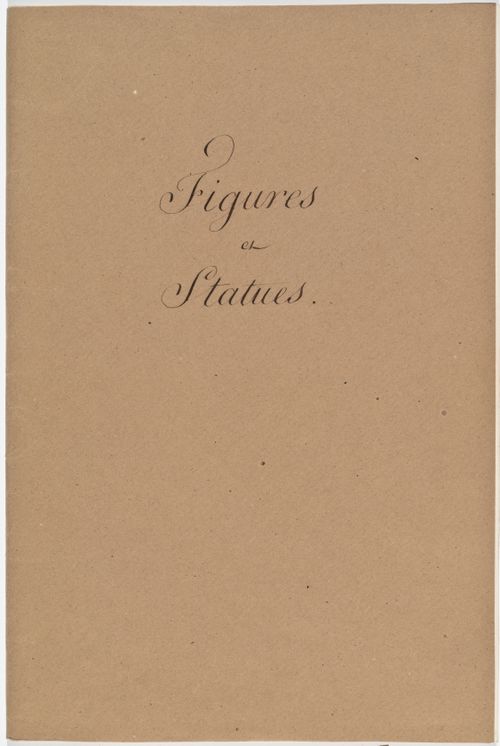
- The three portfolios of this group are entitled: Figures et Statues (DR1974:0002:031:001 - DR1974:0002:031:024), Architecture Antique Mélanges (DR1974:0002:031:025 - DR1974:0002:031:043), and Architecture Moderne Mélanges (DR1974:0002:031:044 - DR1974:0002:031:055). -- Portfolio Figures et Statues comprises primarily drawings of classical figures and architectural sculpture from both antique and 19th century sources. Few of the sources of these drawings are clearly identified, with the exception of Genie de la Liberté from the Colonne de Juillet (DR1974:0002:031:016:003). There are a number of drawings of sculpture from the 16th century tomb monument of Maximillian I in Innsbruck (DR1974:0002:031:017 - DR1974:0002:031:023:001-003). -- Portfolio Architecture Antique Mélanges comprises mostly architectural drawings from buildings or monuments in Pisa, Rome, Tivoli, Naples, Florence, Viterbo, and Nice. Also included are a reconstruction of Pliny the Younger's Villa Laurentine (DR1974:0002:031:043), an orthographic drawing of the L'arc des orfèvres (DR1974:0002:031:032:001-002), and an interior perspective of an imaginary church, perhaps inspired by Pugin (DR1974:0002:031:027). -- Portfolio Architecture Moderne Mélanges comprises drawings which represent the classical tradition of 19th century French and English architecture (Bergdoll, p. 2). The French subjects include the Palais de justice, Amiens (DR1974:0002:031:044:002), the Louvois fountain by Visconti, (DR1974:0002:031:049:002), the Arc du Carrousel (DR1974:0002:031:053:001), and the Vendome column (DR1974:0002:031:053:002). English architecture is represented by Charles Robert Cockerell's Hanover Chapel, Regent Street, London (DR1974:0002:031:054:001), and late Georgian\early Regency houses (DR1974:0002:031:045:001-002 and DR1974:0002:031:046:001-002). The drawings related to Amiens Cathedral (DR1974:0002:031:044:001-002) and the Cloaca Maxima (DR1974:0002:031:052:002) are notable exceptions to the contemporary contents of the folder.
DR1974:0002:031:001-055
Description:
- The three portfolios of this group are entitled: Figures et Statues (DR1974:0002:031:001 - DR1974:0002:031:024), Architecture Antique Mélanges (DR1974:0002:031:025 - DR1974:0002:031:043), and Architecture Moderne Mélanges (DR1974:0002:031:044 - DR1974:0002:031:055). -- Portfolio Figures et Statues comprises primarily drawings of classical figures and architectural sculpture from both antique and 19th century sources. Few of the sources of these drawings are clearly identified, with the exception of Genie de la Liberté from the Colonne de Juillet (DR1974:0002:031:016:003). There are a number of drawings of sculpture from the 16th century tomb monument of Maximillian I in Innsbruck (DR1974:0002:031:017 - DR1974:0002:031:023:001-003). -- Portfolio Architecture Antique Mélanges comprises mostly architectural drawings from buildings or monuments in Pisa, Rome, Tivoli, Naples, Florence, Viterbo, and Nice. Also included are a reconstruction of Pliny the Younger's Villa Laurentine (DR1974:0002:031:043), an orthographic drawing of the L'arc des orfèvres (DR1974:0002:031:032:001-002), and an interior perspective of an imaginary church, perhaps inspired by Pugin (DR1974:0002:031:027). -- Portfolio Architecture Moderne Mélanges comprises drawings which represent the classical tradition of 19th century French and English architecture (Bergdoll, p. 2). The French subjects include the Palais de justice, Amiens (DR1974:0002:031:044:002), the Louvois fountain by Visconti, (DR1974:0002:031:049:002), the Arc du Carrousel (DR1974:0002:031:053:001), and the Vendome column (DR1974:0002:031:053:002). English architecture is represented by Charles Robert Cockerell's Hanover Chapel, Regent Street, London (DR1974:0002:031:054:001), and late Georgian\early Regency houses (DR1974:0002:031:045:001-002 and DR1974:0002:031:046:001-002). The drawings related to Amiens Cathedral (DR1974:0002:031:044:001-002) and the Cloaca Maxima (DR1974:0002:031:052:002) are notable exceptions to the contemporary contents of the folder.
People:
Subject:
architecture, interior design, painting, sculpture
architecture, interior design, painting, sculpture
Date:
between 1800 and 1868
between 1800 and 1868
Title:
Three portfolios of drawings of classical figures, statues from the sepulchral monument of Maximilian I, Innsbruck, and ancient and modern buildings
Actions:
DR1974:0002:031:001-055
Description:
- The three portfolios of this group are entitled: Figures et Statues (DR1974:0002:031:001 - DR1974:0002:031:024), Architecture Antique Mélanges (DR1974:0002:031:025 - DR1974:0002:031:043), and Architecture Moderne Mélanges (DR1974:0002:031:044 - DR1974:0002:031:055). -- Portfolio Figures et Statues comprises primarily drawings of classical figures and architectural sculpture from both antique and 19th century sources. Few of the sources of these drawings are clearly identified, with the exception of Genie de la Liberté from the Colonne de Juillet (DR1974:0002:031:016:003). There are a number of drawings of sculpture from the 16th century tomb monument of Maximillian I in Innsbruck (DR1974:0002:031:017 - DR1974:0002:031:023:001-003). -- Portfolio Architecture Antique Mélanges comprises mostly architectural drawings from buildings or monuments in Pisa, Rome, Tivoli, Naples, Florence, Viterbo, and Nice. Also included are a reconstruction of Pliny the Younger's Villa Laurentine (DR1974:0002:031:043), an orthographic drawing of the L'arc des orfèvres (DR1974:0002:031:032:001-002), and an interior perspective of an imaginary church, perhaps inspired by Pugin (DR1974:0002:031:027). -- Portfolio Architecture Moderne Mélanges comprises drawings which represent the classical tradition of 19th century French and English architecture (Bergdoll, p. 2). The French subjects include the Palais de justice, Amiens (DR1974:0002:031:044:002), the Louvois fountain by Visconti, (DR1974:0002:031:049:002), the Arc du Carrousel (DR1974:0002:031:053:001), and the Vendome column (DR1974:0002:031:053:002). English architecture is represented by Charles Robert Cockerell's Hanover Chapel, Regent Street, London (DR1974:0002:031:054:001), and late Georgian\early Regency houses (DR1974:0002:031:045:001-002 and DR1974:0002:031:046:001-002). The drawings related to Amiens Cathedral (DR1974:0002:031:044:001-002) and the Cloaca Maxima (DR1974:0002:031:052:002) are notable exceptions to the contemporary contents of the folder.
Three portfolios of drawings of classical figures, statues from the sepulchral monument of Maximilian I, Innsbruck, and ancient and modern buildings
Actions:
DR1974:0002:031:001-055
Description:
- The three portfolios of this group are entitled: Figures et Statues (DR1974:0002:031:001 - DR1974:0002:031:024), Architecture Antique Mélanges (DR1974:0002:031:025 - DR1974:0002:031:043), and Architecture Moderne Mélanges (DR1974:0002:031:044 - DR1974:0002:031:055). -- Portfolio Figures et Statues comprises primarily drawings of classical figures and architectural sculpture from both antique and 19th century sources. Few of the sources of these drawings are clearly identified, with the exception of Genie de la Liberté from the Colonne de Juillet (DR1974:0002:031:016:003). There are a number of drawings of sculpture from the 16th century tomb monument of Maximillian I in Innsbruck (DR1974:0002:031:017 - DR1974:0002:031:023:001-003). -- Portfolio Architecture Antique Mélanges comprises mostly architectural drawings from buildings or monuments in Pisa, Rome, Tivoli, Naples, Florence, Viterbo, and Nice. Also included are a reconstruction of Pliny the Younger's Villa Laurentine (DR1974:0002:031:043), an orthographic drawing of the L'arc des orfèvres (DR1974:0002:031:032:001-002), and an interior perspective of an imaginary church, perhaps inspired by Pugin (DR1974:0002:031:027). -- Portfolio Architecture Moderne Mélanges comprises drawings which represent the classical tradition of 19th century French and English architecture (Bergdoll, p. 2). The French subjects include the Palais de justice, Amiens (DR1974:0002:031:044:002), the Louvois fountain by Visconti, (DR1974:0002:031:049:002), the Arc du Carrousel (DR1974:0002:031:053:001), and the Vendome column (DR1974:0002:031:053:002). English architecture is represented by Charles Robert Cockerell's Hanover Chapel, Regent Street, London (DR1974:0002:031:054:001), and late Georgian\early Regency houses (DR1974:0002:031:045:001-002 and DR1974:0002:031:046:001-002). The drawings related to Amiens Cathedral (DR1974:0002:031:044:001-002) and the Cloaca Maxima (DR1974:0002:031:052:002) are notable exceptions to the contemporary contents of the folder.
Form:
drawings
Quantity:
3 portfolio(s)
drawings
Quantity:
3 portfolio(s)
Date:
between 1800 and 1868
between 1800 and 1868
People:
Subject:
architecture, interior design, painting, sculpture
architecture, interior design, painting, sculpture
Form:
archives
Level of archival description:
Fonds
archives
Level of archival description:
Fonds
Title:
Bernard Tschumi fonds
Bernard Tschumi fonds
Actions:
Reference number:
AP214
Synopsis:
The Bernard Tschumi fonds, dating from approximately 1965-2015, documents the professional activities of Bernard Tschumi including Tschumi’s career in academia and his professional practice as an architect through approximately 75 projects dating from the late 1980s to 2012.
AP214
Synopsis:
The Bernard Tschumi fonds, dating from approximately 1965-2015, documents the professional activities of Bernard Tschumi including Tschumi’s career in academia and his professional practice as an architect through approximately 75 projects dating from the late 1980s to 2012.
People:
Date:
circa 1964-2015
circa 1964-2015
Title:
Bernard Tschumi fonds
Actions:
AP214
Synopsis:
The Bernard Tschumi fonds, dating from approximately 1965-2015, documents the professional activities of Bernard Tschumi including Tschumi’s career in academia and his professional practice as an architect through approximately 75 projects dating from the late 1980s to 2012.
Bernard Tschumi fonds
Actions:
AP214
Synopsis:
The Bernard Tschumi fonds, dating from approximately 1965-2015, documents the professional activities of Bernard Tschumi including Tschumi’s career in academia and his professional practice as an architect through approximately 75 projects dating from the late 1980s to 2012.
Form:
archives
Level of archival description:
Fonds
archives
Level of archival description:
Fonds
Date:
circa 1964-2015
circa 1964-2015
People:
Level of archival description:
Series
Series
Title:
Projects
Projects
Reference number:
AP144.S2
Description:
Series documents Cedric Price's projects from his early work in the late 1950s to work dating from the time he founded his own practice in 1960 until 2000. Material includes numerous competition entries, planning and building projects, transportation-related projects, exhibitions, conceptual projects, furniture and interior designs, and monuments, follies, and decorations. Some projects also reflect his teaching, research, lecture and publication activities. Price also worked on several competition juries (see projects Musique, Elephant). Many of Cedric Price's projects in the series are unexecuted. Significant unrealized projects from the 1960s and 1970s include Fun Palace (1961-1974), Potteries Thinkbelt (1963-1967), Oxford Corner House (1965-1966), and Generator (1976-1980). Significant built projects from the same period include the New Aviary (1960-1966), his first major realized project (with Lord Snowdon and Frank Newby), and Inter-Action Centre (1971-1979). Other realized projects include an office building (BTDB Computer, 1968-1973) and restaurant (Blackpool Project, 1971-1975). Planning projects from the 1960s and 1970s include Potteries Thinkbelt, Detroit Think Grid (1969-1971) and Rice University's design charette, Atom (1967). In the 1980s and 1990s, Cedric Price worked on several building proposals including greenhouses (Serre, Serre (2)), museums, galleries, and pavilions (Trafalgar, Pertpavs, Snake), a railway station (Strate (2)), a cultural centre (Tiff), houses (Perthut, Castel), a bus station (Walsall), an aviary (CP Aviary) and office buildings (Domain, Berlin). Planning projects from the same time include parks and cultural complexes, (Parc, South Bank), urban areas, (Strate, Stratton, IFPRI, Haven, Mills), university campuses (Frankfurt, Unibad, Bedford), and rural areas (Stark, Arkage). Transportation-related projects include railways (Strate, Control, Rink), roadways (Stratton) and pedestrian links (Magnet, Halmag, South Bank). Only a few of his projects from that period were executed and those include the renovation projects Congress and SAS 29; a mobile market stall design for Westminster City Council (Westal) for which prototypes were built; a coffee cup design (Crowbar); and building conversion projects Gatard and Juke. Exhibition projects in the series include some devoted to Cedric Price's works (AA Exhibition, Aedes, AFX, Afella), some designed by him (Strike, Food for the Future, Topolski/Waterloo, Ashmole, Mean, AFX), as well as projects designed for exhibition (Citlin, Castel). The series also contains self-financed research and client-less projects, which form a significant part of Cedric Price's practice. Undertaken in anticipation of future clients or new planning needs, they include research into air structures and lightweight enclosures as well as integrated construction and transportation solutions (Trucksafe Air Portable Dock Ahoy), and housing research. South Bank, Magnet, and Duck Land represent a few of the client-less projects. The material in this series documents Cedric Price's work in the United Kingdom, in particular England (the Greater London area, and other areas) and Scotland, Germany, France, Austria, Australia, Japan, the United Arab Emirates, and the United States and other locations such as Canada, Nigeria, and Norway. Major clients include J. Lyons & Co. (Oxford Corner House), David Keddie (Two Tree Island, Southend Roof), Howard Gilman (Generator), British Railways (Strate and Strate (2), and others), the McAlpine family , particularly Alistair McAlpine, and their company Sir Robert McAlpine & Sons Ltd. (McAppy, Perthut, Trafalgar, Pertpavs, Ashmole, Perth, Obeliq, McVance); Établissement Public du Parc de la Villette (Parc, Serre, Serre (2), Musique) and the Canadian Centre for Architecture (IFPRI, Mean). He collaborated with several architects and engineers during the course of his career, his closest association being with engineer Frank Newby and quantity surveyor Douglas Smith. Some of his other collaborators include engineer Max Fordham (Strate (2), Tiff, Berlin), engineering firms Scott Wilson Kirkpatrick and Partners (Stratton, Rink, Control), and Sir Frederick Snow & Partners (South Bank), cybernetician Gordon Pask (Kawasaki/Japnet), architectural firm YRM/Yorke Rosenberg Mardall (Unibad), and architect Richard Rogers (Marman). He also collaborated with members of Archigram on the Trondheim Competition, (1972-1974), and with John and Julia Frazer who provided the computer modelling for Generator. David Price, Cedric Price's brother was the model maker for several projects. The series contains conceptual drawings, design development drawings, reference drawings and maps, presentation drawings (particularly for competitions), and working drawings. A significant amount of textual records are included, especially for projects involving a large amount of research or publicity (Air Structures, Lightweight Enclosures, South Bank, CP Aviary, Stratton), for executed projects, and for the larger unrealized projects like Fun Palace and Generator. Also includes photographic materials of project sites and models. Some models included in the series are made from durable materials (wood, metal, plastic), while others are in-office constructions made out of paper, cardboard and Fome-Cor (TM). Of particular note are the 11 models for Magnet, and a full-size prototype of a market stall for Westal. Series also contains publication layouts, including material for the "Cedric Price Supplement", 'Architectural Design' vols. 40- 42 (1970-1972). Changes in office practice are noted around 1971, evident in the Blackpool Project and later, including the adoption of the metric system, and the creation of working and detail drawings on A4 size paper and filed with textual records (e.g. approximately 300 such drawings are included in the textual records for Blackpool Project). At the same time fewer preamble drawings that relate to site sensing, progress and life-cycle graphs and tables are created for the projects (a common feature from the 1960s), although project progress tables are still used. Of particular interest is material in the Early Work and Miscellaneous Records file (AP144.S2.D1) that relates to office work methods and programmes.
AP144.S2
Description:
Series documents Cedric Price's projects from his early work in the late 1950s to work dating from the time he founded his own practice in 1960 until 2000. Material includes numerous competition entries, planning and building projects, transportation-related projects, exhibitions, conceptual projects, furniture and interior designs, and monuments, follies, and decorations. Some projects also reflect his teaching, research, lecture and publication activities. Price also worked on several competition juries (see projects Musique, Elephant). Many of Cedric Price's projects in the series are unexecuted. Significant unrealized projects from the 1960s and 1970s include Fun Palace (1961-1974), Potteries Thinkbelt (1963-1967), Oxford Corner House (1965-1966), and Generator (1976-1980). Significant built projects from the same period include the New Aviary (1960-1966), his first major realized project (with Lord Snowdon and Frank Newby), and Inter-Action Centre (1971-1979). Other realized projects include an office building (BTDB Computer, 1968-1973) and restaurant (Blackpool Project, 1971-1975). Planning projects from the 1960s and 1970s include Potteries Thinkbelt, Detroit Think Grid (1969-1971) and Rice University's design charette, Atom (1967). In the 1980s and 1990s, Cedric Price worked on several building proposals including greenhouses (Serre, Serre (2)), museums, galleries, and pavilions (Trafalgar, Pertpavs, Snake), a railway station (Strate (2)), a cultural centre (Tiff), houses (Perthut, Castel), a bus station (Walsall), an aviary (CP Aviary) and office buildings (Domain, Berlin). Planning projects from the same time include parks and cultural complexes, (Parc, South Bank), urban areas, (Strate, Stratton, IFPRI, Haven, Mills), university campuses (Frankfurt, Unibad, Bedford), and rural areas (Stark, Arkage). Transportation-related projects include railways (Strate, Control, Rink), roadways (Stratton) and pedestrian links (Magnet, Halmag, South Bank). Only a few of his projects from that period were executed and those include the renovation projects Congress and SAS 29; a mobile market stall design for Westminster City Council (Westal) for which prototypes were built; a coffee cup design (Crowbar); and building conversion projects Gatard and Juke. Exhibition projects in the series include some devoted to Cedric Price's works (AA Exhibition, Aedes, AFX, Afella), some designed by him (Strike, Food for the Future, Topolski/Waterloo, Ashmole, Mean, AFX), as well as projects designed for exhibition (Citlin, Castel). The series also contains self-financed research and client-less projects, which form a significant part of Cedric Price's practice. Undertaken in anticipation of future clients or new planning needs, they include research into air structures and lightweight enclosures as well as integrated construction and transportation solutions (Trucksafe Air Portable Dock Ahoy), and housing research. South Bank, Magnet, and Duck Land represent a few of the client-less projects. The material in this series documents Cedric Price's work in the United Kingdom, in particular England (the Greater London area, and other areas) and Scotland, Germany, France, Austria, Australia, Japan, the United Arab Emirates, and the United States and other locations such as Canada, Nigeria, and Norway. Major clients include J. Lyons & Co. (Oxford Corner House), David Keddie (Two Tree Island, Southend Roof), Howard Gilman (Generator), British Railways (Strate and Strate (2), and others), the McAlpine family , particularly Alistair McAlpine, and their company Sir Robert McAlpine & Sons Ltd. (McAppy, Perthut, Trafalgar, Pertpavs, Ashmole, Perth, Obeliq, McVance); Établissement Public du Parc de la Villette (Parc, Serre, Serre (2), Musique) and the Canadian Centre for Architecture (IFPRI, Mean). He collaborated with several architects and engineers during the course of his career, his closest association being with engineer Frank Newby and quantity surveyor Douglas Smith. Some of his other collaborators include engineer Max Fordham (Strate (2), Tiff, Berlin), engineering firms Scott Wilson Kirkpatrick and Partners (Stratton, Rink, Control), and Sir Frederick Snow & Partners (South Bank), cybernetician Gordon Pask (Kawasaki/Japnet), architectural firm YRM/Yorke Rosenberg Mardall (Unibad), and architect Richard Rogers (Marman). He also collaborated with members of Archigram on the Trondheim Competition, (1972-1974), and with John and Julia Frazer who provided the computer modelling for Generator. David Price, Cedric Price's brother was the model maker for several projects. The series contains conceptual drawings, design development drawings, reference drawings and maps, presentation drawings (particularly for competitions), and working drawings. A significant amount of textual records are included, especially for projects involving a large amount of research or publicity (Air Structures, Lightweight Enclosures, South Bank, CP Aviary, Stratton), for executed projects, and for the larger unrealized projects like Fun Palace and Generator. Also includes photographic materials of project sites and models. Some models included in the series are made from durable materials (wood, metal, plastic), while others are in-office constructions made out of paper, cardboard and Fome-Cor (TM). Of particular note are the 11 models for Magnet, and a full-size prototype of a market stall for Westal. Series also contains publication layouts, including material for the "Cedric Price Supplement", 'Architectural Design' vols. 40- 42 (1970-1972). Changes in office practice are noted around 1971, evident in the Blackpool Project and later, including the adoption of the metric system, and the creation of working and detail drawings on A4 size paper and filed with textual records (e.g. approximately 300 such drawings are included in the textual records for Blackpool Project). At the same time fewer preamble drawings that relate to site sensing, progress and life-cycle graphs and tables are created for the projects (a common feature from the 1960s), although project progress tables are still used. Of particular interest is material in the Early Work and Miscellaneous Records file (AP144.S2.D1) that relates to office work methods and programmes.
People:
Date:
1903-2003, predominant 1960-2000
1903-2003, predominant 1960-2000
Title:
Projects
Actions:
AP144.S2
Description:
Series documents Cedric Price's projects from his early work in the late 1950s to work dating from the time he founded his own practice in 1960 until 2000. Material includes numerous competition entries, planning and building projects, transportation-related projects, exhibitions, conceptual projects, furniture and interior designs, and monuments, follies, and decorations. Some projects also reflect his teaching, research, lecture and publication activities. Price also worked on several competition juries (see projects Musique, Elephant). Many of Cedric Price's projects in the series are unexecuted. Significant unrealized projects from the 1960s and 1970s include Fun Palace (1961-1974), Potteries Thinkbelt (1963-1967), Oxford Corner House (1965-1966), and Generator (1976-1980). Significant built projects from the same period include the New Aviary (1960-1966), his first major realized project (with Lord Snowdon and Frank Newby), and Inter-Action Centre (1971-1979). Other realized projects include an office building (BTDB Computer, 1968-1973) and restaurant (Blackpool Project, 1971-1975). Planning projects from the 1960s and 1970s include Potteries Thinkbelt, Detroit Think Grid (1969-1971) and Rice University's design charette, Atom (1967). In the 1980s and 1990s, Cedric Price worked on several building proposals including greenhouses (Serre, Serre (2)), museums, galleries, and pavilions (Trafalgar, Pertpavs, Snake), a railway station (Strate (2)), a cultural centre (Tiff), houses (Perthut, Castel), a bus station (Walsall), an aviary (CP Aviary) and office buildings (Domain, Berlin). Planning projects from the same time include parks and cultural complexes, (Parc, South Bank), urban areas, (Strate, Stratton, IFPRI, Haven, Mills), university campuses (Frankfurt, Unibad, Bedford), and rural areas (Stark, Arkage). Transportation-related projects include railways (Strate, Control, Rink), roadways (Stratton) and pedestrian links (Magnet, Halmag, South Bank). Only a few of his projects from that period were executed and those include the renovation projects Congress and SAS 29; a mobile market stall design for Westminster City Council (Westal) for which prototypes were built; a coffee cup design (Crowbar); and building conversion projects Gatard and Juke. Exhibition projects in the series include some devoted to Cedric Price's works (AA Exhibition, Aedes, AFX, Afella), some designed by him (Strike, Food for the Future, Topolski/Waterloo, Ashmole, Mean, AFX), as well as projects designed for exhibition (Citlin, Castel). The series also contains self-financed research and client-less projects, which form a significant part of Cedric Price's practice. Undertaken in anticipation of future clients or new planning needs, they include research into air structures and lightweight enclosures as well as integrated construction and transportation solutions (Trucksafe Air Portable Dock Ahoy), and housing research. South Bank, Magnet, and Duck Land represent a few of the client-less projects. The material in this series documents Cedric Price's work in the United Kingdom, in particular England (the Greater London area, and other areas) and Scotland, Germany, France, Austria, Australia, Japan, the United Arab Emirates, and the United States and other locations such as Canada, Nigeria, and Norway. Major clients include J. Lyons & Co. (Oxford Corner House), David Keddie (Two Tree Island, Southend Roof), Howard Gilman (Generator), British Railways (Strate and Strate (2), and others), the McAlpine family , particularly Alistair McAlpine, and their company Sir Robert McAlpine & Sons Ltd. (McAppy, Perthut, Trafalgar, Pertpavs, Ashmole, Perth, Obeliq, McVance); Établissement Public du Parc de la Villette (Parc, Serre, Serre (2), Musique) and the Canadian Centre for Architecture (IFPRI, Mean). He collaborated with several architects and engineers during the course of his career, his closest association being with engineer Frank Newby and quantity surveyor Douglas Smith. Some of his other collaborators include engineer Max Fordham (Strate (2), Tiff, Berlin), engineering firms Scott Wilson Kirkpatrick and Partners (Stratton, Rink, Control), and Sir Frederick Snow & Partners (South Bank), cybernetician Gordon Pask (Kawasaki/Japnet), architectural firm YRM/Yorke Rosenberg Mardall (Unibad), and architect Richard Rogers (Marman). He also collaborated with members of Archigram on the Trondheim Competition, (1972-1974), and with John and Julia Frazer who provided the computer modelling for Generator. David Price, Cedric Price's brother was the model maker for several projects. The series contains conceptual drawings, design development drawings, reference drawings and maps, presentation drawings (particularly for competitions), and working drawings. A significant amount of textual records are included, especially for projects involving a large amount of research or publicity (Air Structures, Lightweight Enclosures, South Bank, CP Aviary, Stratton), for executed projects, and for the larger unrealized projects like Fun Palace and Generator. Also includes photographic materials of project sites and models. Some models included in the series are made from durable materials (wood, metal, plastic), while others are in-office constructions made out of paper, cardboard and Fome-Cor (TM). Of particular note are the 11 models for Magnet, and a full-size prototype of a market stall for Westal. Series also contains publication layouts, including material for the "Cedric Price Supplement", 'Architectural Design' vols. 40- 42 (1970-1972). Changes in office practice are noted around 1971, evident in the Blackpool Project and later, including the adoption of the metric system, and the creation of working and detail drawings on A4 size paper and filed with textual records (e.g. approximately 300 such drawings are included in the textual records for Blackpool Project). At the same time fewer preamble drawings that relate to site sensing, progress and life-cycle graphs and tables are created for the projects (a common feature from the 1960s), although project progress tables are still used. Of particular interest is material in the Early Work and Miscellaneous Records file (AP144.S2.D1) that relates to office work methods and programmes.
Projects
Actions:
AP144.S2
Description:
Series documents Cedric Price's projects from his early work in the late 1950s to work dating from the time he founded his own practice in 1960 until 2000. Material includes numerous competition entries, planning and building projects, transportation-related projects, exhibitions, conceptual projects, furniture and interior designs, and monuments, follies, and decorations. Some projects also reflect his teaching, research, lecture and publication activities. Price also worked on several competition juries (see projects Musique, Elephant). Many of Cedric Price's projects in the series are unexecuted. Significant unrealized projects from the 1960s and 1970s include Fun Palace (1961-1974), Potteries Thinkbelt (1963-1967), Oxford Corner House (1965-1966), and Generator (1976-1980). Significant built projects from the same period include the New Aviary (1960-1966), his first major realized project (with Lord Snowdon and Frank Newby), and Inter-Action Centre (1971-1979). Other realized projects include an office building (BTDB Computer, 1968-1973) and restaurant (Blackpool Project, 1971-1975). Planning projects from the 1960s and 1970s include Potteries Thinkbelt, Detroit Think Grid (1969-1971) and Rice University's design charette, Atom (1967). In the 1980s and 1990s, Cedric Price worked on several building proposals including greenhouses (Serre, Serre (2)), museums, galleries, and pavilions (Trafalgar, Pertpavs, Snake), a railway station (Strate (2)), a cultural centre (Tiff), houses (Perthut, Castel), a bus station (Walsall), an aviary (CP Aviary) and office buildings (Domain, Berlin). Planning projects from the same time include parks and cultural complexes, (Parc, South Bank), urban areas, (Strate, Stratton, IFPRI, Haven, Mills), university campuses (Frankfurt, Unibad, Bedford), and rural areas (Stark, Arkage). Transportation-related projects include railways (Strate, Control, Rink), roadways (Stratton) and pedestrian links (Magnet, Halmag, South Bank). Only a few of his projects from that period were executed and those include the renovation projects Congress and SAS 29; a mobile market stall design for Westminster City Council (Westal) for which prototypes were built; a coffee cup design (Crowbar); and building conversion projects Gatard and Juke. Exhibition projects in the series include some devoted to Cedric Price's works (AA Exhibition, Aedes, AFX, Afella), some designed by him (Strike, Food for the Future, Topolski/Waterloo, Ashmole, Mean, AFX), as well as projects designed for exhibition (Citlin, Castel). The series also contains self-financed research and client-less projects, which form a significant part of Cedric Price's practice. Undertaken in anticipation of future clients or new planning needs, they include research into air structures and lightweight enclosures as well as integrated construction and transportation solutions (Trucksafe Air Portable Dock Ahoy), and housing research. South Bank, Magnet, and Duck Land represent a few of the client-less projects. The material in this series documents Cedric Price's work in the United Kingdom, in particular England (the Greater London area, and other areas) and Scotland, Germany, France, Austria, Australia, Japan, the United Arab Emirates, and the United States and other locations such as Canada, Nigeria, and Norway. Major clients include J. Lyons & Co. (Oxford Corner House), David Keddie (Two Tree Island, Southend Roof), Howard Gilman (Generator), British Railways (Strate and Strate (2), and others), the McAlpine family , particularly Alistair McAlpine, and their company Sir Robert McAlpine & Sons Ltd. (McAppy, Perthut, Trafalgar, Pertpavs, Ashmole, Perth, Obeliq, McVance); Établissement Public du Parc de la Villette (Parc, Serre, Serre (2), Musique) and the Canadian Centre for Architecture (IFPRI, Mean). He collaborated with several architects and engineers during the course of his career, his closest association being with engineer Frank Newby and quantity surveyor Douglas Smith. Some of his other collaborators include engineer Max Fordham (Strate (2), Tiff, Berlin), engineering firms Scott Wilson Kirkpatrick and Partners (Stratton, Rink, Control), and Sir Frederick Snow & Partners (South Bank), cybernetician Gordon Pask (Kawasaki/Japnet), architectural firm YRM/Yorke Rosenberg Mardall (Unibad), and architect Richard Rogers (Marman). He also collaborated with members of Archigram on the Trondheim Competition, (1972-1974), and with John and Julia Frazer who provided the computer modelling for Generator. David Price, Cedric Price's brother was the model maker for several projects. The series contains conceptual drawings, design development drawings, reference drawings and maps, presentation drawings (particularly for competitions), and working drawings. A significant amount of textual records are included, especially for projects involving a large amount of research or publicity (Air Structures, Lightweight Enclosures, South Bank, CP Aviary, Stratton), for executed projects, and for the larger unrealized projects like Fun Palace and Generator. Also includes photographic materials of project sites and models. Some models included in the series are made from durable materials (wood, metal, plastic), while others are in-office constructions made out of paper, cardboard and Fome-Cor (TM). Of particular note are the 11 models for Magnet, and a full-size prototype of a market stall for Westal. Series also contains publication layouts, including material for the "Cedric Price Supplement", 'Architectural Design' vols. 40- 42 (1970-1972). Changes in office practice are noted around 1971, evident in the Blackpool Project and later, including the adoption of the metric system, and the creation of working and detail drawings on A4 size paper and filed with textual records (e.g. approximately 300 such drawings are included in the textual records for Blackpool Project). At the same time fewer preamble drawings that relate to site sensing, progress and life-cycle graphs and tables are created for the projects (a common feature from the 1960s), although project progress tables are still used. Of particular interest is material in the Early Work and Miscellaneous Records file (AP144.S2.D1) that relates to office work methods and programmes.
Level of archival description:
Series
Series
Date:
1903-2003, predominant 1960-2000
1903-2003, predominant 1960-2000
People:
Form:
drawings
drawings
Reference number:
DR2006:0003
Description:
Le collage intitulé " Galerie de la grande architecture canadienne " a été produit dans le contexte de l'exposition " Canada-Trajectoires 1973 " présentée au Musée national d'art moderne de la ville de Paris au cours de l'été 1973. Le collage, appliqué sur papier cartonné, représente une sélection de textes et d'images d'œuvres exposées par Melvin Charney lors de cette exposition. L'objectif de l'exposition "Canada-Trajectoires 1973 " était de réunir des artistes ou des regroupements d'artistes engagés dans des discours critiques et de présenter leur travail non pas tant comme des oeuvres d'art mais plutôt " comme symptômes d'un certain climat ." (1) Selon le catalogue de l'exposition, et les divers comptes rendus qui en ont été fait dans la presse spécialisée, celle-ci était divisée en cinq sections. Quatre de ces sections étaient consacrées à des médiums spécifiques : art céramique, vidéo, peinture et sculpture, cinéma. Une cinquième section présentait des œuvres produites par des collectif d'artistes quelques soit le médium employé: galerie coopérative, coop d'artistes, workshop, banques d'images. C'est dans cette dernière section que Melvin Charney présenta trois projets créé avec l'assistance d'un groupe d'"action photographique", soit un "pavillon d'exposition" réalisé en 1969, une "monument à l'aviation" (1969) et "une galerie de la grande architecture" (1973). Dans un texte de Melvin Charney publié dans le catalogue de l'exposition, ces trois projets furent présentés sous l'intitulé "Quelques monuments nationaux". Le collage incorpore en une première strate collée obliquement par rapport au sens du carton d'œuvre, une image (en partie rognée), un texte manifeste (en partie coupée) et un intitulé. Ces trois éléments de toutes évidences se rapportent à L'ensemble des trois projets présenté par Charney. Sur une seconde strate, collée dans le sens du carton d'œuvres, Charney a collé des textes et des images se rapportant à deux des projets soit "une galerie de la grande architecture" (image et texte 25, 26 31 et 34, et monument à l'aviation, image et texte 50. Le collage est signé et daté en bas à droite. Des indications d'intercalation d'illustration au crayon graphite, - avec la mention "cut line" - détermine à même le carton d'œuvre, une zone regroupant l'ensemble des textes et des images collés. Au dos du collage figure à nouveau la signature de Charney et une numéro d'inventaire renvoyant possiblement à un catalogue constitué par Charney de son œuvre : "MC 1973 ? 02". Ce collage a servi de maquette pour la production d'une affiche publicisant l'exposition, ce qui explique la présence d'indications d'intercalation d'illustrations - une donnée signalant en règle générale que l'œuvre a été produite pour être publiée. (2) Ceci dit on ne sait pas si celle-ci fut effectivement tirée (nous n'en connaissons aucun exemplaire) avant, pendant ou après l'exposition. Cet aspect de l'historique de cette œuvre reste encore au moment où nous écrivons, à éclaircir. On peut établir toutefois avec certitude que cette œuvre, ou l'affiche qui en fut éventuellement tirée, a servi à produire la mise en page d'un article de Melvin Charney publié en avril 1974 dans la revue britannique Architectural Design. Un transparent a sans doute été pris du collage puis envoyé avec l'article de Charney à l'éditeur. Ce dernier a, à son tour, cadré l'image en fonction des indications d'intercalation d'illustrations latérales et supérieure,- on observe que le 3 de 1973 est bel et bien coupé - puis a éliminé les trois quart inférieur pour y placer le texte de l'article. La présence dans l'article publié du nom du musée d'art moderne de la ville de Paris - section arc, et son absence dans le collage est du à une perte. Un examen attentif révèle des marques sans doute de colle pour la bandelette de papier. Dans cet article publié en anglais Charney. 1- Suzanne Page, Canada trajectoires 73 : Musée d'art moderne de la ville de Paris, [Montréal?] : Publié par les Éditions Médiart pour le compte du Conseil des arts du Canada, [1973], [introduction] 2- Information fournie par l,artiste; voir aussi la légende de l'œuvre lors de sa reproduction dans un catalogue en 2000 où elle est décrite comme étant une maquette pour une affiche en offset sur papier.
DR2006:0003
Description:
Le collage intitulé " Galerie de la grande architecture canadienne " a été produit dans le contexte de l'exposition " Canada-Trajectoires 1973 " présentée au Musée national d'art moderne de la ville de Paris au cours de l'été 1973. Le collage, appliqué sur papier cartonné, représente une sélection de textes et d'images d'œuvres exposées par Melvin Charney lors de cette exposition. L'objectif de l'exposition "Canada-Trajectoires 1973 " était de réunir des artistes ou des regroupements d'artistes engagés dans des discours critiques et de présenter leur travail non pas tant comme des oeuvres d'art mais plutôt " comme symptômes d'un certain climat ." (1) Selon le catalogue de l'exposition, et les divers comptes rendus qui en ont été fait dans la presse spécialisée, celle-ci était divisée en cinq sections. Quatre de ces sections étaient consacrées à des médiums spécifiques : art céramique, vidéo, peinture et sculpture, cinéma. Une cinquième section présentait des œuvres produites par des collectif d'artistes quelques soit le médium employé: galerie coopérative, coop d'artistes, workshop, banques d'images. C'est dans cette dernière section que Melvin Charney présenta trois projets créé avec l'assistance d'un groupe d'"action photographique", soit un "pavillon d'exposition" réalisé en 1969, une "monument à l'aviation" (1969) et "une galerie de la grande architecture" (1973). Dans un texte de Melvin Charney publié dans le catalogue de l'exposition, ces trois projets furent présentés sous l'intitulé "Quelques monuments nationaux". Le collage incorpore en une première strate collée obliquement par rapport au sens du carton d'œuvre, une image (en partie rognée), un texte manifeste (en partie coupée) et un intitulé. Ces trois éléments de toutes évidences se rapportent à L'ensemble des trois projets présenté par Charney. Sur une seconde strate, collée dans le sens du carton d'œuvres, Charney a collé des textes et des images se rapportant à deux des projets soit "une galerie de la grande architecture" (image et texte 25, 26 31 et 34, et monument à l'aviation, image et texte 50. Le collage est signé et daté en bas à droite. Des indications d'intercalation d'illustration au crayon graphite, - avec la mention "cut line" - détermine à même le carton d'œuvre, une zone regroupant l'ensemble des textes et des images collés. Au dos du collage figure à nouveau la signature de Charney et une numéro d'inventaire renvoyant possiblement à un catalogue constitué par Charney de son œuvre : "MC 1973 ? 02". Ce collage a servi de maquette pour la production d'une affiche publicisant l'exposition, ce qui explique la présence d'indications d'intercalation d'illustrations - une donnée signalant en règle générale que l'œuvre a été produite pour être publiée. (2) Ceci dit on ne sait pas si celle-ci fut effectivement tirée (nous n'en connaissons aucun exemplaire) avant, pendant ou après l'exposition. Cet aspect de l'historique de cette œuvre reste encore au moment où nous écrivons, à éclaircir. On peut établir toutefois avec certitude que cette œuvre, ou l'affiche qui en fut éventuellement tirée, a servi à produire la mise en page d'un article de Melvin Charney publié en avril 1974 dans la revue britannique Architectural Design. Un transparent a sans doute été pris du collage puis envoyé avec l'article de Charney à l'éditeur. Ce dernier a, à son tour, cadré l'image en fonction des indications d'intercalation d'illustrations latérales et supérieure,- on observe que le 3 de 1973 est bel et bien coupé - puis a éliminé les trois quart inférieur pour y placer le texte de l'article. La présence dans l'article publié du nom du musée d'art moderne de la ville de Paris - section arc, et son absence dans le collage est du à une perte. Un examen attentif révèle des marques sans doute de colle pour la bandelette de papier. Dans cet article publié en anglais Charney. 1- Suzanne Page, Canada trajectoires 73 : Musée d'art moderne de la ville de Paris, [Montréal?] : Publié par les Éditions Médiart pour le compte du Conseil des arts du Canada, [1973], [introduction] 2- Information fournie par l,artiste; voir aussi la légende de l'œuvre lors de sa reproduction dans un catalogue en 2000 où elle est décrite comme étant une maquette pour une affiche en offset sur papier.
People:
Date:
1973
1973
Title:
Some national monuments, Canada trajectories
Actions:
DR2006:0003
Description:
Le collage intitulé " Galerie de la grande architecture canadienne " a été produit dans le contexte de l'exposition " Canada-Trajectoires 1973 " présentée au Musée national d'art moderne de la ville de Paris au cours de l'été 1973. Le collage, appliqué sur papier cartonné, représente une sélection de textes et d'images d'œuvres exposées par Melvin Charney lors de cette exposition. L'objectif de l'exposition "Canada-Trajectoires 1973 " était de réunir des artistes ou des regroupements d'artistes engagés dans des discours critiques et de présenter leur travail non pas tant comme des oeuvres d'art mais plutôt " comme symptômes d'un certain climat ." (1) Selon le catalogue de l'exposition, et les divers comptes rendus qui en ont été fait dans la presse spécialisée, celle-ci était divisée en cinq sections. Quatre de ces sections étaient consacrées à des médiums spécifiques : art céramique, vidéo, peinture et sculpture, cinéma. Une cinquième section présentait des œuvres produites par des collectif d'artistes quelques soit le médium employé: galerie coopérative, coop d'artistes, workshop, banques d'images. C'est dans cette dernière section que Melvin Charney présenta trois projets créé avec l'assistance d'un groupe d'"action photographique", soit un "pavillon d'exposition" réalisé en 1969, une "monument à l'aviation" (1969) et "une galerie de la grande architecture" (1973). Dans un texte de Melvin Charney publié dans le catalogue de l'exposition, ces trois projets furent présentés sous l'intitulé "Quelques monuments nationaux". Le collage incorpore en une première strate collée obliquement par rapport au sens du carton d'œuvre, une image (en partie rognée), un texte manifeste (en partie coupée) et un intitulé. Ces trois éléments de toutes évidences se rapportent à L'ensemble des trois projets présenté par Charney. Sur une seconde strate, collée dans le sens du carton d'œuvres, Charney a collé des textes et des images se rapportant à deux des projets soit "une galerie de la grande architecture" (image et texte 25, 26 31 et 34, et monument à l'aviation, image et texte 50. Le collage est signé et daté en bas à droite. Des indications d'intercalation d'illustration au crayon graphite, - avec la mention "cut line" - détermine à même le carton d'œuvre, une zone regroupant l'ensemble des textes et des images collés. Au dos du collage figure à nouveau la signature de Charney et une numéro d'inventaire renvoyant possiblement à un catalogue constitué par Charney de son œuvre : "MC 1973 ? 02". Ce collage a servi de maquette pour la production d'une affiche publicisant l'exposition, ce qui explique la présence d'indications d'intercalation d'illustrations - une donnée signalant en règle générale que l'œuvre a été produite pour être publiée. (2) Ceci dit on ne sait pas si celle-ci fut effectivement tirée (nous n'en connaissons aucun exemplaire) avant, pendant ou après l'exposition. Cet aspect de l'historique de cette œuvre reste encore au moment où nous écrivons, à éclaircir. On peut établir toutefois avec certitude que cette œuvre, ou l'affiche qui en fut éventuellement tirée, a servi à produire la mise en page d'un article de Melvin Charney publié en avril 1974 dans la revue britannique Architectural Design. Un transparent a sans doute été pris du collage puis envoyé avec l'article de Charney à l'éditeur. Ce dernier a, à son tour, cadré l'image en fonction des indications d'intercalation d'illustrations latérales et supérieure,- on observe que le 3 de 1973 est bel et bien coupé - puis a éliminé les trois quart inférieur pour y placer le texte de l'article. La présence dans l'article publié du nom du musée d'art moderne de la ville de Paris - section arc, et son absence dans le collage est du à une perte. Un examen attentif révèle des marques sans doute de colle pour la bandelette de papier. Dans cet article publié en anglais Charney. 1- Suzanne Page, Canada trajectoires 73 : Musée d'art moderne de la ville de Paris, [Montréal?] : Publié par les Éditions Médiart pour le compte du Conseil des arts du Canada, [1973], [introduction] 2- Information fournie par l,artiste; voir aussi la légende de l'œuvre lors de sa reproduction dans un catalogue en 2000 où elle est décrite comme étant une maquette pour une affiche en offset sur papier.
Some national monuments, Canada trajectories
Actions:
DR2006:0003
Description:
Le collage intitulé " Galerie de la grande architecture canadienne " a été produit dans le contexte de l'exposition " Canada-Trajectoires 1973 " présentée au Musée national d'art moderne de la ville de Paris au cours de l'été 1973. Le collage, appliqué sur papier cartonné, représente une sélection de textes et d'images d'œuvres exposées par Melvin Charney lors de cette exposition. L'objectif de l'exposition "Canada-Trajectoires 1973 " était de réunir des artistes ou des regroupements d'artistes engagés dans des discours critiques et de présenter leur travail non pas tant comme des oeuvres d'art mais plutôt " comme symptômes d'un certain climat ." (1) Selon le catalogue de l'exposition, et les divers comptes rendus qui en ont été fait dans la presse spécialisée, celle-ci était divisée en cinq sections. Quatre de ces sections étaient consacrées à des médiums spécifiques : art céramique, vidéo, peinture et sculpture, cinéma. Une cinquième section présentait des œuvres produites par des collectif d'artistes quelques soit le médium employé: galerie coopérative, coop d'artistes, workshop, banques d'images. C'est dans cette dernière section que Melvin Charney présenta trois projets créé avec l'assistance d'un groupe d'"action photographique", soit un "pavillon d'exposition" réalisé en 1969, une "monument à l'aviation" (1969) et "une galerie de la grande architecture" (1973). Dans un texte de Melvin Charney publié dans le catalogue de l'exposition, ces trois projets furent présentés sous l'intitulé "Quelques monuments nationaux". Le collage incorpore en une première strate collée obliquement par rapport au sens du carton d'œuvre, une image (en partie rognée), un texte manifeste (en partie coupée) et un intitulé. Ces trois éléments de toutes évidences se rapportent à L'ensemble des trois projets présenté par Charney. Sur une seconde strate, collée dans le sens du carton d'œuvres, Charney a collé des textes et des images se rapportant à deux des projets soit "une galerie de la grande architecture" (image et texte 25, 26 31 et 34, et monument à l'aviation, image et texte 50. Le collage est signé et daté en bas à droite. Des indications d'intercalation d'illustration au crayon graphite, - avec la mention "cut line" - détermine à même le carton d'œuvre, une zone regroupant l'ensemble des textes et des images collés. Au dos du collage figure à nouveau la signature de Charney et une numéro d'inventaire renvoyant possiblement à un catalogue constitué par Charney de son œuvre : "MC 1973 ? 02". Ce collage a servi de maquette pour la production d'une affiche publicisant l'exposition, ce qui explique la présence d'indications d'intercalation d'illustrations - une donnée signalant en règle générale que l'œuvre a été produite pour être publiée. (2) Ceci dit on ne sait pas si celle-ci fut effectivement tirée (nous n'en connaissons aucun exemplaire) avant, pendant ou après l'exposition. Cet aspect de l'historique de cette œuvre reste encore au moment où nous écrivons, à éclaircir. On peut établir toutefois avec certitude que cette œuvre, ou l'affiche qui en fut éventuellement tirée, a servi à produire la mise en page d'un article de Melvin Charney publié en avril 1974 dans la revue britannique Architectural Design. Un transparent a sans doute été pris du collage puis envoyé avec l'article de Charney à l'éditeur. Ce dernier a, à son tour, cadré l'image en fonction des indications d'intercalation d'illustrations latérales et supérieure,- on observe que le 3 de 1973 est bel et bien coupé - puis a éliminé les trois quart inférieur pour y placer le texte de l'article. La présence dans l'article publié du nom du musée d'art moderne de la ville de Paris - section arc, et son absence dans le collage est du à une perte. Un examen attentif révèle des marques sans doute de colle pour la bandelette de papier. Dans cet article publié en anglais Charney. 1- Suzanne Page, Canada trajectoires 73 : Musée d'art moderne de la ville de Paris, [Montréal?] : Publié par les Éditions Médiart pour le compte du Conseil des arts du Canada, [1973], [introduction] 2- Information fournie par l,artiste; voir aussi la légende de l'œuvre lors de sa reproduction dans un catalogue en 2000 où elle est décrite comme étant une maquette pour une affiche en offset sur papier.
Form:
drawings
drawings
Date:
1973
1973
People:
Form:
graphic materials
graphic materials
Holdings:
Description:
1 print : engraving ; sheet 19 x 27 cm.
Description:
1 print : engraving ; sheet 19 x 27 cm.
Author:
Publication:
[S.l. : s.n., ca. 1700]
[S.l. : s.n., ca. 1700]
Title:
[Representation of architecture] / Le Pautre in. et sculp.
Actions:
Holdings:
Description:
1 print : engraving ; sheet 19 x 27 cm.
[Representation of architecture] / Le Pautre in. et sculp.
Actions:
Holdings:
Description:
1 print : engraving ; sheet 19 x 27 cm.
Form:
graphic materials
graphic materials
Publication:
[S.l. : s.n., ca. 1700]
[S.l. : s.n., ca. 1700]
Author:
Form:
books
books
Actions:
Subject:
Publication:
L'Internationale Online 2015
L'Internationale Online 2015
Form:
books
books
Publication:
L'Internationale Online 2015
L'Internationale Online 2015
Subject:
Form:
books
books
Actions:
Holdings:
Description:
1 audiocassette : analog ; in plastic folder 17 x 13 cm + 24 slides (color)
Description:
1 audiocassette : analog ; in plastic folder 17 x 13 cm + 24 slides (color)
Author:
Subject:
Publication:
London : Pidgeon Audio Visual : [Distributed by World Microfilms Publications], [1986]
London : Pidgeon Audio Visual : [Distributed by World Microfilms Publications], [1986]
Title:
The representation of opposites / Peter Ahrends.
Actions:
Holdings:
Description:
1 audiocassette : analog ; in plastic folder 17 x 13 cm + 24 slides (color)
The representation of opposites / Peter Ahrends.
Actions:
Holdings:
Description:
1 audiocassette : analog ; in plastic folder 17 x 13 cm + 24 slides (color)
Form:
books
books
Publication:
London : Pidgeon Audio Visual : [Distributed by World Microfilms Publications], [1986]
London : Pidgeon Audio Visual : [Distributed by World Microfilms Publications], [1986]
Author:
Subject:
Form:
books
books
Actions:
Holdings:
Description:
272p. : ill. ; 22 cm.
Description:
272p. : ill. ; 22 cm.
Author:
Subject:
Publication:
Basingstoke : Macmillan, 2000.
Basingstoke : Macmillan, 2000.
Title:
Representation and photography : a Screen Education reader / edited by Manuel Alvarado, Edward Buscombe and Richard Collins.
Actions:
Holdings:
Description:
272p. : ill. ; 22 cm.
Representation and photography : a Screen Education reader / edited by Manuel Alvarado, Edward Buscombe and Richard Collins.
Actions:
Holdings:
Description:
272p. : ill. ; 22 cm.
Form:
books
books
Publication:
Basingstoke : Macmillan, 2000.
Basingstoke : Macmillan, 2000.
Author:
Subject:
Form:
books
books
Actions:
Holdings:
Description:
xiv, 228 pages : illustrations ; 29 cm
Description:
xiv, 228 pages : illustrations ; 29 cm
Author:
Subject:
Publication:
Berkeley, Calif. : University of California Press, 1997.
Berkeley, Calif. : University of California Press, 1997.
Title:
Representation of places : reality and realism in city design / Peter Bosselmann.
Actions:
Holdings:
Description:
xiv, 228 pages : illustrations ; 29 cm
Representation of places : reality and realism in city design / Peter Bosselmann.
Actions:
Holdings:
Description:
xiv, 228 pages : illustrations ; 29 cm
Form:
books
books
Publication:
Berkeley, Calif. : University of California Press, 1997.
Berkeley, Calif. : University of California Press, 1997.
Author:
Subject:


