


4226 Results
Form:
books
books
Price:
$68.00
(available to order)
Summary:
The typical town springs up around a natural resource—a river, an ocean, an exceptionally deep harbor—or in proximity to a larger, already thriving town. Not so with “new towns,” which are created by decree rather than out of necessity and are often intended to break from the tendencies of past development. New towns aren’t a new thing—ancient Phoenicians named their(...)
Title:
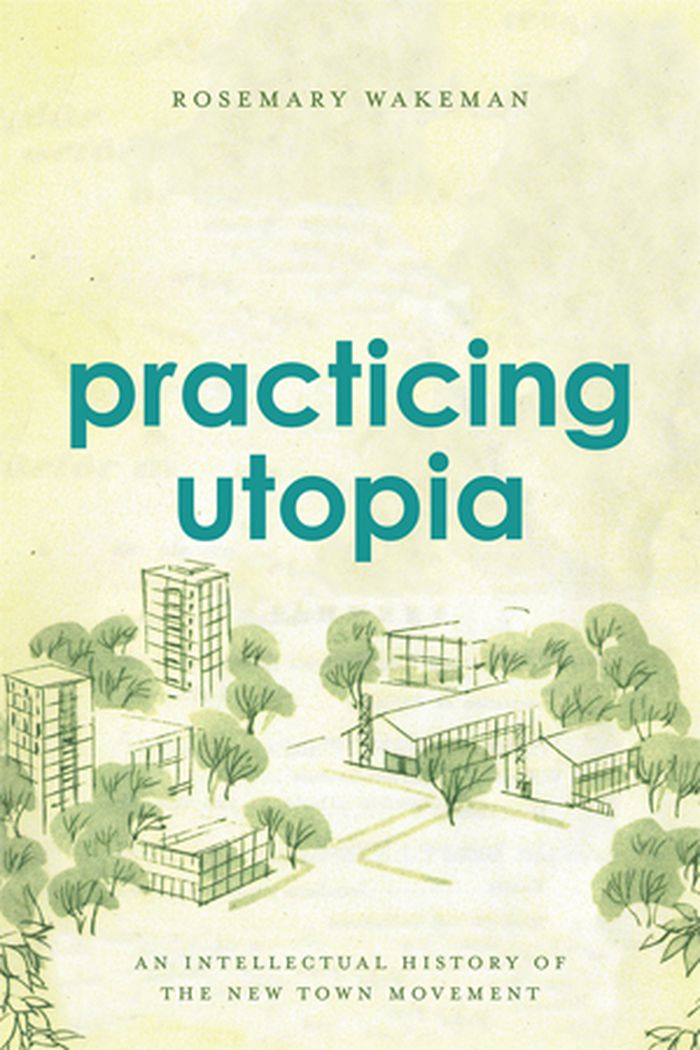
Practicing Utopia: an intellectual history of the New Town movement
Actions:
Price:
$68.00
(available to order)
Summary:
The typical town springs up around a natural resource—a river, an ocean, an exceptionally deep harbor—or in proximity to a larger, already thriving town. Not so with “new towns,” which are created by decree rather than out of necessity and are often intended to break from the tendencies of past development. New towns aren’t a new thing—ancient Phoenicians named their colonies Qart Hadasht, or New City—but these utopian developments saw a resurgence in the twentieth century. 'In Practicing Utopia,' Rosemary Wakeman gives us a sweeping view of the new town movement as a global phenomenon. From Tapiola in Finland to Islamabad in Pakistan, Cergy-Pontoise in France to Irvine in California, Wakeman unspools a masterly account of the golden age of new towns, exploring their utopian qualities and investigating what these towns can tell us about contemporary modernization and urban planning. She presents the new town movement as something truly global, defying a Cold War East-West dichotomy or the north-south polarization of rich and poor countries. Wherever these new towns were located, whatever their size, whether famous or forgotten, they shared a utopian lineage and conception that, in each case, reveals how residents and planners imagined their ideal urban future.
Form:
books
books
Publication:
April 2016
April 2016
Subject:
Urban Theory
Urban Theory
Form:
books
books
Price:
$56.50
(available to order)
Summary:
In an effort to create a secure urban environment in which residents can work, live, and prosper with minimal disruption, New York and London established a network of laws, policing, and municipal government in the nineteenth century aimed at building the confidence of the citizenry and creating stability for economic growth. At the same time, these two world cities(...)
Title:
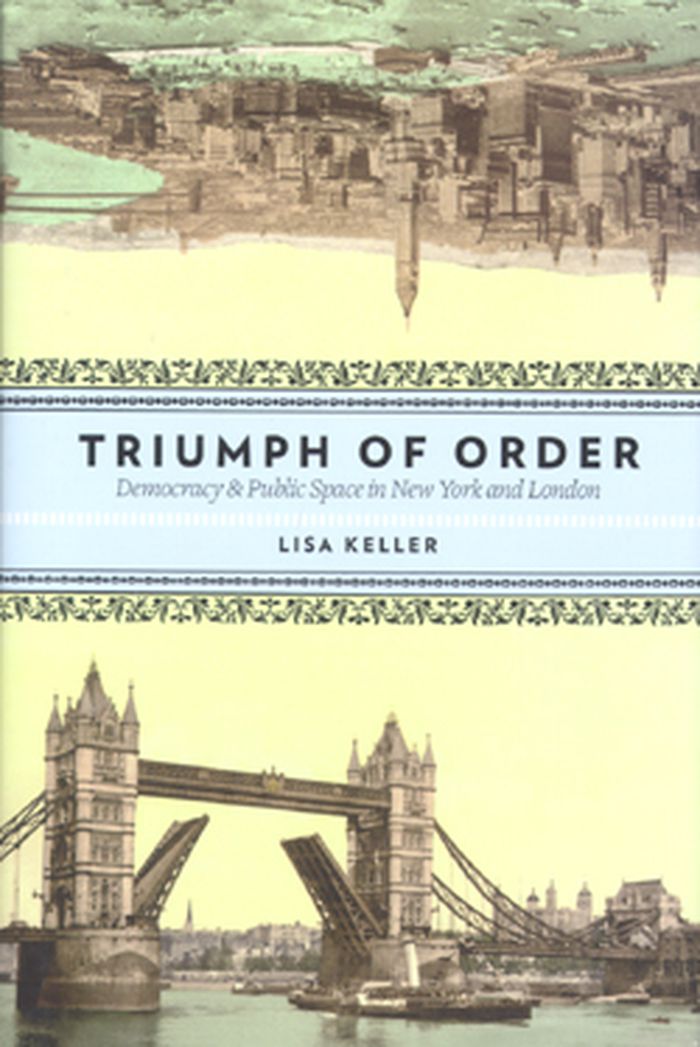
Triumph of order, democracy and public space in New York and London
Actions:
Price:
$56.50
(available to order)
Summary:
In an effort to create a secure urban environment in which residents can work, live, and prosper with minimal disruption, New York and London established a network of laws, policing, and municipal government in the nineteenth century aimed at building the confidence of the citizenry and creating stability for economic growth. At the same time, these two world cities attempted to maintain an expansive level of free speech and assembly, concepts deeply ingrained in both national cultures. As democracy expanded in tandem with the size of the cities themselves, the two goals clashed, resulting in tensions over their compatibility. The results of this clash continue to resonate in our society today. Treating nineteenth-century London and New York as case studies, Lisa Keller examines the critical development of sanctioned free speech, controlled public assembly, new urban regulations, and the quelling of riots, all in the name of a proper regard for order. Drawing on rich archival sources that include the unpublished correspondence of government officials and ordinary citizens, Keller paints an intimate portrait of daily life in these two cities and the intricacies of their emerging bureaucracies. She finds that New York eventually settled on a policy of preempting disruption before it occurred, while London chose a path of greater tolerance toward street activities.
Form:
books
books
Publication:
November 2008, New -York
November 2008, New -York
Subject:
Urban Theory
Urban Theory
Form:
books
books
Title:
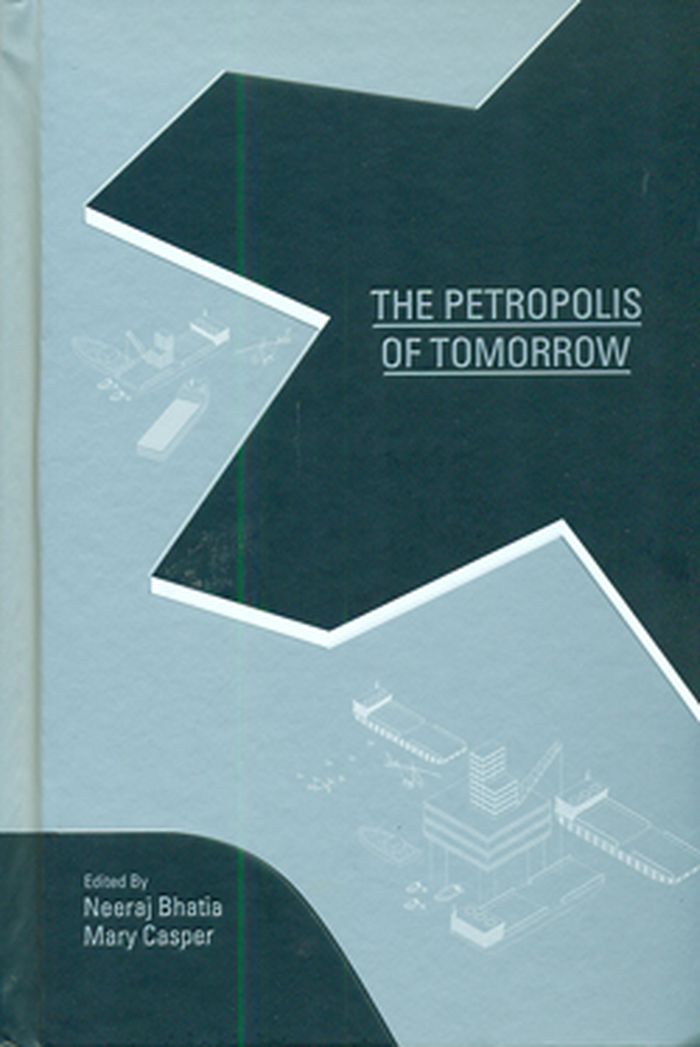
The petropolis of tomorrow
The petropolis of tomorrow
Actions:
Price:
$39.95
(available to order)
Summary:
In recent years, Brazil has discovered vast quantities of petroleum deep within its territorial waters, inciting the construction of a series of cities along its coast and in the ocean. We could term these developments as Petropolises, or cities formed from resource extraction. The Petropolis of Tomorrow is a design and research project, originally undertaken at Rice(...)
Title:
The petropolis of tomorrow
Actions:
Price:
$39.95
(available to order)
Summary:
In recent years, Brazil has discovered vast quantities of petroleum deep within its territorial waters, inciting the construction of a series of cities along its coast and in the ocean. We could term these developments as Petropolises, or cities formed from resource extraction. The Petropolis of Tomorrow is a design and research project, originally undertaken at Rice University that examines the relationship between resource extraction and urban development in order to extract new templates for sustainable urbanism. Organized into three sections: Archipelago Urbanism, Harvesting Urbanism, and Logistical Urbanism, which consist of theoretical, technical, and photo articles as well as design proposals, The Petropolis of Tomorrow elucidates not only a vision for water-based urbanism of the floating frontier city, it also speculates on new methodologies for integrating infrastructure, landscape, urbanism and architecture within the larger spheres of economics, politics, and culture that implicate these disciplines.
Form:
books
books
Publication:
August 2013
August 2013
Subject:
Urban Theory
Urban Theory
Form:
books
books
Actions:
Holdings:
Description:
431 pages : illustrations (some color) ; 28 cm
Description:
431 pages : illustrations (some color) ; 28 cm
Author:
Subject:
Publication:
Matosinhos : Casa da Arquitectura, [2024]., New Haven ; London : Distributed by Yale University Press., ©2024
Matosinhos : Casa da Arquitectura, [2024]., New Haven ; London : Distributed by Yale University Press., ©2024
Title:
Constructed geographies : Paulo Mendes da Rocha / Jean-Louis Cohen, Vanessa Grossman.
Actions:
Holdings:
Description:
431 pages : illustrations (some color) ; 28 cm
Constructed geographies : Paulo Mendes da Rocha / Jean-Louis Cohen, Vanessa Grossman.
Actions:
Holdings:
Description:
431 pages : illustrations (some color) ; 28 cm
Form:
books
books
Publication:
Matosinhos : Casa da Arquitectura, [2024]., New Haven ; London : Distributed by Yale University Press., ©2024
Matosinhos : Casa da Arquitectura, [2024]., New Haven ; London : Distributed by Yale University Press., ©2024
Author:
Subject:
Form:
books
books
Holdings:
Description:
527 pages : illustrations (chiefly color) ; 28 cm
Description:
527 pages : illustrations (chiefly color) ; 28 cm
Author:
Subject:
Publication:
London ; New York : Phaidon, 2012.
London ; New York : Phaidon, 2012.
Title:
The future of architecture, since 1889 / Jean-Louis Cohen.
Actions:
Holdings:
Description:
527 pages : illustrations (chiefly color) ; 28 cm
The future of architecture, since 1889 / Jean-Louis Cohen.
Actions:
Holdings:
Description:
527 pages : illustrations (chiefly color) ; 28 cm
Form:
books
books
Publication:
London ; New York : Phaidon, 2012.
London ; New York : Phaidon, 2012.
Author:
Subject:
Form:
books
books
Actions:
Price:
$32.95
(available to order)
Summary:
New edition of this 1933 classic on the development of American cities with an introduction by Andrea Tuttle Kornbluh.
$32.95
(available to order)
Summary:
New edition of this 1933 classic on the development of American cities with an introduction by Andrea Tuttle Kornbluh.
Title:
The rise of the city 1878-1898
Actions:
Price:
$32.95
(available to order)
Summary:
New edition of this 1933 classic on the development of American cities with an introduction by Andrea Tuttle Kornbluh.
The rise of the city 1878-1898
Actions:
Price:
$32.95
(available to order)
Summary:
New edition of this 1933 classic on the development of American cities with an introduction by Andrea Tuttle Kornbluh.
Form:
books
books
Publication:
September 1999, Columbus, Ohio
September 1999, Columbus, Ohio
Subject:
Urban Theory
Urban Theory
Form:
books
books
Actions:
Holdings:
Description:
216 pages : illustrations (some color) ; 28 cm
Description:
216 pages : illustrations (some color) ; 28 cm
Author:
Subject:
Publication:
New York : The Museum of Modern Art , [2012], New York : Artbook/D.A.P ; London : Thames & Hudson Ltd., ©2012
New York : The Museum of Modern Art , [2012], New York : Artbook/D.A.P ; London : Thames & Hudson Ltd., ©2012
Title:
Tokyo, 1955-1970 : a new Avant-Garde / Doryun Chong ; with essays by Michio Hayashi, Mika Yoshitake, Miryam Sas ; and additional contributions by Mitsuda Yuri, Nakajima Masatoshi.
Actions:
Holdings:
Description:
216 pages : illustrations (some color) ; 28 cm
Tokyo, 1955-1970 : a new Avant-Garde / Doryun Chong ; with essays by Michio Hayashi, Mika Yoshitake, Miryam Sas ; and additional contributions by Mitsuda Yuri, Nakajima Masatoshi.
Actions:
Holdings:
Description:
216 pages : illustrations (some color) ; 28 cm
Form:
books
books
Publication:
New York : The Museum of Modern Art , [2012], New York : Artbook/D.A.P ; London : Thames & Hudson Ltd., ©2012
New York : The Museum of Modern Art , [2012], New York : Artbook/D.A.P ; London : Thames & Hudson Ltd., ©2012
Author:
Subject:
Form:
video
video
Title:
The Isms Of Architecture.
The Isms Of Architecture.
Actions:
Description:
1 online resource (1 video file (32 minutes)) : sound, color
Author:
Subject:
Publication:
London, England : Pidgeon Digital, 1982.
London, England : Pidgeon Digital, 1982.
Title:
The Isms Of Architecture.
Actions:
Description:
1 online resource (1 video file (32 minutes)) : sound, color
The Isms Of Architecture.
Actions:
Description:
1 online resource (1 video file (32 minutes)) : sound, color
Form:
video
video
Publication:
London, England : Pidgeon Digital, 1982.
London, England : Pidgeon Digital, 1982.
Author:
Subject:
Form:
books
books
Price:
$64.95
(available to order)
Summary:
This book investigates the characteristics of today's built environment: no longer simply a city but increasingly large conurbations made up of a number of development clusters, linked by transport routes. The diffusion of the once compact city into a city web, the 'meta city' is mirrored by changes in society from communities with strong social cohesion and interest in(...)
Title:
Cities without cities : an interpretation of the Zwischenstadt
Actions:
Price:
$64.95
(available to order)
Summary:
This book investigates the characteristics of today's built environment: no longer simply a city but increasingly large conurbations made up of a number of development clusters, linked by transport routes. The diffusion of the once compact city into a city web, the 'meta city' is mirrored by changes in society from communities with strong social cohesion and interest in their towns and cities to individuals pursing their own goals, with global social links and little interest in their own town or city other than the quality of their personal space. The account is complex and on a number of levels; social, philosophical, economic and environmental. The difficulties in managing or even controlling the city web, divided arbitrarily into areas of limited size and political power, are enormous. Areas compete with each other rather than co-operate. The book provides a better understanding of this new type of urban form and argues for a change in planning systems for better management.
Form:
books
books
Publication:
November 2003, London
November 2003, London
Subject:
Urban Theory
Urban Theory
Form:
books
books
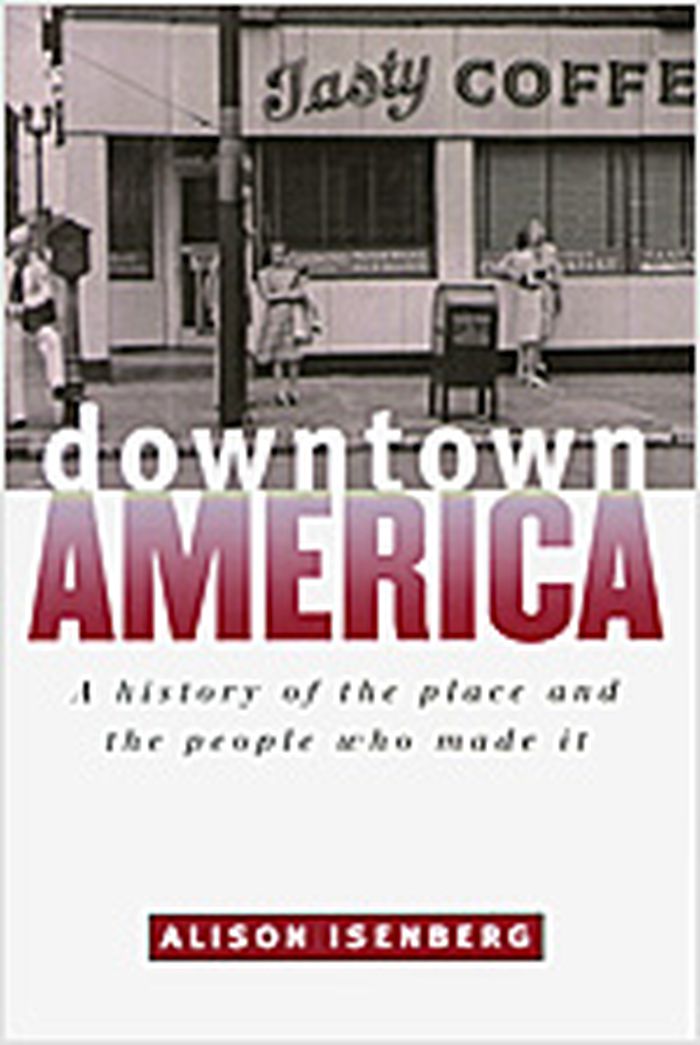
Price:
$28.50
(available to order)
Summary:
"Downtown America" was once the vibrant urban center romanticized in the Petula Clark song-a place where the lights were brighter, where people went to spend their money and forget their worries. But in the second half of the twentieth century, "downtown" became a shadow of its former self, succumbing to economic competition and commercial decline. And the death of Main(...)
Title:
Downtown America : a history of the place and the people who made it
Actions:
Price:
$28.50
(available to order)
Summary:
"Downtown America" was once the vibrant urban center romanticized in the Petula Clark song-a place where the lights were brighter, where people went to spend their money and forget their worries. But in the second half of the twentieth century, "downtown" became a shadow of its former self, succumbing to economic competition and commercial decline. And the death of Main Streets across the country came to be seen as sadly inexorable, like the passing of an aged loved one. "Downtown America" cuts beneath the archetypal story of downtown's rise and fall and offers a new story of urban development in the United States. Moving beyond conventional narratives, Alison Isenberg shows that downtown's trajectory was not dictated by inevitable free market forces or natural life-and-death cycles. Instead, it was the product of human actors-the contested creation of retailers, developers, government leaders, architects, and planners, as well as political activists, consumers, civic clubs, real estate appraisers, even postcard artists. Throughout the twentieth century, conflicts over downtown's mundane conditions-what it should look like and who should walk its streets-pointed to fundamental disagreements over American values. Isenberg reveals how the innovative efforts of these participants infused Main Street with its resonant symbolism, while still accounting for pervasive uncertainty and fears of decline. Readers of this work will find anything but a story of inevitability. Even some of the downtown's darkest moments-the Great Depression's collapse in land values, the rioting and looting of the 1960s, or abandonment and vacancy during the 1970s-illuminate how core cultural values have animated and intertwined with economic investment to reinvent the physical form and social experiences of urban commerce. "Downtown America"-its empty stores, revitalized marketplaces, and romanticized past-will never look quite the same again.
Form:
books
books
Publication:
January 1900, Chicago, London
January 1900, Chicago, London
Subject:
Urban Theory
Urban Theory


