


3892 Results
Form:
books
books
Actions:
Price:
$41.95
(available in store)
Summary:
In 1972, Gordon Matta-Clark (1943–78) installed a dumpster on the street between 98 and 112 Greene Street in New York’s SoHo neighborhood, an architectural artwork he called 'Open House'. Matta-Clark used discarded, scavenged materials—old pieces of wood, doors—to subdivide the space inside the dumpster, creating corridors and small rooms within the container. Dancers and(...)
$41.95
(available in store)
Summary:
In 1972, Gordon Matta-Clark (1943–78) installed a dumpster on the street between 98 and 112 Greene Street in New York’s SoHo neighborhood, an architectural artwork he called 'Open House'. Matta-Clark used discarded, scavenged materials—old pieces of wood, doors—to subdivide the space inside the dumpster, creating corridors and small rooms within the container. Dancers and(...)
Subject:
Contemporary Art Monographs
Contemporary Art Monographs
Publication:
April 2020
April 2020
Title:
Gordon Matta-Clark: Open house
Actions:
Price:
$41.95
(available in store)
Summary:
In 1972, Gordon Matta-Clark (1943–78) installed a dumpster on the street between 98 and 112 Greene Street in New York’s SoHo neighborhood, an architectural artwork he called 'Open House'. Matta-Clark used discarded, scavenged materials—old pieces of wood, doors—to subdivide the space inside the dumpster, creating corridors and small rooms within the container. Dancers and artists moved around the space, their pedestrian movements activating the sculpture and captured in a Super-8 film of the piece. Matta-Clark is best known for his building cuts and architectural interventions. Because of the nature of this work and its context—sited in spaces abandoned or slated for demolition—Matta-Clark’s “anarchitecture” was almost necessarily ephemeral, surviving as only documentation and sculptural sections. 'Open House' (1972) is the only still-extant architectural piece by Matta-Clark. 'Gordon Matta-Clark: Open House' is the first publication to focus on this crucial piece by the artist, using it as a way into his complex body of work. Featuring contributions from Sophie Costes, Thierry Davila and Lydia Yee, this volume takes a historical and theoretical approach to Open House and Matta-Clark’s entire oeuvre.
Gordon Matta-Clark: Open house
Actions:
Price:
$41.95
(available in store)
Summary:
In 1972, Gordon Matta-Clark (1943–78) installed a dumpster on the street between 98 and 112 Greene Street in New York’s SoHo neighborhood, an architectural artwork he called 'Open House'. Matta-Clark used discarded, scavenged materials—old pieces of wood, doors—to subdivide the space inside the dumpster, creating corridors and small rooms within the container. Dancers and artists moved around the space, their pedestrian movements activating the sculpture and captured in a Super-8 film of the piece. Matta-Clark is best known for his building cuts and architectural interventions. Because of the nature of this work and its context—sited in spaces abandoned or slated for demolition—Matta-Clark’s “anarchitecture” was almost necessarily ephemeral, surviving as only documentation and sculptural sections. 'Open House' (1972) is the only still-extant architectural piece by Matta-Clark. 'Gordon Matta-Clark: Open House' is the first publication to focus on this crucial piece by the artist, using it as a way into his complex body of work. Featuring contributions from Sophie Costes, Thierry Davila and Lydia Yee, this volume takes a historical and theoretical approach to Open House and Matta-Clark’s entire oeuvre.
Form:
books
books
Publication:
April 2020
April 2020
Subject:
Contemporary Art Monographs
Contemporary Art Monographs
Form:
books
books
Actions:
Price:
$16.00
(available to order)
Summary:
The German photographer Kerstin Flake has made an impact with her enigmatic pictures of bizarre configurations, taken with an analog large-format camera. In Replaces she has photographed installations in empty industrial premises at the Gründerzeithaus in Leipzig, which functions as her studio. The geography here is significant, as this part of the former East Germany is(...)
$16.00
(available to order)
Summary:
The German photographer Kerstin Flake has made an impact with her enigmatic pictures of bizarre configurations, taken with an analog large-format camera. In Replaces she has photographed installations in empty industrial premises at the Gründerzeithaus in Leipzig, which functions as her studio. The geography here is significant, as this part of the former East Germany is(...)
Title:
Angle 15°: Kerstin Flake, replaces
Actions:
Price:
$16.00
(available to order)
Summary:
The German photographer Kerstin Flake has made an impact with her enigmatic pictures of bizarre configurations, taken with an analog large-format camera. In Replaces she has photographed installations in empty industrial premises at the Gründerzeithaus in Leipzig, which functions as her studio. The geography here is significant, as this part of the former East Germany is rapidly changing. New capital is being generated as a result of hectic property speculation, and in parallel old industry has ground to a halt – its traditional rooting has been lost, and the present is in a state of flux. In Flake’s work the spaces have been emptied of their original function, and the normal physical rules of the game have been abandoned. The places emerge anew, now dominated by irrational compositional principles. Objects are animated like props on a stage. Worn-out window frames on edge and doors stand vertically in the room – the spatial elements stand like absurd exclamation marks that prevent both exit and entry. Furniture is stacked hysterically, with a crazed logic. Men in suits appear in the compositions as rigid horizontal objects, trousered legs create diagonal lines. As a pointed statement this publication is a poetic but also politically oriented investigation of displacements and alternative logic
Angle 15°: Kerstin Flake, replaces
Actions:
Price:
$16.00
(available to order)
Summary:
The German photographer Kerstin Flake has made an impact with her enigmatic pictures of bizarre configurations, taken with an analog large-format camera. In Replaces she has photographed installations in empty industrial premises at the Gründerzeithaus in Leipzig, which functions as her studio. The geography here is significant, as this part of the former East Germany is rapidly changing. New capital is being generated as a result of hectic property speculation, and in parallel old industry has ground to a halt – its traditional rooting has been lost, and the present is in a state of flux. In Flake’s work the spaces have been emptied of their original function, and the normal physical rules of the game have been abandoned. The places emerge anew, now dominated by irrational compositional principles. Objects are animated like props on a stage. Worn-out window frames on edge and doors stand vertically in the room – the spatial elements stand like absurd exclamation marks that prevent both exit and entry. Furniture is stacked hysterically, with a crazed logic. Men in suits appear in the compositions as rigid horizontal objects, trousered legs create diagonal lines. As a pointed statement this publication is a poetic but also politically oriented investigation of displacements and alternative logic
Form:
books
books
Publication:
October 2023
October 2023
Subject:
Photography monographs
Photography monographs
Form:
books
books
Price:
$42.95
(available to order)
Summary:
“All too often,” wrote disabled architect Ronald Mace, “designers don’t take the needs of disabled and elderly people into account.” Building Access investigates twentieth-century strategies for designing the world with disability in mind. Commonly understood in terms of curb cuts, automatic doors, Braille signs, and flexible kitchens, Universal Design purported to create(...)
$42.95
(available to order)
Summary:
“All too often,” wrote disabled architect Ronald Mace, “designers don’t take the needs of disabled and elderly people into account.” Building Access investigates twentieth-century strategies for designing the world with disability in mind. Commonly understood in terms of curb cuts, automatic doors, Braille signs, and flexible kitchens, Universal Design purported to create(...)
Title:
Building access: universal design and the politics of disability
Actions:
Price:
$42.95
(available to order)
Summary:
“All too often,” wrote disabled architect Ronald Mace, “designers don’t take the needs of disabled and elderly people into account.” Building Access investigates twentieth-century strategies for designing the world with disability in mind. Commonly understood in terms of curb cuts, automatic doors, Braille signs, and flexible kitchens, Universal Design purported to create a built environment for everyone, not only the average citizen. But who counts as “everyone,” Aimi Hamraie asks, and how can designers know? Blending technoscience studies and design history with critical disability, race, and feminist theories, Building Access interrogates the historical, cultural, and theoretical contexts for these questions, offering a groundbreaking critical history of Universal Design. Hamraie reveals that the twentieth-century shift from “design for the average” to “design for all” took place through liberal political, economic, and scientific structures concerned with defining the disabled user and designing in its name. Tracing the co-evolution of accessible design for disabled veterans, a radical disability maker movement, disability rights law, and strategies for diversifying the architecture profession, Hamraie shows that Universal Design was not just an approach to creating new products or spaces, but also a sustained, understated activist movement challenging dominant understandings of disability in architecture, medicine, and society.
Building access: universal design and the politics of disability
Actions:
Price:
$42.95
(available to order)
Summary:
“All too often,” wrote disabled architect Ronald Mace, “designers don’t take the needs of disabled and elderly people into account.” Building Access investigates twentieth-century strategies for designing the world with disability in mind. Commonly understood in terms of curb cuts, automatic doors, Braille signs, and flexible kitchens, Universal Design purported to create a built environment for everyone, not only the average citizen. But who counts as “everyone,” Aimi Hamraie asks, and how can designers know? Blending technoscience studies and design history with critical disability, race, and feminist theories, Building Access interrogates the historical, cultural, and theoretical contexts for these questions, offering a groundbreaking critical history of Universal Design. Hamraie reveals that the twentieth-century shift from “design for the average” to “design for all” took place through liberal political, economic, and scientific structures concerned with defining the disabled user and designing in its name. Tracing the co-evolution of accessible design for disabled veterans, a radical disability maker movement, disability rights law, and strategies for diversifying the architecture profession, Hamraie shows that Universal Design was not just an approach to creating new products or spaces, but also a sustained, understated activist movement challenging dominant understandings of disability in architecture, medicine, and society.
Form:
books
books
Publication:
November 2017
November 2017
Subject:
Architectural Theory
Architectural Theory
Form:
books
books
Actions:
Holdings:
Description:
xiii, 319 pages : illustrations, plan ; 24 cm
Description:
xiii, 319 pages : illustrations, plan ; 24 cm
Author:
Subject:
Publication:
Delft : Publikatieburo Bouwkunde, Faculty of Architecture Delft University of Technology, ©1997.
Delft : Publikatieburo Bouwkunde, Faculty of Architecture Delft University of Technology, ©1997.
Title:
Precedents and design thinking in an age of relativization : the transformations of the normative discourse on the orders of architecture in France between 1650 and 1793 / door Denis Bilodeau.
Actions:
Holdings:
Description:
xiii, 319 pages : illustrations, plan ; 24 cm
Precedents and design thinking in an age of relativization : the transformations of the normative discourse on the orders of architecture in France between 1650 and 1793 / door Denis Bilodeau.
Actions:
Holdings:
Description:
xiii, 319 pages : illustrations, plan ; 24 cm
Form:
books
books
Publication:
Delft : Publikatieburo Bouwkunde, Faculty of Architecture Delft University of Technology, ©1997.
Delft : Publikatieburo Bouwkunde, Faculty of Architecture Delft University of Technology, ©1997.
Author:
Subject:
Form:
books
books
Actions:
Price:
$78.00
(available to order)
Summary:
Curious about how Alsop Architects managed to construct that flying, translucent rectangle at the Ontario College of Art and Design? Wonder about the sustainability of the Genzyme Building? The saying "the truth is in the details" reveals an essential quality of architectural design. How a staircase curves, a roof seemingly floats, or a concrete wall illuminates are(...)
$78.00
(available to order)
Summary:
Curious about how Alsop Architects managed to construct that flying, translucent rectangle at the Ontario College of Art and Design? Wonder about the sustainability of the Genzyme Building? The saying "the truth is in the details" reveals an essential quality of architectural design. How a staircase curves, a roof seemingly floats, or a concrete wall illuminates are(...)
Publication:
December 2006, New York
December 2006, New York
Title:
Details in contemporary architecture
Actions:
Price:
$78.00
(available to order)
Summary:
Curious about how Alsop Architects managed to construct that flying, translucent rectangle at the Ontario College of Art and Design? Wonder about the sustainability of the Genzyme Building? The saying "the truth is in the details" reveals an essential quality of architectural design. How a staircase curves, a roof seemingly floats, or a concrete wall illuminates are critical questions for architects looking at or creating new work. You might forgive designers for closely guarding their signature techniques. Fortunately, editors Christine Killory and René Davids culled an amazing collection of the best trade secrets in "Details in contemporary architecture". By looking at the best work of the past two years, the book demonstrates how complicated design problems have been handled by architects to achieve beautiful, functional, innovative, sustainable, and, where necessary, economical results. Including work by David Chipperfield, Herzog and de Meuron, Morphosis, ShoP, and many other well-known firms, "Details in contemporary architecture" extensively explores the common as well as more exotic architectural detailing (screens and walls, doors and windows, roofs, bridges, and stairs) that so often gets lost in the pages and photographs of the design media. "Details in contemporary architecture" is the first volume of a new series entitled "AsBuilt". AsBuilt features details from a representative range of building types and materials of recent built work in America. The series seeks to ground both practice and theory more deeply while fostering a better understanding of the relationships between architectural form and technology.
Details in contemporary architecture
Actions:
Price:
$78.00
(available to order)
Summary:
Curious about how Alsop Architects managed to construct that flying, translucent rectangle at the Ontario College of Art and Design? Wonder about the sustainability of the Genzyme Building? The saying "the truth is in the details" reveals an essential quality of architectural design. How a staircase curves, a roof seemingly floats, or a concrete wall illuminates are critical questions for architects looking at or creating new work. You might forgive designers for closely guarding their signature techniques. Fortunately, editors Christine Killory and René Davids culled an amazing collection of the best trade secrets in "Details in contemporary architecture". By looking at the best work of the past two years, the book demonstrates how complicated design problems have been handled by architects to achieve beautiful, functional, innovative, sustainable, and, where necessary, economical results. Including work by David Chipperfield, Herzog and de Meuron, Morphosis, ShoP, and many other well-known firms, "Details in contemporary architecture" extensively explores the common as well as more exotic architectural detailing (screens and walls, doors and windows, roofs, bridges, and stairs) that so often gets lost in the pages and photographs of the design media. "Details in contemporary architecture" is the first volume of a new series entitled "AsBuilt". AsBuilt features details from a representative range of building types and materials of recent built work in America. The series seeks to ground both practice and theory more deeply while fostering a better understanding of the relationships between architectural form and technology.
Form:
books
books
Publication:
December 2006, New York
December 2006, New York
Form:
books
books
Actions:
Price:
$143.00
(available to order)
Summary:
The Stedelijk Museum opened its doors in 1895, the same year as the first Venice Biennale. It was a "quiet, civilized museum for the Amsterdam bourgeoisie in a time when there was nothing as troublesome as modern art." Initially, the museum exhibited the legacy of the eccentric Sophia Augusta de Bruyn, Douairière Lopez Suasso: a heterogeneous collection of antiques,(...)
$143.00
(available to order)
Summary:
The Stedelijk Museum opened its doors in 1895, the same year as the first Venice Biennale. It was a "quiet, civilized museum for the Amsterdam bourgeoisie in a time when there was nothing as troublesome as modern art." Initially, the museum exhibited the legacy of the eccentric Sophia Augusta de Bruyn, Douairière Lopez Suasso: a heterogeneous collection of antiques,(...)
Subject:
Interior Design
Interior Design
Publication:
August 2004, Amsterdam
August 2004, Amsterdam
Title:
The furniture collection, Stedelijk Mueum, Amsterdam : 1850-2000 from Michael Thonet to Marcel Wanders
Actions:
Price:
$143.00
(available to order)
Summary:
The Stedelijk Museum opened its doors in 1895, the same year as the first Venice Biennale. It was a "quiet, civilized museum for the Amsterdam bourgeoisie in a time when there was nothing as troublesome as modern art." Initially, the museum exhibited the legacy of the eccentric Sophia Augusta de Bruyn, Douairière Lopez Suasso: a heterogeneous collection of antiques, coins, jewels, timepieces, silver knickknacks, and other curiosa. Period rooms, from canal houses that had been demolished when Raadhuisstraat was driven through, helped create a presentable whole. The museum's renowned furniture collection was not begun until 1934, but since then it has grown to include more than 1000 objects from circa 1850 to the present, with an accent on the twentieth century. Chairs, settees, tables, folding screens, cabinets, and even complete interiors are included.~This publication provides a comprehensive overview of the Stedelijk Museum’s furniture collecting activities from 1934 to 2000. It charts the museum's rich collection, which includes work by H.P. Berlage, K.P.C de Bazel, Piet Kramer, Gerrit T. Rietveld, Martin Visser, Piet Hein Eek, and Marcel Wanders, as well as international furniture classics designed by Michael Thonet, Charlotte Perriand, Ludwig Mies van der Rohe, Marcel Breuer, Joe Colombo, Arne Jacobsen, Ettore Sottsass, Philippe Starck, and Ron Arad. Besides a complete overview of the furniture collection, this annotated catalogue includes an introduction to the history of the collection and its exhibition activities. In addition, the volume explores various themes, such as international and Dutch icons, and contrasts and evolutions, in greater depth in a number of short essays.
The furniture collection, Stedelijk Mueum, Amsterdam : 1850-2000 from Michael Thonet to Marcel Wanders
Actions:
Price:
$143.00
(available to order)
Summary:
The Stedelijk Museum opened its doors in 1895, the same year as the first Venice Biennale. It was a "quiet, civilized museum for the Amsterdam bourgeoisie in a time when there was nothing as troublesome as modern art." Initially, the museum exhibited the legacy of the eccentric Sophia Augusta de Bruyn, Douairière Lopez Suasso: a heterogeneous collection of antiques, coins, jewels, timepieces, silver knickknacks, and other curiosa. Period rooms, from canal houses that had been demolished when Raadhuisstraat was driven through, helped create a presentable whole. The museum's renowned furniture collection was not begun until 1934, but since then it has grown to include more than 1000 objects from circa 1850 to the present, with an accent on the twentieth century. Chairs, settees, tables, folding screens, cabinets, and even complete interiors are included.~This publication provides a comprehensive overview of the Stedelijk Museum’s furniture collecting activities from 1934 to 2000. It charts the museum's rich collection, which includes work by H.P. Berlage, K.P.C de Bazel, Piet Kramer, Gerrit T. Rietveld, Martin Visser, Piet Hein Eek, and Marcel Wanders, as well as international furniture classics designed by Michael Thonet, Charlotte Perriand, Ludwig Mies van der Rohe, Marcel Breuer, Joe Colombo, Arne Jacobsen, Ettore Sottsass, Philippe Starck, and Ron Arad. Besides a complete overview of the furniture collection, this annotated catalogue includes an introduction to the history of the collection and its exhibition activities. In addition, the volume explores various themes, such as international and Dutch icons, and contrasts and evolutions, in greater depth in a number of short essays.
Form:
books
books
Publication:
August 2004, Amsterdam
August 2004, Amsterdam
Subject:
Interior Design
Interior Design
Form:
books
books
Title:
John Divola : three acts
John Divola : three acts
Actions:
Price:
$60.00
(available to order)
Summary:
In 1973, artist John Divola began the first of three highly ambitious and original bodies of work that together form this publication. The Vandalism series comprises black-and-white photographs of interiors of abandoned houses. Entering illegally, Divola spray painted expressive markings in the forms of dots, lines, and grids, creating a series of conceptual gestures that(...)
$60.00
(available to order)
Summary:
In 1973, artist John Divola began the first of three highly ambitious and original bodies of work that together form this publication. The Vandalism series comprises black-and-white photographs of interiors of abandoned houses. Entering illegally, Divola spray painted expressive markings in the forms of dots, lines, and grids, creating a series of conceptual gestures that(...)
Title:
John Divola : three acts
Actions:
Price:
$60.00
(available to order)
Summary:
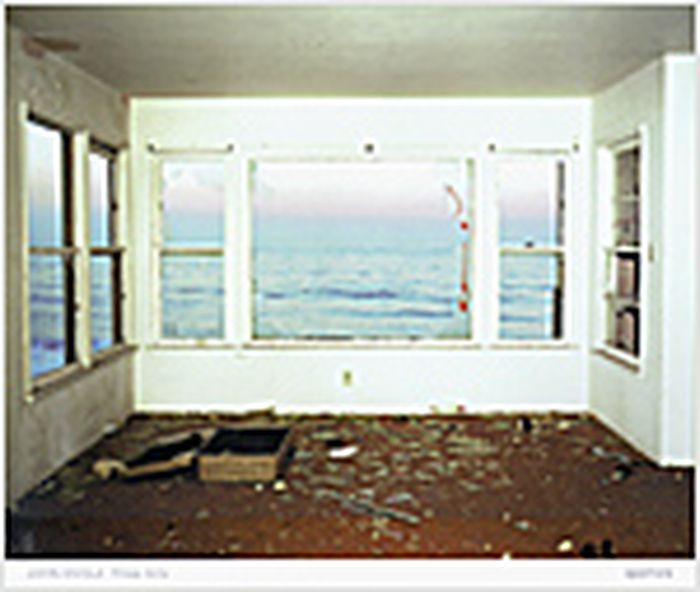
In 1973, artist John Divola began the first of three highly ambitious and original bodies of work that together form this publication. The Vandalism series comprises black-and-white photographs of interiors of abandoned houses. Entering illegally, Divola spray painted expressive markings in the forms of dots, lines, and grids, creating a series of conceptual gestures that referenced “action painting” as readily as the graffiti that was fast becoming a cultural phenomenon. The following year, Divola began the Los Angeles International Airport Noise Abatement series, photographing a condemned neighborhood bought out by the airport to serve as a noise buffer for new runways.An extensive catalog of break-ins, the photographs record the evidence of violent entries: shattered windows, doors torn from hinges, a crowbar resting in the jamb of a door pried open. The final installment in this book, the Zuma series, is the artist’s documentation of the destruction of an abandoned beachfront property. While employing similar strategies of painting and intervention, the Zuma images add variation and complexity to Divola’s established themes as they incorporate color, elements of nature, and meditation on change. These cyclical images skillfully juxtapose romantic skies and sunsets with a seaside structure that, frame by frame, deteriorates into ruin as it is vandalized by the artist and others who eventually set it on fire. Divola’s art practice shares a tradition with conceptual artists such as Bruce Nauman, whose photographs are considered to be performance or sculpture, and Robert Smithson, who used photography to investigate the built environment.
John Divola : three acts
Actions:
Price:
$60.00
(available to order)
Summary:
In 1973, artist John Divola began the first of three highly ambitious and original bodies of work that together form this publication. The Vandalism series comprises black-and-white photographs of interiors of abandoned houses. Entering illegally, Divola spray painted expressive markings in the forms of dots, lines, and grids, creating a series of conceptual gestures that referenced “action painting” as readily as the graffiti that was fast becoming a cultural phenomenon. The following year, Divola began the Los Angeles International Airport Noise Abatement series, photographing a condemned neighborhood bought out by the airport to serve as a noise buffer for new runways.An extensive catalog of break-ins, the photographs record the evidence of violent entries: shattered windows, doors torn from hinges, a crowbar resting in the jamb of a door pried open. The final installment in this book, the Zuma series, is the artist’s documentation of the destruction of an abandoned beachfront property. While employing similar strategies of painting and intervention, the Zuma images add variation and complexity to Divola’s established themes as they incorporate color, elements of nature, and meditation on change. These cyclical images skillfully juxtapose romantic skies and sunsets with a seaside structure that, frame by frame, deteriorates into ruin as it is vandalized by the artist and others who eventually set it on fire. Divola’s art practice shares a tradition with conceptual artists such as Bruce Nauman, whose photographs are considered to be performance or sculpture, and Robert Smithson, who used photography to investigate the built environment.
Form:
books
books
Publication:
May 2006, New York
May 2006, New York
Subject:
Photography monographs
Photography monographs
Form:
books
books
Actions:
Holdings:
Description:
441 pages, 5 unnumbered pages : illustrations, facsimiles, plans, portrait ; 25 cm
Description:
441 pages, 5 unnumbered pages : illustrations, facsimiles, plans, portrait ; 25 cm
Author:
Subject:
Publication:
Ciudad de México : Editorial de la Facultad de Arquitectura, UNAM, [2020]
Ciudad de México : Editorial de la Facultad de Arquitectura, UNAM, [2020]
Title:
Teatros junto a los hospitales : los conjuntos de seguridad social del IMSS en la presidencia de Adolfo López Mateos 1958-1964 / Enrique X. de Anda A.
Actions:
Holdings:
Description:
441 pages, 5 unnumbered pages : illustrations, facsimiles, plans, portrait ; 25 cm
Teatros junto a los hospitales : los conjuntos de seguridad social del IMSS en la presidencia de Adolfo López Mateos 1958-1964 / Enrique X. de Anda A.
Actions:
Holdings:
Description:
441 pages, 5 unnumbered pages : illustrations, facsimiles, plans, portrait ; 25 cm
Form:
books
books
Publication:
Ciudad de México : Editorial de la Facultad de Arquitectura, UNAM, [2020]
Ciudad de México : Editorial de la Facultad de Arquitectura, UNAM, [2020]
Author:
Subject:
Form:
books
books
Title:
Minka, my farmhouse in Japan
Minka, my farmhouse in Japan
Actions:
Price:
$27.95
(available to order)
Summary:
In 1959 the journalist John Roderick joined the Tokyo bureau of the Associated Press. There, he befriended a Japanese family, the Takishitas. After musing offhandedly that he would like to one day have his own house in Japan, the family unbeknownst to John set out to grant his wish. They found Roderick a 250-year-old minka, or hand-built farmhouse, with a thatched roof(...)
$27.95
(available to order)
Summary:
In 1959 the journalist John Roderick joined the Tokyo bureau of the Associated Press. There, he befriended a Japanese family, the Takishitas. After musing offhandedly that he would like to one day have his own house in Japan, the family unbeknownst to John set out to grant his wish. They found Roderick a 250-year-old minka, or hand-built farmhouse, with a thatched roof(...)
Title:
Minka, my farmhouse in Japan
Actions:
Price:
$27.95
(available to order)
Summary:
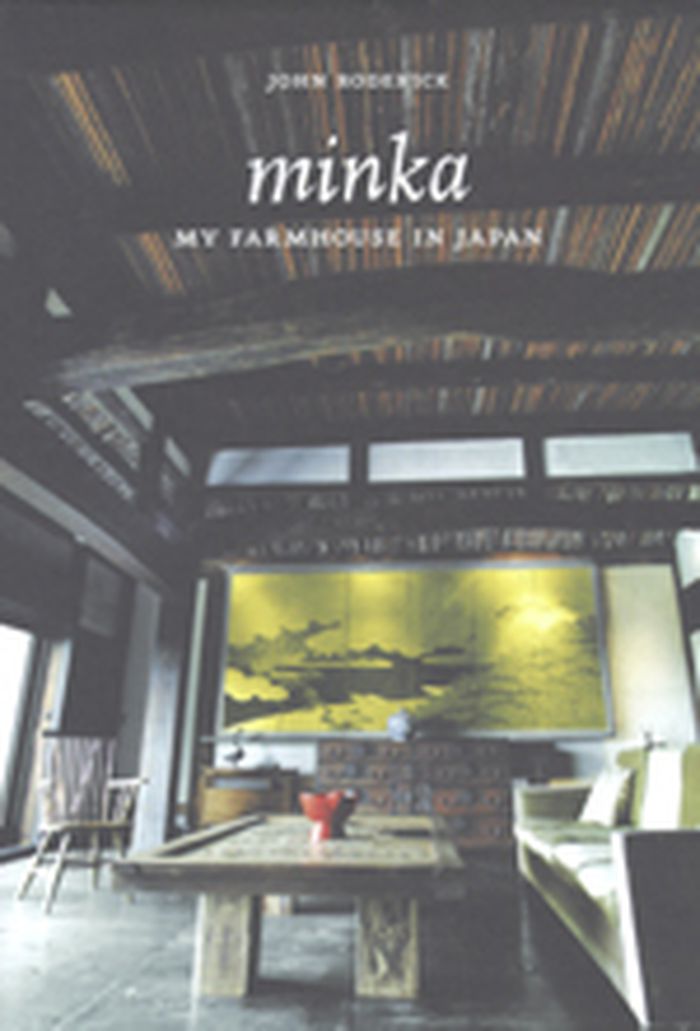
In 1959 the journalist John Roderick joined the Tokyo bureau of the Associated Press. There, he befriended a Japanese family, the Takishitas. After musing offhandedly that he would like to one day have his own house in Japan, the family unbeknownst to John set out to grant his wish. They found Roderick a 250-year-old minka, or hand-built farmhouse, with a thatched roof and held together entirely by wooden pegs and joinery. It was about to be washed away by flooding and was being offered for only fourteen dollars. Roderick graciously bought the house, but was privately dismayed at the prospect of living in this enormous old relic lacking heating, bathing, plumbing, and proper kitchen facilities. So the minka was dismantled and stored, where Roderick secretly hoped it would stay, as it did for several years. But Roderick's reverence for natural materials and his appreciation of traditional Japanese and Shinto craftsmanship eventually got the better of him. Before long a team of experienced carpenters were hoisting massive beams, laying wide wooden floors, and attaching the split-bamboo ceiling. In just forty days they rebuilt the house on a hill overlooking Kamakura, the ancient capital of Japan. Working together, they renovated the farmhouse, adding features such as floor-to-ceiling sliding glass doors and a modern kitchen, bath, and toilet. From these humble beginnings, Roderick's minka has become internationally known and has hosted such luminaries as Senator Hillary Clinton. John Roderick's architectural memoir "Minka" tells the compelling and often poignant story of how one man fell in love with the people, culture, and ancient building traditions of Japan, and reminds us all about the importance of craftsmanship and the meaning of place and home in the process.
Minka, my farmhouse in Japan
Actions:
Price:
$27.95
(available to order)
Summary:
In 1959 the journalist John Roderick joined the Tokyo bureau of the Associated Press. There, he befriended a Japanese family, the Takishitas. After musing offhandedly that he would like to one day have his own house in Japan, the family unbeknownst to John set out to grant his wish. They found Roderick a 250-year-old minka, or hand-built farmhouse, with a thatched roof and held together entirely by wooden pegs and joinery. It was about to be washed away by flooding and was being offered for only fourteen dollars. Roderick graciously bought the house, but was privately dismayed at the prospect of living in this enormous old relic lacking heating, bathing, plumbing, and proper kitchen facilities. So the minka was dismantled and stored, where Roderick secretly hoped it would stay, as it did for several years. But Roderick's reverence for natural materials and his appreciation of traditional Japanese and Shinto craftsmanship eventually got the better of him. Before long a team of experienced carpenters were hoisting massive beams, laying wide wooden floors, and attaching the split-bamboo ceiling. In just forty days they rebuilt the house on a hill overlooking Kamakura, the ancient capital of Japan. Working together, they renovated the farmhouse, adding features such as floor-to-ceiling sliding glass doors and a modern kitchen, bath, and toilet. From these humble beginnings, Roderick's minka has become internationally known and has hosted such luminaries as Senator Hillary Clinton. John Roderick's architectural memoir "Minka" tells the compelling and often poignant story of how one man fell in love with the people, culture, and ancient building traditions of Japan, and reminds us all about the importance of craftsmanship and the meaning of place and home in the process.
Form:
books
books
Publication:
November 2007, New York
November 2007, New York
Subject:
Contemporary Asian Architecture
Contemporary Asian Architecture
Form:
audio
audio
Title:
Pardon My French.
Pardon My French.
Actions:
Description:
1 online resource.
Author:
Subject:
Publication:
[Place of publication not identified] : Junior Aspirin Records, 2013., [Place of publication not identified] : Stop Making Sense, 2013.
[Place of publication not identified] : Junior Aspirin Records, 2013., [Place of publication not identified] : Stop Making Sense, 2013.
Form:
audio
audio
Publication:
[Place of publication not identified] : Junior Aspirin Records, 2013., [Place of publication not identified] : Stop Making Sense, 2013.
[Place of publication not identified] : Junior Aspirin Records, 2013., [Place of publication not identified] : Stop Making Sense, 2013.
Author:
Subject:


