


5088 Results
Form:
books
books

Price:
$43.99
(available to order)
Summary:
Modernist Estates: the buildings and the people who live in them today gives us an inside look at remarkable and sometimes controversial estates in Britain and their impact on the lives of their communities. Featuring twenty-one modernist homes and their residents, including the Barbican, the Isokon, Balfron Tower and Park Hill, it provides an overview of the building,(...)
Title:
Modernist estates: the buildings and the people who live in them
Actions:
Price:
$43.99
(available to order)
Summary:
Modernist Estates: the buildings and the people who live in them today gives us an inside look at remarkable and sometimes controversial estates in Britain and their impact on the lives of their communities. Featuring twenty-one modernist homes and their residents, including the Barbican, the Isokon, Balfron Tower and Park Hill, it provides an overview of the building, architects, historical and political context, and explores, with interviews and contemporary photography, what it's like to live on a modernist estate today.
Form:
books
books
Publication:
October 2015
October 2015
Subject:
Modernism
Modernism
Form:
books
books
Actions:
Price:
$36.00
(available in store)
Summary:
Synanthropes have always been an immutable part of the tapestry of our lives. They are the reason we hear birdsong in the morning and skittering throughout the day, and why we take such pains to fix lids to our garbage cans. But they are so much more than that, too: epidemic vectors, churners of soil, ecosystem evolvers, spiritual lodestars, and, sometimes, sharp-toothed(...)
Title:
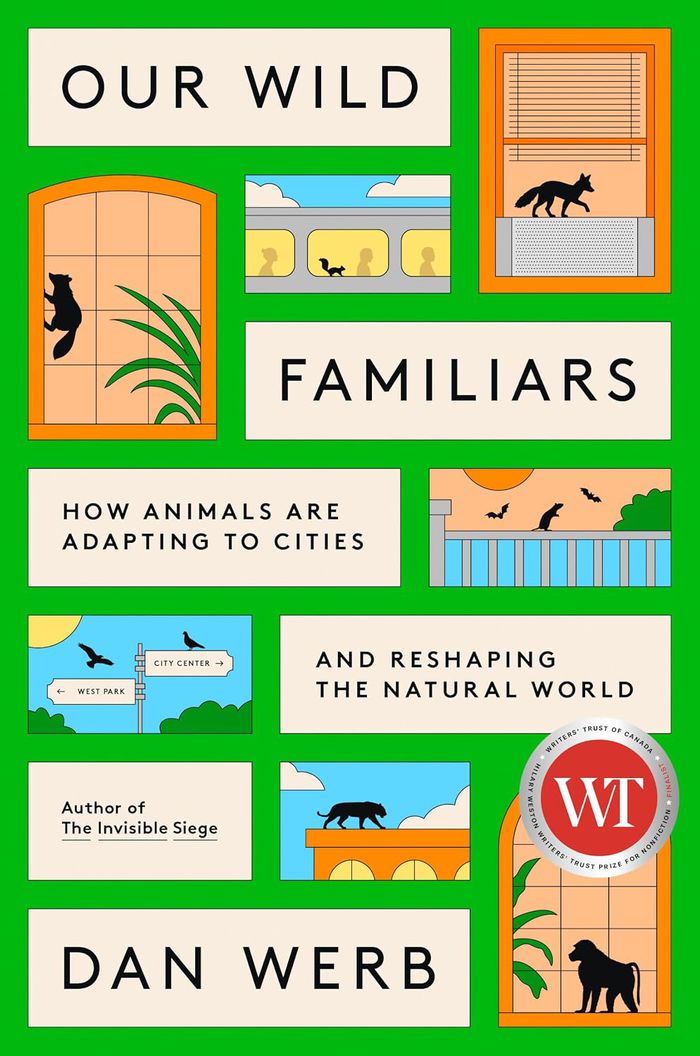
Our wild familiars: How animals are adapting to cities and reshaping the natural world
Actions:
Price:
$36.00
(available in store)
Summary:
Synanthropes have always been an immutable part of the tapestry of our lives. They are the reason we hear birdsong in the morning and skittering throughout the day, and why we take such pains to fix lids to our garbage cans. But they are so much more than that, too: epidemic vectors, churners of soil, ecosystem evolvers, spiritual lodestars, and, sometimes, sharp-toothed marauders making their way through our most intimate spaces with cruel intent. But beyond their quotidian impact on our lives, synanthropes have a critical part to play in how our communities are shaped and how sustainably they function. These creatures are ambassadors from nature, arbiters of our planet’s future, and a key influence on our species’ ongoing evolution; and recently, something essential has shifted with them. We are in a fraught era of environmental disruption, habitat destruction, and human population expansion that is ravaging formerly wild and untouched habitats. That’s caused us to become ever more inundated with synanthropes, which are bringing delight, chaos and danger to our doorstep. These species, so long dismissed, are forcing us to reckon with them—from the hundreds of thousands of raccoons in urban spaces that spread our refuse no matter how many “raccoon-proof” bags and bins we invent, to the invasive kudzu plants that grow a foot a day, enveloping houses, telephone poles, trees, and any other structures into their green abyss. Now, as urban spaces increasingly become wild spaces, we have a choice: continue to resist them by any means necessary, or take the opportunity to promote a more harmonious coexistence. Through vivid storytelling, ''Our Wild Familiars'' brings to spectacular life the world’s most successful synanthropes, from bats, raccoons, and crows, to some of its weirdest, including the Giant Pacific Octopus. Acting as a guide to the curious, Werb reveals how the cracks in our millennia-long efforts to shield ourselves against the outside world might just lead us to a new and necessary balance with nature—or to an ever more savage future.
Form:
books
books
Publication:
July 2026
July 2026
Subject:
Fauna and flora
Fauna and flora
Form:
books
books
Title:
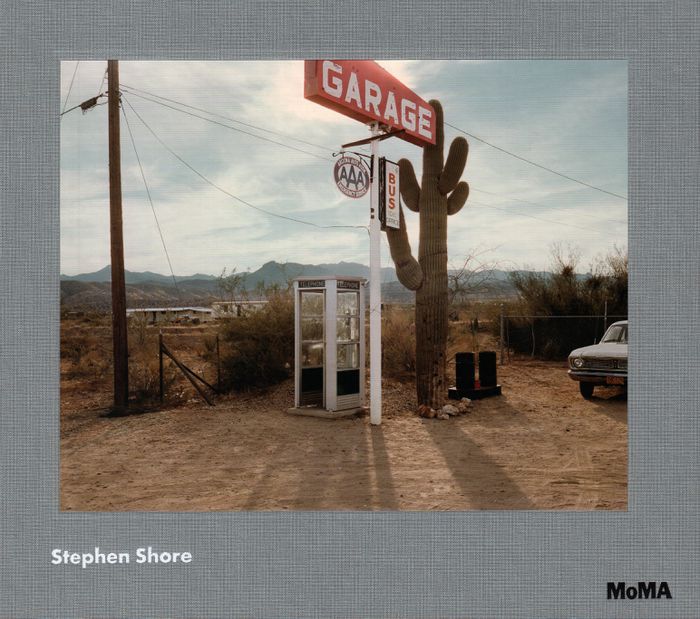
Stephen Shore
Stephen Shore
Actions:
Price:
$95.00
(available to order)
Summary:
Published to accompany the first comprehensive survey of Stephen Shore’s work in the US, this catalog reflects the full range of his contribution, including the gelatin silver prints he made as a teenager (and sold to The Museum of Modern Art); Shore's photographs of the scene at Andy Warhol’s Factory, in New York; the color images he made during cross-country road trips(...)
Title:
Stephen Shore
Actions:
Price:
$95.00
(available to order)
Summary:
Published to accompany the first comprehensive survey of Stephen Shore’s work in the US, this catalog reflects the full range of his contribution, including the gelatin silver prints he made as a teenager (and sold to The Museum of Modern Art); Shore's photographs of the scene at Andy Warhol’s Factory, in New York; the color images he made during cross-country road trips in the 1970s; his recent explorations of Israel, the West Bank and Ukraine; and his current work on digital platforms, including Instagram.
Form:
books
books
Publication:
November 2017
November 2017
Subject:
Photography monographs
Photography monographs
Form:
books
books

Title:
Dandelions
Dandelions
Actions:
Price:
$27.50
(available to order)
Summary:
In ''Dandelions'', Thea Lenarduzzi pieces together her family history through four generations’ worth of migration between Italy and England, and the stories scattered like seeds along the way. Where, or what, is home? What has it meant, historically and personally, to be 'Italian' or 'English', or both in a culture that prefers us to choose? What does it mean to have(...)
Title:
Dandelions
Actions:
Price:
$27.50
(available to order)
Summary:
In ''Dandelions'', Thea Lenarduzzi pieces together her family history through four generations’ worth of migration between Italy and England, and the stories scattered like seeds along the way. Where, or what, is home? What has it meant, historically and personally, to be 'Italian' or 'English', or both in a culture that prefers us to choose? What does it mean to have roots? Or to have left a piece of oneself somewhere long since abandoned? At the heart of this book brimming with the lives of remarkable and apparently unremarkable people is Thea’s grandmother Dirce, a former seamstress, who, now approaching 100, is a repository of tales that are by turns unpredictable, unreliable, significant. And that lead us deeper. There’s the one about Mussolini’s modern Icarus who crashed into the murk of a lake; about the Manchester factory worker who wanted only to be seen; about the shadowy demon who visits in your sleep; and the monument to a murdered politician that, when it rains, runs the colour of blood. Through the journeys of Dirce and her relatives, from the Friuli to Sheffield and Manchester and back again, a different kind of history emerges, in which self and place are warp and weft, tightly woven, with threads left hazardously trailing.
Form:
books
books
Publication:
May 2023
May 2023
Subject:
Literature and poetry
Literature and poetry
Form:
books
books
Actions:
Price:
$27.95
(available in store)
Summary:
We barely talk about them and seldom know their names. Philosophy has always overlooked them; even biology considers them as mere decoration on the tree of life. And yet plants give life to the Earth: they produce the atmosphere that surrounds us, they are the origin of the oxygen that animates us. Plants embody the most direct, elementary connection that life can(...)
Title:
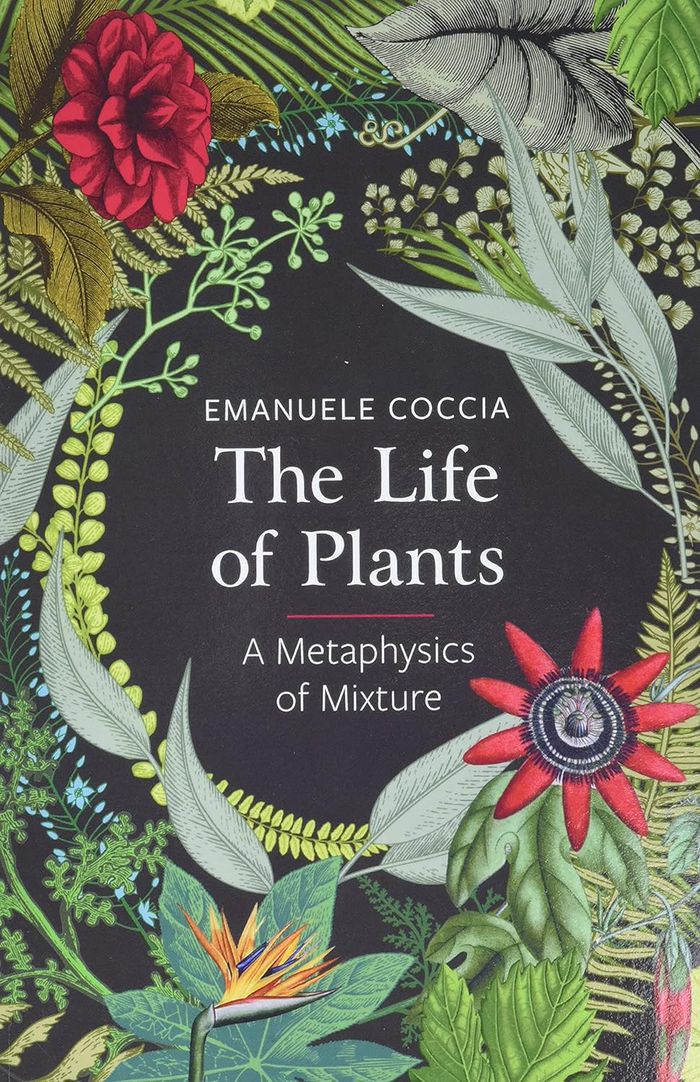
The life of plants: A metaphysics of mixture
Actions:
Price:
$27.95
(available in store)
Summary:
We barely talk about them and seldom know their names. Philosophy has always overlooked them; even biology considers them as mere decoration on the tree of life. And yet plants give life to the Earth: they produce the atmosphere that surrounds us, they are the origin of the oxygen that animates us. Plants embody the most direct, elementary connection that life can establish with the world. In this highly original book, Emanuele Coccia argues that, as the very creator of atmosphere, plants occupy the fundamental position from which we should analyze all elements of life. From this standpoint, we can no longer perceive the world as a simple collection of objects or as a universal space containing all things, but as the site of a veritable metaphysical mixture. Since our atmosphere is rendered possible through plants alone, life only perpetuates itself through the very circle of consumption undertaken by plants. In other words, life exists only insofar as it consumes other life, removing any moral or ethical considerations from the equation. In contrast to trends of thought that discuss nature and the cosmos in general terms, Coccia’s account brings the infinitely small together with the infinitely big, offering a radical redefinition of the place of humanity within the realm of life.
Form:
books
books
Publication:
December 2018
December 2018
Subject:
Environment and environmental theory
Environment and environmental theory
Form:
books
books
Title:
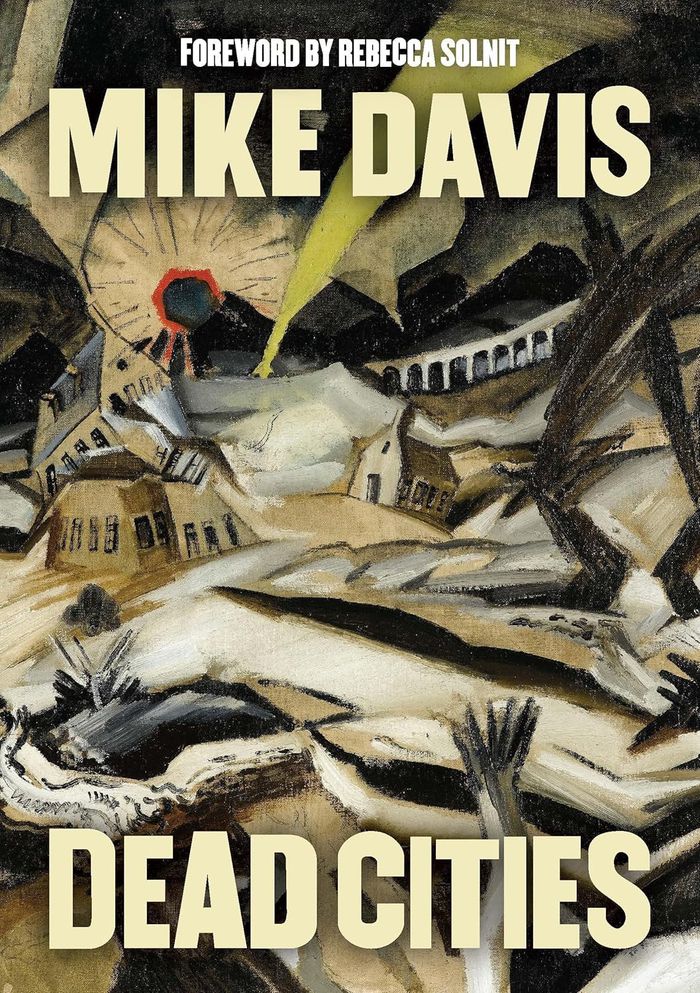
Dead cities and other tales
Dead cities and other tales
Actions:
Price:
$38.95
(available in store)
Summary:
For the late great Mike Davis, the ravaging of the climate by capital—and his prescient analysis of its consequences for those of us left to deal with the resulting crises—was always a central part of his urban geography. In these wide ranging, incisive, and hauntingly relevant essays, Davis asks us to consider what we would find if we put a microscope to the ruins of(...)
Title:
Dead cities and other tales
Actions:
Price:
$38.95
(available in store)
Summary:
For the late great Mike Davis, the ravaging of the climate by capital—and his prescient analysis of its consequences for those of us left to deal with the resulting crises—was always a central part of his urban geography. In these wide ranging, incisive, and hauntingly relevant essays, Davis asks us to consider what we would find if we put a microscope to the ruins of Metropolis, and provides a riveting account of the disasters—natural, man-made, and those (as in the case of climate calamity) where the distinction is impossible to make—that he finds on the other end. He begins his examination by sifting through the rubble of the twin towers in the wake of 9/11, presciently identifying the seeds of war already germinating in the scorched soil of ground zero, and closes by considering how little prepared our hollowed out urban infrastructure is to deal with shocks of any kind, be they from car bombs or ice storms. In between we are treated to tours of blasted wastelands where American generals built and destroyed replicas of Berlin, glimpses of Las Vegas’s penchant for annihilating its own best-known landmarks, and other riveting tales of the dialectic between nature and the city.
Form:
books
books
Publication:
October 2024
October 2024
Subject:
Urban Theory
Urban Theory
Form:
books
books

Title:
Designing the X
Designing the X
Actions:
Price:
$53.95
(available to order)
Summary:
As the pace of global change accelerates—ecologically, socially, and technologically—our traditional ways of understanding and responding to change fall short. We now live in an era of supercomplexity, where challenges like climate instability, migration, technological disruption, resource depletion, and systemic inequality converge and defy conventional(...)
Title:
Designing the X
Actions:
Price:
$53.95
(available to order)
Summary:
As the pace of global change accelerates—ecologically, socially, and technologically—our traditional ways of understanding and responding to change fall short. We now live in an era of supercomplexity, where challenges like climate instability, migration, technological disruption, resource depletion, and systemic inequality converge and defy conventional solutions. ''Designing the X'' meets this moment with a bold and timely proposition: when data, science, and analysis alone are insufficient to move us forward, we must turn to design as a powerful mode of reasoning through synthesis, where intuition meets insight and imagination drives action. Design enables us to move with complexity, not against it, and to shape futures beyond the limits of the present. Grounded in praxis and research—including 67 interviews with designers, technologists and scientists, innovators and entrepreneurs, urbanists, and educators— ''Designing the X'' makes a compelling case for design as an essential partner to science and technology: integrative, inventive, and profoundly human. The “X” stands for what’s missing in today’s analytic methods: the leap from parts to greater wholes, from current conditions to future potential. This book is for anyone seeking agency in an age of accelerating change. It’s a compass for those ready to imagine—and design—the future we cannot yet see.
Form:
books
books
Publication:
October 2025
October 2025
Subject:
Design Theory
Design Theory
Form:
books
books
Actions:
Price:
$18.50
(available to order)
Summary:
An essential toolkit for understanding architecture as both art form and the setting for our everyday lives We spend most of our days and nights in buildings, living and working and sometimes playing. Architecture is both the setting for our everyday lives and a public art form - but it remains mysterious to most of us. In "How architecture works", Witold Rybczynski, (...)
Title:
How architecture works: a humanist's toolkit
Actions:
Price:
$18.50
(available to order)
Summary:
An essential toolkit for understanding architecture as both art form and the setting for our everyday lives We spend most of our days and nights in buildings, living and working and sometimes playing. Architecture is both the setting for our everyday lives and a public art form - but it remains mysterious to most of us. In "How architecture works", Witold Rybczynski, answers our most fundamental questions about how good - and not so good - buildings are designed and constructed. Introducing the reader to the rich and varied world of modern architecture, he reveals how architects as diverse as Frank Gehry, Renzo Piano, and Robert A. M. Stern envision and create their designs. He teaches us how to read" plans, how buildingsrespond to their settings, and how the smallest detail - of a stair balustrade, for instance - can convey an architect's vision. How Architecture Works explains the central elements that make up good building design, ranging from a war memorial in London to an opera house in Saint Petersburg, from the National Museum of African American History and Culture in Washington, D.C., to a famous architect's private retreat in Princeton, New Jersey. It is an enlightening humanist's toolkit for thinking about the built environment and seeing it afresh.
Form:
books
books
Publication:
October 2014
October 2014
Subject:
Architectural Theory
Architectural Theory
Form:
books
books
Price:
$68.00
(available to order)
Summary:
The typical town springs up around a natural resource—a river, an ocean, an exceptionally deep harbor—or in proximity to a larger, already thriving town. Not so with “new towns,” which are created by decree rather than out of necessity and are often intended to break from the tendencies of past development. New towns aren’t a new thing—ancient Phoenicians named their(...)
Title:
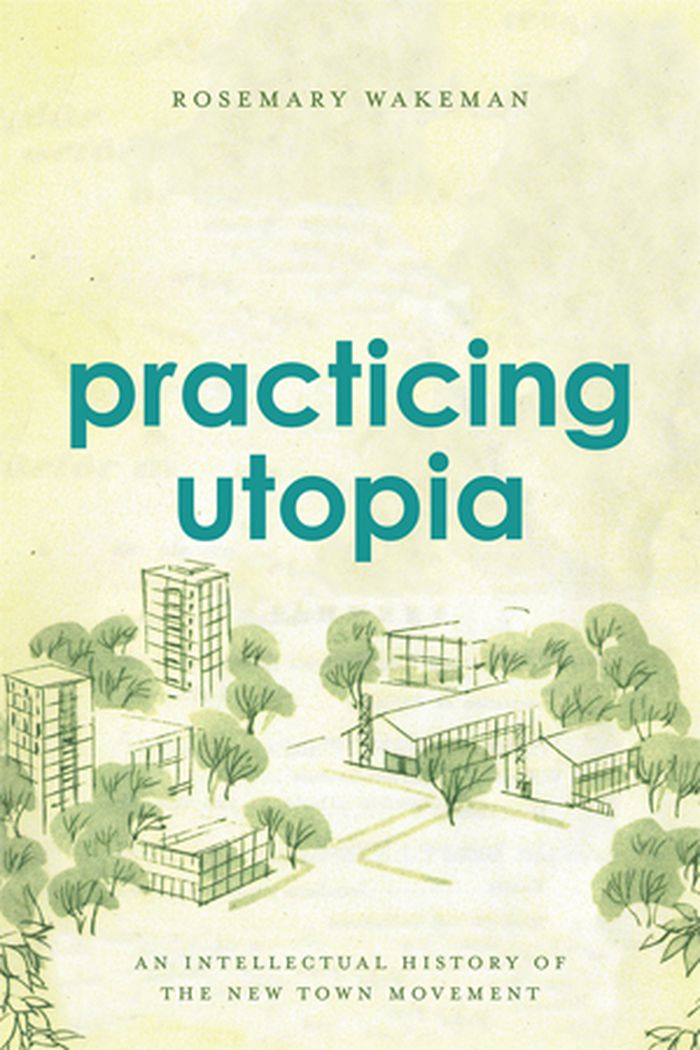
Practicing Utopia: an intellectual history of the New Town movement
Actions:
Price:
$68.00
(available to order)
Summary:
The typical town springs up around a natural resource—a river, an ocean, an exceptionally deep harbor—or in proximity to a larger, already thriving town. Not so with “new towns,” which are created by decree rather than out of necessity and are often intended to break from the tendencies of past development. New towns aren’t a new thing—ancient Phoenicians named their colonies Qart Hadasht, or New City—but these utopian developments saw a resurgence in the twentieth century. 'In Practicing Utopia,' Rosemary Wakeman gives us a sweeping view of the new town movement as a global phenomenon. From Tapiola in Finland to Islamabad in Pakistan, Cergy-Pontoise in France to Irvine in California, Wakeman unspools a masterly account of the golden age of new towns, exploring their utopian qualities and investigating what these towns can tell us about contemporary modernization and urban planning. She presents the new town movement as something truly global, defying a Cold War East-West dichotomy or the north-south polarization of rich and poor countries. Wherever these new towns were located, whatever their size, whether famous or forgotten, they shared a utopian lineage and conception that, in each case, reveals how residents and planners imagined their ideal urban future.
Form:
books
books
Publication:
April 2016
April 2016
Subject:
Urban Theory
Urban Theory
Form:
books
books
Title:
Whole earth field guide
Whole earth field guide
Actions:
Price:
$46.95
(available to order)
Summary:
The Whole Earth Catalog was a cultural touchstone of the 1960s and 1970s. Between 1968 and 1971, almost two million copies of its various editions were sold, and not just to commune-dwellers and hippies. Millions of mainstream readers turned to the Whole Earth Catalog for practical advice and intellectual stimulation, finding everything from a review of Buckminster Fuller(...)
Publication:
October 2016
October 2016
Title:
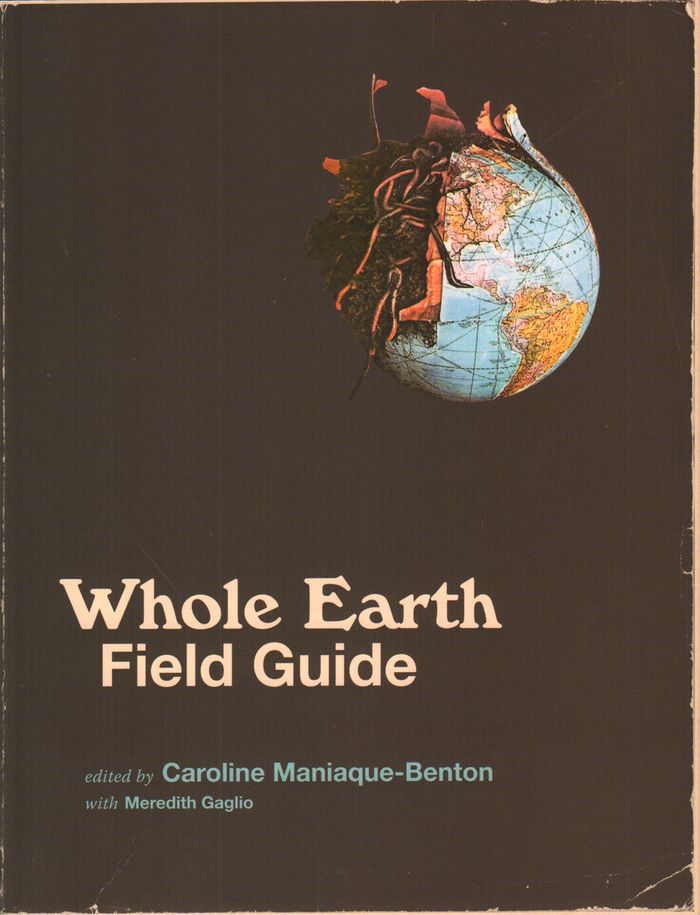
Whole earth field guide
Actions:
Price:
$46.95
(available to order)
Summary:
The Whole Earth Catalog was a cultural touchstone of the 1960s and 1970s. Between 1968 and 1971, almost two million copies of its various editions were sold, and not just to commune-dwellers and hippies. Millions of mainstream readers turned to the Whole Earth Catalog for practical advice and intellectual stimulation, finding everything from a review of Buckminster Fuller to recommendations for juicers. This book offers selections from eighty texts from the nearly 1,000 items of "suggested reading" in the Last Whole Earth Catalog. Illustrated and meticulously documented, this fascinating selection of texts cited as 'suggested reading' in the Whole Earth Catalog gives us a fresh, new look at this bible of a generation. Wonderful juxtapositions abound: Buckminster Fuller and Wendell Berry; Timothy Leary and Lao-Tzu; Thoreau and Marshall McLuhan; the Boston Women's Health Collective and Norbert Wiener; Nicholas Negroponte and Kakuzo Okakura; and Margaret Mead and James Baldwin (their A Rap on Race). At once libertarian and communitarian, practical and mystical, scientific and hands-on, Whole Earth Field Guide reveals the astonishing energy and spirit that motivated thousands of young people to challenge the status quo and to grapple, with remarkable prescience, with issues such as ecology and information technology that still confront us today.
Form:
books
books
Publication:
October 2016
October 2016


