


357 Results
Form:
events
events
Description:
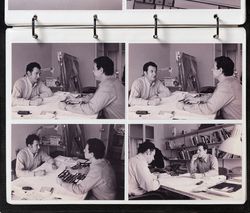
Join us in Madrid for a conversation with Iñaki Ábalos and Juan Herreros, with the participation of Ángel Borrego, Enrique Encabo, Albert Ferré (Associate Director, CCA Publications), María Auxiliadora Gálvez, and Moisés Puente. “Is there such a thing as an architecture of conversation?” ask Iñaki Ábalos and Juan Herreros in their text “A Conversation,” published in CIRCO(...)
Join us in Madrid for a conversation with Iñaki Ábalos and Juan Herreros, with the participation of Ángel Borrego, Enrique Encabo, Albert Ferré (Associate Director, CCA Publications), María Auxiliadora Gálvez, and Moisés Puente. “Is there such a thing as an architecture of conversation?” ask Iñaki Ábalos and Juan Herreros in their text “A Conversation,” published in CIRCO(...)
Date:
7 February 2017, 7pm
7 February 2017, 7pm
Title:
AP164: A Conversation with Iñaki Ábalos and Juan Herreros
Actions:
Description:
Join us in Madrid for a conversation with Iñaki Ábalos and Juan Herreros, with the participation of Ángel Borrego, Enrique Encabo, Albert Ferré (Associate Director, CCA Publications), María Auxiliadora Gálvez, and Moisés Puente. “Is there such a thing as an architecture of conversation?” ask Iñaki Ábalos and Juan Herreros in their text “A Conversation,” published in CIRCO(...)
AP164: A Conversation with Iñaki Ábalos and Juan Herreros
Actions:
Description:
Join us in Madrid for a conversation with Iñaki Ábalos and Juan Herreros, with the participation of Ángel Borrego, Enrique Encabo, Albert Ferré (Associate Director, CCA Publications), María Auxiliadora Gálvez, and Moisés Puente. “Is there such a thing as an architecture of conversation?” ask Iñaki Ábalos and Juan Herreros in their text “A Conversation,” published in CIRCO(...)
Form:
events
events
Date:
7 February 2017
7pm
7 February 2017
7pm
Level of archival description:
Sub-series
Sub-series
Actions:
Reference number:
AP140.S2.SS10.D2
Description:
This sub-series documents some of the reference materials used or collection during the activities and procedures of the successive firms of James Stirling; James Stirling and Partner; James Stirling, Michael Wilford, and Associates; and Michael Wilford and Partners. Material in this file was produced between 1957 and 1998. Sub-series contains reference materials including typescripts dated from the early 1960s, articles and drafts of articles, translations, publications, regulations, postcards and invitation cards. It contains also materials from the surviving office library of James Stirling and Michael Wilford as it existed in 2000 when it was housed at 8 Fitzroy Square in London. During the processing the office library, a selection publications were transferred in the CCA library collection to facilitate description and access. This sub-series contains part of the published materials that remained in the archives.
AP140.S2.SS10.D2
Description:
This sub-series documents some of the reference materials used or collection during the activities and procedures of the successive firms of James Stirling; James Stirling and Partner; James Stirling, Michael Wilford, and Associates; and Michael Wilford and Partners. Material in this file was produced between 1957 and 1998. Sub-series contains reference materials including typescripts dated from the early 1960s, articles and drafts of articles, translations, publications, regulations, postcards and invitation cards. It contains also materials from the surviving office library of James Stirling and Michael Wilford as it existed in 2000 when it was housed at 8 Fitzroy Square in London. During the processing the office library, a selection publications were transferred in the CCA library collection to facilitate description and access. This sub-series contains part of the published materials that remained in the archives.
People:
Date:
1962-1995
1962-1995
Title:
Reference materials and library
Actions:
AP140.S2.SS10.D2
Description:
This sub-series documents some of the reference materials used or collection during the activities and procedures of the successive firms of James Stirling; James Stirling and Partner; James Stirling, Michael Wilford, and Associates; and Michael Wilford and Partners. Material in this file was produced between 1957 and 1998. Sub-series contains reference materials including typescripts dated from the early 1960s, articles and drafts of articles, translations, publications, regulations, postcards and invitation cards. It contains also materials from the surviving office library of James Stirling and Michael Wilford as it existed in 2000 when it was housed at 8 Fitzroy Square in London. During the processing the office library, a selection publications were transferred in the CCA library collection to facilitate description and access. This sub-series contains part of the published materials that remained in the archives.
Reference materials and library
Actions:
AP140.S2.SS10.D2
Description:
This sub-series documents some of the reference materials used or collection during the activities and procedures of the successive firms of James Stirling; James Stirling and Partner; James Stirling, Michael Wilford, and Associates; and Michael Wilford and Partners. Material in this file was produced between 1957 and 1998. Sub-series contains reference materials including typescripts dated from the early 1960s, articles and drafts of articles, translations, publications, regulations, postcards and invitation cards. It contains also materials from the surviving office library of James Stirling and Michael Wilford as it existed in 2000 when it was housed at 8 Fitzroy Square in London. During the processing the office library, a selection publications were transferred in the CCA library collection to facilitate description and access. This sub-series contains part of the published materials that remained in the archives.
Level of archival description:
File 2
File 2
Date:
1962-1995
1962-1995
People:
Form:
exhibitions
exhibitions
Form:
exhibitions
exhibitions
Date:
September 2018 to
March 2019
September 2018 to
March 2019
Form:
exhibitions
exhibitions
Actions:
Description:
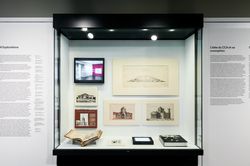
On the occasion of Phyllis Lambert’s ninetieth birthday, this exhibition offers an autobiographical glimpse into the evolution of the CCA founder’s ideas and her work as an architect, activist, editor, and curator. Highlighting her deep commitment to the city and to intellectual research, this display of archival material from the CCA’s collection, institutional archives,(...)
On the occasion of Phyllis Lambert’s ninetieth birthday, this exhibition offers an autobiographical glimpse into the evolution of the CCA founder’s ideas and her work as an architect, activist, editor, and curator. Highlighting her deep commitment to the city and to intellectual research, this display of archival material from the CCA’s collection, institutional archives,(...)
Location:
Hall cases
Hall cases
Date:
18 January 2017 to 11 June 2017
18 January 2017 to 11 June 2017
Title:
Phyllis Lambert: 75 Years At Work
Actions:
Description:
On the occasion of Phyllis Lambert’s ninetieth birthday, this exhibition offers an autobiographical glimpse into the evolution of the CCA founder’s ideas and her work as an architect, activist, editor, and curator. Highlighting her deep commitment to the city and to intellectual research, this display of archival material from the CCA’s collection, institutional archives,(...)
Phyllis Lambert: 75 Years At Work
Actions:
Description:
On the occasion of Phyllis Lambert’s ninetieth birthday, this exhibition offers an autobiographical glimpse into the evolution of the CCA founder’s ideas and her work as an architect, activist, editor, and curator. Highlighting her deep commitment to the city and to intellectual research, this display of archival material from the CCA’s collection, institutional archives,(...)
Form:
exhibitions
exhibitions
Date:
18 January 2017 to
11 June 2017
18 January 2017 to
11 June 2017
Location:
Hall cases
Hall cases
Form:
archives
Level of archival description:
Fonds
archives
Level of archival description:
Fonds
Reference number:
AP170
Synopsis:
The Mark Goulthorpe HypoSurface project records, 1990-2014, document the design development, technical implementation, exhibition, and marketing of various iterations of the HypoSurface wall. The wall has a “skin” divided up into pixel-like metallic facets manipulated by a network of actuating pistons in order to create images, texts and patterns in dynamic relief. Sensors allow people near the wall to influence its movement. The records include approximately 62,700 digital files, 3 folders of textual documents, and 44 prototype pieces, and a working HypoSurface wall module.
AP170
Synopsis:
The Mark Goulthorpe HypoSurface project records, 1990-2014, document the design development, technical implementation, exhibition, and marketing of various iterations of the HypoSurface wall. The wall has a “skin” divided up into pixel-like metallic facets manipulated by a network of actuating pistons in order to create images, texts and patterns in dynamic relief. Sensors allow people near the wall to influence its movement. The records include approximately 62,700 digital files, 3 folders of textual documents, and 44 prototype pieces, and a working HypoSurface wall module.
People:
Date:
1990 - 2014
1990 - 2014
Title:
Mark Goulthorpe Hyposurface project records
Actions:
AP170
Synopsis:
The Mark Goulthorpe HypoSurface project records, 1990-2014, document the design development, technical implementation, exhibition, and marketing of various iterations of the HypoSurface wall. The wall has a “skin” divided up into pixel-like metallic facets manipulated by a network of actuating pistons in order to create images, texts and patterns in dynamic relief. Sensors allow people near the wall to influence its movement. The records include approximately 62,700 digital files, 3 folders of textual documents, and 44 prototype pieces, and a working HypoSurface wall module.
Mark Goulthorpe Hyposurface project records
Actions:
AP170
Synopsis:
The Mark Goulthorpe HypoSurface project records, 1990-2014, document the design development, technical implementation, exhibition, and marketing of various iterations of the HypoSurface wall. The wall has a “skin” divided up into pixel-like metallic facets manipulated by a network of actuating pistons in order to create images, texts and patterns in dynamic relief. Sensors allow people near the wall to influence its movement. The records include approximately 62,700 digital files, 3 folders of textual documents, and 44 prototype pieces, and a working HypoSurface wall module.
Form:
archives
Level of archival description:
Fonds
archives
Level of archival description:
Fonds
Date:
1990 - 2014
1990 - 2014
People:
Form:
events
events

Actions:
Description:
The CCA hosts a second afternoon of discussion on the work of Cedric Price, with the participation of Samantha Hardingham, Whitney Moon, Molly Wright Steenson, Kathy Velikov, and Mark Wigley. As Price’s archive is one of the most consulted at the CCA, we have invited scholars, mostly from North America, to present their individual motivations and methodologies for(...)
The CCA hosts a second afternoon of discussion on the work of Cedric Price, with the participation of Samantha Hardingham, Whitney Moon, Molly Wright Steenson, Kathy Velikov, and Mark Wigley. As Price’s archive is one of the most consulted at the CCA, we have invited scholars, mostly from North America, to present their individual motivations and methodologies for(...)
Date:
9 February 2017
9 February 2017
Title:
An Afternoon with Cedric Price no. 2
Actions:
Description:
The CCA hosts a second afternoon of discussion on the work of Cedric Price, with the participation of Samantha Hardingham, Whitney Moon, Molly Wright Steenson, Kathy Velikov, and Mark Wigley. As Price’s archive is one of the most consulted at the CCA, we have invited scholars, mostly from North America, to present their individual motivations and methodologies for(...)
An Afternoon with Cedric Price no. 2
Actions:
Description:
The CCA hosts a second afternoon of discussion on the work of Cedric Price, with the participation of Samantha Hardingham, Whitney Moon, Molly Wright Steenson, Kathy Velikov, and Mark Wigley. As Price’s archive is one of the most consulted at the CCA, we have invited scholars, mostly from North America, to present their individual motivations and methodologies for(...)
Form:
events
events
Date:
9 February 2017
9 February 2017
Form:
articles
articles
Actions:
Başak Eren, Emma Larcelet, Fabrizio Furiassi, Katie Filek, Ushma Thakrar, and Robin Hueppe
Title:
On Legibility / Tracing Illegibility
Başak Eren, Emma Larcelet, Fabrizio Furiassi, Katie Filek, Ushma Thakrar, and Robin Hueppe
Actions:
On Legibility / Tracing Illegibility
Başak Eren, Emma Larcelet, Fabrizio Furiassi, Katie Filek, Ushma Thakrar, and Robin Hueppe
Actions:
Level of archival description:
Project
Project
Actions:
Reference number:
AP198.S1.1997.PR02
Description:
Project records document the design process for OCEAN North’s competition entry for the Jyväskylä Music and Arts Centre in 1997. The project was titled Terra Cultura by OCEAN North. The international competition called to create a multi-usage space that would include a venue for the symphonic orchestra, a music school, exhibition spaces, and the possibility to host a variety of small cultural events in the Finnish city of Jyväskylä. The proposed site is in the center of the town, across the street from the Jyväskylä city church and its park, and nearby buildings designed by Alvar Aalto. OCEAN North’s concept presents a topological surface as an extension of the surrounding urban scape with two masses that would host the formal functions of the building (concert hall, music school, exhibition halls). The two volumes, or raised blocks, are divided along a diagonal elevated space, which is the extension of the ground’s topological surface filled and dubbed “Liquid Flow Space” by the design team. In their interview with Greg Lynn, Johan Bettum and Kivi Sotamaa mentioned that the idea for Jyväskylä was that it was a cloud. Digital files, in particular, show the process to achieve the projected design. Drawings provide views of streamed particles and of resulting peels. They also include plans, elevations and axonometric views of the structure. Most files are raster or vector images, likely saved from CAD software. A few files are in CAD formats such as Microstation, 3D Studio and form*Z. Digital files also present sine wave analysis and resulting charts for each component of the program. The analysis and charts present the relationships between various components of the building’s program such as the Art Museum, the Concert Halls, the technical space, and the Common facilities. These files are raster images and spreadsheets. Photographs of the site in Jyväskylä and of models built by OCEAN North were digitized and are included with the digital working files. Physical drawings are chiefly floor plans for the building, but also include sections and sketches. Finally, project files include photographic prints of two built models. One of these models, a small model of the conceptual masses of the building structure, is itself in the archive. Photographs show the model in the context of a city scape model. The second model, not part of the archive at CCA, was built at a bigger scale and was an intricate cardboard and wooden stick structure. Sources: Softspace: from a representation of form to a simulation of space, Edited by Sean Lally and Jessica Young. London, New York: Routledge, 2007. Greg Lynn, ed. Archaeology of the Digital 17: OCEAN North, Jyväskylä Music and Arts Centre, Montréal: Canadian Centre for Architecture, 2017. ePub.
AP198.S1.1997.PR02
Description:
Project records document the design process for OCEAN North’s competition entry for the Jyväskylä Music and Arts Centre in 1997. The project was titled Terra Cultura by OCEAN North. The international competition called to create a multi-usage space that would include a venue for the symphonic orchestra, a music school, exhibition spaces, and the possibility to host a variety of small cultural events in the Finnish city of Jyväskylä. The proposed site is in the center of the town, across the street from the Jyväskylä city church and its park, and nearby buildings designed by Alvar Aalto. OCEAN North’s concept presents a topological surface as an extension of the surrounding urban scape with two masses that would host the formal functions of the building (concert hall, music school, exhibition halls). The two volumes, or raised blocks, are divided along a diagonal elevated space, which is the extension of the ground’s topological surface filled and dubbed “Liquid Flow Space” by the design team. In their interview with Greg Lynn, Johan Bettum and Kivi Sotamaa mentioned that the idea for Jyväskylä was that it was a cloud. Digital files, in particular, show the process to achieve the projected design. Drawings provide views of streamed particles and of resulting peels. They also include plans, elevations and axonometric views of the structure. Most files are raster or vector images, likely saved from CAD software. A few files are in CAD formats such as Microstation, 3D Studio and form*Z. Digital files also present sine wave analysis and resulting charts for each component of the program. The analysis and charts present the relationships between various components of the building’s program such as the Art Museum, the Concert Halls, the technical space, and the Common facilities. These files are raster images and spreadsheets. Photographs of the site in Jyväskylä and of models built by OCEAN North were digitized and are included with the digital working files. Physical drawings are chiefly floor plans for the building, but also include sections and sketches. Finally, project files include photographic prints of two built models. One of these models, a small model of the conceptual masses of the building structure, is itself in the archive. Photographs show the model in the context of a city scape model. The second model, not part of the archive at CCA, was built at a bigger scale and was an intricate cardboard and wooden stick structure. Sources: Softspace: from a representation of form to a simulation of space, Edited by Sean Lally and Jessica Young. London, New York: Routledge, 2007. Greg Lynn, ed. Archaeology of the Digital 17: OCEAN North, Jyväskylä Music and Arts Centre, Montréal: Canadian Centre for Architecture, 2017. ePub.
People:
Date:
1997
1997
Title:
Terra Cultura – Jyväskylä Music and Arts Centre, international competition entry
Actions:
AP198.S1.1997.PR02
Description:
Project records document the design process for OCEAN North’s competition entry for the Jyväskylä Music and Arts Centre in 1997. The project was titled Terra Cultura by OCEAN North. The international competition called to create a multi-usage space that would include a venue for the symphonic orchestra, a music school, exhibition spaces, and the possibility to host a variety of small cultural events in the Finnish city of Jyväskylä. The proposed site is in the center of the town, across the street from the Jyväskylä city church and its park, and nearby buildings designed by Alvar Aalto. OCEAN North’s concept presents a topological surface as an extension of the surrounding urban scape with two masses that would host the formal functions of the building (concert hall, music school, exhibition halls). The two volumes, or raised blocks, are divided along a diagonal elevated space, which is the extension of the ground’s topological surface filled and dubbed “Liquid Flow Space” by the design team. In their interview with Greg Lynn, Johan Bettum and Kivi Sotamaa mentioned that the idea for Jyväskylä was that it was a cloud. Digital files, in particular, show the process to achieve the projected design. Drawings provide views of streamed particles and of resulting peels. They also include plans, elevations and axonometric views of the structure. Most files are raster or vector images, likely saved from CAD software. A few files are in CAD formats such as Microstation, 3D Studio and form*Z. Digital files also present sine wave analysis and resulting charts for each component of the program. The analysis and charts present the relationships between various components of the building’s program such as the Art Museum, the Concert Halls, the technical space, and the Common facilities. These files are raster images and spreadsheets. Photographs of the site in Jyväskylä and of models built by OCEAN North were digitized and are included with the digital working files. Physical drawings are chiefly floor plans for the building, but also include sections and sketches. Finally, project files include photographic prints of two built models. One of these models, a small model of the conceptual masses of the building structure, is itself in the archive. Photographs show the model in the context of a city scape model. The second model, not part of the archive at CCA, was built at a bigger scale and was an intricate cardboard and wooden stick structure. Sources: Softspace: from a representation of form to a simulation of space, Edited by Sean Lally and Jessica Young. London, New York: Routledge, 2007. Greg Lynn, ed. Archaeology of the Digital 17: OCEAN North, Jyväskylä Music and Arts Centre, Montréal: Canadian Centre for Architecture, 2017. ePub.
Terra Cultura – Jyväskylä Music and Arts Centre, international competition entry
Actions:
AP198.S1.1997.PR02
Description:
Project records document the design process for OCEAN North’s competition entry for the Jyväskylä Music and Arts Centre in 1997. The project was titled Terra Cultura by OCEAN North. The international competition called to create a multi-usage space that would include a venue for the symphonic orchestra, a music school, exhibition spaces, and the possibility to host a variety of small cultural events in the Finnish city of Jyväskylä. The proposed site is in the center of the town, across the street from the Jyväskylä city church and its park, and nearby buildings designed by Alvar Aalto. OCEAN North’s concept presents a topological surface as an extension of the surrounding urban scape with two masses that would host the formal functions of the building (concert hall, music school, exhibition halls). The two volumes, or raised blocks, are divided along a diagonal elevated space, which is the extension of the ground’s topological surface filled and dubbed “Liquid Flow Space” by the design team. In their interview with Greg Lynn, Johan Bettum and Kivi Sotamaa mentioned that the idea for Jyväskylä was that it was a cloud. Digital files, in particular, show the process to achieve the projected design. Drawings provide views of streamed particles and of resulting peels. They also include plans, elevations and axonometric views of the structure. Most files are raster or vector images, likely saved from CAD software. A few files are in CAD formats such as Microstation, 3D Studio and form*Z. Digital files also present sine wave analysis and resulting charts for each component of the program. The analysis and charts present the relationships between various components of the building’s program such as the Art Museum, the Concert Halls, the technical space, and the Common facilities. These files are raster images and spreadsheets. Photographs of the site in Jyväskylä and of models built by OCEAN North were digitized and are included with the digital working files. Physical drawings are chiefly floor plans for the building, but also include sections and sketches. Finally, project files include photographic prints of two built models. One of these models, a small model of the conceptual masses of the building structure, is itself in the archive. Photographs show the model in the context of a city scape model. The second model, not part of the archive at CCA, was built at a bigger scale and was an intricate cardboard and wooden stick structure. Sources: Softspace: from a representation of form to a simulation of space, Edited by Sean Lally and Jessica Young. London, New York: Routledge, 2007. Greg Lynn, ed. Archaeology of the Digital 17: OCEAN North, Jyväskylä Music and Arts Centre, Montréal: Canadian Centre for Architecture, 2017. ePub.
Level of archival description:
Project
Project
Date:
1997
1997
People:
Form:
archives
Level of archival description:
Fonds
archives
Level of archival description:
Fonds
Title:
Amancio Williams fonds
Amancio Williams fonds
Reference number:
AP205
Synopsis:
The Amancio Williams fonds documents Williams' career as an architect and designer from the 1940s to the late 1980s. The fonds documents his work for over 80 architectural, urban planning and furniture design projects, as well as the administration of his architecture practice, and his professional activities through correspondence, photographic material, and promotional materials.
AP205
Synopsis:
The Amancio Williams fonds documents Williams' career as an architect and designer from the 1940s to the late 1980s. The fonds documents his work for over 80 architectural, urban planning and furniture design projects, as well as the administration of his architecture practice, and his professional activities through correspondence, photographic material, and promotional materials.
People:
Date:
1848-2010s
1848-2010s
Title:
Amancio Williams fonds
Actions:
AP205
Synopsis:
The Amancio Williams fonds documents Williams' career as an architect and designer from the 1940s to the late 1980s. The fonds documents his work for over 80 architectural, urban planning and furniture design projects, as well as the administration of his architecture practice, and his professional activities through correspondence, photographic material, and promotional materials.
Amancio Williams fonds
Actions:
AP205
Synopsis:
The Amancio Williams fonds documents Williams' career as an architect and designer from the 1940s to the late 1980s. The fonds documents his work for over 80 architectural, urban planning and furniture design projects, as well as the administration of his architecture practice, and his professional activities through correspondence, photographic material, and promotional materials.
Form:
archives
Level of archival description:
Fonds
archives
Level of archival description:
Fonds
Date:
1848-2010s
1848-2010s
People:
Form:
archives
Level of archival description:
Fonds
archives
Level of archival description:
Fonds
Title:
Ábalos & Herreros fonds
Ábalos & Herreros fonds
Reference number:
AP164
Synopsis:
The Ábalos&Herreros fonds documents the activities of the architectural firm Ábalos&Herreros, founded by architects Iñaki Ábalos and Juan Herreros. The archive primarily consists of drawings, photographic materials and textual documentation, and covers the existance of the firm from 1985 to 2008. The concentration of the firm's work was produced in the city of Madrid and the Community of Madrid where the firm maintained its head office. However, the archive also documents projects for other Spanish autonomous communities as well as for other countries such as Portugal, Germany, the United States, and Brazil.
AP164
Synopsis:
The Ábalos&Herreros fonds documents the activities of the architectural firm Ábalos&Herreros, founded by architects Iñaki Ábalos and Juan Herreros. The archive primarily consists of drawings, photographic materials and textual documentation, and covers the existance of the firm from 1985 to 2008. The concentration of the firm's work was produced in the city of Madrid and the Community of Madrid where the firm maintained its head office. However, the archive also documents projects for other Spanish autonomous communities as well as for other countries such as Portugal, Germany, the United States, and Brazil.
People:
Date:
1920-2009
1920-2009
Title:
Ábalos & Herreros fonds
Actions:
AP164
Synopsis:
The Ábalos&Herreros fonds documents the activities of the architectural firm Ábalos&Herreros, founded by architects Iñaki Ábalos and Juan Herreros. The archive primarily consists of drawings, photographic materials and textual documentation, and covers the existance of the firm from 1985 to 2008. The concentration of the firm's work was produced in the city of Madrid and the Community of Madrid where the firm maintained its head office. However, the archive also documents projects for other Spanish autonomous communities as well as for other countries such as Portugal, Germany, the United States, and Brazil.
Ábalos & Herreros fonds
Actions:
AP164
Synopsis:
The Ábalos&Herreros fonds documents the activities of the architectural firm Ábalos&Herreros, founded by architects Iñaki Ábalos and Juan Herreros. The archive primarily consists of drawings, photographic materials and textual documentation, and covers the existance of the firm from 1985 to 2008. The concentration of the firm's work was produced in the city of Madrid and the Community of Madrid where the firm maintained its head office. However, the archive also documents projects for other Spanish autonomous communities as well as for other countries such as Portugal, Germany, the United States, and Brazil.
Form:
archives
Level of archival description:
Fonds
archives
Level of archival description:
Fonds
Date:
1920-2009
1920-2009
People:


