


5707 Results
Level of archival description:
Project
Project
Reference number:
AP178.S1.1988.PR03
Description:
This project series documents the Centro Galego de Arte Contemporânea in Santiago de Compostela, Spain. While the records were held in the office’s archives this project was assigned the number 54/80. The office assigned the date 1988 for this project. This project was commissioned by the Xunta de Galicia for the autonomous community of Galicia in Spain. The building was located near the Galego Pobo Museum and the Convento de Santo Domingo de Bonaval. The museum was approximately 75,000 square feet and divided into two L-shaped structures. The building had four floors and included exhibition halls, a terrace, a cafeteria, administrative spaces, an auditorium, and a library. The exterior was principally made of granite panels. The exhibition spaces were very bright, principally due to the natural light that came from multiple openings in the building as well as the white walls. The floors of the public spaces and exhibition rooms were made of Greek marble. Siza also transformed the Convento de Santo Domingo de Bonaval garden into a public park. The park was understood as an extension of the museum. Documenting this project are sketches, studies, preliminary drawings, plans and working drawings. Textual materials include project documentation and correspondence. Photographic materials document the models, project site and built project.
AP178.S1.1988.PR03
Description:
This project series documents the Centro Galego de Arte Contemporânea in Santiago de Compostela, Spain. While the records were held in the office’s archives this project was assigned the number 54/80. The office assigned the date 1988 for this project. This project was commissioned by the Xunta de Galicia for the autonomous community of Galicia in Spain. The building was located near the Galego Pobo Museum and the Convento de Santo Domingo de Bonaval. The museum was approximately 75,000 square feet and divided into two L-shaped structures. The building had four floors and included exhibition halls, a terrace, a cafeteria, administrative spaces, an auditorium, and a library. The exterior was principally made of granite panels. The exhibition spaces were very bright, principally due to the natural light that came from multiple openings in the building as well as the white walls. The floors of the public spaces and exhibition rooms were made of Greek marble. Siza also transformed the Convento de Santo Domingo de Bonaval garden into a public park. The park was understood as an extension of the museum. Documenting this project are sketches, studies, preliminary drawings, plans and working drawings. Textual materials include project documentation and correspondence. Photographic materials document the models, project site and built project.
People:
Date:
1988-1995
1988-1995
Title:
Centro Galego de Arte Contemporânea [Galician Centre of Contemporary Art], Santiago de Compostela, Spain, 1988-1993
Actions:
AP178.S1.1988.PR03
Description:
This project series documents the Centro Galego de Arte Contemporânea in Santiago de Compostela, Spain. While the records were held in the office’s archives this project was assigned the number 54/80. The office assigned the date 1988 for this project. This project was commissioned by the Xunta de Galicia for the autonomous community of Galicia in Spain. The building was located near the Galego Pobo Museum and the Convento de Santo Domingo de Bonaval. The museum was approximately 75,000 square feet and divided into two L-shaped structures. The building had four floors and included exhibition halls, a terrace, a cafeteria, administrative spaces, an auditorium, and a library. The exterior was principally made of granite panels. The exhibition spaces were very bright, principally due to the natural light that came from multiple openings in the building as well as the white walls. The floors of the public spaces and exhibition rooms were made of Greek marble. Siza also transformed the Convento de Santo Domingo de Bonaval garden into a public park. The park was understood as an extension of the museum. Documenting this project are sketches, studies, preliminary drawings, plans and working drawings. Textual materials include project documentation and correspondence. Photographic materials document the models, project site and built project.
Centro Galego de Arte Contemporânea [Galician Centre of Contemporary Art], Santiago de Compostela, Spain, 1988-1993
Actions:
AP178.S1.1988.PR03
Description:
This project series documents the Centro Galego de Arte Contemporânea in Santiago de Compostela, Spain. While the records were held in the office’s archives this project was assigned the number 54/80. The office assigned the date 1988 for this project. This project was commissioned by the Xunta de Galicia for the autonomous community of Galicia in Spain. The building was located near the Galego Pobo Museum and the Convento de Santo Domingo de Bonaval. The museum was approximately 75,000 square feet and divided into two L-shaped structures. The building had four floors and included exhibition halls, a terrace, a cafeteria, administrative spaces, an auditorium, and a library. The exterior was principally made of granite panels. The exhibition spaces were very bright, principally due to the natural light that came from multiple openings in the building as well as the white walls. The floors of the public spaces and exhibition rooms were made of Greek marble. Siza also transformed the Convento de Santo Domingo de Bonaval garden into a public park. The park was understood as an extension of the museum. Documenting this project are sketches, studies, preliminary drawings, plans and working drawings. Textual materials include project documentation and correspondence. Photographic materials document the models, project site and built project.
Level of archival description:
Project
Project
Date:
1988-1995
1988-1995
People:
Form:
archives
Level of archival description:
Fonds
archives
Level of archival description:
Fonds
Title:
Barry Downs fonds
Barry Downs fonds
Reference number:
AP077
Synopsis:
The Barry Downs fonds contains 6 drawings and 8 presentation panels for a total of 11 projects conceived between 1956 and 1968. This period coincided with Down's position as design architect for Thompson, Berwick, Pratt & Partners, and his subsequent partnership with Fred Thornton Hollingsworth. The documents, particularly the drawings, reveal the considerable skill Downs possessed as both a draughtsman and a designer.
AP077
Synopsis:
The Barry Downs fonds contains 6 drawings and 8 presentation panels for a total of 11 projects conceived between 1956 and 1968. This period coincided with Down's position as design architect for Thompson, Berwick, Pratt & Partners, and his subsequent partnership with Fred Thornton Hollingsworth. The documents, particularly the drawings, reveal the considerable skill Downs possessed as both a draughtsman and a designer.
People:
Date:
[1956-1968]
[1956-1968]
Title:
Barry Downs fonds
Actions:
AP077
Synopsis:
The Barry Downs fonds contains 6 drawings and 8 presentation panels for a total of 11 projects conceived between 1956 and 1968. This period coincided with Down's position as design architect for Thompson, Berwick, Pratt & Partners, and his subsequent partnership with Fred Thornton Hollingsworth. The documents, particularly the drawings, reveal the considerable skill Downs possessed as both a draughtsman and a designer.
Barry Downs fonds
Actions:
AP077
Synopsis:
The Barry Downs fonds contains 6 drawings and 8 presentation panels for a total of 11 projects conceived between 1956 and 1968. This period coincided with Down's position as design architect for Thompson, Berwick, Pratt & Partners, and his subsequent partnership with Fred Thornton Hollingsworth. The documents, particularly the drawings, reveal the considerable skill Downs possessed as both a draughtsman and a designer.
Form:
archives
Level of archival description:
Fonds
archives
Level of archival description:
Fonds
Date:
[1956-1968]
[1956-1968]
People:
Form:
events
events

Actions:
Date:
25 July 2019, 6:30pm
25 July 2019, 6:30pm
Form:
events
events
Date:
25 July 2019
6:30pm
25 July 2019
6:30pm
Form:
textual records
textual records
Actions:
Reference number:
AP075.S3.SS2.047
Description:
Original folder entitled: "PLAY - OKANAGAN LANDING COMMUNITY".
AP075.S3.SS2.047
Description:
Original folder entitled: "PLAY - OKANAGAN LANDING COMMUNITY".
People:
Date:
1971
1971
Title:
Assistance request from the Okanagan Landing Committee for the development of a park on Okanagan Lake, British Columbia
Actions:
AP075.S3.SS2.047
Description:
Original folder entitled: "PLAY - OKANAGAN LANDING COMMUNITY".
Assistance request from the Okanagan Landing Committee for the development of a park on Okanagan Lake, British Columbia
Actions:
AP075.S3.SS2.047
Description:
Original folder entitled: "PLAY - OKANAGAN LANDING COMMUNITY".
Form:
textual records
textual records
Date:
1971
1971
People:
Form:
textual records
textual records
Title:
Lysander Notes
Lysander Notes
Actions:
Reference number:
ARCH153557
Description:
Handwritten notes for report on Lysander New Community, 1968
ARCH153557
Description:
Handwritten notes for report on Lysander New Community, 1968
People:
Date:
1968
1968
Title:
Lysander Notes
Actions:
ARCH153557
Description:
Handwritten notes for report on Lysander New Community, 1968
Lysander Notes
Actions:
ARCH153557
Description:
Handwritten notes for report on Lysander New Community, 1968
Form:
textual records
textual records
Date:
1968
1968
People:
Form:
events
events
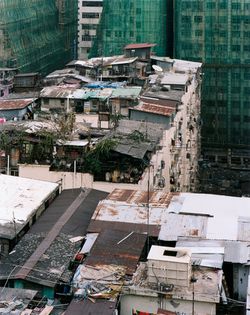
Title:
Learning from... Hong Kong
Learning from... Hong Kong
Actions:
Description:
Self-built settlements on the roofs of high-rise buildings have been an integral part of Hong Kong’s history for over half a century. Rooftop structures range from basic shelters for the disadvantaged to intricate multi-storey constructions equipped with the amenities of modern life. Rufina Wu and Stefan Canham use the tools of an architect and a photographer to document(...)
Self-built settlements on the roofs of high-rise buildings have been an integral part of Hong Kong’s history for over half a century. Rooftop structures range from basic shelters for the disadvantaged to intricate multi-storey constructions equipped with the amenities of modern life. Rufina Wu and Stefan Canham use the tools of an architect and a photographer to document(...)
Location:
Paul-Desmarais Theatre
Paul-Desmarais Theatre
Date:
3 May 2012 , 7pm
3 May 2012 , 7pm
Title:
Learning from... Hong Kong
Actions:
Description:
Self-built settlements on the roofs of high-rise buildings have been an integral part of Hong Kong’s history for over half a century. Rooftop structures range from basic shelters for the disadvantaged to intricate multi-storey constructions equipped with the amenities of modern life. Rufina Wu and Stefan Canham use the tools of an architect and a photographer to document(...)
Learning from... Hong Kong
Actions:
Description:
Self-built settlements on the roofs of high-rise buildings have been an integral part of Hong Kong’s history for over half a century. Rooftop structures range from basic shelters for the disadvantaged to intricate multi-storey constructions equipped with the amenities of modern life. Rufina Wu and Stefan Canham use the tools of an architect and a photographer to document(...)
Form:
events
events
Date:
3 May 2012
7pm
3 May 2012
7pm
Location:
Paul-Desmarais Theatre
Paul-Desmarais Theatre
Form:
textual records
textual records
Actions:
Reference number:
AP075.S3.SS2.068
Description:
Submittal by Resources for Community and Equity Community Builders, possibly used as documentation by Cornelia Hahn Oberlander. Original folder entitled "OXFORD PLAZA AND DAVID BROWER CENTRE SAN FRANCISCO".
AP075.S3.SS2.068
Description:
Submittal by Resources for Community and Equity Community Builders, possibly used as documentation by Cornelia Hahn Oberlander. Original folder entitled "OXFORD PLAZA AND DAVID BROWER CENTRE SAN FRANCISCO".
People:
Date:
2002
2002
Title:
Proposal for the Oxford Plaza and Brower Center in San Francisco
Actions:
AP075.S3.SS2.068
Description:
Submittal by Resources for Community and Equity Community Builders, possibly used as documentation by Cornelia Hahn Oberlander. Original folder entitled "OXFORD PLAZA AND DAVID BROWER CENTRE SAN FRANCISCO".
Proposal for the Oxford Plaza and Brower Center in San Francisco
Actions:
AP075.S3.SS2.068
Description:
Submittal by Resources for Community and Equity Community Builders, possibly used as documentation by Cornelia Hahn Oberlander. Original folder entitled "OXFORD PLAZA AND DAVID BROWER CENTRE SAN FRANCISCO".
Form:
textual records
textual records
Date:
2002
2002
People:
Form:
archives
Level of archival description:
Fonds
archives
Level of archival description:
Fonds
Actions:
Reference number:
AP084
Synopsis:
The Gardiner & Thornton architects fonds, 1924-1987, documents the built projects of Vancouver-based firm, Gardiner & Thornton, architects, and its successive firms. Over 300 architectural projects are represented in this fonds. Materials in this fonds include approximately 3925 drawings (including reprographic copies), 908 photographic materials and 3.06 l.m. of textual records.
AP084
Synopsis:
The Gardiner & Thornton architects fonds, 1924-1987, documents the built projects of Vancouver-based firm, Gardiner & Thornton, architects, and its successive firms. Over 300 architectural projects are represented in this fonds. Materials in this fonds include approximately 3925 drawings (including reprographic copies), 908 photographic materials and 3.06 l.m. of textual records.
People:
Date:
1924-1987
1924-1987
Title:
Gardiner & Thornton architects fonds
Actions:
AP084
Synopsis:
The Gardiner & Thornton architects fonds, 1924-1987, documents the built projects of Vancouver-based firm, Gardiner & Thornton, architects, and its successive firms. Over 300 architectural projects are represented in this fonds. Materials in this fonds include approximately 3925 drawings (including reprographic copies), 908 photographic materials and 3.06 l.m. of textual records.
Gardiner & Thornton architects fonds
Actions:
AP084
Synopsis:
The Gardiner & Thornton architects fonds, 1924-1987, documents the built projects of Vancouver-based firm, Gardiner & Thornton, architects, and its successive firms. Over 300 architectural projects are represented in this fonds. Materials in this fonds include approximately 3925 drawings (including reprographic copies), 908 photographic materials and 3.06 l.m. of textual records.
Form:
archives
Level of archival description:
Fonds
archives
Level of archival description:
Fonds
Date:
1924-1987
1924-1987
People:
Form:
exhibitions
exhibitions
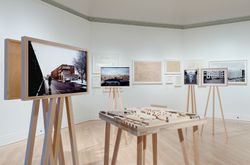
Actions:
Description:
Wohnhaus Schlesisches Tor—also known as Bonjour Tristesse—in Berlin and Punt en Komma in The Hague are Álvaro Siza’s first built works outside his native Portugal. The two projects resemble one another in size, scale, program, and ambition: both were built in the 1980s, both are results of a distinct attitude towards the city, and both were social housing projects(...)
Wohnhaus Schlesisches Tor—also known as Bonjour Tristesse—in Berlin and Punt en Komma in The Hague are Álvaro Siza’s first built works outside his native Portugal. The two projects resemble one another in size, scale, program, and ambition: both were built in the 1980s, both are results of a distinct attitude towards the city, and both were social housing projects(...)
Location:
Octagonal gallery Keyword(s):
Álvaro Siza, Punt en Komma, The Hague, Bonjour Tristesse, Berlin
Octagonal gallery Keyword(s):
Álvaro Siza, Punt en Komma, The Hague, Bonjour Tristesse, Berlin
Date:
24 September 2015 to 22 May 2016
24 September 2015 to 22 May 2016
Title:
Corner, Block, Neighbourhood, Cities. Álvaro Siza in Berlin and The Hague
Actions:
Description:
Wohnhaus Schlesisches Tor—also known as Bonjour Tristesse—in Berlin and Punt en Komma in The Hague are Álvaro Siza’s first built works outside his native Portugal. The two projects resemble one another in size, scale, program, and ambition: both were built in the 1980s, both are results of a distinct attitude towards the city, and both were social housing projects(...)
Corner, Block, Neighbourhood, Cities. Álvaro Siza in Berlin and The Hague
Actions:
Description:
Wohnhaus Schlesisches Tor—also known as Bonjour Tristesse—in Berlin and Punt en Komma in The Hague are Álvaro Siza’s first built works outside his native Portugal. The two projects resemble one another in size, scale, program, and ambition: both were built in the 1980s, both are results of a distinct attitude towards the city, and both were social housing projects(...)
Form:
exhibitions
exhibitions
Date:
24 September 2015 to
22 May 2016
24 September 2015 to
22 May 2016
Location:
Octagonal gallery Keyword(s):
Álvaro Siza, Punt en Komma, The Hague, Bonjour Tristesse, Berlin
Octagonal gallery Keyword(s):
Álvaro Siza, Punt en Komma, The Hague, Bonjour Tristesse, Berlin
Level of archival description:
Series
Series
Actions:
Reference number:
AP193.S1
Description:
Series 1, Water Flux and Scrambled Flat, 2002-2010, documents the conception and evolution of a project that was originally a farm building and later became a geology and glaciology museum and research center focused on the Swiss Alps. The project was never realized. R&Sie(n) conceptualized Scrambled Flat as an experimental farm. The project goal was to reconcile European Union’s agricultural regulations, imposing a separation between animal and human living, to the community of Évolène traditional way of living, contiguously with animals, benefiting from the resources they offer. As conceived, Scrambled Flat creates an environment where fluidity between the existence of the animals and the humans is materialized. The size of the form is also adapted from a typical local rural house and exploits the heat of the animals and the insulation of the hay. For this project, R&Sie(n) approached the mayor of the community with the design proposition. The mayor then called for a competition, while also changing the program to an ecology museum and research center illustrating the local effects of global warming and the thawing of the Alps. R&Sie(n) won the competition with Water Flux, a reinterpretation of Scrambled Flat. The project was intended to uncover and exorcise the anxieties of ecological disaster, and the principle of flux related to seasonal change and, more broadly, climate change. The firm designed rooms that reproduce the geological and meteorological environment of the high mountains making it visible and experimental, offering refrigerated spaces for art installations and scientific demonstrations. The concept was also to build with the use of new technologies such as digital modelling, point scanning, and computer numerical control (CNC), combined with ancient local knowledge of knocking on trees to decide which specific pines have the best wood for construction. The building is designed to be constructed with local lamellar wood milled by nearby CNC. The resulting parts would be used for the structure, the insulation, the waterproofing and both the interior and exterior finishes. The design includes a grille wrapping the building, reproducing the profile of traditional houses and enclosure and making it possible to hold the snow inside a typo-morphological imprint. Therefore, the transformable envelope of the building reacts to the rhythm of the seasons. In the winter, the structure would appear like a solid cut-out of ice and snow, with cavities similar to those found in glaciers. In the summer, it would resemble piles of stones used in these areas to make borders. A small pool would collect rainwater and supply it to an interior artificial snowmaking system designed for the gallery. Transformation of the water is an integral part of the design. The records contain images of plans, sections, details for the structure of the façade, renderings, plans of the engineered structure, and photographs documenting the conception of the models with the CNC machinery. The Rhino 3D modelling files are also part of the records along with AutoCAD models and a video documenting the process. The records contain two physical models: a smaller polymer model at 1:20 scale representing the whole structure of the building, and a larger 1:1 latch wood fragment representing detail of the structure in its integrality.
AP193.S1
Description:
Series 1, Water Flux and Scrambled Flat, 2002-2010, documents the conception and evolution of a project that was originally a farm building and later became a geology and glaciology museum and research center focused on the Swiss Alps. The project was never realized. R&Sie(n) conceptualized Scrambled Flat as an experimental farm. The project goal was to reconcile European Union’s agricultural regulations, imposing a separation between animal and human living, to the community of Évolène traditional way of living, contiguously with animals, benefiting from the resources they offer. As conceived, Scrambled Flat creates an environment where fluidity between the existence of the animals and the humans is materialized. The size of the form is also adapted from a typical local rural house and exploits the heat of the animals and the insulation of the hay. For this project, R&Sie(n) approached the mayor of the community with the design proposition. The mayor then called for a competition, while also changing the program to an ecology museum and research center illustrating the local effects of global warming and the thawing of the Alps. R&Sie(n) won the competition with Water Flux, a reinterpretation of Scrambled Flat. The project was intended to uncover and exorcise the anxieties of ecological disaster, and the principle of flux related to seasonal change and, more broadly, climate change. The firm designed rooms that reproduce the geological and meteorological environment of the high mountains making it visible and experimental, offering refrigerated spaces for art installations and scientific demonstrations. The concept was also to build with the use of new technologies such as digital modelling, point scanning, and computer numerical control (CNC), combined with ancient local knowledge of knocking on trees to decide which specific pines have the best wood for construction. The building is designed to be constructed with local lamellar wood milled by nearby CNC. The resulting parts would be used for the structure, the insulation, the waterproofing and both the interior and exterior finishes. The design includes a grille wrapping the building, reproducing the profile of traditional houses and enclosure and making it possible to hold the snow inside a typo-morphological imprint. Therefore, the transformable envelope of the building reacts to the rhythm of the seasons. In the winter, the structure would appear like a solid cut-out of ice and snow, with cavities similar to those found in glaciers. In the summer, it would resemble piles of stones used in these areas to make borders. A small pool would collect rainwater and supply it to an interior artificial snowmaking system designed for the gallery. Transformation of the water is an integral part of the design. The records contain images of plans, sections, details for the structure of the façade, renderings, plans of the engineered structure, and photographs documenting the conception of the models with the CNC machinery. The Rhino 3D modelling files are also part of the records along with AutoCAD models and a video documenting the process. The records contain two physical models: a smaller polymer model at 1:20 scale representing the whole structure of the building, and a larger 1:1 latch wood fragment representing detail of the structure in its integrality.
People:
Date:
2002-2010
2002-2010
Title:
Water Flux and Scrambled Flat
Actions:
AP193.S1
Description:
Series 1, Water Flux and Scrambled Flat, 2002-2010, documents the conception and evolution of a project that was originally a farm building and later became a geology and glaciology museum and research center focused on the Swiss Alps. The project was never realized. R&Sie(n) conceptualized Scrambled Flat as an experimental farm. The project goal was to reconcile European Union’s agricultural regulations, imposing a separation between animal and human living, to the community of Évolène traditional way of living, contiguously with animals, benefiting from the resources they offer. As conceived, Scrambled Flat creates an environment where fluidity between the existence of the animals and the humans is materialized. The size of the form is also adapted from a typical local rural house and exploits the heat of the animals and the insulation of the hay. For this project, R&Sie(n) approached the mayor of the community with the design proposition. The mayor then called for a competition, while also changing the program to an ecology museum and research center illustrating the local effects of global warming and the thawing of the Alps. R&Sie(n) won the competition with Water Flux, a reinterpretation of Scrambled Flat. The project was intended to uncover and exorcise the anxieties of ecological disaster, and the principle of flux related to seasonal change and, more broadly, climate change. The firm designed rooms that reproduce the geological and meteorological environment of the high mountains making it visible and experimental, offering refrigerated spaces for art installations and scientific demonstrations. The concept was also to build with the use of new technologies such as digital modelling, point scanning, and computer numerical control (CNC), combined with ancient local knowledge of knocking on trees to decide which specific pines have the best wood for construction. The building is designed to be constructed with local lamellar wood milled by nearby CNC. The resulting parts would be used for the structure, the insulation, the waterproofing and both the interior and exterior finishes. The design includes a grille wrapping the building, reproducing the profile of traditional houses and enclosure and making it possible to hold the snow inside a typo-morphological imprint. Therefore, the transformable envelope of the building reacts to the rhythm of the seasons. In the winter, the structure would appear like a solid cut-out of ice and snow, with cavities similar to those found in glaciers. In the summer, it would resemble piles of stones used in these areas to make borders. A small pool would collect rainwater and supply it to an interior artificial snowmaking system designed for the gallery. Transformation of the water is an integral part of the design. The records contain images of plans, sections, details for the structure of the façade, renderings, plans of the engineered structure, and photographs documenting the conception of the models with the CNC machinery. The Rhino 3D modelling files are also part of the records along with AutoCAD models and a video documenting the process. The records contain two physical models: a smaller polymer model at 1:20 scale representing the whole structure of the building, and a larger 1:1 latch wood fragment representing detail of the structure in its integrality.
Water Flux and Scrambled Flat
Actions:
AP193.S1
Description:
Series 1, Water Flux and Scrambled Flat, 2002-2010, documents the conception and evolution of a project that was originally a farm building and later became a geology and glaciology museum and research center focused on the Swiss Alps. The project was never realized. R&Sie(n) conceptualized Scrambled Flat as an experimental farm. The project goal was to reconcile European Union’s agricultural regulations, imposing a separation between animal and human living, to the community of Évolène traditional way of living, contiguously with animals, benefiting from the resources they offer. As conceived, Scrambled Flat creates an environment where fluidity between the existence of the animals and the humans is materialized. The size of the form is also adapted from a typical local rural house and exploits the heat of the animals and the insulation of the hay. For this project, R&Sie(n) approached the mayor of the community with the design proposition. The mayor then called for a competition, while also changing the program to an ecology museum and research center illustrating the local effects of global warming and the thawing of the Alps. R&Sie(n) won the competition with Water Flux, a reinterpretation of Scrambled Flat. The project was intended to uncover and exorcise the anxieties of ecological disaster, and the principle of flux related to seasonal change and, more broadly, climate change. The firm designed rooms that reproduce the geological and meteorological environment of the high mountains making it visible and experimental, offering refrigerated spaces for art installations and scientific demonstrations. The concept was also to build with the use of new technologies such as digital modelling, point scanning, and computer numerical control (CNC), combined with ancient local knowledge of knocking on trees to decide which specific pines have the best wood for construction. The building is designed to be constructed with local lamellar wood milled by nearby CNC. The resulting parts would be used for the structure, the insulation, the waterproofing and both the interior and exterior finishes. The design includes a grille wrapping the building, reproducing the profile of traditional houses and enclosure and making it possible to hold the snow inside a typo-morphological imprint. Therefore, the transformable envelope of the building reacts to the rhythm of the seasons. In the winter, the structure would appear like a solid cut-out of ice and snow, with cavities similar to those found in glaciers. In the summer, it would resemble piles of stones used in these areas to make borders. A small pool would collect rainwater and supply it to an interior artificial snowmaking system designed for the gallery. Transformation of the water is an integral part of the design. The records contain images of plans, sections, details for the structure of the façade, renderings, plans of the engineered structure, and photographs documenting the conception of the models with the CNC machinery. The Rhino 3D modelling files are also part of the records along with AutoCAD models and a video documenting the process. The records contain two physical models: a smaller polymer model at 1:20 scale representing the whole structure of the building, and a larger 1:1 latch wood fragment representing detail of the structure in its integrality.
Level of archival description:
Series
Series
Date:
2002-2010
2002-2010
People:


