


409 Results
Form:
books
books
Actions:
Holdings:
Description:
248 pages : illustrations (chiefly color), charts, portraits ; 23 cm
Description:
248 pages : illustrations (chiefly color), charts, portraits ; 23 cm
Author:
Subject:
Publication:
Basel, Switzerland : Birkhäuser ; Potsdam, Germany : Bauhaus Earth, [2023], ©2023
Basel, Switzerland : Birkhäuser ; Potsdam, Germany : Bauhaus Earth, [2023], ©2023
Title:
Reconstructing the future : cities as carbon sinks / Bauhaus Earth, Hans Joachim Schellnhuber, Rocio Armillas Tiseyra (eds).
Actions:
Holdings:
Description:
248 pages : illustrations (chiefly color), charts, portraits ; 23 cm
Reconstructing the future : cities as carbon sinks / Bauhaus Earth, Hans Joachim Schellnhuber, Rocio Armillas Tiseyra (eds).
Actions:
Holdings:
Description:
248 pages : illustrations (chiefly color), charts, portraits ; 23 cm
Form:
books
books
Publication:
Basel, Switzerland : Birkhäuser ; Potsdam, Germany : Bauhaus Earth, [2023], ©2023
Basel, Switzerland : Birkhäuser ; Potsdam, Germany : Bauhaus Earth, [2023], ©2023
Author:
Subject:
Form:
books
books
Actions:
Holdings:
Description:
237 pages : illustrations (some color), facsimiles, plans ; 23 cm
Description:
237 pages : illustrations (some color), facsimiles, plans ; 23 cm
Author:
Subject:
Publication:
Berlin : Sternberg Press, [2017], ©2017
Berlin : Sternberg Press, [2017], ©2017
Title:
Botanical drift : protagonists of the invasive herbarium / edited by Khadija von Zinnenburg Carroll ; chapters by Germaine Greer [and twenty-five others].
Actions:
Holdings:
Description:
237 pages : illustrations (some color), facsimiles, plans ; 23 cm
Botanical drift : protagonists of the invasive herbarium / edited by Khadija von Zinnenburg Carroll ; chapters by Germaine Greer [and twenty-five others].
Actions:
Holdings:
Description:
237 pages : illustrations (some color), facsimiles, plans ; 23 cm
Form:
books
books
Publication:
Berlin : Sternberg Press, [2017], ©2017
Berlin : Sternberg Press, [2017], ©2017
Author:
Subject:
Form:
books
books
Actions:
Holdings:
Description:
327 pages : illustrations ; 29 cm
Description:
327 pages : illustrations ; 29 cm
Author:
Subject:
Publication:
Cambridge, MA : SA+P Press, MIT School of Architecture + Planning, [2017], Cambridge, MA : The MIT Press
Cambridge, MA : SA+P Press, MIT School of Architecture + Planning, [2017], Cambridge, MA : The MIT Press
Title:
Public space? : lost and found / edited by Gediminas Urbonas, Ann Lui, and Lucas Freeman ; produced by the MIT Program in Art, Culture and Technology.
Actions:
Holdings:
Description:
327 pages : illustrations ; 29 cm
Public space? : lost and found / edited by Gediminas Urbonas, Ann Lui, and Lucas Freeman ; produced by the MIT Program in Art, Culture and Technology.
Actions:
Holdings:
Description:
327 pages : illustrations ; 29 cm
Form:
books
books
Publication:
Cambridge, MA : SA+P Press, MIT School of Architecture + Planning, [2017], Cambridge, MA : The MIT Press
Cambridge, MA : SA+P Press, MIT School of Architecture + Planning, [2017], Cambridge, MA : The MIT Press
Author:
Subject:
Form:
books
books
Actions:
Holdings:
Description:
339 pages : illustrations (chiefly color), plans ; 25 cm
Description:
339 pages : illustrations (chiefly color), plans ; 25 cm
Author:
Subject:
Publication:
New York : W.W. Norton & Co., ©2010.
New York : W.W. Norton & Co., ©2010.
Title:
Rematerial : from waste to architecture / Alejandro Bahamón, Maria Camila Sanjinés.
Actions:
Holdings:
Description:
339 pages : illustrations (chiefly color), plans ; 25 cm
Rematerial : from waste to architecture / Alejandro Bahamón, Maria Camila Sanjinés.
Actions:
Holdings:
Description:
339 pages : illustrations (chiefly color), plans ; 25 cm
Form:
books
books
Publication:
New York : W.W. Norton & Co., ©2010.
New York : W.W. Norton & Co., ©2010.
Author:
Subject:
Form:
books
books
Actions:
Price:
$20.00
(available to order)
Summary:
Le constat est implacable : le plastique actuel et son recyclage représentent une impasse, sur le plan écologique et sanitaire. À peine 10?% du plastique produit à base de pétrole est recyclé, le reste terminant dans les dépotoirs ou l’environnement… Par chance, un substitut existe : le bioplastique. Dans cet ouvrage de vulgarisation, Paul Lavallée présente un panorama(...)
$20.00
(available to order)
Summary:
Le constat est implacable : le plastique actuel et son recyclage représentent une impasse, sur le plan écologique et sanitaire. À peine 10?% du plastique produit à base de pétrole est recyclé, le reste terminant dans les dépotoirs ou l’environnement… Par chance, un substitut existe : le bioplastique. Dans cet ouvrage de vulgarisation, Paul Lavallée présente un panorama(...)
Title:
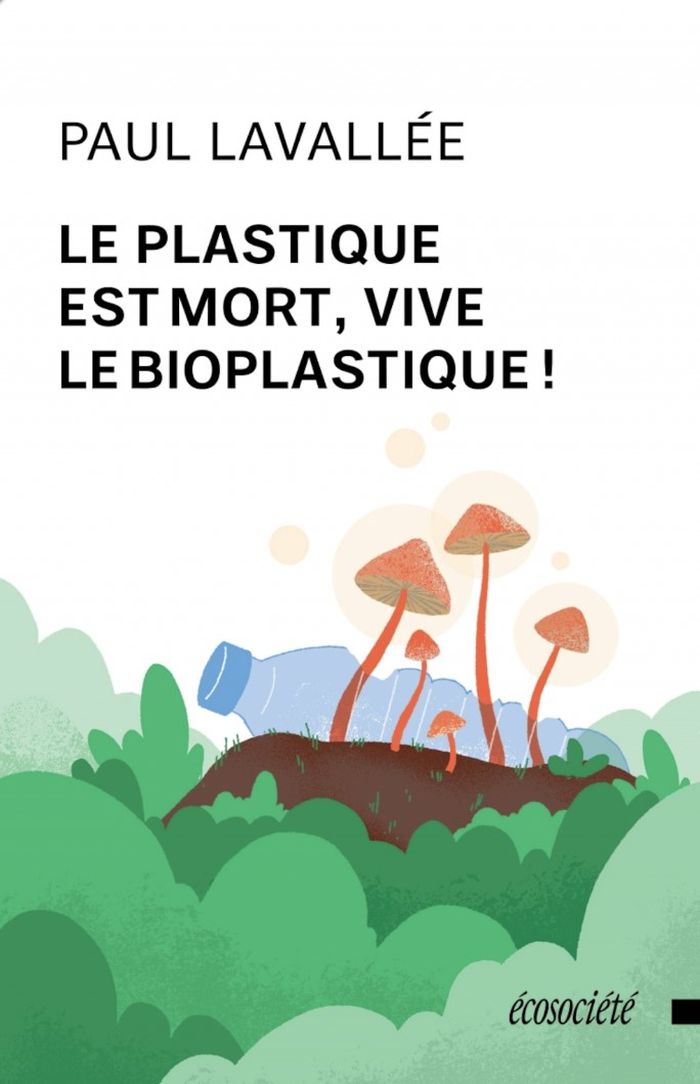
Le plastique est mort, vive le bioplastique!
Actions:
Price:
$20.00
(available to order)
Summary:
Le constat est implacable : le plastique actuel et son recyclage représentent une impasse, sur le plan écologique et sanitaire. À peine 10?% du plastique produit à base de pétrole est recyclé, le reste terminant dans les dépotoirs ou l’environnement… Par chance, un substitut existe : le bioplastique. Dans cet ouvrage de vulgarisation, Paul Lavallée présente un panorama complet des avantages des bioplastiques et des mythes à déconstruire. Fabriqué à partir de tout matériau organique (végétaux, résidus alimentaires, algues…), le bioplastique peut se décomposer par certaines bactéries, devenir du compost ou du méthane. Plan de conversion à l’appui, ce livre essentiel montre comment le bioplastique offre un avenir beaucoup plus sain pour l’environnement et les êtres vivants.
Le plastique est mort, vive le bioplastique!
Actions:
Price:
$20.00
(available to order)
Summary:
Le constat est implacable : le plastique actuel et son recyclage représentent une impasse, sur le plan écologique et sanitaire. À peine 10?% du plastique produit à base de pétrole est recyclé, le reste terminant dans les dépotoirs ou l’environnement… Par chance, un substitut existe : le bioplastique. Dans cet ouvrage de vulgarisation, Paul Lavallée présente un panorama complet des avantages des bioplastiques et des mythes à déconstruire. Fabriqué à partir de tout matériau organique (végétaux, résidus alimentaires, algues…), le bioplastique peut se décomposer par certaines bactéries, devenir du compost ou du méthane. Plan de conversion à l’appui, ce livre essentiel montre comment le bioplastique offre un avenir beaucoup plus sain pour l’environnement et les êtres vivants.
Form:
books
books
Publication:
October 2023
October 2023
Subject:
Environment and environmental theory
Environment and environmental theory
Form:
books
books
Actions:
Price:
$85.95
(available to order)
Summary:
De la Suède à l’Australie en passant par l’Égypte, l’Inde ou la Colombie, ce livre célèbre les plus anciens et les plus grandioses de ces sanctuaires, mais également leurs plus jeunes et plus petits héritiers, et s'intéresse au rôle primordial de ces enceintes de la mémoire. Car les bibliothèques sont bien plus qu'un simple amoncèlement de livres. Elles constituent les(...)
$85.95
(available to order)
Summary:
De la Suède à l’Australie en passant par l’Égypte, l’Inde ou la Colombie, ce livre célèbre les plus anciens et les plus grandioses de ces sanctuaires, mais également leurs plus jeunes et plus petits héritiers, et s'intéresse au rôle primordial de ces enceintes de la mémoire. Car les bibliothèques sont bien plus qu'un simple amoncèlement de livres. Elles constituent les(...)
Subject:
Commercial interiors, Building types
Commercial interiors, Building types
Publication:
November 2022
November 2022
Title:
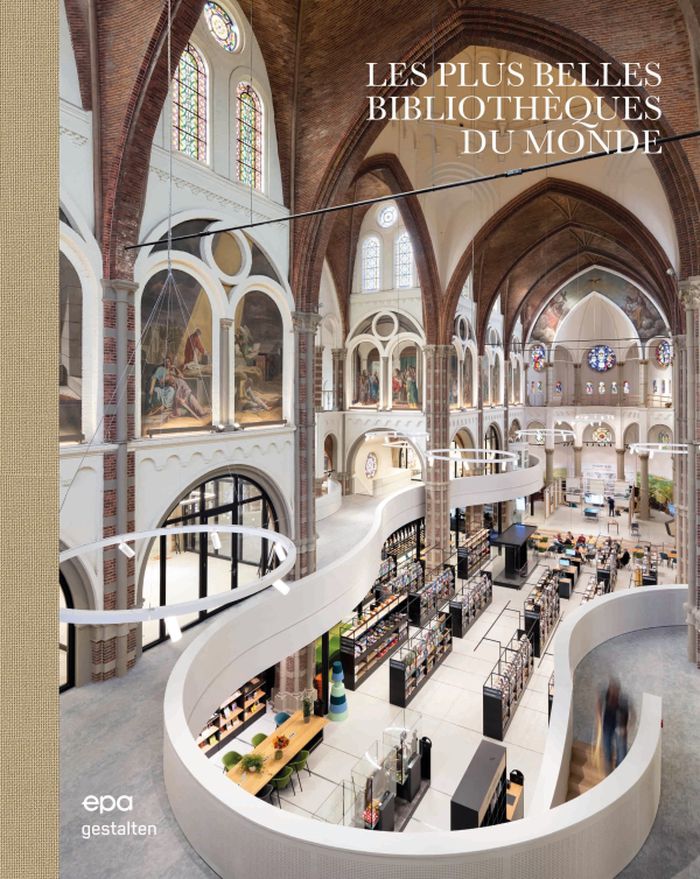
Les plus belles bibliothèques du monde
Actions:
Price:
$85.95
(available to order)
Summary:
De la Suède à l’Australie en passant par l’Égypte, l’Inde ou la Colombie, ce livre célèbre les plus anciens et les plus grandioses de ces sanctuaires, mais également leurs plus jeunes et plus petits héritiers, et s'intéresse au rôle primordial de ces enceintes de la mémoire. Car les bibliothèques sont bien plus qu'un simple amoncèlement de livres. Elles constituent les archives de notre connaissance, des lieux d'étude et de rencontre, mais aussi un symbole et le témoignage vivant des sociétés qui les ont construites. Découvrez les différentes audaces architecturales auxquelles elles ont donné lieu, des palais baroques ou rococos aux micro-bibliothèques en plastique recyclé, et les pépites les plus improbables qui existent entre les deux.
Les plus belles bibliothèques du monde
Actions:
Price:
$85.95
(available to order)
Summary:
De la Suède à l’Australie en passant par l’Égypte, l’Inde ou la Colombie, ce livre célèbre les plus anciens et les plus grandioses de ces sanctuaires, mais également leurs plus jeunes et plus petits héritiers, et s'intéresse au rôle primordial de ces enceintes de la mémoire. Car les bibliothèques sont bien plus qu'un simple amoncèlement de livres. Elles constituent les archives de notre connaissance, des lieux d'étude et de rencontre, mais aussi un symbole et le témoignage vivant des sociétés qui les ont construites. Découvrez les différentes audaces architecturales auxquelles elles ont donné lieu, des palais baroques ou rococos aux micro-bibliothèques en plastique recyclé, et les pépites les plus improbables qui existent entre les deux.
Form:
books
books
Publication:
November 2022
November 2022
Subject:
Commercial interiors, Building types
Commercial interiors, Building types
Form:
books
books
Price:
$44.95
(available to order)
Summary:
This book addresses the status of the periphery and of the peripheric -the state of being around something- as an antiquated space, a space fallen into disuse or discredit, where all defunct fashions are absorbed, and takes it as a starting point for revising the idea in which a recently acquired historical perspective plays an essential role. That as a common place, the(...)
$44.95
(available to order)
Summary:
This book addresses the status of the periphery and of the peripheric -the state of being around something- as an antiquated space, a space fallen into disuse or discredit, where all defunct fashions are absorbed, and takes it as a starting point for revising the idea in which a recently acquired historical perspective plays an essential role. That as a common place, the(...)
Title:
Around
Actions:
Price:
$44.95
(available to order)
Summary:
This book addresses the status of the periphery and of the peripheric -the state of being around something- as an antiquated space, a space fallen into disuse or discredit, where all defunct fashions are absorbed, and takes it as a starting point for revising the idea in which a recently acquired historical perspective plays an essential role. That as a common place, the periphery belongs to the past is an advantage which, along with the interventions making up this book, we intend to make good use of. The first part of this book, "Prepositions: A Journey to the Periphery", attempts to juxtapose examples of architectural and photographic interventions that have contributed, and contribute, to turning the periphery into an easily identifiable spatial signifier, and likewise to propose a rereading of these spaces which permits us to decipher their more or less diverse yearnings, utopias and social spaces. In all these interventions the periphery is always comparable to a concrete geographical reality to which one directs oneself, towards which one travels, with the aim of appropriating it, of defining it. This always involves the same preposition: around. The second part, "Propositions: The Journey of the Periphery", will be taken up with the rehabilitation or reutilization of the concept of the periphery. Once the concept of the periphery is considered as being obsolete, it is possible -and this is the chief theoretical contribution of this project- to recycle it, to convert the preposition "around" into a theoretical proposition that gives a number of new twists to the concept and explores its possibilities. The projects and photos included in this second part reflect a fundamental change in the perception of the periphery. The periphery escapes its geographical location and occupies the city's historic center, rural/natural surroundings, technological fantasies, the social utopias of postmodernity, etc. The periphery ceases to mean "around" as a physical location and becomes an invitation to reflection "around" the periphery as both concept and possibility. This doesn't so much mean a colonizing journey to the periphery, as in the first part, as a journey of the periphery to places where it was proscribed until quite recently. The periphery turns out to mean a mobile discourse that uses the common places of the classical periphery in order to dislodge and deterritorialize these.
Around
Actions:
Price:
$44.95
(available to order)
Summary:
This book addresses the status of the periphery and of the peripheric -the state of being around something- as an antiquated space, a space fallen into disuse or discredit, where all defunct fashions are absorbed, and takes it as a starting point for revising the idea in which a recently acquired historical perspective plays an essential role. That as a common place, the periphery belongs to the past is an advantage which, along with the interventions making up this book, we intend to make good use of. The first part of this book, "Prepositions: A Journey to the Periphery", attempts to juxtapose examples of architectural and photographic interventions that have contributed, and contribute, to turning the periphery into an easily identifiable spatial signifier, and likewise to propose a rereading of these spaces which permits us to decipher their more or less diverse yearnings, utopias and social spaces. In all these interventions the periphery is always comparable to a concrete geographical reality to which one directs oneself, towards which one travels, with the aim of appropriating it, of defining it. This always involves the same preposition: around. The second part, "Propositions: The Journey of the Periphery", will be taken up with the rehabilitation or reutilization of the concept of the periphery. Once the concept of the periphery is considered as being obsolete, it is possible -and this is the chief theoretical contribution of this project- to recycle it, to convert the preposition "around" into a theoretical proposition that gives a number of new twists to the concept and explores its possibilities. The projects and photos included in this second part reflect a fundamental change in the perception of the periphery. The periphery escapes its geographical location and occupies the city's historic center, rural/natural surroundings, technological fantasies, the social utopias of postmodernity, etc. The periphery ceases to mean "around" as a physical location and becomes an invitation to reflection "around" the periphery as both concept and possibility. This doesn't so much mean a colonizing journey to the periphery, as in the first part, as a journey of the periphery to places where it was proscribed until quite recently. The periphery turns out to mean a mobile discourse that uses the common places of the classical periphery in order to dislodge and deterritorialize these.
Form:
books
books
Publication:
April 2003, Barcelona
April 2003, Barcelona
Subject:
Urban Theory
Urban Theory
Form:
books
books
Actions:
Holdings:
Description:
316 pages : illustrations (chiefly color), color maps ; 24 cm.
Description:
316 pages : illustrations (chiefly color), color maps ; 24 cm.
Author:
Subject:
Publication:
Hamilton, NJ : ISC Press ; Seattle, WA : Distributed by University of Washington Press, ©2011.
Hamilton, NJ : ISC Press ; Seattle, WA : Distributed by University of Washington Press, ©2011.
Title:
The new earthwork : art, action, agency / edited by Twylene Moyer and Glenn Harper.
Actions:
Holdings:
Description:
316 pages : illustrations (chiefly color), color maps ; 24 cm.
The new earthwork : art, action, agency / edited by Twylene Moyer and Glenn Harper.
Actions:
Holdings:
Description:
316 pages : illustrations (chiefly color), color maps ; 24 cm.
Form:
books
books
Publication:
Hamilton, NJ : ISC Press ; Seattle, WA : Distributed by University of Washington Press, ©2011.
Hamilton, NJ : ISC Press ; Seattle, WA : Distributed by University of Washington Press, ©2011.
Author:
Subject:
Form:
books
books
Actions:
Price:
$25.00
(available to order)
Summary:
Au printemps 2017, des résident.e.s de Rosemont–La Petite-Patrie, à Montréal, décident de se réapproprier le terrain vague situé à l'extrémité de leur ruelle verte pour en faire un jardin en permaculture et un espace de rencontre. Partage des savoir-faire horticoles, fabrication d’accessoires en matériel recyclé, organisation d'événements socioculturels, gestion des(...)
$25.00
(available to order)
Summary:
Au printemps 2017, des résident.e.s de Rosemont–La Petite-Patrie, à Montréal, décident de se réapproprier le terrain vague situé à l'extrémité de leur ruelle verte pour en faire un jardin en permaculture et un espace de rencontre. Partage des savoir-faire horticoles, fabrication d’accessoires en matériel recyclé, organisation d'événements socioculturels, gestion des(...)
Title:
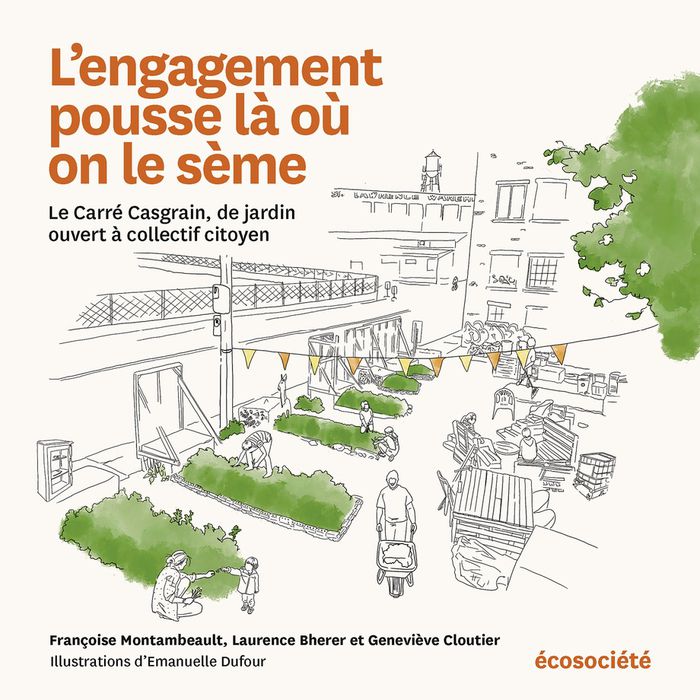
L'engagement pousse là où on le sème
Actions:
Price:
$25.00
(available to order)
Summary:
Au printemps 2017, des résident.e.s de Rosemont–La Petite-Patrie, à Montréal, décident de se réapproprier le terrain vague situé à l'extrémité de leur ruelle verte pour en faire un jardin en permaculture et un espace de rencontre. Partage des savoir-faire horticoles, fabrication d’accessoires en matériel recyclé, organisation d'événements socioculturels, gestion des relations avec le voisinage... Au fil du temps, le Carré Casgrain devient une véritable communauté! Pour les membres du collectif, c'est aussi l'occasion d'expérimenter un fonctionnement horizontal, centré sur l’autonomie et la collaboration. Ils en viennent même à jouer – sans l'avoir cherché! – le rôle de représentant.e.s du quartier auprès des institutions locales, notamment dans le dossier du garage de la Société de transports de Montréal, rue Bellechasse. Trois chercheuses en sciences sociales retracent l'aventure du Carré Casgrain et la trajectoire de ses membres, à travers les témoignages d'Hélène, Alex, Hélia, Claude, Camille, Adeline, Charlotte et des deux Fabien. Elles réfléchissent aux motivations qui poussent des citoyen.ne.s à s'investir dans des projets de verdissement et aux nouvelles formes d'engagement politique qu'ils suscitent. Illustrée par Emanuelle Dufour, cette histoire sous le signe de la convivialité pourrait bien inspirer d'autres initiatives citoyennes.
L'engagement pousse là où on le sème
Actions:
Price:
$25.00
(available to order)
Summary:
Au printemps 2017, des résident.e.s de Rosemont–La Petite-Patrie, à Montréal, décident de se réapproprier le terrain vague situé à l'extrémité de leur ruelle verte pour en faire un jardin en permaculture et un espace de rencontre. Partage des savoir-faire horticoles, fabrication d’accessoires en matériel recyclé, organisation d'événements socioculturels, gestion des relations avec le voisinage... Au fil du temps, le Carré Casgrain devient une véritable communauté! Pour les membres du collectif, c'est aussi l'occasion d'expérimenter un fonctionnement horizontal, centré sur l’autonomie et la collaboration. Ils en viennent même à jouer – sans l'avoir cherché! – le rôle de représentant.e.s du quartier auprès des institutions locales, notamment dans le dossier du garage de la Société de transports de Montréal, rue Bellechasse. Trois chercheuses en sciences sociales retracent l'aventure du Carré Casgrain et la trajectoire de ses membres, à travers les témoignages d'Hélène, Alex, Hélia, Claude, Camille, Adeline, Charlotte et des deux Fabien. Elles réfléchissent aux motivations qui poussent des citoyen.ne.s à s'investir dans des projets de verdissement et aux nouvelles formes d'engagement politique qu'ils suscitent. Illustrée par Emanuelle Dufour, cette histoire sous le signe de la convivialité pourrait bien inspirer d'autres initiatives citoyennes.
Form:
books
books
Publication:
August 2021
August 2021
Subject:
Green Architecture
Green Architecture


