


1196 Results
Form:
textual records
textual records
Actions:
Reference number:
AP197.S3.004
Description:
The box is comprised of correspondence for 1991-1994, organized in alphabetical order by last name, from L-T. The box documents Frampton’s career as Ware professor at the Graduate School of Architecture, Planning and Preservation, Columbia University and his related professional activities. Correspondence in this box includes: offers of teaching positions; requests to write articles, reviews, books and recommendation letters; invitations to teach, present, or attend at lectures/symposiums/conferences; and requests to serve on juries. Correspondence relates to Kenneth Frampton’s involvement/participation as: a lecturer at Association of Collegiate Schools of Architecture (ASCA) Conference and the Chinese University of Hong Kong; a keynote speaker at the National University of Singapore Conference; visiting professorship at the Université de Montréal; as Chairman of the Jerusalem Seminar in Architecture; a member of the advisory board for the World Architecture Triennale, Nara.
AP197.S3.004
Description:
The box is comprised of correspondence for 1991-1994, organized in alphabetical order by last name, from L-T. The box documents Frampton’s career as Ware professor at the Graduate School of Architecture, Planning and Preservation, Columbia University and his related professional activities. Correspondence in this box includes: offers of teaching positions; requests to write articles, reviews, books and recommendation letters; invitations to teach, present, or attend at lectures/symposiums/conferences; and requests to serve on juries. Correspondence relates to Kenneth Frampton’s involvement/participation as: a lecturer at Association of Collegiate Schools of Architecture (ASCA) Conference and the Chinese University of Hong Kong; a keynote speaker at the National University of Singapore Conference; visiting professorship at the Université de Montréal; as Chairman of the Jerusalem Seminar in Architecture; a member of the advisory board for the World Architecture Triennale, Nara.
People:
Date:
1991-1994
1991-1994
Title:
Personal and professional correspondence for names L-T from 1991-1994
Actions:
AP197.S3.004
Description:
The box is comprised of correspondence for 1991-1994, organized in alphabetical order by last name, from L-T. The box documents Frampton’s career as Ware professor at the Graduate School of Architecture, Planning and Preservation, Columbia University and his related professional activities. Correspondence in this box includes: offers of teaching positions; requests to write articles, reviews, books and recommendation letters; invitations to teach, present, or attend at lectures/symposiums/conferences; and requests to serve on juries. Correspondence relates to Kenneth Frampton’s involvement/participation as: a lecturer at Association of Collegiate Schools of Architecture (ASCA) Conference and the Chinese University of Hong Kong; a keynote speaker at the National University of Singapore Conference; visiting professorship at the Université de Montréal; as Chairman of the Jerusalem Seminar in Architecture; a member of the advisory board for the World Architecture Triennale, Nara.
Personal and professional correspondence for names L-T from 1991-1994
Actions:
AP197.S3.004
Description:
The box is comprised of correspondence for 1991-1994, organized in alphabetical order by last name, from L-T. The box documents Frampton’s career as Ware professor at the Graduate School of Architecture, Planning and Preservation, Columbia University and his related professional activities. Correspondence in this box includes: offers of teaching positions; requests to write articles, reviews, books and recommendation letters; invitations to teach, present, or attend at lectures/symposiums/conferences; and requests to serve on juries. Correspondence relates to Kenneth Frampton’s involvement/participation as: a lecturer at Association of Collegiate Schools of Architecture (ASCA) Conference and the Chinese University of Hong Kong; a keynote speaker at the National University of Singapore Conference; visiting professorship at the Université de Montréal; as Chairman of the Jerusalem Seminar in Architecture; a member of the advisory board for the World Architecture Triennale, Nara.
Form:
textual records
textual records
Date:
1991-1994
1991-1994
People:
Form:
textual records
textual records
Title:
F-I alphabetical files
F-I alphabetical files
Actions:
Reference number:
ARCH255609
Description:
15 files - F-I alphabetical files - Foundation of Canada, F-H miscellaneous files, Alastair Hunter photography litigation, Inner City Angels including 2 photographs of Erickson and company; International Year of the Child; Request for lectures, seminars, TV broadcasts, interview, or photo sittings; itineraries.
ARCH255609
Description:
15 files - F-I alphabetical files - Foundation of Canada, F-H miscellaneous files, Alastair Hunter photography litigation, Inner City Angels including 2 photographs of Erickson and company; International Year of the Child; Request for lectures, seminars, TV broadcasts, interview, or photo sittings; itineraries.
People:
Date:
1977-1986
1977-1986
Title:
F-I alphabetical files
Actions:
ARCH255609
Description:
15 files - F-I alphabetical files - Foundation of Canada, F-H miscellaneous files, Alastair Hunter photography litigation, Inner City Angels including 2 photographs of Erickson and company; International Year of the Child; Request for lectures, seminars, TV broadcasts, interview, or photo sittings; itineraries.
F-I alphabetical files
Actions:
ARCH255609
Description:
15 files - F-I alphabetical files - Foundation of Canada, F-H miscellaneous files, Alastair Hunter photography litigation, Inner City Angels including 2 photographs of Erickson and company; International Year of the Child; Request for lectures, seminars, TV broadcasts, interview, or photo sittings; itineraries.
Form:
textual records
textual records
Date:
1977-1986
1977-1986
People:
Level of archival description:
Project
Project
Reference number:
AP178.S1.1998.PR07
Description:
This project series documents the C. Cultural e Audit. para a Fundação Ibere Camargo in Porto Alegre, Brazil. While the records were held in the office’s archives this project was assigned the number 102/90. The office assigned the date 1998 to this project. At the end of the nineties, an architectural competition was held for the construction of a new building for the Iberê Camargo Foundation. The foundation holds the archives and work of the Brazilian painter Ibere Carmargo, as well as hosts temporary exhibitions and seminars. The project site is located near the Guaíba River, between a cliff and the Avenida Padre Cacique. Collaborators on the project were Barbara Rangel, Pedro Polonia, Michele Gigante, Francesca Montalto, Atsushi Ueno, Rita Amaral, José Luiz Cana, and Camargo Correa. The three-stories building is 88,000 square feet and includes nine galleries, storage spaces, offices, a bookstore, an auditorium, and a video library. Each of the galleries is independent but linked via a system of ramps. One of the unique qualities of the building are the ramps that come out of its concrete façade. Due to the limited space, the parking was built below the Avenida Padre Cacique. The building respects the concept of sustainable development, with a sewage treatment station that redistributes the water to the surrounding vegetation. The museum was Siza's first built project in Brazil and it was inaugurated in 2008. Siza received the Golden Lion award at the Venice Architecture Biennale in 2003 for this project. Documenting this project are sketches, studies, preliminary drawings, working drawings, technical drawings, and electrical drawings. Textual material includes project documentation, correspondence, and documentation regarding exhibitions about the building. Photographic material documents the models, project site, and built project.
AP178.S1.1998.PR07
Description:
This project series documents the C. Cultural e Audit. para a Fundação Ibere Camargo in Porto Alegre, Brazil. While the records were held in the office’s archives this project was assigned the number 102/90. The office assigned the date 1998 to this project. At the end of the nineties, an architectural competition was held for the construction of a new building for the Iberê Camargo Foundation. The foundation holds the archives and work of the Brazilian painter Ibere Carmargo, as well as hosts temporary exhibitions and seminars. The project site is located near the Guaíba River, between a cliff and the Avenida Padre Cacique. Collaborators on the project were Barbara Rangel, Pedro Polonia, Michele Gigante, Francesca Montalto, Atsushi Ueno, Rita Amaral, José Luiz Cana, and Camargo Correa. The three-stories building is 88,000 square feet and includes nine galleries, storage spaces, offices, a bookstore, an auditorium, and a video library. Each of the galleries is independent but linked via a system of ramps. One of the unique qualities of the building are the ramps that come out of its concrete façade. Due to the limited space, the parking was built below the Avenida Padre Cacique. The building respects the concept of sustainable development, with a sewage treatment station that redistributes the water to the surrounding vegetation. The museum was Siza's first built project in Brazil and it was inaugurated in 2008. Siza received the Golden Lion award at the Venice Architecture Biennale in 2003 for this project. Documenting this project are sketches, studies, preliminary drawings, working drawings, technical drawings, and electrical drawings. Textual material includes project documentation, correspondence, and documentation regarding exhibitions about the building. Photographic material documents the models, project site, and built project.
People:
Date:
1998-2006
1998-2006
Title:
C. Cultural e Audit. para a Fundação Iberê Camargo [Iberê Camargo Foundation Museum], Porto Alegre, Brazil (1998)
Actions:
AP178.S1.1998.PR07
Description:
This project series documents the C. Cultural e Audit. para a Fundação Ibere Camargo in Porto Alegre, Brazil. While the records were held in the office’s archives this project was assigned the number 102/90. The office assigned the date 1998 to this project. At the end of the nineties, an architectural competition was held for the construction of a new building for the Iberê Camargo Foundation. The foundation holds the archives and work of the Brazilian painter Ibere Carmargo, as well as hosts temporary exhibitions and seminars. The project site is located near the Guaíba River, between a cliff and the Avenida Padre Cacique. Collaborators on the project were Barbara Rangel, Pedro Polonia, Michele Gigante, Francesca Montalto, Atsushi Ueno, Rita Amaral, José Luiz Cana, and Camargo Correa. The three-stories building is 88,000 square feet and includes nine galleries, storage spaces, offices, a bookstore, an auditorium, and a video library. Each of the galleries is independent but linked via a system of ramps. One of the unique qualities of the building are the ramps that come out of its concrete façade. Due to the limited space, the parking was built below the Avenida Padre Cacique. The building respects the concept of sustainable development, with a sewage treatment station that redistributes the water to the surrounding vegetation. The museum was Siza's first built project in Brazil and it was inaugurated in 2008. Siza received the Golden Lion award at the Venice Architecture Biennale in 2003 for this project. Documenting this project are sketches, studies, preliminary drawings, working drawings, technical drawings, and electrical drawings. Textual material includes project documentation, correspondence, and documentation regarding exhibitions about the building. Photographic material documents the models, project site, and built project.
C. Cultural e Audit. para a Fundação Iberê Camargo [Iberê Camargo Foundation Museum], Porto Alegre, Brazil (1998)
Actions:
AP178.S1.1998.PR07
Description:
This project series documents the C. Cultural e Audit. para a Fundação Ibere Camargo in Porto Alegre, Brazil. While the records were held in the office’s archives this project was assigned the number 102/90. The office assigned the date 1998 to this project. At the end of the nineties, an architectural competition was held for the construction of a new building for the Iberê Camargo Foundation. The foundation holds the archives and work of the Brazilian painter Ibere Carmargo, as well as hosts temporary exhibitions and seminars. The project site is located near the Guaíba River, between a cliff and the Avenida Padre Cacique. Collaborators on the project were Barbara Rangel, Pedro Polonia, Michele Gigante, Francesca Montalto, Atsushi Ueno, Rita Amaral, José Luiz Cana, and Camargo Correa. The three-stories building is 88,000 square feet and includes nine galleries, storage spaces, offices, a bookstore, an auditorium, and a video library. Each of the galleries is independent but linked via a system of ramps. One of the unique qualities of the building are the ramps that come out of its concrete façade. Due to the limited space, the parking was built below the Avenida Padre Cacique. The building respects the concept of sustainable development, with a sewage treatment station that redistributes the water to the surrounding vegetation. The museum was Siza's first built project in Brazil and it was inaugurated in 2008. Siza received the Golden Lion award at the Venice Architecture Biennale in 2003 for this project. Documenting this project are sketches, studies, preliminary drawings, working drawings, technical drawings, and electrical drawings. Textual material includes project documentation, correspondence, and documentation regarding exhibitions about the building. Photographic material documents the models, project site, and built project.
Level of archival description:
Project
Project
Date:
1998-2006
1998-2006
People:
Form:
exhibitions
exhibitions
Description:
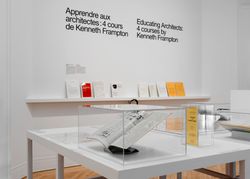
Amid education reform in American schools of architecture in the 1970s, Kenneth Frampton was integral in transforming the curriculum of Columbia University’s Graduate School of Architecture Planning. In particular, he designed and taught what became three core courses: the theory seminar “Comparative Critical Analysis,” the history lectures “Thresholds of Modern(...)
Amid education reform in American schools of architecture in the 1970s, Kenneth Frampton was integral in transforming the curriculum of Columbia University’s Graduate School of Architecture Planning. In particular, he designed and taught what became three core courses: the theory seminar “Comparative Critical Analysis,” the history lectures “Thresholds of Modern(...)
Date:
31 May 2017 to 24 September 2017
31 May 2017 to 24 September 2017
Title:
Educating Architects: Four Courses by Kenneth Frampton
Actions:
Description:
Amid education reform in American schools of architecture in the 1970s, Kenneth Frampton was integral in transforming the curriculum of Columbia University’s Graduate School of Architecture Planning. In particular, he designed and taught what became three core courses: the theory seminar “Comparative Critical Analysis,” the history lectures “Thresholds of Modern(...)
Educating Architects: Four Courses by Kenneth Frampton
Actions:
Description:
Amid education reform in American schools of architecture in the 1970s, Kenneth Frampton was integral in transforming the curriculum of Columbia University’s Graduate School of Architecture Planning. In particular, he designed and taught what became three core courses: the theory seminar “Comparative Critical Analysis,” the history lectures “Thresholds of Modern(...)
Form:
exhibitions
exhibitions
Date:
31 May 2017 to
24 September 2017
31 May 2017 to
24 September 2017
Form:
textual records
textual records
Reference number:
ARCH153544
Description:
Documentation concerning the project of a Journal for Discussion, and Criticism of Architecture, Planning and Urban Design, to be edited by Stanford Anderson and Anthony Vidler : with lists of proposed writers and topics for first issues; budget data Photocopy of Denise Levertov : "Some Notes on Organic Form", Poetry, vol. 106, no 6, September 1965 Schedule and introductory text by H.-R. Hitchcock for the "3rd Modern Architecture Symposium", Columbia University, May 13-15, 1966 CASE editorial Board Meeting, May 9 1965 Schedule of Seminar on Constructivism, A.A. 24/6/65 "A Work Study Program" Correspondence between PDE and Anthony Vidler Letter from Stuart Cohen [Statements of the editors about] Re:Form Editorial Statement (CASE/Problems in Architecture) Statement of the Editorial Board New York May 9, 1965; Colin Rowe, Peter Eisenman, Stanford Anderson, Kenneth Frampton, Henry Millon
ARCH153544
Description:
Documentation concerning the project of a Journal for Discussion, and Criticism of Architecture, Planning and Urban Design, to be edited by Stanford Anderson and Anthony Vidler : with lists of proposed writers and topics for first issues; budget data Photocopy of Denise Levertov : "Some Notes on Organic Form", Poetry, vol. 106, no 6, September 1965 Schedule and introductory text by H.-R. Hitchcock for the "3rd Modern Architecture Symposium", Columbia University, May 13-15, 1966 CASE editorial Board Meeting, May 9 1965 Schedule of Seminar on Constructivism, A.A. 24/6/65 "A Work Study Program" Correspondence between PDE and Anthony Vidler Letter from Stuart Cohen [Statements of the editors about] Re:Form Editorial Statement (CASE/Problems in Architecture) Statement of the Editorial Board New York May 9, 1965; Colin Rowe, Peter Eisenman, Stanford Anderson, Kenneth Frampton, Henry Millon
People:
Date:
1965-1971
1965-1971
Title:
PDE IAUS, 1971: D Projects - 2 IAUS magazine: CASE Mag. 1965-1971
Actions:
ARCH153544
Description:
Documentation concerning the project of a Journal for Discussion, and Criticism of Architecture, Planning and Urban Design, to be edited by Stanford Anderson and Anthony Vidler : with lists of proposed writers and topics for first issues; budget data Photocopy of Denise Levertov : "Some Notes on Organic Form", Poetry, vol. 106, no 6, September 1965 Schedule and introductory text by H.-R. Hitchcock for the "3rd Modern Architecture Symposium", Columbia University, May 13-15, 1966 CASE editorial Board Meeting, May 9 1965 Schedule of Seminar on Constructivism, A.A. 24/6/65 "A Work Study Program" Correspondence between PDE and Anthony Vidler Letter from Stuart Cohen [Statements of the editors about] Re:Form Editorial Statement (CASE/Problems in Architecture) Statement of the Editorial Board New York May 9, 1965; Colin Rowe, Peter Eisenman, Stanford Anderson, Kenneth Frampton, Henry Millon
PDE IAUS, 1971: D Projects - 2 IAUS magazine: CASE Mag. 1965-1971
Actions:
ARCH153544
Description:
Documentation concerning the project of a Journal for Discussion, and Criticism of Architecture, Planning and Urban Design, to be edited by Stanford Anderson and Anthony Vidler : with lists of proposed writers and topics for first issues; budget data Photocopy of Denise Levertov : "Some Notes on Organic Form", Poetry, vol. 106, no 6, September 1965 Schedule and introductory text by H.-R. Hitchcock for the "3rd Modern Architecture Symposium", Columbia University, May 13-15, 1966 CASE editorial Board Meeting, May 9 1965 Schedule of Seminar on Constructivism, A.A. 24/6/65 "A Work Study Program" Correspondence between PDE and Anthony Vidler Letter from Stuart Cohen [Statements of the editors about] Re:Form Editorial Statement (CASE/Problems in Architecture) Statement of the Editorial Board New York May 9, 1965; Colin Rowe, Peter Eisenman, Stanford Anderson, Kenneth Frampton, Henry Millon
Form:
textual records
textual records
Date:
1965-1971
1965-1971
People:
Form:
exhibitions
exhibitions
Actions:
Description:
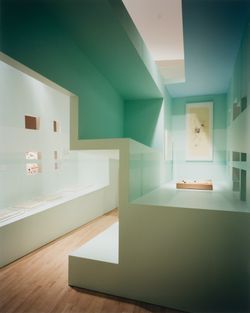
*Cities of Artificial Excavation: The Work of Peter Eisenman, 1978–1988* explores how American architect and writer Peter Eisenman questioned the concept of “site,” and demonstrates the importance of drawing and modelmaking in generating his ideas. The exhibition reveals the richness and complexity of the design process by looking carefully at Eisenman’s drawings and(...)
*Cities of Artificial Excavation: The Work of Peter Eisenman, 1978–1988* explores how American architect and writer Peter Eisenman questioned the concept of “site,” and demonstrates the importance of drawing and modelmaking in generating his ideas. The exhibition reveals the richness and complexity of the design process by looking carefully at Eisenman’s drawings and(...)
Location:
Main galleries
Main galleries
Date:
2 March 1994 to 19 June 1994
2 March 1994 to 19 June 1994
Title:
Cities of Artificial Excavation: The Work of Peter Eisenman, 1978-1988
Actions:
Description:
*Cities of Artificial Excavation: The Work of Peter Eisenman, 1978–1988* explores how American architect and writer Peter Eisenman questioned the concept of “site,” and demonstrates the importance of drawing and modelmaking in generating his ideas. The exhibition reveals the richness and complexity of the design process by looking carefully at Eisenman’s drawings and(...)
Cities of Artificial Excavation: The Work of Peter Eisenman, 1978-1988
Actions:
Description:
*Cities of Artificial Excavation: The Work of Peter Eisenman, 1978–1988* explores how American architect and writer Peter Eisenman questioned the concept of “site,” and demonstrates the importance of drawing and modelmaking in generating his ideas. The exhibition reveals the richness and complexity of the design process by looking carefully at Eisenman’s drawings and(...)
Form:
exhibitions
exhibitions
Date:
2 March 1994 to
19 June 1994
2 March 1994 to
19 June 1994
Location:
Main galleries
Main galleries
Form:
drawings, textual records
drawings, textual records
Actions:
Reference number:
ARCH278476
Description:
File's title: A&H 2001/2002 2.1. Educativo A. [illegible] VIC / UIC 2001-2. List of courses, conferences, talks and/or seminars: - 5° Curso PFC (Universitat Internacional de Catalunya); - Madrid Verde (E.T.S. Arquitectura Madrid); - Congreso de Galería y revistas experimentales de arquitectura - [...] Contains as well presentation drawings possibly by a student.
ARCH278476
Description:
File's title: A&H 2001/2002 2.1. Educativo A. [illegible] VIC / UIC 2001-2. List of courses, conferences, talks and/or seminars: - 5° Curso PFC (Universitat Internacional de Catalunya); - Madrid Verde (E.T.S. Arquitectura Madrid); - Congreso de Galería y revistas experimentales de arquitectura - [...] Contains as well presentation drawings possibly by a student.
People:
Date:
2001-2002, 2004
2001-2002, 2004
Title:
Reference materials, clippings, correspondence, presentation drawings, etc. regarding courses and conferences by Abalos & Herreros at the Escuela Técnica Superior de Arquitectura de Madrid and the Universitat Internacional de Catalunya
Actions:
ARCH278476
Description:
File's title: A&H 2001/2002 2.1. Educativo A. [illegible] VIC / UIC 2001-2. List of courses, conferences, talks and/or seminars: - 5° Curso PFC (Universitat Internacional de Catalunya); - Madrid Verde (E.T.S. Arquitectura Madrid); - Congreso de Galería y revistas experimentales de arquitectura - [...] Contains as well presentation drawings possibly by a student.
Reference materials, clippings, correspondence, presentation drawings, etc. regarding courses and conferences by Abalos & Herreros at the Escuela Técnica Superior de Arquitectura de Madrid and the Universitat Internacional de Catalunya
Actions:
ARCH278476
Description:
File's title: A&H 2001/2002 2.1. Educativo A. [illegible] VIC / UIC 2001-2. List of courses, conferences, talks and/or seminars: - 5° Curso PFC (Universitat Internacional de Catalunya); - Madrid Verde (E.T.S. Arquitectura Madrid); - Congreso de Galería y revistas experimentales de arquitectura - [...] Contains as well presentation drawings possibly by a student.
Form:
drawings, textual records
drawings, textual records
Date:
2001-2002, 2004
2001-2002, 2004
People:
Form:
drawings
Quantity:
24 conceptual drawing(s)
drawings
Quantity:
24 conceptual drawing(s)
Reference number:
AP140.S2.SS1.D31.P2
Description:
conceptual and schematic sketches and drawings showing the earlier stages of the development of the design; conceptual sketches consist of several doodles and thumbnail sketches exploring different overall shapes for the building, and alternatives for an amphitheatre-shaped building; schematic sketches and drawings show more detailed alternatives for the planning of students' rooms, service rooms, and car park, and for the shape and position of the breakfast and seminar room, twin vertical circulation cores, and escape stairs; they include a revised schedule of accommodation, a drawing for diagrammatic cross and longitudinal sections for an amphitheatre-shaped building, diagrammatic floor plans, sections, partial sections, sectional elevations, and elevation obliques, showing more developed geometrical designs for the plan and the section for the building; some drawings depict a scheme with an underground parking garage and curved access ramp; some of the schematic drawings feature doodles and thumbnail sketches, some are hand-coloured, and some are annotated
AP140.S2.SS1.D31.P2
Description:
conceptual and schematic sketches and drawings showing the earlier stages of the development of the design; conceptual sketches consist of several doodles and thumbnail sketches exploring different overall shapes for the building, and alternatives for an amphitheatre-shaped building; schematic sketches and drawings show more detailed alternatives for the planning of students' rooms, service rooms, and car park, and for the shape and position of the breakfast and seminar room, twin vertical circulation cores, and escape stairs; they include a revised schedule of accommodation, a drawing for diagrammatic cross and longitudinal sections for an amphitheatre-shaped building, diagrammatic floor plans, sections, partial sections, sectional elevations, and elevation obliques, showing more developed geometrical designs for the plan and the section for the building; some drawings depict a scheme with an underground parking garage and curved access ramp; some of the schematic drawings feature doodles and thumbnail sketches, some are hand-coloured, and some are annotated
People:
Title:
Conceptual and schematic sketches and drawings
Actions:
AP140.S2.SS1.D31.P2
Description:
conceptual and schematic sketches and drawings showing the earlier stages of the development of the design; conceptual sketches consist of several doodles and thumbnail sketches exploring different overall shapes for the building, and alternatives for an amphitheatre-shaped building; schematic sketches and drawings show more detailed alternatives for the planning of students' rooms, service rooms, and car park, and for the shape and position of the breakfast and seminar room, twin vertical circulation cores, and escape stairs; they include a revised schedule of accommodation, a drawing for diagrammatic cross and longitudinal sections for an amphitheatre-shaped building, diagrammatic floor plans, sections, partial sections, sectional elevations, and elevation obliques, showing more developed geometrical designs for the plan and the section for the building; some drawings depict a scheme with an underground parking garage and curved access ramp; some of the schematic drawings feature doodles and thumbnail sketches, some are hand-coloured, and some are annotated
Conceptual and schematic sketches and drawings
Actions:
AP140.S2.SS1.D31.P2
Description:
conceptual and schematic sketches and drawings showing the earlier stages of the development of the design; conceptual sketches consist of several doodles and thumbnail sketches exploring different overall shapes for the building, and alternatives for an amphitheatre-shaped building; schematic sketches and drawings show more detailed alternatives for the planning of students' rooms, service rooms, and car park, and for the shape and position of the breakfast and seminar room, twin vertical circulation cores, and escape stairs; they include a revised schedule of accommodation, a drawing for diagrammatic cross and longitudinal sections for an amphitheatre-shaped building, diagrammatic floor plans, sections, partial sections, sectional elevations, and elevation obliques, showing more developed geometrical designs for the plan and the section for the building; some drawings depict a scheme with an underground parking garage and curved access ramp; some of the schematic drawings feature doodles and thumbnail sketches, some are hand-coloured, and some are annotated
Form:
drawings
Quantity:
24 conceptual drawing(s)
drawings
Quantity:
24 conceptual drawing(s)
People:
Form:
textual records
textual records
Actions:
Reference number:
AP197.S3.007
Description:
The box is comprised of correspondence for the years of 1997-1998, organized in chronological order. The box documents Frampton’s career as Ware professor at the Graduate School of Architecture, Planning and Preservation, Columbia University and his related professional activities. Correspondence in this box includes: offers of teaching positions; requests to write articles, reviews, books and recommendation letters; invitations to teach, present, or attend at lectures/symposiums/conferences; and requests to serve on juries. Throughout this period, Frampton corresponded with various architects, professors, publishers, and editors of various publications such as: the Berlage Institute; the Finnish Association of Architect; Università della Svizzera italiana; Kisho Kurakawa; Tadao Ando; Mario Botta; Aurelio Galfetti; the Barragan Foundation; and Steven Holl. Correspondence relating to the following projects can be found in this box: editor of Technology, Place and Architecture: The Jerusalem Seminar in Architecture; and the General Editor of the publication World Architecture: a Critical Mosaic 1900-2000 Vols: 1-10.
AP197.S3.007
Description:
The box is comprised of correspondence for the years of 1997-1998, organized in chronological order. The box documents Frampton’s career as Ware professor at the Graduate School of Architecture, Planning and Preservation, Columbia University and his related professional activities. Correspondence in this box includes: offers of teaching positions; requests to write articles, reviews, books and recommendation letters; invitations to teach, present, or attend at lectures/symposiums/conferences; and requests to serve on juries. Throughout this period, Frampton corresponded with various architects, professors, publishers, and editors of various publications such as: the Berlage Institute; the Finnish Association of Architect; Università della Svizzera italiana; Kisho Kurakawa; Tadao Ando; Mario Botta; Aurelio Galfetti; the Barragan Foundation; and Steven Holl. Correspondence relating to the following projects can be found in this box: editor of Technology, Place and Architecture: The Jerusalem Seminar in Architecture; and the General Editor of the publication World Architecture: a Critical Mosaic 1900-2000 Vols: 1-10.
People:
Date:
1997-1998
1997-1998
Title:
Personal and professional correspondence from 1997-1998
Actions:
AP197.S3.007
Description:
The box is comprised of correspondence for the years of 1997-1998, organized in chronological order. The box documents Frampton’s career as Ware professor at the Graduate School of Architecture, Planning and Preservation, Columbia University and his related professional activities. Correspondence in this box includes: offers of teaching positions; requests to write articles, reviews, books and recommendation letters; invitations to teach, present, or attend at lectures/symposiums/conferences; and requests to serve on juries. Throughout this period, Frampton corresponded with various architects, professors, publishers, and editors of various publications such as: the Berlage Institute; the Finnish Association of Architect; Università della Svizzera italiana; Kisho Kurakawa; Tadao Ando; Mario Botta; Aurelio Galfetti; the Barragan Foundation; and Steven Holl. Correspondence relating to the following projects can be found in this box: editor of Technology, Place and Architecture: The Jerusalem Seminar in Architecture; and the General Editor of the publication World Architecture: a Critical Mosaic 1900-2000 Vols: 1-10.
Personal and professional correspondence from 1997-1998
Actions:
AP197.S3.007
Description:
The box is comprised of correspondence for the years of 1997-1998, organized in chronological order. The box documents Frampton’s career as Ware professor at the Graduate School of Architecture, Planning and Preservation, Columbia University and his related professional activities. Correspondence in this box includes: offers of teaching positions; requests to write articles, reviews, books and recommendation letters; invitations to teach, present, or attend at lectures/symposiums/conferences; and requests to serve on juries. Throughout this period, Frampton corresponded with various architects, professors, publishers, and editors of various publications such as: the Berlage Institute; the Finnish Association of Architect; Università della Svizzera italiana; Kisho Kurakawa; Tadao Ando; Mario Botta; Aurelio Galfetti; the Barragan Foundation; and Steven Holl. Correspondence relating to the following projects can be found in this box: editor of Technology, Place and Architecture: The Jerusalem Seminar in Architecture; and the General Editor of the publication World Architecture: a Critical Mosaic 1900-2000 Vols: 1-10.
Form:
textual records
textual records
Date:
1997-1998
1997-1998
People:
Level of archival description:
Project
Project
Title:
BMI/HQ
BMI/HQ
Reference number:
AP144.S2.D74
Description:
File documents the unexecuted design for the headquarters of the Birmingham and Midland Institute (BMI), in Birmingham, England. This project is related to the Shantasea Development (AP144.S2.D72) from which Cedric Price resigned as architect to take on the role of architect for BMI, one of the proposed tenants for the Shantasea project. Cedric Price proposed a municipal and regional "nerve centre" to house seminar and study rooms, workshops, galleries, film, television and music studios, a library, a planetarium, and a theatre. A flexible life-cycle plan (expansion, static, contraction) for the building and the activities would allow BMI to expand in the short and medium term, and to shrink in the long term, when it was assumed that many of its roles would be replaced by the UK's Open University plan (Works II, 42). Work on the project came to a stop in 1970 under a new city council (Architectural Design, June 1971, 368). Existing conditions material consists of maps and a survey of Birmingham. Conceptual sketches and drawings include: annotated diagrammatic plans and sections used to develop the building's massing and the horizontal/vertical relationships between functional areas; axonometric views showing the building's general form/functions; plans used for calculating square footage; diagrams showing visual and physical movement through the building; information and movement charts; and flow charts showing the building's organization. Design development drawings consist of graphs showing how functional areas might be used over time. Design development and working drawings include: diagrammatic plans and sections; exploded axonometric views of the functional relationships between areas; exterior axonometric views; sectional perspectives; space allocation plans; circulation drawings; diagrams showing activities throughout the day; furniture equipment schedules; theatre seating and stair studies; and elevations for exterior cladding. Charts show links between activities/actions; activity distribution; activity/capacity; progress of pre-contract work; and the telephone network. File also includes drawings by engineering consultants Felix Samuely and Partners and Zisman, Bowyer and Partners. Presentation material includes: newspaper clippings and text concerning the project; diagrammatic plans, sections, and charts; and a photo collage of the site; and a text by Cedric Price entitled "The Present Position". Some materials in this file were published in "Cedric Price Supplement No. 3", 'Architectural Design', vol. 41, (June 1971), 364-368, and 'Cedric Price-Works II' (London: Architectural Press, 1984), 36, 42. Material in this file was produced between 1967 and 1971. Zisman Bowyer and Partners appear as the mechanical and electrical consulting engineers; Silk and Frazier as the quantity surveyors; and Versa-Serve Ltd as the catering consultants on this project. File contains cartographic materials, conceptual drawings, design development drawings, panels, photographic materials, presentation drawings, presentation panels, publication drawings, technical drawings, and textual records.
AP144.S2.D74
Description:
File documents the unexecuted design for the headquarters of the Birmingham and Midland Institute (BMI), in Birmingham, England. This project is related to the Shantasea Development (AP144.S2.D72) from which Cedric Price resigned as architect to take on the role of architect for BMI, one of the proposed tenants for the Shantasea project. Cedric Price proposed a municipal and regional "nerve centre" to house seminar and study rooms, workshops, galleries, film, television and music studios, a library, a planetarium, and a theatre. A flexible life-cycle plan (expansion, static, contraction) for the building and the activities would allow BMI to expand in the short and medium term, and to shrink in the long term, when it was assumed that many of its roles would be replaced by the UK's Open University plan (Works II, 42). Work on the project came to a stop in 1970 under a new city council (Architectural Design, June 1971, 368). Existing conditions material consists of maps and a survey of Birmingham. Conceptual sketches and drawings include: annotated diagrammatic plans and sections used to develop the building's massing and the horizontal/vertical relationships between functional areas; axonometric views showing the building's general form/functions; plans used for calculating square footage; diagrams showing visual and physical movement through the building; information and movement charts; and flow charts showing the building's organization. Design development drawings consist of graphs showing how functional areas might be used over time. Design development and working drawings include: diagrammatic plans and sections; exploded axonometric views of the functional relationships between areas; exterior axonometric views; sectional perspectives; space allocation plans; circulation drawings; diagrams showing activities throughout the day; furniture equipment schedules; theatre seating and stair studies; and elevations for exterior cladding. Charts show links between activities/actions; activity distribution; activity/capacity; progress of pre-contract work; and the telephone network. File also includes drawings by engineering consultants Felix Samuely and Partners and Zisman, Bowyer and Partners. Presentation material includes: newspaper clippings and text concerning the project; diagrammatic plans, sections, and charts; and a photo collage of the site; and a text by Cedric Price entitled "The Present Position". Some materials in this file were published in "Cedric Price Supplement No. 3", 'Architectural Design', vol. 41, (June 1971), 364-368, and 'Cedric Price-Works II' (London: Architectural Press, 1984), 36, 42. Material in this file was produced between 1967 and 1971. Zisman Bowyer and Partners appear as the mechanical and electrical consulting engineers; Silk and Frazier as the quantity surveyors; and Versa-Serve Ltd as the catering consultants on this project. File contains cartographic materials, conceptual drawings, design development drawings, panels, photographic materials, presentation drawings, presentation panels, publication drawings, technical drawings, and textual records.
People:
Date:
1967-1971
1967-1971
Title:
BMI/HQ
Actions:
AP144.S2.D74
Description:
File documents the unexecuted design for the headquarters of the Birmingham and Midland Institute (BMI), in Birmingham, England. This project is related to the Shantasea Development (AP144.S2.D72) from which Cedric Price resigned as architect to take on the role of architect for BMI, one of the proposed tenants for the Shantasea project. Cedric Price proposed a municipal and regional "nerve centre" to house seminar and study rooms, workshops, galleries, film, television and music studios, a library, a planetarium, and a theatre. A flexible life-cycle plan (expansion, static, contraction) for the building and the activities would allow BMI to expand in the short and medium term, and to shrink in the long term, when it was assumed that many of its roles would be replaced by the UK's Open University plan (Works II, 42). Work on the project came to a stop in 1970 under a new city council (Architectural Design, June 1971, 368). Existing conditions material consists of maps and a survey of Birmingham. Conceptual sketches and drawings include: annotated diagrammatic plans and sections used to develop the building's massing and the horizontal/vertical relationships between functional areas; axonometric views showing the building's general form/functions; plans used for calculating square footage; diagrams showing visual and physical movement through the building; information and movement charts; and flow charts showing the building's organization. Design development drawings consist of graphs showing how functional areas might be used over time. Design development and working drawings include: diagrammatic plans and sections; exploded axonometric views of the functional relationships between areas; exterior axonometric views; sectional perspectives; space allocation plans; circulation drawings; diagrams showing activities throughout the day; furniture equipment schedules; theatre seating and stair studies; and elevations for exterior cladding. Charts show links between activities/actions; activity distribution; activity/capacity; progress of pre-contract work; and the telephone network. File also includes drawings by engineering consultants Felix Samuely and Partners and Zisman, Bowyer and Partners. Presentation material includes: newspaper clippings and text concerning the project; diagrammatic plans, sections, and charts; and a photo collage of the site; and a text by Cedric Price entitled "The Present Position". Some materials in this file were published in "Cedric Price Supplement No. 3", 'Architectural Design', vol. 41, (June 1971), 364-368, and 'Cedric Price-Works II' (London: Architectural Press, 1984), 36, 42. Material in this file was produced between 1967 and 1971. Zisman Bowyer and Partners appear as the mechanical and electrical consulting engineers; Silk and Frazier as the quantity surveyors; and Versa-Serve Ltd as the catering consultants on this project. File contains cartographic materials, conceptual drawings, design development drawings, panels, photographic materials, presentation drawings, presentation panels, publication drawings, technical drawings, and textual records.
BMI/HQ
Actions:
AP144.S2.D74
Description:
File documents the unexecuted design for the headquarters of the Birmingham and Midland Institute (BMI), in Birmingham, England. This project is related to the Shantasea Development (AP144.S2.D72) from which Cedric Price resigned as architect to take on the role of architect for BMI, one of the proposed tenants for the Shantasea project. Cedric Price proposed a municipal and regional "nerve centre" to house seminar and study rooms, workshops, galleries, film, television and music studios, a library, a planetarium, and a theatre. A flexible life-cycle plan (expansion, static, contraction) for the building and the activities would allow BMI to expand in the short and medium term, and to shrink in the long term, when it was assumed that many of its roles would be replaced by the UK's Open University plan (Works II, 42). Work on the project came to a stop in 1970 under a new city council (Architectural Design, June 1971, 368). Existing conditions material consists of maps and a survey of Birmingham. Conceptual sketches and drawings include: annotated diagrammatic plans and sections used to develop the building's massing and the horizontal/vertical relationships between functional areas; axonometric views showing the building's general form/functions; plans used for calculating square footage; diagrams showing visual and physical movement through the building; information and movement charts; and flow charts showing the building's organization. Design development drawings consist of graphs showing how functional areas might be used over time. Design development and working drawings include: diagrammatic plans and sections; exploded axonometric views of the functional relationships between areas; exterior axonometric views; sectional perspectives; space allocation plans; circulation drawings; diagrams showing activities throughout the day; furniture equipment schedules; theatre seating and stair studies; and elevations for exterior cladding. Charts show links between activities/actions; activity distribution; activity/capacity; progress of pre-contract work; and the telephone network. File also includes drawings by engineering consultants Felix Samuely and Partners and Zisman, Bowyer and Partners. Presentation material includes: newspaper clippings and text concerning the project; diagrammatic plans, sections, and charts; and a photo collage of the site; and a text by Cedric Price entitled "The Present Position". Some materials in this file were published in "Cedric Price Supplement No. 3", 'Architectural Design', vol. 41, (June 1971), 364-368, and 'Cedric Price-Works II' (London: Architectural Press, 1984), 36, 42. Material in this file was produced between 1967 and 1971. Zisman Bowyer and Partners appear as the mechanical and electrical consulting engineers; Silk and Frazier as the quantity surveyors; and Versa-Serve Ltd as the catering consultants on this project. File contains cartographic materials, conceptual drawings, design development drawings, panels, photographic materials, presentation drawings, presentation panels, publication drawings, technical drawings, and textual records.
Level of archival description:
File 74
File 74
Date:
1967-1971
1967-1971
People:


