


5088 Results
Form:
books
books
Title:
On Loos, ornament and crime
On Loos, ornament and crime
Actions:
Price:
$44.95
(available to order)
Summary:
In his Columns of Smoke series, Juan José Lahuerta takes on the enormously ambitious task of re-reading modernity, offering us fresh ways of looking at it while drawing new links between the ideas of architecture and ornamentation, with a special focus on how they have been treated in print. While the first volume of Columns of Smoke considered epoch-making architect(...)
Title:
On Loos, ornament and crime
Actions:
Price:
$44.95
(available to order)
Summary:
In his Columns of Smoke series, Juan José Lahuerta takes on the enormously ambitious task of re-reading modernity, offering us fresh ways of looking at it while drawing new links between the ideas of architecture and ornamentation, with a special focus on how they have been treated in print. While the first volume of Columns of Smoke considered epoch-making architect Adolf Loos’s relationship with photography, here Lahuerta turns to the Classical strand in Loos’s architecture and to his written work—and specifically his engagement with architectural and artistic theory.
Form:
books
books
Publication:
September 2015
September 2015
Subject:
Architectural Theory
Architectural Theory
Form:
books
books
Actions:
Holdings:
Description:
383 pages : color illustrations ; 16 cm
Description:
383 pages : color illustrations ; 16 cm
Author:
Subject:
Publication:
Roma : Gangemi Editore, 2011.
Roma : Gangemi Editore, 2011.
Title:
Paolo Portoghesi, architect / Francesca Gottardo ; [translation, Erika G. Young].
Actions:
Holdings:
Description:
383 pages : color illustrations ; 16 cm
Paolo Portoghesi, architect / Francesca Gottardo ; [translation, Erika G. Young].
Actions:
Holdings:
Description:
383 pages : color illustrations ; 16 cm
Form:
books
books
Publication:
Roma : Gangemi Editore, 2011.
Roma : Gangemi Editore, 2011.
Author:
Subject:
Form:
books
books
Holdings:
Description:
144 pages : illustrations (chiefly color), charts, map ; 24 cm
Description:
144 pages : illustrations (chiefly color), charts, map ; 24 cm
Author:
Subject:
Publication:
Berlin : Hatje Cantz Verlag GmbH ; Cambridge, Massachusetts : The MIT Press, [2022], ©2022
Berlin : Hatje Cantz Verlag GmbH ; Cambridge, Massachusetts : The MIT Press, [2022], ©2022
Title:
Spatializing justice : building blocks / Teddy Cruz and Fonna Forman.
Actions:
Holdings:
Description:
144 pages : illustrations (chiefly color), charts, map ; 24 cm
Spatializing justice : building blocks / Teddy Cruz and Fonna Forman.
Actions:
Holdings:
Description:
144 pages : illustrations (chiefly color), charts, map ; 24 cm
Form:
books
books
Publication:
Berlin : Hatje Cantz Verlag GmbH ; Cambridge, Massachusetts : The MIT Press, [2022], ©2022
Berlin : Hatje Cantz Verlag GmbH ; Cambridge, Massachusetts : The MIT Press, [2022], ©2022
Author:
Subject:
Form:
books
books
Price:
$33.95
(available to order)
Summary:
Big Tech firms dominate the global economy. But what value do they actually produce? In this brilliant survey of global tech economy, Nick Dyer-Witheford and Alessandra Mularoni argue that the role of firms like Amazon and Google, Palantir and Uber, is in the automation of circulation. By applying digital technologies to processes of market exchange—everything from(...)
Title:
Cybernetic circulation complex: Big tech and planetary crisis
Actions:
Price:
$33.95
(available to order)
Summary:
Big Tech firms dominate the global economy. But what value do they actually produce? In this brilliant survey of global tech economy, Nick Dyer-Witheford and Alessandra Mularoni argue that the role of firms like Amazon and Google, Palantir and Uber, is in the automation of circulation. By applying digital technologies to processes of market exchange—everything from advertising and shopping, to logistics and financial services—Big Tech aims to subject these activities to the level of control and predictability that capital has secured in industrial production. But there is a way out of the multiple crises that Big Tech has helped precipitate. If we are to break their grip on the global economy then it’ll take more than just antitrust legislation or reducing individual time online. By understanding the central role Big Tech plays in contemporary capitalism, Dyer-Witheford and Mularoni argue that what is required instead is a new, ambitious and comprehensive program of democratic collective planning that can move us beyond capitalism. ''Cybernetic Circulation Complex'' offers not only a compelling analysis of the power of Big Tech and their role in our current global crises, but a roadmap for a new form of life: biocommunism, a digital degrowth that can help us steer between the double boundaries of ecological sustainability and equitable social development.
Form:
books
books
Publication:
February 2025
February 2025
Subject:
Social
Social
Form:
books
books
Title:
Colour after Klein
Colour after Klein
Actions:
Price:
$53.95
(available to order)
Summary:
As suggested by the work of Yves Klein, this book is not about colour rules or colour theory; instead it takes pleasure in the oscillation between the aesthetic and the conceptual, materiality and immateriality, the object and the void, purification and mystification, and between erasure and colouring in. Colour is celebrated for its immanence, its quality of being in the(...)
Title:
Colour after Klein
Actions:
Price:
$53.95
(available to order)
Summary:
As suggested by the work of Yves Klein, this book is not about colour rules or colour theory; instead it takes pleasure in the oscillation between the aesthetic and the conceptual, materiality and immateriality, the object and the void, purification and mystification, and between erasure and colouring in. Colour is celebrated for its immanence, its quality of being in the world, but also the potential it has to open up a psychic space, a world of lost feeling; with literally the power to take us over, colour us in. "Colour after Klein" explores the significance of colour as it emerges in the work of 20 of some influential artists of the twentieth and twenty-first centuries, including Yves Klein, Donald Judd, Bruce Nauman, Louise Bourgeois, Andy Warhol and James Turrell. Featuring an introduction by curator Jane Alison, an essay that explores the place of colour in the work of Yves Klein by art historian Nuit Banai, and profiles of each of the contributing artists, this book provides a new perspective on key works of Modern and contemporary art. Also included in the book are artists' writings on the subject of colour, with pieces by Klein, Judd and Hélio Oiticica. This book accompanies the exhibition "Colour after Klein" at the Barbican Art Gallery, London, 27 May to 11 September 2005.
Form:
books
books
Publication:
September 2005, London
September 2005, London
Subject:
Contemporary Art Monographs
Contemporary Art Monographs
Form:
books
books
Price:
$50.00
(available to order)
Summary:
They are places we fear to tread, monuments to the principles of our forebears, awe-inspiring towers of achievement : public institutions that sustain and support our lives are all around us. Scott Fortino investigates these enduring pillars of public life in "Institutional", a striking visual essay that documents the diverse architectural structures that house the(...)
Subject:
Photography monographs
Photography monographs
Publication:
September 2005, Santa Fe
September 2005, Santa Fe
Title:
Institutional : photographs of jails, schools, and other Chicago buildings
Actions:
Price:
$50.00
(available to order)
Summary:
They are places we fear to tread, monuments to the principles of our forebears, awe-inspiring towers of achievement : public institutions that sustain and support our lives are all around us. Scott Fortino investigates these enduring pillars of public life in "Institutional", a striking visual essay that documents the diverse architectural structures that house the foundations of civic life in the city of Chicago. From schools to churches to prisons, Fortino transforms these worn, familiar edifices into compelling symbols of long-lost ideals and communitarian spirit. Fortino coaxes out the subtle warmth and depths of these often overwhelming and pitiless public spaces in his photographs, as his camera reveals the hidden characters of both high-profile works by renowned designers such as Rem Koolhaas, Helmut Jahn, and Mies van der Rohe as well as the stolid structures designed by long-forgotten architects. Light, colour, and composition work together in Fortino's images to produce provocative new perspectives on the interiors of public buildings, revealing how their cultural and social roles as places of worship, education, punishment, or entertainment cast long and complex shadows over our lives. Fortino challenges us in "Institutional" to rethink our view of the public spaces we pass through every day by offering an original and fascinating photographic study of the settings in which the important events of human life unfold.
Form:
books
books
Publication:
September 2005, Santa Fe
September 2005, Santa Fe
Subject:
Photography monographs
Photography monographs
Form:
books
books
Actions:
Price:
$41.95
(available to order)
Summary:
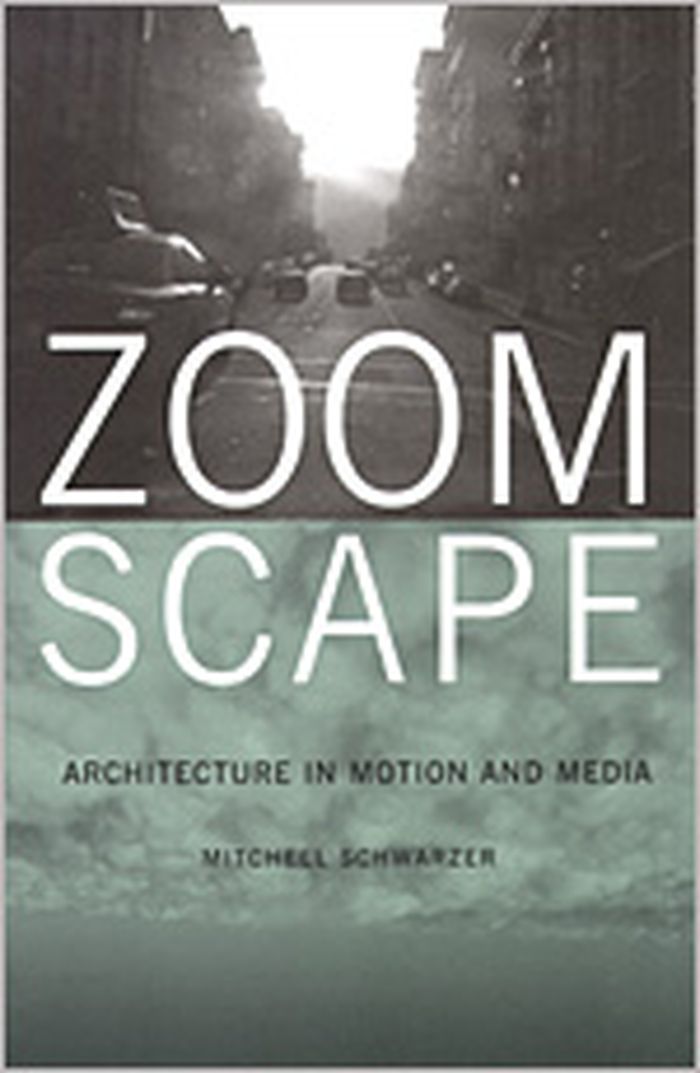
Although a few among us are intrepid architectural tourists, visiting buildings and landscapes our cameras at the ready, most of us experience architecture through the windshield of a moving vehicle, the architectural experience reduced to a blurry and momentary drive-by. And the rest of our architectural "tourism" is through the images of cameras, movies, and television(...)
Subject:
Architecture and Film, Set Design
Architecture and Film, Set Design
Publication:
May 2004, New York
May 2004, New York
Title:
Zoomscape : architecture and motion in media
Actions:
Price:
$41.95
(available to order)
Summary:
Although a few among us are intrepid architectural tourists, visiting buildings and landscapes our cameras at the ready, most of us experience architecture through the windshield of a moving vehicle, the architectural experience reduced to a blurry and momentary drive-by. And the rest of our architectural "tourism" is through the images of cameras, movies, and television programs—that is, through the lens of another's eye. Architectural historian Mitchell Schwarzer calls this new mediated architectural experience the "zoomscape." In this thought-provoking book, he argues that the perception of architecture has been fundamentally altered by the technologies of transportation and the camera - we now look at buildings, neighborhoods, cities, and even entire continents as we ride in trains, cars, and planes, and/or as we view photographs, movies, and television. "Zoomscape" shows how we now perceive buildings and places at high speeds, across great distances, through edited and multiple reproductions. Nowadays, our views of the architectural landscape are modulated by the accelerator pedal and the remote control, by studio production techniques and airplane flight paths. Using examples from high art and popular culture - from the novels of Don DeLillo to the opening credits of "The Sopranos" - Mitchell Schwarzer shows that the zoomscape has brought about unprecedented and often marvelous new ways of perceiving the built environment.
Form:
books
books
Publication:
May 2004, New York
May 2004, New York
Subject:
Architecture and Film, Set Design
Architecture and Film, Set Design
Form:
books
books
Actions:
Price:
$95.00
(available to order)
Summary:
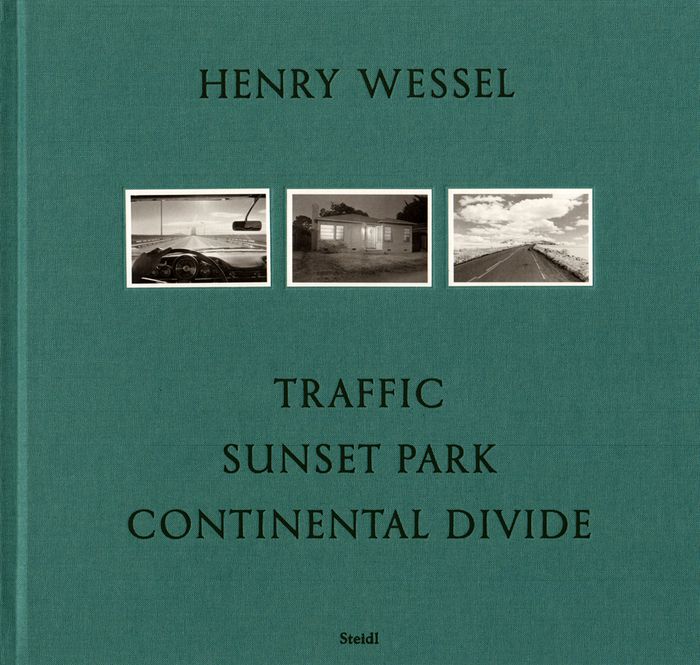
This book presents three independent bodies of work by Henry Wessel, each being a precise sequence arranged to give the viewer the experience of what it felt like to pass through the territory described. The first series “Traffic” shows Wessel’s photos of drivers stuck in traffic as he commuted in the early 1980s from Richmond, California, to San Francisco in the morning(...)
Title:
Henry Wessel: Traffic / Sunset Park / Continental Divide
Actions:
Price:
$95.00
(available to order)
Summary:
This book presents three independent bodies of work by Henry Wessel, each being a precise sequence arranged to give the viewer the experience of what it felt like to pass through the territory described. The first series “Traffic” shows Wessel’s photos of drivers stuck in traffic as he commuted in the early 1980s from Richmond, California, to San Francisco in the morning rush hour. Wessel records the determination, impatience and blank boredom of his fellow drivers as they navigate a daily drill that seems at times daunting and hopeless. “Sunset Park” is Wessel’s series of night photos of the modest working-class neighborhood of Sunset Park in Santa Monica. Over four years in the mid-1990s, Wessel captured the nocturnal transformation of suburbia into a strange, sometimes eerie,landscape. In his words: “You can’t help but notice how the world is reconfigured by the lights at night. The spot lighting of particular areas, the lack of ambient light, the unnatural way that shadows are cast, all take us to an unfamiliar place…” Wessel’s final series “Continental Divide” takes the viewer on a ride from the dense, suburban flatlands of the Midwest, up across the Rocky Mountains, and down into the sparse desert landscape of the American West. Wessel depicts its houses, shacks, street corners, and the highway, reminding us of the inherent aesthetics of the everyday.
Form:
books
books
Publication:
January 2017
January 2017
Subject:
Photography monographs
Photography monographs
Form:
books
books
Price:
$26.95
(available to order)
Summary:
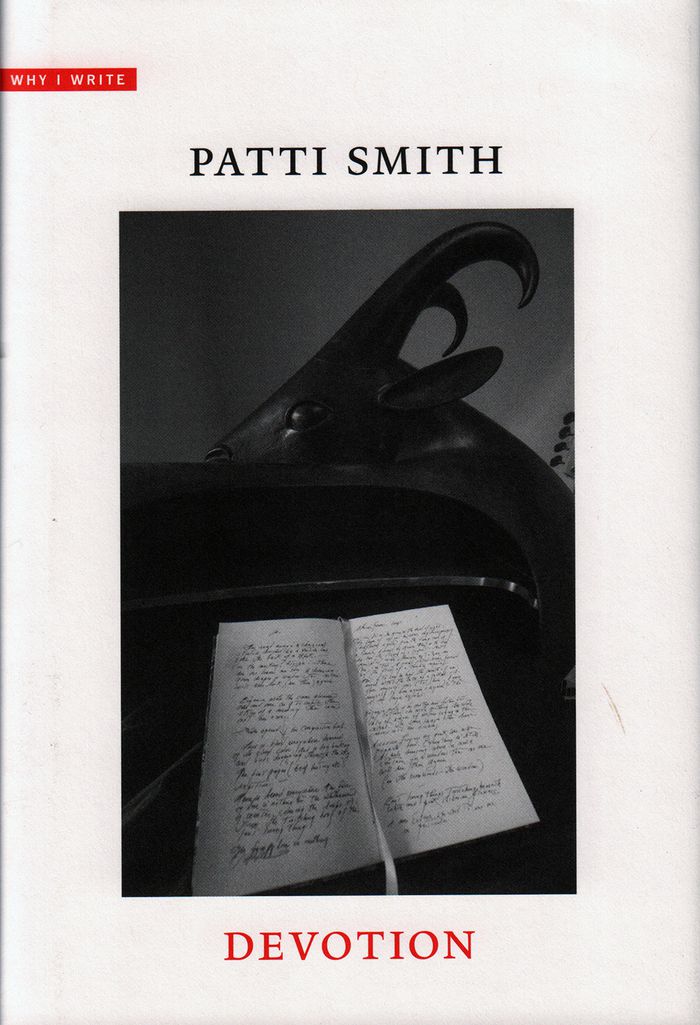
A work of creative brilliance may seem like magic—its source a mystery, its impact unexpectedly stirring. How does an artist accomplish such an achievement, connecting deeply with an audience never met? In this groundbreaking book, one of our culture’s beloved artists offers a detailed account of her own creative process, inspirations, and unexpected connections. Patti(...)
Title:
Devotion
Actions:
Price:
$26.95
(available to order)
Summary:
A work of creative brilliance may seem like magic—its source a mystery, its impact unexpectedly stirring. How does an artist accomplish such an achievement, connecting deeply with an audience never met? In this groundbreaking book, one of our culture’s beloved artists offers a detailed account of her own creative process, inspirations, and unexpected connections. Patti Smith first presents an original and beautifully crafted tale of obsession—a young skater who lives for her art, a possessive collector who ruthlessly seeks his prize, a relationship forged of need both craven and exalted. She then takes us on a second journey, exploring the sources of her story. We travel through the South of France to Camus’s house, and visit the garden of the great publisher Gallimard where the ghosts of Mishima, Nabokov, and Genet mingle. Smith tracks down Simone Weil’s grave in a lonely cemetery, hours from London, and winds through the nameless Paris streets of Patrick Modiano’s novels. Whether writing in a café or a train, Smith generously opens her notebooks and lets us glimpse the alchemy of her art and craft in this arresting and original book on writing. "The why I write" series is based on the Windham-Campbell Lectures, delivered annually to commemorate the awarding of the Donald Windham-Sandy M. Campbell Literature Prizes at Yale University.
Form:
books
books
Publication:
September 2017
September 2017
Subject:
Literature and poetry
Literature and poetry
Form:
books
books
Price:
$35.95
(available in store)
Summary:
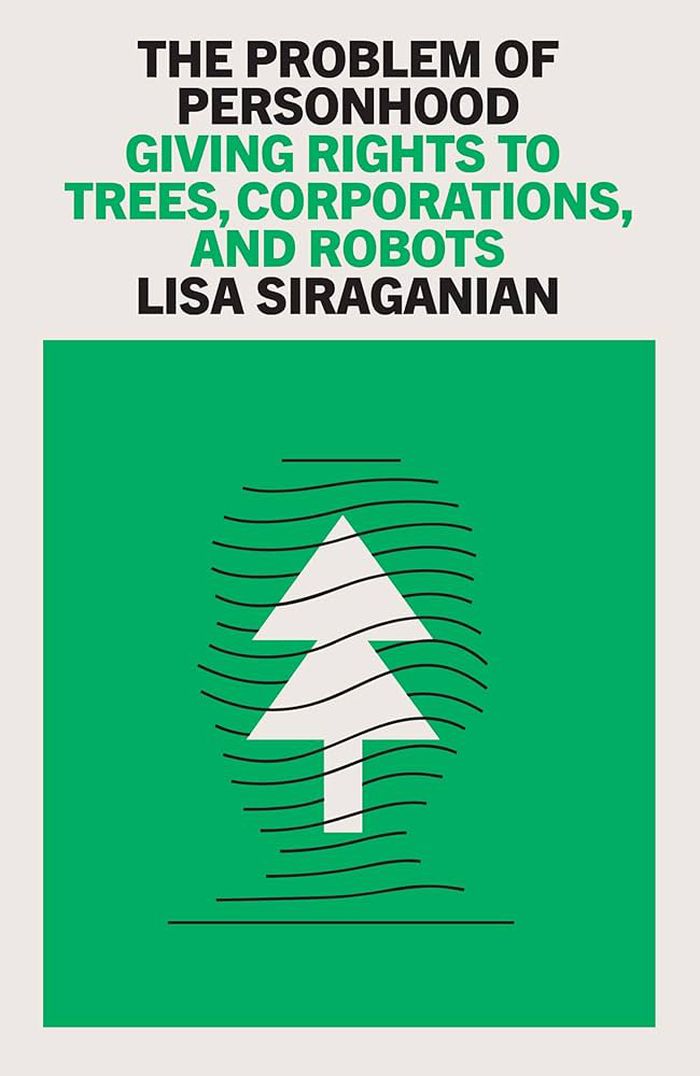
Over the last twenty-five years, the concept of personhood has become central to many contentious debates. Corporations have won free speech protections, as if they were individuals. The right to life or freedom has been claimed on behalf of fetuses, trees, and elephants. The fund of human rights is spilling over into the nonhuman. ''The Problem of Personhood'' reveals(...)
Title:
The problem of personhood: Giving rights to trees, corporations and robots
Actions:
Price:
$35.95
(available in store)
Summary:
Over the last twenty-five years, the concept of personhood has become central to many contentious debates. Corporations have won free speech protections, as if they were individuals. The right to life or freedom has been claimed on behalf of fetuses, trees, and elephants. The fund of human rights is spilling over into the nonhuman. ''The Problem of Personhood'' reveals the unsettling consequences of granting rights to imagined persons, such as Sophia the robot citizen or New Zealand’s Whanganui River. Synthesizing the political and philosophical debates on personhood and drawing on a varied cast of thinkers that includes Simone Weil, Hannah Arendt, and Dr. Seuss, Lisa Siraganian uncovers the disturbing impact of this contemporary development. Awarding rights to robots and rivers all too easily becomes a legal tool to turn people into capital. When robot Sophia is made a citizen, “she” is transformed into a subject in the law without the corresponding legal duties that protect us from her. At the root of this trend is the US Supreme Court’s Citizens United ruling that grants First Amendment rights to corporations as if they were individuals. The result has not been the transformation of things into humans so much as humans into things, when animals and the environment would be better protected with reference to our humanity rather than to theirs.
Form:
books
books
Publication:
April 2026
April 2026
Subject:
Social
Social


