


4843 Results
Form:
books
books
Actions:
Price:
$18.00
(available to order)
Summary:
Identifying an intensified concern for place-based production in art and architecture, "Surface tension – supplements" addresses questions of site-specific art, public and architectural design, and location-based practice. With Supplement No. 1, issues of spatial practice are explored in critical essays by Jennifer Gabrys on the geographic implications of Fresh Kills(...)
$18.00
(available to order)
Summary:
Identifying an intensified concern for place-based production in art and architecture, "Surface tension – supplements" addresses questions of site-specific art, public and architectural design, and location-based practice. With Supplement No. 1, issues of spatial practice are explored in critical essays by Jennifer Gabrys on the geographic implications of Fresh Kills(...)
Subject:
Acoustics
Acoustics
Publication:
June 2006, Copenhagen, Los Angeles
June 2006, Copenhagen, Los Angeles
Title:
Surface tension - supplement no 1
Actions:
Price:
$18.00
(available to order)
Summary:
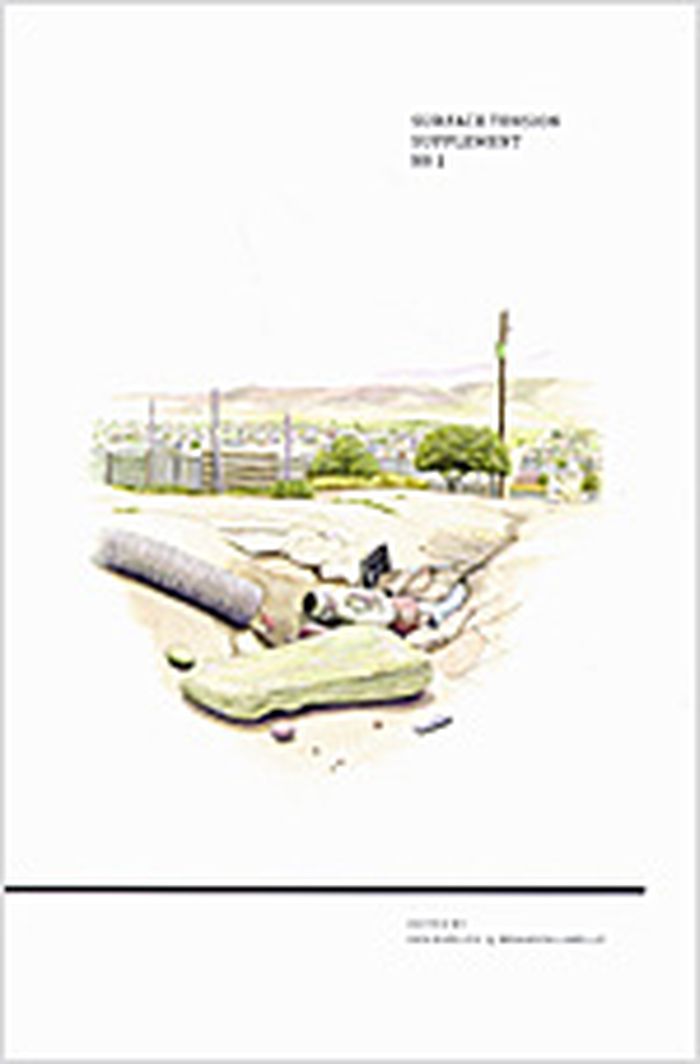
Identifying an intensified concern for place-based production in art and architecture, "Surface tension – supplements" addresses questions of site-specific art, public and architectural design, and location-based practice. With Supplement No. 1, issues of spatial practice are explored in critical essays by Jennifer Gabrys on the geographic implications of Fresh Kills Landfill, Scott Berzofsky, Nicholas Petr, Nicholas Wisniewski & Michael Rakowitz on artistic interventions in Baltimore, and by Claudine Isé, curator of "Vanishing Point", an exhibition at the Wexner Center for the Arts, which questions the aesthetics of urban non-spaces through recent photography and film. In addition field reports by Robin Wilson on public art projects in Bristol, Goto Newton on the cultures of interventionist practice in Curitiba Brazil, and Ken Ehrlich on the infrastructure of signage in Los Angeles as seen through the photographic works of Brandon Lattu complement the articles. In addition, documentation of public projects in Tijuana and Ohio by the artist groups Simparch and e-Xplo will be presented, along with projects designed specifically for the book by Sophie Warren and Jonathan Mosely, a Bristol-based team working with questions of utopian architecture, and Brandon LaBelle with a textual-photographic meditation on experimental architecture. Additional writings by Kathy Battista and Aoife O’Brien provide critical and creative perspectives on recent events, books, and exhibitions working with questions of architecture, performance, and media.
Surface tension - supplement no 1
Actions:
Price:
$18.00
(available to order)
Summary:
Identifying an intensified concern for place-based production in art and architecture, "Surface tension – supplements" addresses questions of site-specific art, public and architectural design, and location-based practice. With Supplement No. 1, issues of spatial practice are explored in critical essays by Jennifer Gabrys on the geographic implications of Fresh Kills Landfill, Scott Berzofsky, Nicholas Petr, Nicholas Wisniewski & Michael Rakowitz on artistic interventions in Baltimore, and by Claudine Isé, curator of "Vanishing Point", an exhibition at the Wexner Center for the Arts, which questions the aesthetics of urban non-spaces through recent photography and film. In addition field reports by Robin Wilson on public art projects in Bristol, Goto Newton on the cultures of interventionist practice in Curitiba Brazil, and Ken Ehrlich on the infrastructure of signage in Los Angeles as seen through the photographic works of Brandon Lattu complement the articles. In addition, documentation of public projects in Tijuana and Ohio by the artist groups Simparch and e-Xplo will be presented, along with projects designed specifically for the book by Sophie Warren and Jonathan Mosely, a Bristol-based team working with questions of utopian architecture, and Brandon LaBelle with a textual-photographic meditation on experimental architecture. Additional writings by Kathy Battista and Aoife O’Brien provide critical and creative perspectives on recent events, books, and exhibitions working with questions of architecture, performance, and media.
Form:
books
books
Publication:
June 2006, Copenhagen, Los Angeles
June 2006, Copenhagen, Los Angeles
Subject:
Acoustics
Acoustics
Form:
books
books
Price:
$51.95
(available to order)
Summary:
"The Organizational Complex" is a historical and theoretical analysis of corporate architecture in the United States after the Second World War. Its title refers to the aesthetic and technological extension of the military-industrial complex, in which architecture, computers, and corporations formed a network of objects, images, and discourses that realigned social(...)
$51.95
(available to order)
Summary:
"The Organizational Complex" is a historical and theoretical analysis of corporate architecture in the United States after the Second World War. Its title refers to the aesthetic and technological extension of the military-industrial complex, in which architecture, computers, and corporations formed a network of objects, images, and discourses that realigned social(...)
Subject:
Architectural Theory
Architectural Theory
Publication:
July 2003, Cambridge, Massachusetts
July 2003, Cambridge, Massachusetts
Title:
The organizational complex : architecture, media, and corporate space
Actions:
Price:
$51.95
(available to order)
Summary:
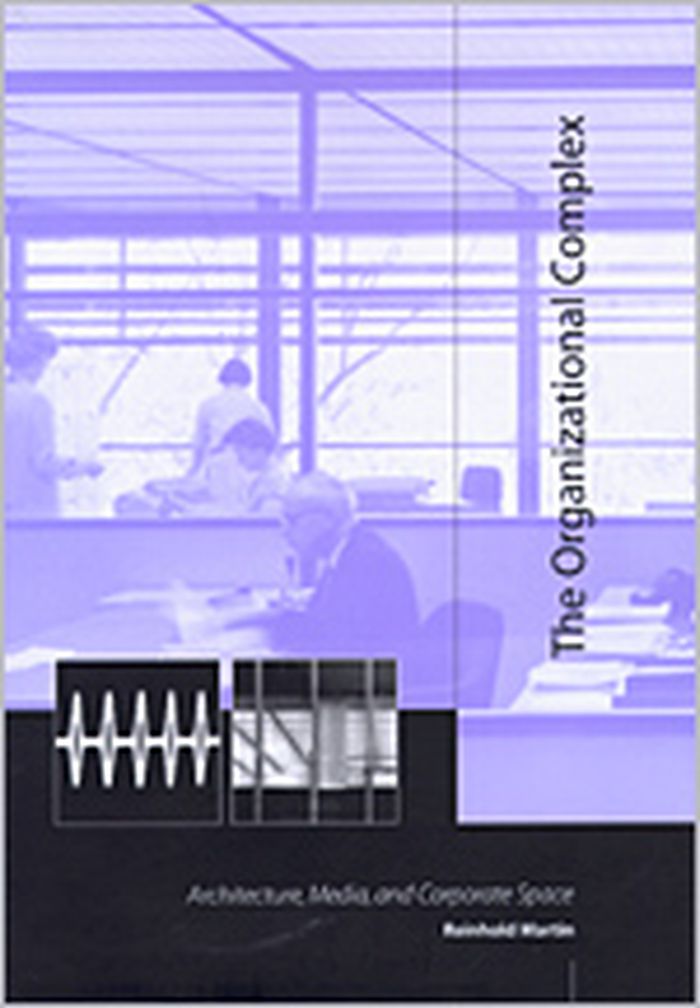
"The Organizational Complex" is a historical and theoretical analysis of corporate architecture in the United States after the Second World War. Its title refers to the aesthetic and technological extension of the military-industrial complex, in which architecture, computers, and corporations formed a network of objects, images, and discourses that realigned social relations and transformed the postwar landscape. In-depth case studies of architect Eero Saarinen's work for General Motors, IBM, and Bell Laboratories and analyses of office buildings designed by Skidmore, Owings & Merrill trace the emergence of a systems-based model of organization in architecture, in which the modular curtain wall acts as both an organizational device and a carrier of the corporate image. Such an image--of the corporation as a flexible, integrated system--is seen to correspond with a "humanization" of corporate life, as corporations decentralize both spatially and administratively. Parallel analyses follow the assimilation of cybernetics into aesthetics in the writings of artist and visual theorist Gyorgy Kepes, as art merges with techno-science in the service of a dynamic new "pattern-seeing." Image and system thus converge in the organizational complex, while top-down power dissolves into networked, pattern-based control. Architecture, as one among many media technologies, supplies the patterns--images of organic integration designed to regulate new and unstable human-machine assemblages.
The organizational complex : architecture, media, and corporate space
Actions:
Price:
$51.95
(available to order)
Summary:
"The Organizational Complex" is a historical and theoretical analysis of corporate architecture in the United States after the Second World War. Its title refers to the aesthetic and technological extension of the military-industrial complex, in which architecture, computers, and corporations formed a network of objects, images, and discourses that realigned social relations and transformed the postwar landscape. In-depth case studies of architect Eero Saarinen's work for General Motors, IBM, and Bell Laboratories and analyses of office buildings designed by Skidmore, Owings & Merrill trace the emergence of a systems-based model of organization in architecture, in which the modular curtain wall acts as both an organizational device and a carrier of the corporate image. Such an image--of the corporation as a flexible, integrated system--is seen to correspond with a "humanization" of corporate life, as corporations decentralize both spatially and administratively. Parallel analyses follow the assimilation of cybernetics into aesthetics in the writings of artist and visual theorist Gyorgy Kepes, as art merges with techno-science in the service of a dynamic new "pattern-seeing." Image and system thus converge in the organizational complex, while top-down power dissolves into networked, pattern-based control. Architecture, as one among many media technologies, supplies the patterns--images of organic integration designed to regulate new and unstable human-machine assemblages.
Form:
books
books
Publication:
July 2003, Cambridge, Massachusetts
July 2003, Cambridge, Massachusetts
Subject:
Architectural Theory
Architectural Theory
Form:
books
books
Actions:
Price:
$95.00
(available to order)
Summary:
This book presents three independent bodies of work by Henry Wessel, each being a precise sequence arranged to give the viewer the experience of what it felt like to pass through the territory described. The first series “Traffic” shows Wessel’s photos of drivers stuck in traffic as he commuted in the early 1980s from Richmond, California, to San Francisco in the morning(...)
$95.00
(available to order)
Summary:
This book presents three independent bodies of work by Henry Wessel, each being a precise sequence arranged to give the viewer the experience of what it felt like to pass through the territory described. The first series “Traffic” shows Wessel’s photos of drivers stuck in traffic as he commuted in the early 1980s from Richmond, California, to San Francisco in the morning(...)
Title:
Henry Wessel: Traffic / Sunset Park / Continental Divide
Actions:
Price:
$95.00
(available to order)
Summary:
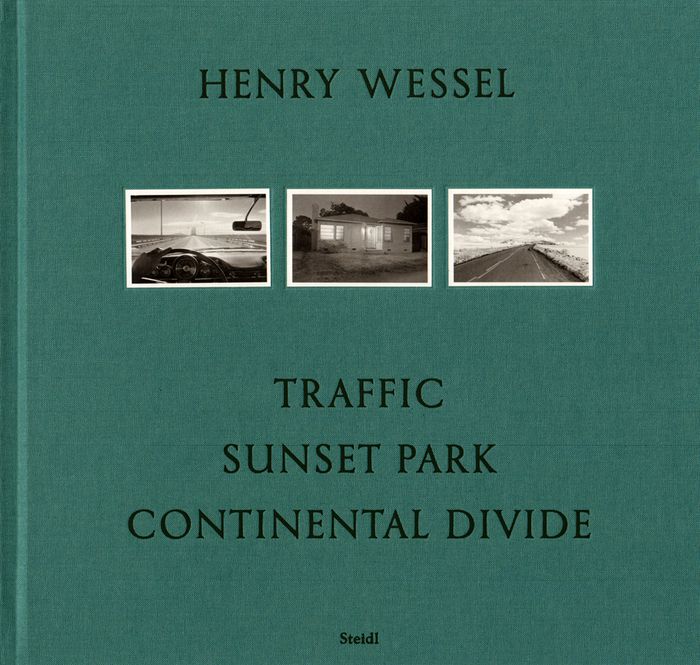
This book presents three independent bodies of work by Henry Wessel, each being a precise sequence arranged to give the viewer the experience of what it felt like to pass through the territory described. The first series “Traffic” shows Wessel’s photos of drivers stuck in traffic as he commuted in the early 1980s from Richmond, California, to San Francisco in the morning rush hour. Wessel records the determination, impatience and blank boredom of his fellow drivers as they navigate a daily drill that seems at times daunting and hopeless. “Sunset Park” is Wessel’s series of night photos of the modest working-class neighborhood of Sunset Park in Santa Monica. Over four years in the mid-1990s, Wessel captured the nocturnal transformation of suburbia into a strange, sometimes eerie,landscape. In his words: “You can’t help but notice how the world is reconfigured by the lights at night. The spot lighting of particular areas, the lack of ambient light, the unnatural way that shadows are cast, all take us to an unfamiliar place…” Wessel’s final series “Continental Divide” takes the viewer on a ride from the dense, suburban flatlands of the Midwest, up across the Rocky Mountains, and down into the sparse desert landscape of the American West. Wessel depicts its houses, shacks, street corners, and the highway, reminding us of the inherent aesthetics of the everyday.
Henry Wessel: Traffic / Sunset Park / Continental Divide
Actions:
Price:
$95.00
(available to order)
Summary:
This book presents three independent bodies of work by Henry Wessel, each being a precise sequence arranged to give the viewer the experience of what it felt like to pass through the territory described. The first series “Traffic” shows Wessel’s photos of drivers stuck in traffic as he commuted in the early 1980s from Richmond, California, to San Francisco in the morning rush hour. Wessel records the determination, impatience and blank boredom of his fellow drivers as they navigate a daily drill that seems at times daunting and hopeless. “Sunset Park” is Wessel’s series of night photos of the modest working-class neighborhood of Sunset Park in Santa Monica. Over four years in the mid-1990s, Wessel captured the nocturnal transformation of suburbia into a strange, sometimes eerie,landscape. In his words: “You can’t help but notice how the world is reconfigured by the lights at night. The spot lighting of particular areas, the lack of ambient light, the unnatural way that shadows are cast, all take us to an unfamiliar place…” Wessel’s final series “Continental Divide” takes the viewer on a ride from the dense, suburban flatlands of the Midwest, up across the Rocky Mountains, and down into the sparse desert landscape of the American West. Wessel depicts its houses, shacks, street corners, and the highway, reminding us of the inherent aesthetics of the everyday.
Form:
books
books
Publication:
January 2017
January 2017
Subject:
Photography monographs
Photography monographs
Form:
books
books
Price:
$61.50
(available to order)
Summary:
Even before being printed in a book to narrate true life (as much as it may seem brutal or idillyc), or to recall the features of a face, since its early years photography has been “exhibited” to audiences. An history of photography narrated through exhibitions and the theory that has accompanied it has never been carried out yet. It would be very interesting,(...)
$61.50
(available to order)
Summary:
Even before being printed in a book to narrate true life (as much as it may seem brutal or idillyc), or to recall the features of a face, since its early years photography has been “exhibited” to audiences. An history of photography narrated through exhibitions and the theory that has accompanied it has never been carried out yet. It would be very interesting,(...)
Title:
Photoshow
Actions:
Price:
$61.50
(available to order)
Summary:
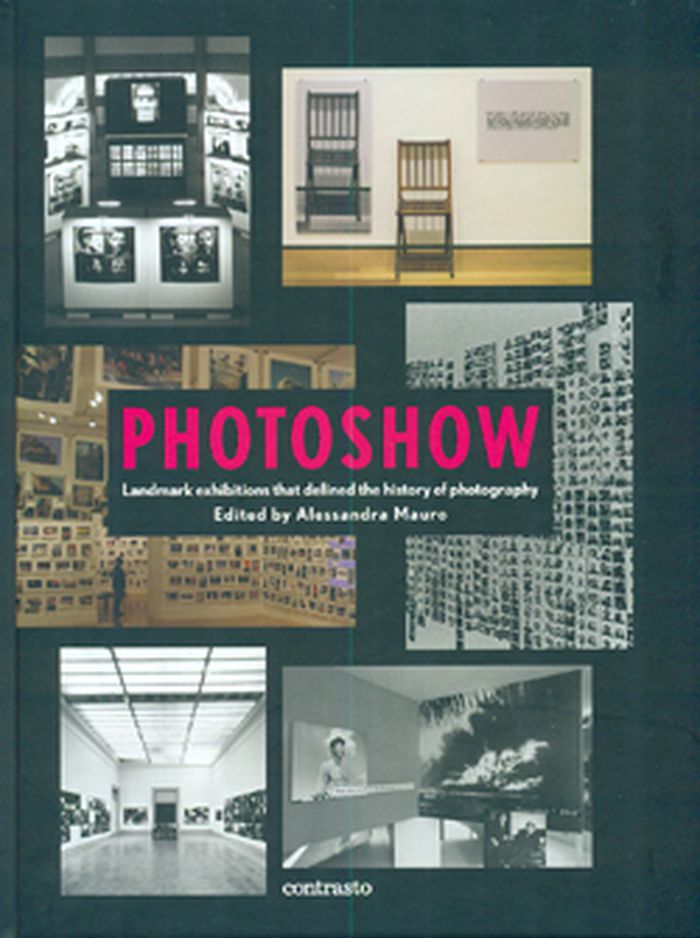
Even before being printed in a book to narrate true life (as much as it may seem brutal or idillyc), or to recall the features of a face, since its early years photography has been “exhibited” to audiences. An history of photography narrated through exhibitions and the theory that has accompanied it has never been carried out yet. It would be very interesting, furthermore, to trace back the different aesthetic schools and communication theories that have pointed out the evolution of the history of photography and its public moments par excellence: exhibitions. Installations manifest values, ideologies, politics and aesthetics. An history of photography exhibitions would represent a different and original way of studying photography as a means of expression and contemporary communication. Nowadays photography plays its role on the art and collection market with an unexpected strength and vigour. The discovery and success of a new talent on the market depends on the common work of private galleries, public spaces and the international limelight. The activity of American and European Photography Museums, the numerous great art events and festivals – especially dedicated to the world and market of photography, art galleries that discover new talents and new ways of exhibiting them, all this contributes to a system that works perfectly well presenting new ways of expression for photography, actually widely recognized as heritage of humanity.
Photoshow
Actions:
Price:
$61.50
(available to order)
Summary:
Even before being printed in a book to narrate true life (as much as it may seem brutal or idillyc), or to recall the features of a face, since its early years photography has been “exhibited” to audiences. An history of photography narrated through exhibitions and the theory that has accompanied it has never been carried out yet. It would be very interesting, furthermore, to trace back the different aesthetic schools and communication theories that have pointed out the evolution of the history of photography and its public moments par excellence: exhibitions. Installations manifest values, ideologies, politics and aesthetics. An history of photography exhibitions would represent a different and original way of studying photography as a means of expression and contemporary communication. Nowadays photography plays its role on the art and collection market with an unexpected strength and vigour. The discovery and success of a new talent on the market depends on the common work of private galleries, public spaces and the international limelight. The activity of American and European Photography Museums, the numerous great art events and festivals – especially dedicated to the world and market of photography, art galleries that discover new talents and new ways of exhibiting them, all this contributes to a system that works perfectly well presenting new ways of expression for photography, actually widely recognized as heritage of humanity.
Form:
books
books
Publication:
November 2014
November 2014
Subject:
Theory of Photography
Theory of Photography
Form:
books
books
Actions:
Subject:
Publication:
Caradt 2023
Caradt 2023
Form:
books
books
Publication:
Caradt 2023
Caradt 2023
Subject:
Form:
books
books
Holdings:
Description:
xii, 433 pages : illustrations (some color) ; 30 cm
Description:
xii, 433 pages : illustrations (some color) ; 30 cm
Author:
Subject:
Publication:
New Haven : Yale University Press, 1994.
New Haven : Yale University Press, 1994.
Title:
The Renaissance print, 1470-1550 / David Landau and Peter Parshall.
Actions:
Holdings:
Description:
xii, 433 pages : illustrations (some color) ; 30 cm
The Renaissance print, 1470-1550 / David Landau and Peter Parshall.
Actions:
Holdings:
Description:
xii, 433 pages : illustrations (some color) ; 30 cm
Form:
books
books
Publication:
New Haven : Yale University Press, 1994.
New Haven : Yale University Press, 1994.
Author:
Subject:
Form:
books
books
Actions:
Holdings:
Description:
xviii, 288 pages : illustrations ; 25 cm
Description:
xviii, 288 pages : illustrations ; 25 cm
Author:
Subject:
Publication:
Princeton, N.J. : Princeton University Press, ©1992.
Princeton, N.J. : Princeton University Press, ©1992.
Title:
Ornament, fantasy, and desire in nineteenth-century French literature / Rae Beth Gordon.
Actions:
Holdings:
Description:
xviii, 288 pages : illustrations ; 25 cm
Ornament, fantasy, and desire in nineteenth-century French literature / Rae Beth Gordon.
Actions:
Holdings:
Description:
xviii, 288 pages : illustrations ; 25 cm
Form:
books
books
Publication:
Princeton, N.J. : Princeton University Press, ©1992.
Princeton, N.J. : Princeton University Press, ©1992.
Author:
Subject:
Form:
books
books
Actions:
Holdings:
Description:
119 pages : illustrations, maps ; 21 cm
Description:
119 pages : illustrations, maps ; 21 cm
Author:
Subject:
Publication:
London ; New York : Verso, 2007.
London ; New York : Verso, 2007.
Title:
Graphs, maps, trees : abstract models for literary history / Franco Moretti.
Actions:
Holdings:
Description:
119 pages : illustrations, maps ; 21 cm
Graphs, maps, trees : abstract models for literary history / Franco Moretti.
Actions:
Holdings:
Description:
119 pages : illustrations, maps ; 21 cm
Form:
books
books
Publication:
London ; New York : Verso, 2007.
London ; New York : Verso, 2007.
Author:
Subject:
Form:
books
books
Actions:
Holdings:
Description:
6 preliminary leaves, 15 (i.e. 16) plates (some color) 64 cm
Description:
6 preliminary leaves, 15 (i.e. 16) plates (some color) 64 cm
Author:
Subject:
Publication:
Sunnyside, Orpington, Kent., G. Allen, 1887.
Sunnyside, Orpington, Kent., G. Allen, 1887.
Title:
Examples of the architecture of Venice, selected & drawn to measurement from the edifices. By John Ruskin.
Actions:
Holdings:
Description:
6 preliminary leaves, 15 (i.e. 16) plates (some color) 64 cm
Examples of the architecture of Venice, selected & drawn to measurement from the edifices. By John Ruskin.
Actions:
Holdings:
Description:
6 preliminary leaves, 15 (i.e. 16) plates (some color) 64 cm
Form:
books
books
Publication:
Sunnyside, Orpington, Kent., G. Allen, 1887.
Sunnyside, Orpington, Kent., G. Allen, 1887.
Author:
Subject:
Form:
books
books
Actions:
Subject:
Publication:
The Avery Review 2019
The Avery Review 2019
Form:
books
books
Publication:
The Avery Review 2019
The Avery Review 2019
Subject:


