


4288 Results
Form:
books
books
Actions:
Price:
$35.00
(available in store)
Summary:
The sequel to the authors’ “Are We Human?”, this provocative book is an urgent manifesto for an alternative architectural philosophy. It treats bacteria as the real architects, construction workers, maintenance crews and inhabitants of buildings. Colomina and Wigley draw on the latest research into microbes to rethink the past and possible futures of the built(...)
Title:
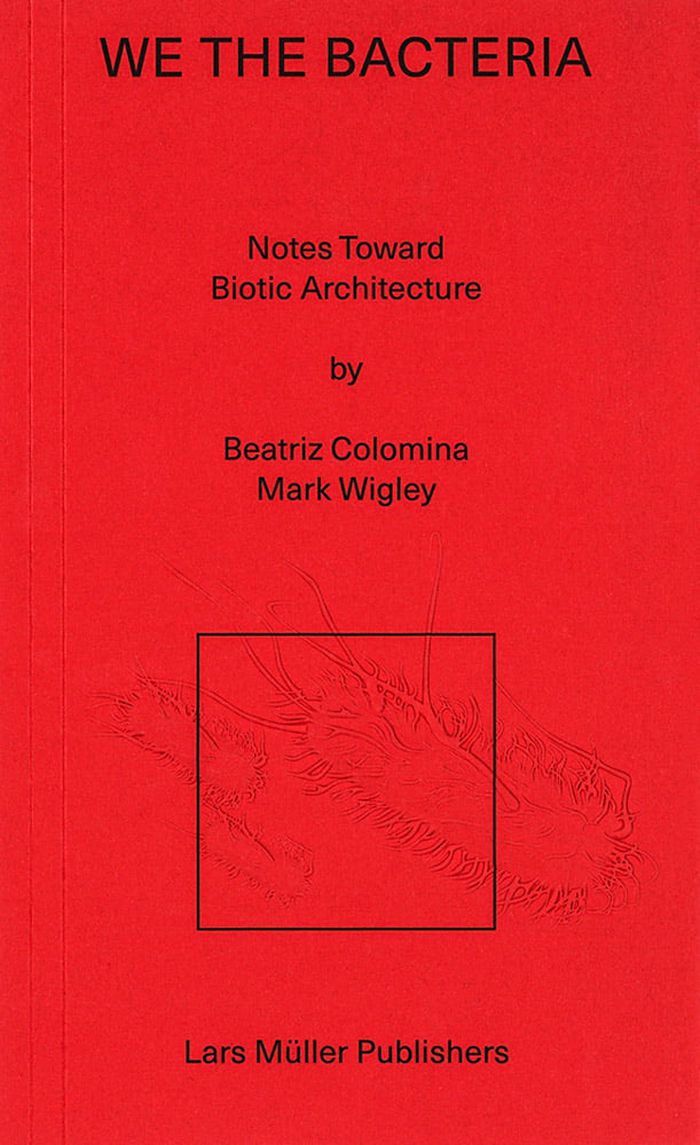
We the bacteria: Notes towards biotic architecture
Actions:
Price:
$35.00
(available in store)
Summary:
The sequel to the authors’ “Are We Human?”, this provocative book is an urgent manifesto for an alternative architectural philosophy. It treats bacteria as the real architects, construction workers, maintenance crews and inhabitants of buildings. Colomina and Wigley draw on the latest research into microbes to rethink the past and possible futures of the built environment. The book explores the intimate entanglements of the microbes within bodies and buildings over the last 10,000 years, culminating in the antibiotic philosophy of contemporary architecture. The diseases of our time are diseases of the built environment. The deadly combination of rapidly declining microbial diversity and rising antibiotic-resistant bacteria is as great a threat as climate change. Hostility to bacteria has to give way to new forms of hospitality from a more symbiotic architecture that learns from bacteria, embracing them and reconnecting with soil, plants and other species. Buildings based on fear of bacteria, which is to say fear of life itself, must give way to buildings learning from models of coexistence based on bacteria themselves. The main goal of the book is to rethink the very idea of shelter in terms of forms of inclusion rather than prophylactic forms of exclusion.
Form:
books
books
Publication:
October 2025
October 2025
Subject:
Architecture ecologies
Architecture ecologies
Form:
books
books
Actions:
Price:
$62.00
(available to order)
Summary:
In 2014, Xu Tiantian, founder of Beijing-based studio Design and Architecture (DnA) began to work in Songyang County, in China's Zhejiang Province. Her exemplary holistic planning concept of Architectural Acupuncture, which has gained the support of local administrative and political leadership, aims at revitalising rural areas and comprises the renovation of production(...)
Subject:
Contemporary Asian Architecture
Contemporary Asian Architecture
Publication:
January 2021
January 2021
Title:
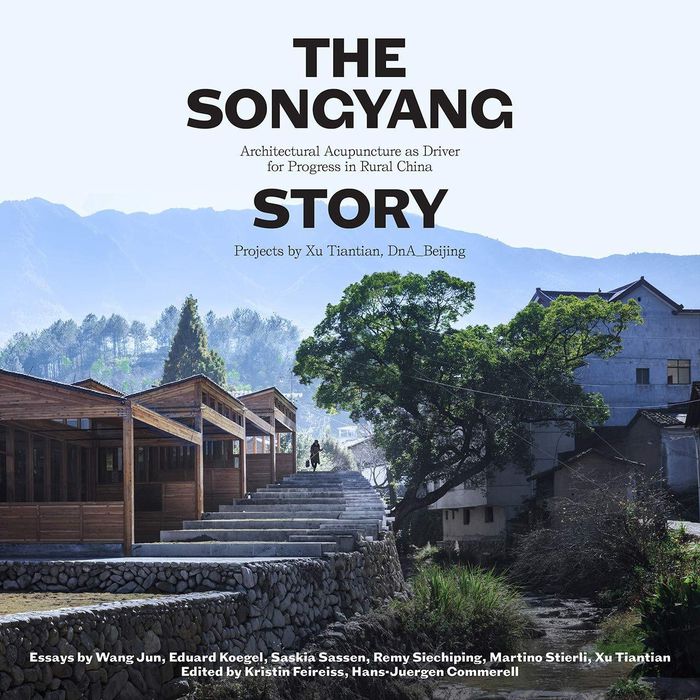
Songyang Story: architectural acupuncture as driver for socio-economic in rural China
Actions:
Price:
$62.00
(available to order)
Summary:
In 2014, Xu Tiantian, founder of Beijing-based studio Design and Architecture (DnA) began to work in Songyang County, in China's Zhejiang Province. Her exemplary holistic planning concept of Architectural Acupuncture, which has gained the support of local administrative and political leadership, aims at revitalising rural areas and comprises the renovation of production plants and of tourist and technical infrastructure as well as the creation of venues for culture and education and of social housing. Each of Xu's small-scale interventions at local level is unique, only the small budget is common to all of them. Moreover, they are all inter-related with each other and in their entirety serve the broader goal of mutual enhancement. This book introduces Xu's concept of Architectural Acupuncture and discusses the influence of architecture on cultural self-understanding and economic renewal in 21st-century rural China. It features some 20 new buildings and conversions of existing structures with diverse functions. Published alongside are essays by international economists, sociologists, and curators as well as by the secretary of the Songyang County Party Committee, examining the social, political, and economic implications of sustainable planning and collective action in the Chinese province.
Form:
books
books
Publication:
January 2021
January 2021
Subject:
Contemporary Asian Architecture
Contemporary Asian Architecture
Form:
books
books
Price:
$37.95
(available to order)
Summary:
In ''Ruderal city'' Bettina Stoetzer traces relationships among people, plants, and animals in contemporary Berlin as they make their lives in the ruins of European nationalism and capitalism. She develops the notion of the ruderal—originally an ecological designation for the unruly life that inhabits inhospitable environments such as rubble, roadsides, train tracks, and(...)
Title:
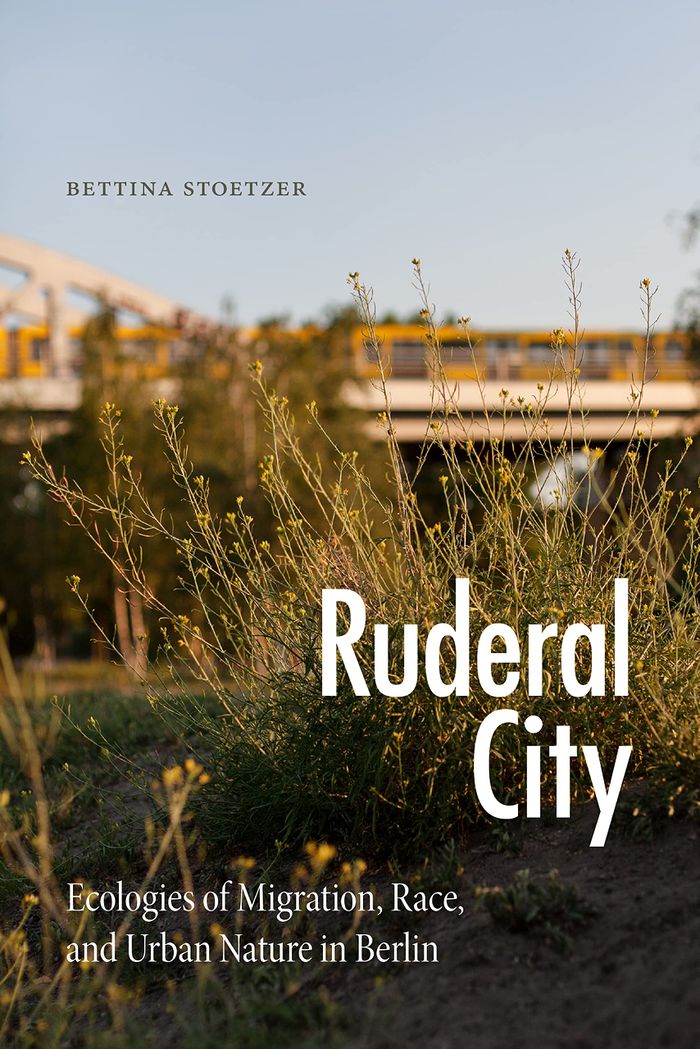
Ruderal city: ecologies of migration, race, and urban nature in Berlin
Actions:
Price:
$37.95
(available to order)
Summary:
In ''Ruderal city'' Bettina Stoetzer traces relationships among people, plants, and animals in contemporary Berlin as they make their lives in the ruins of European nationalism and capitalism. She develops the notion of the ruderal—originally an ecological designation for the unruly life that inhabits inhospitable environments such as rubble, roadsides, train tracks, and sidewalk cracks—to theorize Berlin as a “ruderal city.” Stoetzer explores sites in and around Berlin that have figured in German national imaginaries—gardens, forests, parks, and rubble fields—to show how racial, class, and gender inequalities shape contestations over today’s uses and knowledges of urban nature. Drawing on fieldwork with gardeners, botanists, migrant workers, refugees, public officials, and nature enthusiasts while charting human and more-than-human worlds, Stoetzer offers a wide-ranging ethnographic portrait of Berlin’s postwar ecologies that reveals emergent futures in the margins of European cities. Brimming with stories that break down divides between environmental perspectives and the study of migration and racial politics, Berlin’s ruderal worlds help us rethink the space of nature and culture and the categories through which we make sense of urban life in inhospitable times.
Form:
books
books
Publication:
December 2022
December 2022
Subject:
Urban Theory
Urban Theory
Form:
books
books
Actions:
Holdings:
Description:
xxii, 193 pages : illustrations ; 21 cm
Description:
xxii, 193 pages : illustrations ; 21 cm
Author:
Subject:
Publication:
Chicago : University of Chicago Press, 1988.
Chicago : University of Chicago Press, 1988.
Title:
The Nature of Frank Lloyd Wright / edited by Carol R. Bolon, Robert S. Nelson, and Linda Seidel ; introduction by Vincent Scully.
Actions:
Holdings:
Description:
xxii, 193 pages : illustrations ; 21 cm
The Nature of Frank Lloyd Wright / edited by Carol R. Bolon, Robert S. Nelson, and Linda Seidel ; introduction by Vincent Scully.
Actions:
Holdings:
Description:
xxii, 193 pages : illustrations ; 21 cm
Form:
books
books
Publication:
Chicago : University of Chicago Press, 1988.
Chicago : University of Chicago Press, 1988.
Author:
Subject:
Form:
books
books
Actions:
Holdings:
Description:
viii, 137 pages : illustrations, maps, portraits ; 28 cm
Description:
viii, 137 pages : illustrations, maps, portraits ; 28 cm
Author:
Subject:
Publication:
Cambridge, Massachusetts : The MIT Press, [2026]
Cambridge, Massachusetts : The MIT Press, [2026]
Title:
The inner passage : an untold story of Black resistance along a southern waterway / Virginia McGee Richards ; introduction by Imani Perry ; foreword by James Estrin.
Actions:
Holdings:
Description:
viii, 137 pages : illustrations, maps, portraits ; 28 cm
The inner passage : an untold story of Black resistance along a southern waterway / Virginia McGee Richards ; introduction by Imani Perry ; foreword by James Estrin.
Actions:
Holdings:
Description:
viii, 137 pages : illustrations, maps, portraits ; 28 cm
Form:
books
books
Publication:
Cambridge, Massachusetts : The MIT Press, [2026]
Cambridge, Massachusetts : The MIT Press, [2026]
Author:
Subject:
Form:
books
books
Actions:
Holdings:
Description:
xxv, 524 pages : illustrations, maps ; 29 cm
Description:
xxv, 524 pages : illustrations, maps ; 29 cm
Author:
Subject:
Publication:
Philadelphia : University of Pennsylvania Press, ©1992.
Philadelphia : University of Pennsylvania Press, ©1992.
Title:
The buried past : an archaeological history of Philadelphia / John L. Cotter, Daniel G. Roberts, Michael Parrington ; with the assistance of Sarah S. Evans.
Actions:
Holdings:
Description:
xxv, 524 pages : illustrations, maps ; 29 cm
The buried past : an archaeological history of Philadelphia / John L. Cotter, Daniel G. Roberts, Michael Parrington ; with the assistance of Sarah S. Evans.
Actions:
Holdings:
Description:
xxv, 524 pages : illustrations, maps ; 29 cm
Form:
books
books
Publication:
Philadelphia : University of Pennsylvania Press, ©1992.
Philadelphia : University of Pennsylvania Press, ©1992.
Author:
Subject:
Form:
books
books
Actions:
Holdings:
Description:
159 pages : illustrations (some color), plans, portrait ; 23 cm
Description:
159 pages : illustrations (some color), plans, portrait ; 23 cm
Author:
Subject:
Publication:
Hilversum : Verloren, 2023, ©2023
Hilversum : Verloren, 2023, ©2023
Title:
Ir. Hein Otto (1916-1994) : eenvoud en elegantie / Marianne van Lidth de Jeude ; onder redactie van Tjeerd Boersma, Johanna Karssen, Juliette Roding en Heino van Rijnberk met medewerking van Imke van Hellemondt.
Actions:
Holdings:
Description:
159 pages : illustrations (some color), plans, portrait ; 23 cm
Form:
books
books
Publication:
Hilversum : Verloren, 2023, ©2023
Hilversum : Verloren, 2023, ©2023
Author:
Subject:
Form:
books
books
Actions:
Price:
$45.95
(available to order)
Summary:
The German pavilion at the 9th Venice Architecture Biennale offers an overview of more than 35 contemporary architectural projects in Germany which have manifested in peripheral urban areas, suburban spaces, and de-industrialized zones. The projects reveal the transformation and reactivation of banal everyday architecture--business parks, switching stations, water(...)
Title:
Deutschlandscape : epicentres at the periphery - German pavilion, Venice Biennale 2004
Actions:
Price:
$45.95
(available to order)
Summary:
The German pavilion at the 9th Venice Architecture Biennale offers an overview of more than 35 contemporary architectural projects in Germany which have manifested in peripheral urban areas, suburban spaces, and de-industrialized zones. The projects reveal the transformation and reactivation of banal everyday architecture--business parks, switching stations, water purification plants, and strictly coded and conventional housing types--to open up a new perception of the "deutschlandscape." Here, architectural norms are reworked and given a new aesthetic twist through ironic self-reflection. These built projects by a critical young generation of German architects reveal highly innovative use of new materials, generate suburban "plug-ins" (temporary and mobile architecture), and skillfully rework the familiar to create solutions for hitherto underrepresented yet vital areas on the urban fringe. Accompanying essays and interviews reveal the personal narratives behind the architecture. Contributions include: "urban therapist" Sonja Beeck on dealing with the psychological dimensions of shrinking cities in the former GDR; artist and urbanist Kai Vöckler on the German psychoscape; Omar Akbar of the Bauhaus Dessau on the wider implications of urban sprawl; Peter Cook on tuning suburbia; Angelika Fitz on strategic answers to restrictive building regulations; Peter Wilson on the marketing of place; and Rudolf Stegers on multi-layered meanings behind the architectural image.
Form:
books
books
Publication:
November 2004, Ostfildern
November 2004, Ostfildern
Subject:
Urban Theory
Urban Theory
Form:
books
books
Title:
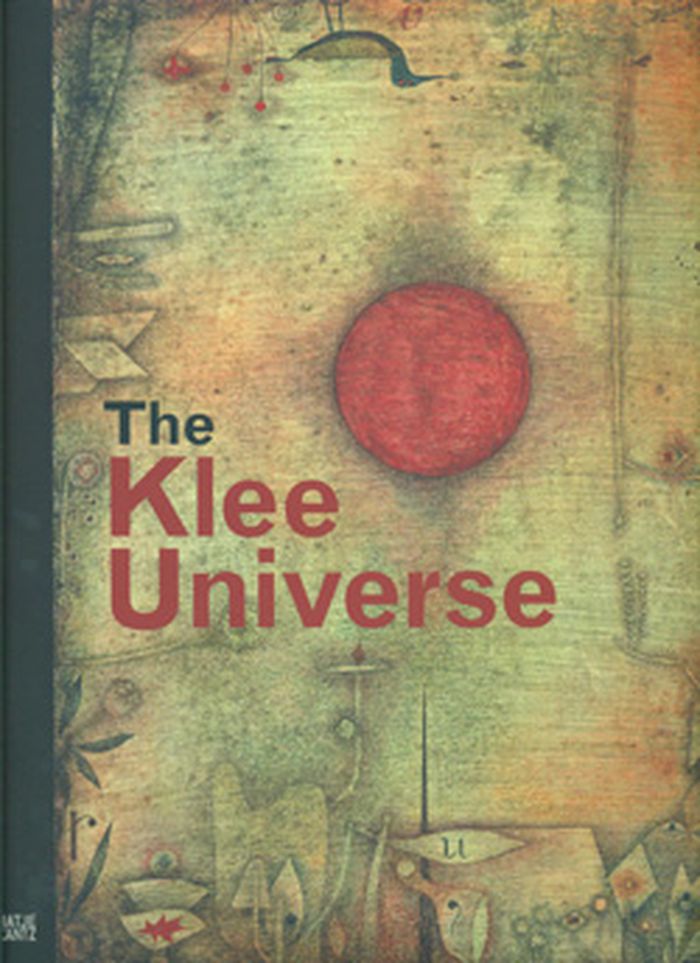
The Klee universe
The Klee universe
Actions:
Price:
$72.00
(available to order)
Summary:
There are artists whose métier is the observation or documentation of the world, and artists who set the world aside altogether to build their own visionary cosmology, designing its constituent parts from scratch as a personal mythology relayed in motifs. Paul Klee (1879-1940) was such an artist, as his aphorism “Art does not reproduce the visible, rather it makes(...)
Title:
The Klee universe
Actions:
Price:
$72.00
(available to order)
Summary:
There are artists whose métier is the observation or documentation of the world, and artists who set the world aside altogether to build their own visionary cosmology, designing its constituent parts from scratch as a personal mythology relayed in motifs. Paul Klee (1879-1940) was such an artist, as his aphorism “Art does not reproduce the visible, rather it makes visible” testifies, and The Klee Universe addresses his work from this perspective. In 1906, Klee noted in his diary, "All will be Klee," and in 1911, as the encyclopedist of his cosmos, he began to meticulously chronicle his works in a catalogue that, by the time he died, was to contain more than 9,000 items. Here, in the fashion of an Orbis Pictus or a Renaissance emblem book, Klee's oeuvre is made legible as a cogent entirety, in thematic units address: the human life cycle, from birth and childhood to sexual desire, parenthood and death; music, architecture, theater and religion; plants, animals and landscapes; and, finally, darker, destructive forces in the shape of war, fear and death. The Klee Universe reimagines the artist as a Renaissance man, an artist of great learning whose cosmos proves to be a coherent system of ideas and images.
Form:
books
books
Publication:
January 2009, Berlin
January 2009, Berlin
Subject:
Contemporary Art Monographs
Contemporary Art Monographs
Form:
books
books
Actions:
Price:
$71.95
(available to order)
Summary:
Karl Blossfeldt (1865-1932) achieved overnight fame in the late 1920s with the first publication of his photographs of plants. Those photographs, which revealed the inner structures of the organic forms, immediately made him a pioneer of New Objectivity, an(...)
$71.95
(available to order)
Summary:
Karl Blossfeldt (1865-1932) achieved overnight fame in the late 1920s with the first publication of his photographs of plants. Those photographs, which revealed the inner structures of the organic forms, immediately made him a pioneer of New Objectivity, an(...)
Subject:
Photography monographs
Photography monographs
Publication:
March 2001, Cambridge, Mass.
March 2001, Cambridge, Mass.
Title:
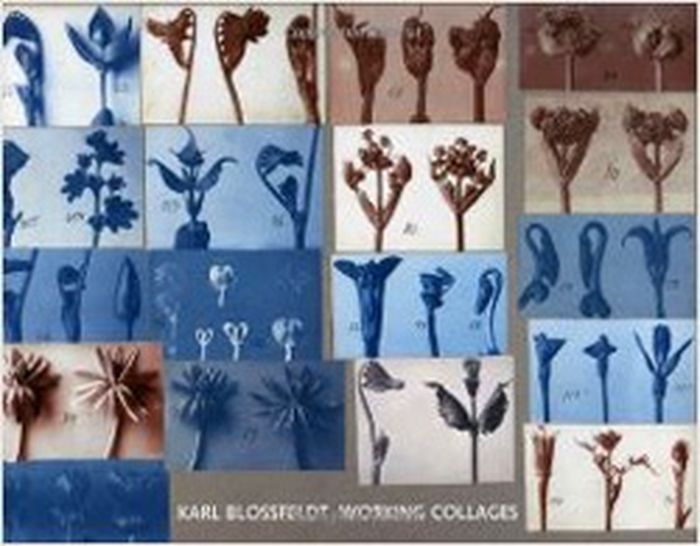
Karl Blossfeldt : working collages
Actions:
Price:
$71.95
(available to order)
Summary:
Karl Blossfeldt (1865-1932) achieved overnight fame in the late 1920s with the first publication of his photographs of plants. Those photographs, which revealed the inner structures of the organic forms, immediately made him a pioneer of New Objectivity, an innovative movement in art and photography of the 1920s and 1930s. Blossfeldt, however, was neither a trained photographer nor a botanist. He was a sculptor and art professor who did his photographic work to generate teaching material for his students. The publication of this book is the result of an extraordinary event, the 1997 discovery in Blossfeldt’s estate of sixty-one previously unknown collages, in virtually mint condition, of photographic contact prints arranged on large cardboard sheets. Blossfeldt apparently used these to study the relation and similarity of the photographs and to compare them graphically and aesthetically. On some Blossfeldt had made marks or handwritten notations. Others show lines for cropping. The collages, published here for the first time, unveil a hidden treasure of modern photography and cast fresh light on the systematic approach Blossfeldt used in his photographic studies. All collages are reproduced in four colours. Introducing the book is an essay by Swiss art historian Ulrike Meyer-Stump, a contributing curator to the exhibitions at the Kunsthaus in Zurich.
Form:
books
books
Publication:
March 2001, Cambridge, Mass.
March 2001, Cambridge, Mass.
Subject:
Photography monographs
Photography monographs


