


4378 Results
Form:
books
books
Price:
$45.00
(available to order)
Summary:
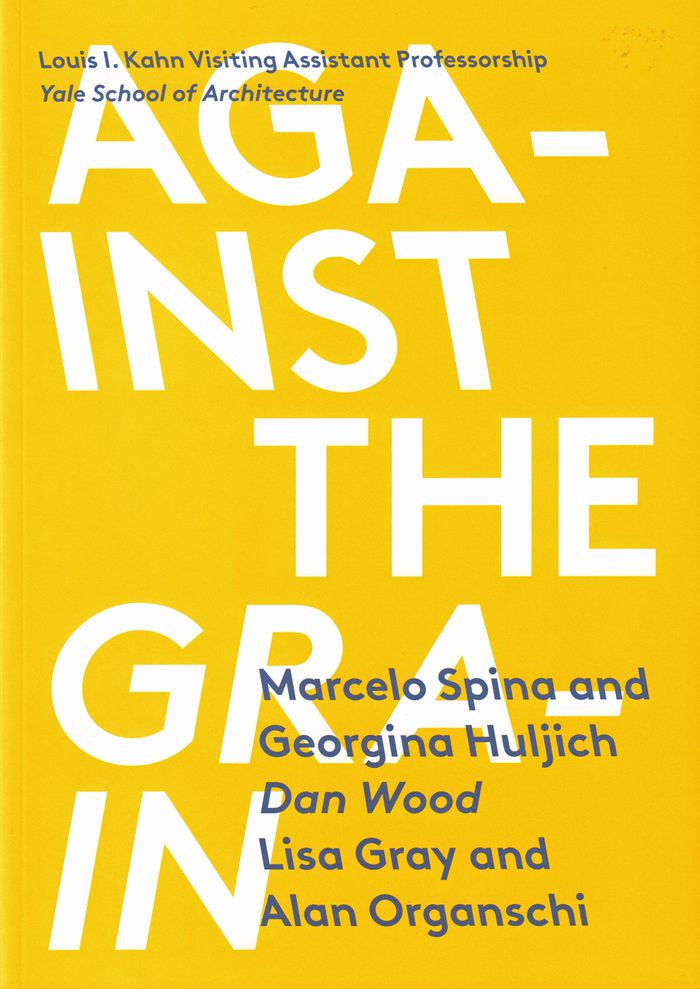
"Against the grain" features the work of three studios of the Louis I. Kahn Visiting Assistant Professors at Yale. Marcelo Spina and Georgina Huljich in "Brutal beauty: piles, monoliths and the incongruous whole" explored ways to make mute icons through monolithic form so that the buildings were foreign to their context and difficult to read formally for a film center in(...)
Title:
Against the grain: Louis I. Kahn visiting assistant professorship
Actions:
Price:
$45.00
(available to order)
Summary:
"Against the grain" features the work of three studios of the Louis I. Kahn Visiting Assistant Professors at Yale. Marcelo Spina and Georgina Huljich in "Brutal beauty: piles, monoliths and the incongruous whole" explored ways to make mute icons through monolithic form so that the buildings were foreign to their context and difficult to read formally for a film center in Los Angeles. Dan Wood in "Boulevard Triumphant: ecological infrastructure, architecture, modernization, and the image of the city" a studio for a civic center in Gabon that challenged the architectural language in Africa beyond the clichés and nostalgia to create an architecture that embodied a new ambition. Lisa Gray and Alan Organschi in "Timber innovation district: new timber technologies and contemporary high performance wood architecture" researched wood as a material for larger-scale projects for a site on New Haven’s working waterfront, with projects ranging from bridges to manufacturing facilities and multi-family housing. Edited by Jackie Kow and Nina Rappaport the book is designed by MGMT.design and is distributed by Actar D.
Form:
books
books
Publication:
August 2016
August 2016
Subject:
Contemporary Architecture
Contemporary Architecture
Form:
books
books

Actions:
Price:
$35.99
(available to order)
Summary:
'Flâneuse [flanne-euhze], noun, from the French. Feminine form of flâneur [flanne-euhr], an idler, a dawdling observer, usually found in cities. That is an imaginary definition.' If the word flâneur conjures up visions of Baudelaire, boulevards and bohemia – then what exactly is a flâneuse? In this gloriously provocative and celebratory book, Lauren Elkin defines her as(...)
Title:
Flâneuse: Women walk the city in Paris, New York, Tokyo, Venice, and London
Actions:
Price:
$35.99
(available to order)
Summary:
'Flâneuse [flanne-euhze], noun, from the French. Feminine form of flâneur [flanne-euhr], an idler, a dawdling observer, usually found in cities. That is an imaginary definition.' If the word flâneur conjures up visions of Baudelaire, boulevards and bohemia – then what exactly is a flâneuse? In this gloriously provocative and celebratory book, Lauren Elkin defines her as ‘a determined resourceful woman keenly attuned to the creative potential of the city, and the liberating possibilities of a good walk’. Part cultural meander, part memoir, Flâ neuse traces the relationship between the city and creativity through a journey that begins in New York and moves us to Paris, via Venice, Tokyo and London, exploring along the way the paths taken by the flâneuses who have lived and walked in those cities. From nineteenth-century novelist George Sand to artist Sophie Calle, from war correspondent Martha Gellhorn to film-maker Agnes Varda, Flâneuse considers what is at stake when a certain kind of light-footed woman encounters the city and changes her life, one step at a time.
Form:
books
books
Publication:
June 2017
June 2017
Subject:
Literature and poetry
Literature and poetry
Form:
books
books

Actions:
Price:
$119.00
(available to order)
Summary:
"Modernism: designing a new world" is the first book to explore Modernism in the designed world from a truly international perspective, and across all the arts. It offers a reassessment of the idea of Modernism and reveals the fundamental ways in which it has shaped our own world and its visual culture. Modernism flourished during the years 1914 to 1939. As a movement(...)
Title:
Modernism : designing a new world, 1914-1939
Actions:
Price:
$119.00
(available to order)
Summary:
"Modernism: designing a new world" is the first book to explore Modernism in the designed world from a truly international perspective, and across all the arts. It offers a reassessment of the idea of Modernism and reveals the fundamental ways in which it has shaped our own world and its visual culture. Modernism flourished during the years 1914 to 1939. As a movement it was the key point of reference for 20th century architecture, design and art. Modernists had an utopian desire to create a better world, frequently combined with social and political beliefs that design and art could transform society. The range of objects illustrated – including painting, sculpture, film, photography, prints and collage as well as architecture, interiors, furniture, manufactured products, graphic and fashion design – reflect the period’s emphasis on the unity of the arts and the key role of the fine arts in shaping contemporary visual culture. Europe and America take centre stage but the reach of Modernism is demonstrated by selected works from around the world, including Russia, Palestine and Japan.
Form:
books
books
Publication:
May 2006, London
May 2006, London
Subject:
Architecture since 1900, Europe
Architecture since 1900, Europe
Form:
books
books
Actions:
Price:
$62.50
(available to order)
Summary:
Swiss graphic design and “the Swiss Style” are crucial elements in the history of modernism. During the 1920s and ’30s, skills traditionally associated with Swiss industry, particularly pharmaceuticals and mechanical engineering, were matched by those of the country’s graphic designers, who produced their advertising and technical literature. These pioneering graphic(...)
Title:
Swiss graphic design : the origins and growth of an international style 1920-1965
Actions:
Price:
$62.50
(available to order)
Summary:
Swiss graphic design and “the Swiss Style” are crucial elements in the history of modernism. During the 1920s and ’30s, skills traditionally associated with Swiss industry, particularly pharmaceuticals and mechanical engineering, were matched by those of the country’s graphic designers, who produced their advertising and technical literature. These pioneering graphic artists saw design as part of industrial production and searched for anonymous, objective visual communication. They chose photographic images rather than illustration, and typefaces that were industrial-looking rather than those designed for books. This volume looks at graphic language developed by such Swiss designers as Theo Ballmer, Max Bill, Adrian Frutiger, Karl Gerstner, Armin Hoffman, Ernst Keller, Herbert Matter, Josef Müller-Brockmann, and Jan Tschichold. The style of these artists received worldwide admiration for its formal discipline : images and text were organized by geometrical grids. Adopted internationally, the grid and sans serif typefaces such as Helvetica became the classic emblems of Swiss graphic design. This book shows design work across a range of media, including posters, magazines, exhibition displays, brochures, advertisements, books, and film.
Form:
books
books
Publication:
April 2006, New Haven
April 2006, New Haven
Subject:
Graphic Design and Typography
Graphic Design and Typography
Form:
journals and magazines
journals and magazines
Title:
Hunch 9 2005 : disciplines
Hunch 9 2005 : disciplines
Actions:
Price:
$28.95
(available to order)
Summary:
"Hunch 9" asserts a broad disciplinary claim regarding architectural publications generally: it is not the quantities of publications that are a problem, but rather their consistent failure to present lines of reasoning. This inadequacy will be addressed by disciplining the issue : by organizing projects, lectures, interviews and essays into a set of arguments about(...)
Title:
Hunch 9 2005 : disciplines
Actions:
Price:
$28.95
(available to order)
Summary:
"Hunch 9" asserts a broad disciplinary claim regarding architectural publications generally: it is not the quantities of publications that are a problem, but rather their consistent failure to present lines of reasoning. This inadequacy will be addressed by disciplining the issue : by organizing projects, lectures, interviews and essays into a set of arguments about 'disciplines'. 'Return' will discuss the current erosion of architecture's disciplinary distinctions; 'Resonate' will examine the perspectives of other disciplines such as music, money, planning and film; 'Reason' will trace theoretical precedents for architectural autonomy, expertise, and education; 'Realize' will make connections between theory and practices through Berlage research-production processes, construction technology, form and precedent; and 'Relay' will expose the various disciplinary transfers in and out of architectural practice. Texts for this issue include essays and lectures by Brian Eno, Jeff Kipnis, Bernard Cache, Lieven de Cauter, Mark Linder, Alejandro Zaera-Polo, Richard Sennett, Paul Morrell, Helene Furján, Peter Trummer, Ronald Wall, Rem Koolhaas, a master class by Greg Lynn, a studio with Salvador Perez Arroyo and an interview with R.E. Somol. Graphic design : Mick Morsink.
Form:
journals and magazines
journals and magazines
Publication:
January 1900, Rotterdam
January 1900, Rotterdam
Subject:
Magazines
Magazines
Form:
books
books
Title:
Architecture of Life
Architecture of Life
Actions:
Price:
$50.00
(available in store)
Summary:
Published in conjunction with Berkeley Art Museum and Pacific Film Archive’s inaugural exhibition in its landmark new building designed by Diller Scofidio + Renfro, Architecture of Life explores the ways that architecture—as concept, metaphor, and practice—illuminates various aspects of life experience: the nature of the self and psyche, the fundamental structures of(...)
Publication:
February 2016
February 2016
Title:
Architecture of Life
Actions:
Price:
$50.00
(available in store)
Summary:
Published in conjunction with Berkeley Art Museum and Pacific Film Archive’s inaugural exhibition in its landmark new building designed by Diller Scofidio + Renfro, Architecture of Life explores the ways that architecture—as concept, metaphor, and practice—illuminates various aspects of life experience: the nature of the self and psyche, the fundamental structures of reality, and the power of the imagination to reshape our world. The sweeping exhibition comprises over 150 works of art in a wide range of media, as well as scientific illustrations and architectural drawings and models, all of which are reproduced in full color in the catalog. International in scope, Architecture of Life presents work by artists Yuri Ancarani, George Ault, Lee Bontecou, Louise Bourgeois, Marcel Duchamp, Léon Ferrari, Suzan Frecon, Trenton Doyle Hancock, Johannes Itten, Kimsooja, Fernand Léger, Tomás Saraceno; architects Diller Scofidio + Renfro, Buckminster Fuller, Frederick Kiesler, Toyo Ito, Lebbeus Woods; scientists Wilson Bentley, Santiago Ramón y Cajal, Viktor Schauberger; and composer Iannis Xenakis, among many others. The exhibition also includes Mbuti barkcloth drawings, Pomo baskets, Micronesian navigational charts, Tibetan meditation mandalas, and tantric drawings from Rajasthan.
Form:
books
books
Publication:
February 2016
February 2016
Form:
books
books
Actions:
Price:
$85.00
(available to order)
Summary:
This book explores the evolving concept of unfinishedness as essential to understanding art movements from the Renaissance to the present day. Unfinished features more than 200 works, created in a variety of media, by artists ranging from Leonardo, Titian, Rembrandt, Turner, and Cézanne to Picasso, Warhol, Twombly, Freud, Richter, and Nauman. What unites these works,(...)
Publication:
May 2016
May 2016
Title:
Unfinished: thoughts left visible
Actions:
Price:
$85.00
(available to order)
Summary:
This book explores the evolving concept of unfinishedness as essential to understanding art movements from the Renaissance to the present day. Unfinished features more than 200 works, created in a variety of media, by artists ranging from Leonardo, Titian, Rembrandt, Turner, and Cézanne to Picasso, Warhol, Twombly, Freud, Richter, and Nauman. What unites these works, across centuries and media, is that each one displays some aspect of being unfinished. Essays and case studies by major contemporary scholars address this key concept from the perspective of both the creator and the viewer, probing the impact that this long artistic trajectory—which can be traced back to the first century—has had on modern and contemporary art. The book explores the degrees to which instances of incompleteness were accidental or intentional, experimental or conceptual. Also included are illuminating interviews with contemporary artists, including Tuymans, Celmins, and Marden, and parallel considerations of the unfinished in literature and film. The result is a multidisciplinary approach and thought-provoking analysis that provide valuable insight into the making, meaning, and critical reception of the unfinished in art.
Form:
books
books
Publication:
May 2016
May 2016
Form:
books
books
Actions:
Price:
$75.00
(available to order)
Summary:
Although highly regarded during his short life--and honored by artists and architects today--the American artist Gordon Matta-Clark (1943-78) has been largely ignored within the history of art. Matta-Clark is best remembered for site-specific projects known as(...)
Subject:
Contemporary Art Monographs
Contemporary Art Monographs
Publication:
December 1999, Cambridge, Mass.
December 1999, Cambridge, Mass.
Title:
Object to be destroyed : the work of Gordon Matta-Clark
Actions:
Price:
$75.00
(available to order)
Summary:
Although highly regarded during his short life--and honored by artists and architects today--the American artist Gordon Matta-Clark (1943-78) has been largely ignored within the history of art. Matta-Clark is best remembered for site-specific projects known as "building cuts." Sculptural transformations of architecture produced through direct cuts into buildings scheduled for demolition, these works now exist only as sculptural fragments, photographs, and film and video documentations. Matta-Clark is also remembered as a catalytic force in the creation of SoHo in the early 1970s. Through loft activities, site projects at the exhibition space 112 Greene Street, and his work at the restaurant Food, he participated in the production of a new social and artistic space. In this first critical account of Matta-Clark's work, Lee considers it in the context of the art of the 1970s--particularly site-specific, conceptual, and minimalist practices--and its confrontation with issues of community, property, the alienation of urban space, the "right to the city," and the ideologies of progress that have defined modern building programs.
Form:
books
books
Publication:
December 1999, Cambridge, Mass.
December 1999, Cambridge, Mass.
Subject:
Contemporary Art Monographs
Contemporary Art Monographs
Form:
books
books
Actions:
Price:
$22.95
(available to order)
Summary:
At the turn of the last century, Adolf Loos wrote: "The evolution of culture is synonymous with the removal of ornament from objects of daily use." Ornament had exhausted its purpose, and the persistence of it, Loos argued, was indicative of a degenerative culture. The simple, undecorated form was celebrated as a signal of the movement of modern man toward some truer,(...)
Title:
Crime and ornament : the arts and popular culture in the shadow of Adolf Loos
Actions:
Price:
$22.95
(available to order)
Summary:
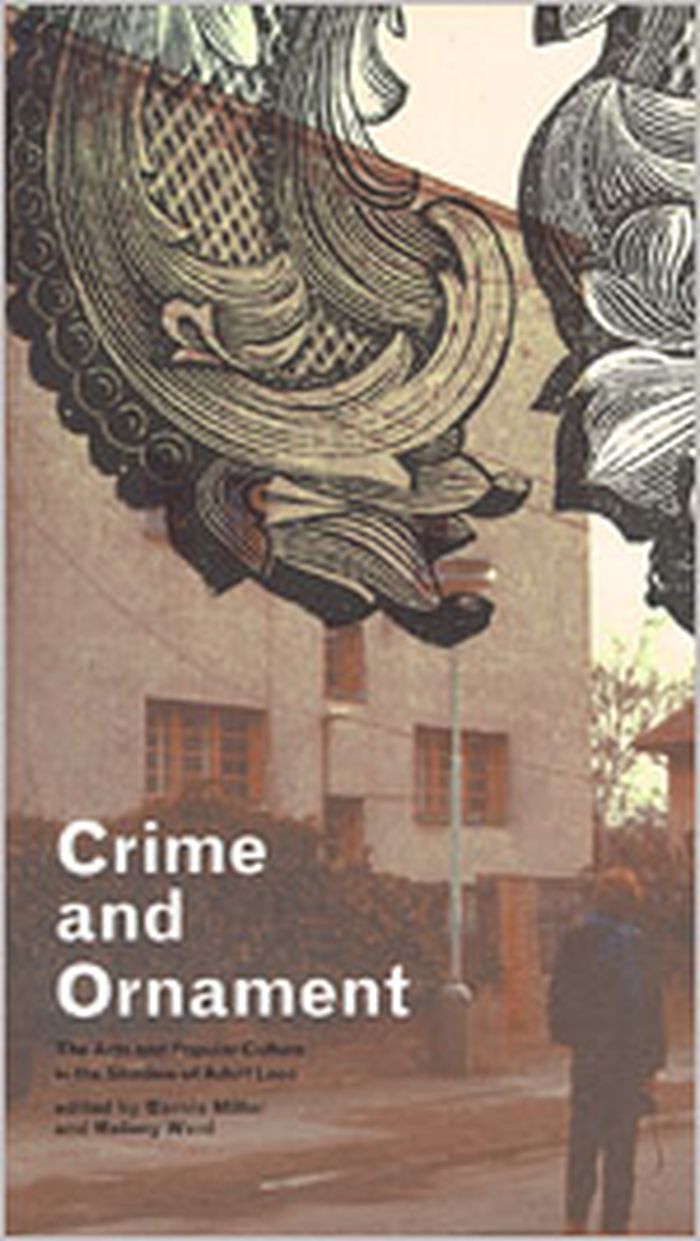
At the turn of the last century, Adolf Loos wrote: "The evolution of culture is synonymous with the removal of ornament from objects of daily use." Ornament had exhausted its purpose, and the persistence of it, Loos argued, was indicative of a degenerative culture. The simple, undecorated form was celebrated as a signal of the movement of modern man toward some truer, more powerful expression of his self. Debates about ornament have returned: recent thinking questions the assumption that ornament is inessential, and its artistic and political implications continue to be hotly debated. The writers in "Crime and Ornament" bring these debates together by addressing the role of ornament in a variety of disciplines: film, visual art, video, literature, fashion, sports, gay imagery and, of course, architecture are explored in relation to this key concept. With a distinguished group of contributors including Felicity Scott, Brian Pronger, Jeanne Randolph, Ignasi de Solà-Morales, Graham Ramsay, Katherine Milligan, Jan Zwicky, Jim Drobnick, "Crime and Ornament" provides a diverse, multi-disciplinary approach to a salient concern in architectural, artistic and aesthetic discourse.
Form:
books
books
Publication:
January 1900, Toronto
January 1900, Toronto
Subject:
Architectural Theory
Architectural Theory
Form:
books
books
Price:
$100.00
(available to order)
Summary:
Featured in the 2018 film "The gardener," Les Quatre Vents in Charlevoix County, Quebec, has been acclaimed as the most aesthetically satisfying and horticulturally exciting landscape experience in North America. This twenty-acre garden seamlessly combines traditional and novel elements into a splendid composition, adorned with unexpected touches and perfectly compatible(...)
Title:
The greater perfection: The story of the gardens at Les Quatre Vents
Actions:
Price:
$100.00
(available to order)
Summary:
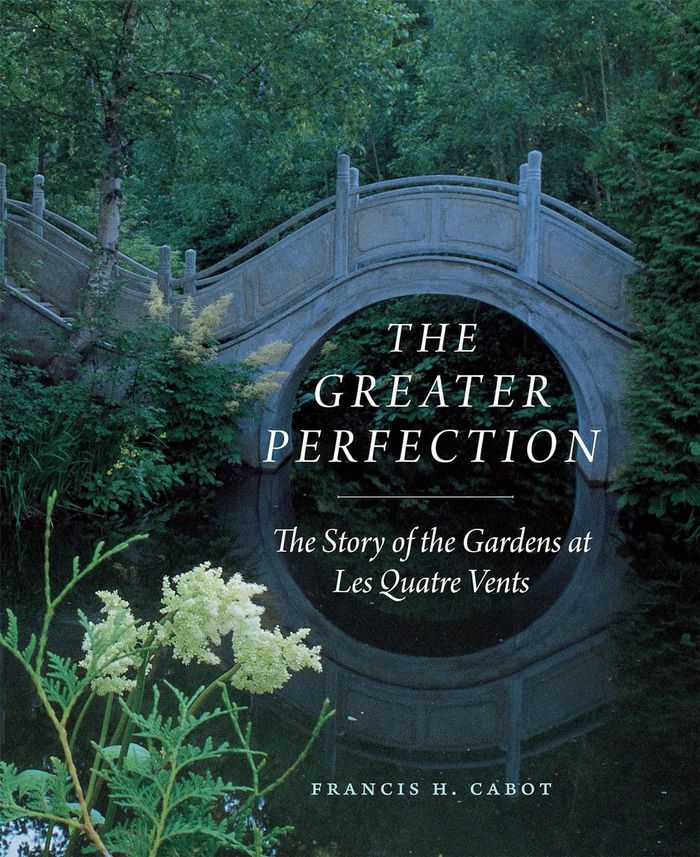
Featured in the 2018 film "The gardener," Les Quatre Vents in Charlevoix County, Quebec, has been acclaimed as the most aesthetically satisfying and horticulturally exciting landscape experience in North America. This twenty-acre garden seamlessly combines traditional and novel elements into a splendid composition, adorned with unexpected touches and perfectly compatible with its natural surroundings. "The greater perfection," first published in 2001, illustrates the delights, diversions, and surprises that await the garden’s visitors. Francis H. Cabot’s account of the challenges he faced in developing Les Quatre Vents reveals the fascinating process behind the creation of a world-class garden that has become a mecca for horticultural enthusiasts around the globe. Winner of the 2003 Annual Literature Award of the Council on Botanical and Horticultural Libraries and featuring stunning full-color images by five leading garden photographers, "The greater perfection" is one of the most beautiful books on gardens to appear in years. This new printing includes a foreword by Marianne Cabot Welch, Cabot’s daughter, that further contextualizes the gardens and explores how a place rooted in the past can confront the future.
Form:
books
books
Publication:
January 2024
January 2024
Subject:
Gardens
Gardens


