


479 Results
Form:
books
books
Actions:
Price:
$190.00
(available in store)
Summary:
Between 2010 and 2020, Caruso St John expanded its reputation for sensitive and characterful architecture through a remarkable range of projects. Major buildings in the heart of Swiss, German, and Belgian cities explored the role urban landmarks can play in the present day, while smaller domestic projects provided the opportunity for experiments in restoration, materials,(...)
$190.00
(available in store)
Summary:
Between 2010 and 2020, Caruso St John expanded its reputation for sensitive and characterful architecture through a remarkable range of projects. Major buildings in the heart of Swiss, German, and Belgian cities explored the role urban landmarks can play in the present day, while smaller domestic projects provided the opportunity for experiments in restoration, materials,(...)
Title:
Caruso St John, Collected Works: Volume 3, 2010-2020
Actions:
Price:
$190.00
(available in store)
Summary:
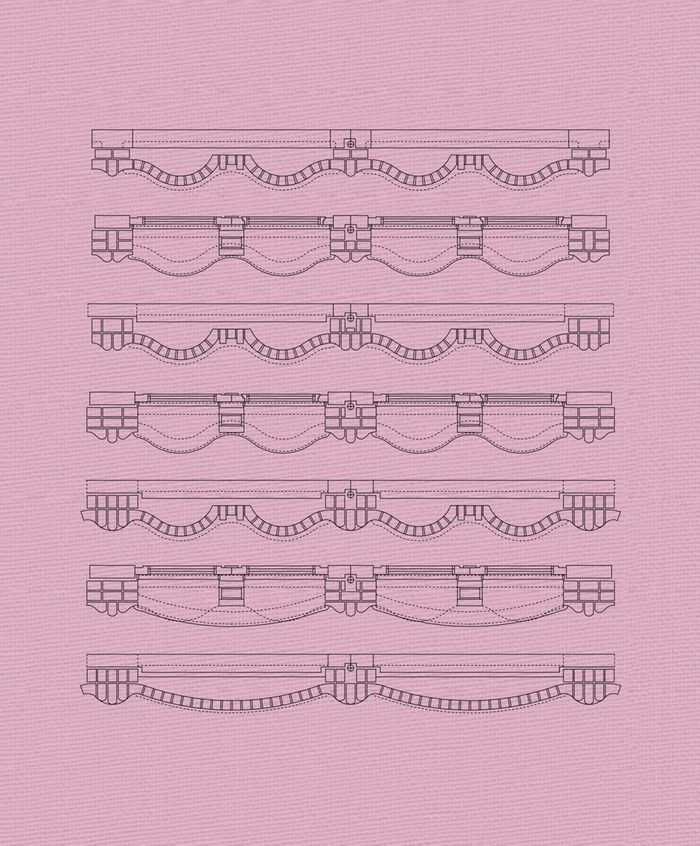
Between 2010 and 2020, Caruso St John expanded its reputation for sensitive and characterful architecture through a remarkable range of projects. Major buildings in the heart of Swiss, German, and Belgian cities explored the role urban landmarks can play in the present day, while smaller domestic projects provided the opportunity for experiments in restoration, materials, and colour. Transforming buildings for reuse – from beloved public institutions to longabandoned industrial sites – became a focal point for the practice as it sought to emphasise its work with the existing rather than contribute to the escalating production of new construction. Their designs for memorials, exhibitions, and museums further developed this engagement with memory and an aliveness to the past.
Caruso St John, Collected Works: Volume 3, 2010-2020
Actions:
Price:
$190.00
(available in store)
Summary:
Between 2010 and 2020, Caruso St John expanded its reputation for sensitive and characterful architecture through a remarkable range of projects. Major buildings in the heart of Swiss, German, and Belgian cities explored the role urban landmarks can play in the present day, while smaller domestic projects provided the opportunity for experiments in restoration, materials, and colour. Transforming buildings for reuse – from beloved public institutions to longabandoned industrial sites – became a focal point for the practice as it sought to emphasise its work with the existing rather than contribute to the escalating production of new construction. Their designs for memorials, exhibitions, and museums further developed this engagement with memory and an aliveness to the past.
Form:
books
books
Publication:
January 2026
January 2026
Subject:
Architecture Monographs
Architecture Monographs
Form:
books
books
Price:
$72.00
(available to order)
Summary:
In the years 1984–1996, SOM continued to develop the skills for which it had become known—high standards of design, imaginative structural solutions, exceptional detailing, city making on a grand scale, expertise in managing large and complex sites—and also addressed new areas of design and practice. A contextual modernism—one attentive to climate, topography, and the(...)
$72.00
(available to order)
Summary:
In the years 1984–1996, SOM continued to develop the skills for which it had become known—high standards of design, imaginative structural solutions, exceptional detailing, city making on a grand scale, expertise in managing large and complex sites—and also addressed new areas of design and practice. A contextual modernism—one attentive to climate, topography, and the(...)
Title:
SOM: Architecture of Skidmore, Owings, and Merrell (1984-1996)
Actions:
Price:
$72.00
(available to order)
Summary:
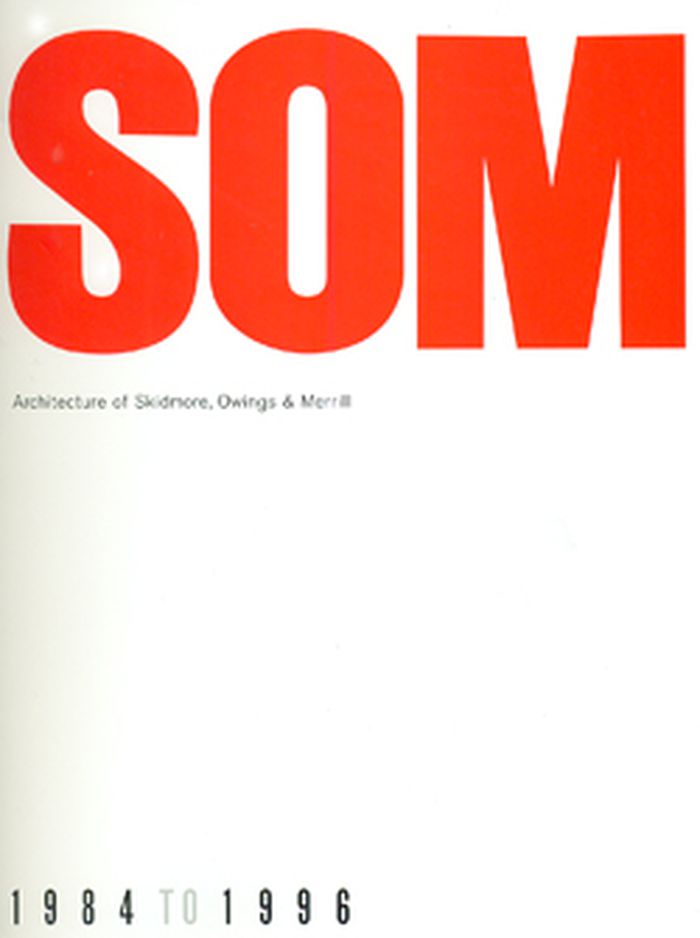
In the years 1984–1996, SOM continued to develop the skills for which it had become known—high standards of design, imaginative structural solutions, exceptional detailing, city making on a grand scale, expertise in managing large and complex sites—and also addressed new areas of design and practice. A contextual modernism—one attentive to climate, topography, and the regional vernacular—a focus on restoration and reuse, and an expansion of international work came to the fore in a time of great social and economic change. In his introduction, Detlef Mertins traces the firm’s history in parallel with this restructuring, a growth in real estate development and financial markets that fundamentally changed how buildings were commissioned and built.
SOM: Architecture of Skidmore, Owings, and Merrell (1984-1996)
Actions:
Price:
$72.00
(available to order)
Summary:
In the years 1984–1996, SOM continued to develop the skills for which it had become known—high standards of design, imaginative structural solutions, exceptional detailing, city making on a grand scale, expertise in managing large and complex sites—and also addressed new areas of design and practice. A contextual modernism—one attentive to climate, topography, and the regional vernacular—a focus on restoration and reuse, and an expansion of international work came to the fore in a time of great social and economic change. In his introduction, Detlef Mertins traces the firm’s history in parallel with this restructuring, a growth in real estate development and financial markets that fundamentally changed how buildings were commissioned and built.
Form:
books
books
Publication:
November 2009
November 2009
Subject:
Architecture Monographs
Architecture Monographs
Form:
books
books
Title:
MAP 005 : Chernobyl
MAP 005 : Chernobyl
Actions:
Price:
$11.95
(available to order)
Summary:
This issue charts the history of major nuclear accidents, focusing on the Chernobyl reactor 4 explosion of 1986, mapping a minute by minute description of the events on nuclear plant cut-outs and info graphics. From its medical implications to the social impact of the accident and articles and input from scientists, this issue offers a wide spectrum of commentaries on the(...)
$11.95
(available to order)
Summary:
This issue charts the history of major nuclear accidents, focusing on the Chernobyl reactor 4 explosion of 1986, mapping a minute by minute description of the events on nuclear plant cut-outs and info graphics. From its medical implications to the social impact of the accident and articles and input from scientists, this issue offers a wide spectrum of commentaries on the(...)
Title:
MAP 005 : Chernobyl
Actions:
Price:
$11.95
(available to order)
Summary:
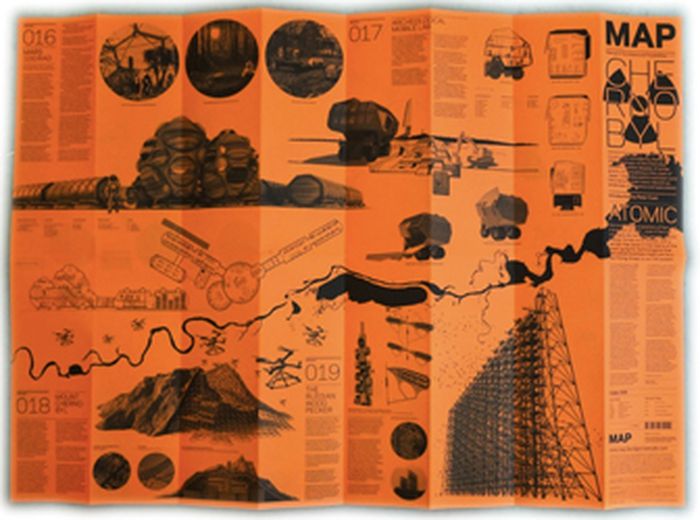
This issue charts the history of major nuclear accidents, focusing on the Chernobyl reactor 4 explosion of 1986, mapping a minute by minute description of the events on nuclear plant cut-outs and info graphics. From its medical implications to the social impact of the accident and articles and input from scientists, this issue offers a wide spectrum of commentaries on the implications of radiation in this scarred landscape. The project page investigates various scenarios; an astrobiology testing base, the reuse of the massive "Woodpecker" ex-soviet antenna into a migratory bird feeding ground, a mobile archeology lab for radioactive landscapes and Mount Chernobyl, an alternative to the new sarcophagus for the damaged reactor.
MAP 005 : Chernobyl
Actions:
Price:
$11.95
(available to order)
Summary:
This issue charts the history of major nuclear accidents, focusing on the Chernobyl reactor 4 explosion of 1986, mapping a minute by minute description of the events on nuclear plant cut-outs and info graphics. From its medical implications to the social impact of the accident and articles and input from scientists, this issue offers a wide spectrum of commentaries on the implications of radiation in this scarred landscape. The project page investigates various scenarios; an astrobiology testing base, the reuse of the massive "Woodpecker" ex-soviet antenna into a migratory bird feeding ground, a mobile archeology lab for radioactive landscapes and Mount Chernobyl, an alternative to the new sarcophagus for the damaged reactor.
Form:
books
books
Publication:
September 2012
September 2012
Subject:
Consignment
Consignment
Form:
books
books
Title:
This Is Not a House
This Is Not a House
Actions:
Price:
$65.00
(available to order)
Summary:
This Is Not a House showcases recent projects that represent the vanguard of architects creating innovative spaces for living in the twenty-first century. Dan Rubinstein and the editors of the Amsterdam-based magazine have selected projects on five continents that will shape how we think of domestic life for a long time to come. Where the great experimenters of the last(...)
$65.00
(available to order)
Summary:
This Is Not a House showcases recent projects that represent the vanguard of architects creating innovative spaces for living in the twenty-first century. Dan Rubinstein and the editors of the Amsterdam-based magazine have selected projects on five continents that will shape how we think of domestic life for a long time to come. Where the great experimenters of the last(...)
Title:
This Is Not a House
Actions:
Price:
$65.00
(available to order)
Summary:
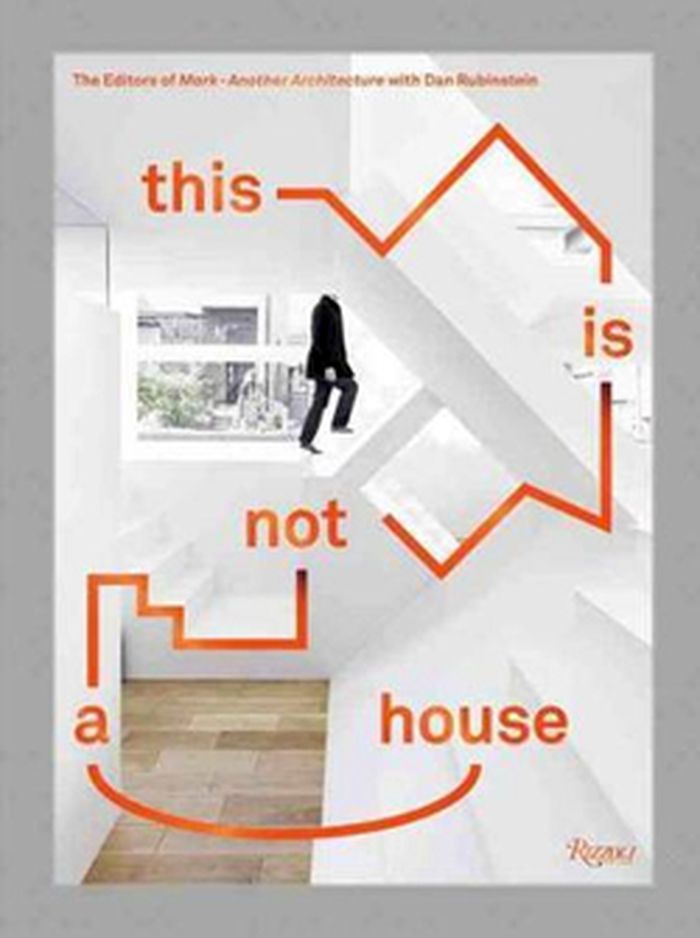
This Is Not a House showcases recent projects that represent the vanguard of architects creating innovative spaces for living in the twenty-first century. Dan Rubinstein and the editors of the Amsterdam-based magazine have selected projects on five continents that will shape how we think of domestic life for a long time to come. Where the great experimenters of the last century were stripping away ornamentation and creating free-flowing spaces for the first time, today’s pioneers are researching the potential of new materials and techniques to push the boundaries of environmental sustainability, as well as creating new forms and bold, sophisticated explorations in the adaptive reuse of spaces originally designed for any number of other purposes.
This Is Not a House
Actions:
Price:
$65.00
(available to order)
Summary:
This Is Not a House showcases recent projects that represent the vanguard of architects creating innovative spaces for living in the twenty-first century. Dan Rubinstein and the editors of the Amsterdam-based magazine have selected projects on five continents that will shape how we think of domestic life for a long time to come. Where the great experimenters of the last century were stripping away ornamentation and creating free-flowing spaces for the first time, today’s pioneers are researching the potential of new materials and techniques to push the boundaries of environmental sustainability, as well as creating new forms and bold, sophisticated explorations in the adaptive reuse of spaces originally designed for any number of other purposes.
Form:
books
books
Publication:
October 2015
October 2015
Subject:
Residential Architecture
Residential Architecture
Form:
books
books
Title:
Urbanism without effort
Urbanism without effort
Actions:
Price:
$22.95
(available to order)
Summary:
In ''Urbanism Without Effort,'' Chuck Wolfe argues that 'unplanned' places can often teach us more about great placemaking than planned ones. From impromptu movie nights in a Seattle alley to the adapted reuse of Diocletian's Palace in Split, Croatia, Wolfe searches for the 'first principles' of what makes humans feel happy and safe amid the hustle and bustle of urban(...)
$22.95
(available to order)
Summary:
In ''Urbanism Without Effort,'' Chuck Wolfe argues that 'unplanned' places can often teach us more about great placemaking than planned ones. From impromptu movie nights in a Seattle alley to the adapted reuse of Diocletian's Palace in Split, Croatia, Wolfe searches for the 'first principles' of what makes humans feel happy and safe amid the hustle and bustle of urban(...)
Title:
Urbanism without effort
Actions:
Price:
$22.95
(available to order)
Summary:
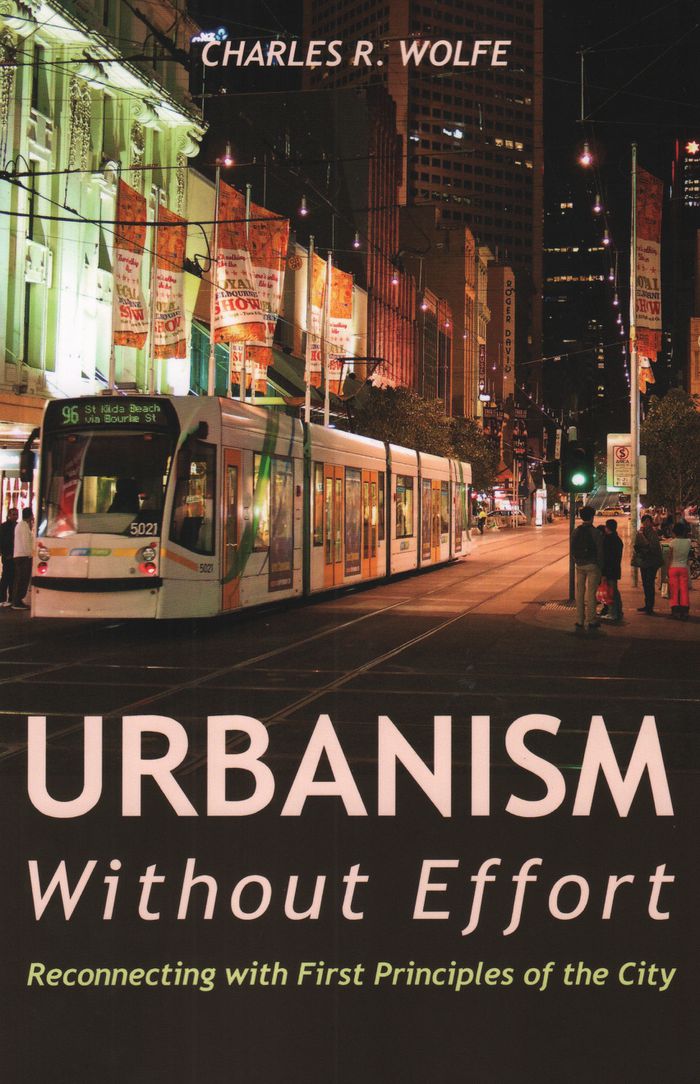
In ''Urbanism Without Effort,'' Chuck Wolfe argues that 'unplanned' places can often teach us more about great placemaking than planned ones. From impromptu movie nights in a Seattle alley to the adapted reuse of Diocletian's Palace in Split, Croatia, Wolfe searches for the 'first principles' of what makes humans feel happy and safe amid the hustle and bustle of urban life. He highlights the common elements of cities around the world that spontaneously bring people together: being inherently walkable, factors that contribute to safety at night, the importance of intersections and corners, and more. In this age of skyrocketing metropolitan growth, he argues, looking to the past might be our best approach to creating the urban future we dream about.
Urbanism without effort
Actions:
Price:
$22.95
(available to order)
Summary:
In ''Urbanism Without Effort,'' Chuck Wolfe argues that 'unplanned' places can often teach us more about great placemaking than planned ones. From impromptu movie nights in a Seattle alley to the adapted reuse of Diocletian's Palace in Split, Croatia, Wolfe searches for the 'first principles' of what makes humans feel happy and safe amid the hustle and bustle of urban life. He highlights the common elements of cities around the world that spontaneously bring people together: being inherently walkable, factors that contribute to safety at night, the importance of intersections and corners, and more. In this age of skyrocketing metropolitan growth, he argues, looking to the past might be our best approach to creating the urban future we dream about.
Form:
books
books
Publication:
March 2019
March 2019
Subject:
Urban Theory
Urban Theory
Form:
books
books
Actions:
Price:
$53.00
(available to order)
Summary:
This monograph discusses the role that ruins play in urban centers in terms of their meaning, testimony, and value, and the opportunities they provide. After an outline of historical and contemporary of approaches, with a special analysis of British and Italian approaches, Elisa Pilia puts forward a methodology for the investigation of the strategic values of such(...)
$53.00
(available to order)
Summary:
This monograph discusses the role that ruins play in urban centers in terms of their meaning, testimony, and value, and the opportunities they provide. After an outline of historical and contemporary of approaches, with a special analysis of British and Italian approaches, Elisa Pilia puts forward a methodology for the investigation of the strategic values of such(...)
Title:
Urban ruins: memorial value and contemporary role
Actions:
Price:
$53.00
(available to order)
Summary:
This monograph discusses the role that ruins play in urban centers in terms of their meaning, testimony, and value, and the opportunities they provide. After an outline of historical and contemporary of approaches, with a special analysis of British and Italian approaches, Elisa Pilia puts forward a methodology for the investigation of the strategic values of such artifacts, and ideas for their potential contribution to a sustainable requalification of historic urban cores. The protocol is tested on the historical center of Cagliari, a mid-sized port city on the southern coast of the island of Sardinia, Italy, where the remains left by aerial bombardment during the Second World War are still a dramatic part of the controversial European debate on how to reuse ruins.
Urban ruins: memorial value and contemporary role
Actions:
Price:
$53.00
(available to order)
Summary:
This monograph discusses the role that ruins play in urban centers in terms of their meaning, testimony, and value, and the opportunities they provide. After an outline of historical and contemporary of approaches, with a special analysis of British and Italian approaches, Elisa Pilia puts forward a methodology for the investigation of the strategic values of such artifacts, and ideas for their potential contribution to a sustainable requalification of historic urban cores. The protocol is tested on the historical center of Cagliari, a mid-sized port city on the southern coast of the island of Sardinia, Italy, where the remains left by aerial bombardment during the Second World War are still a dramatic part of the controversial European debate on how to reuse ruins.
Form:
books
books
Publication:
July 2019
July 2019
Subject:
Architectural Theory
Architectural Theory
Form:
books
books
Actions:
Price:
$64.95
(available to order)
Summary:
Lina Bo Bardi (1914–1992) is renowned for her boldly modernist designs like the São Paulo Museum of Art and the culture and leisure center SESC Pompéia. An artist, architect, designer, writer, and activist, she was a tireless champion for local craft and materials. Her democratic designs were inclusive and stood as an open invitation to those typically excluded from(...)
$64.95
(available to order)
Summary:
Lina Bo Bardi (1914–1992) is renowned for her boldly modernist designs like the São Paulo Museum of Art and the culture and leisure center SESC Pompéia. An artist, architect, designer, writer, and activist, she was a tireless champion for local craft and materials. Her democratic designs were inclusive and stood as an open invitation to those typically excluded from(...)
Title:
Lina Bo Bardi: Material ideologies
Actions:
Price:
$64.95
(available to order)
Summary:
Lina Bo Bardi (1914–1992) is renowned for her boldly modernist designs like the São Paulo Museum of Art and the culture and leisure center SESC Pompéia. An artist, architect, designer, writer, and activist, she was a tireless champion for local craft and materials. Her democratic designs were inclusive and stood as an open invitation to those typically excluded from elitist institutions, embodying an aesthetic that stood out among the modernist movement in Brazil and abroad. This collection of essays presents new perspectives on Bo Bardi from leading contemporary artists, architects, curators, and scholars. Contributors engage with the conceptual, social, and political philosophies latent in the architectural materials she chose—from her application of concrete to her implementation of nature and her reuse of vernacular materials.
Lina Bo Bardi: Material ideologies
Actions:
Price:
$64.95
(available to order)
Summary:
Lina Bo Bardi (1914–1992) is renowned for her boldly modernist designs like the São Paulo Museum of Art and the culture and leisure center SESC Pompéia. An artist, architect, designer, writer, and activist, she was a tireless champion for local craft and materials. Her democratic designs were inclusive and stood as an open invitation to those typically excluded from elitist institutions, embodying an aesthetic that stood out among the modernist movement in Brazil and abroad. This collection of essays presents new perspectives on Bo Bardi from leading contemporary artists, architects, curators, and scholars. Contributors engage with the conceptual, social, and political philosophies latent in the architectural materials she chose—from her application of concrete to her implementation of nature and her reuse of vernacular materials.
Form:
books
books
Publication:
November 2022
November 2022
Subject:
Architecture Monographs
Architecture Monographs
Form:
books
books
Actions:
Price:
$86.95
(available in store)
Summary:
Faced with questions about how to adapt and reuse a former industrial site in the center of town, an international insurance corporation, together with the Swiss city of Winterthur, held a competition among architecture and design firms to come up with an innovative, effective plan. The winning firm was the Vienna-based Architekt Krischanitz, and their submission,(...)
$86.95
(available in store)
Summary:
Faced with questions about how to adapt and reuse a former industrial site in the center of town, an international insurance corporation, together with the Swiss city of Winterthur, held a competition among architecture and design firms to come up with an innovative, effective plan. The winning firm was the Vienna-based Architekt Krischanitz, and their submission,(...)
Title:
Superblock Winterthur: a project with architect Krischanitz
Actions:
Price:
$86.95
(available in store)
Summary:
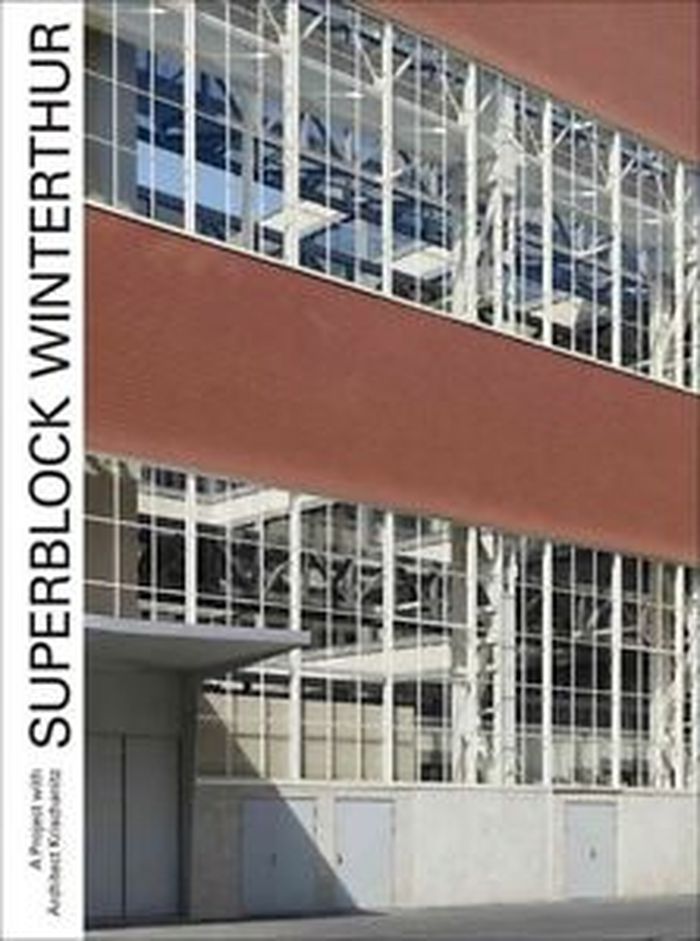
Faced with questions about how to adapt and reuse a former industrial site in the center of town, an international insurance corporation, together with the Swiss city of Winterthur, held a competition among architecture and design firms to come up with an innovative, effective plan. The winning firm was the Vienna-based Architekt Krischanitz, and their submission, Superblock, is a striking idea given a brilliant execution: it combines a large workshop where diesel engines were assembled with newly constructed yet visually complementary buildings. This book details the project from concept to completion, using numerous photographs, plans, and visualizations to trace the history of the site, the genesis and development of the Superblock concept, and the revitalization of the neighborhood that it is expected to lead.
Superblock Winterthur: a project with architect Krischanitz
Actions:
Price:
$86.95
(available in store)
Summary:
Faced with questions about how to adapt and reuse a former industrial site in the center of town, an international insurance corporation, together with the Swiss city of Winterthur, held a competition among architecture and design firms to come up with an innovative, effective plan. The winning firm was the Vienna-based Architekt Krischanitz, and their submission, Superblock, is a striking idea given a brilliant execution: it combines a large workshop where diesel engines were assembled with newly constructed yet visually complementary buildings. This book details the project from concept to completion, using numerous photographs, plans, and visualizations to trace the history of the site, the genesis and development of the Superblock concept, and the revitalization of the neighborhood that it is expected to lead.
Form:
books
books
Publication:
August 2015
August 2015
Subject:
Architecture Monographs
Architecture Monographs
Form:
books
books
Actions:
Holdings:
Description:
183 p. : illustrations (some color) ; 24 cm
Description:
183 p. : illustrations (some color) ; 24 cm
Author:
Subject:
Publication:
Monaco ; [Paris] : Éditions du Rocher, ©2000.
Monaco ; [Paris] : Éditions du Rocher, ©2000.
Title:
Le labyrinthe, un fil d'Ariane / Myriam Philibert.
Actions:
Holdings:
Description:
183 p. : illustrations (some color) ; 24 cm
Le labyrinthe, un fil d'Ariane / Myriam Philibert.
Actions:
Holdings:
Description:
183 p. : illustrations (some color) ; 24 cm
Form:
books
books
Publication:
Monaco ; [Paris] : Éditions du Rocher, ©2000.
Monaco ; [Paris] : Éditions du Rocher, ©2000.
Author:
Subject:
Form:
books
books
Title:
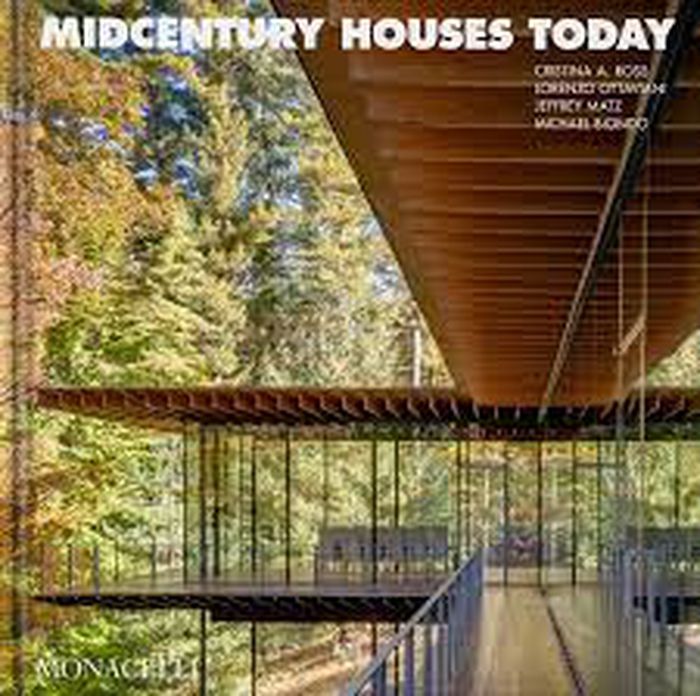
Midcentury houses today
Midcentury houses today
Actions:
Price:
$74.95
(available in store)
Summary:
This expanded and updated edition of the 2014 classic focuses on the concentration of midcentury houses in New Canaan, Connecticut, built by noted architects including Marcel Breuer, Eliot Noyes, Philip Johnson, John Black Lee, and Edward Durell Stone. This new edition addresses the issue of preservation and adaptive reuse as a sustainable architectural strategy. A(...)
$74.95
(available in store)
Summary:
This expanded and updated edition of the 2014 classic focuses on the concentration of midcentury houses in New Canaan, Connecticut, built by noted architects including Marcel Breuer, Eliot Noyes, Philip Johnson, John Black Lee, and Edward Durell Stone. This new edition addresses the issue of preservation and adaptive reuse as a sustainable architectural strategy. A(...)
Subject:
Residential Architecture
Residential Architecture
Publication:
April 2024
April 2024
Title:
Midcentury houses today
Actions:
Price:
$74.95
(available in store)
Summary:
This expanded and updated edition of the 2014 classic focuses on the concentration of midcentury houses in New Canaan, Connecticut, built by noted architects including Marcel Breuer, Eliot Noyes, Philip Johnson, John Black Lee, and Edward Durell Stone. This new edition addresses the issue of preservation and adaptive reuse as a sustainable architectural strategy. A representative group of 17 houses reveals an evolving legacy, now adapting to contemporary life. Each is examined in detail, with plans, timelines, and both archival and new photography, capturing the clean, minimalist look of the initial construction and re-imagining by significant architects of our time. Today preservation and renovation of older buildings has new visibility as a sustainable approach. As the National Trust for Historic Preservation has said, "The greenest building is the one that is already built."
Midcentury houses today
Actions:
Price:
$74.95
(available in store)
Summary:
This expanded and updated edition of the 2014 classic focuses on the concentration of midcentury houses in New Canaan, Connecticut, built by noted architects including Marcel Breuer, Eliot Noyes, Philip Johnson, John Black Lee, and Edward Durell Stone. This new edition addresses the issue of preservation and adaptive reuse as a sustainable architectural strategy. A representative group of 17 houses reveals an evolving legacy, now adapting to contemporary life. Each is examined in detail, with plans, timelines, and both archival and new photography, capturing the clean, minimalist look of the initial construction and re-imagining by significant architects of our time. Today preservation and renovation of older buildings has new visibility as a sustainable approach. As the National Trust for Historic Preservation has said, "The greenest building is the one that is already built."
Form:
books
books
Publication:
April 2024
April 2024
Subject:
Residential Architecture
Residential Architecture


