


4353 Results
Form:
books
books
Actions:
Price:
$39.95
(available to order)
Summary:
Few twentieth-century writers on architecture and design have enjoyed the renown of Reyner Banham. Born and trained in England and a U.S. resident starting in 1976, Banham wrote incisively about American and European buildings and culture. Now readers can enjoy a chronological cross-section of essays, polemics, and reviews drawn from more than three decades of Banham's(...)
$39.95
(available to order)
Summary:
Few twentieth-century writers on architecture and design have enjoyed the renown of Reyner Banham. Born and trained in England and a U.S. resident starting in 1976, Banham wrote incisively about American and European buildings and culture. Now readers can enjoy a chronological cross-section of essays, polemics, and reviews drawn from more than three decades of Banham's(...)
Title:
A critic writes : essays by Reyner Banham
Actions:
Price:
$39.95
(available to order)
Summary:
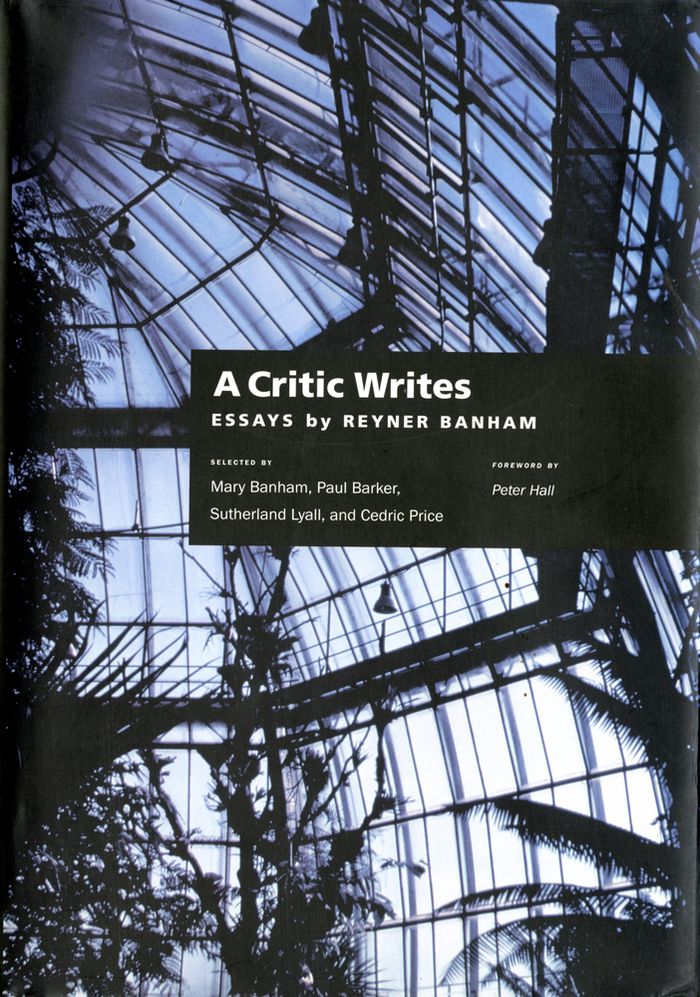
Few twentieth-century writers on architecture and design have enjoyed the renown of Reyner Banham. Born and trained in England and a U.S. resident starting in 1976, Banham wrote incisively about American and European buildings and culture. Now readers can enjoy a chronological cross-section of essays, polemics, and reviews drawn from more than three decades of Banham's writings. The volume, which includes discussions of Italian Futurism, Adolf Loos, Paul Scheerbart, and the Bauhaus as well as explorations of contemporary architecture by Frank Gehry, James Stirling, and Norman Foster, conveys the full range of Banham's belief in industrial and technological development as the motor of architectural evolution. Banham's interests and passions ranged from architecture and the culture of pop art to urban and industrial design. In brilliant analyses of automobile styling, mobile homes, science fiction films, and the American predilection for gadgets, he anticipated many of the preoccupations of contemporary cultural studies. Los Angeles, the city that Banham commemorated in a book and a film, receives extensive attention in essays on the Santa Monica Pier, the Getty Museum, Forest Lawn cemetery, and the ubiquitous freeway system. Eminently readable, provocative, and entertaining, this book is certain to consolidate Banham's reputation among architects and students of contemporary culture. For those acquainted with his writing, it offers welcome surprises as well as familiar delights. For those encountering Banham for the first time, it comprises the perfect introduction.
A critic writes : essays by Reyner Banham
Actions:
Price:
$39.95
(available to order)
Summary:
Few twentieth-century writers on architecture and design have enjoyed the renown of Reyner Banham. Born and trained in England and a U.S. resident starting in 1976, Banham wrote incisively about American and European buildings and culture. Now readers can enjoy a chronological cross-section of essays, polemics, and reviews drawn from more than three decades of Banham's writings. The volume, which includes discussions of Italian Futurism, Adolf Loos, Paul Scheerbart, and the Bauhaus as well as explorations of contemporary architecture by Frank Gehry, James Stirling, and Norman Foster, conveys the full range of Banham's belief in industrial and technological development as the motor of architectural evolution. Banham's interests and passions ranged from architecture and the culture of pop art to urban and industrial design. In brilliant analyses of automobile styling, mobile homes, science fiction films, and the American predilection for gadgets, he anticipated many of the preoccupations of contemporary cultural studies. Los Angeles, the city that Banham commemorated in a book and a film, receives extensive attention in essays on the Santa Monica Pier, the Getty Museum, Forest Lawn cemetery, and the ubiquitous freeway system. Eminently readable, provocative, and entertaining, this book is certain to consolidate Banham's reputation among architects and students of contemporary culture. For those acquainted with his writing, it offers welcome surprises as well as familiar delights. For those encountering Banham for the first time, it comprises the perfect introduction.
Form:
books
books
Publication:
April 1999, Berkeley
April 1999, Berkeley
Subject:
Architectural Theory
Architectural Theory
Form:
books
books
Actions:
Price:
$27.00
(available in store)
Summary:
As a follow-up of a first volume published in 2019 that built on years of thematic investigations, the book focuses on how the institution works out and on these questions by rethinking its tools and how it relates to others. ''The Museum Is Not Enough'' (no. 10–14) gathers conversations among curators, artists, academics, and architects on how institutions engage(...)
$27.00
(available in store)
Summary:
As a follow-up of a first volume published in 2019 that built on years of thematic investigations, the book focuses on how the institution works out and on these questions by rethinking its tools and how it relates to others. ''The Museum Is Not Enough'' (no. 10–14) gathers conversations among curators, artists, academics, and architects on how institutions engage(...)
Subject:
CCA Publications
CCA Publications
Publication:
January 2022
January 2022
Title:
The Museum Is Not Enough, Num.10-14
Actions:
Price:
$27.00
(available in store)
Summary:
As a follow-up of a first volume published in 2019 that built on years of thematic investigations, the book focuses on how the institution works out and on these questions by rethinking its tools and how it relates to others. ''The Museum Is Not Enough'' (no. 10–14) gathers conversations among curators, artists, academics, and architects on how institutions engage multiple contexts, objects, and perspectives: reflecting on strategies to unlearn and decentre established ways of seeing and doing; looking closely at how to describe and document archival sources while interrogating the stakes, and often the harm, in separating cultural objects from their context; questioning the relationship between institutions and “the public”; and discussing curatorial tools—and particularly film—that collapse research and display, observation and action, here and there. Underlying these reflections is the realization that the museum’s activity can’t be constructed from a fixed position. Unless the questions it deals with are observed from another angle, it is hard not to perpetuate the thinking that created them. The book responds to an urgent need to equip the institution to understand how things around it are rapidly changing, and the importance of conveying and discussing this instability. Here, the museum gets outside its physical walls to explore on-site, to talk with people, to connect and activate collaborators, to design conditions for different forms of dialogue to happen on the ground.
The Museum Is Not Enough, Num.10-14
Actions:
Price:
$27.00
(available in store)
Summary:
As a follow-up of a first volume published in 2019 that built on years of thematic investigations, the book focuses on how the institution works out and on these questions by rethinking its tools and how it relates to others. ''The Museum Is Not Enough'' (no. 10–14) gathers conversations among curators, artists, academics, and architects on how institutions engage multiple contexts, objects, and perspectives: reflecting on strategies to unlearn and decentre established ways of seeing and doing; looking closely at how to describe and document archival sources while interrogating the stakes, and often the harm, in separating cultural objects from their context; questioning the relationship between institutions and “the public”; and discussing curatorial tools—and particularly film—that collapse research and display, observation and action, here and there. Underlying these reflections is the realization that the museum’s activity can’t be constructed from a fixed position. Unless the questions it deals with are observed from another angle, it is hard not to perpetuate the thinking that created them. The book responds to an urgent need to equip the institution to understand how things around it are rapidly changing, and the importance of conveying and discussing this instability. Here, the museum gets outside its physical walls to explore on-site, to talk with people, to connect and activate collaborators, to design conditions for different forms of dialogue to happen on the ground.
Form:
books
books
Publication:
January 2022
January 2022
Subject:
CCA Publications
CCA Publications
Form:
books
books
Title:
The Hollywood sign
The Hollywood sign
Actions:
Price:
$27.95
(available to order)
Summary:
Hollywood's famous sign, constructed of massive white block letters set into a steep hillside, is an emblem of the movie capital it looms over and an international symbol of glamour and star power. To so many who see its image, the sign represents the earthly home of that otherwise ethereal world of fame, stardom, and celebrity -the goal of American and worldwide(...)
$27.95
(available to order)
Summary:
Hollywood's famous sign, constructed of massive white block letters set into a steep hillside, is an emblem of the movie capital it looms over and an international symbol of glamour and star power. To so many who see its image, the sign represents the earthly home of that otherwise ethereal world of fame, stardom, and celebrity -the goal of American and worldwide(...)
Title:
The Hollywood sign
Actions:
Price:
$27.95
(available to order)
Summary:
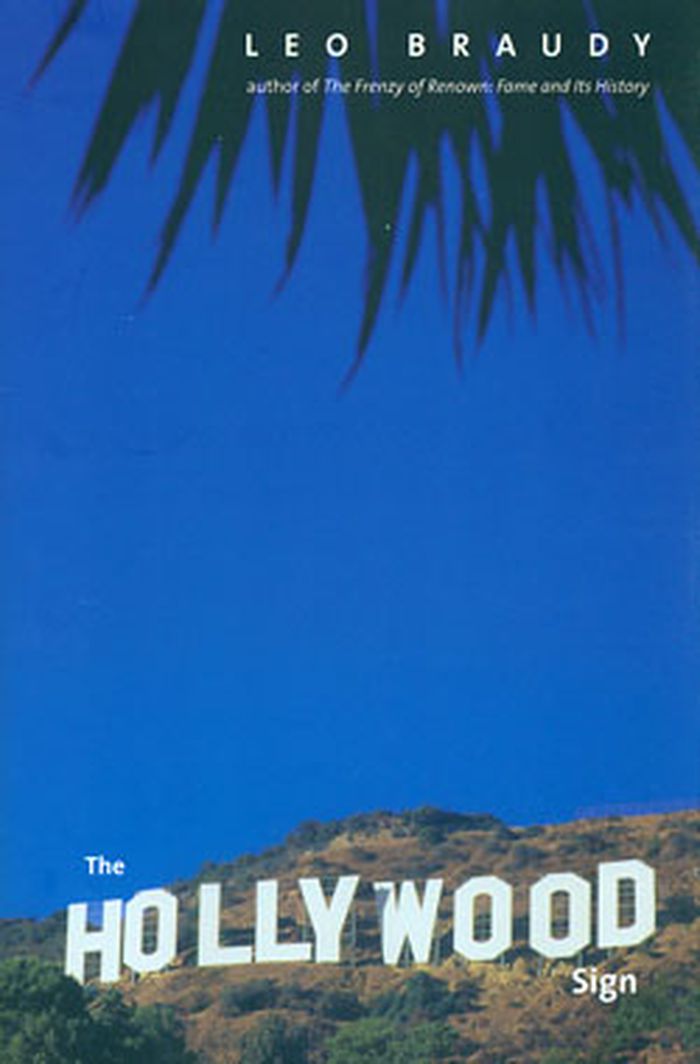
Hollywood's famous sign, constructed of massive white block letters set into a steep hillside, is an emblem of the movie capital it looms over and an international symbol of glamour and star power. To so many who see its image, the sign represents the earthly home of that otherwise ethereal world of fame, stardom, and celebrity -the goal of American and worldwide aspiration to be in the limelight, to be, like the Hollywood sign itself, instantly recognizable. How an advertisement erected in 1923, touting the real estate development Hollywoodland, took on a life of its own is a story worthy of the entertainment world that is its focus. Leo Braudy traces the remarkable history of this distinctly American landmark, which has been saved over the years by a disparate group of fans and supporters, among them Alice Cooper and Hugh Hefner, who spearheaded its reconstruction in the 1970s. He also uses the sign's history to offer an intriguing look at the rise of the movie business from its earliest, silent days through the development of the studio system that helped define modern Hollywood. Mixing social history, urban studies, literature, and film, along with forays into such topics as the lure of Hollywood for utopian communities and the development of domestic architecture in Los Angeles, The Hollywood Sign is a fascinating account of how a temporary structure has become a permanent icon of American culture.
The Hollywood sign
Actions:
Price:
$27.95
(available to order)
Summary:
Hollywood's famous sign, constructed of massive white block letters set into a steep hillside, is an emblem of the movie capital it looms over and an international symbol of glamour and star power. To so many who see its image, the sign represents the earthly home of that otherwise ethereal world of fame, stardom, and celebrity -the goal of American and worldwide aspiration to be in the limelight, to be, like the Hollywood sign itself, instantly recognizable. How an advertisement erected in 1923, touting the real estate development Hollywoodland, took on a life of its own is a story worthy of the entertainment world that is its focus. Leo Braudy traces the remarkable history of this distinctly American landmark, which has been saved over the years by a disparate group of fans and supporters, among them Alice Cooper and Hugh Hefner, who spearheaded its reconstruction in the 1970s. He also uses the sign's history to offer an intriguing look at the rise of the movie business from its earliest, silent days through the development of the studio system that helped define modern Hollywood. Mixing social history, urban studies, literature, and film, along with forays into such topics as the lure of Hollywood for utopian communities and the development of domestic architecture in Los Angeles, The Hollywood Sign is a fascinating account of how a temporary structure has become a permanent icon of American culture.
Form:
books
books
Publication:
March 2011
March 2011
Subject:
Signage
Signage
Form:
books
books
Price:
$54.95
(available to order)
Summary:
Après avoir détruit sa maison-oeuvre-laboratoire en céramique blanche de Garches, Jean-Pierre Raynaud a exposé au CAPC-musée d’Art contemporain de Bordeaux les gravats, telles des reliques, dans des poubelles métalliques en usage dans les blocs opératoires. Pour lui, en effet, l’oeuvre d’art est un but et son unique raison d’être. « Le but n’est pas de faire des oeuvres(...)
$54.95
(available to order)
Summary:
Après avoir détruit sa maison-oeuvre-laboratoire en céramique blanche de Garches, Jean-Pierre Raynaud a exposé au CAPC-musée d’Art contemporain de Bordeaux les gravats, telles des reliques, dans des poubelles métalliques en usage dans les blocs opératoires. Pour lui, en effet, l’oeuvre d’art est un but et son unique raison d’être. « Le but n’est pas de faire des oeuvres(...)
Title:
La maison de Jean-Pierre Raynaud contruction destruction 1969-1993
Actions:
Price:
$54.95
(available to order)
Summary:
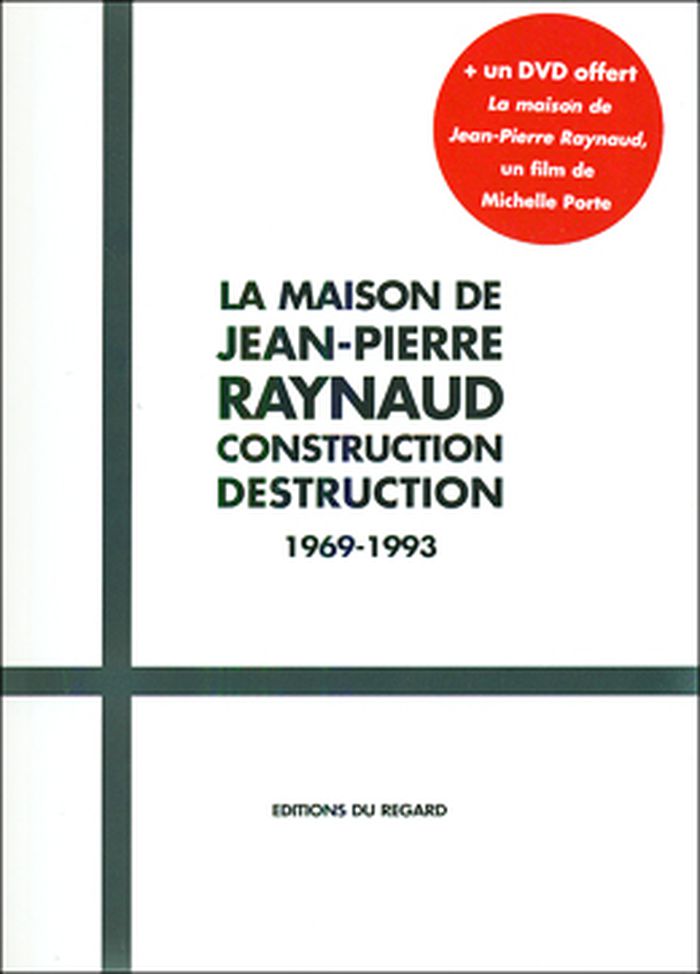
Après avoir détruit sa maison-oeuvre-laboratoire en céramique blanche de Garches, Jean-Pierre Raynaud a exposé au CAPC-musée d’Art contemporain de Bordeaux les gravats, telles des reliques, dans des poubelles métalliques en usage dans les blocs opératoires. Pour lui, en effet, l’oeuvre d’art est un but et son unique raison d’être. « Le but n’est pas de faire des oeuvres d’art, il est de vivre l’oeuvre d’art comme un but ». « En 23 ans, la maison a connu cinq stades successifs. Et je tenais beaucoup à en assurer moi-même les métamorphoses. Quand j’ai pris conscience, en 1988, qu’elle était réellement terminée, cela a été un choc terrible, comme l’aboutissement d’une recherche, la fin d’une vie. Je n’ai pas voulu accepter que ma relation avec elle prenne fin, aussi, durant quatre ans, j’ai réfléchi sur le sens de cette « oeuvre » qui m’échouait comme si je devais en être le gardien jusqu’à ma mort. J’ai réalisé qu’étant unique elle méritait plus d’audace et d’égard que cette architecture parfaite, figée qu’elle était devenue, ce qui est le propre des objets d’art, il me fallait lui faire subir un sort exceptionnel, digne d’elle. Je décidai de la métamorphoser, de l’emporter ailleurs, de lui faire vivre une expérience absolue. Pour cela, elle devait se soumettre à une ultime transformation : la démolition ». Jean-Pierre Raynaud, 1993. Le livre retrace l'histoire de la maison, de sa construction à sa destruction. Il est accompagné du film de Michelle Porte (33 min).
La maison de Jean-Pierre Raynaud contruction destruction 1969-1993
Actions:
Price:
$54.95
(available to order)
Summary:
Après avoir détruit sa maison-oeuvre-laboratoire en céramique blanche de Garches, Jean-Pierre Raynaud a exposé au CAPC-musée d’Art contemporain de Bordeaux les gravats, telles des reliques, dans des poubelles métalliques en usage dans les blocs opératoires. Pour lui, en effet, l’oeuvre d’art est un but et son unique raison d’être. « Le but n’est pas de faire des oeuvres d’art, il est de vivre l’oeuvre d’art comme un but ». « En 23 ans, la maison a connu cinq stades successifs. Et je tenais beaucoup à en assurer moi-même les métamorphoses. Quand j’ai pris conscience, en 1988, qu’elle était réellement terminée, cela a été un choc terrible, comme l’aboutissement d’une recherche, la fin d’une vie. Je n’ai pas voulu accepter que ma relation avec elle prenne fin, aussi, durant quatre ans, j’ai réfléchi sur le sens de cette « oeuvre » qui m’échouait comme si je devais en être le gardien jusqu’à ma mort. J’ai réalisé qu’étant unique elle méritait plus d’audace et d’égard que cette architecture parfaite, figée qu’elle était devenue, ce qui est le propre des objets d’art, il me fallait lui faire subir un sort exceptionnel, digne d’elle. Je décidai de la métamorphoser, de l’emporter ailleurs, de lui faire vivre une expérience absolue. Pour cela, elle devait se soumettre à une ultime transformation : la démolition ». Jean-Pierre Raynaud, 1993. Le livre retrace l'histoire de la maison, de sa construction à sa destruction. Il est accompagné du film de Michelle Porte (33 min).
Form:
books
books
Publication:
December 2011
December 2011
Subject:
Contemporary Art Monographs
Contemporary Art Monographs
Form:
books
books
Actions:
Price:
$72.00
(available to order)
Summary:
Transforming words into icons and images into wide-screen epics, Ed Ruscha has wholly reconceived the terms of painting for our era. Tagged variously as a Conceptualist, Pop artist or latter-day Surrealist, Ruscha flouts category, or rather incorporates all categories, always surprising and experimenting with both subject and method. His paintings are steeped in our(...)
$72.00
(available to order)
Summary:
Transforming words into icons and images into wide-screen epics, Ed Ruscha has wholly reconceived the terms of painting for our era. Tagged variously as a Conceptualist, Pop artist or latter-day Surrealist, Ruscha flouts category, or rather incorporates all categories, always surprising and experimenting with both subject and method. His paintings are steeped in our(...)
Subject:
Contemporary Art Monographs
Contemporary Art Monographs
Publication:
February 2010
February 2010
Title:
Ed Ruscha: fifty years of painting
Actions:
Price:
$72.00
(available to order)
Summary:
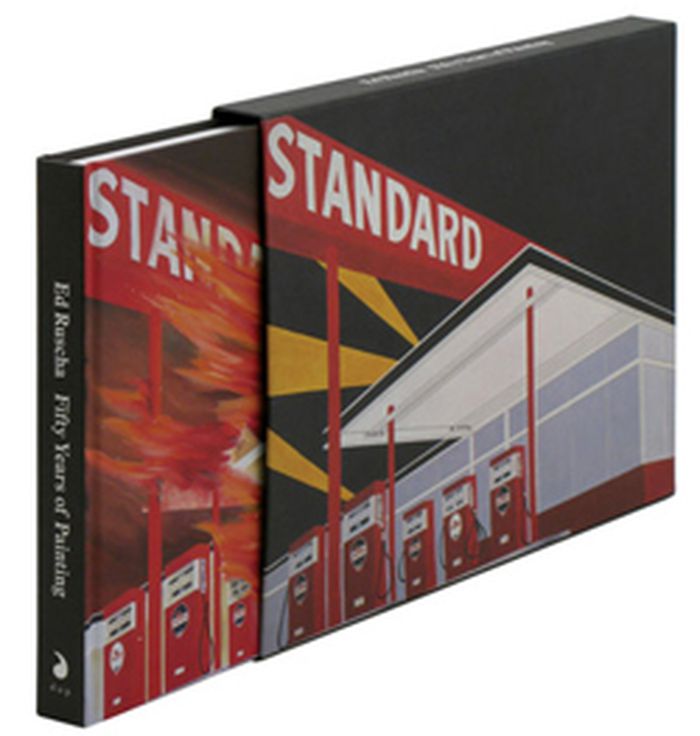
Transforming words into icons and images into wide-screen epics, Ed Ruscha has wholly reconceived the terms of painting for our era. Tagged variously as a Conceptualist, Pop artist or latter-day Surrealist, Ruscha flouts category, or rather incorporates all categories, always surprising and experimenting with both subject and method. His paintings are steeped in our times: cinema, advertising, logos, late capitalism and the twists and turns of postwar art have all informed his iconography since the early 1960s, arriving on the cool surfaces of his canvases with magnetic detachment. Ruscha eschews process and focuses exclusively on the final product: “the means to the end has always been secondary in my art,” he has said. Ruscha has also reinvented the use of words in art, finding disquieting ways to invest language with a weird, throbbing, ambient static, never aspiring to what he calls “word gestures,” since “each word is an excursion unto itself.” Fifty Years of Painting focuses on Ruscha's majestic oeuvre of paintings. A magnificent publication, it comes housed in a slipcase that sports the artist's classic painting “Standard Station” (1966), and, alongside fantastic reproductions, it contains a preface by novelist James Ellroy, essays by Ralph Rugoff, Alexandra Schwartz and Ulrich Wilmes, a text by novelist Bruce Wagner, an interview with the artist by Kristine McKenna, an illustrated chronology and an exhibition history. Ed Ruscha (born 1937) has made pioneering work in the media of painting, printmaking, drawing, bookmaking, photography and film since 1958.
Ed Ruscha: fifty years of painting
Actions:
Price:
$72.00
(available to order)
Summary:
Transforming words into icons and images into wide-screen epics, Ed Ruscha has wholly reconceived the terms of painting for our era. Tagged variously as a Conceptualist, Pop artist or latter-day Surrealist, Ruscha flouts category, or rather incorporates all categories, always surprising and experimenting with both subject and method. His paintings are steeped in our times: cinema, advertising, logos, late capitalism and the twists and turns of postwar art have all informed his iconography since the early 1960s, arriving on the cool surfaces of his canvases with magnetic detachment. Ruscha eschews process and focuses exclusively on the final product: “the means to the end has always been secondary in my art,” he has said. Ruscha has also reinvented the use of words in art, finding disquieting ways to invest language with a weird, throbbing, ambient static, never aspiring to what he calls “word gestures,” since “each word is an excursion unto itself.” Fifty Years of Painting focuses on Ruscha's majestic oeuvre of paintings. A magnificent publication, it comes housed in a slipcase that sports the artist's classic painting “Standard Station” (1966), and, alongside fantastic reproductions, it contains a preface by novelist James Ellroy, essays by Ralph Rugoff, Alexandra Schwartz and Ulrich Wilmes, a text by novelist Bruce Wagner, an interview with the artist by Kristine McKenna, an illustrated chronology and an exhibition history. Ed Ruscha (born 1937) has made pioneering work in the media of painting, printmaking, drawing, bookmaking, photography and film since 1958.
Form:
books
books
Publication:
February 2010
February 2010
Subject:
Contemporary Art Monographs
Contemporary Art Monographs
Form:
books
books
Actions:
Price:
$75.00
(available to order)
Summary:
Working across an unusually broad range of media, including painting, photography, film, drawing and sculpture, Sigmar Polke is widely regarded as one of the most influential and experimental artists of the post-war generation. His irreverent wit and promiscuous intelligence, coupled with his exceptional grasp of the properties of his materials, provided the foundation(...)
$75.00
(available to order)
Summary:
Working across an unusually broad range of media, including painting, photography, film, drawing and sculpture, Sigmar Polke is widely regarded as one of the most influential and experimental artists of the post-war generation. His irreverent wit and promiscuous intelligence, coupled with his exceptional grasp of the properties of his materials, provided the foundation(...)
Title:
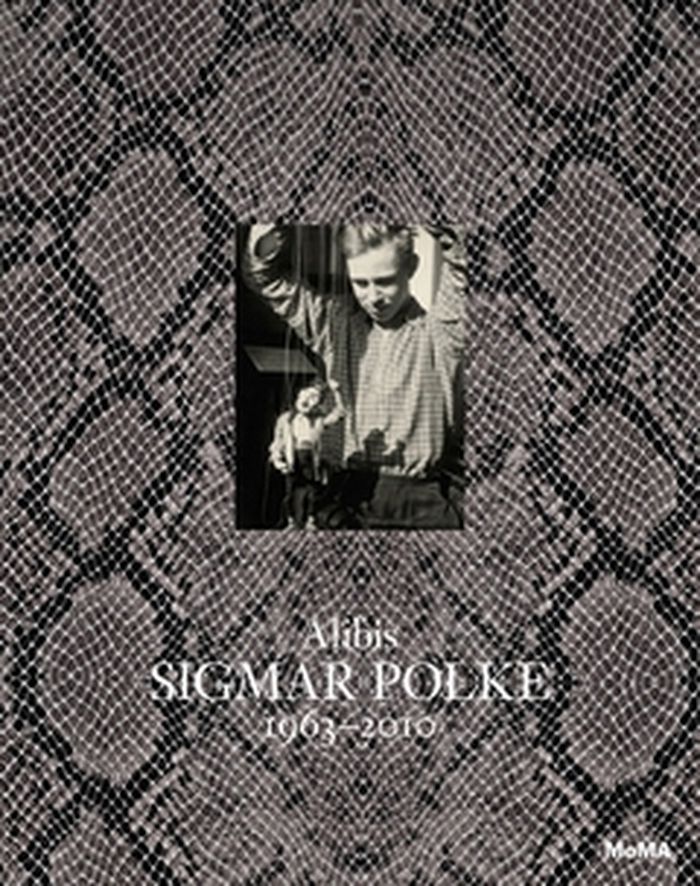
Alibis Sigmar Polke 1963-2010
Actions:
Price:
$75.00
(available to order)
Summary:
Working across an unusually broad range of media, including painting, photography, film, drawing and sculpture, Sigmar Polke is widely regarded as one of the most influential and experimental artists of the post-war generation. His irreverent wit and promiscuous intelligence, coupled with his exceptional grasp of the properties of his materials, provided the foundation for his punishing critiques of the conventions of art history and social behavior. Experimenting wildly with materials and tools as varied as meteor dust and the xerox machine, Polke made work of both an intimate and monumental scale, drawn from sources as diverse as newspaper headlines and Durer prints. Polke avoided any one signature style, a fluid method best defined by the word "alibi," which means "in or at another place." This also is a reminder of the deflection of responsibility which shaped German behavior during the Nazi period, compelling Polke's generation to reinvent the role of the artist. Published in conjunction with "Alibis: Sigmar Polke 1963-2010," the first exhibition to encompass the artist's work across all media, this richly illustrated publication provides an overview of his cross-disciplinary innovations and career. Essays by Kathy Halbreich, Associate Director of The Museum of Modern Art; Mark Godfrey, Curator of International Art, Tate Modern; and a range of scholars and artists examine the full range of Polke's exceptionally inventive oeuvre and place his enormous skepticism of all social, political and artistic conventions against German history.
Alibis Sigmar Polke 1963-2010
Actions:
Price:
$75.00
(available to order)
Summary:
Working across an unusually broad range of media, including painting, photography, film, drawing and sculpture, Sigmar Polke is widely regarded as one of the most influential and experimental artists of the post-war generation. His irreverent wit and promiscuous intelligence, coupled with his exceptional grasp of the properties of his materials, provided the foundation for his punishing critiques of the conventions of art history and social behavior. Experimenting wildly with materials and tools as varied as meteor dust and the xerox machine, Polke made work of both an intimate and monumental scale, drawn from sources as diverse as newspaper headlines and Durer prints. Polke avoided any one signature style, a fluid method best defined by the word "alibi," which means "in or at another place." This also is a reminder of the deflection of responsibility which shaped German behavior during the Nazi period, compelling Polke's generation to reinvent the role of the artist. Published in conjunction with "Alibis: Sigmar Polke 1963-2010," the first exhibition to encompass the artist's work across all media, this richly illustrated publication provides an overview of his cross-disciplinary innovations and career. Essays by Kathy Halbreich, Associate Director of The Museum of Modern Art; Mark Godfrey, Curator of International Art, Tate Modern; and a range of scholars and artists examine the full range of Polke's exceptionally inventive oeuvre and place his enormous skepticism of all social, political and artistic conventions against German history.
Form:
books
books
Publication:
April 2014
April 2014
Subject:
Contemporary Art Monographs
Contemporary Art Monographs
Form:
books
books
Actions:
Price:
$41.95
(available to order)
Summary:
Propaganda art—whether a depiction of joyous workers in the style of socialist realism or a film directed by Steve Bannon—delivers a message. But, as Jonas Staal argues in this illuminating and timely book, propaganda does not merely make a political point; it aims to construct reality itself. Political regimes have shaped our world according to their interests and(...)
$41.95
(available to order)
Summary:
Propaganda art—whether a depiction of joyous workers in the style of socialist realism or a film directed by Steve Bannon—delivers a message. But, as Jonas Staal argues in this illuminating and timely book, propaganda does not merely make a political point; it aims to construct reality itself. Political regimes have shaped our world according to their interests and(...)
Title:
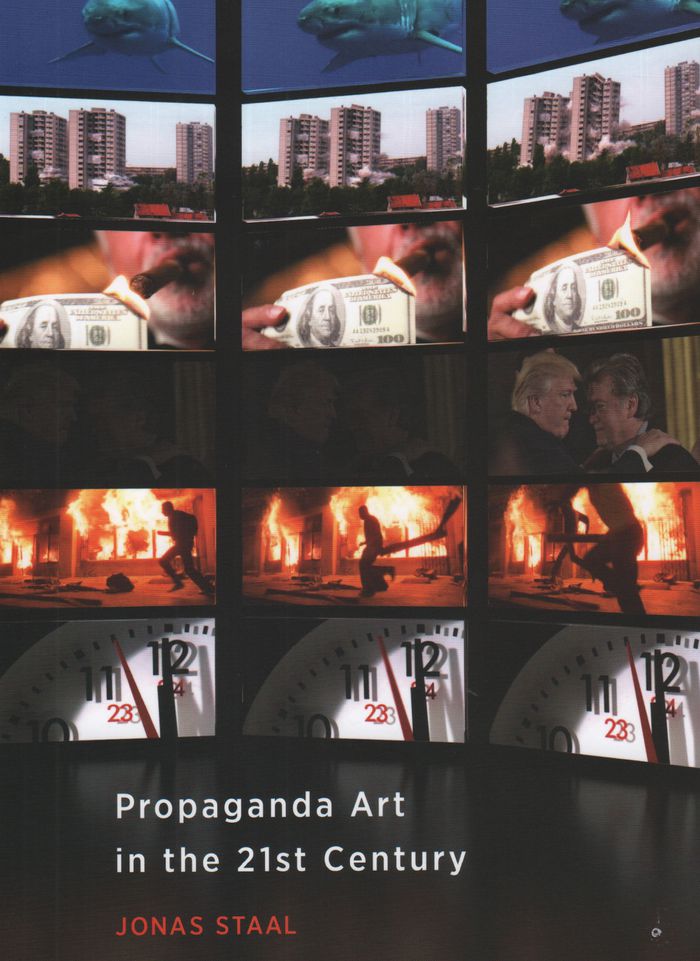
Propaganda art in the 21st century
Actions:
Price:
$41.95
(available to order)
Summary:
Propaganda art—whether a depiction of joyous workers in the style of socialist realism or a film directed by Steve Bannon—delivers a message. But, as Jonas Staal argues in this illuminating and timely book, propaganda does not merely make a political point; it aims to construct reality itself. Political regimes have shaped our world according to their interests and ideology; today, popular mass movements push back by constructing other worlds with their own propagandas. Staal shows that propaganda is not a relic of a totalitarian past but occurs today even in liberal democracies. He considers different historical forms of propaganda art, from avant-garde to totalitarian and modernist, and he investigates the us versus them dichotomy promoted in War on Terror propaganda art—describing, among other things, a fictional scenario from the Department of Homeland Security, acted out in real time, and military training via videogame. He discusses artistic and cultural productions developed by such popular mass movements of the twenty-first century as the Occupy, activism by and in support of undocumented migrants and refugees, and struggles for liberation in such countries as Mali and Syria. Staal, both a scholar of propaganda and a self-described propaganda artist, proposes a new model of emancipatory propaganda art—one that acknowledges the relation between art and power and takes both an aesthetic and a political position in the practice of world-making.
Propaganda art in the 21st century
Actions:
Price:
$41.95
(available to order)
Summary:
Propaganda art—whether a depiction of joyous workers in the style of socialist realism or a film directed by Steve Bannon—delivers a message. But, as Jonas Staal argues in this illuminating and timely book, propaganda does not merely make a political point; it aims to construct reality itself. Political regimes have shaped our world according to their interests and ideology; today, popular mass movements push back by constructing other worlds with their own propagandas. Staal shows that propaganda is not a relic of a totalitarian past but occurs today even in liberal democracies. He considers different historical forms of propaganda art, from avant-garde to totalitarian and modernist, and he investigates the us versus them dichotomy promoted in War on Terror propaganda art—describing, among other things, a fictional scenario from the Department of Homeland Security, acted out in real time, and military training via videogame. He discusses artistic and cultural productions developed by such popular mass movements of the twenty-first century as the Occupy, activism by and in support of undocumented migrants and refugees, and struggles for liberation in such countries as Mali and Syria. Staal, both a scholar of propaganda and a self-described propaganda artist, proposes a new model of emancipatory propaganda art—one that acknowledges the relation between art and power and takes both an aesthetic and a political position in the practice of world-making.
Form:
books
books
Publication:
September 2019
September 2019
Subject:
Art Theory
Art Theory
Form:
books
books
Actions:
Price:
$74.95
(available to order)
Summary:
In an era of globalisation, there is an unprecedented scale and nature of contemporary migrant flows, as well as the flow of goods, capital, ideas, images and technology. This sheer number and mobility of contemporary migrants clearly has massively disruptive effects on traditional modes of dwelling however they were manifest in everyday life. But contemporary migrancy(...)
$74.95
(available to order)
Summary:
In an era of globalisation, there is an unprecedented scale and nature of contemporary migrant flows, as well as the flow of goods, capital, ideas, images and technology. This sheer number and mobility of contemporary migrants clearly has massively disruptive effects on traditional modes of dwelling however they were manifest in everyday life. But contemporary migrancy(...)
Title:
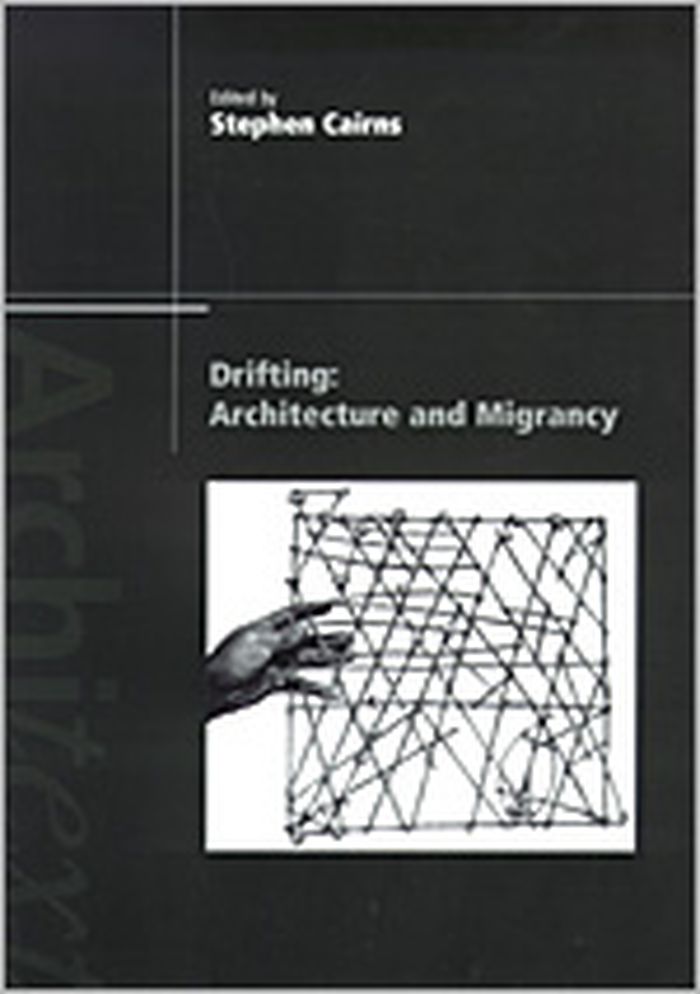
Drifting : architecture and migrancy
Actions:
Price:
$74.95
(available to order)
Summary:
In an era of globalisation, there is an unprecedented scale and nature of contemporary migrant flows, as well as the flow of goods, capital, ideas, images and technology. This sheer number and mobility of contemporary migrants clearly has massively disruptive effects on traditional modes of dwelling however they were manifest in everyday life. But contemporary migrancy also has important consequences for the way dwelling is conceptualised more generally. This book is concerned with the modes of dwelling that emerge through migrancy; it is also concerned with the effects these modes of dwelling have for dominant conceptions of space and place; and finally, it is interested in the kinds of architectures that become possible if those effects are taken seriously. This book inspects the intersections between architectures of place and flows of migrancy. It does so without seeking to defend the idea of place, nor lament its passing. Rather, this book is an exploration of the often complex and unorthodox modes of dwelling that are emerging precisely from within the ruins of the idea of place. This exploration is informed by post-structuralist analyses of architecture and urbanism, and their representation in media such as film. It focuses on the Pacific Rim as an intensified zone of global flows. Within the Pacific Rim there are complex tensions between the new economies of Asia and the settler nations of Canada, the US, Australia and New Zealand. These tensions produce difficulties for the narrative of the nation state, and herald conditions that no longer conform to the geo-political norms of the old world.
Drifting : architecture and migrancy
Actions:
Price:
$74.95
(available to order)
Summary:
In an era of globalisation, there is an unprecedented scale and nature of contemporary migrant flows, as well as the flow of goods, capital, ideas, images and technology. This sheer number and mobility of contemporary migrants clearly has massively disruptive effects on traditional modes of dwelling however they were manifest in everyday life. But contemporary migrancy also has important consequences for the way dwelling is conceptualised more generally. This book is concerned with the modes of dwelling that emerge through migrancy; it is also concerned with the effects these modes of dwelling have for dominant conceptions of space and place; and finally, it is interested in the kinds of architectures that become possible if those effects are taken seriously. This book inspects the intersections between architectures of place and flows of migrancy. It does so without seeking to defend the idea of place, nor lament its passing. Rather, this book is an exploration of the often complex and unorthodox modes of dwelling that are emerging precisely from within the ruins of the idea of place. This exploration is informed by post-structuralist analyses of architecture and urbanism, and their representation in media such as film. It focuses on the Pacific Rim as an intensified zone of global flows. Within the Pacific Rim there are complex tensions between the new economies of Asia and the settler nations of Canada, the US, Australia and New Zealand. These tensions produce difficulties for the narrative of the nation state, and herald conditions that no longer conform to the geo-political norms of the old world.
Form:
books
books
Publication:
September 2003, London / New York
September 2003, London / New York
Subject:
Architectural Theory
Architectural Theory
Form:
books
books
Title:
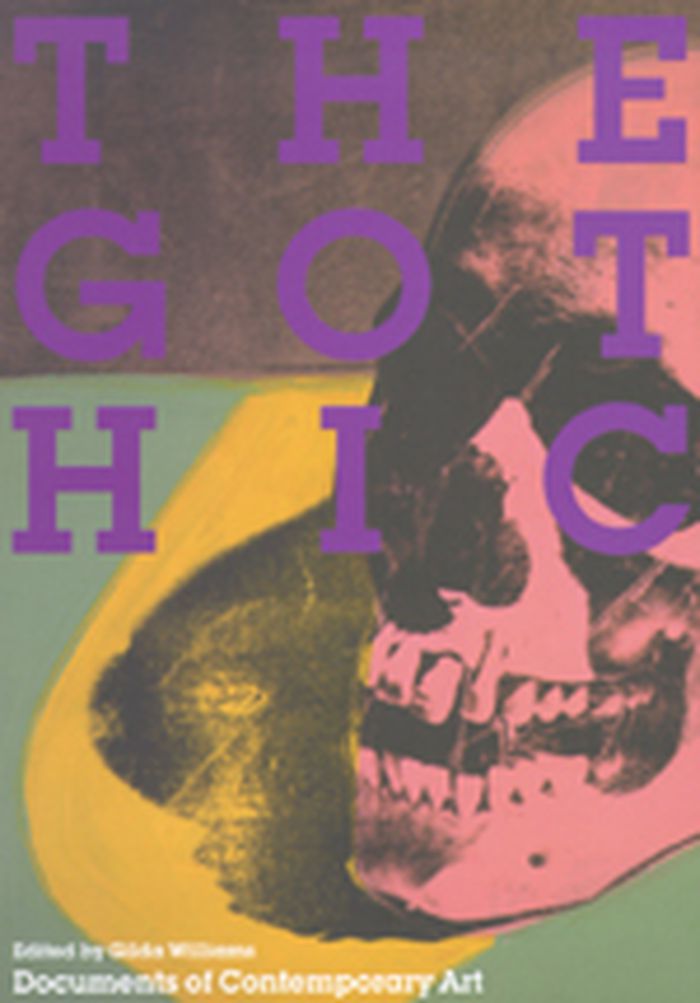
The gothic
The gothic
Actions:
Price:
$23.95
(available to order)
Summary:
This collection of writings examines the pervasive and influential role of "the Gothic" in contemporary visual culture. The contemporary Gothic in art is informed as much by the stock themes of the eighteenth- and nineteenth-century Gothic novel as it is by more recent permutations of the Gothic in horror film theory, Lacanian psychoanalysis, and Goth subcultures. This(...)
$23.95
(available to order)
Summary:
This collection of writings examines the pervasive and influential role of "the Gothic" in contemporary visual culture. The contemporary Gothic in art is informed as much by the stock themes of the eighteenth- and nineteenth-century Gothic novel as it is by more recent permutations of the Gothic in horror film theory, Lacanian psychoanalysis, and Goth subcultures. This(...)
Title:
The gothic
Actions:
Price:
$23.95
(available to order)
Summary:
This collection of writings examines the pervasive and influential role of "the Gothic" in contemporary visual culture. The contemporary Gothic in art is informed as much by the stock themes of the eighteenth- and nineteenth-century Gothic novel as it is by more recent permutations of the Gothic in horror film theory, Lacanian psychoanalysis, and Goth subcultures. This reader from London's Whitechapel Gallery brings together artists as different as Matthew Barney, Gregor Schneider, Louise Bourgeois, and Douglas Gordon; its intent is not to use "the Gothic" to group together dissimilar artists but rather to shed light on a particular understanding of their practice. Anthony Vidler looks at ideas of the uncanny to explore Rachel Whiteread's House, and Jeff Wall uses the motif of vampirism to analyze fellow artist Dan Graham's Kammerspell; Hal Foster considers Robert Gober's recent work--laden with Christian symbolism, criticism of America as a nexus of power, and fragmented bodies--as an updated American Gothic, and Kobena Mercer examines the Gothic's depiction of the Other in relation to Michael Jackson's pop video Thriller. Texts by artists including Mike Kelley, Damien Hirst, Tacita Dean, Jonathan Meese, and Catherine Sullivan are complemented by extracts from Walpole's genre-establishing gothic novel The Castle of Otranto, William Gibson, Bret Easton Ellis, and Stephen King, among others, and theoretical writings by such key thinkers as Carol Clover, Beatriz Colomina, Julia Kristeva, Eve Kosofsky Sedgwick, Marina Warner, and Slavoj Zizek. The Gothic provides the first comprehensive overview of the uses of Gothic in contemporary visual culture.
The gothic
Actions:
Price:
$23.95
(available to order)
Summary:
This collection of writings examines the pervasive and influential role of "the Gothic" in contemporary visual culture. The contemporary Gothic in art is informed as much by the stock themes of the eighteenth- and nineteenth-century Gothic novel as it is by more recent permutations of the Gothic in horror film theory, Lacanian psychoanalysis, and Goth subcultures. This reader from London's Whitechapel Gallery brings together artists as different as Matthew Barney, Gregor Schneider, Louise Bourgeois, and Douglas Gordon; its intent is not to use "the Gothic" to group together dissimilar artists but rather to shed light on a particular understanding of their practice. Anthony Vidler looks at ideas of the uncanny to explore Rachel Whiteread's House, and Jeff Wall uses the motif of vampirism to analyze fellow artist Dan Graham's Kammerspell; Hal Foster considers Robert Gober's recent work--laden with Christian symbolism, criticism of America as a nexus of power, and fragmented bodies--as an updated American Gothic, and Kobena Mercer examines the Gothic's depiction of the Other in relation to Michael Jackson's pop video Thriller. Texts by artists including Mike Kelley, Damien Hirst, Tacita Dean, Jonathan Meese, and Catherine Sullivan are complemented by extracts from Walpole's genre-establishing gothic novel The Castle of Otranto, William Gibson, Bret Easton Ellis, and Stephen King, among others, and theoretical writings by such key thinkers as Carol Clover, Beatriz Colomina, Julia Kristeva, Eve Kosofsky Sedgwick, Marina Warner, and Slavoj Zizek. The Gothic provides the first comprehensive overview of the uses of Gothic in contemporary visual culture.
Form:
books
books
Publication:
October 2007, Whitechapel London Cambridge
October 2007, Whitechapel London Cambridge
Subject:
Art Theory
Art Theory
Form:
books
books
Title:
Olafur Eliasson
Olafur Eliasson
Actions:
Price:
$59.95
(available to order)
Summary:
Né au Danemark, Eliasson travaille aujourd hui à Berlin. Il reconstitue dans l'espace de la galerie les fragments d'une contrée lointaine et transforme en sculptures des sensations immatérielles ou des phénomènes invisibles. Une simple ouverture circulaire au plafond d'une galerie de Los Angeles, par exemple, suffit à donner l'illusion d'un pâle soleil scandinave et à(...)
$59.95
(available to order)
Summary:
Né au Danemark, Eliasson travaille aujourd hui à Berlin. Il reconstitue dans l'espace de la galerie les fragments d'une contrée lointaine et transforme en sculptures des sensations immatérielles ou des phénomènes invisibles. Une simple ouverture circulaire au plafond d'une galerie de Los Angeles, par exemple, suffit à donner l'illusion d'un pâle soleil scandinave et à(...)
Subject:
Contemporary Art Monographs
Contemporary Art Monographs
Publication:
June 2007, Paris
June 2007, Paris
Title:
Olafur Eliasson
Actions:
Price:
$59.95
(available to order)
Summary:
Né au Danemark, Eliasson travaille aujourd hui à Berlin. Il reconstitue dans l'espace de la galerie les fragments d'une contrée lointaine et transforme en sculptures des sensations immatérielles ou des phénomènes invisibles. Une simple ouverture circulaire au plafond d'une galerie de Los Angeles, par exemple, suffit à donner l'illusion d'un pâle soleil scandinave et à fabriquer un cadran solaire géant, évoquant à la fois les découpes architecturales de Gordon Matta-Clark et l'oculus du Panthéon de Rome. Les ouvres sereines et magnifiques d'Eliasson, inspirées par les thèmes de la nature, de la solitude et de l'introspection, ont été présentées dans les grandes manifestations internationales d'art contemporain, dont la Biennale de Venise en 1999. Dans son essai, la conservatrice Madeleine Grynsztejn étudie la démarche singulière d un artiste qui mêle l'innovation technologique à son art. Le critique et conservateur Daniel Birnbaum s'entretient avec l'artiste de l'implantation des ouvres et de leur environnement immédiat, dans et à l'extérieur du musée. Dans «Focus», le théoricien de l'architecture Michael Speaks se penche sur l'intervention d'Eliasson «Green river» (1998), qu'il compare au film tourné par Antonioni en 1964, «Le Désert rouge». L'artiste a choisi un extrait de L'Évolution créatrice d'Henri Bergson (1907) qui traite de notre rapport subjectif et visuel à la nature, thème également central de son art. Les écrits d'Olafur Eliasson rassemblent un essai sur le plus banal des sujets, le temps qu il fait, et une lettre ouverte intitulée «Chers tous», adressée à tous les spectateurs de ses ouvres sensuelles et sophistiquées.
Olafur Eliasson
Actions:
Price:
$59.95
(available to order)
Summary:
Né au Danemark, Eliasson travaille aujourd hui à Berlin. Il reconstitue dans l'espace de la galerie les fragments d'une contrée lointaine et transforme en sculptures des sensations immatérielles ou des phénomènes invisibles. Une simple ouverture circulaire au plafond d'une galerie de Los Angeles, par exemple, suffit à donner l'illusion d'un pâle soleil scandinave et à fabriquer un cadran solaire géant, évoquant à la fois les découpes architecturales de Gordon Matta-Clark et l'oculus du Panthéon de Rome. Les ouvres sereines et magnifiques d'Eliasson, inspirées par les thèmes de la nature, de la solitude et de l'introspection, ont été présentées dans les grandes manifestations internationales d'art contemporain, dont la Biennale de Venise en 1999. Dans son essai, la conservatrice Madeleine Grynsztejn étudie la démarche singulière d un artiste qui mêle l'innovation technologique à son art. Le critique et conservateur Daniel Birnbaum s'entretient avec l'artiste de l'implantation des ouvres et de leur environnement immédiat, dans et à l'extérieur du musée. Dans «Focus», le théoricien de l'architecture Michael Speaks se penche sur l'intervention d'Eliasson «Green river» (1998), qu'il compare au film tourné par Antonioni en 1964, «Le Désert rouge». L'artiste a choisi un extrait de L'Évolution créatrice d'Henri Bergson (1907) qui traite de notre rapport subjectif et visuel à la nature, thème également central de son art. Les écrits d'Olafur Eliasson rassemblent un essai sur le plus banal des sujets, le temps qu il fait, et une lettre ouverte intitulée «Chers tous», adressée à tous les spectateurs de ses ouvres sensuelles et sophistiquées.
Form:
books
books
Publication:
June 2007, Paris
June 2007, Paris
Subject:
Contemporary Art Monographs
Contemporary Art Monographs


