


12071 Results
Form:
books
books
Title:
The social (re)production of architecture: politics, values and actions in contemporary practice
The social (re)production of architecture: politics, values and actions in contemporary practice
Actions:
Price:
$76.90
(available to order)
Summary:
''The Social (Re)Production of Architecture'' brings the debates of the 'right to the city' into today’s context of ecological, economic and social crises. Building on the 1970s' discussions about the 'production of space', which French sociologist Henri Lefebvre considered a civic right, the authors question who has the right to make space, and explore the kinds of(...)
$76.90
(available to order)
Summary:
''The Social (Re)Production of Architecture'' brings the debates of the 'right to the city' into today’s context of ecological, economic and social crises. Building on the 1970s' discussions about the 'production of space', which French sociologist Henri Lefebvre considered a civic right, the authors question who has the right to make space, and explore the kinds of(...)
Title:
The social (re)production of architecture: politics, values and actions in contemporary practice
Actions:
Price:
$76.90
(available to order)
Summary:
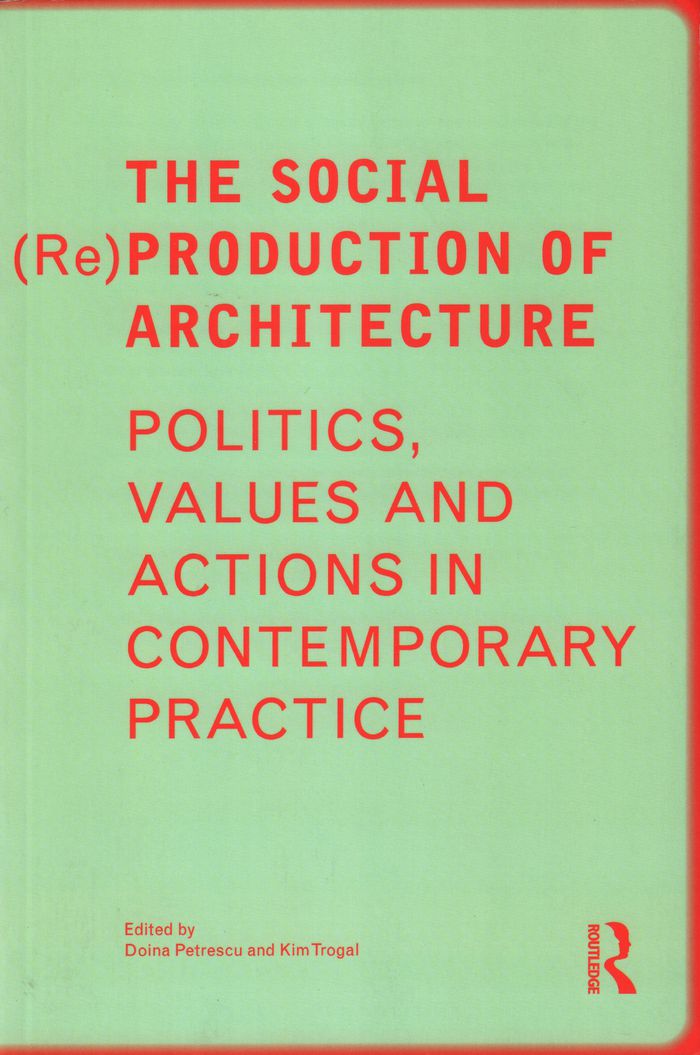
''The Social (Re)Production of Architecture'' brings the debates of the 'right to the city' into today’s context of ecological, economic and social crises. Building on the 1970s' discussions about the 'production of space', which French sociologist Henri Lefebvre considered a civic right, the authors question who has the right to make space, and explore the kinds of relations that are produced in the process. In the emerging post-capitalist era, this book addresses urgent social and ecological imperatives for change and opens up questions around architecture's engagement with new forms of organization and practice. The book asks what (new) kinds of 'social' can architecture (re)produce, and what kinds of politics, values and actions are needed.
The social (re)production of architecture: politics, values and actions in contemporary practice
Actions:
Price:
$76.90
(available to order)
Summary:
''The Social (Re)Production of Architecture'' brings the debates of the 'right to the city' into today’s context of ecological, economic and social crises. Building on the 1970s' discussions about the 'production of space', which French sociologist Henri Lefebvre considered a civic right, the authors question who has the right to make space, and explore the kinds of relations that are produced in the process. In the emerging post-capitalist era, this book addresses urgent social and ecological imperatives for change and opens up questions around architecture's engagement with new forms of organization and practice. The book asks what (new) kinds of 'social' can architecture (re)produce, and what kinds of politics, values and actions are needed.
Form:
books
books
Publication:
August 2017
August 2017
Subject:
Architectural Theory
Architectural Theory
Form:
books
books
Actions:
Price:
$37.50
(available in store)
Summary:
How can you navigate towards something when there are no fixed points when you cannot determine your position? How do you know where to go, or even know when you have got there? This fourth volume in the Archifutures series investigates how architecture, traditionally considered to be a future?oriented activity, can best respond as we find ourselves on the threshold of a(...)
$37.50
(available in store)
Summary:
How can you navigate towards something when there are no fixed points when you cannot determine your position? How do you know where to go, or even know when you have got there? This fourth volume in the Archifutures series investigates how architecture, traditionally considered to be a future?oriented activity, can best respond as we find ourselves on the threshold of a(...)
Title:
Archifutures Vol. 4: Thresholds. A field guide to making the future of architecture
Actions:
Price:
$37.50
(available in store)
Summary:
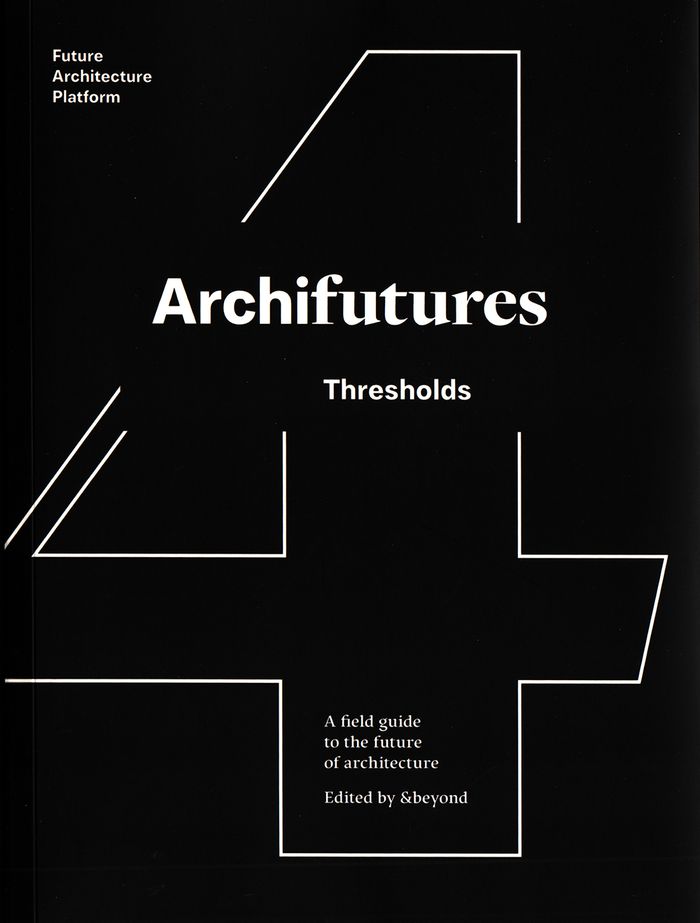
How can you navigate towards something when there are no fixed points when you cannot determine your position? How do you know where to go, or even know when you have got there? This fourth volume in the Archifutures series investigates how architecture, traditionally considered to be a future?oriented activity, can best respond as we find ourselves on the threshold of a “post-futurist” condition where the future is not necessarily ahead of us, but everywhere and – perhaps most especially – “now”.
Archifutures Vol. 4: Thresholds. A field guide to making the future of architecture
Actions:
Price:
$37.50
(available in store)
Summary:
How can you navigate towards something when there are no fixed points when you cannot determine your position? How do you know where to go, or even know when you have got there? This fourth volume in the Archifutures series investigates how architecture, traditionally considered to be a future?oriented activity, can best respond as we find ourselves on the threshold of a “post-futurist” condition where the future is not necessarily ahead of us, but everywhere and – perhaps most especially – “now”.
Form:
books
books
Publication:
October 2017
October 2017
Subject:
Contemporary Architecture
Contemporary Architecture
Form:
books
books
Actions:
Price:
$53.50
(available to order)
Summary:
Want to keep up with emerging design thinking and issues worldwide? "Design Studio" is a new thematic series that distils the most topical work and ideas from schools and practices globally. The first volume launches with a statement: "Everything needs to change". Exploring architecture and the climate emergency, editors Sofie Pelsmakers (author of Environmental Design(...)
$53.50
(available to order)
Summary:
Want to keep up with emerging design thinking and issues worldwide? "Design Studio" is a new thematic series that distils the most topical work and ideas from schools and practices globally. The first volume launches with a statement: "Everything needs to change". Exploring architecture and the climate emergency, editors Sofie Pelsmakers (author of Environmental Design(...)
Title:
Design Studio vol.1: Everything needs to change. Architecture and the climate emergency
Actions:
Price:
$53.50
(available to order)
Summary:
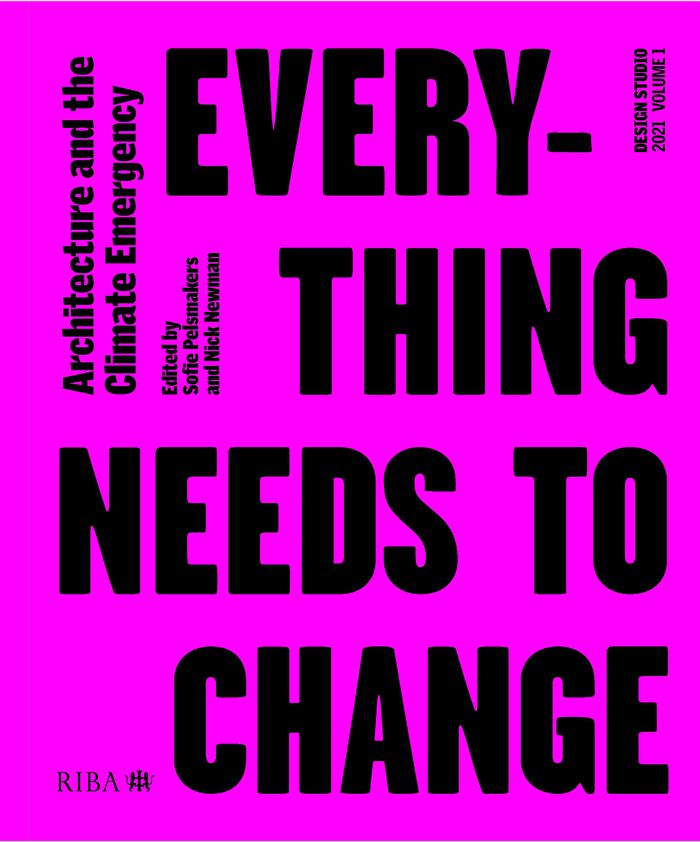
Want to keep up with emerging design thinking and issues worldwide? "Design Studio" is a new thematic series that distils the most topical work and ideas from schools and practices globally. The first volume launches with a statement: "Everything needs to change". Exploring architecture and the climate emergency, editors Sofie Pelsmakers (author of Environmental Design Sourcebook) and Nick Newman (climate activist and Director at Studio Bark), are channelling the message of Greta Thunberg to inspire, enthuse and inform the next generation of architects. Featuring articles, building profiles and case studies from a range of leading voices, it explores solutions to climatic, environmental and social challenges. It urges readers to radically rethink what it means to be an architect in an era of climate crisis, and what the role of the architect is or can be. Discover how using local materials, working with nature, radical design processes, transformative learning and activism can help us find hope in the burning world. This first volume is produced in four unique fluorescent colours – green, red, yellow and purple – to be your own poster for change.
Design Studio vol.1: Everything needs to change. Architecture and the climate emergency
Actions:
Price:
$53.50
(available to order)
Summary:
Want to keep up with emerging design thinking and issues worldwide? "Design Studio" is a new thematic series that distils the most topical work and ideas from schools and practices globally. The first volume launches with a statement: "Everything needs to change". Exploring architecture and the climate emergency, editors Sofie Pelsmakers (author of Environmental Design Sourcebook) and Nick Newman (climate activist and Director at Studio Bark), are channelling the message of Greta Thunberg to inspire, enthuse and inform the next generation of architects. Featuring articles, building profiles and case studies from a range of leading voices, it explores solutions to climatic, environmental and social challenges. It urges readers to radically rethink what it means to be an architect in an era of climate crisis, and what the role of the architect is or can be. Discover how using local materials, working with nature, radical design processes, transformative learning and activism can help us find hope in the burning world. This first volume is produced in four unique fluorescent colours – green, red, yellow and purple – to be your own poster for change.
Form:
books
books
Publication:
May 2021
May 2021
Subject:
Contemporary Architecture
Contemporary Architecture
Form:
books
books
Price:
$32.99
(available in store)
Summary:
This book takes architectural history out of the realm of dreary textbooks into a world of dynamic design, succinct page-length essays and instructive sidebars. These graphic devices heighten the reader's ability to retain an impressive amount of information, even through a cursory reading. A brief run-through of the book's captions and sidebars provides a mini crash(...)
$32.99
(available in store)
Summary:
This book takes architectural history out of the realm of dreary textbooks into a world of dynamic design, succinct page-length essays and instructive sidebars. These graphic devices heighten the reader's ability to retain an impressive amount of information, even through a cursory reading. A brief run-through of the book's captions and sidebars provides a mini crash(...)
Publication:
December 2001
December 2001
Title:
The annotated arc, a crash course in the history of architecture
Actions:
Price:
$32.99
(available in store)
Summary:
This book takes architectural history out of the realm of dreary textbooks into a world of dynamic design, succinct page-length essays and instructive sidebars. These graphic devices heighten the reader's ability to retain an impressive amount of information, even through a cursory reading. A brief run-through of the book's captions and sidebars provides a mini crash course in the history of architecture. Incorporating more than 250 illustrations, The Annotated Arch draws on the very elements of architecture to craft a visual and textual approach to the subject that no ordinary textbook could match. From Stonehenge to the Eiffel Tower, from Flippo Brunelleschi to Frank Lloyd Wright, the language of architecture is clarified in five sections.
The annotated arc, a crash course in the history of architecture
Actions:
Price:
$32.99
(available in store)
Summary:
This book takes architectural history out of the realm of dreary textbooks into a world of dynamic design, succinct page-length essays and instructive sidebars. These graphic devices heighten the reader's ability to retain an impressive amount of information, even through a cursory reading. A brief run-through of the book's captions and sidebars provides a mini crash course in the history of architecture. Incorporating more than 250 illustrations, The Annotated Arch draws on the very elements of architecture to craft a visual and textual approach to the subject that no ordinary textbook could match. From Stonehenge to the Eiffel Tower, from Flippo Brunelleschi to Frank Lloyd Wright, the language of architecture is clarified in five sections.
Form:
books
books
Publication:
December 2001
December 2001
Form:
books
books
Price:
$19.95
(available to order)
Summary:
What if there is no ‘space,’ only a permanent, slow-motion mystic takeover, an implausibly careening awning? Nothing is utopian. Everything wants to be. Soft Architects face the reaching middle. If architecture is the language of concrete and steel, then Soft Architecture needs a vocabulary of flesh, air, fabric and colour. It’s about civic surface and natural history.(...)
$19.95
(available to order)
Summary:
What if there is no ‘space,’ only a permanent, slow-motion mystic takeover, an implausibly careening awning? Nothing is utopian. Everything wants to be. Soft Architects face the reaching middle. If architecture is the language of concrete and steel, then Soft Architecture needs a vocabulary of flesh, air, fabric and colour. It’s about civic surface and natural history.(...)
Publication:
August 2006, Toronto
August 2006, Toronto
Title:
Occasional work and seven walks from the office for soft architecture
Actions:
Price:
$19.95
(available to order)
Summary:
What if there is no ‘space,’ only a permanent, slow-motion mystic takeover, an implausibly careening awning? Nothing is utopian. Everything wants to be. Soft Architects face the reaching middle. If architecture is the language of concrete and steel, then Soft Architecture needs a vocabulary of flesh, air, fabric and colour. It’s about civic surface and natural history. It’s about social space and clothing and urban geography and visual art, and some intersection of all these. This delectable book collects the rococo prose of Lisa Robertson, the ambulatory Office for Soft Architecture. There are essays on Vancouver fountains, the syntax of the suburban home, Value Village, the joy of synthetics, sca×olding and the persistence of the Himalayan blackberry. There are also seven Walks, tours of Vancouver sites – poetic dioramas, really, and more material than cement could ever be.
Occasional work and seven walks from the office for soft architecture
Actions:
Price:
$19.95
(available to order)
Summary:
What if there is no ‘space,’ only a permanent, slow-motion mystic takeover, an implausibly careening awning? Nothing is utopian. Everything wants to be. Soft Architects face the reaching middle. If architecture is the language of concrete and steel, then Soft Architecture needs a vocabulary of flesh, air, fabric and colour. It’s about civic surface and natural history. It’s about social space and clothing and urban geography and visual art, and some intersection of all these. This delectable book collects the rococo prose of Lisa Robertson, the ambulatory Office for Soft Architecture. There are essays on Vancouver fountains, the syntax of the suburban home, Value Village, the joy of synthetics, sca×olding and the persistence of the Himalayan blackberry. There are also seven Walks, tours of Vancouver sites – poetic dioramas, really, and more material than cement could ever be.
Form:
books
books
Publication:
August 2006, Toronto
August 2006, Toronto
Form:
books
books
Actions:
Price:
$115.00
(available to order)
Summary:
Author Robert A. M. Stern and his colleagues trace the rise and fall of the real estate market, the impact of the designation of historic districts and new zoning on development, and the emergence of new commercial and residential centers. The survey is organized geographically, moving north from Lower Manhattan and covering the Bronx, Queens, Brooklyn, and Staten Island(...)
$115.00
(available to order)
Summary:
Author Robert A. M. Stern and his colleagues trace the rise and fall of the real estate market, the impact of the designation of historic districts and new zoning on development, and the emergence of new commercial and residential centers. The survey is organized geographically, moving north from Lower Manhattan and covering the Bronx, Queens, Brooklyn, and Staten Island(...)
Title:
New York 2000, architecture and urbanism between the bicentennial and the millennium
Actions:
Price:
$115.00
(available to order)
Summary:
Author Robert A. M. Stern and his colleagues trace the rise and fall of the real estate market, the impact of the designation of historic districts and new zoning on development, and the emergence of new commercial and residential centers. The survey is organized geographically, moving north from Lower Manhattan and covering the Bronx, Queens, Brooklyn, and Staten Island as well. This book documents milestones in the city's architectural history over the past forty years—the development of Battery Park City, the rebirth of Harlem and Times Square, the creation of the cultural precinct around the new MoMA, and the reclaiming of the waterfront along the East and Hudson Rivers as recreational parkland—and celebrates the achievements of internationally recognized architects such as Sir Norman Foster, Cesar Pelli, Richard Meier, and Renzo Piano.
New York 2000, architecture and urbanism between the bicentennial and the millennium
Actions:
Price:
$115.00
(available to order)
Summary:
Author Robert A. M. Stern and his colleagues trace the rise and fall of the real estate market, the impact of the designation of historic districts and new zoning on development, and the emergence of new commercial and residential centers. The survey is organized geographically, moving north from Lower Manhattan and covering the Bronx, Queens, Brooklyn, and Staten Island as well. This book documents milestones in the city's architectural history over the past forty years—the development of Battery Park City, the rebirth of Harlem and Times Square, the creation of the cultural precinct around the new MoMA, and the reclaiming of the waterfront along the East and Hudson Rivers as recreational parkland—and celebrates the achievements of internationally recognized architects such as Sir Norman Foster, Cesar Pelli, Richard Meier, and Renzo Piano.
Form:
books
books
Publication:
November 2006
November 2006
Subject:
Architecture since 1900, Europe
Architecture since 1900, Europe
Form:
books
books
Price:
$47.95
(available to order)
Summary:
The catalogue from a biennial exhibition examining new architectural and creative urban work in Europe, Asia and Australia, with projects selected by Dominique Perrault and Hiroshi Hara. This publication features projects by twenty emerging architects and includes biographic information, plans, models and elevations. Architects include: Renée van Zuuk, dECOi Architects,(...)
$47.95
(available to order)
Summary:
The catalogue from a biennial exhibition examining new architectural and creative urban work in Europe, Asia and Australia, with projects selected by Dominique Perrault and Hiroshi Hara. This publication features projects by twenty emerging architects and includes biographic information, plans, models and elevations. Architects include: Renée van Zuuk, dECOi Architects,(...)
Title:
New trends of architecture in Europe and Asia-Pacific, 2004-2005
Actions:
Price:
$47.95
(available to order)
Summary:
The catalogue from a biennial exhibition examining new architectural and creative urban work in Europe, Asia and Australia, with projects selected by Dominique Perrault and Hiroshi Hara. This publication features projects by twenty emerging architects and includes biographic information, plans, models and elevations. Architects include: Renée van Zuuk, dECOi Architects, Ocean North, Yung Ho Chang and RCR Architects.
New trends of architecture in Europe and Asia-Pacific, 2004-2005
Actions:
Price:
$47.95
(available to order)
Summary:
The catalogue from a biennial exhibition examining new architectural and creative urban work in Europe, Asia and Australia, with projects selected by Dominique Perrault and Hiroshi Hara. This publication features projects by twenty emerging architects and includes biographic information, plans, models and elevations. Architects include: Renée van Zuuk, dECOi Architects, Ocean North, Yung Ho Chang and RCR Architects.
Form:
books
books
Publication:
November 2004, Tokyo
November 2004, Tokyo
Subject:
Architecture since 1900, Europe
Architecture since 1900, Europe
Form:
books
books
Actions:
Price:
$52.95
(available to order)
Summary:
The book reconstructs the story of Serbian modernism as a local history within a major movement and views the buildings designed in Belgrade in the 1920s and 1930s as part of a larger cultural phenomenon. Because so many of the buildings discussed are disintegrating or have been destroyed or altered beyond recognition, the book serves not only as a documentary and(...)
$52.95
(available to order)
Summary:
The book reconstructs the story of Serbian modernism as a local history within a major movement and views the buildings designed in Belgrade in the 1920s and 1930s as part of a larger cultural phenomenon. Because so many of the buildings discussed are disintegrating or have been destroyed or altered beyond recognition, the book serves not only as a documentary and(...)
Subject:
Architecture since 1900, Europe
Architecture since 1900, Europe
Publication:
June 2003, Cambridge, Mass.
June 2003, Cambridge, Mass.
Title:
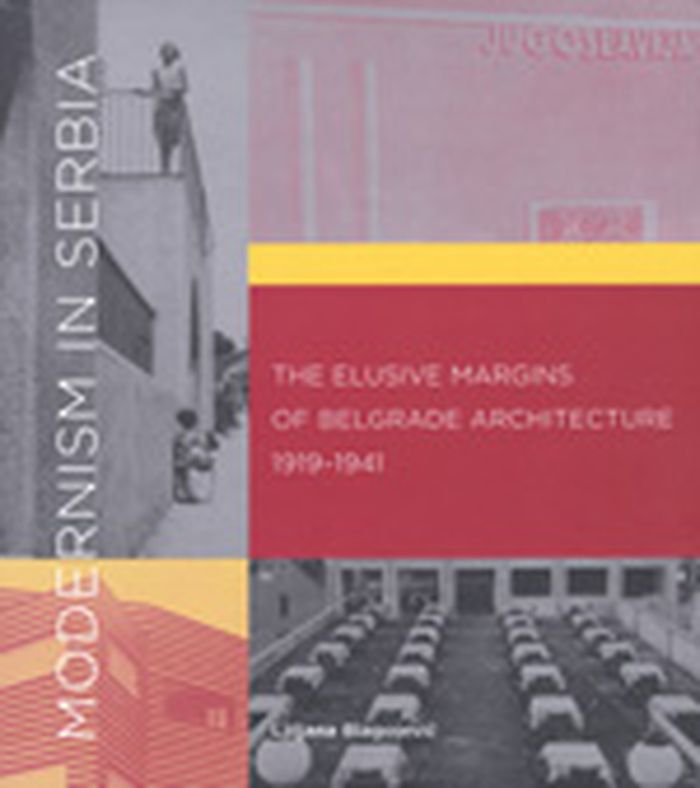
Modernism in Serbia : the elusive margins of Belgrade architecture 1919-1941
Actions:
Price:
$52.95
(available to order)
Summary:
The book reconstructs the story of Serbian modernism as a local history within a major movement and views the buildings designed in Belgrade in the 1920s and 1930s as part of a larger cultural phenomenon. Because so many of the buildings discussed are disintegrating or have been destroyed or altered beyond recognition, the book serves not only as a documentary and critical study but also as a preservation resource. Most of the photographs and plans have never been published outside of Serbia, if at all. In restoring this work to its rightful place in the history of modern architecture, the book also sheds new light on a number of other stories. These include the influence of Le Corbusier and of the Yugoslav avant-garde movement Zenitism and the impact of international modern movements on the theoretical underpinnings of Serbian modernism. One of the subplots follows the story of the Group of Architects of the Modern Movement in Belgrade and its four founding members, Milan Zlokovic, Branislav Kojic, Jan Dubovy, and Dusan Babic. Through anexamination of their work and that of other modern architects, most notably Dragisa Brasovan and Nikola Dobrovic, the book discusses the identity of Serbian modernism as it was established in the period from 1925 to 1940. The book also identifies those buildings that represent the purest examples of Serbian modernism and analyzes the qualities that make them quintessentially local forms while part of the larger modernist movement
Modernism in Serbia : the elusive margins of Belgrade architecture 1919-1941
Actions:
Price:
$52.95
(available to order)
Summary:
The book reconstructs the story of Serbian modernism as a local history within a major movement and views the buildings designed in Belgrade in the 1920s and 1930s as part of a larger cultural phenomenon. Because so many of the buildings discussed are disintegrating or have been destroyed or altered beyond recognition, the book serves not only as a documentary and critical study but also as a preservation resource. Most of the photographs and plans have never been published outside of Serbia, if at all. In restoring this work to its rightful place in the history of modern architecture, the book also sheds new light on a number of other stories. These include the influence of Le Corbusier and of the Yugoslav avant-garde movement Zenitism and the impact of international modern movements on the theoretical underpinnings of Serbian modernism. One of the subplots follows the story of the Group of Architects of the Modern Movement in Belgrade and its four founding members, Milan Zlokovic, Branislav Kojic, Jan Dubovy, and Dusan Babic. Through anexamination of their work and that of other modern architects, most notably Dragisa Brasovan and Nikola Dobrovic, the book discusses the identity of Serbian modernism as it was established in the period from 1925 to 1940. The book also identifies those buildings that represent the purest examples of Serbian modernism and analyzes the qualities that make them quintessentially local forms while part of the larger modernist movement
Form:
books
books
Publication:
June 2003, Cambridge, Mass.
June 2003, Cambridge, Mass.
Subject:
Architecture since 1900, Europe
Architecture since 1900, Europe
Form:
books
books
Actions:
Price:
$36.95
(available to order)
Summary:
In this volume, Ayala Levin charts the settler colonial imagination and practices that undergirded Israeli architectural development aid in Africa. Focusing on the ''golden age'' of Israel’s diplomatic relations in and throughout the continent from 1958 to 1973, Levin finds that Israel positioned itself as a developing-nation alternative in the competition over aid and(...)
$36.95
(available to order)
Summary:
In this volume, Ayala Levin charts the settler colonial imagination and practices that undergirded Israeli architectural development aid in Africa. Focusing on the ''golden age'' of Israel’s diplomatic relations in and throughout the continent from 1958 to 1973, Levin finds that Israel positioned itself as a developing-nation alternative in the competition over aid and(...)
Title:
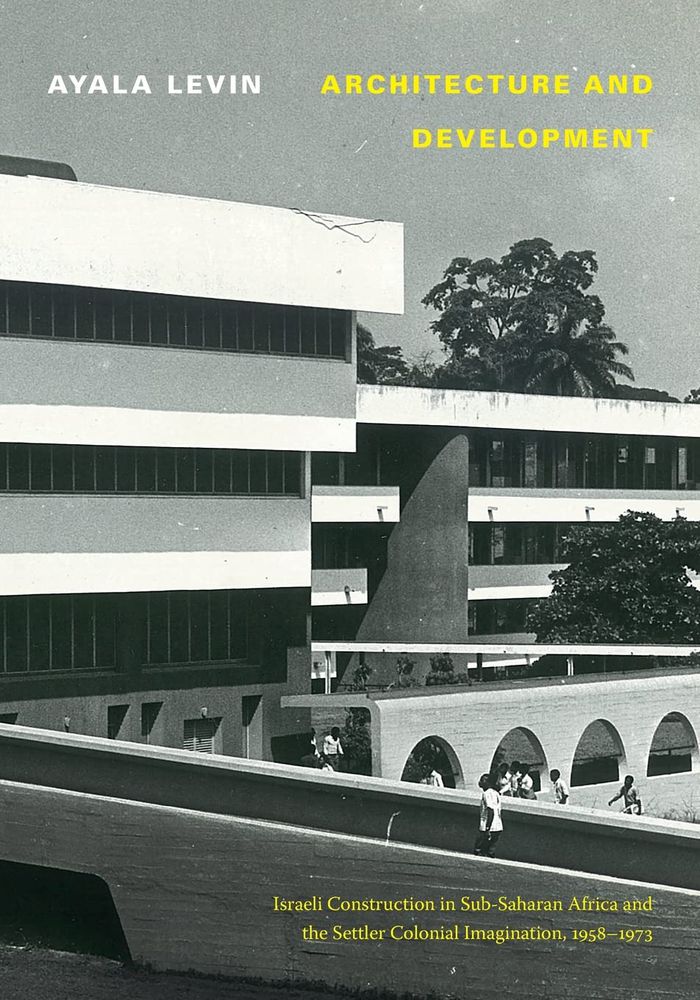
Architecture and development: Israeli construction in sub-saharan Africa 1958-1973
Actions:
Price:
$36.95
(available to order)
Summary:
In this volume, Ayala Levin charts the settler colonial imagination and practices that undergirded Israeli architectural development aid in Africa. Focusing on the ''golden age'' of Israel’s diplomatic relations in and throughout the continent from 1958 to 1973, Levin finds that Israel positioned itself as a developing-nation alternative in the competition over aid and influence between global North and global South. In analyses of the design and construction of prestigious governmental projects in Nigeria, Sierra Leone, and Ethiopia, Levin details how architects, planners, and a trade union--owned construction company staged Israel as a new center of nonaligned expertise. These actors and professionals paradoxically capitalized on their settler colonial experience in Palestine, refashioning it as an alternative to Western colonial expertise. Levin traces how Israel became involved in the modernization of governance, education, and agriculture in Africa, as well as how African leaders chose to work with Israel to forge new South-South connections. In so doing, she offers new ways of understanding the role of architecture as a vehicle of postcolonial development and in the mobilization of development resources.
Architecture and development: Israeli construction in sub-saharan Africa 1958-1973
Actions:
Price:
$36.95
(available to order)
Summary:
In this volume, Ayala Levin charts the settler colonial imagination and practices that undergirded Israeli architectural development aid in Africa. Focusing on the ''golden age'' of Israel’s diplomatic relations in and throughout the continent from 1958 to 1973, Levin finds that Israel positioned itself as a developing-nation alternative in the competition over aid and influence between global North and global South. In analyses of the design and construction of prestigious governmental projects in Nigeria, Sierra Leone, and Ethiopia, Levin details how architects, planners, and a trade union--owned construction company staged Israel as a new center of nonaligned expertise. These actors and professionals paradoxically capitalized on their settler colonial experience in Palestine, refashioning it as an alternative to Western colonial expertise. Levin traces how Israel became involved in the modernization of governance, education, and agriculture in Africa, as well as how African leaders chose to work with Israel to forge new South-South connections. In so doing, she offers new ways of understanding the role of architecture as a vehicle of postcolonial development and in the mobilization of development resources.
Form:
books
books
Publication:
March 2022
March 2022
Subject:
Architecture since 1900, Africa
Architecture since 1900, Africa
Form:
books
books
Title:
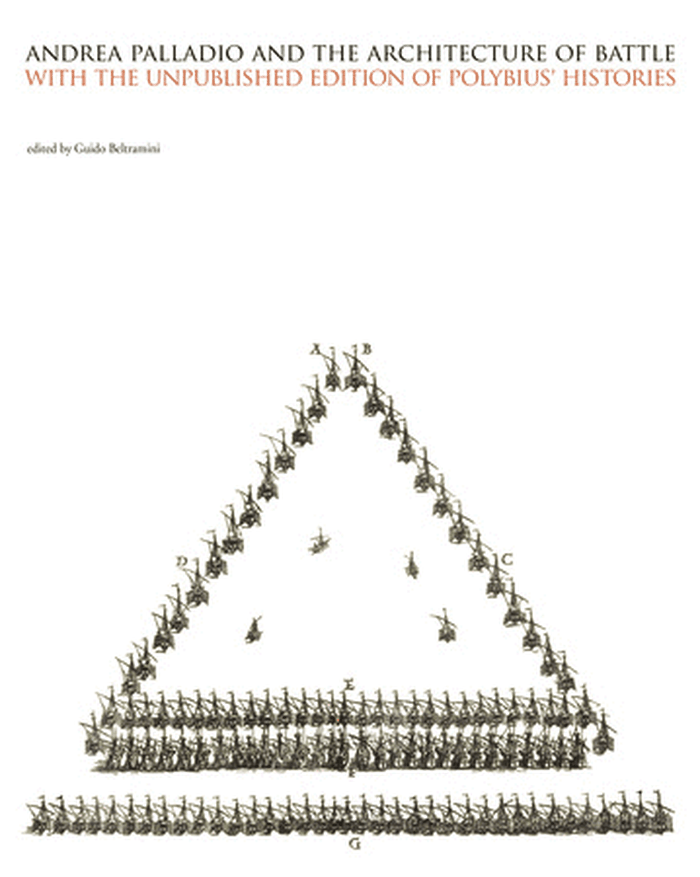
Andrea Palladio and the Architecture of Battle: With the unpublished edition of Polybius’ Histories
Andrea Palladio and the Architecture of Battle: With the unpublished edition of Polybius’ Histories
Actions:
Price:
$76.00
(available to order)
Summary:
Published here for the first time are Palladio's preparatory materials for an illustrated edition of Polybius' Histories alongside Palladio's material for his edition of Julius Caesar' Commentaries (1575). Long thought to have been lost, his original Polybius has now been recomposed by drawing on three manuscript copies: the mock-up used by Palladio to plan the(...)
$76.00
(available to order)
Summary:
Published here for the first time are Palladio's preparatory materials for an illustrated edition of Polybius' Histories alongside Palladio's material for his edition of Julius Caesar' Commentaries (1575). Long thought to have been lost, his original Polybius has now been recomposed by drawing on three manuscript copies: the mock-up used by Palladio to plan the(...)
Title:
Andrea Palladio and the Architecture of Battle: With the unpublished edition of Polybius’ Histories
Actions:
Price:
$76.00
(available to order)
Summary:
Published here for the first time are Palladio's preparatory materials for an illustrated edition of Polybius' Histories alongside Palladio's material for his edition of Julius Caesar' Commentaries (1575). Long thought to have been lost, his original Polybius has now been recomposed by drawing on three manuscript copies: the mock-up used by Palladio to plan the edition, rediscovered in the London British Library in 1977; a second copy found in Florence in 1986 and a third exemplar only very recently found in the New York Public Library. Here the reproductions of the 43 etchings for the Polybius have been accompanied by 42 etchings which Palladio dedicated to Caesar's deeds. This offers a complete picture of his effort to reconstruct those excellent features of ancient warfare on which Palladio wished to base his own proposals for reforming the contemporary Venetian militia, as well as give a different point of view on the history of architecture.
Andrea Palladio and the Architecture of Battle: With the unpublished edition of Polybius’ Histories
Actions:
Price:
$76.00
(available to order)
Summary:
Published here for the first time are Palladio's preparatory materials for an illustrated edition of Polybius' Histories alongside Palladio's material for his edition of Julius Caesar' Commentaries (1575). Long thought to have been lost, his original Polybius has now been recomposed by drawing on three manuscript copies: the mock-up used by Palladio to plan the edition, rediscovered in the London British Library in 1977; a second copy found in Florence in 1986 and a third exemplar only very recently found in the New York Public Library. Here the reproductions of the 43 etchings for the Polybius have been accompanied by 42 etchings which Palladio dedicated to Caesar's deeds. This offers a complete picture of his effort to reconstruct those excellent features of ancient warfare on which Palladio wished to base his own proposals for reforming the contemporary Venetian militia, as well as give a different point of view on the history of architecture.
Form:
books
books
Publication:
July 2010
July 2010
Subject:
Architecture Monographs
Architecture Monographs


