


4749 Results
Form:
books
books
Price:
$34.95
(available to order)
Summary:
Cet ouvrage suit l’histoire de l’architecture, débutant dans l’Antiquité (le Parthénon, le temple d’Atshepsout) et les époques byzantine et gothique, continuant jusqu’au Moyen Âge, puis à la Renaissance (Uffi zi, temple de Virupaksha) et au baroque, pour finalement s’attarder aux réalisations récentes, comme le Chrysler Building et le tout nouveau stade olympique de(...)
$34.95
(available to order)
Summary:
Cet ouvrage suit l’histoire de l’architecture, débutant dans l’Antiquité (le Parthénon, le temple d’Atshepsout) et les époques byzantine et gothique, continuant jusqu’au Moyen Âge, puis à la Renaissance (Uffi zi, temple de Virupaksha) et au baroque, pour finalement s’attarder aux réalisations récentes, comme le Chrysler Building et le tout nouveau stade olympique de(...)
Subject:
Architecture since 1900, Europe
Architecture since 1900, Europe
Publication:
February 2009, Montréal
February 2009, Montréal
Title:
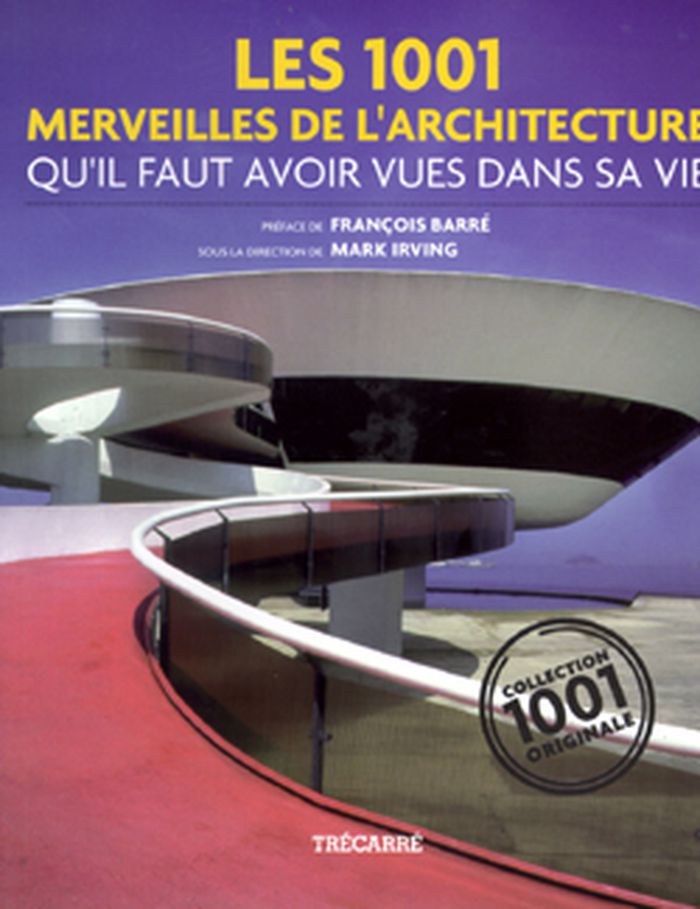
Les 1001 merveilles de l'architecture qu'il faut avoir vu dans sa vie
Actions:
Price:
$34.95
(available to order)
Summary:
Cet ouvrage suit l’histoire de l’architecture, débutant dans l’Antiquité (le Parthénon, le temple d’Atshepsout) et les époques byzantine et gothique, continuant jusqu’au Moyen Âge, puis à la Renaissance (Uffi zi, temple de Virupaksha) et au baroque, pour finalement s’attarder aux réalisations récentes, comme le Chrysler Building et le tout nouveau stade olympique de Pékin, conçu par le duo Herzog & de Meuron, sans oublier Habitat 67. Un glossaire ainsi qu’un index des constructions classées par pays complète le tout.
Les 1001 merveilles de l'architecture qu'il faut avoir vu dans sa vie
Actions:
Price:
$34.95
(available to order)
Summary:
Cet ouvrage suit l’histoire de l’architecture, débutant dans l’Antiquité (le Parthénon, le temple d’Atshepsout) et les époques byzantine et gothique, continuant jusqu’au Moyen Âge, puis à la Renaissance (Uffi zi, temple de Virupaksha) et au baroque, pour finalement s’attarder aux réalisations récentes, comme le Chrysler Building et le tout nouveau stade olympique de Pékin, conçu par le duo Herzog & de Meuron, sans oublier Habitat 67. Un glossaire ainsi qu’un index des constructions classées par pays complète le tout.
Form:
books
books
Publication:
February 2009, Montréal
February 2009, Montréal
Subject:
Architecture since 1900, Europe
Architecture since 1900, Europe
Form:
books
books
Title:
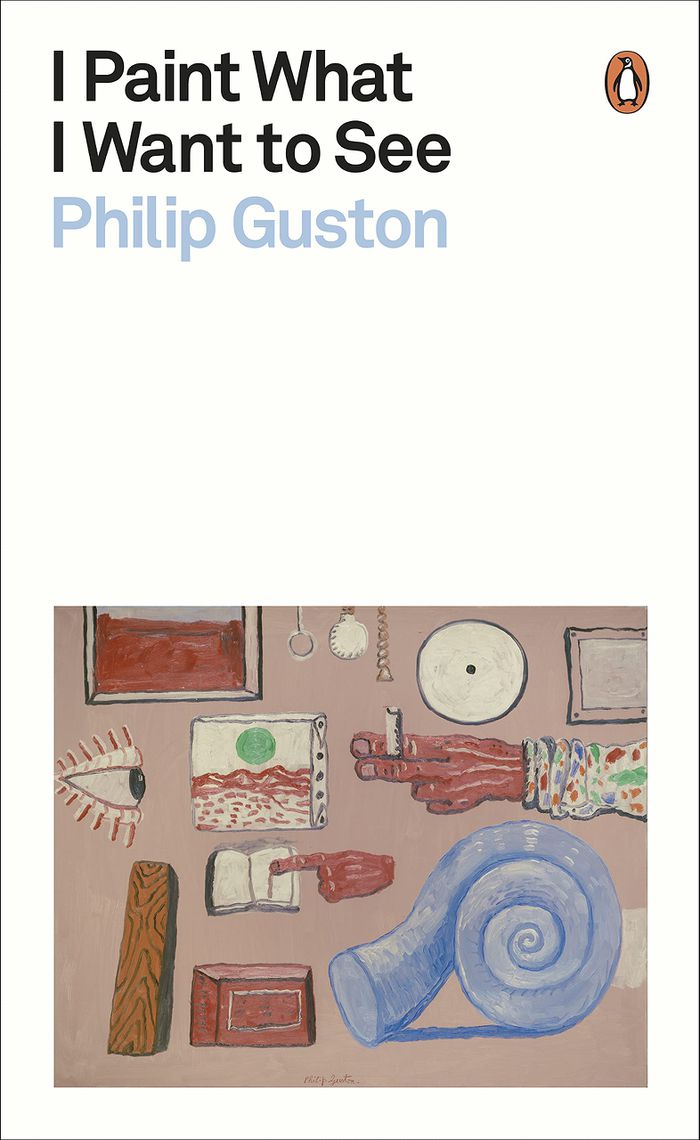
I paint what I want to see
I paint what I want to see
Actions:
Price:
$21.99
(available in store)
Summary:
How does a painter see the world? Philip Guston, one of the most influential artists of the twentieth century, spoke about art with unparalleled candour and commitment. Touching on work from across his career as well as that of his fellow artists and Renaissance heroes, this selection of his writings, talks and interviews draws together some of his most incisive(...)
$21.99
(available in store)
Summary:
How does a painter see the world? Philip Guston, one of the most influential artists of the twentieth century, spoke about art with unparalleled candour and commitment. Touching on work from across his career as well as that of his fellow artists and Renaissance heroes, this selection of his writings, talks and interviews draws together some of his most incisive(...)
Title:
I paint what I want to see
Actions:
Price:
$21.99
(available in store)
Summary:
How does a painter see the world? Philip Guston, one of the most influential artists of the twentieth century, spoke about art with unparalleled candour and commitment. Touching on work from across his career as well as that of his fellow artists and Renaissance heroes, this selection of his writings, talks and interviews draws together some of his most incisive reflections on iconography and abstraction, metaphysics and mysticism, and, above all, the nature of painting and drawing.
I paint what I want to see
Actions:
Price:
$21.99
(available in store)
Summary:
How does a painter see the world? Philip Guston, one of the most influential artists of the twentieth century, spoke about art with unparalleled candour and commitment. Touching on work from across his career as well as that of his fellow artists and Renaissance heroes, this selection of his writings, talks and interviews draws together some of his most incisive reflections on iconography and abstraction, metaphysics and mysticism, and, above all, the nature of painting and drawing.
Form:
books
books
Publication:
June 2022
June 2022
Subject:
Art Theory
Art Theory
Form:
books
books
Actions:
Price:
$29.95
(available to order)
Summary:
À la fois très informatif et richement illustré, ce livre révèle aux lecteurs les merveilleuses facettes de l’art du jardin dans la culture occidentale, de l’Antiquité à la période moderne. L’accent est mis sur les somptueux jardins de la Renaissance et de l’époque baroque dans les différents pays européens. Le livre traite également de pays plus reculés et d’aspects(...)
$29.95
(available to order)
Summary:
À la fois très informatif et richement illustré, ce livre révèle aux lecteurs les merveilleuses facettes de l’art du jardin dans la culture occidentale, de l’Antiquité à la période moderne. L’accent est mis sur les somptueux jardins de la Renaissance et de l’époque baroque dans les différents pays européens. Le livre traite également de pays plus reculés et d’aspects(...)
Title:
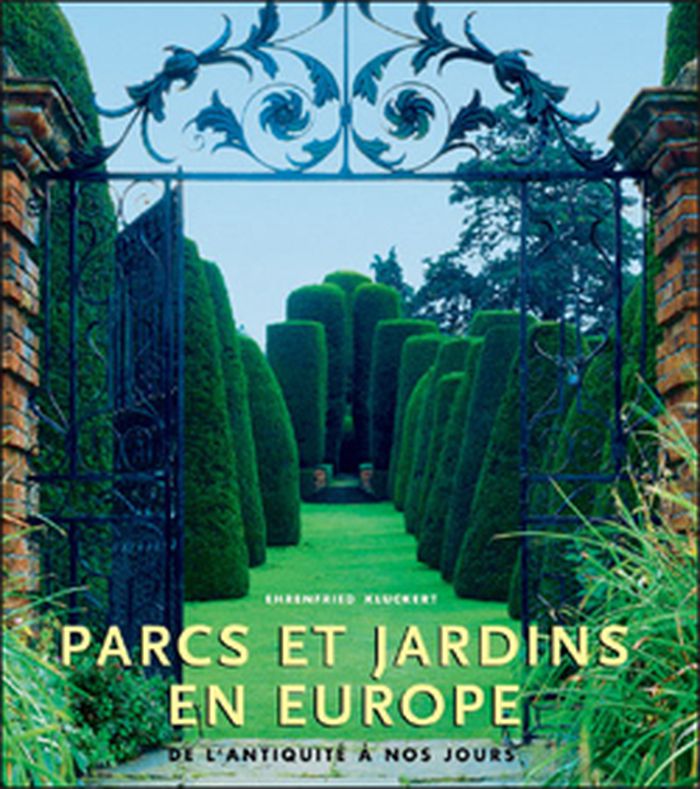
Parcs et jardins en Europe: de l'antiquité à nos jours
Actions:
Price:
$29.95
(available to order)
Summary:
À la fois très informatif et richement illustré, ce livre révèle aux lecteurs les merveilleuses facettes de l’art du jardin dans la culture occidentale, de l’Antiquité à la période moderne. L’accent est mis sur les somptueux jardins de la Renaissance et de l’époque baroque dans les différents pays européens. Le livre traite également de pays plus reculés et d’aspects captivants comme les jardins créés par les Arabes en Espagne. Différents chapitres sur le jardin, en théorie et en pratique, complètent ce tour d’horizon.
Parcs et jardins en Europe: de l'antiquité à nos jours
Actions:
Price:
$29.95
(available to order)
Summary:
À la fois très informatif et richement illustré, ce livre révèle aux lecteurs les merveilleuses facettes de l’art du jardin dans la culture occidentale, de l’Antiquité à la période moderne. L’accent est mis sur les somptueux jardins de la Renaissance et de l’époque baroque dans les différents pays européens. Le livre traite également de pays plus reculés et d’aspects captivants comme les jardins créés par les Arabes en Espagne. Différents chapitres sur le jardin, en théorie et en pratique, complètent ce tour d’horizon.
Form:
books
books
Publication:
September 2011
September 2011
Subject:
Gardens
Gardens
Form:
books
books
Actions:
Price:
$24.95
(available to order)
Summary:
Richard Sennett has spent an intellectual lifetime exploring how humans live in cities. In this pair of essays he visits two of the world's greatest cities at crucial moments in their history to meditate on the condition of exile in both geographical and psychic space: the Jewish Ghetto of Renaissance Venice, where state-imposed outsiderdom was translated into a rich(...)
$24.95
(available to order)
Summary:
Richard Sennett has spent an intellectual lifetime exploring how humans live in cities. In this pair of essays he visits two of the world's greatest cities at crucial moments in their history to meditate on the condition of exile in both geographical and psychic space: the Jewish Ghetto of Renaissance Venice, where state-imposed outsiderdom was translated into a rich(...)
Title:
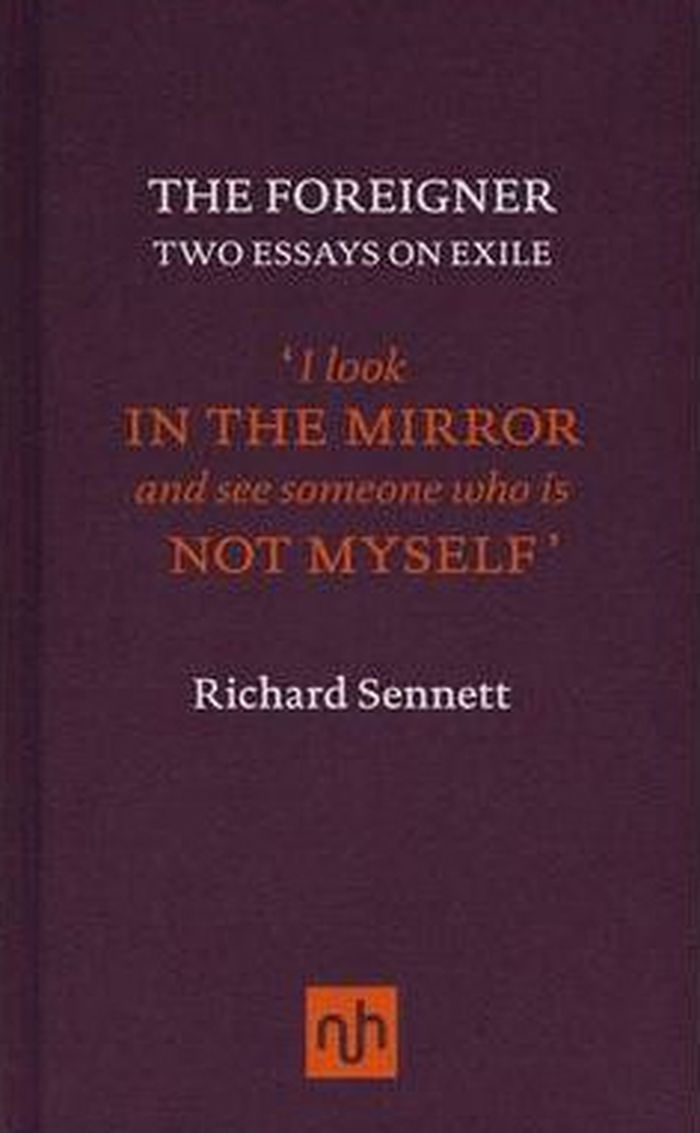
Richard Sennett : The foreigner, two essays on exile
Actions:
Price:
$24.95
(available to order)
Summary:
Richard Sennett has spent an intellectual lifetime exploring how humans live in cities. In this pair of essays he visits two of the world's greatest cities at crucial moments in their history to meditate on the condition of exile in both geographical and psychic space: the Jewish Ghetto of Renaissance Venice, where state-imposed outsiderdom was translated into a rich community identity; and nineteenth-century Paris, a magnet for political exiles, where the experience of displacement seeped into the city's culture at large.
Richard Sennett : The foreigner, two essays on exile
Actions:
Price:
$24.95
(available to order)
Summary:
Richard Sennett has spent an intellectual lifetime exploring how humans live in cities. In this pair of essays he visits two of the world's greatest cities at crucial moments in their history to meditate on the condition of exile in both geographical and psychic space: the Jewish Ghetto of Renaissance Venice, where state-imposed outsiderdom was translated into a rich community identity; and nineteenth-century Paris, a magnet for political exiles, where the experience of displacement seeped into the city's culture at large.
Form:
books
books
Publication:
June 2012
June 2012
Subject:
Critical Theory
Critical Theory
Form:
books
books
Actions:
Price:
$12.95
(available to order)
Summary:
La grande historienne anglaise traite ici de l'un de ses sujets de prédilection : le rôle joué en Europe par la tradition hermétique et la pensée magique dans l'histoire des idées, à la charnière de la Renaissance et du XVIIe siècle. Selon elle, loin de faire obstacle au développement de la pensée scientifique, la tradition hermétique a au contraire amorcé le changement(...)
$12.95
(available to order)
Summary:
La grande historienne anglaise traite ici de l'un de ses sujets de prédilection : le rôle joué en Europe par la tradition hermétique et la pensée magique dans l'histoire des idées, à la charnière de la Renaissance et du XVIIe siècle. Selon elle, loin de faire obstacle au développement de la pensée scientifique, la tradition hermétique a au contraire amorcé le changement(...)
Title:
Science et tradition hermétique, n.é.
Actions:
Price:
$12.95
(available to order)
Summary:
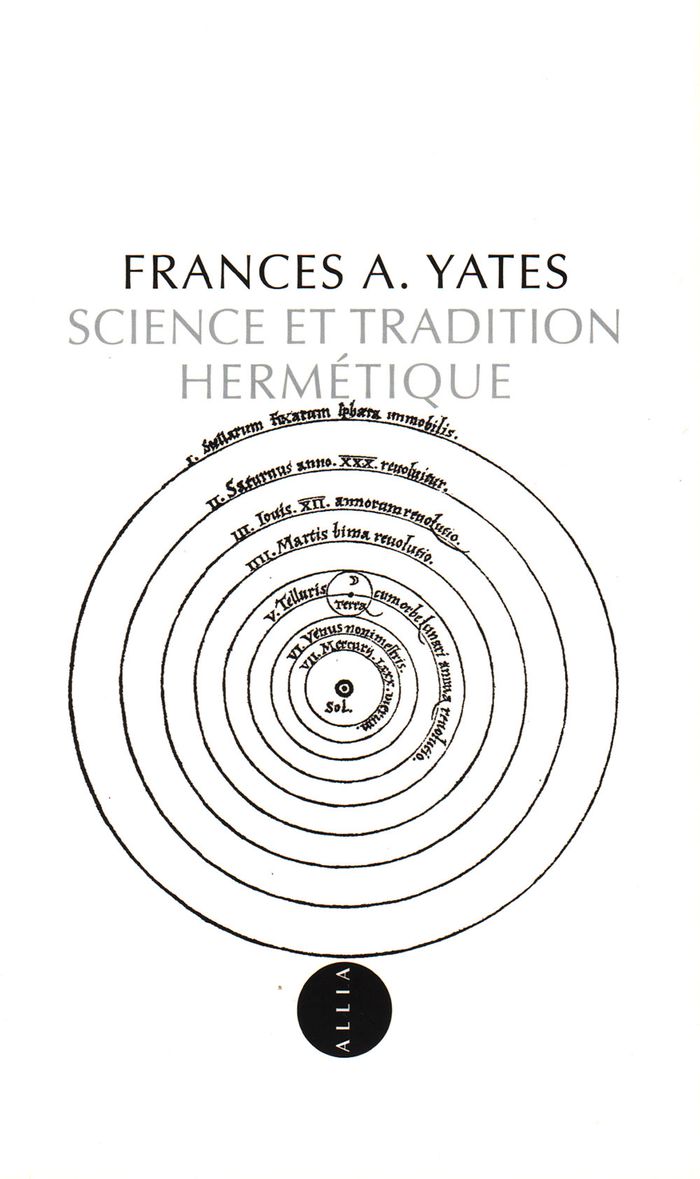
La grande historienne anglaise traite ici de l'un de ses sujets de prédilection : le rôle joué en Europe par la tradition hermétique et la pensée magique dans l'histoire des idées, à la charnière de la Renaissance et du XVIIe siècle. Selon elle, loin de faire obstacle au développement de la pensée scientifique, la tradition hermétique a au contraire amorcé le changement dans les mentalités qui a favorisé l'émergence de la science moderne, notamment l'héliocentrisme de Copernic et la physique de Newton.
Science et tradition hermétique, n.é.
Actions:
Price:
$12.95
(available to order)
Summary:
La grande historienne anglaise traite ici de l'un de ses sujets de prédilection : le rôle joué en Europe par la tradition hermétique et la pensée magique dans l'histoire des idées, à la charnière de la Renaissance et du XVIIe siècle. Selon elle, loin de faire obstacle au développement de la pensée scientifique, la tradition hermétique a au contraire amorcé le changement dans les mentalités qui a favorisé l'émergence de la science moderne, notamment l'héliocentrisme de Copernic et la physique de Newton.
Form:
books
books
Publication:
November 2018
November 2018
Subject:
Current Exhibitions
Current Exhibitions
Form:
books
books
Actions:
Price:
$81.95
(available to order)
Summary:
This book expands knowledge about the conservation of ancient monuments, works of art and historic buildings. It includes the origins of the interest in conservation within the European context, and the development of the concepts from Antiquity and the Renaissance to the present day. Jokilehto illustrates how this development has influenced international collaboration in(...)
$81.95
(available to order)
Summary:
This book expands knowledge about the conservation of ancient monuments, works of art and historic buildings. It includes the origins of the interest in conservation within the European context, and the development of the concepts from Antiquity and the Renaissance to the present day. Jokilehto illustrates how this development has influenced international collaboration in(...)
Title:
A history of architectural conversation
Actions:
Price:
$81.95
(available to order)
Summary:
This book expands knowledge about the conservation of ancient monuments, works of art and historic buildings. It includes the origins of the interest in conservation within the European context, and the development of the concepts from Antiquity and the Renaissance to the present day. Jokilehto illustrates how this development has influenced international collaboration in the protection and conservation of cultural heritage, and how it has formed the principal concepts and approach to conservation and restoration in today's multi-cultural society.
A history of architectural conversation
Actions:
Price:
$81.95
(available to order)
Summary:
This book expands knowledge about the conservation of ancient monuments, works of art and historic buildings. It includes the origins of the interest in conservation within the European context, and the development of the concepts from Antiquity and the Renaissance to the present day. Jokilehto illustrates how this development has influenced international collaboration in the protection and conservation of cultural heritage, and how it has formed the principal concepts and approach to conservation and restoration in today's multi-cultural society.
Form:
books
books
Publication:
October 2002
October 2002
Form:
books
books
Title:
Scandinavian architecture
Scandinavian architecture
Actions:
Price:
$62.00
(available to order)
Summary:
''Scandinavian architecture'' presents the most complete survey of Nordic architecture available today. Showcasing examples of public, domestic and commercial buildings, this beautiful volume exhibits how Scandinavian architects use their own resources and traditions, as well as adapting the styles of medieval, Renaissance, baroque and modern Europe. With more than 500(...)
$62.00
(available to order)
Summary:
''Scandinavian architecture'' presents the most complete survey of Nordic architecture available today. Showcasing examples of public, domestic and commercial buildings, this beautiful volume exhibits how Scandinavian architects use their own resources and traditions, as well as adapting the styles of medieval, Renaissance, baroque and modern Europe. With more than 500(...)
Title:
Scandinavian architecture
Actions:
Price:
$62.00
(available to order)
Summary:
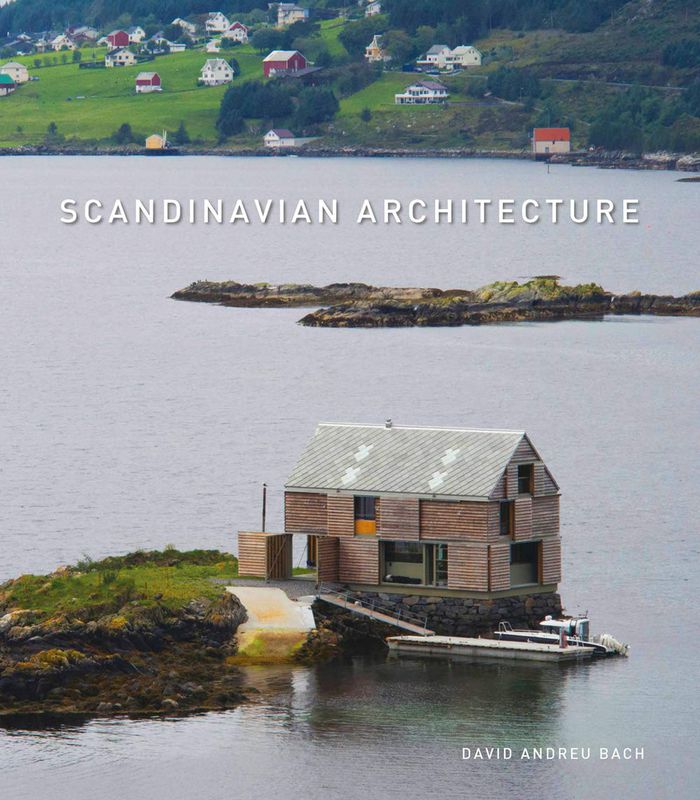
''Scandinavian architecture'' presents the most complete survey of Nordic architecture available today. Showcasing examples of public, domestic and commercial buildings, this beautiful volume exhibits how Scandinavian architects use their own resources and traditions, as well as adapting the styles of medieval, Renaissance, baroque and modern Europe. With more than 500 illustrations providing a visual explanation of this region's architecture, this unique look into Scandinavia’s new generation of architects is an endlessly rich resource for anyone with a passion for architecture and interior design.
Scandinavian architecture
Actions:
Price:
$62.00
(available to order)
Summary:
''Scandinavian architecture'' presents the most complete survey of Nordic architecture available today. Showcasing examples of public, domestic and commercial buildings, this beautiful volume exhibits how Scandinavian architects use their own resources and traditions, as well as adapting the styles of medieval, Renaissance, baroque and modern Europe. With more than 500 illustrations providing a visual explanation of this region's architecture, this unique look into Scandinavia’s new generation of architects is an endlessly rich resource for anyone with a passion for architecture and interior design.
Form:
books
books
Publication:
November 2021
November 2021
Subject:
History since 1900, Reference Books
History since 1900, Reference Books
Form:
books
books
Price:
$66.00
(available to order)
Summary:
The architectural drawing might seem to be a quintessentially modern form, and indeed many histories of the genre begin in the early modern period with Italian Renaissance architects such as Alberti. Yet the Middle Ages also had a remarkably sophisticated way of drawing and writing about architecture. ''God’s own language'' takes us to twelfth-century Paris, where a(...)
$66.00
(available to order)
Summary:
The architectural drawing might seem to be a quintessentially modern form, and indeed many histories of the genre begin in the early modern period with Italian Renaissance architects such as Alberti. Yet the Middle Ages also had a remarkably sophisticated way of drawing and writing about architecture. ''God’s own language'' takes us to twelfth-century Paris, where a(...)
Title:
God's own language: Architectural drawing in the twelfth century
Actions:
Price:
$66.00
(available to order)
Summary:
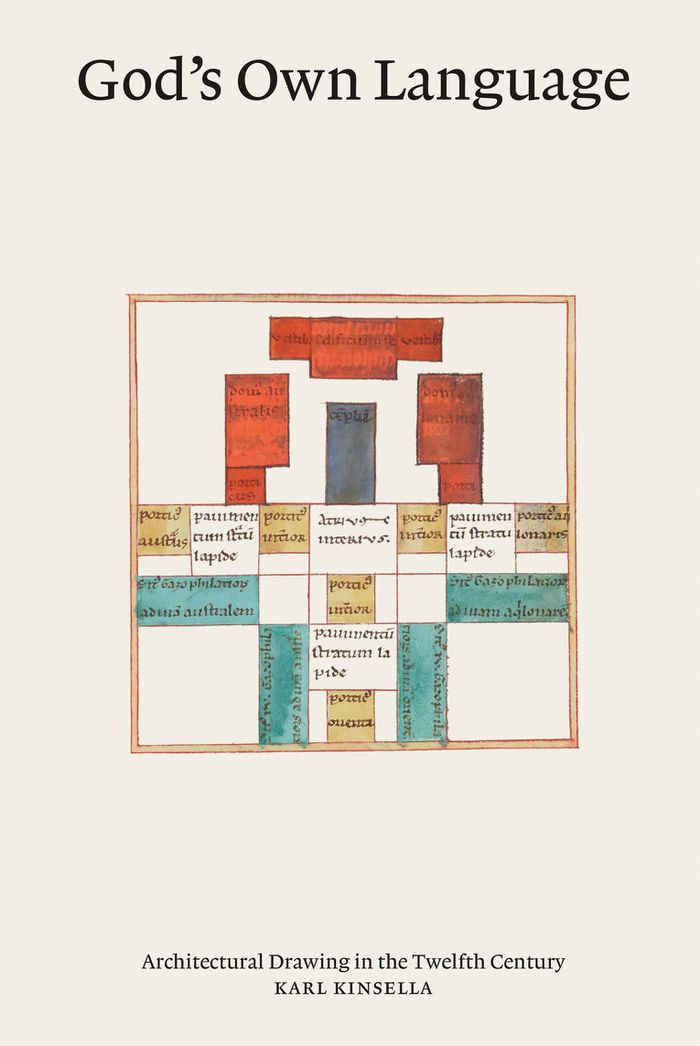
The architectural drawing might seem to be a quintessentially modern form, and indeed many histories of the genre begin in the early modern period with Italian Renaissance architects such as Alberti. Yet the Middle Ages also had a remarkably sophisticated way of drawing and writing about architecture. ''God’s own language'' takes us to twelfth-century Paris, where a Scottish monk named Richard of Saint Victor, along with his mentor Hugh, developed an innovative visual and textual architectural language. In the process, he devised techniques and terms that we still use today, from sectional elevations to the word “plan.” Surprisingly, however, Richard’s detailed drawings appeared not in an architectural treatise but in a widely circulated set of biblical commentaries. Seeing architecture as a way of communicating with the divine, Richard drew plans and elevations for such biblical constructions as Noah’s ark and the temple envisioned by the prophet Ezekiel. Interpreting Richard and Hugh’s drawings and writings within the context of the thriving theological and intellectual cultures of medieval Paris, Karl Kinsella argues that the popularity of these works suggests that, centuries before the Renaissance, there was a large circle of readers with a highly developed understanding of geometry and the visual language of architecture.
God's own language: Architectural drawing in the twelfth century
Actions:
Price:
$66.00
(available to order)
Summary:
The architectural drawing might seem to be a quintessentially modern form, and indeed many histories of the genre begin in the early modern period with Italian Renaissance architects such as Alberti. Yet the Middle Ages also had a remarkably sophisticated way of drawing and writing about architecture. ''God’s own language'' takes us to twelfth-century Paris, where a Scottish monk named Richard of Saint Victor, along with his mentor Hugh, developed an innovative visual and textual architectural language. In the process, he devised techniques and terms that we still use today, from sectional elevations to the word “plan.” Surprisingly, however, Richard’s detailed drawings appeared not in an architectural treatise but in a widely circulated set of biblical commentaries. Seeing architecture as a way of communicating with the divine, Richard drew plans and elevations for such biblical constructions as Noah’s ark and the temple envisioned by the prophet Ezekiel. Interpreting Richard and Hugh’s drawings and writings within the context of the thriving theological and intellectual cultures of medieval Paris, Karl Kinsella argues that the popularity of these works suggests that, centuries before the Renaissance, there was a large circle of readers with a highly developed understanding of geometry and the visual language of architecture.
Form:
books
books
Publication:
June 2023
June 2023
Subject:
Architectural Theory
Architectural Theory
Form:
books
books
Title:
The Klee universe
The Klee universe
Actions:
Price:
$72.00
(available to order)
Summary:
There are artists whose métier is the observation or documentation of the world, and artists who set the world aside altogether to build their own visionary cosmology, designing its constituent parts from scratch as a personal mythology relayed in motifs. Paul Klee (1879-1940) was such an artist, as his aphorism “Art does not reproduce the visible, rather it makes(...)
$72.00
(available to order)
Summary:
There are artists whose métier is the observation or documentation of the world, and artists who set the world aside altogether to build their own visionary cosmology, designing its constituent parts from scratch as a personal mythology relayed in motifs. Paul Klee (1879-1940) was such an artist, as his aphorism “Art does not reproduce the visible, rather it makes(...)
Title:
The Klee universe
Actions:
Price:
$72.00
(available to order)
Summary:
There are artists whose métier is the observation or documentation of the world, and artists who set the world aside altogether to build their own visionary cosmology, designing its constituent parts from scratch as a personal mythology relayed in motifs. Paul Klee (1879-1940) was such an artist, as his aphorism “Art does not reproduce the visible, rather it makes visible” testifies, and The Klee Universe addresses his work from this perspective. In 1906, Klee noted in his diary, "All will be Klee," and in 1911, as the encyclopedist of his cosmos, he began to meticulously chronicle his works in a catalogue that, by the time he died, was to contain more than 9,000 items. Here, in the fashion of an Orbis Pictus or a Renaissance emblem book, Klee's oeuvre is made legible as a cogent entirety, in thematic units address: the human life cycle, from birth and childhood to sexual desire, parenthood and death; music, architecture, theater and religion; plants, animals and landscapes; and, finally, darker, destructive forces in the shape of war, fear and death. The Klee Universe reimagines the artist as a Renaissance man, an artist of great learning whose cosmos proves to be a coherent system of ideas and images.
The Klee universe
Actions:
Price:
$72.00
(available to order)
Summary:
There are artists whose métier is the observation or documentation of the world, and artists who set the world aside altogether to build their own visionary cosmology, designing its constituent parts from scratch as a personal mythology relayed in motifs. Paul Klee (1879-1940) was such an artist, as his aphorism “Art does not reproduce the visible, rather it makes visible” testifies, and The Klee Universe addresses his work from this perspective. In 1906, Klee noted in his diary, "All will be Klee," and in 1911, as the encyclopedist of his cosmos, he began to meticulously chronicle his works in a catalogue that, by the time he died, was to contain more than 9,000 items. Here, in the fashion of an Orbis Pictus or a Renaissance emblem book, Klee's oeuvre is made legible as a cogent entirety, in thematic units address: the human life cycle, from birth and childhood to sexual desire, parenthood and death; music, architecture, theater and religion; plants, animals and landscapes; and, finally, darker, destructive forces in the shape of war, fear and death. The Klee Universe reimagines the artist as a Renaissance man, an artist of great learning whose cosmos proves to be a coherent system of ideas and images.
Form:
books
books
Publication:
January 2009, Berlin
January 2009, Berlin
Subject:
Contemporary Art Monographs
Contemporary Art Monographs
Form:
books
books
Actions:
Price:
$135.00
(available to order)
Summary:
"Antiquity and its Interpreters" examines how the physical and textual remains of the ancient Romans were viewed and received by writers, artists, and cultural (...)
$135.00
(available to order)
Summary:
"Antiquity and its Interpreters" examines how the physical and textual remains of the ancient Romans were viewed and received by writers, artists, and cultural (...)
Subject:
History until 1900, Classicism
History until 1900, Classicism
Publication:
November 1999, Cambridge
November 1999, Cambridge
Title:
Antiquity and its interpreters
Actions:
Price:
$135.00
(available to order)
Summary:
"Antiquity and its Interpreters" examines how the physical and textual remains of the ancient Romans were viewed and received by writers, artists, and cultural makers of early modern Italy. This volume reconsiders the complex relationship between the two cultures, in light of recent scholarship in the field a new appreciation and awareness of the act of history writing itself. The case studies analyze specific texts, the archaeological projects that made ‘antiquity’ available, the revival of art history and theory, and the appropriation of antiquities to serve social ideologies, among other topics. Demonstrating that the antique model was itself an artful contruct, "Antiquity and its Interpretors" shows that the originality of Renaissance culture owed as much to ignorance about antiquity as to an understanding of it. It also provides a synthesis of seminal work that recognizes the reciprocal relationship of the Renaissance to Antiquity. Contributors include James Ackerman, David Galbraith, Patricia Fortini Brown, Philip Sohm, Sheila Bonde, Martine Furno II, Marina Belozerskaya, Kenneth D. S. Lapatin, Leonard Barkan, Julia Branna Perlman, Nicola Courtright, Alina A. Payne, Rebekah Smick, Gehard Wolf, Christof Thoenes, Michael Koortbojian, Tod Marder, Phyllis Pray Bober, Richard Betts, Catherine Wilkinson Zerner, Richard Brilliant, Michael Ann Holly, Carl Goldstein.
Antiquity and its interpreters
Actions:
Price:
$135.00
(available to order)
Summary:
"Antiquity and its Interpreters" examines how the physical and textual remains of the ancient Romans were viewed and received by writers, artists, and cultural makers of early modern Italy. This volume reconsiders the complex relationship between the two cultures, in light of recent scholarship in the field a new appreciation and awareness of the act of history writing itself. The case studies analyze specific texts, the archaeological projects that made ‘antiquity’ available, the revival of art history and theory, and the appropriation of antiquities to serve social ideologies, among other topics. Demonstrating that the antique model was itself an artful contruct, "Antiquity and its Interpretors" shows that the originality of Renaissance culture owed as much to ignorance about antiquity as to an understanding of it. It also provides a synthesis of seminal work that recognizes the reciprocal relationship of the Renaissance to Antiquity. Contributors include James Ackerman, David Galbraith, Patricia Fortini Brown, Philip Sohm, Sheila Bonde, Martine Furno II, Marina Belozerskaya, Kenneth D. S. Lapatin, Leonard Barkan, Julia Branna Perlman, Nicola Courtright, Alina A. Payne, Rebekah Smick, Gehard Wolf, Christof Thoenes, Michael Koortbojian, Tod Marder, Phyllis Pray Bober, Richard Betts, Catherine Wilkinson Zerner, Richard Brilliant, Michael Ann Holly, Carl Goldstein.
Form:
books
books
Publication:
November 1999, Cambridge
November 1999, Cambridge
Subject:
History until 1900, Classicism
History until 1900, Classicism


