


5194 Results
Form:
books
books
Title:
I hate the Lake District
I hate the Lake District
Actions:
Price:
$24.95
(available to order)
Summary:
"I Hate the Lake District" offers a different vision of the rural environment from those found in much contemporary nature writing. Based on the author's trips around North West England, the book engages with nuclear power and nuclear war, slavery, imperialism, ghosts, love, God, cockroaches, and the sheer violence and contingency of “nature” itself—of which the human(...)
$24.95
(available to order)
Summary:
"I Hate the Lake District" offers a different vision of the rural environment from those found in much contemporary nature writing. Based on the author's trips around North West England, the book engages with nuclear power and nuclear war, slavery, imperialism, ghosts, love, God, cockroaches, and the sheer violence and contingency of “nature” itself—of which the human(...)
Title:
I hate the Lake District
Actions:
Price:
$24.95
(available to order)
Summary:
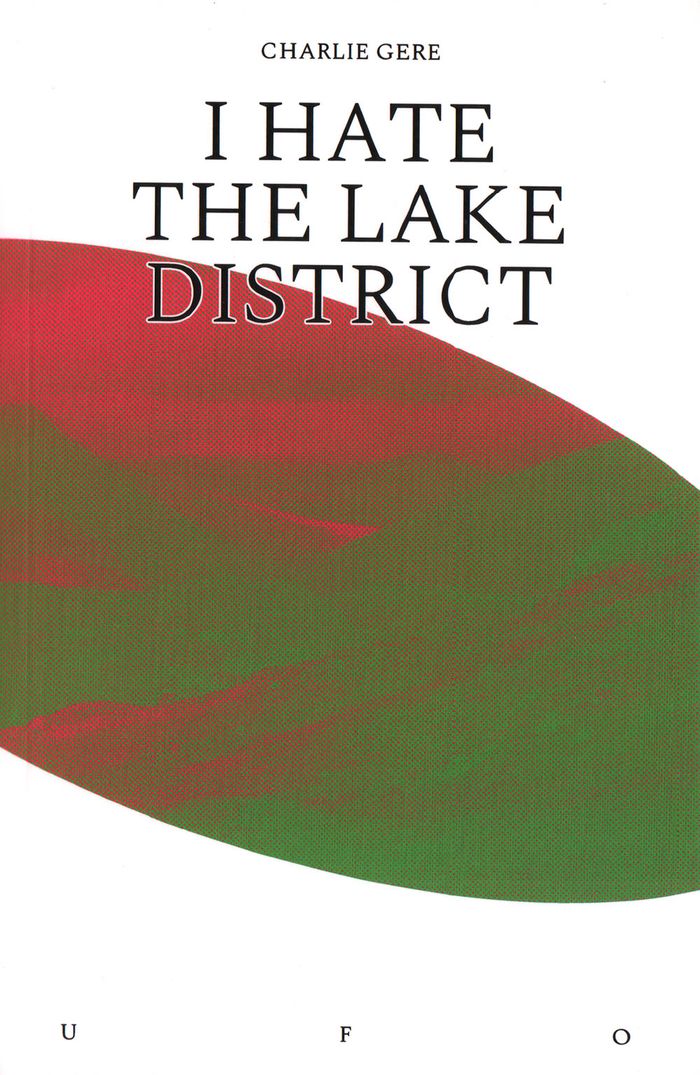
"I Hate the Lake District" offers a different vision of the rural environment from those found in much contemporary nature writing. Based on the author's trips around North West England, the book engages with nuclear power and nuclear war, slavery, imperialism, ghosts, love, God, cockroaches, and the sheer violence and contingency of “nature” itself—of which the human presence is merely a part. Each chapter starts with an account of a visit to a place in this remote part of England, the deep north, but digresses and wanders through multifarious themes and subjects.
I hate the Lake District
Actions:
Price:
$24.95
(available to order)
Summary:
"I Hate the Lake District" offers a different vision of the rural environment from those found in much contemporary nature writing. Based on the author's trips around North West England, the book engages with nuclear power and nuclear war, slavery, imperialism, ghosts, love, God, cockroaches, and the sheer violence and contingency of “nature” itself—of which the human presence is merely a part. Each chapter starts with an account of a visit to a place in this remote part of England, the deep north, but digresses and wanders through multifarious themes and subjects.
Form:
books
books
Publication:
October 2019
October 2019
Subject:
Journeys
Journeys
Form:
books
books
Title:
Silence (Object Lessons)
Silence (Object Lessons)
Actions:
Price:
$21.95
(available to order)
Summary:
What is silence? In a series of short meditations, novelist and playwright John Biguenet considers silence as a servant of power, as a lie, as a punishment, as the voice of God, as a terrorist's final weapon, as a luxury good, as the reason for torture-in short, as an object we both do and do not recognize. Concluding with the prospects for its future in a world(...)
$21.95
(available to order)
Summary:
What is silence? In a series of short meditations, novelist and playwright John Biguenet considers silence as a servant of power, as a lie, as a punishment, as the voice of God, as a terrorist's final weapon, as a luxury good, as the reason for torture-in short, as an object we both do and do not recognize. Concluding with the prospects for its future in a world(...)
Title:
Silence (Object Lessons)
Actions:
Price:
$21.95
(available to order)
Summary:
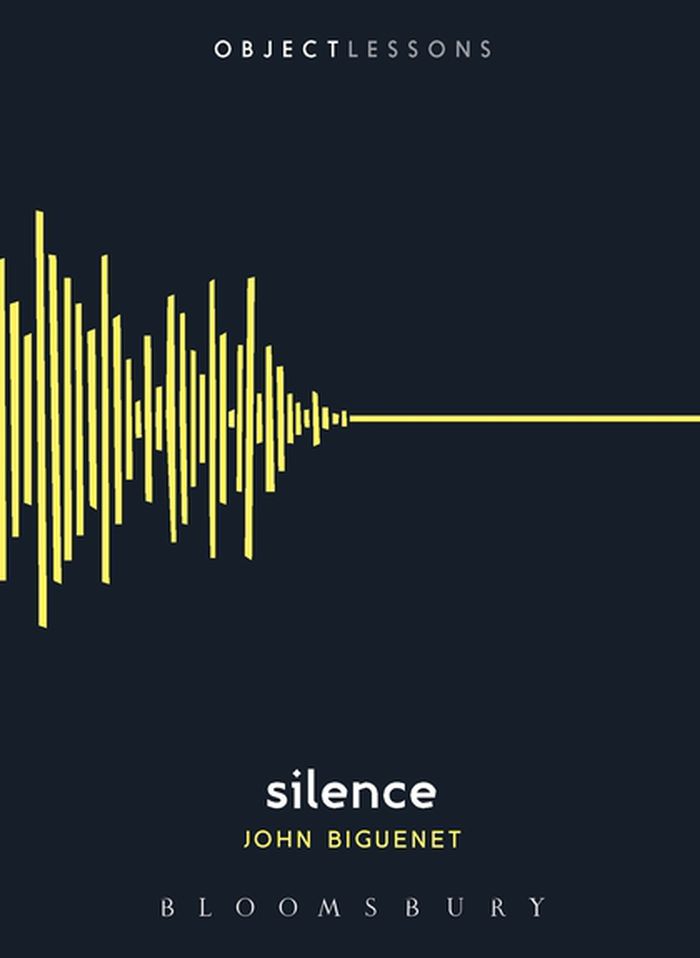
What is silence? In a series of short meditations, novelist and playwright John Biguenet considers silence as a servant of power, as a lie, as a punishment, as the voice of God, as a terrorist's final weapon, as a luxury good, as the reason for torture-in short, as an object we both do and do not recognize. Concluding with the prospects for its future in a world burgeoning with noise, Biguenet asks whether we should desire or fear silence-or if it is even ours to choose.
Silence (Object Lessons)
Actions:
Price:
$21.95
(available to order)
Summary:
What is silence? In a series of short meditations, novelist and playwright John Biguenet considers silence as a servant of power, as a lie, as a punishment, as the voice of God, as a terrorist's final weapon, as a luxury good, as the reason for torture-in short, as an object we both do and do not recognize. Concluding with the prospects for its future in a world burgeoning with noise, Biguenet asks whether we should desire or fear silence-or if it is even ours to choose.
Form:
books
books
Publication:
May 2015
May 2015
Form:
books
books
Actions:
Price:
$60.00
(available in store)
Summary:
Architectural production today encompasses myriad documents that defy the traditional conventions of the profession. This book examines 33 artefacts involved in the design and construction of contemporary architecture. Its definition of architectural documents is expansive – not just working drawings, but correspondence, contracts, mock-ups and models, journalism, photos,(...)
$60.00
(available in store)
Summary:
Architectural production today encompasses myriad documents that defy the traditional conventions of the profession. This book examines 33 artefacts involved in the design and construction of contemporary architecture. Its definition of architectural documents is expansive – not just working drawings, but correspondence, contracts, mock-ups and models, journalism, photos,(...)
Title:
Better together: (33) Documents of contemporary Australian architecture & their associated short stories
Actions:
Price:
$60.00
(available in store)
Summary:
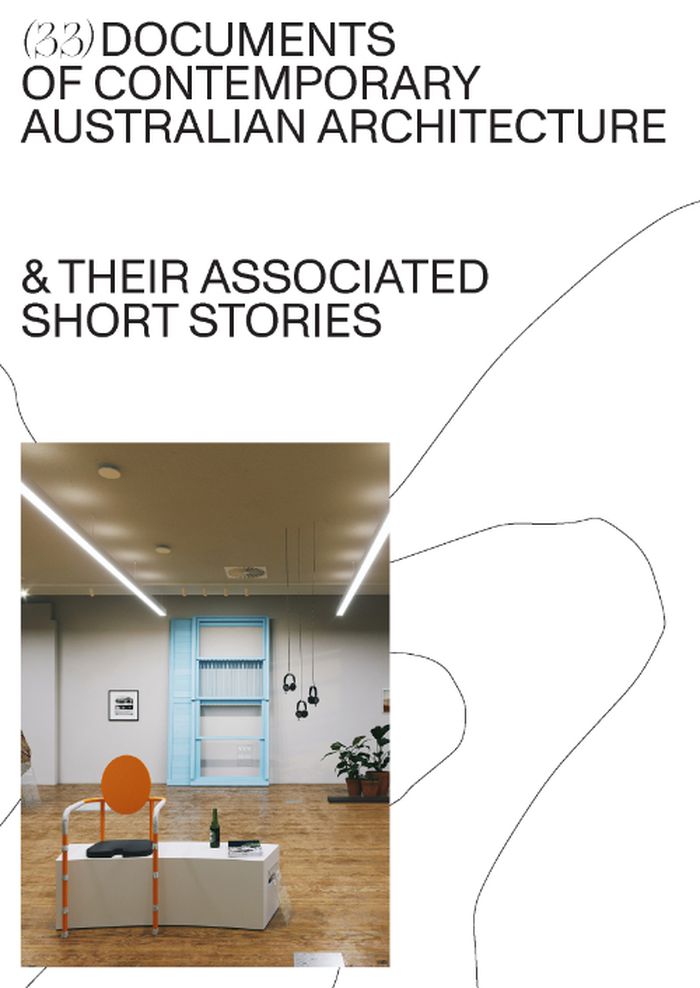
Architectural production today encompasses myriad documents that defy the traditional conventions of the profession. This book examines 33 artefacts involved in the design and construction of contemporary architecture. Its definition of architectural documents is expansive – not just working drawings, but correspondence, contracts, mock-ups and models, journalism, photos, and other formats that address the unique processes of modern architectural production. With a cross-section of work by Australian architects, including Andrew Power, Studio Bright, Sibling Architecture, Richard Stampton, and others, presented in a short story format to unravel the artefacts’ inner lives.
Better together: (33) Documents of contemporary Australian architecture & their associated short stories
Actions:
Price:
$60.00
(available in store)
Summary:
Architectural production today encompasses myriad documents that defy the traditional conventions of the profession. This book examines 33 artefacts involved in the design and construction of contemporary architecture. Its definition of architectural documents is expansive – not just working drawings, but correspondence, contracts, mock-ups and models, journalism, photos, and other formats that address the unique processes of modern architectural production. With a cross-section of work by Australian architects, including Andrew Power, Studio Bright, Sibling Architecture, Richard Stampton, and others, presented in a short story format to unravel the artefacts’ inner lives.
Form:
books
books
Publication:
January 2023
January 2023
Subject:
Contemporary Architecture
Contemporary Architecture
Form:
journals and magazines
journals and magazines
Title:
Eye Magazine #95
Eye Magazine #95
Actions:
Price:
$40.00
(available to order)
Summary:
The feature articles in this issue of Eye Magazine all focus on the enduring value and power of the designed graphic form. Inside we: meet the Swiss design collective Atlas Studio; sit down for an interview with cartoonist, illustrator and animator R.O. Blechman; look at a French Aladdin’s cave of printed history and treasure; catch up with the small, but prolific design(...)
$40.00
(available to order)
Summary:
The feature articles in this issue of Eye Magazine all focus on the enduring value and power of the designed graphic form. Inside we: meet the Swiss design collective Atlas Studio; sit down for an interview with cartoonist, illustrator and animator R.O. Blechman; look at a French Aladdin’s cave of printed history and treasure; catch up with the small, but prolific design(...)
Title:
Eye Magazine #95
Actions:
Price:
$40.00
(available to order)
Summary:
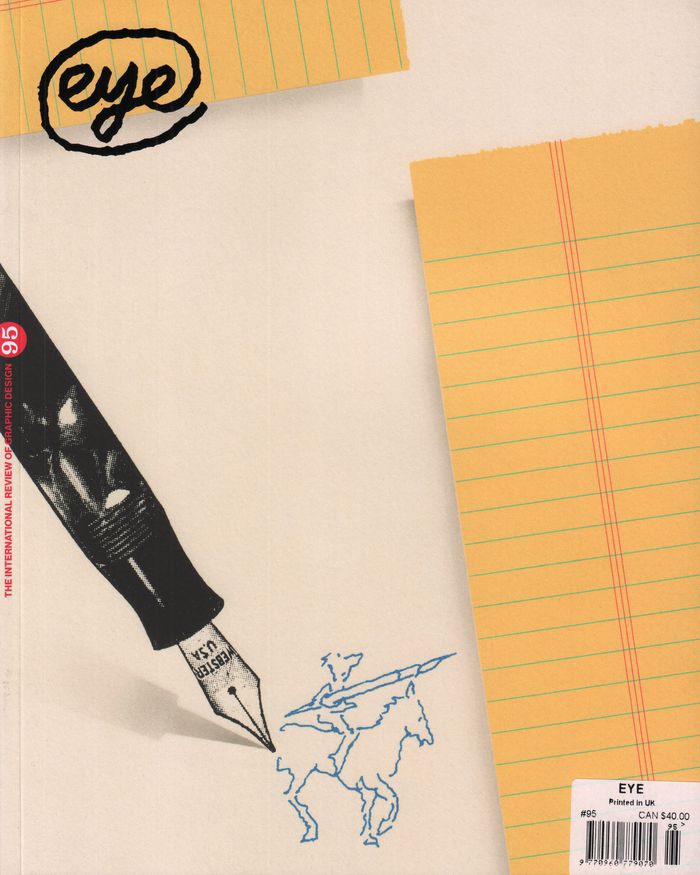
The feature articles in this issue of Eye Magazine all focus on the enduring value and power of the designed graphic form. Inside we: meet the Swiss design collective Atlas Studio; sit down for an interview with cartoonist, illustrator and animator R.O. Blechman; look at a French Aladdin’s cave of printed history and treasure; catch up with the small, but prolific design team Triboro; and take a look and re-assess the powerful poster work of David King, whose anti-Nazi, anti-Fascist messages are more pertinent now than ever.
Eye Magazine #95
Actions:
Price:
$40.00
(available to order)
Summary:
The feature articles in this issue of Eye Magazine all focus on the enduring value and power of the designed graphic form. Inside we: meet the Swiss design collective Atlas Studio; sit down for an interview with cartoonist, illustrator and animator R.O. Blechman; look at a French Aladdin’s cave of printed history and treasure; catch up with the small, but prolific design team Triboro; and take a look and re-assess the powerful poster work of David King, whose anti-Nazi, anti-Fascist messages are more pertinent now than ever.
Form:
journals and magazines
journals and magazines
Publication:
March 2018
March 2018
Subject:
Magazines
Magazines
Form:
journals and magazines
journals and magazines
Title:
Accattone 5: Armin Linke
Accattone 5: Armin Linke
Actions:
Price:
$42.00
(available in store)
Summary:
Based entirely on the work of Armin Linke, Accattone #5 explores photography in relation to the major architecture of public and private institutions: the infrastructure of the Roman Empire, neoclassical Athens, the United Nations headquarters, neo-liberal corporate environments and the fragile European institutions in Brussels. Monuments are carefully crafted to convey(...)
$42.00
(available in store)
Summary:
Based entirely on the work of Armin Linke, Accattone #5 explores photography in relation to the major architecture of public and private institutions: the infrastructure of the Roman Empire, neoclassical Athens, the United Nations headquarters, neo-liberal corporate environments and the fragile European institutions in Brussels. Monuments are carefully crafted to convey(...)
Title:
Accattone 5: Armin Linke
Actions:
Price:
$42.00
(available in store)
Summary:
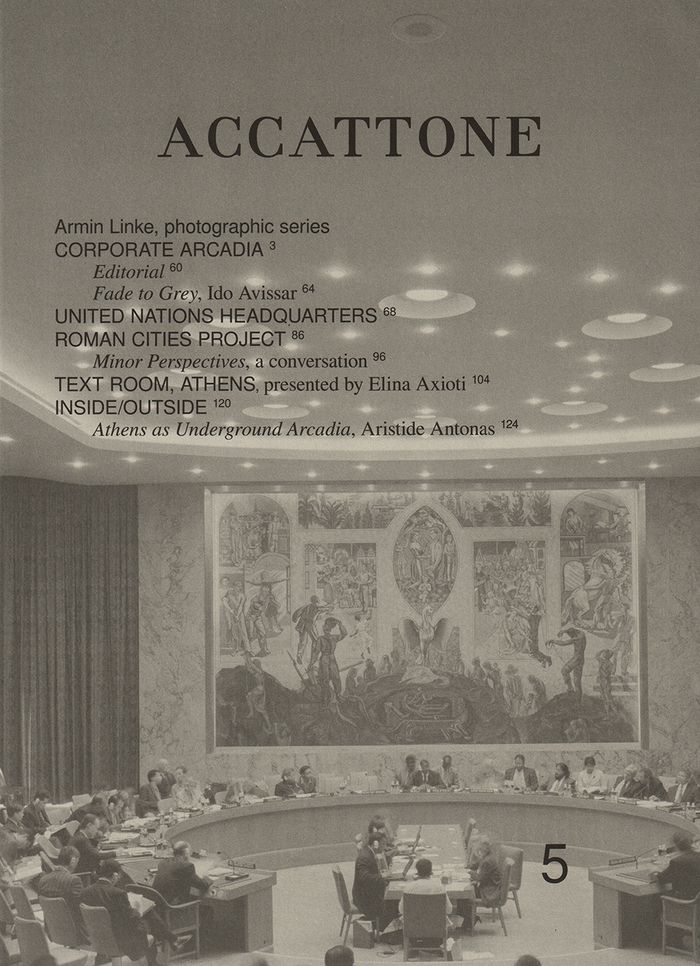
Based entirely on the work of Armin Linke, Accattone #5 explores photography in relation to the major architecture of public and private institutions: the infrastructure of the Roman Empire, neoclassical Athens, the United Nations headquarters, neo-liberal corporate environments and the fragile European institutions in Brussels. Monuments are carefully crafted to convey determined sets of aesthetic codes and political values, incorporated in a purportedly eternal and total character. Photography can challenge the power of such representations by bringing out their inherent glitches, small cracks and everyday ambiguities. It can reprogramme architecture.
Accattone 5: Armin Linke
Actions:
Price:
$42.00
(available in store)
Summary:
Based entirely on the work of Armin Linke, Accattone #5 explores photography in relation to the major architecture of public and private institutions: the infrastructure of the Roman Empire, neoclassical Athens, the United Nations headquarters, neo-liberal corporate environments and the fragile European institutions in Brussels. Monuments are carefully crafted to convey determined sets of aesthetic codes and political values, incorporated in a purportedly eternal and total character. Photography can challenge the power of such representations by bringing out their inherent glitches, small cracks and everyday ambiguities. It can reprogramme architecture.
Form:
journals and magazines
journals and magazines
Publication:
March 2018
March 2018
Subject:
Magazines
Magazines
Form:
books
books
Actions:
Price:
$61.95
(available in store)
Summary:
In the “Museum of the Revolution”, there is a panoramic painting produced by North Korean artists depicting the liberation of the capital from Portuguese colonial rule. It illustrates the rhetoric of a revolution as the leader and followers parade through the streets and avenues, laid out with grandeur by the colonial powers. These streets, named and renamed, function as(...)
$61.95
(available in store)
Summary:
In the “Museum of the Revolution”, there is a panoramic painting produced by North Korean artists depicting the liberation of the capital from Portuguese colonial rule. It illustrates the rhetoric of a revolution as the leader and followers parade through the streets and avenues, laid out with grandeur by the colonial powers. These streets, named and renamed, function as(...)
Title:
Guy Tillim: Museum of the revolution
Actions:
Price:
$61.95
(available in store)
Summary:
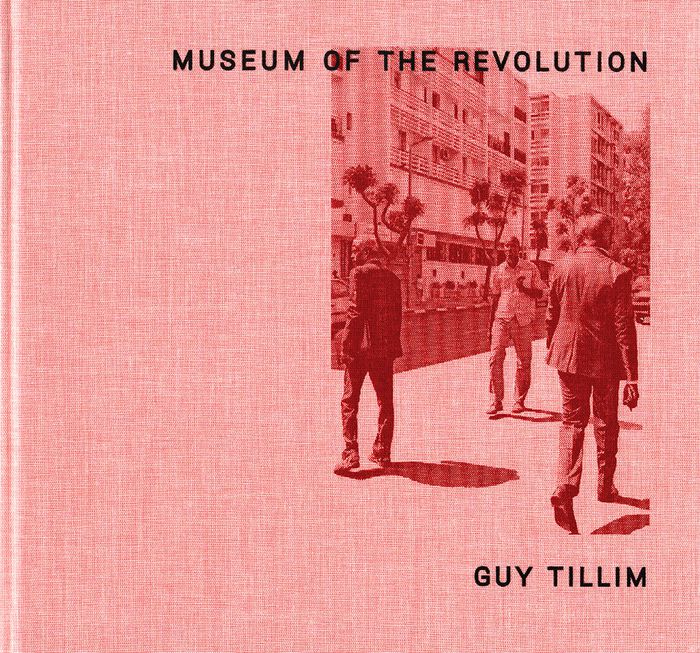
In the “Museum of the Revolution”, there is a panoramic painting produced by North Korean artists depicting the liberation of the capital from Portuguese colonial rule. It illustrates the rhetoric of a revolution as the leader and followers parade through the streets and avenues, laid out with grandeur by the colonial powers. These streets, named and renamed, function as silent witnesses to the ebb and flow of political, economic and social shifts of power and become a museum of the many revolutions that have taken place in African countries over the past 65 years.
Guy Tillim: Museum of the revolution
Actions:
Price:
$61.95
(available in store)
Summary:
In the “Museum of the Revolution”, there is a panoramic painting produced by North Korean artists depicting the liberation of the capital from Portuguese colonial rule. It illustrates the rhetoric of a revolution as the leader and followers parade through the streets and avenues, laid out with grandeur by the colonial powers. These streets, named and renamed, function as silent witnesses to the ebb and flow of political, economic and social shifts of power and become a museum of the many revolutions that have taken place in African countries over the past 65 years.
Form:
books
books
Publication:
February 2019
February 2019
Subject:
Photography monographs
Photography monographs
Form:
books
books
Actions:
Price:
$42.00
(available to order)
Summary:
For this book, the Netherlands Architecture Institute selected 22 Dutch architecture firms with genuinely innovative ideas on these seven imperatives and the will to do something about them. The result is an agenda for the future of our living environment and a proof that designers have the creative power to make it happen. Architecture of Consequence proves that any(...)
$42.00
(available to order)
Summary:
For this book, the Netherlands Architecture Institute selected 22 Dutch architecture firms with genuinely innovative ideas on these seven imperatives and the will to do something about them. The result is an agenda for the future of our living environment and a proof that designers have the creative power to make it happen. Architecture of Consequence proves that any(...)
Title:
Architecture of consequence, dutch designs on the future
Actions:
Price:
$42.00
(available to order)
Summary:
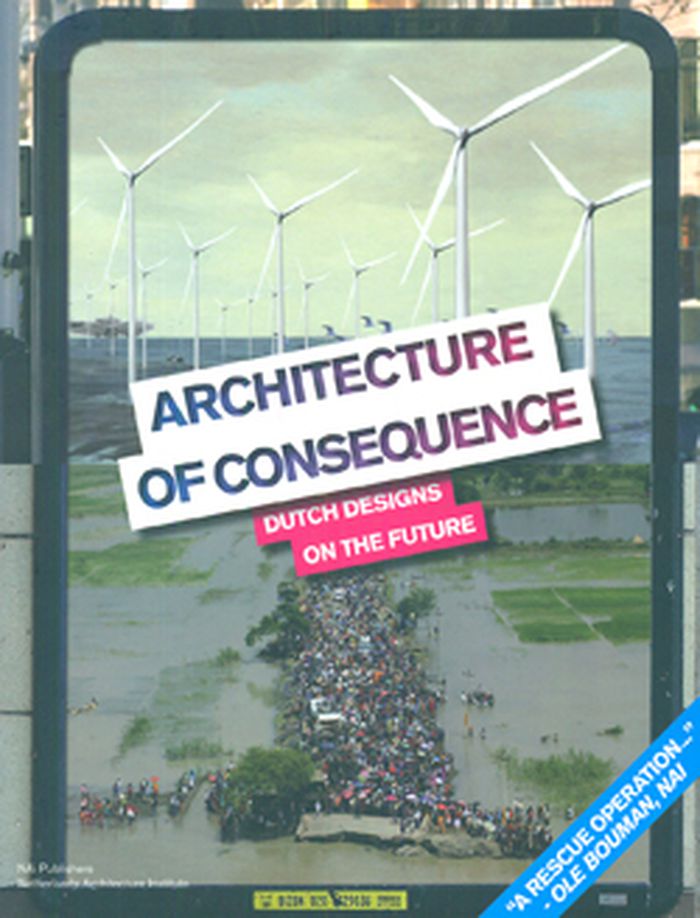
For this book, the Netherlands Architecture Institute selected 22 Dutch architecture firms with genuinely innovative ideas on these seven imperatives and the will to do something about them. The result is an agenda for the future of our living environment and a proof that designers have the creative power to make it happen. Architecture of Consequence proves that any notion that architecture should be an “expression of its time,” or should do no more than express the vanity of its commissioners, pales into insignificance when compared to its tremendous potential for resolving urgent societal problems.
Architecture of consequence, dutch designs on the future
Actions:
Price:
$42.00
(available to order)
Summary:
For this book, the Netherlands Architecture Institute selected 22 Dutch architecture firms with genuinely innovative ideas on these seven imperatives and the will to do something about them. The result is an agenda for the future of our living environment and a proof that designers have the creative power to make it happen. Architecture of Consequence proves that any notion that architecture should be an “expression of its time,” or should do no more than express the vanity of its commissioners, pales into insignificance when compared to its tremendous potential for resolving urgent societal problems.
Form:
books
books
Publication:
March 2010
March 2010
Subject:
Architecture since 1900, Europe
Architecture since 1900, Europe
Form:
books
books
Actions:
Price:
$44.00
(available to order)
Summary:
In Come Together author and visual artist Francesco Spampinato assembles an international roster of forty of today's most exciting and influential collectives, from design studios like Project Projects and political performance artists The Yes Men to flash mob provocateurs Improv Everywhere and the multimedia artists Assume Vivid Astro Focus. Alongside visual portfolios(...)
$44.00
(available to order)
Summary:
In Come Together author and visual artist Francesco Spampinato assembles an international roster of forty of today's most exciting and influential collectives, from design studios like Project Projects and political performance artists The Yes Men to flash mob provocateurs Improv Everywhere and the multimedia artists Assume Vivid Astro Focus. Alongside visual portfolios(...)
Title:
Come together: the rise of cooperative art and design
Actions:
Price:
$44.00
(available to order)
Summary:
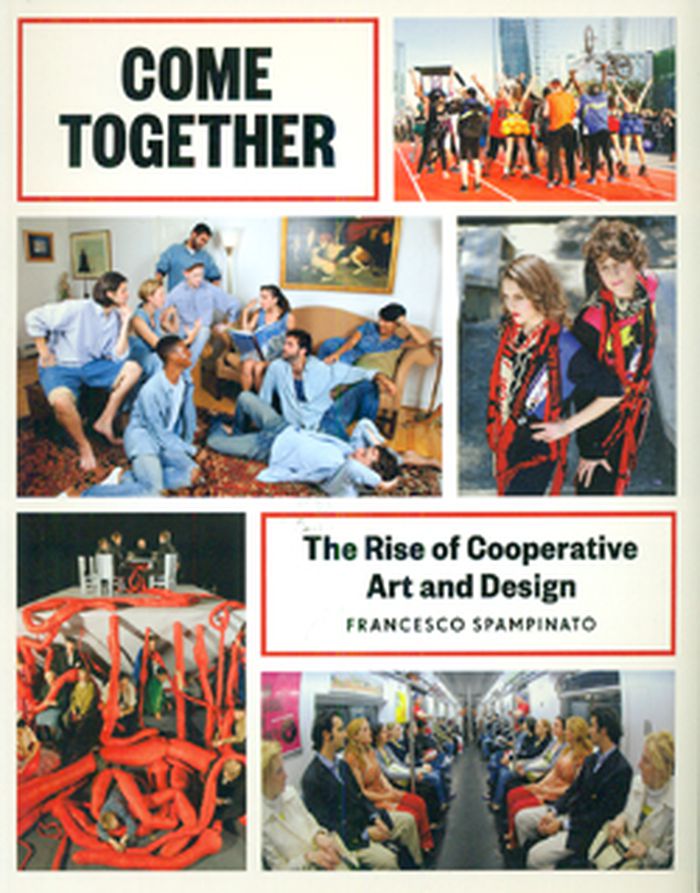
In Come Together author and visual artist Francesco Spampinato assembles an international roster of forty of today's most exciting and influential collectives, from design studios like Project Projects and political performance artists The Yes Men to flash mob provocateurs Improv Everywhere and the multimedia artists Assume Vivid Astro Focus. Alongside visual portfolios of their best work are in-depth interviews addressing each group's unique motivations, processes, and objectives. What emerges is a shared desire to turn viewers into producers and to use commercial mass-media strategies to challenge prevailing social, political, and cultural power structures.
Come together: the rise of cooperative art and design
Actions:
Price:
$44.00
(available to order)
Summary:
In Come Together author and visual artist Francesco Spampinato assembles an international roster of forty of today's most exciting and influential collectives, from design studios like Project Projects and political performance artists The Yes Men to flash mob provocateurs Improv Everywhere and the multimedia artists Assume Vivid Astro Focus. Alongside visual portfolios of their best work are in-depth interviews addressing each group's unique motivations, processes, and objectives. What emerges is a shared desire to turn viewers into producers and to use commercial mass-media strategies to challenge prevailing social, political, and cultural power structures.
Form:
books
books
Publication:
November 2014
November 2014
Subject:
Graphic Design and Typography
Graphic Design and Typography
Form:
books
books
Title:
The allure of the archive
The allure of the archive
Actions:
Price:
$24.95
(available to order)
Summary:
Arlette Farge’s Le Goût de l’archive is widely regarded as a historiographical classic. While combing through two-hundred-year-old judicial records from the Archives of the Bastille, historian Farge was struck by the extraordinarily intimate portrayal they provided of the lives of the poor in pre-Revolutionary France, especially women. She was seduced by the sensuality of(...)
$24.95
(available to order)
Summary:
Arlette Farge’s Le Goût de l’archive is widely regarded as a historiographical classic. While combing through two-hundred-year-old judicial records from the Archives of the Bastille, historian Farge was struck by the extraordinarily intimate portrayal they provided of the lives of the poor in pre-Revolutionary France, especially women. She was seduced by the sensuality of(...)
Title:
The allure of the archive
Actions:
Price:
$24.95
(available to order)
Summary:
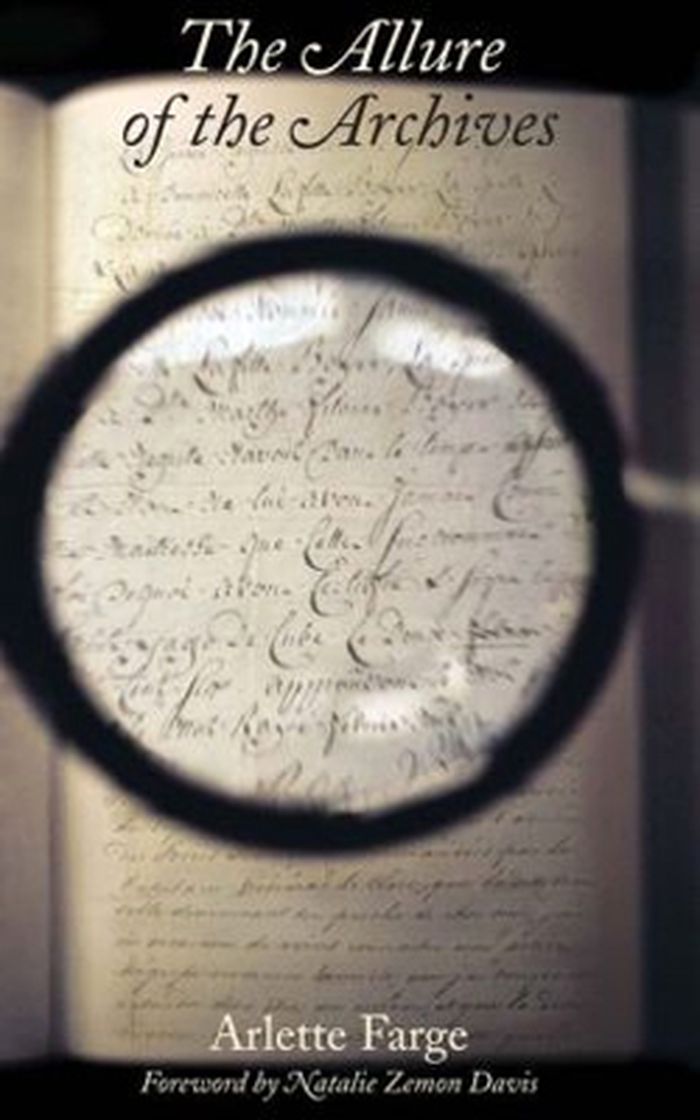
Arlette Farge’s Le Goût de l’archive is widely regarded as a historiographical classic. While combing through two-hundred-year-old judicial records from the Archives of the Bastille, historian Farge was struck by the extraordinarily intimate portrayal they provided of the lives of the poor in pre-Revolutionary France, especially women. She was seduced by the sensuality of old manuscripts and by the revelatory power of voices otherwise lost. In The Allure of the Archives, she conveys the exhilaration of uncovering hidden secrets and the thrill of venturing into new dimensions of the past.
The allure of the archive
Actions:
Price:
$24.95
(available to order)
Summary:
Arlette Farge’s Le Goût de l’archive is widely regarded as a historiographical classic. While combing through two-hundred-year-old judicial records from the Archives of the Bastille, historian Farge was struck by the extraordinarily intimate portrayal they provided of the lives of the poor in pre-Revolutionary France, especially women. She was seduced by the sensuality of old manuscripts and by the revelatory power of voices otherwise lost. In The Allure of the Archives, she conveys the exhilaration of uncovering hidden secrets and the thrill of venturing into new dimensions of the past.
Form:
books
books
Publication:
February 2015
February 2015
Subject:
Archive, library and the digital
Archive, library and the digital
Form:
books
books
Price:
$62.95
(available in store)
Summary:
Hawksmoor wasn’t always appreciated, however: for decades after his death, he was seen as at best a second-rate talent. From the Shadows tells the story of the resurrection of his reputation, showing how over the years his work was ignored, abused, and altered—and, finally, recovered and celebrated. It is a story of the triumph of talent and of the power of appreciative(...)
$62.95
(available in store)
Summary:
Hawksmoor wasn’t always appreciated, however: for decades after his death, he was seen as at best a second-rate talent. From the Shadows tells the story of the resurrection of his reputation, showing how over the years his work was ignored, abused, and altered—and, finally, recovered and celebrated. It is a story of the triumph of talent and of the power of appreciative(...)
Title:
From the shadows: the architecture and afterlife of Nicholas Hawksmoor
Actions:
Price:
$62.95
(available in store)
Summary:
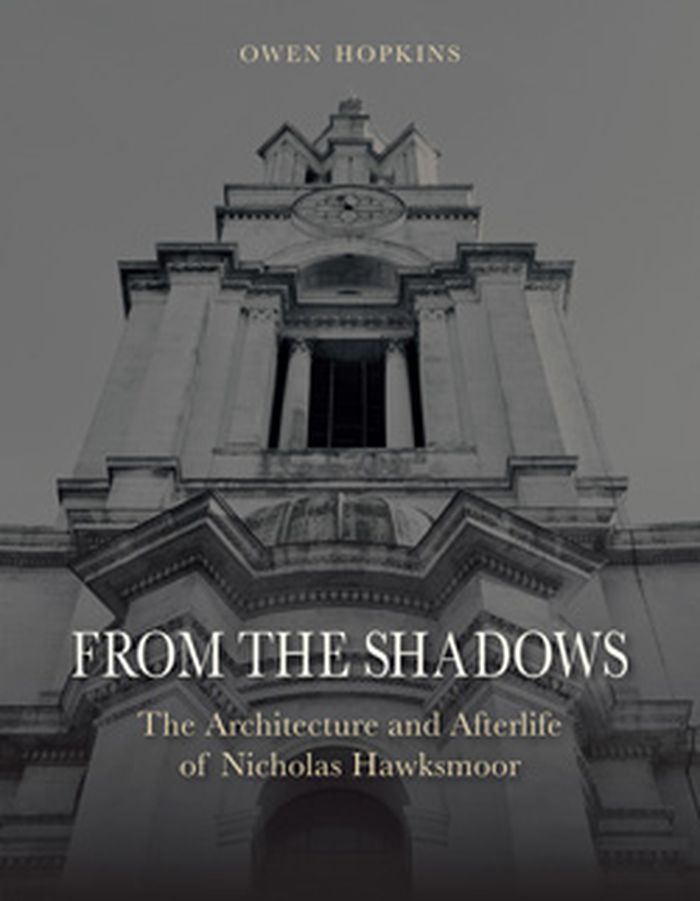
Hawksmoor wasn’t always appreciated, however: for decades after his death, he was seen as at best a second-rate talent. From the Shadows tells the story of the resurrection of his reputation, showing how over the years his work was ignored, abused, and altered—and, finally, recovered and celebrated. It is a story of the triumph of talent and of the power of appreciative admirers like T. S. Eliot, James Stirling, Robert Venturi, and Peter Ackroyd, all of whom played a role in the twentieth-century recovery of Hawksmoor’s reputation.
From the shadows: the architecture and afterlife of Nicholas Hawksmoor
Actions:
Price:
$62.95
(available in store)
Summary:
Hawksmoor wasn’t always appreciated, however: for decades after his death, he was seen as at best a second-rate talent. From the Shadows tells the story of the resurrection of his reputation, showing how over the years his work was ignored, abused, and altered—and, finally, recovered and celebrated. It is a story of the triumph of talent and of the power of appreciative admirers like T. S. Eliot, James Stirling, Robert Venturi, and Peter Ackroyd, all of whom played a role in the twentieth-century recovery of Hawksmoor’s reputation.
Form:
books
books
Publication:
November 2015
November 2015
Subject:
Architectural Theory
Architectural Theory


