


461 Results
Form:
books
books
Actions:
Price:
$46.95
(available to order)
Summary:
A stone falls to the Earth. It picks up speed, rolling down the steep side of a mountain until it comes to rest in an empty plain. But the plain won’t remain empty for long: out of the shadows emerge two figures, who immediately start to grapple, using that very stone as a weapon to kill. But those same hands, our human hands, holding the same weight of stone, also shape(...)
$46.95
(available to order)
Summary:
A stone falls to the Earth. It picks up speed, rolling down the steep side of a mountain until it comes to rest in an empty plain. But the plain won’t remain empty for long: out of the shadows emerge two figures, who immediately start to grapple, using that very stone as a weapon to kill. But those same hands, our human hands, holding the same weight of stone, also shape(...)
Title:
Hard as rock, old as stone: Of humans and war
Actions:
Price:
$46.95
(available to order)
Summary:
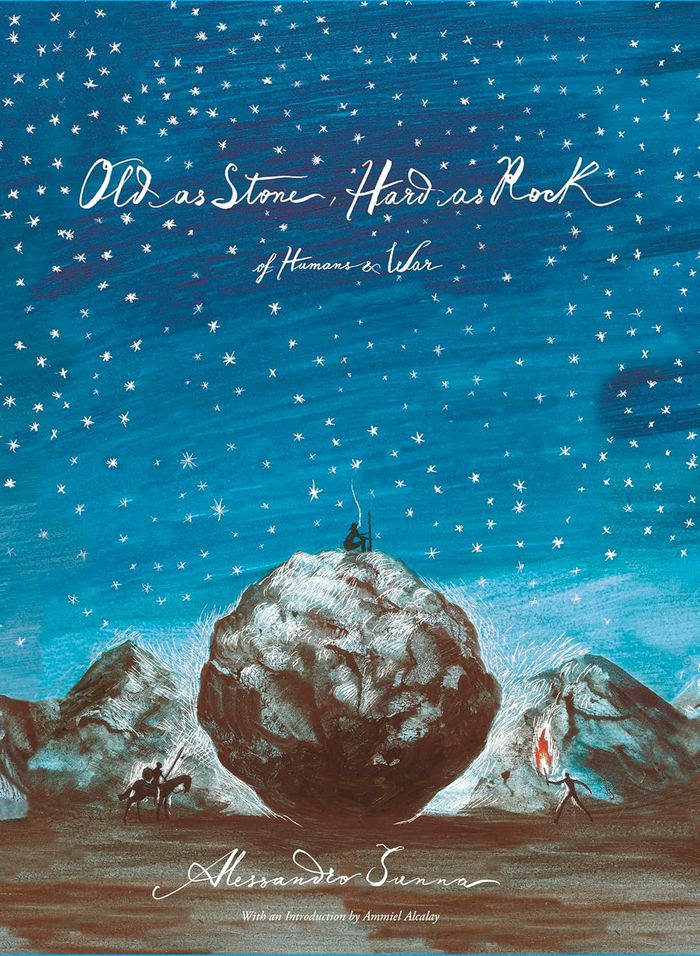
A stone falls to the Earth. It picks up speed, rolling down the steep side of a mountain until it comes to rest in an empty plain. But the plain won’t remain empty for long: out of the shadows emerge two figures, who immediately start to grapple, using that very stone as a weapon to kill. But those same hands, our human hands, holding the same weight of stone, also shape and forge, chisel and build, creating as they destroy, rendering beauty and violence alike. What is the relationship of those twin impulses? In these pages, artist Alessandaro Sanna uses the shaping force of his hands to explore the seemingly endless, perversely steadfast human capacity for destruction. Unflinchingly tracing humanity’s long history of war, from the havoc of armies on horseback, to the violence of the conquistadores, to the carnage of the First World War, to the ghastly terror of the atomic bomb, and the cruel, shockingly intentional attack on the Twin Towers, Sanna records our compulsion to destroy. The hands mold clay, streak color across a sky, define a world, give beauty to the eye; and yet fires burn, an acrid smell arises, smoke blots out the sun. For what and why?
Hard as rock, old as stone: Of humans and war
Actions:
Price:
$46.95
(available to order)
Summary:
A stone falls to the Earth. It picks up speed, rolling down the steep side of a mountain until it comes to rest in an empty plain. But the plain won’t remain empty for long: out of the shadows emerge two figures, who immediately start to grapple, using that very stone as a weapon to kill. But those same hands, our human hands, holding the same weight of stone, also shape and forge, chisel and build, creating as they destroy, rendering beauty and violence alike. What is the relationship of those twin impulses? In these pages, artist Alessandaro Sanna uses the shaping force of his hands to explore the seemingly endless, perversely steadfast human capacity for destruction. Unflinchingly tracing humanity’s long history of war, from the havoc of armies on horseback, to the violence of the conquistadores, to the carnage of the First World War, to the ghastly terror of the atomic bomb, and the cruel, shockingly intentional attack on the Twin Towers, Sanna records our compulsion to destroy. The hands mold clay, streak color across a sky, define a world, give beauty to the eye; and yet fires burn, an acrid smell arises, smoke blots out the sun. For what and why?
Form:
books
books
Publication:
January 2025
January 2025
Subject:
Illustration
Illustration
Form:
books
books

Actions:
Price:
$19.95
(available to order)
Summary:
Japan today protects one-seventh of its land surface in parks, which are visited by well over a billion people each year. Parkscapes analyzes the origins, development, and distinctive features of these public spaces. Green zones were created by the government beginning in the late nineteenth century for state purposes but eventually evolved into sites of negotiation(...)
$19.95
(available to order)
Summary:
Japan today protects one-seventh of its land surface in parks, which are visited by well over a billion people each year. Parkscapes analyzes the origins, development, and distinctive features of these public spaces. Green zones were created by the government beginning in the late nineteenth century for state purposes but eventually evolved into sites of negotiation(...)
Title:
Parkscapes: green spaces in modern Japan
Actions:
Price:
$19.95
(available to order)
Summary:
Japan today protects one-seventh of its land surface in parks, which are visited by well over a billion people each year. Parkscapes analyzes the origins, development, and distinctive features of these public spaces. Green zones were created by the government beginning in the late nineteenth century for state purposes but eventually evolved into sites of negotiation between bureaucrats and ordinary citizens who use them for demonstrations, riots, and shelters, as well as recreation. Thomas Havens shows how revolutionary officials in the 1870s seized private properties and converted them into public parks for educating and managing citizens in the new emperor-sanctioned state. Rebuilding Tokyo and Yokohama after the earthquake and fires of 1923 spurred the spread of urban parklands both in the capital and other cities. According to Havens, the growth of suburbs, the national mobilization of World War II, and the post-1945 American occupation helped speed the creation of more urban parks, setting the stage for vast increases in public green spaces during Japan’s golden age of affluence from the 1960s through the 1980s. Since the 1990s the Japanese public has embraced a heightened ecological consciousness and become deeply involved in the design and management of both city and natural parks—realms once monopolized by government bureaucrats.
Parkscapes: green spaces in modern Japan
Actions:
Price:
$19.95
(available to order)
Summary:
Japan today protects one-seventh of its land surface in parks, which are visited by well over a billion people each year. Parkscapes analyzes the origins, development, and distinctive features of these public spaces. Green zones were created by the government beginning in the late nineteenth century for state purposes but eventually evolved into sites of negotiation between bureaucrats and ordinary citizens who use them for demonstrations, riots, and shelters, as well as recreation. Thomas Havens shows how revolutionary officials in the 1870s seized private properties and converted them into public parks for educating and managing citizens in the new emperor-sanctioned state. Rebuilding Tokyo and Yokohama after the earthquake and fires of 1923 spurred the spread of urban parklands both in the capital and other cities. According to Havens, the growth of suburbs, the national mobilization of World War II, and the post-1945 American occupation helped speed the creation of more urban parks, setting the stage for vast increases in public green spaces during Japan’s golden age of affluence from the 1960s through the 1980s. Since the 1990s the Japanese public has embraced a heightened ecological consciousness and become deeply involved in the design and management of both city and natural parks—realms once monopolized by government bureaucrats.
Form:
books
books
Publication:
April 2011
April 2011
Subject:
Landscape Theory
Landscape Theory
Form:
books
books
Title:
The Urban Archetypes of Jane Jacobs and Ebenezer Howard: Contradiction and meaning in city form
The Urban Archetypes of Jane Jacobs and Ebenezer Howard: Contradiction and meaning in city form
Actions:
Price:
$80.00
(available to order)
Summary:
Ebenezer Howard, an Englishman, and Jane Jacobs, a naturalized Canadian, personify the twentieth century’s opposing outlooks on cities. Howard had envisaged small towns, newly built from scratch, fashioned on single family homes with small gardens. Jacobs embraced existing inner-city neighbourhoods emphasizing the verve of the living street. From Howard’s idea, the(...)
$80.00
(available to order)
Summary:
Ebenezer Howard, an Englishman, and Jane Jacobs, a naturalized Canadian, personify the twentieth century’s opposing outlooks on cities. Howard had envisaged small towns, newly built from scratch, fashioned on single family homes with small gardens. Jacobs embraced existing inner-city neighbourhoods emphasizing the verve of the living street. From Howard’s idea, the(...)
Title:
The Urban Archetypes of Jane Jacobs and Ebenezer Howard: Contradiction and meaning in city form
Actions:
Price:
$80.00
(available to order)
Summary:
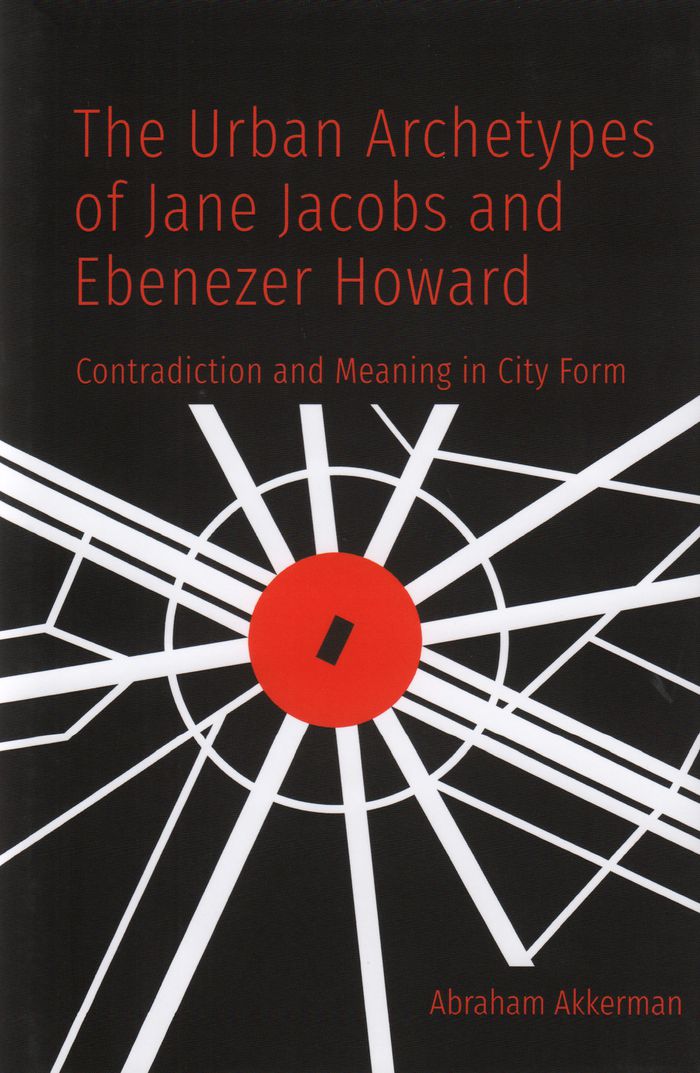
Ebenezer Howard, an Englishman, and Jane Jacobs, a naturalized Canadian, personify the twentieth century’s opposing outlooks on cities. Howard had envisaged small towns, newly built from scratch, fashioned on single family homes with small gardens. Jacobs embraced existing inner-city neighbourhoods emphasizing the verve of the living street. From Howard’s idea, the American Dream of garden suburbs had emerged, yet his conceptualization of a modern city received criticism for being uniform and alienated from the rest of the city. Similarly, at the turn of the new century, Jacobs’ inner-city neighbourhoods came to be recognized as the result of commodification, vacillating between poverty and newly discovered hubs of urban authenticity. Presenting Howard and Jacobs within a psychocultural context, ''The urban archetypes of Jane Jacobs and Ebenezer Howard'' addresses our urban crisis in the recognition that ''city form'' is a gendered, allegorical medium expressing femininity and masculinity within two founding features of the built environment: void and volume. Both founding contrasts bring tensions, but also the opportunities of fusion between pairs of urban polarities: human scale against superscale, gait against speed, and spontaneity against surveillance. Jacobs and Howard, in their respective attitudes, have come to embrace the two ancient archetypes, the Garden and the Citadel, leaving it to future generations to blend their two contrarian stances.
The Urban Archetypes of Jane Jacobs and Ebenezer Howard: Contradiction and meaning in city form
Actions:
Price:
$80.00
(available to order)
Summary:
Ebenezer Howard, an Englishman, and Jane Jacobs, a naturalized Canadian, personify the twentieth century’s opposing outlooks on cities. Howard had envisaged small towns, newly built from scratch, fashioned on single family homes with small gardens. Jacobs embraced existing inner-city neighbourhoods emphasizing the verve of the living street. From Howard’s idea, the American Dream of garden suburbs had emerged, yet his conceptualization of a modern city received criticism for being uniform and alienated from the rest of the city. Similarly, at the turn of the new century, Jacobs’ inner-city neighbourhoods came to be recognized as the result of commodification, vacillating between poverty and newly discovered hubs of urban authenticity. Presenting Howard and Jacobs within a psychocultural context, ''The urban archetypes of Jane Jacobs and Ebenezer Howard'' addresses our urban crisis in the recognition that ''city form'' is a gendered, allegorical medium expressing femininity and masculinity within two founding features of the built environment: void and volume. Both founding contrasts bring tensions, but also the opportunities of fusion between pairs of urban polarities: human scale against superscale, gait against speed, and spontaneity against surveillance. Jacobs and Howard, in their respective attitudes, have come to embrace the two ancient archetypes, the Garden and the Citadel, leaving it to future generations to blend their two contrarian stances.
Form:
books
books
Publication:
January 2020
January 2020
Subject:
Urban Theory
Urban Theory
Form:
books
books
Actions:
Price:
$48.95
(available to order)
Summary:
When the automobile was first introduced, few Americans predicted its fundamental impact, not only on how people would travel, but on the American landscape itself. Instead of reducing the amount of wheeled transport on public roads, the advent of mass-produced cars caused congestion, at the curb and in the right-of-way, from small midwestern farm towns to New York,(...)
$48.95
(available to order)
Summary:
When the automobile was first introduced, few Americans predicted its fundamental impact, not only on how people would travel, but on the American landscape itself. Instead of reducing the amount of wheeled transport on public roads, the advent of mass-produced cars caused congestion, at the curb and in the right-of-way, from small midwestern farm towns to New York,(...)
Title:
Lots of parking : land use in a car culture
Actions:
Price:
$48.95
(available to order)
Summary:
When the automobile was first introduced, few Americans predicted its fundamental impact, not only on how people would travel, but on the American landscape itself. Instead of reducing the amount of wheeled transport on public roads, the advent of mass-produced cars caused congestion, at the curb and in the right-of-way, from small midwestern farm towns to New York, Chicago, Detroit, and Los Angeles. "Lots of Parking" examines a neglected aspect of this rise of the automobile: the impact on America not of cars in motion but of cars at rest. While most studies have tended to focus on highway construction and engineering improvements to accommodate increasing flow and the desire for speed, John A. Jakle and Keith A. Sculle examine a fundamental feature of the urban, and suburban, scene — the parking lot. Their lively and exhaustive exploration traces the history of parking from the curbside to the rise of public and commercial parking lots and garages and the concomitant demolition of the old pedestrian-oriented urban infrastructure. In an accessible style enhanced by a range of interesting and unusual illustrations, Jakle and Sculle discuss the role of parking in downtown revitalization efforts and, by contrast, its role in the promotion of outlying suburban shopping districts and its incorporation into our neighbourhoods and residences.
Lots of parking : land use in a car culture
Actions:
Price:
$48.95
(available to order)
Summary:
When the automobile was first introduced, few Americans predicted its fundamental impact, not only on how people would travel, but on the American landscape itself. Instead of reducing the amount of wheeled transport on public roads, the advent of mass-produced cars caused congestion, at the curb and in the right-of-way, from small midwestern farm towns to New York, Chicago, Detroit, and Los Angeles. "Lots of Parking" examines a neglected aspect of this rise of the automobile: the impact on America not of cars in motion but of cars at rest. While most studies have tended to focus on highway construction and engineering improvements to accommodate increasing flow and the desire for speed, John A. Jakle and Keith A. Sculle examine a fundamental feature of the urban, and suburban, scene — the parking lot. Their lively and exhaustive exploration traces the history of parking from the curbside to the rise of public and commercial parking lots and garages and the concomitant demolition of the old pedestrian-oriented urban infrastructure. In an accessible style enhanced by a range of interesting and unusual illustrations, Jakle and Sculle discuss the role of parking in downtown revitalization efforts and, by contrast, its role in the promotion of outlying suburban shopping districts and its incorporation into our neighbourhoods and residences.
Form:
books
books
Publication:
June 2004, Charlottesville
June 2004, Charlottesville
Subject:
Urban Theory
Urban Theory
Form:
books
books
Price:
$63.95
(available to order)
Summary:
First built in Europe and grandly imported to the United States in the mid-nineteenth century, the classic multiway boulevard has been in decline for many years, victim of a narrowly focused approach to street design that views unencumbered vehicular traffic flow as the highest priority. The American preoccupation with destination and speed has made multiway boulevards(...)
$63.95
(available to order)
Summary:
First built in Europe and grandly imported to the United States in the mid-nineteenth century, the classic multiway boulevard has been in decline for many years, victim of a narrowly focused approach to street design that views unencumbered vehicular traffic flow as the highest priority. The American preoccupation with destination and speed has made multiway boulevards(...)
Subject:
Urban Theory
Urban Theory
Publication:
October 2001, Cambridge, Mass.
October 2001, Cambridge, Mass.
Title:
The boulevard book : history, evolution, design of multiway boulevards
Actions:
Price:
$63.95
(available to order)
Summary:
First built in Europe and grandly imported to the United States in the mid-nineteenth century, the classic multiway boulevard has been in decline for many years, victim of a narrowly focused approach to street design that views unencumbered vehicular traffic flow as the highest priority. The American preoccupation with destination and speed has made multiway boulevards increasingly rare as artifacts of the urban landscape. This book reintroduces the boulevard, tree-lined and with separate realms for through traffic and for slow-paced vehicular-pedestrian movement, as an important and often crucial feature of both historic and contemporary cities. It presents more than fifty boulevards—-as varied as Avenue Montaigne, in Paris; C. G. Road, in Ahmedabad, India; and The Esplanade, in Chico, California--celebrating their usefulness and beauty. It discusses their history and evolution, the misconceptions that led to their near-demise in the United States, and their potential as a modern street type. Based on wide research, "The Boulevard Book" examines the safety of these streets and offers design guidelines for professionals, scholars, and community decision makers. Extensive plans, cross sections, and perspective drawings permit visual comparisons. The book shows how multiway boulevards respond to many issues that are central to urban life, including livability, mobility, safety, interest, economic opportunity, mass transit, and open space.
The boulevard book : history, evolution, design of multiway boulevards
Actions:
Price:
$63.95
(available to order)
Summary:
First built in Europe and grandly imported to the United States in the mid-nineteenth century, the classic multiway boulevard has been in decline for many years, victim of a narrowly focused approach to street design that views unencumbered vehicular traffic flow as the highest priority. The American preoccupation with destination and speed has made multiway boulevards increasingly rare as artifacts of the urban landscape. This book reintroduces the boulevard, tree-lined and with separate realms for through traffic and for slow-paced vehicular-pedestrian movement, as an important and often crucial feature of both historic and contemporary cities. It presents more than fifty boulevards—-as varied as Avenue Montaigne, in Paris; C. G. Road, in Ahmedabad, India; and The Esplanade, in Chico, California--celebrating their usefulness and beauty. It discusses their history and evolution, the misconceptions that led to their near-demise in the United States, and their potential as a modern street type. Based on wide research, "The Boulevard Book" examines the safety of these streets and offers design guidelines for professionals, scholars, and community decision makers. Extensive plans, cross sections, and perspective drawings permit visual comparisons. The book shows how multiway boulevards respond to many issues that are central to urban life, including livability, mobility, safety, interest, economic opportunity, mass transit, and open space.
Form:
books
books
Publication:
October 2001, Cambridge, Mass.
October 2001, Cambridge, Mass.
Subject:
Urban Theory
Urban Theory
Form:
books
books
Price:
$36.95
(available to order)
Summary:
By United Nations estimates, 60 percent of the world's population will be urban by 2030. With the increasing speed of urbanization, especially in the developing world, scholars are now rethinking standard concepts and histories of modern cities. "The Spaces of the Modern City" historicizes the contemporary discussion of urbanism, highlighting the local and global breadth(...)
$36.95
(available to order)
Summary:
By United Nations estimates, 60 percent of the world's population will be urban by 2030. With the increasing speed of urbanization, especially in the developing world, scholars are now rethinking standard concepts and histories of modern cities. "The Spaces of the Modern City" historicizes the contemporary discussion of urbanism, highlighting the local and global breadth(...)
Subject:
Urban Theory
Urban Theory
Publication:
February 2008, Princeton, Oxford
February 2008, Princeton, Oxford
Title:
The Spaces of the Modern city : imaginaries, politics, and everyday life
Actions:
Price:
$36.95
(available to order)
Summary:
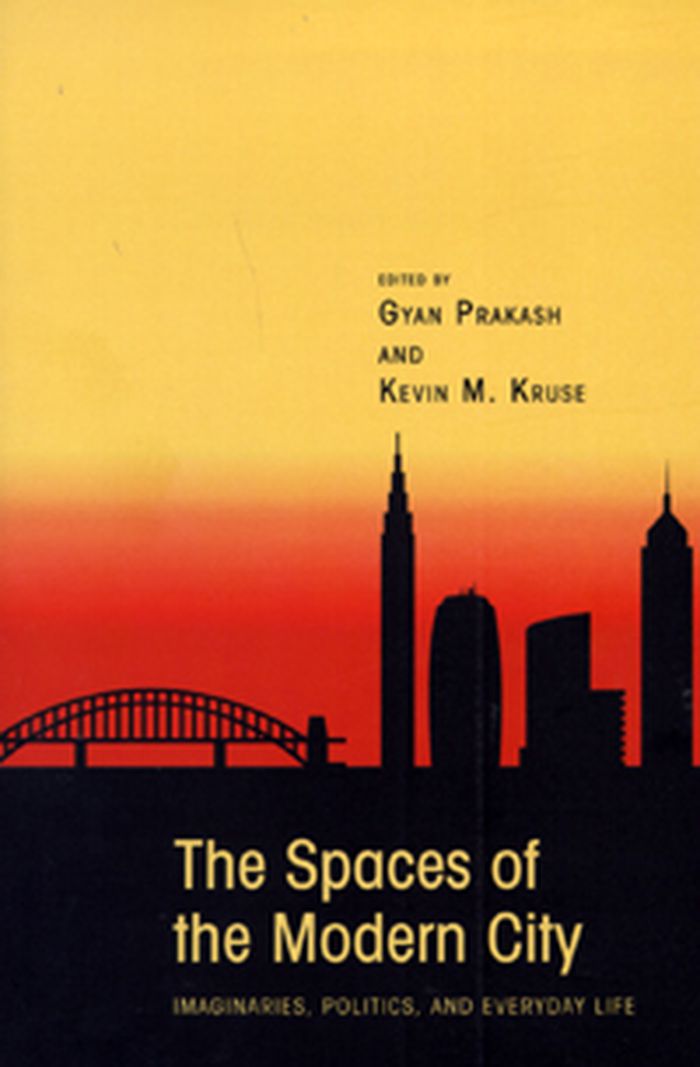
By United Nations estimates, 60 percent of the world's population will be urban by 2030. With the increasing speed of urbanization, especially in the developing world, scholars are now rethinking standard concepts and histories of modern cities. "The Spaces of the Modern City" historicizes the contemporary discussion of urbanism, highlighting the local and global breadth of the city landscape. This interdisciplinary collection examines how the city develops in the interactions of space and imagination. The essays focus on issues such as street design in Vienna, the motion picture industry in Los Angeles, architecture in Marseilles and Algiers, and the kaleidoscopic paradox of post-apartheid Johannesburg. They explore the nature of spatial politics, examining the disparate worlds of eighteenth-century Baghdad, nineteenth-century Morelia, Cold War-era West Berlin, and postwar Los Angeles. They also show the meaning of everyday spaces to urban life, illuminating issues such as crime in metropolitan London, youth culture in Dakar, "memory projects" in Tokyo, and Bombay cinema. Informed by a range of theoretical writings, this collection offers a fresh and truly global perspective on the nature of the modern city. The contributors are Sheila Crane, Belinda Davis, Mamadou Diouf, Philip J. Ethington, David Frisby, Christina M. Jiménez, Dina Rizk Khoury, Ranjani Mazumdar, Frank Mort, Martin Murray, Jordan Sand, and Sarah Schrank.
The Spaces of the Modern city : imaginaries, politics, and everyday life
Actions:
Price:
$36.95
(available to order)
Summary:
By United Nations estimates, 60 percent of the world's population will be urban by 2030. With the increasing speed of urbanization, especially in the developing world, scholars are now rethinking standard concepts and histories of modern cities. "The Spaces of the Modern City" historicizes the contemporary discussion of urbanism, highlighting the local and global breadth of the city landscape. This interdisciplinary collection examines how the city develops in the interactions of space and imagination. The essays focus on issues such as street design in Vienna, the motion picture industry in Los Angeles, architecture in Marseilles and Algiers, and the kaleidoscopic paradox of post-apartheid Johannesburg. They explore the nature of spatial politics, examining the disparate worlds of eighteenth-century Baghdad, nineteenth-century Morelia, Cold War-era West Berlin, and postwar Los Angeles. They also show the meaning of everyday spaces to urban life, illuminating issues such as crime in metropolitan London, youth culture in Dakar, "memory projects" in Tokyo, and Bombay cinema. Informed by a range of theoretical writings, this collection offers a fresh and truly global perspective on the nature of the modern city. The contributors are Sheila Crane, Belinda Davis, Mamadou Diouf, Philip J. Ethington, David Frisby, Christina M. Jiménez, Dina Rizk Khoury, Ranjani Mazumdar, Frank Mort, Martin Murray, Jordan Sand, and Sarah Schrank.
Form:
books
books
Publication:
February 2008, Princeton, Oxford
February 2008, Princeton, Oxford
Subject:
Urban Theory
Urban Theory
Form:
books
books
Title:
And the pursuit of happiness
And the pursuit of happiness
Actions:
Price:
$37.50
(available to order)
Summary:
This publication is beloved artist and author Maira Kalman's yearlong investigation of democracy and how it works. Energized and inspired by the 2008 elections, on inauguration day Kalman traveled to Washington, D.C., launching a national tour that would take her from a town hall meeting in Newfane, Vermont, to the inner chambers of the Supreme Court. As we follow(...)
$37.50
(available to order)
Summary:
This publication is beloved artist and author Maira Kalman's yearlong investigation of democracy and how it works. Energized and inspired by the 2008 elections, on inauguration day Kalman traveled to Washington, D.C., launching a national tour that would take her from a town hall meeting in Newfane, Vermont, to the inner chambers of the Supreme Court. As we follow(...)
Title:
And the pursuit of happiness
Actions:
Price:
$37.50
(available to order)
Summary:
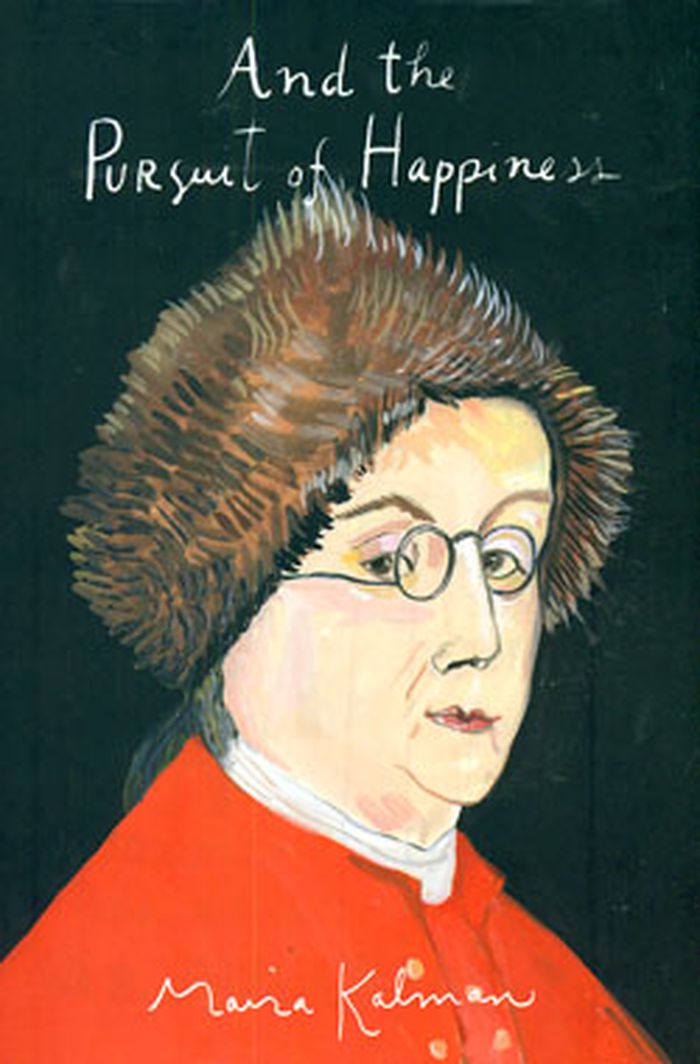
This publication is beloved artist and author Maira Kalman's yearlong investigation of democracy and how it works. Energized and inspired by the 2008 elections, on inauguration day Kalman traveled to Washington, D.C., launching a national tour that would take her from a town hall meeting in Newfane, Vermont, to the inner chambers of the Supreme Court. As we follow Kalman's wholly idiosyncratic journey, we fall in love with Lincoln alongside her as she imagines making a home for herself in the center of his magisterial memorial; ponder Alexis de Tocqueville's America; witness the inner workings of a Bronx middle-school student council; take a high-speed lesson in great American women in the National Portrait Gallery; and consider the cost of war to the brave American service families of Fort Campbell, Kentucky. The observations she makes as she travels charm and inform, and-as we have come to expect with Kalman-the route is always one of fascinating indirection. Kalman finds evidence of democracy at work all around us. And the cast of characters we meet along the way is rousing good company, featuring visits from Benjamin Franklin, Eleanor Roosevelt, and many others. And the Pursuit of Happiness is a remarkable tribute to our history and a powerful reminder of the potential our future holds, from a true national treasure.
And the pursuit of happiness
Actions:
Price:
$37.50
(available to order)
Summary:
This publication is beloved artist and author Maira Kalman's yearlong investigation of democracy and how it works. Energized and inspired by the 2008 elections, on inauguration day Kalman traveled to Washington, D.C., launching a national tour that would take her from a town hall meeting in Newfane, Vermont, to the inner chambers of the Supreme Court. As we follow Kalman's wholly idiosyncratic journey, we fall in love with Lincoln alongside her as she imagines making a home for herself in the center of his magisterial memorial; ponder Alexis de Tocqueville's America; witness the inner workings of a Bronx middle-school student council; take a high-speed lesson in great American women in the National Portrait Gallery; and consider the cost of war to the brave American service families of Fort Campbell, Kentucky. The observations she makes as she travels charm and inform, and-as we have come to expect with Kalman-the route is always one of fascinating indirection. Kalman finds evidence of democracy at work all around us. And the cast of characters we meet along the way is rousing good company, featuring visits from Benjamin Franklin, Eleanor Roosevelt, and many others. And the Pursuit of Happiness is a remarkable tribute to our history and a powerful reminder of the potential our future holds, from a true national treasure.
Form:
books
books
Publication:
February 2011
February 2011
Subject:
Illustration
Illustration
Form:
audio
audio
Actions:
Description:
1 online resource.
Author:
Subject:
Publication:
[Place of publication not identified] : Junior Aspirin Records, 2017.
[Place of publication not identified] : Junior Aspirin Records, 2017.
Form:
audio
audio
Publication:
[Place of publication not identified] : Junior Aspirin Records, 2017.
[Place of publication not identified] : Junior Aspirin Records, 2017.
Author:
Subject:
Form:
books
books
Actions:
Price:
$45.00
(available to order)
Summary:
As digital technology advances at breakneck speed, images are circulating quicker than ever before. But what is the status of the image in the digital era? In this publication, art historian Hubert Burda (born 1940) examines the "iconic turn" in ten themed chapters and conversations with leading cultural theorists. In the first chapter, "The View Through the Window,"(...)
$45.00
(available to order)
Summary:
As digital technology advances at breakneck speed, images are circulating quicker than ever before. But what is the status of the image in the digital era? In this publication, art historian Hubert Burda (born 1940) examines the "iconic turn" in ten themed chapters and conversations with leading cultural theorists. In the first chapter, "The View Through the Window,"(...)
Title:
The digital wunderkammer : 10 chapters on the iconic turn
Actions:
Price:
$45.00
(available to order)
Summary:
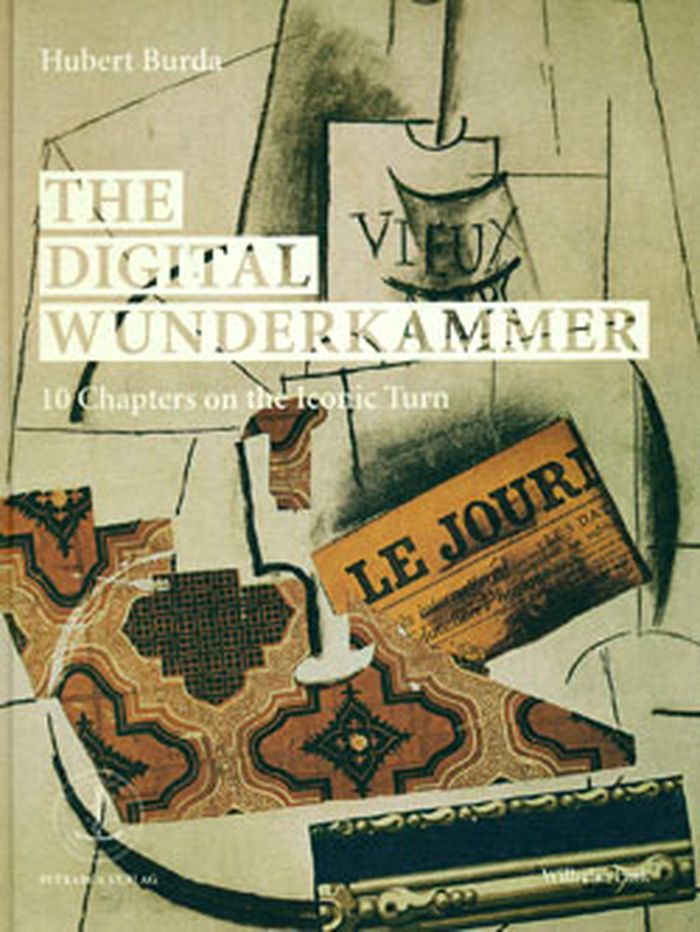
As digital technology advances at breakneck speed, images are circulating quicker than ever before. But what is the status of the image in the digital era? In this publication, art historian Hubert Burda (born 1940) examines the "iconic turn" in ten themed chapters and conversations with leading cultural theorists. In the first chapter, "The View Through the Window," Burda traces the connection between perspectival painting and the television, demonstrating in the second chapter how the image requires a frame, which in turn requires a material vehicle - the topic of the third chapter - that in our era has become a non-material vehicle with its own formal parameters. In the fourth chapter, "The Mobile Image," Burda shows how images have always been linked to portability, but now migrate to an unprecedented degree, so that anyone with a personal device can globally disseminate, say, footage from a concert via Youtube. A discussion of the capacity of individual images to placate or ennervate leads to a seventh chapter on the appetite for the Sublime and the rhetoric and representation of power throughout art history. Following a discussion of the democratization of celebrity culture, Burda proposes that the Google search box is perhaps the most interesting "interface" of our times, analogous to the seventeenth-century cabinet of curiosities (or wunderkammer). Conversations with Friedrich Kittler, Peter Sloterdijk, Bazon Brock, Horst Bredekamp and Hans Belting further extend this imaginative debate on the "iconic turn."
The digital wunderkammer : 10 chapters on the iconic turn
Actions:
Price:
$45.00
(available to order)
Summary:
As digital technology advances at breakneck speed, images are circulating quicker than ever before. But what is the status of the image in the digital era? In this publication, art historian Hubert Burda (born 1940) examines the "iconic turn" in ten themed chapters and conversations with leading cultural theorists. In the first chapter, "The View Through the Window," Burda traces the connection between perspectival painting and the television, demonstrating in the second chapter how the image requires a frame, which in turn requires a material vehicle - the topic of the third chapter - that in our era has become a non-material vehicle with its own formal parameters. In the fourth chapter, "The Mobile Image," Burda shows how images have always been linked to portability, but now migrate to an unprecedented degree, so that anyone with a personal device can globally disseminate, say, footage from a concert via Youtube. A discussion of the capacity of individual images to placate or ennervate leads to a seventh chapter on the appetite for the Sublime and the rhetoric and representation of power throughout art history. Following a discussion of the democratization of celebrity culture, Burda proposes that the Google search box is perhaps the most interesting "interface" of our times, analogous to the seventeenth-century cabinet of curiosities (or wunderkammer). Conversations with Friedrich Kittler, Peter Sloterdijk, Bazon Brock, Horst Bredekamp and Hans Belting further extend this imaginative debate on the "iconic turn."
Form:
books
books
Publication:
August 2011
August 2011
Subject:
Epistemology
Epistemology
Form:
audio
audio
Actions:
Description:
1 online resource.
Author:
Subject:
Publication:
[Place of publication not identified] : Lateral Addition, 2018.
[Place of publication not identified] : Lateral Addition, 2018.
Form:
audio
audio
Publication:
[Place of publication not identified] : Lateral Addition, 2018.
[Place of publication not identified] : Lateral Addition, 2018.
Author:
Subject:


