


474 Results
Form:
books
books
Title:
Greg Lynn Form
Greg Lynn Form
Actions:
Price:
$57.95
(available to order)
Summary:
Greg Lynn FORM has been at the cutting edge of design in the field of architecture when comes to the use of computer-aided design. The projects, publications, teachings and writings associated with the office have been influential in the acceptance and use of advanced technology for design and fabrication. Greg Lynn FORM was established in 1994 in Iloboken , NJ and(...)
$57.95
(available to order)
Summary:
Greg Lynn FORM has been at the cutting edge of design in the field of architecture when comes to the use of computer-aided design. The projects, publications, teachings and writings associated with the office have been influential in the acceptance and use of advanced technology for design and fabrication. Greg Lynn FORM was established in 1994 in Iloboken , NJ and(...)
Title:
Greg Lynn Form
Actions:
Price:
$57.95
(available to order)
Summary:
Greg Lynn FORM has been at the cutting edge of design in the field of architecture when comes to the use of computer-aided design. The projects, publications, teachings and writings associated with the office have been influential in the acceptance and use of advanced technology for design and fabrication. Greg Lynn FORM was established in 1994 in Iloboken , NJ and relocated to Venice, California in 1998 to take advantage of the knowledge and technology resources in both the manufacturing and entertainment industries of Southern California. The office is a design forward team that combines a unique specialization in exotic form and a creative ease and expertise with cutting edge design, manufacturing and construction techniques germane to the aeronautic, automobile and film industries of Southern California . The office is especially experienced in collaborative partnerships on international projects ranging from boutique interiors to public housing. Most recently the office collaborated with 5 well known design firms in a team called United Architects and submitted one of the the proposals for the World Trade center competition. Greg Lynn FORM is committed to design quality and innovation with the ability to take leadership roles within interdisciplinary design teams that fuse a variety of expert knowledge and resources.
Greg Lynn Form
Actions:
Price:
$57.95
(available to order)
Summary:
Greg Lynn FORM has been at the cutting edge of design in the field of architecture when comes to the use of computer-aided design. The projects, publications, teachings and writings associated with the office have been influential in the acceptance and use of advanced technology for design and fabrication. Greg Lynn FORM was established in 1994 in Iloboken , NJ and relocated to Venice, California in 1998 to take advantage of the knowledge and technology resources in both the manufacturing and entertainment industries of Southern California. The office is a design forward team that combines a unique specialization in exotic form and a creative ease and expertise with cutting edge design, manufacturing and construction techniques germane to the aeronautic, automobile and film industries of Southern California . The office is especially experienced in collaborative partnerships on international projects ranging from boutique interiors to public housing. Most recently the office collaborated with 5 well known design firms in a team called United Architects and submitted one of the the proposals for the World Trade center competition. Greg Lynn FORM is committed to design quality and innovation with the ability to take leadership roles within interdisciplinary design teams that fuse a variety of expert knowledge and resources.
Form:
books
books
Publication:
January 2007, Beijing
January 2007, Beijing
Subject:
Architecture Monographs
Architecture Monographs
Form:
books
books
Price:
$50.00
(available to order)
Summary:
They are places we fear to tread, monuments to the principles of our forebears, awe-inspiring towers of achievement : public institutions that sustain and support our lives are all around us. Scott Fortino investigates these enduring pillars of public life in "Institutional", a striking visual essay that documents the diverse architectural structures that house the(...)
$50.00
(available to order)
Summary:
They are places we fear to tread, monuments to the principles of our forebears, awe-inspiring towers of achievement : public institutions that sustain and support our lives are all around us. Scott Fortino investigates these enduring pillars of public life in "Institutional", a striking visual essay that documents the diverse architectural structures that house the(...)
Subject:
Photography monographs
Photography monographs
Publication:
September 2005, Santa Fe
September 2005, Santa Fe
Title:
Institutional : photographs of jails, schools, and other Chicago buildings
Actions:
Price:
$50.00
(available to order)
Summary:
They are places we fear to tread, monuments to the principles of our forebears, awe-inspiring towers of achievement : public institutions that sustain and support our lives are all around us. Scott Fortino investigates these enduring pillars of public life in "Institutional", a striking visual essay that documents the diverse architectural structures that house the foundations of civic life in the city of Chicago. From schools to churches to prisons, Fortino transforms these worn, familiar edifices into compelling symbols of long-lost ideals and communitarian spirit. Fortino coaxes out the subtle warmth and depths of these often overwhelming and pitiless public spaces in his photographs, as his camera reveals the hidden characters of both high-profile works by renowned designers such as Rem Koolhaas, Helmut Jahn, and Mies van der Rohe as well as the stolid structures designed by long-forgotten architects. Light, colour, and composition work together in Fortino's images to produce provocative new perspectives on the interiors of public buildings, revealing how their cultural and social roles as places of worship, education, punishment, or entertainment cast long and complex shadows over our lives. Fortino challenges us in "Institutional" to rethink our view of the public spaces we pass through every day by offering an original and fascinating photographic study of the settings in which the important events of human life unfold.
Institutional : photographs of jails, schools, and other Chicago buildings
Actions:
Price:
$50.00
(available to order)
Summary:
They are places we fear to tread, monuments to the principles of our forebears, awe-inspiring towers of achievement : public institutions that sustain and support our lives are all around us. Scott Fortino investigates these enduring pillars of public life in "Institutional", a striking visual essay that documents the diverse architectural structures that house the foundations of civic life in the city of Chicago. From schools to churches to prisons, Fortino transforms these worn, familiar edifices into compelling symbols of long-lost ideals and communitarian spirit. Fortino coaxes out the subtle warmth and depths of these often overwhelming and pitiless public spaces in his photographs, as his camera reveals the hidden characters of both high-profile works by renowned designers such as Rem Koolhaas, Helmut Jahn, and Mies van der Rohe as well as the stolid structures designed by long-forgotten architects. Light, colour, and composition work together in Fortino's images to produce provocative new perspectives on the interiors of public buildings, revealing how their cultural and social roles as places of worship, education, punishment, or entertainment cast long and complex shadows over our lives. Fortino challenges us in "Institutional" to rethink our view of the public spaces we pass through every day by offering an original and fascinating photographic study of the settings in which the important events of human life unfold.
Form:
books
books
Publication:
September 2005, Santa Fe
September 2005, Santa Fe
Subject:
Photography monographs
Photography monographs
Form:
books
books
Title:
Boring postcards
Boring postcards
Actions:
Price:
$14.95
(available to order)
Summary:
Martin Parr is a key figure in the world of photography and contemporary art. Some accuse him of cruelty, but many more appreciate the wit and irony with which he tackles such subjects as bad taste, food, the tourist, shopping and the foibles of the British. Parr has been collecting postcards for twenty years, and here is the cream of his collection – his boring(...)
$14.95
(available to order)
Summary:
Martin Parr is a key figure in the world of photography and contemporary art. Some accuse him of cruelty, but many more appreciate the wit and irony with which he tackles such subjects as bad taste, food, the tourist, shopping and the foibles of the British. Parr has been collecting postcards for twenty years, and here is the cream of his collection – his boring(...)
Title:
Boring postcards
Actions:
Price:
$14.95
(available to order)
Summary:
Martin Parr is a key figure in the world of photography and contemporary art. Some accuse him of cruelty, but many more appreciate the wit and irony with which he tackles such subjects as bad taste, food, the tourist, shopping and the foibles of the British. Parr has been collecting postcards for twenty years, and here is the cream of his collection – his boring postcards. With no introduction or commentary of any kind, Parr’s boring postcards are reproduced straight: they are exactly what they say they are, namely boring picture postcards showing boring photographs of boring places … presumably for boring people to buy to send to their boring friends. All of them are shot in Britain, taking us on a boring tour of its motorways, ring roads, traffic interchanges, bus stations, pedestrian precincts, factories, housing estates, airports, caravan sites, convalescent homes and shopping centres. Some attempt to idealize their subjects, only to fail dismally. Others lack any apparent purpose or interest … but the resultant collection of photographic images is wholly compelling. Boring Postcards is multi-layered: a commentary on British architecture, social life and identity, a record of a folk photography which is today being appropriated by the most fashionable photographers (including Parr), an exercise in sublime minimalism … and, above all, a richly comic photographic entertainment
Boring postcards
Actions:
Price:
$14.95
(available to order)
Summary:
Martin Parr is a key figure in the world of photography and contemporary art. Some accuse him of cruelty, but many more appreciate the wit and irony with which he tackles such subjects as bad taste, food, the tourist, shopping and the foibles of the British. Parr has been collecting postcards for twenty years, and here is the cream of his collection – his boring postcards. With no introduction or commentary of any kind, Parr’s boring postcards are reproduced straight: they are exactly what they say they are, namely boring picture postcards showing boring photographs of boring places … presumably for boring people to buy to send to their boring friends. All of them are shot in Britain, taking us on a boring tour of its motorways, ring roads, traffic interchanges, bus stations, pedestrian precincts, factories, housing estates, airports, caravan sites, convalescent homes and shopping centres. Some attempt to idealize their subjects, only to fail dismally. Others lack any apparent purpose or interest … but the resultant collection of photographic images is wholly compelling. Boring Postcards is multi-layered: a commentary on British architecture, social life and identity, a record of a folk photography which is today being appropriated by the most fashionable photographers (including Parr), an exercise in sublime minimalism … and, above all, a richly comic photographic entertainment
Form:
books
books
Publication:
February 2004, London
February 2004, London
Subject:
Theory of Photography
Theory of Photography
Form:
books
books
Title:
The birth of graffiti
The birth of graffiti
Actions:
Price:
$32.00
(available to order)
Summary:
The now global phenomenon of graffiti was first captured in New York by a professional photographer in early 1973. The result was Jon Naar's The Faith of Graffiti, the first and most celebrated book about this controversial new art form. Now the forty or so photographs in that book and more than one hundred additional never-before-published pictures from that landmark(...)
$32.00
(available to order)
Summary:
The now global phenomenon of graffiti was first captured in New York by a professional photographer in early 1973. The result was Jon Naar's The Faith of Graffiti, the first and most celebrated book about this controversial new art form. Now the forty or so photographs in that book and more than one hundred additional never-before-published pictures from that landmark(...)
Publication:
June 2007, Munich
June 2007, Munich
Title:
The birth of graffiti
Actions:
Price:
$32.00
(available to order)
Summary:
The now global phenomenon of graffiti was first captured in New York by a professional photographer in early 1973. The result was Jon Naar's The Faith of Graffiti, the first and most celebrated book about this controversial new art form. Now the forty or so photographs in that book and more than one hundred additional never-before-published pictures from that landmark body of work are brought together in a book destined to become a classic in its own right. Presented full-frame, at high resolution, and with meticulous attention to the original color, this book brings to life the gritty, exciting New York of the early 1970s and the raw visual power of early graffiti. While today graffiti is an accepted reality of city life--by turns condemned and embraced--these early photographs recall a time when subway cars and tenement walls seemed to explode overnight into bursts of color and energy. In most cases these ephemeral works survive only in Naar's masterful photographs. Sacha Jenkins, an authority on graffiti's history, puts these photographs in a broad historical context of an emerging youth culture that now reaches into every corner of art, fashion, and entertainment. At once nostalgic and inspirational, The Birth of Graffiti opens the way to a deeper appreciation of graffiti's historical and artistic significance.
The birth of graffiti
Actions:
Price:
$32.00
(available to order)
Summary:
The now global phenomenon of graffiti was first captured in New York by a professional photographer in early 1973. The result was Jon Naar's The Faith of Graffiti, the first and most celebrated book about this controversial new art form. Now the forty or so photographs in that book and more than one hundred additional never-before-published pictures from that landmark body of work are brought together in a book destined to become a classic in its own right. Presented full-frame, at high resolution, and with meticulous attention to the original color, this book brings to life the gritty, exciting New York of the early 1970s and the raw visual power of early graffiti. While today graffiti is an accepted reality of city life--by turns condemned and embraced--these early photographs recall a time when subway cars and tenement walls seemed to explode overnight into bursts of color and energy. In most cases these ephemeral works survive only in Naar's masterful photographs. Sacha Jenkins, an authority on graffiti's history, puts these photographs in a broad historical context of an emerging youth culture that now reaches into every corner of art, fashion, and entertainment. At once nostalgic and inspirational, The Birth of Graffiti opens the way to a deeper appreciation of graffiti's historical and artistic significance.
Form:
books
books
Publication:
June 2007, Munich
June 2007, Munich
Form:
books
books
Price:
$55.50
(available to order)
Summary:
Human obsolescence is imminent. The factories of the future will be dark, staffed by armies of tireless robots. The hospitals of the future will have fewer doctors, depending instead on cloud-based AI to diagnose patients and recommend treatments. The homes of the future will anticipate our wants and needs and provide all the entertainment, food, and distraction we could(...)
$55.50
(available to order)
Summary:
Human obsolescence is imminent. The factories of the future will be dark, staffed by armies of tireless robots. The hospitals of the future will have fewer doctors, depending instead on cloud-based AI to diagnose patients and recommend treatments. The homes of the future will anticipate our wants and needs and provide all the entertainment, food, and distraction we could(...)
Title:
Automation and utopia: human flourishing in a world without work
Actions:
Price:
$55.50
(available to order)
Summary:
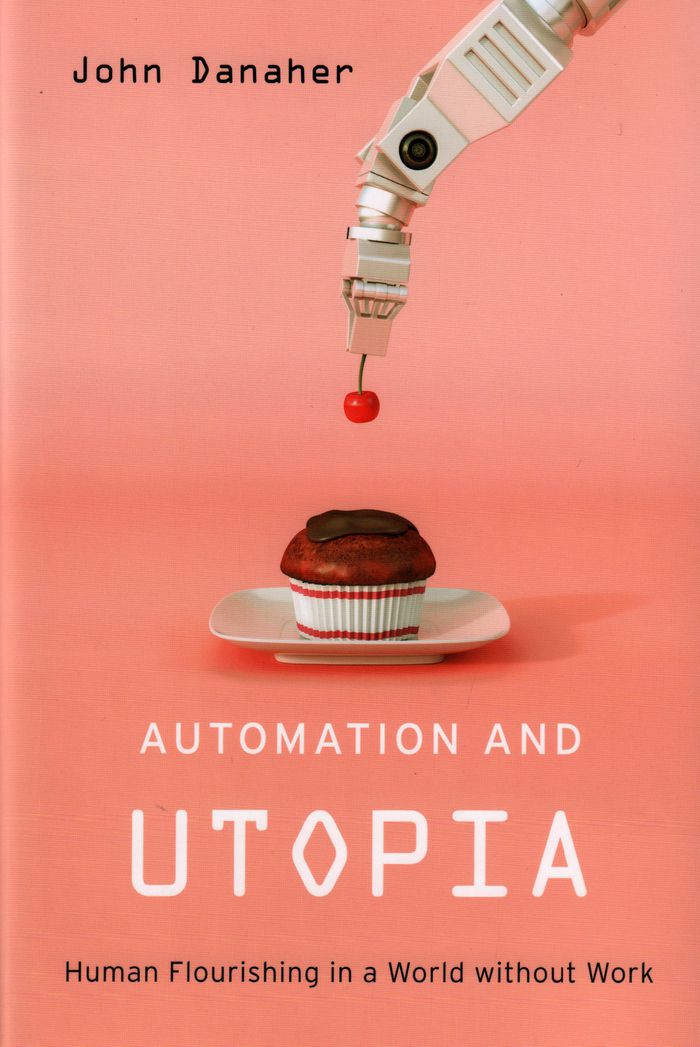
Human obsolescence is imminent. The factories of the future will be dark, staffed by armies of tireless robots. The hospitals of the future will have fewer doctors, depending instead on cloud-based AI to diagnose patients and recommend treatments. The homes of the future will anticipate our wants and needs and provide all the entertainment, food, and distraction we could ever desire. To many, this is a depressing prognosis, an image of civilization replaced by its machines. But what if an automated future is something to be welcomed rather than feared? Work is a source of misery and oppression for most people, so shouldn’t we do what we can to hasten its demise? Automation and Utopia makes the case for a world in which, free from need or want, we can spend our time inventing and playing games and exploring virtual realities that are more deeply engaging and absorbing than any we have experienced before, allowing us to achieve idealized forms of human flourishing. The idea that we should “give up” and retreat to the virtual may seem shocking, even distasteful. But John Danaher urges us to embrace the possibilities of this new existence. The rise of automating technologies presents a utopian moment for humankind, providing both the motive and the means to build a better future.
Automation and utopia: human flourishing in a world without work
Actions:
Price:
$55.50
(available to order)
Summary:
Human obsolescence is imminent. The factories of the future will be dark, staffed by armies of tireless robots. The hospitals of the future will have fewer doctors, depending instead on cloud-based AI to diagnose patients and recommend treatments. The homes of the future will anticipate our wants and needs and provide all the entertainment, food, and distraction we could ever desire. To many, this is a depressing prognosis, an image of civilization replaced by its machines. But what if an automated future is something to be welcomed rather than feared? Work is a source of misery and oppression for most people, so shouldn’t we do what we can to hasten its demise? Automation and Utopia makes the case for a world in which, free from need or want, we can spend our time inventing and playing games and exploring virtual realities that are more deeply engaging and absorbing than any we have experienced before, allowing us to achieve idealized forms of human flourishing. The idea that we should “give up” and retreat to the virtual may seem shocking, even distasteful. But John Danaher urges us to embrace the possibilities of this new existence. The rise of automating technologies presents a utopian moment for humankind, providing both the motive and the means to build a better future.
Form:
books
books
Publication:
September 2019
September 2019
Subject:
Architectural Theory
Architectural Theory
Form:
books
books
Actions:
Price:
$53.95
(available to order)
Summary:
What is it about Times Square that has inspired such attention for well over a century? And how is it that, despite its many changes of character, the place has maintained a unique hold on our collective imagination? In this book, which comes twenty years after her widely acclaimed Times Square Roulette, Lynne Sagalyn masterfully tells the story of profound urban change(...)
$53.95
(available to order)
Summary:
What is it about Times Square that has inspired such attention for well over a century? And how is it that, despite its many changes of character, the place has maintained a unique hold on our collective imagination? In this book, which comes twenty years after her widely acclaimed Times Square Roulette, Lynne Sagalyn masterfully tells the story of profound urban change(...)
Title:
Times Square remade: The dynamics of urban change
Actions:
Price:
$53.95
(available to order)
Summary:
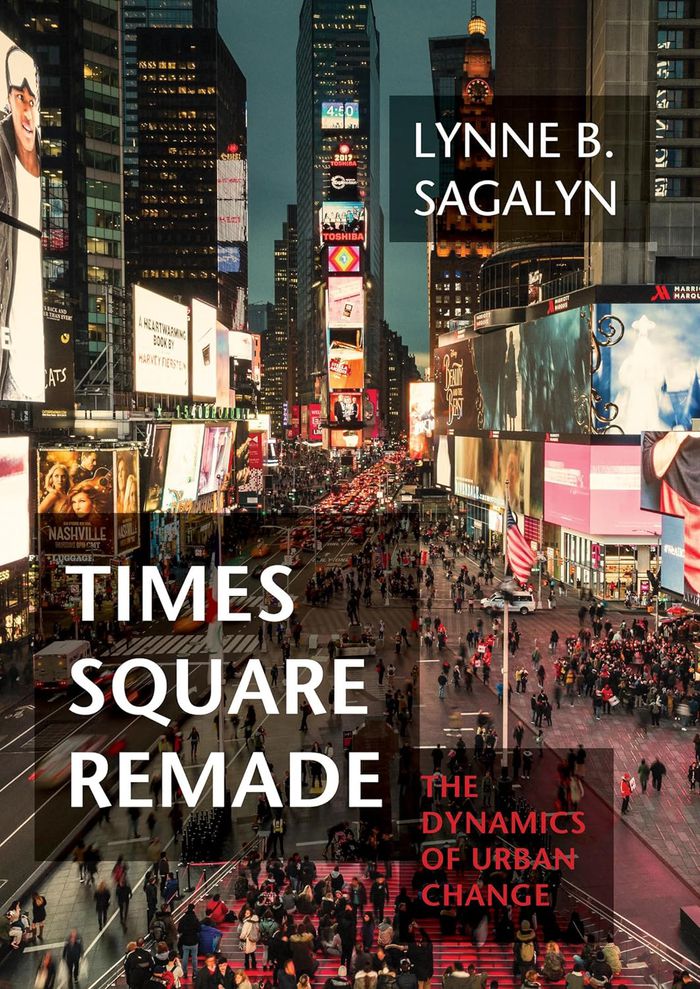
What is it about Times Square that has inspired such attention for well over a century? And how is it that, despite its many changes of character, the place has maintained a unique hold on our collective imagination? In this book, which comes twenty years after her widely acclaimed Times Square Roulette, Lynne Sagalyn masterfully tells the story of profound urban change over decades in the symbolic space that is New York City’s Times Square. Drawing on the history, sociology, and political economy of the place, ''Times Square remade'' examines how the public-private transformation of 42nd Street at Times Square impacted the entertainment district and adjacent neighborhoods, particularly Hell’s Kitchen. Sagalyn chronicles the earliest halcyon days of 42nd Street and Times Square as the nexus of speculation and competitive theater building as well as its darkest days as vice central, and on to the years of aggressive government intervention to cleanse West 42nd Street of pornography and crime. Thematically, the author analyzes the three main forces that have shaped and reshaped Times Square—theater, real estate, and pornography—and explains the politics and economics of what got built and what has been restored or preserved. Accompanied by nearly 160 images, more than half in color, ''Times Square remade'' is a deftly woven narrative of urban transformation that will appeal as much to the general reader and New York City enthusiast as to urbanists, city planners, architects, urban designers, and policymakers.
Times Square remade: The dynamics of urban change
Actions:
Price:
$53.95
(available to order)
Summary:
What is it about Times Square that has inspired such attention for well over a century? And how is it that, despite its many changes of character, the place has maintained a unique hold on our collective imagination? In this book, which comes twenty years after her widely acclaimed Times Square Roulette, Lynne Sagalyn masterfully tells the story of profound urban change over decades in the symbolic space that is New York City’s Times Square. Drawing on the history, sociology, and political economy of the place, ''Times Square remade'' examines how the public-private transformation of 42nd Street at Times Square impacted the entertainment district and adjacent neighborhoods, particularly Hell’s Kitchen. Sagalyn chronicles the earliest halcyon days of 42nd Street and Times Square as the nexus of speculation and competitive theater building as well as its darkest days as vice central, and on to the years of aggressive government intervention to cleanse West 42nd Street of pornography and crime. Thematically, the author analyzes the three main forces that have shaped and reshaped Times Square—theater, real estate, and pornography—and explains the politics and economics of what got built and what has been restored or preserved. Accompanied by nearly 160 images, more than half in color, ''Times Square remade'' is a deftly woven narrative of urban transformation that will appeal as much to the general reader and New York City enthusiast as to urbanists, city planners, architects, urban designers, and policymakers.
Form:
books
books
Publication:
October 2023
October 2023
Subject:
Urban Theory
Urban Theory
Form:
books
books
Price:
$33.95
(available to order)
Summary:
Increasingly we live through our personal screens; we work, play, socialize, and learn digitally. The shift to remote everything during the pandemic was another step in a decades-long march toward the digitization of everyday life made possible by innovations in media, information, and communication technology. In "The Digital Environment," Pablo Boczkowski and Eugenia(...)
$33.95
(available to order)
Summary:
Increasingly we live through our personal screens; we work, play, socialize, and learn digitally. The shift to remote everything during the pandemic was another step in a decades-long march toward the digitization of everyday life made possible by innovations in media, information, and communication technology. In "The Digital Environment," Pablo Boczkowski and Eugenia(...)
Title:
The digital environment: How we live, learn, work and play now
Actions:
Price:
$33.95
(available to order)
Summary:
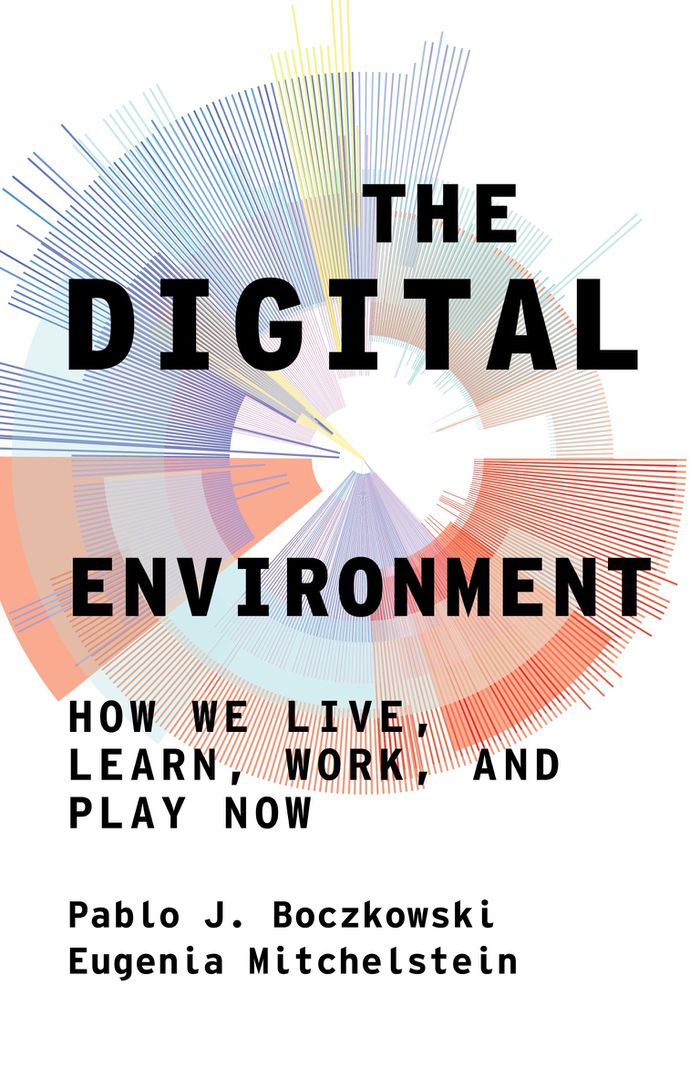
Increasingly we live through our personal screens; we work, play, socialize, and learn digitally. The shift to remote everything during the pandemic was another step in a decades-long march toward the digitization of everyday life made possible by innovations in media, information, and communication technology. In "The Digital Environment," Pablo Boczkowski and Eugenia Mitchelstein offer a new way to understand the role of the digital in our daily lives, calling on us to turn our attention from our discrete devices and apps to the array of artifacts and practices that make up the digital environment that envelops every aspect of our social experience. Boczkowski and Mitchelstein explore a series of issues raised by the digital takeover of everyday life, drawing on interviews with a variety of experts. They show how existing inequities of gender, race, ethnicity, education, and class are baked into the design and deployment of technology, and describe emancipatory practices that counter this–including the use of Twitter as a platform for activism through such hashtags as #BlackLivesMatter and #MeToo. They discuss the digitization of parenting, schooling, and dating–noting, among other things, that today we can both begin and end relationships online. They describe how digital media shape our consumption of sports, entertainment, and news, and consider the dynamics of political campaigns, disinformation, and social activism. Finally, they report on developments in three areas that will be key to our digital future: data science, virtual reality, and space exploration.
The digital environment: How we live, learn, work and play now
Actions:
Price:
$33.95
(available to order)
Summary:
Increasingly we live through our personal screens; we work, play, socialize, and learn digitally. The shift to remote everything during the pandemic was another step in a decades-long march toward the digitization of everyday life made possible by innovations in media, information, and communication technology. In "The Digital Environment," Pablo Boczkowski and Eugenia Mitchelstein offer a new way to understand the role of the digital in our daily lives, calling on us to turn our attention from our discrete devices and apps to the array of artifacts and practices that make up the digital environment that envelops every aspect of our social experience. Boczkowski and Mitchelstein explore a series of issues raised by the digital takeover of everyday life, drawing on interviews with a variety of experts. They show how existing inequities of gender, race, ethnicity, education, and class are baked into the design and deployment of technology, and describe emancipatory practices that counter this–including the use of Twitter as a platform for activism through such hashtags as #BlackLivesMatter and #MeToo. They discuss the digitization of parenting, schooling, and dating–noting, among other things, that today we can both begin and end relationships online. They describe how digital media shape our consumption of sports, entertainment, and news, and consider the dynamics of political campaigns, disinformation, and social activism. Finally, they report on developments in three areas that will be key to our digital future: data science, virtual reality, and space exploration.
Form:
books
books
Publication:
August 2021
August 2021
Subject:
Social
Social
Form:
books
books
Title:
The Hollywood sign
The Hollywood sign
Actions:
Price:
$27.95
(available to order)
Summary:
Hollywood's famous sign, constructed of massive white block letters set into a steep hillside, is an emblem of the movie capital it looms over and an international symbol of glamour and star power. To so many who see its image, the sign represents the earthly home of that otherwise ethereal world of fame, stardom, and celebrity -the goal of American and worldwide(...)
$27.95
(available to order)
Summary:
Hollywood's famous sign, constructed of massive white block letters set into a steep hillside, is an emblem of the movie capital it looms over and an international symbol of glamour and star power. To so many who see its image, the sign represents the earthly home of that otherwise ethereal world of fame, stardom, and celebrity -the goal of American and worldwide(...)
Title:
The Hollywood sign
Actions:
Price:
$27.95
(available to order)
Summary:
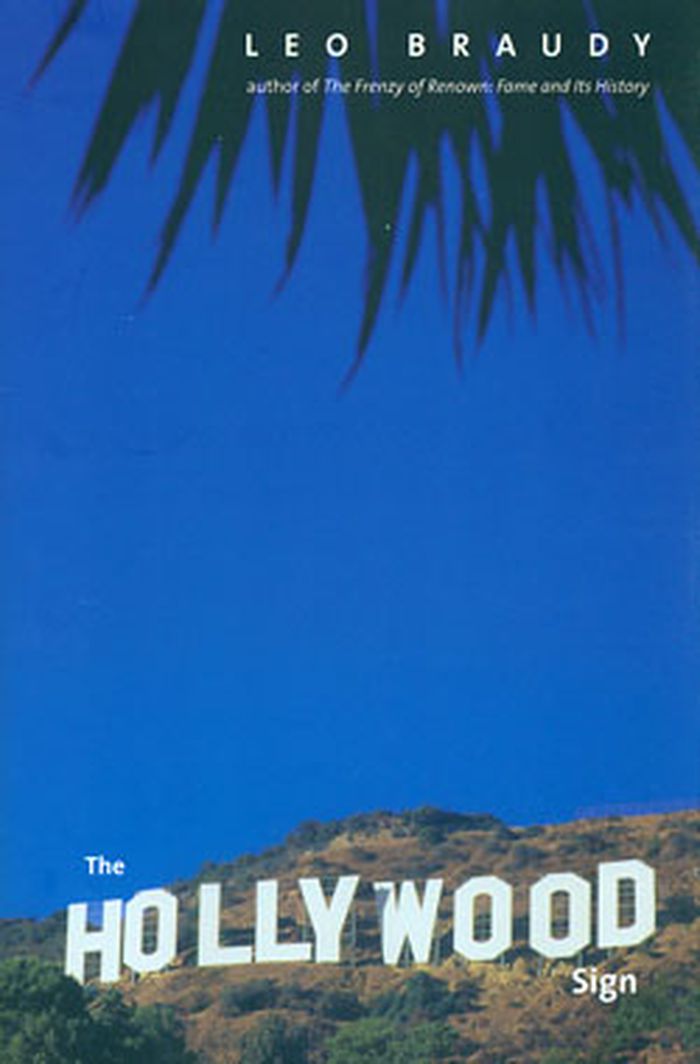
Hollywood's famous sign, constructed of massive white block letters set into a steep hillside, is an emblem of the movie capital it looms over and an international symbol of glamour and star power. To so many who see its image, the sign represents the earthly home of that otherwise ethereal world of fame, stardom, and celebrity -the goal of American and worldwide aspiration to be in the limelight, to be, like the Hollywood sign itself, instantly recognizable. How an advertisement erected in 1923, touting the real estate development Hollywoodland, took on a life of its own is a story worthy of the entertainment world that is its focus. Leo Braudy traces the remarkable history of this distinctly American landmark, which has been saved over the years by a disparate group of fans and supporters, among them Alice Cooper and Hugh Hefner, who spearheaded its reconstruction in the 1970s. He also uses the sign's history to offer an intriguing look at the rise of the movie business from its earliest, silent days through the development of the studio system that helped define modern Hollywood. Mixing social history, urban studies, literature, and film, along with forays into such topics as the lure of Hollywood for utopian communities and the development of domestic architecture in Los Angeles, The Hollywood Sign is a fascinating account of how a temporary structure has become a permanent icon of American culture.
The Hollywood sign
Actions:
Price:
$27.95
(available to order)
Summary:
Hollywood's famous sign, constructed of massive white block letters set into a steep hillside, is an emblem of the movie capital it looms over and an international symbol of glamour and star power. To so many who see its image, the sign represents the earthly home of that otherwise ethereal world of fame, stardom, and celebrity -the goal of American and worldwide aspiration to be in the limelight, to be, like the Hollywood sign itself, instantly recognizable. How an advertisement erected in 1923, touting the real estate development Hollywoodland, took on a life of its own is a story worthy of the entertainment world that is its focus. Leo Braudy traces the remarkable history of this distinctly American landmark, which has been saved over the years by a disparate group of fans and supporters, among them Alice Cooper and Hugh Hefner, who spearheaded its reconstruction in the 1970s. He also uses the sign's history to offer an intriguing look at the rise of the movie business from its earliest, silent days through the development of the studio system that helped define modern Hollywood. Mixing social history, urban studies, literature, and film, along with forays into such topics as the lure of Hollywood for utopian communities and the development of domestic architecture in Los Angeles, The Hollywood Sign is a fascinating account of how a temporary structure has become a permanent icon of American culture.
Form:
books
books
Publication:
March 2011
March 2011
Subject:
Signage
Signage
Form:
books
books
Actions:
Price:
$41.95
(available to order)
Summary:
During the economic boom of the 1990's, art museums expanded dramatically in size, scope, and ambition. They came to be seen as new civic centers : on the one hand as places of entertainment, leisure, and commerce, on the other as socially therapeutic institutions. But museums were also criticized for everything from elitism to looting or illegally exporting works from(...)
$41.95
(available to order)
Summary:
During the economic boom of the 1990's, art museums expanded dramatically in size, scope, and ambition. They came to be seen as new civic centers : on the one hand as places of entertainment, leisure, and commerce, on the other as socially therapeutic institutions. But museums were also criticized for everything from elitism to looting or illegally exporting works from(...)
Subject:
Museums and Universal Exhibitions
Museums and Universal Exhibitions
Publication:
January 2004, Princeton / Cambridge, Mass.
January 2004, Princeton / Cambridge, Mass.
Title:
Whose muse? : art museums and the public trust
Actions:
Price:
$41.95
(available to order)
Summary:
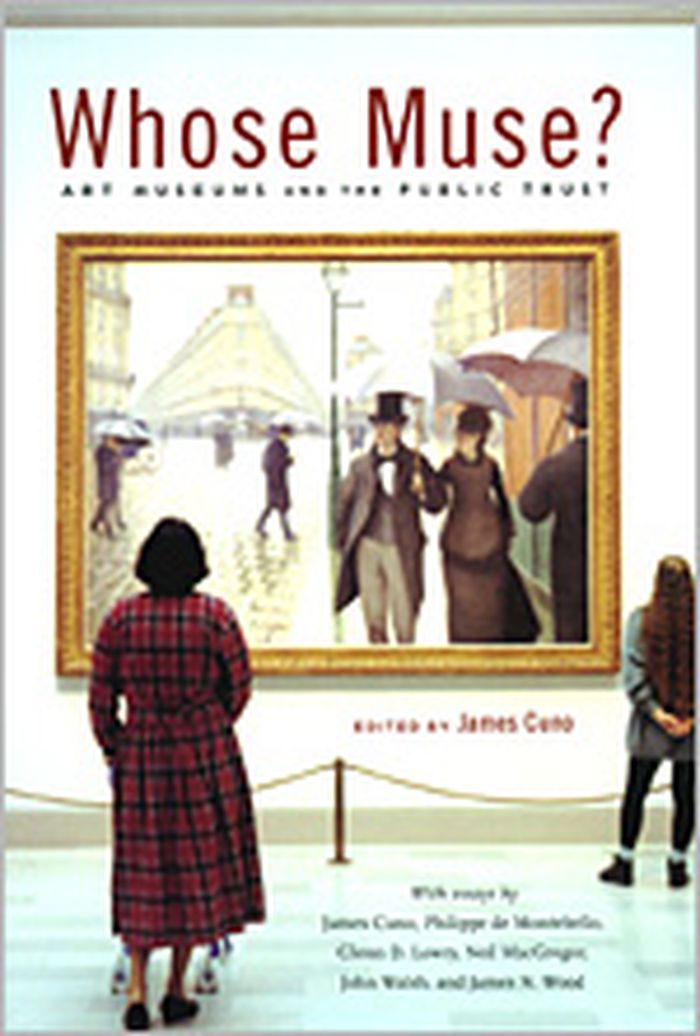
During the economic boom of the 1990's, art museums expanded dramatically in size, scope, and ambition. They came to be seen as new civic centers : on the one hand as places of entertainment, leisure, and commerce, on the other as socially therapeutic institutions. But museums were also criticized for everything from elitism to looting or illegally exporting works from other countries, to exhibiting works offensive to the public taste. "Whose Muse?" brings together five directors of leading American and British art museums who together offer a forward-looking alternative to such prevailing views. While their approaches differ, certain themes recur : as museums have become increasingly complex and costly to manage, and as government support has waned, the temptation is great to follow policies driven not by a mission but by the market. However, the directors concur that public trust can be upheld only if museums continue to see their core mission as building collections that reflect a nation's artistic legacy and providing informed and unfettered access to them. The book, based on a lecture series of the same title held in 2000-2001 by the Harvard Program for Art Museum Directors, also includes an introduction by Cuno and a fascinating - and surprisingly frank - roundtable discussion among the participating directors. A rare collection of sustained reflections by prominent museum directors on the current state of affairs in their profession, this book is without equal. It will be read widely not only by museum professionals, trustees, critics, and scholars, but also by the art-loving public itself.
Whose muse? : art museums and the public trust
Actions:
Price:
$41.95
(available to order)
Summary:
During the economic boom of the 1990's, art museums expanded dramatically in size, scope, and ambition. They came to be seen as new civic centers : on the one hand as places of entertainment, leisure, and commerce, on the other as socially therapeutic institutions. But museums were also criticized for everything from elitism to looting or illegally exporting works from other countries, to exhibiting works offensive to the public taste. "Whose Muse?" brings together five directors of leading American and British art museums who together offer a forward-looking alternative to such prevailing views. While their approaches differ, certain themes recur : as museums have become increasingly complex and costly to manage, and as government support has waned, the temptation is great to follow policies driven not by a mission but by the market. However, the directors concur that public trust can be upheld only if museums continue to see their core mission as building collections that reflect a nation's artistic legacy and providing informed and unfettered access to them. The book, based on a lecture series of the same title held in 2000-2001 by the Harvard Program for Art Museum Directors, also includes an introduction by Cuno and a fascinating - and surprisingly frank - roundtable discussion among the participating directors. A rare collection of sustained reflections by prominent museum directors on the current state of affairs in their profession, this book is without equal. It will be read widely not only by museum professionals, trustees, critics, and scholars, but also by the art-loving public itself.
Form:
books
books
Publication:
January 2004, Princeton / Cambridge, Mass.
January 2004, Princeton / Cambridge, Mass.
Subject:
Museums and Universal Exhibitions
Museums and Universal Exhibitions
Form:
books
books
Actions:
Price:
$29.95
(available to order)
Summary:
In this publication, the Indonesian architectural and urban historian Abidin Kusno explores the connections between the built environment and political consciousness in Indonesia during the colonial and postcolonial eras. Focusing primarily on Jakarta, he describes how perceptions of the past, anxieties about the rapid pace of change in the present, and hopes for the(...)
$29.95
(available to order)
Summary:
In this publication, the Indonesian architectural and urban historian Abidin Kusno explores the connections between the built environment and political consciousness in Indonesia during the colonial and postcolonial eras. Focusing primarily on Jakarta, he describes how perceptions of the past, anxieties about the rapid pace of change in the present, and hopes for the(...)
Title:
The appearances of memory : mnemonic practices of architecture and urban form in Indonesia
Actions:
Price:
$29.95
(available to order)
Summary:
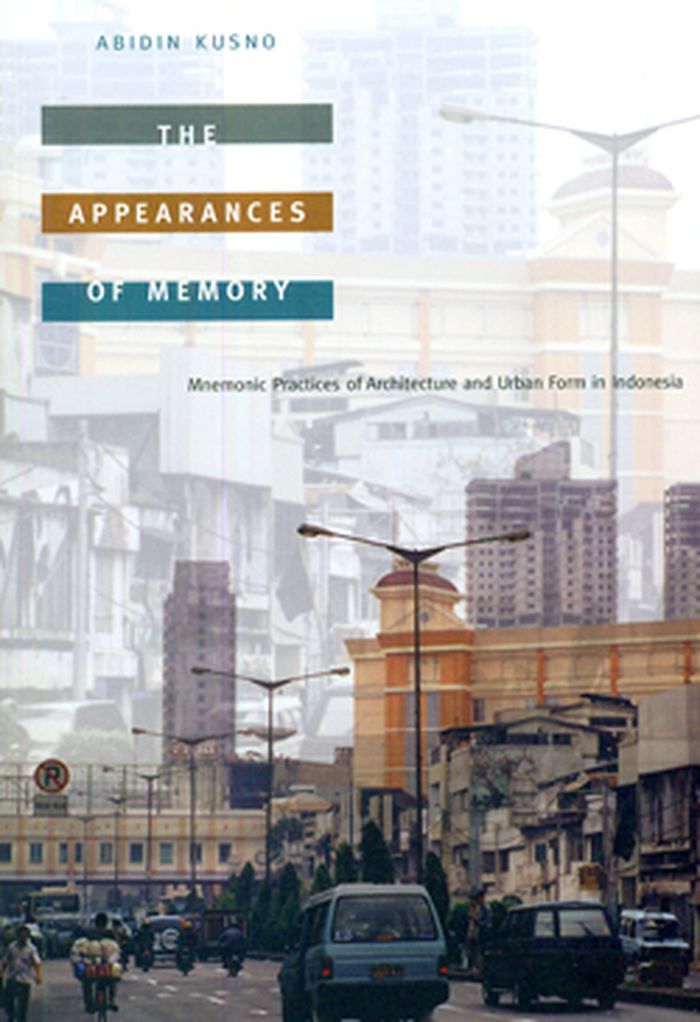
In this publication, the Indonesian architectural and urban historian Abidin Kusno explores the connections between the built environment and political consciousness in Indonesia during the colonial and postcolonial eras. Focusing primarily on Jakarta, he describes how perceptions of the past, anxieties about the rapid pace of change in the present, and hopes for the future have been embodied in architecture and urban space at different historical moments. He argues that the built environment serves as a reminder of the practices of the past and an instantiation of the desire to remake oneself within, as well as beyond, one’s particular time and place. Addressing developments in Indonesia since the fall of President Suharto’s regime in 1998, Kusno delves into such topics as the domestication of traumatic violence and the restoration of order in the urban space, the intense interest in urban history in contemporary Indonesia, and the implications of "superblocks", large urban complexes consisting of residences, offices, shops, and entertainment venues. Moving farther back in time, he examines how Indonesian architects reinvented colonial architectural styles to challenge the political culture of the state, how colonial structures such as railway and commercial buildings created a new, politically charged cognitive map of cities in Java in the early twentieth century, and how the Dutch, in attempting to quell dissent, imposed a distinctive urban visual order in the 1930s. Finally, the present and the past meet in his long-term considerations of how Java has responded to the global flow of Islamic architecture, and how the meanings of Indonesian gatehouses have changed and persisted over time.
The appearances of memory : mnemonic practices of architecture and urban form in Indonesia
Actions:
Price:
$29.95
(available to order)
Summary:
In this publication, the Indonesian architectural and urban historian Abidin Kusno explores the connections between the built environment and political consciousness in Indonesia during the colonial and postcolonial eras. Focusing primarily on Jakarta, he describes how perceptions of the past, anxieties about the rapid pace of change in the present, and hopes for the future have been embodied in architecture and urban space at different historical moments. He argues that the built environment serves as a reminder of the practices of the past and an instantiation of the desire to remake oneself within, as well as beyond, one’s particular time and place. Addressing developments in Indonesia since the fall of President Suharto’s regime in 1998, Kusno delves into such topics as the domestication of traumatic violence and the restoration of order in the urban space, the intense interest in urban history in contemporary Indonesia, and the implications of "superblocks", large urban complexes consisting of residences, offices, shops, and entertainment venues. Moving farther back in time, he examines how Indonesian architects reinvented colonial architectural styles to challenge the political culture of the state, how colonial structures such as railway and commercial buildings created a new, politically charged cognitive map of cities in Java in the early twentieth century, and how the Dutch, in attempting to quell dissent, imposed a distinctive urban visual order in the 1930s. Finally, the present and the past meet in his long-term considerations of how Java has responded to the global flow of Islamic architecture, and how the meanings of Indonesian gatehouses have changed and persisted over time.
Form:
books
books
Publication:
April 2010
April 2010
Subject:
History until 1900, Asia
History until 1900, Asia


