


462 Results
Form:
books
books
Actions:
Price:
$82.95
(available in store)
Summary:
Of all the visual arts, illustration shares a unique relationship with the written word, often serving to visualize, enhance, or respond to a text. "Reading Pictures" presents a global history of this versatile art form, linking its emergence to modern developments such as the illustrated news, recreational reading, and ad-driven consumer culture. From the advent of(...)
Title:
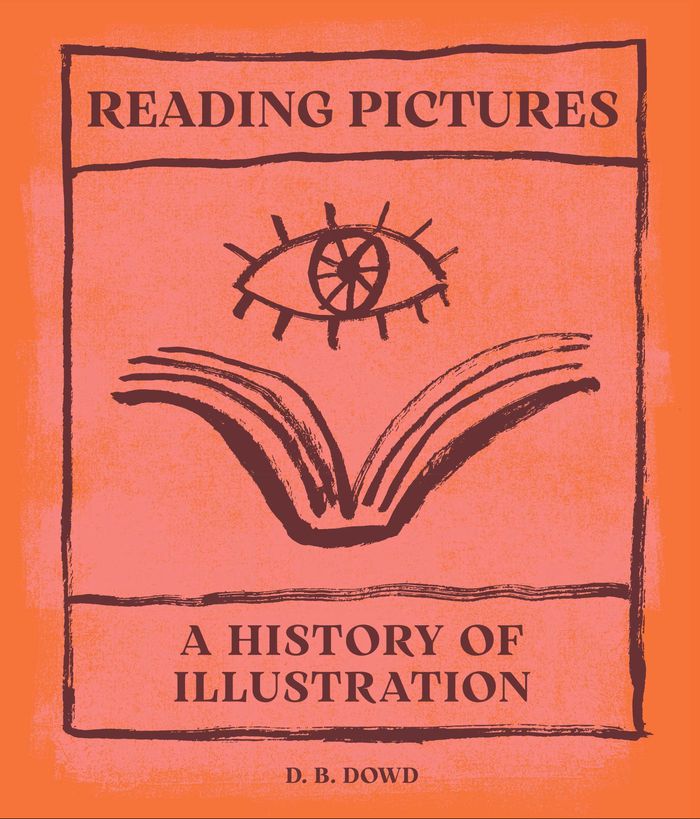
Reading pictures: A history of illustration
Actions:
Price:
$82.95
(available in store)
Summary:
Of all the visual arts, illustration shares a unique relationship with the written word, often serving to visualize, enhance, or respond to a text. "Reading Pictures" presents a global history of this versatile art form, linking its emergence to modern developments such as the illustrated news, recreational reading, and ad-driven consumer culture. From the advent of the printing press in the mid-fifteenth century to the modernist artistic and cultural movements of the nineteenth and twentieth centuries, D. B. Dowd traces the development of illustration as an integral part of the reading experience. He examines the move from ancient scrolls to pamphlets and book forms, and a return to the scroll in electronic form on smartphones and tablets. His story begins with relief prints and woodcuts in ancient China and Japan before moving to printing and platemaking in early modern Europe. Dowd discusses how book and periodical publishing rose sharply with the innovations of wood engraving and lithography, leading to a boom in cultural literacy; and how the illustrated press reached its zenith between the 1860s and 1960s, as printed entertainment and the news of the world became commonplace in every household, bringing with them advertising, propaganda, and consumer culture. Richly illustrated with more than four hundred images spanning the iconic to the unexpected, Reading Pictures reframes the story of illustration within the broader histories of race, gender, literacy, and the transmission of cultural memory. It reveals how reading and looking have become increasingly integrated, and that, as images have become ever more prevalent today with the digital revolution, what is meant by literacy has evolved.
Form:
books
books
Publication:
April 2026
April 2026
Subject:
Illustration
Illustration
Form:
books
books
Actions:
Price:
$99.95
(available to order)
Summary:
While the history of photography is a well-established canon, much less critical attention has been directed at the phenomenon of the photobook, which for many photographers is perhaps the most significant vehicle for the display of their work and the communication of their vision to a mass audience. In the first of two volumes, both co-edited by Martin Parr and Gerry(...)
Subject:
Photography Collections
Photography Collections
Publication:
November 2004, London
November 2004, London
Title:
The photobook : a history, volume 1
Actions:
Price:
$99.95
(available to order)
Summary:
While the history of photography is a well-established canon, much less critical attention has been directed at the phenomenon of the photobook, which for many photographers is perhaps the most significant vehicle for the display of their work and the communication of their vision to a mass audience. In the first of two volumes, both co-edited by Martin Parr and Gerry Badger, "The Photobook" provides a comprehensive overview of the development of the photobook, from its inception at the dawn of photography in the early nineteenth century through to the radical Japanese photobooks of the 1960s and 70s, by way of the modernist and propaganda books of the 1930s and 40s. In his introduction, Badger argues that the photobook is one of the most significant photographic genres due to the extent of its distribution and level of availability, and contests the traditional notion that the history of photography is best represented by the original print. This study provides an important corrective to the traditional history of photography. The selection of photographers made by Badger and Parr challenges the popular canon, and their survey of the history of the photobook reveals a secret web of influence and interrelationships between photographers and photographic movements around the world. The book is divided into a series of thematic and broadly chronological chapters, each featuring a general introductory text providing background information and highlighting the dominant political and artistic influences on the photobook in the period, followed by more detailed discussion of the individual photobooks. The chapter texts are followed by spreads and images from over 200 books, which provide the central means of telling the history of the photobook. Chosen by Parr and Badger, these illustrations show around 200 of the most artistically and culturally important photobooks in three dimensions, with the cover or jacket and a selection of spreads from the book shown. Volume One also features an illuminating and provocative introduction, ‘The Photobook: Between the Film and the Novel’ by Badger, which is accompanied by a preface written by Parr.
Form:
books
books
Publication:
November 2004, London
November 2004, London
Subject:
Photography Collections
Photography Collections


