


10808 Results
Level of archival description:
Project
Project
Reference number:
AP206.S1.1981.PR01
Description:
This project series documents a residence for Aditya Prakash in Chandigarh, India in 1981, and later, the addition of a studio to the house around 1992. Located on plot no. 18 on Street B in Sector 8C, the residence was two-storeys in height with a barsati and terrace making up the second floor. The studio addition was also two-storeys, with his architectural offices on the ground level and his painting studio above.[1] The studio's façade was marked with distinctive geometric windows of varying shapes and sizes that were red, blue and yellow in colour. The project is recorded through original drawings of plans, elevations, sections and perspectives of both the home and studio addition, dating from around 1981-1992. [1] Vikramaditya Prakash, One Continuous Line: Art, Architecture and Urbanism of Aditya Prakash (Ahmedabad, India: Mapin Publishing Pvt. Ltd., 2019), 232.
AP206.S1.1981.PR01
Description:
This project series documents a residence for Aditya Prakash in Chandigarh, India in 1981, and later, the addition of a studio to the house around 1992. Located on plot no. 18 on Street B in Sector 8C, the residence was two-storeys in height with a barsati and terrace making up the second floor. The studio addition was also two-storeys, with his architectural offices on the ground level and his painting studio above.[1] The studio's façade was marked with distinctive geometric windows of varying shapes and sizes that were red, blue and yellow in colour. The project is recorded through original drawings of plans, elevations, sections and perspectives of both the home and studio addition, dating from around 1981-1992. [1] Vikramaditya Prakash, One Continuous Line: Art, Architecture and Urbanism of Aditya Prakash (Ahmedabad, India: Mapin Publishing Pvt. Ltd., 2019), 232.
People:
Date:
circa 1981-1992
circa 1981-1992
Title:
Residence for Shri Aditya Prakash, Chandigarh, India (circa 1981-1992)
Actions:
AP206.S1.1981.PR01
Description:
This project series documents a residence for Aditya Prakash in Chandigarh, India in 1981, and later, the addition of a studio to the house around 1992. Located on plot no. 18 on Street B in Sector 8C, the residence was two-storeys in height with a barsati and terrace making up the second floor. The studio addition was also two-storeys, with his architectural offices on the ground level and his painting studio above.[1] The studio's façade was marked with distinctive geometric windows of varying shapes and sizes that were red, blue and yellow in colour. The project is recorded through original drawings of plans, elevations, sections and perspectives of both the home and studio addition, dating from around 1981-1992. [1] Vikramaditya Prakash, One Continuous Line: Art, Architecture and Urbanism of Aditya Prakash (Ahmedabad, India: Mapin Publishing Pvt. Ltd., 2019), 232.
Residence for Shri Aditya Prakash, Chandigarh, India (circa 1981-1992)
Actions:
AP206.S1.1981.PR01
Description:
This project series documents a residence for Aditya Prakash in Chandigarh, India in 1981, and later, the addition of a studio to the house around 1992. Located on plot no. 18 on Street B in Sector 8C, the residence was two-storeys in height with a barsati and terrace making up the second floor. The studio addition was also two-storeys, with his architectural offices on the ground level and his painting studio above.[1] The studio's façade was marked with distinctive geometric windows of varying shapes and sizes that were red, blue and yellow in colour. The project is recorded through original drawings of plans, elevations, sections and perspectives of both the home and studio addition, dating from around 1981-1992. [1] Vikramaditya Prakash, One Continuous Line: Art, Architecture and Urbanism of Aditya Prakash (Ahmedabad, India: Mapin Publishing Pvt. Ltd., 2019), 232.
Level of archival description:
Project
Project
Date:
circa 1981-1992
circa 1981-1992
People:
Level of archival description:
Project
Project
Reference number:
AP154.S1.1967.PR01
Description:
The Twin Parks, Bronx, New York, N.Y. (1967) project series documents the participation of Giovanni Pasanella in the development and execution of housing projects in the Twin Parks West and Twin Parks East areas of the Bronx. In 1967, Giovanni Pasanella collaborated with Jonathan Barnett, Jaquelin Robertson, Richard Weinstein and Myles Weintraub on the "Twin Parks Study". The researchers identified underused sites that could be developed and buildings that could be rehabilitated in the East Tremont area. A plan focussing on two areas--Twin Parks West and Twin Parks East--was developed in collobaration with a group of local religious organizations called the Twin Parks Association. Between 1970 and 1973 a number of sites in the Twin Parks area were developed by different government agencies and designed by different architects. Giovanni Pasanella was selected to design Sites 8, 5-7, 10-12 and 6 in Twin Parks West for the New York State Urban Development Corporation (UDC). He was also chosen to design housing for Site 1-2 of Twin Parks West for the New York City Housing Authority (NYCHA), and he was selected as architect for Twin Parks East--a project composed of housing and a school--developed by the New York City Educational Construction Fund. The project series is arranged in four subseries. The documents related to the Twin Parks Study constitute the first subseries. A second subseries is related to the drawings for the built works in Twin Parks West that were designed for the UDC. Drawings for the apartment building designed for the NYCHA constitute the third subseries and the drawings for Twin Parks East constitute the fourth subseries.
AP154.S1.1967.PR01
Description:
The Twin Parks, Bronx, New York, N.Y. (1967) project series documents the participation of Giovanni Pasanella in the development and execution of housing projects in the Twin Parks West and Twin Parks East areas of the Bronx. In 1967, Giovanni Pasanella collaborated with Jonathan Barnett, Jaquelin Robertson, Richard Weinstein and Myles Weintraub on the "Twin Parks Study". The researchers identified underused sites that could be developed and buildings that could be rehabilitated in the East Tremont area. A plan focussing on two areas--Twin Parks West and Twin Parks East--was developed in collobaration with a group of local religious organizations called the Twin Parks Association. Between 1970 and 1973 a number of sites in the Twin Parks area were developed by different government agencies and designed by different architects. Giovanni Pasanella was selected to design Sites 8, 5-7, 10-12 and 6 in Twin Parks West for the New York State Urban Development Corporation (UDC). He was also chosen to design housing for Site 1-2 of Twin Parks West for the New York City Housing Authority (NYCHA), and he was selected as architect for Twin Parks East--a project composed of housing and a school--developed by the New York City Educational Construction Fund. The project series is arranged in four subseries. The documents related to the Twin Parks Study constitute the first subseries. A second subseries is related to the drawings for the built works in Twin Parks West that were designed for the UDC. Drawings for the apartment building designed for the NYCHA constitute the third subseries and the drawings for Twin Parks East constitute the fourth subseries.
People:
Date:
1966-1974
1966-1974
Title:
Twin Parks, Bronx, New York, N.Y. (1967)
Actions:
AP154.S1.1967.PR01
Description:
The Twin Parks, Bronx, New York, N.Y. (1967) project series documents the participation of Giovanni Pasanella in the development and execution of housing projects in the Twin Parks West and Twin Parks East areas of the Bronx. In 1967, Giovanni Pasanella collaborated with Jonathan Barnett, Jaquelin Robertson, Richard Weinstein and Myles Weintraub on the "Twin Parks Study". The researchers identified underused sites that could be developed and buildings that could be rehabilitated in the East Tremont area. A plan focussing on two areas--Twin Parks West and Twin Parks East--was developed in collobaration with a group of local religious organizations called the Twin Parks Association. Between 1970 and 1973 a number of sites in the Twin Parks area were developed by different government agencies and designed by different architects. Giovanni Pasanella was selected to design Sites 8, 5-7, 10-12 and 6 in Twin Parks West for the New York State Urban Development Corporation (UDC). He was also chosen to design housing for Site 1-2 of Twin Parks West for the New York City Housing Authority (NYCHA), and he was selected as architect for Twin Parks East--a project composed of housing and a school--developed by the New York City Educational Construction Fund. The project series is arranged in four subseries. The documents related to the Twin Parks Study constitute the first subseries. A second subseries is related to the drawings for the built works in Twin Parks West that were designed for the UDC. Drawings for the apartment building designed for the NYCHA constitute the third subseries and the drawings for Twin Parks East constitute the fourth subseries.
Twin Parks, Bronx, New York, N.Y. (1967)
Actions:
AP154.S1.1967.PR01
Description:
The Twin Parks, Bronx, New York, N.Y. (1967) project series documents the participation of Giovanni Pasanella in the development and execution of housing projects in the Twin Parks West and Twin Parks East areas of the Bronx. In 1967, Giovanni Pasanella collaborated with Jonathan Barnett, Jaquelin Robertson, Richard Weinstein and Myles Weintraub on the "Twin Parks Study". The researchers identified underused sites that could be developed and buildings that could be rehabilitated in the East Tremont area. A plan focussing on two areas--Twin Parks West and Twin Parks East--was developed in collobaration with a group of local religious organizations called the Twin Parks Association. Between 1970 and 1973 a number of sites in the Twin Parks area were developed by different government agencies and designed by different architects. Giovanni Pasanella was selected to design Sites 8, 5-7, 10-12 and 6 in Twin Parks West for the New York State Urban Development Corporation (UDC). He was also chosen to design housing for Site 1-2 of Twin Parks West for the New York City Housing Authority (NYCHA), and he was selected as architect for Twin Parks East--a project composed of housing and a school--developed by the New York City Educational Construction Fund. The project series is arranged in four subseries. The documents related to the Twin Parks Study constitute the first subseries. A second subseries is related to the drawings for the built works in Twin Parks West that were designed for the UDC. Drawings for the apartment building designed for the NYCHA constitute the third subseries and the drawings for Twin Parks East constitute the fourth subseries.
Level of archival description:
project
project
Date:
1966-1974
1966-1974
People:
Level of archival description:
Sub-series
Sub-series
Title:
Opera Houses
Opera Houses
Reference number:
CI001.S2.D3
Description:
Charles Rohault de Fleury's sustained involvement with the design of opera houses began with his appointment in 1846 as official architect of the existing Salle Le Pelletier, home to the *Paris Opera, and continued until an open competition was called in 1860 (Charles Garnier won this competition). During this period Rohault de Fleury submitted numerous proposals to replace theprovisional Salle Le Pelletier with a structure more appropriate to the grandeur and importance of France's national opera company. The CCA collection contains four projects related to his work for the Paris opera: two early projects (1846 and 1847) and one later one (1859) for a newopera house, and a portfolio of lithographs and drawings related to alterations and repairs to Salle Le Pelletier (1850-1854). The collection also includes Charles' earliest theatre project, a comprehensive plan for an opera house and surrounding infrastructure for the Theatre Royal Italien opera company (1838-1840), and an album containing drawings and prints of antique and contemporary theatres (1839-1854?). Charles' first project was for the Theatre Royal Italien opera company whose previous home, the Salle Favart, had burned down on the night of January 14 1838. The CCA collection contains an album of presentation drawings for a new theatre located on rue de la Paix with boutiques in the adjacent 'passages' (DR1974:0002:019:001-023). A second album consists of site plans including proposed 'maisons à loyers' (apartment buildings) and documents relating to the cost estimates and rental income for the entire project (DR1974:0002:036:001-016). The architectural style and interior arrangement of the theatre is heavily indebted to Francois Debret's Salle Le Pelletier. Charles' originality lies more in his conception of the social and economic role of the theatre in relation and integration, to its surrounding urban fabric. An explanation of the entire Theatre Royal Italien project, and Charles' role as architect in it, is found in two proposal letters (located in the Avery Library, Columbia University, NY) written by the entrepreneur Eugene Lecomte to the Minister of the Interior, Comte Duchatel, on May 15 and October 31 1839 (1). Charles' album of drawings at the CCA for the theatre and some of the cost and rental estimates are probably presentation copies directly related to the first letter, and most likely submitted to the Minister of the Interior. Charles' project was never executed, and the Italian opera company eventualy found a permanent home in the existing Salle Ventadour (1841). However, the inclusive nature of the Théâtre Royal Italien proposal, with its stress on urban development and contextuality, continued to play a seminal role in his later Paris Opera projects. Upon replacing Francois Debret as architect of Salle Le Pelletier in 1846, Charles proposed nine possible locations (site plans) for a new opera house for the Paris Opera (*Academie Royale de Musique) and, in the following year (1847) prepared a portfolio of drawings for the actual structure with an accompanying seven-page manuscript describing the project. Although executed in successive years, the site plans and 1847 drawings are conceptually related. Both components were undertaken in response to offical interest in a public competition that was never implemented (2)(3). The CCA has two sets of the nine site plans proposed in 1846 (DR1974:0002:036:001-016), one containing transfer lithographed site plans with a written analysis and cost estimate for each of the proposed locations, and the other with only the site plans (similar sets are located in the 'Archives Nationales' in France). They indicate that Charles, (heavily influenced by his Théâtre Royal Italien project) preferred the Rue de la Paix location (siteplan #3) for the new opera house. Although site plan number six, Boulevard des Capucines, was not favoured at this date, it is highly prophetic as it was the location officially chosen in 1860 for the new opera house. Apparently unique to the CCA collection is the 1847 manuscript and portfolio of drawings for the proposed opera house (DR1974:0002:036:001-016). The manuscript is both an indepth review of the requirements for a national opera house and a guide to his portfolio of drawings. Charles' conception and design continued to be strongly influenced by Debret's Salle Lepelletier, as well as his own Théâtre Italien project, and various antique and contemporary opera houses and theatres. Many of the French and Italian sources mentioned in the manuscript are collected in an album (DR1974:0002:010:001-048) as references for his own designs (4). As official architect of Salle Le pelletier, Charles was also responsible for repairs, restorations, and alterations to the existing structure. The drawings and transfer lithographs in the CCA collection (DR1974:0002:036:001-016) are primarily dated 1854, and relate to documented repair and restoration projects undertaken during this period (5)(6). The CCA collection has the presentation drawings and lithographs for the later 1859 project (DR1974:0002:027:001-027) for the Paris opera (*Theatre Imperiale de l'opera) that were sent to Achille Fould, the Minister of State. This project is probably a counterpart to a similiar one that he submitted to the Prefect of the Seine, Baron Haussmann, in the same year (7). Site plans show the opera house on an irregular polygonal site facing Boulevard des Capucines. The placement of the 'maisons à loyers' on the rear of the site reflects Charles' continued emphasis on integrating his opera projects into the surrounding urban context. In 1859, it appeared that Charles was favoured to build the new opera house. But late in the following year, a public competition was called in which Charles Garnier emerged as the victor. Although Charles did not build the final structure, his numerous projects, as exemplified in the CCA collection, were of prime importance in determining the location, configuration, and plan of the Place de l'Opera (8). * The 'Paris Opera' was France's national opera, and thus its name changed numerous times throughout its history according to altering perceptions of its role in French culture and/or changes in political regimes. For reasons of clarity, the national opera will be referred to as the Paris Opera. The names indicated in brackets with a star refer to the proper name of the opera company at the date of the project. (1) Eugene Le Comte, "Projet de Salle rue de la Paix, pour le Théâtre Royal Italien: Lettres à Monsieur le Ministre de l'Intérieur, en date des 15 mai et 31octobre 1839" (Paris: P. Dupont, 1839). (2) Christopher Curtis Mead, "Charles Garnier's Paris Opera and the Renaissance of Classicism in Nineteenth century French Architecture", 3 vols. (PhD thesis; Philadelphia: University of Pennsylvania, 1986), p. 234 and p. 956, fn. 30. (3) Monika Steinhauser, "Die Architektur des Pariser Oper" (Munich: Prestel Verlag, 1969), p. 45, fns. 143 and 144. (4) Barry Bergdoll, "Charles Rohault de Fleury: Part Three: Theatres and the Opera house", 'CCA Research Report', n.d., p. 3. (5) Larousse XIXth Century, s.v. "Rohault de Fleury, Charles". (6) Mead, p. 238. (7) Oeuvres de C. Rohault de Fleury, architecte" (Paris: Librarie centrale d'architecture, 1884).. (8) Macmillan, s.v. "Rohault de Fleury Familly".
CI001.S2.D3
Description:
Charles Rohault de Fleury's sustained involvement with the design of opera houses began with his appointment in 1846 as official architect of the existing Salle Le Pelletier, home to the *Paris Opera, and continued until an open competition was called in 1860 (Charles Garnier won this competition). During this period Rohault de Fleury submitted numerous proposals to replace theprovisional Salle Le Pelletier with a structure more appropriate to the grandeur and importance of France's national opera company. The CCA collection contains four projects related to his work for the Paris opera: two early projects (1846 and 1847) and one later one (1859) for a newopera house, and a portfolio of lithographs and drawings related to alterations and repairs to Salle Le Pelletier (1850-1854). The collection also includes Charles' earliest theatre project, a comprehensive plan for an opera house and surrounding infrastructure for the Theatre Royal Italien opera company (1838-1840), and an album containing drawings and prints of antique and contemporary theatres (1839-1854?). Charles' first project was for the Theatre Royal Italien opera company whose previous home, the Salle Favart, had burned down on the night of January 14 1838. The CCA collection contains an album of presentation drawings for a new theatre located on rue de la Paix with boutiques in the adjacent 'passages' (DR1974:0002:019:001-023). A second album consists of site plans including proposed 'maisons à loyers' (apartment buildings) and documents relating to the cost estimates and rental income for the entire project (DR1974:0002:036:001-016). The architectural style and interior arrangement of the theatre is heavily indebted to Francois Debret's Salle Le Pelletier. Charles' originality lies more in his conception of the social and economic role of the theatre in relation and integration, to its surrounding urban fabric. An explanation of the entire Theatre Royal Italien project, and Charles' role as architect in it, is found in two proposal letters (located in the Avery Library, Columbia University, NY) written by the entrepreneur Eugene Lecomte to the Minister of the Interior, Comte Duchatel, on May 15 and October 31 1839 (1). Charles' album of drawings at the CCA for the theatre and some of the cost and rental estimates are probably presentation copies directly related to the first letter, and most likely submitted to the Minister of the Interior. Charles' project was never executed, and the Italian opera company eventualy found a permanent home in the existing Salle Ventadour (1841). However, the inclusive nature of the Théâtre Royal Italien proposal, with its stress on urban development and contextuality, continued to play a seminal role in his later Paris Opera projects. Upon replacing Francois Debret as architect of Salle Le Pelletier in 1846, Charles proposed nine possible locations (site plans) for a new opera house for the Paris Opera (*Academie Royale de Musique) and, in the following year (1847) prepared a portfolio of drawings for the actual structure with an accompanying seven-page manuscript describing the project. Although executed in successive years, the site plans and 1847 drawings are conceptually related. Both components were undertaken in response to offical interest in a public competition that was never implemented (2)(3). The CCA has two sets of the nine site plans proposed in 1846 (DR1974:0002:036:001-016), one containing transfer lithographed site plans with a written analysis and cost estimate for each of the proposed locations, and the other with only the site plans (similar sets are located in the 'Archives Nationales' in France). They indicate that Charles, (heavily influenced by his Théâtre Royal Italien project) preferred the Rue de la Paix location (siteplan #3) for the new opera house. Although site plan number six, Boulevard des Capucines, was not favoured at this date, it is highly prophetic as it was the location officially chosen in 1860 for the new opera house. Apparently unique to the CCA collection is the 1847 manuscript and portfolio of drawings for the proposed opera house (DR1974:0002:036:001-016). The manuscript is both an indepth review of the requirements for a national opera house and a guide to his portfolio of drawings. Charles' conception and design continued to be strongly influenced by Debret's Salle Lepelletier, as well as his own Théâtre Italien project, and various antique and contemporary opera houses and theatres. Many of the French and Italian sources mentioned in the manuscript are collected in an album (DR1974:0002:010:001-048) as references for his own designs (4). As official architect of Salle Le pelletier, Charles was also responsible for repairs, restorations, and alterations to the existing structure. The drawings and transfer lithographs in the CCA collection (DR1974:0002:036:001-016) are primarily dated 1854, and relate to documented repair and restoration projects undertaken during this period (5)(6). The CCA collection has the presentation drawings and lithographs for the later 1859 project (DR1974:0002:027:001-027) for the Paris opera (*Theatre Imperiale de l'opera) that were sent to Achille Fould, the Minister of State. This project is probably a counterpart to a similiar one that he submitted to the Prefect of the Seine, Baron Haussmann, in the same year (7). Site plans show the opera house on an irregular polygonal site facing Boulevard des Capucines. The placement of the 'maisons à loyers' on the rear of the site reflects Charles' continued emphasis on integrating his opera projects into the surrounding urban context. In 1859, it appeared that Charles was favoured to build the new opera house. But late in the following year, a public competition was called in which Charles Garnier emerged as the victor. Although Charles did not build the final structure, his numerous projects, as exemplified in the CCA collection, were of prime importance in determining the location, configuration, and plan of the Place de l'Opera (8). * The 'Paris Opera' was France's national opera, and thus its name changed numerous times throughout its history according to altering perceptions of its role in French culture and/or changes in political regimes. For reasons of clarity, the national opera will be referred to as the Paris Opera. The names indicated in brackets with a star refer to the proper name of the opera company at the date of the project. (1) Eugene Le Comte, "Projet de Salle rue de la Paix, pour le Théâtre Royal Italien: Lettres à Monsieur le Ministre de l'Intérieur, en date des 15 mai et 31octobre 1839" (Paris: P. Dupont, 1839). (2) Christopher Curtis Mead, "Charles Garnier's Paris Opera and the Renaissance of Classicism in Nineteenth century French Architecture", 3 vols. (PhD thesis; Philadelphia: University of Pennsylvania, 1986), p. 234 and p. 956, fn. 30. (3) Monika Steinhauser, "Die Architektur des Pariser Oper" (Munich: Prestel Verlag, 1969), p. 45, fns. 143 and 144. (4) Barry Bergdoll, "Charles Rohault de Fleury: Part Three: Theatres and the Opera house", 'CCA Research Report', n.d., p. 3. (5) Larousse XIXth Century, s.v. "Rohault de Fleury, Charles". (6) Mead, p. 238. (7) Oeuvres de C. Rohault de Fleury, architecte" (Paris: Librarie centrale d'architecture, 1884).. (8) Macmillan, s.v. "Rohault de Fleury Familly".
People:
Date:
1717-1868
1717-1868
Title:
Opera Houses
CI001.S2.D3
Description:
Charles Rohault de Fleury's sustained involvement with the design of opera houses began with his appointment in 1846 as official architect of the existing Salle Le Pelletier, home to the *Paris Opera, and continued until an open competition was called in 1860 (Charles Garnier won this competition). During this period Rohault de Fleury submitted numerous proposals to replace theprovisional Salle Le Pelletier with a structure more appropriate to the grandeur and importance of France's national opera company. The CCA collection contains four projects related to his work for the Paris opera: two early projects (1846 and 1847) and one later one (1859) for a newopera house, and a portfolio of lithographs and drawings related to alterations and repairs to Salle Le Pelletier (1850-1854). The collection also includes Charles' earliest theatre project, a comprehensive plan for an opera house and surrounding infrastructure for the Theatre Royal Italien opera company (1838-1840), and an album containing drawings and prints of antique and contemporary theatres (1839-1854?). Charles' first project was for the Theatre Royal Italien opera company whose previous home, the Salle Favart, had burned down on the night of January 14 1838. The CCA collection contains an album of presentation drawings for a new theatre located on rue de la Paix with boutiques in the adjacent 'passages' (DR1974:0002:019:001-023). A second album consists of site plans including proposed 'maisons à loyers' (apartment buildings) and documents relating to the cost estimates and rental income for the entire project (DR1974:0002:036:001-016). The architectural style and interior arrangement of the theatre is heavily indebted to Francois Debret's Salle Le Pelletier. Charles' originality lies more in his conception of the social and economic role of the theatre in relation and integration, to its surrounding urban fabric. An explanation of the entire Theatre Royal Italien project, and Charles' role as architect in it, is found in two proposal letters (located in the Avery Library, Columbia University, NY) written by the entrepreneur Eugene Lecomte to the Minister of the Interior, Comte Duchatel, on May 15 and October 31 1839 (1). Charles' album of drawings at the CCA for the theatre and some of the cost and rental estimates are probably presentation copies directly related to the first letter, and most likely submitted to the Minister of the Interior. Charles' project was never executed, and the Italian opera company eventualy found a permanent home in the existing Salle Ventadour (1841). However, the inclusive nature of the Théâtre Royal Italien proposal, with its stress on urban development and contextuality, continued to play a seminal role in his later Paris Opera projects. Upon replacing Francois Debret as architect of Salle Le Pelletier in 1846, Charles proposed nine possible locations (site plans) for a new opera house for the Paris Opera (*Academie Royale de Musique) and, in the following year (1847) prepared a portfolio of drawings for the actual structure with an accompanying seven-page manuscript describing the project. Although executed in successive years, the site plans and 1847 drawings are conceptually related. Both components were undertaken in response to offical interest in a public competition that was never implemented (2)(3). The CCA has two sets of the nine site plans proposed in 1846 (DR1974:0002:036:001-016), one containing transfer lithographed site plans with a written analysis and cost estimate for each of the proposed locations, and the other with only the site plans (similar sets are located in the 'Archives Nationales' in France). They indicate that Charles, (heavily influenced by his Théâtre Royal Italien project) preferred the Rue de la Paix location (siteplan #3) for the new opera house. Although site plan number six, Boulevard des Capucines, was not favoured at this date, it is highly prophetic as it was the location officially chosen in 1860 for the new opera house. Apparently unique to the CCA collection is the 1847 manuscript and portfolio of drawings for the proposed opera house (DR1974:0002:036:001-016). The manuscript is both an indepth review of the requirements for a national opera house and a guide to his portfolio of drawings. Charles' conception and design continued to be strongly influenced by Debret's Salle Lepelletier, as well as his own Théâtre Italien project, and various antique and contemporary opera houses and theatres. Many of the French and Italian sources mentioned in the manuscript are collected in an album (DR1974:0002:010:001-048) as references for his own designs (4). As official architect of Salle Le pelletier, Charles was also responsible for repairs, restorations, and alterations to the existing structure. The drawings and transfer lithographs in the CCA collection (DR1974:0002:036:001-016) are primarily dated 1854, and relate to documented repair and restoration projects undertaken during this period (5)(6). The CCA collection has the presentation drawings and lithographs for the later 1859 project (DR1974:0002:027:001-027) for the Paris opera (*Theatre Imperiale de l'opera) that were sent to Achille Fould, the Minister of State. This project is probably a counterpart to a similiar one that he submitted to the Prefect of the Seine, Baron Haussmann, in the same year (7). Site plans show the opera house on an irregular polygonal site facing Boulevard des Capucines. The placement of the 'maisons à loyers' on the rear of the site reflects Charles' continued emphasis on integrating his opera projects into the surrounding urban context. In 1859, it appeared that Charles was favoured to build the new opera house. But late in the following year, a public competition was called in which Charles Garnier emerged as the victor. Although Charles did not build the final structure, his numerous projects, as exemplified in the CCA collection, were of prime importance in determining the location, configuration, and plan of the Place de l'Opera (8). * The 'Paris Opera' was France's national opera, and thus its name changed numerous times throughout its history according to altering perceptions of its role in French culture and/or changes in political regimes. For reasons of clarity, the national opera will be referred to as the Paris Opera. The names indicated in brackets with a star refer to the proper name of the opera company at the date of the project. (1) Eugene Le Comte, "Projet de Salle rue de la Paix, pour le Théâtre Royal Italien: Lettres à Monsieur le Ministre de l'Intérieur, en date des 15 mai et 31octobre 1839" (Paris: P. Dupont, 1839). (2) Christopher Curtis Mead, "Charles Garnier's Paris Opera and the Renaissance of Classicism in Nineteenth century French Architecture", 3 vols. (PhD thesis; Philadelphia: University of Pennsylvania, 1986), p. 234 and p. 956, fn. 30. (3) Monika Steinhauser, "Die Architektur des Pariser Oper" (Munich: Prestel Verlag, 1969), p. 45, fns. 143 and 144. (4) Barry Bergdoll, "Charles Rohault de Fleury: Part Three: Theatres and the Opera house", 'CCA Research Report', n.d., p. 3. (5) Larousse XIXth Century, s.v. "Rohault de Fleury, Charles". (6) Mead, p. 238. (7) Oeuvres de C. Rohault de Fleury, architecte" (Paris: Librarie centrale d'architecture, 1884).. (8) Macmillan, s.v. "Rohault de Fleury Familly".
Opera Houses
CI001.S2.D3
Description:
Charles Rohault de Fleury's sustained involvement with the design of opera houses began with his appointment in 1846 as official architect of the existing Salle Le Pelletier, home to the *Paris Opera, and continued until an open competition was called in 1860 (Charles Garnier won this competition). During this period Rohault de Fleury submitted numerous proposals to replace theprovisional Salle Le Pelletier with a structure more appropriate to the grandeur and importance of France's national opera company. The CCA collection contains four projects related to his work for the Paris opera: two early projects (1846 and 1847) and one later one (1859) for a newopera house, and a portfolio of lithographs and drawings related to alterations and repairs to Salle Le Pelletier (1850-1854). The collection also includes Charles' earliest theatre project, a comprehensive plan for an opera house and surrounding infrastructure for the Theatre Royal Italien opera company (1838-1840), and an album containing drawings and prints of antique and contemporary theatres (1839-1854?). Charles' first project was for the Theatre Royal Italien opera company whose previous home, the Salle Favart, had burned down on the night of January 14 1838. The CCA collection contains an album of presentation drawings for a new theatre located on rue de la Paix with boutiques in the adjacent 'passages' (DR1974:0002:019:001-023). A second album consists of site plans including proposed 'maisons à loyers' (apartment buildings) and documents relating to the cost estimates and rental income for the entire project (DR1974:0002:036:001-016). The architectural style and interior arrangement of the theatre is heavily indebted to Francois Debret's Salle Le Pelletier. Charles' originality lies more in his conception of the social and economic role of the theatre in relation and integration, to its surrounding urban fabric. An explanation of the entire Theatre Royal Italien project, and Charles' role as architect in it, is found in two proposal letters (located in the Avery Library, Columbia University, NY) written by the entrepreneur Eugene Lecomte to the Minister of the Interior, Comte Duchatel, on May 15 and October 31 1839 (1). Charles' album of drawings at the CCA for the theatre and some of the cost and rental estimates are probably presentation copies directly related to the first letter, and most likely submitted to the Minister of the Interior. Charles' project was never executed, and the Italian opera company eventualy found a permanent home in the existing Salle Ventadour (1841). However, the inclusive nature of the Théâtre Royal Italien proposal, with its stress on urban development and contextuality, continued to play a seminal role in his later Paris Opera projects. Upon replacing Francois Debret as architect of Salle Le Pelletier in 1846, Charles proposed nine possible locations (site plans) for a new opera house for the Paris Opera (*Academie Royale de Musique) and, in the following year (1847) prepared a portfolio of drawings for the actual structure with an accompanying seven-page manuscript describing the project. Although executed in successive years, the site plans and 1847 drawings are conceptually related. Both components were undertaken in response to offical interest in a public competition that was never implemented (2)(3). The CCA has two sets of the nine site plans proposed in 1846 (DR1974:0002:036:001-016), one containing transfer lithographed site plans with a written analysis and cost estimate for each of the proposed locations, and the other with only the site plans (similar sets are located in the 'Archives Nationales' in France). They indicate that Charles, (heavily influenced by his Théâtre Royal Italien project) preferred the Rue de la Paix location (siteplan #3) for the new opera house. Although site plan number six, Boulevard des Capucines, was not favoured at this date, it is highly prophetic as it was the location officially chosen in 1860 for the new opera house. Apparently unique to the CCA collection is the 1847 manuscript and portfolio of drawings for the proposed opera house (DR1974:0002:036:001-016). The manuscript is both an indepth review of the requirements for a national opera house and a guide to his portfolio of drawings. Charles' conception and design continued to be strongly influenced by Debret's Salle Lepelletier, as well as his own Théâtre Italien project, and various antique and contemporary opera houses and theatres. Many of the French and Italian sources mentioned in the manuscript are collected in an album (DR1974:0002:010:001-048) as references for his own designs (4). As official architect of Salle Le pelletier, Charles was also responsible for repairs, restorations, and alterations to the existing structure. The drawings and transfer lithographs in the CCA collection (DR1974:0002:036:001-016) are primarily dated 1854, and relate to documented repair and restoration projects undertaken during this period (5)(6). The CCA collection has the presentation drawings and lithographs for the later 1859 project (DR1974:0002:027:001-027) for the Paris opera (*Theatre Imperiale de l'opera) that were sent to Achille Fould, the Minister of State. This project is probably a counterpart to a similiar one that he submitted to the Prefect of the Seine, Baron Haussmann, in the same year (7). Site plans show the opera house on an irregular polygonal site facing Boulevard des Capucines. The placement of the 'maisons à loyers' on the rear of the site reflects Charles' continued emphasis on integrating his opera projects into the surrounding urban context. In 1859, it appeared that Charles was favoured to build the new opera house. But late in the following year, a public competition was called in which Charles Garnier emerged as the victor. Although Charles did not build the final structure, his numerous projects, as exemplified in the CCA collection, were of prime importance in determining the location, configuration, and plan of the Place de l'Opera (8). * The 'Paris Opera' was France's national opera, and thus its name changed numerous times throughout its history according to altering perceptions of its role in French culture and/or changes in political regimes. For reasons of clarity, the national opera will be referred to as the Paris Opera. The names indicated in brackets with a star refer to the proper name of the opera company at the date of the project. (1) Eugene Le Comte, "Projet de Salle rue de la Paix, pour le Théâtre Royal Italien: Lettres à Monsieur le Ministre de l'Intérieur, en date des 15 mai et 31octobre 1839" (Paris: P. Dupont, 1839). (2) Christopher Curtis Mead, "Charles Garnier's Paris Opera and the Renaissance of Classicism in Nineteenth century French Architecture", 3 vols. (PhD thesis; Philadelphia: University of Pennsylvania, 1986), p. 234 and p. 956, fn. 30. (3) Monika Steinhauser, "Die Architektur des Pariser Oper" (Munich: Prestel Verlag, 1969), p. 45, fns. 143 and 144. (4) Barry Bergdoll, "Charles Rohault de Fleury: Part Three: Theatres and the Opera house", 'CCA Research Report', n.d., p. 3. (5) Larousse XIXth Century, s.v. "Rohault de Fleury, Charles". (6) Mead, p. 238. (7) Oeuvres de C. Rohault de Fleury, architecte" (Paris: Librarie centrale d'architecture, 1884).. (8) Macmillan, s.v. "Rohault de Fleury Familly".
Level of archival description:
File 3
File 3
Date:
1717-1868
1717-1868
People:
Form:
exhibitions
exhibitions
Actions:
Description:
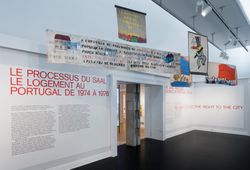
Born out of the Portuguese revolution of 25 April 1974, the Serviço Ambulatório de Apoio Local (Local Ambulatory Support Service) was a pioneering architectural and political experiment designed to address extreme housing shortages and poor living conditions in Portuguese cities. There was not only one SAAL: its initiatives and results varied widely depending on complex(...)
Born out of the Portuguese revolution of 25 April 1974, the Serviço Ambulatório de Apoio Local (Local Ambulatory Support Service) was a pioneering architectural and political experiment designed to address extreme housing shortages and poor living conditions in Portuguese cities. There was not only one SAAL: its initiatives and results varied widely depending on complex(...)
Location:
Main galleries
Main galleries
Date:
12 May 2015 to 4 October 2015
12 May 2015 to 4 October 2015
Title:
The SAAL Process: Housing in Portugal 1974–76
Actions:
Description:
Born out of the Portuguese revolution of 25 April 1974, the Serviço Ambulatório de Apoio Local (Local Ambulatory Support Service) was a pioneering architectural and political experiment designed to address extreme housing shortages and poor living conditions in Portuguese cities. There was not only one SAAL: its initiatives and results varied widely depending on complex(...)
The SAAL Process: Housing in Portugal 1974–76
Actions:
Description:
Born out of the Portuguese revolution of 25 April 1974, the Serviço Ambulatório de Apoio Local (Local Ambulatory Support Service) was a pioneering architectural and political experiment designed to address extreme housing shortages and poor living conditions in Portuguese cities. There was not only one SAAL: its initiatives and results varied widely depending on complex(...)
Form:
exhibitions
exhibitions
Date:
12 May 2015 to
4 October 2015
12 May 2015 to
4 October 2015
Location:
Main galleries
Main galleries
Form:
textual records
textual records
Reference number:
ARCH255577
Description:
20 publications including: Tall building structure: a world view / Council on Tall Buildings and Urban Habitat; Bauwelt 6 Aug. 1962 Hugo Weber: Mies van der Rohe; L'architettura July-Aug. 1955 annotated in graphite "M.G. Thesis"; Bauen & Wohnen July 1972; Arts & Architecture Nov. 1956; Western Architect & Engineer Feb. 1961; Architectural Forum Feb. 1959, June 1959, April 1961 and May 1962; Polytechnisch Tydschrift 12 Sept. 1957; Architectural Review Oct. 1977; Architectural Record Oct. 1960; Document Architettura v.1 no.14; Casabella Jan-Feb 1988; Columus Indiana: central area plan; Elkhart Indiana: Comprehensive plan for parks, recreation and open land; Elkhat Indiana: central area plan; Mauna City: a city within a city
ARCH255577
Description:
20 publications including: Tall building structure: a world view / Council on Tall Buildings and Urban Habitat; Bauwelt 6 Aug. 1962 Hugo Weber: Mies van der Rohe; L'architettura July-Aug. 1955 annotated in graphite "M.G. Thesis"; Bauen & Wohnen July 1972; Arts & Architecture Nov. 1956; Western Architect & Engineer Feb. 1961; Architectural Forum Feb. 1959, June 1959, April 1961 and May 1962; Polytechnisch Tydschrift 12 Sept. 1957; Architectural Review Oct. 1977; Architectural Record Oct. 1960; Document Architettura v.1 no.14; Casabella Jan-Feb 1988; Columus Indiana: central area plan; Elkhart Indiana: Comprehensive plan for parks, recreation and open land; Elkhat Indiana: central area plan; Mauna City: a city within a city
People:
Date:
1951-1966
1951-1966
Title:
Misc. publications and magazines of architecture
Actions:
ARCH255577
Description:
20 publications including: Tall building structure: a world view / Council on Tall Buildings and Urban Habitat; Bauwelt 6 Aug. 1962 Hugo Weber: Mies van der Rohe; L'architettura July-Aug. 1955 annotated in graphite "M.G. Thesis"; Bauen & Wohnen July 1972; Arts & Architecture Nov. 1956; Western Architect & Engineer Feb. 1961; Architectural Forum Feb. 1959, June 1959, April 1961 and May 1962; Polytechnisch Tydschrift 12 Sept. 1957; Architectural Review Oct. 1977; Architectural Record Oct. 1960; Document Architettura v.1 no.14; Casabella Jan-Feb 1988; Columus Indiana: central area plan; Elkhart Indiana: Comprehensive plan for parks, recreation and open land; Elkhat Indiana: central area plan; Mauna City: a city within a city
Misc. publications and magazines of architecture
Actions:
ARCH255577
Description:
20 publications including: Tall building structure: a world view / Council on Tall Buildings and Urban Habitat; Bauwelt 6 Aug. 1962 Hugo Weber: Mies van der Rohe; L'architettura July-Aug. 1955 annotated in graphite "M.G. Thesis"; Bauen & Wohnen July 1972; Arts & Architecture Nov. 1956; Western Architect & Engineer Feb. 1961; Architectural Forum Feb. 1959, June 1959, April 1961 and May 1962; Polytechnisch Tydschrift 12 Sept. 1957; Architectural Review Oct. 1977; Architectural Record Oct. 1960; Document Architettura v.1 no.14; Casabella Jan-Feb 1988; Columus Indiana: central area plan; Elkhart Indiana: Comprehensive plan for parks, recreation and open land; Elkhat Indiana: central area plan; Mauna City: a city within a city
Form:
textual records
textual records
Date:
1951-1966
1951-1966
People:
Level of archival description:
Series
Series
Title:
CIAM IV, CIRPAC and London
CIAM IV, CIRPAC and London
Reference number:
AP112.S1
Description:
The series contains seven bands of negatives, divided into groups of two and three negatives a band. The first five bands document the 4th Congrès International d'Architecture Moderne (CIAM) held on board the SS Patris II from 29 July to 13 August 1933, as it travelled between Marseilles, France, and Athens, Greece, and then returned. The conference, themed "The Functional City", presented and discussed the results of an analysis of more than thirty cities, and sought to establish new principles in urban planning. Sise participated at the conference as the Canadian delegate and presented the city of Los Angeles, California. The resolutions adopted at the conference were published for the first time in November under the title "Constatations du quatrième CIAM". These findings formed the base of the Charte d'Athenès written by Le Corbusier in 1941. The negatives show some of the participants of the conference including: Le Corbusier (1887-1965), from the French delegation; László Moholy-Nagy (1895-1946), from the German delegation, who was in charge of filming the presentations; Alvar Aalto (1898-1976), representing Finland; and the painter Fernand Léger (1881-1955), also from the French delegatation, who presented on the importance of colour in architecture. The two other bands of negatives provide evidence of Sise's attendance at Comité International pour la Résolution des Problèmes d'Architecture Contemporaine (CIRPAC), held in May 1934 at the Royal Institute of British Architects in London, England, to establish the program for the next CIAM (1). They also show his meeting in London with Georges Braque during the summer of the same year. (1) Eric Mumford states in "The CIAM Discourse on Urbanism, 1928-1960" that Le Corbusier did not participate at this conference (p. 92). _____________________ La série contient des bandes de négatifs, qui contiennent soit deux, soit trois images, et sont au nombre de sept. Les cinq premières bandes documentent le IVe Congrès International d'Architecture Moderne (CIAM) tenu à bord du SS Patris II du 29 juillet au 13 août 1933, entre Marseilles, France et Athènes, Grèce, à Athènes même, et sur le même bateau de croisière durant le retour à Marseilles. Le Congrès, qui se déroulait autour du thème de "The functional city", consistait en la communication des résultats de l'analyse de plus de trente villes et l'objectif visait à établir de nouveaux principes d'urbanisme. Hazen Sise participait au Congrès à titre de délégué du Canada et présenta la ville de Los Angeles, Californie. Les résolutions prises lors du Congrès ont été publiées pour la première fois au mois de novembre suivant sous le titre de "Constatations du quatrième CIAM". Ces "Constatations" seront ensuite à la base de la Charte d'Athènes que Le Corbusier rédigea en 1941. Les clichés montrent quelques-uns des participants au Congrès, dont Le Corbusier (1887-1965), de la délégation française, alors qu'il faisait une communication; László Moholy-Nagy (1895-1946), de la délégation allemande, à qui on avait confié la tâche de filmer les exposés; Alvar Aalto (1898-1976), représentant la Finlande; et le peintre Fernand Léger (1881-1955), délégué de la France, qui présenta un discours à l'attention des architectes au sujet de l'importance de la couleur en architecture. Les deux autres bandes de négatifs témoignent de la présence de Sise au (Comité International pour la Résolution des Problèmes d'Architecture Contemporaine (CIRPAC) à Londres, Angleterre, tenu en mai 1934 au Royal Institute of British Architects pour établir le programme du prochain CIAM (1) et de sa rencontre à Londres avec Georges Braque durant l'été de la même année. (1) Eric Mumford affirme cependant dans "The CIAM Discourse on Urbanism, 1928-1960" que Le Corbusier n'a pas participé à ce congrès (p. 92).
AP112.S1
Description:
The series contains seven bands of negatives, divided into groups of two and three negatives a band. The first five bands document the 4th Congrès International d'Architecture Moderne (CIAM) held on board the SS Patris II from 29 July to 13 August 1933, as it travelled between Marseilles, France, and Athens, Greece, and then returned. The conference, themed "The Functional City", presented and discussed the results of an analysis of more than thirty cities, and sought to establish new principles in urban planning. Sise participated at the conference as the Canadian delegate and presented the city of Los Angeles, California. The resolutions adopted at the conference were published for the first time in November under the title "Constatations du quatrième CIAM". These findings formed the base of the Charte d'Athenès written by Le Corbusier in 1941. The negatives show some of the participants of the conference including: Le Corbusier (1887-1965), from the French delegation; László Moholy-Nagy (1895-1946), from the German delegation, who was in charge of filming the presentations; Alvar Aalto (1898-1976), representing Finland; and the painter Fernand Léger (1881-1955), also from the French delegatation, who presented on the importance of colour in architecture. The two other bands of negatives provide evidence of Sise's attendance at Comité International pour la Résolution des Problèmes d'Architecture Contemporaine (CIRPAC), held in May 1934 at the Royal Institute of British Architects in London, England, to establish the program for the next CIAM (1). They also show his meeting in London with Georges Braque during the summer of the same year. (1) Eric Mumford states in "The CIAM Discourse on Urbanism, 1928-1960" that Le Corbusier did not participate at this conference (p. 92). _____________________ La série contient des bandes de négatifs, qui contiennent soit deux, soit trois images, et sont au nombre de sept. Les cinq premières bandes documentent le IVe Congrès International d'Architecture Moderne (CIAM) tenu à bord du SS Patris II du 29 juillet au 13 août 1933, entre Marseilles, France et Athènes, Grèce, à Athènes même, et sur le même bateau de croisière durant le retour à Marseilles. Le Congrès, qui se déroulait autour du thème de "The functional city", consistait en la communication des résultats de l'analyse de plus de trente villes et l'objectif visait à établir de nouveaux principes d'urbanisme. Hazen Sise participait au Congrès à titre de délégué du Canada et présenta la ville de Los Angeles, Californie. Les résolutions prises lors du Congrès ont été publiées pour la première fois au mois de novembre suivant sous le titre de "Constatations du quatrième CIAM". Ces "Constatations" seront ensuite à la base de la Charte d'Athènes que Le Corbusier rédigea en 1941. Les clichés montrent quelques-uns des participants au Congrès, dont Le Corbusier (1887-1965), de la délégation française, alors qu'il faisait une communication; László Moholy-Nagy (1895-1946), de la délégation allemande, à qui on avait confié la tâche de filmer les exposés; Alvar Aalto (1898-1976), représentant la Finlande; et le peintre Fernand Léger (1881-1955), délégué de la France, qui présenta un discours à l'attention des architectes au sujet de l'importance de la couleur en architecture. Les deux autres bandes de négatifs témoignent de la présence de Sise au (Comité International pour la Résolution des Problèmes d'Architecture Contemporaine (CIRPAC) à Londres, Angleterre, tenu en mai 1934 au Royal Institute of British Architects pour établir le programme du prochain CIAM (1) et de sa rencontre à Londres avec Georges Braque durant l'été de la même année. (1) Eric Mumford affirme cependant dans "The CIAM Discourse on Urbanism, 1928-1960" que Le Corbusier n'a pas participé à ce congrès (p. 92).
People:
Date:
1933-1934
1933-1934
Title:
CIAM IV, CIRPAC and London
Actions:
AP112.S1
Description:
The series contains seven bands of negatives, divided into groups of two and three negatives a band. The first five bands document the 4th Congrès International d'Architecture Moderne (CIAM) held on board the SS Patris II from 29 July to 13 August 1933, as it travelled between Marseilles, France, and Athens, Greece, and then returned. The conference, themed "The Functional City", presented and discussed the results of an analysis of more than thirty cities, and sought to establish new principles in urban planning. Sise participated at the conference as the Canadian delegate and presented the city of Los Angeles, California. The resolutions adopted at the conference were published for the first time in November under the title "Constatations du quatrième CIAM". These findings formed the base of the Charte d'Athenès written by Le Corbusier in 1941. The negatives show some of the participants of the conference including: Le Corbusier (1887-1965), from the French delegation; László Moholy-Nagy (1895-1946), from the German delegation, who was in charge of filming the presentations; Alvar Aalto (1898-1976), representing Finland; and the painter Fernand Léger (1881-1955), also from the French delegatation, who presented on the importance of colour in architecture. The two other bands of negatives provide evidence of Sise's attendance at Comité International pour la Résolution des Problèmes d'Architecture Contemporaine (CIRPAC), held in May 1934 at the Royal Institute of British Architects in London, England, to establish the program for the next CIAM (1). They also show his meeting in London with Georges Braque during the summer of the same year. (1) Eric Mumford states in "The CIAM Discourse on Urbanism, 1928-1960" that Le Corbusier did not participate at this conference (p. 92). _____________________ La série contient des bandes de négatifs, qui contiennent soit deux, soit trois images, et sont au nombre de sept. Les cinq premières bandes documentent le IVe Congrès International d'Architecture Moderne (CIAM) tenu à bord du SS Patris II du 29 juillet au 13 août 1933, entre Marseilles, France et Athènes, Grèce, à Athènes même, et sur le même bateau de croisière durant le retour à Marseilles. Le Congrès, qui se déroulait autour du thème de "The functional city", consistait en la communication des résultats de l'analyse de plus de trente villes et l'objectif visait à établir de nouveaux principes d'urbanisme. Hazen Sise participait au Congrès à titre de délégué du Canada et présenta la ville de Los Angeles, Californie. Les résolutions prises lors du Congrès ont été publiées pour la première fois au mois de novembre suivant sous le titre de "Constatations du quatrième CIAM". Ces "Constatations" seront ensuite à la base de la Charte d'Athènes que Le Corbusier rédigea en 1941. Les clichés montrent quelques-uns des participants au Congrès, dont Le Corbusier (1887-1965), de la délégation française, alors qu'il faisait une communication; László Moholy-Nagy (1895-1946), de la délégation allemande, à qui on avait confié la tâche de filmer les exposés; Alvar Aalto (1898-1976), représentant la Finlande; et le peintre Fernand Léger (1881-1955), délégué de la France, qui présenta un discours à l'attention des architectes au sujet de l'importance de la couleur en architecture. Les deux autres bandes de négatifs témoignent de la présence de Sise au (Comité International pour la Résolution des Problèmes d'Architecture Contemporaine (CIRPAC) à Londres, Angleterre, tenu en mai 1934 au Royal Institute of British Architects pour établir le programme du prochain CIAM (1) et de sa rencontre à Londres avec Georges Braque durant l'été de la même année. (1) Eric Mumford affirme cependant dans "The CIAM Discourse on Urbanism, 1928-1960" que Le Corbusier n'a pas participé à ce congrès (p. 92).
CIAM IV, CIRPAC and London
Actions:
AP112.S1
Description:
The series contains seven bands of negatives, divided into groups of two and three negatives a band. The first five bands document the 4th Congrès International d'Architecture Moderne (CIAM) held on board the SS Patris II from 29 July to 13 August 1933, as it travelled between Marseilles, France, and Athens, Greece, and then returned. The conference, themed "The Functional City", presented and discussed the results of an analysis of more than thirty cities, and sought to establish new principles in urban planning. Sise participated at the conference as the Canadian delegate and presented the city of Los Angeles, California. The resolutions adopted at the conference were published for the first time in November under the title "Constatations du quatrième CIAM". These findings formed the base of the Charte d'Athenès written by Le Corbusier in 1941. The negatives show some of the participants of the conference including: Le Corbusier (1887-1965), from the French delegation; László Moholy-Nagy (1895-1946), from the German delegation, who was in charge of filming the presentations; Alvar Aalto (1898-1976), representing Finland; and the painter Fernand Léger (1881-1955), also from the French delegatation, who presented on the importance of colour in architecture. The two other bands of negatives provide evidence of Sise's attendance at Comité International pour la Résolution des Problèmes d'Architecture Contemporaine (CIRPAC), held in May 1934 at the Royal Institute of British Architects in London, England, to establish the program for the next CIAM (1). They also show his meeting in London with Georges Braque during the summer of the same year. (1) Eric Mumford states in "The CIAM Discourse on Urbanism, 1928-1960" that Le Corbusier did not participate at this conference (p. 92). _____________________ La série contient des bandes de négatifs, qui contiennent soit deux, soit trois images, et sont au nombre de sept. Les cinq premières bandes documentent le IVe Congrès International d'Architecture Moderne (CIAM) tenu à bord du SS Patris II du 29 juillet au 13 août 1933, entre Marseilles, France et Athènes, Grèce, à Athènes même, et sur le même bateau de croisière durant le retour à Marseilles. Le Congrès, qui se déroulait autour du thème de "The functional city", consistait en la communication des résultats de l'analyse de plus de trente villes et l'objectif visait à établir de nouveaux principes d'urbanisme. Hazen Sise participait au Congrès à titre de délégué du Canada et présenta la ville de Los Angeles, Californie. Les résolutions prises lors du Congrès ont été publiées pour la première fois au mois de novembre suivant sous le titre de "Constatations du quatrième CIAM". Ces "Constatations" seront ensuite à la base de la Charte d'Athènes que Le Corbusier rédigea en 1941. Les clichés montrent quelques-uns des participants au Congrès, dont Le Corbusier (1887-1965), de la délégation française, alors qu'il faisait une communication; László Moholy-Nagy (1895-1946), de la délégation allemande, à qui on avait confié la tâche de filmer les exposés; Alvar Aalto (1898-1976), représentant la Finlande; et le peintre Fernand Léger (1881-1955), délégué de la France, qui présenta un discours à l'attention des architectes au sujet de l'importance de la couleur en architecture. Les deux autres bandes de négatifs témoignent de la présence de Sise au (Comité International pour la Résolution des Problèmes d'Architecture Contemporaine (CIRPAC) à Londres, Angleterre, tenu en mai 1934 au Royal Institute of British Architects pour établir le programme du prochain CIAM (1) et de sa rencontre à Londres avec Georges Braque durant l'été de la même année. (1) Eric Mumford affirme cependant dans "The CIAM Discourse on Urbanism, 1928-1960" que Le Corbusier n'a pas participé à ce congrès (p. 92).
Level of archival description:
Series
Series
Date:
1933-1934
1933-1934
People:
Form:
exhibitions
exhibitions

Description:
The New Spirit: Modern Architecture in Vancouver, 1938–1963 looks at key buildings and projects from an exhilarating epoch in Vancouver’s history through design drawings, period photographs, furniture, and decoration. In the years following the Second World War, Vancouver emerged as a city with a particularly vital and progressive architectural culture, adapting the(...)
The New Spirit: Modern Architecture in Vancouver, 1938–1963 looks at key buildings and projects from an exhilarating epoch in Vancouver’s history through design drawings, period photographs, furniture, and decoration. In the years following the Second World War, Vancouver emerged as a city with a particularly vital and progressive architectural culture, adapting the(...)
Location:
Main galleries
Main galleries
Date:
5 March 1997 to 25 May 1997
5 March 1997 to 25 May 1997
Title:
The New Spirit: Modern Architecture in Vancouver, 1938-1963
Actions:
Description:
The New Spirit: Modern Architecture in Vancouver, 1938–1963 looks at key buildings and projects from an exhilarating epoch in Vancouver’s history through design drawings, period photographs, furniture, and decoration. In the years following the Second World War, Vancouver emerged as a city with a particularly vital and progressive architectural culture, adapting the(...)
The New Spirit: Modern Architecture in Vancouver, 1938-1963
Actions:
Description:
The New Spirit: Modern Architecture in Vancouver, 1938–1963 looks at key buildings and projects from an exhilarating epoch in Vancouver’s history through design drawings, period photographs, furniture, and decoration. In the years following the Second World War, Vancouver emerged as a city with a particularly vital and progressive architectural culture, adapting the(...)
Form:
exhibitions
exhibitions
Date:
5 March 1997 to
25 May 1997
5 March 1997 to
25 May 1997
Location:
Main galleries
Main galleries
Form:
archives
Level of archival description:
Fonds
archives
Level of archival description:
Fonds
Title:
Arthur Erickson fonds
Arthur Erickson fonds
Reference number:
AP022
Synopsis:
The Arthur Erickson fonds documents the work and activities of Canadian architect Arthur Erickson between 1947 and 2002 (predominant dates 1963-ca. 2000). It comprises architecture projects records with three hundred ninety-seven projects by Erickson / Massey, Arthur Erickson Architects and Arthur Erickson as a design consultant are documented with drawings, photographs, textual documents and other material. It also includes project administration records, records from Erickson's Toronto, Los Angeles and Vancouver offices, records related to Erickson's professional activities, material related to some of Erickson's student projects, and personal papers.
AP022
Synopsis:
The Arthur Erickson fonds documents the work and activities of Canadian architect Arthur Erickson between 1947 and 2002 (predominant dates 1963-ca. 2000). It comprises architecture projects records with three hundred ninety-seven projects by Erickson / Massey, Arthur Erickson Architects and Arthur Erickson as a design consultant are documented with drawings, photographs, textual documents and other material. It also includes project administration records, records from Erickson's Toronto, Los Angeles and Vancouver offices, records related to Erickson's professional activities, material related to some of Erickson's student projects, and personal papers.
People:
Date:
1947-2002 (predominant 1963-2000)
1947-2002 (predominant 1963-2000)
Title:
Arthur Erickson fonds
Actions:
AP022
Synopsis:
The Arthur Erickson fonds documents the work and activities of Canadian architect Arthur Erickson between 1947 and 2002 (predominant dates 1963-ca. 2000). It comprises architecture projects records with three hundred ninety-seven projects by Erickson / Massey, Arthur Erickson Architects and Arthur Erickson as a design consultant are documented with drawings, photographs, textual documents and other material. It also includes project administration records, records from Erickson's Toronto, Los Angeles and Vancouver offices, records related to Erickson's professional activities, material related to some of Erickson's student projects, and personal papers.
Arthur Erickson fonds
Actions:
AP022
Synopsis:
The Arthur Erickson fonds documents the work and activities of Canadian architect Arthur Erickson between 1947 and 2002 (predominant dates 1963-ca. 2000). It comprises architecture projects records with three hundred ninety-seven projects by Erickson / Massey, Arthur Erickson Architects and Arthur Erickson as a design consultant are documented with drawings, photographs, textual documents and other material. It also includes project administration records, records from Erickson's Toronto, Los Angeles and Vancouver offices, records related to Erickson's professional activities, material related to some of Erickson's student projects, and personal papers.
Form:
archives
Level of archival description:
Fonds
archives
Level of archival description:
Fonds
Date:
1947-2002 (predominant 1963-2000)
1947-2002 (predominant 1963-2000)
People:
Level of archival description:
Series
Series
Title:
Projects
Projects
Actions:
Reference number:
AP194.S1
Description:
Series contains records associated with three OCEAN North projects to which Johan Bettum brought a significant insight: Synthetic Landscape (1995-2000), Jyväskylä Music and Arts Centre (1997) and Töölö Football Stadium (1997). The collaborative process around these projects allowed exploring design methods through the usage of digital tools. In discussions with Greg Lynn, Johan Bettum and Kivi Sotamaa have expressed that they had broached Töölö as a landscape and Jyväskylä as a cloud. Particle streaming and Channelling Systems approaches were applied in these projects and further developed in the third phase of the Synthetic Landscape project and its Pavilion. The Synthetic Landscape project also featured usage of polymer composite materials. All records are born-digital, except for one 1995 drawing from the Synthetic Landscape project. Records include CAD models, raster and vector images, textual records and animated renderings from Channelling Systems studies. CAD models and drawings show design process of the projects, and range from the abstract (particle streaming) to very detailed plans (Jyväskylä). They were created using form*Z, Microstation, Alias, 3D Studio, AutoCAD and Rhinoceros. Some files were saved in IGES and DXF formats. Most CAD drawings have been saved as raster images. Drawings and models might have been saved in more than one file format. Digital textual records include project descriptions, presentations and reports, budgets and meeting notes, often created using the Microsoft Office software suite. Sources: Bettum, Johan and Michael Hensel. “Channelling Systems: Dynamic Processes and Digital Time-Based Methods in Urban Design.” AD Architectural Design 70, no.3 (June 2000): 36-43. Greg Lynn, ed. Archaeology of the Digital 17: OCEAN North, Jyväskylä Music and Arts Centre, Montréal: Canadian Centre for Architecture, 2017. ePub.
AP194.S1
Description:
Series contains records associated with three OCEAN North projects to which Johan Bettum brought a significant insight: Synthetic Landscape (1995-2000), Jyväskylä Music and Arts Centre (1997) and Töölö Football Stadium (1997). The collaborative process around these projects allowed exploring design methods through the usage of digital tools. In discussions with Greg Lynn, Johan Bettum and Kivi Sotamaa have expressed that they had broached Töölö as a landscape and Jyväskylä as a cloud. Particle streaming and Channelling Systems approaches were applied in these projects and further developed in the third phase of the Synthetic Landscape project and its Pavilion. The Synthetic Landscape project also featured usage of polymer composite materials. All records are born-digital, except for one 1995 drawing from the Synthetic Landscape project. Records include CAD models, raster and vector images, textual records and animated renderings from Channelling Systems studies. CAD models and drawings show design process of the projects, and range from the abstract (particle streaming) to very detailed plans (Jyväskylä). They were created using form*Z, Microstation, Alias, 3D Studio, AutoCAD and Rhinoceros. Some files were saved in IGES and DXF formats. Most CAD drawings have been saved as raster images. Drawings and models might have been saved in more than one file format. Digital textual records include project descriptions, presentations and reports, budgets and meeting notes, often created using the Microsoft Office software suite. Sources: Bettum, Johan and Michael Hensel. “Channelling Systems: Dynamic Processes and Digital Time-Based Methods in Urban Design.” AD Architectural Design 70, no.3 (June 2000): 36-43. Greg Lynn, ed. Archaeology of the Digital 17: OCEAN North, Jyväskylä Music and Arts Centre, Montréal: Canadian Centre for Architecture, 2017. ePub.
People:
Date:
1995-2000
1995-2000
Title:
Projects
Actions:
AP194.S1
Description:
Series contains records associated with three OCEAN North projects to which Johan Bettum brought a significant insight: Synthetic Landscape (1995-2000), Jyväskylä Music and Arts Centre (1997) and Töölö Football Stadium (1997). The collaborative process around these projects allowed exploring design methods through the usage of digital tools. In discussions with Greg Lynn, Johan Bettum and Kivi Sotamaa have expressed that they had broached Töölö as a landscape and Jyväskylä as a cloud. Particle streaming and Channelling Systems approaches were applied in these projects and further developed in the third phase of the Synthetic Landscape project and its Pavilion. The Synthetic Landscape project also featured usage of polymer composite materials. All records are born-digital, except for one 1995 drawing from the Synthetic Landscape project. Records include CAD models, raster and vector images, textual records and animated renderings from Channelling Systems studies. CAD models and drawings show design process of the projects, and range from the abstract (particle streaming) to very detailed plans (Jyväskylä). They were created using form*Z, Microstation, Alias, 3D Studio, AutoCAD and Rhinoceros. Some files were saved in IGES and DXF formats. Most CAD drawings have been saved as raster images. Drawings and models might have been saved in more than one file format. Digital textual records include project descriptions, presentations and reports, budgets and meeting notes, often created using the Microsoft Office software suite. Sources: Bettum, Johan and Michael Hensel. “Channelling Systems: Dynamic Processes and Digital Time-Based Methods in Urban Design.” AD Architectural Design 70, no.3 (June 2000): 36-43. Greg Lynn, ed. Archaeology of the Digital 17: OCEAN North, Jyväskylä Music and Arts Centre, Montréal: Canadian Centre for Architecture, 2017. ePub.
Projects
Actions:
AP194.S1
Description:
Series contains records associated with three OCEAN North projects to which Johan Bettum brought a significant insight: Synthetic Landscape (1995-2000), Jyväskylä Music and Arts Centre (1997) and Töölö Football Stadium (1997). The collaborative process around these projects allowed exploring design methods through the usage of digital tools. In discussions with Greg Lynn, Johan Bettum and Kivi Sotamaa have expressed that they had broached Töölö as a landscape and Jyväskylä as a cloud. Particle streaming and Channelling Systems approaches were applied in these projects and further developed in the third phase of the Synthetic Landscape project and its Pavilion. The Synthetic Landscape project also featured usage of polymer composite materials. All records are born-digital, except for one 1995 drawing from the Synthetic Landscape project. Records include CAD models, raster and vector images, textual records and animated renderings from Channelling Systems studies. CAD models and drawings show design process of the projects, and range from the abstract (particle streaming) to very detailed plans (Jyväskylä). They were created using form*Z, Microstation, Alias, 3D Studio, AutoCAD and Rhinoceros. Some files were saved in IGES and DXF formats. Most CAD drawings have been saved as raster images. Drawings and models might have been saved in more than one file format. Digital textual records include project descriptions, presentations and reports, budgets and meeting notes, often created using the Microsoft Office software suite. Sources: Bettum, Johan and Michael Hensel. “Channelling Systems: Dynamic Processes and Digital Time-Based Methods in Urban Design.” AD Architectural Design 70, no.3 (June 2000): 36-43. Greg Lynn, ed. Archaeology of the Digital 17: OCEAN North, Jyväskylä Music and Arts Centre, Montréal: Canadian Centre for Architecture, 2017. ePub.
Level of archival description:
Series
Series
Date:
1995-2000
1995-2000
People:
Form:
archives
Level of archival description:
Fonds
archives
Level of archival description:
Fonds
Reference number:
AP154
Synopsis:
The Pasanella + Klein Stolzman + Berg collection documents selected projects of the architect Giovanni Pasanella and of firms of which he was a principal, namely, Merz & Pasanella, Pasanella + Klein, and Pasanella + Klein Stolzman + Berg.
AP154
Synopsis:
The Pasanella + Klein Stolzman + Berg collection documents selected projects of the architect Giovanni Pasanella and of firms of which he was a principal, namely, Merz & Pasanella, Pasanella + Klein, and Pasanella + Klein Stolzman + Berg.
People:
Date:
1955-2007
1955-2007
Title:
Pasanella + Klein Stolzman + Berg collection
Actions:
AP154
Synopsis:
The Pasanella + Klein Stolzman + Berg collection documents selected projects of the architect Giovanni Pasanella and of firms of which he was a principal, namely, Merz & Pasanella, Pasanella + Klein, and Pasanella + Klein Stolzman + Berg.
Pasanella + Klein Stolzman + Berg collection
Actions:
AP154
Synopsis:
The Pasanella + Klein Stolzman + Berg collection documents selected projects of the architect Giovanni Pasanella and of firms of which he was a principal, namely, Merz & Pasanella, Pasanella + Klein, and Pasanella + Klein Stolzman + Berg.
Form:
archives
Level of archival description:
Fonds
archives
Level of archival description:
Fonds
Date:
1955-2007
1955-2007
People:


