


5088 Results
Form:
books
books
Actions:
Price:
$35.95
(available to order)
Summary:
From the beet fields of North Dakota to the National Forest campgrounds of California to Amazon's CamperForce program in Texas, employers have discovered a new, low-cost labor pool, made up largely of transient older Americans. Finding that social security comes up short, often underwater on mortgages, these invisible casualties of the Great Recession have taken to the(...)
Title:
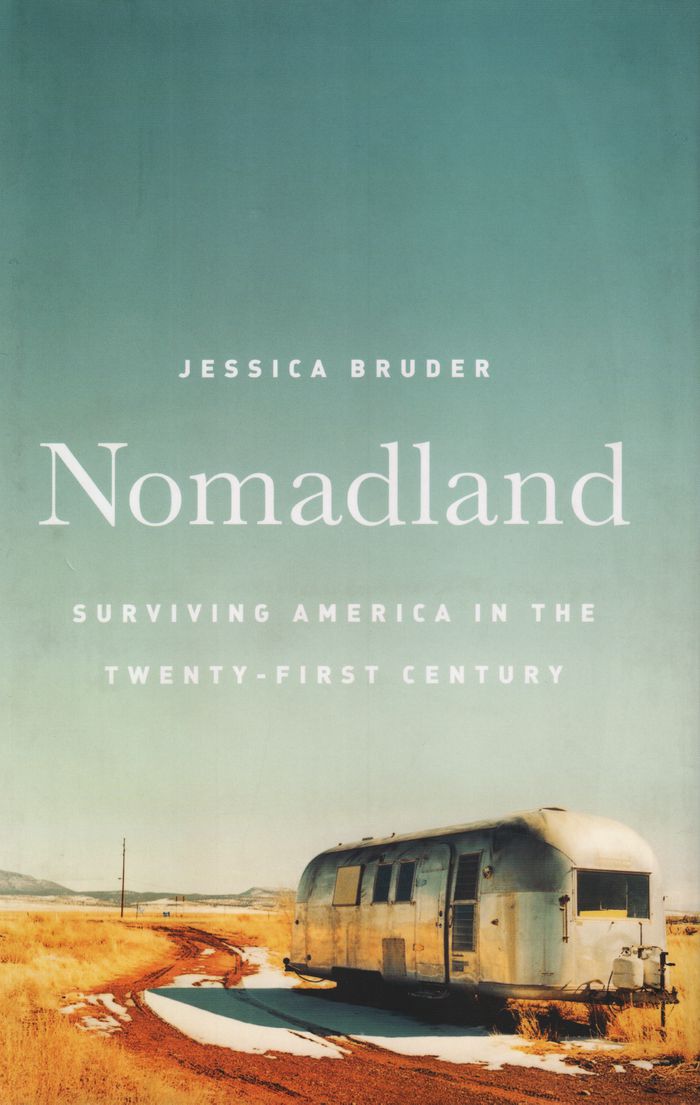
Nomadland: surviving America in the twenty-first century
Actions:
Price:
$35.95
(available to order)
Summary:
From the beet fields of North Dakota to the National Forest campgrounds of California to Amazon's CamperForce program in Texas, employers have discovered a new, low-cost labor pool, made up largely of transient older Americans. Finding that social security comes up short, often underwater on mortgages, these invisible casualties of the Great Recession have taken to the road by the tens of thousands in late-model RVs, travel trailers, and vans, forming a growing community of nomads: migrant laborers who call themselves ''workampers.'' On frequently traveled routes between seasonal jobs, Jessica Bruder meets people from all walks of life: accompanying them from campground toilet cleaning to warehouse product scanning to desert reunions, then moving on to the dangerous work of beet harvesting, Bruder tells an eye-opening tale of the dark underbelly of the American economy- one that foreshadows the precarious future that may await many more of us.
Form:
books
books
Publication:
September 2017
September 2017
Subject:
Current Exhibitions
Current Exhibitions
Form:
books
books
Price:
$66.95
(available to order)
Summary:
101 Things that Open and Close the City. 50 leading experts provide tools for analyzing how the Open City is made and unmade. Urban History 101 teaches us that the built environment is not the product of invisible, uncontrollable market forces, but of human-made tools that could have been used differently (or not at all). The Arsenal of Exclusion & Inclusion is an(...)
Title:
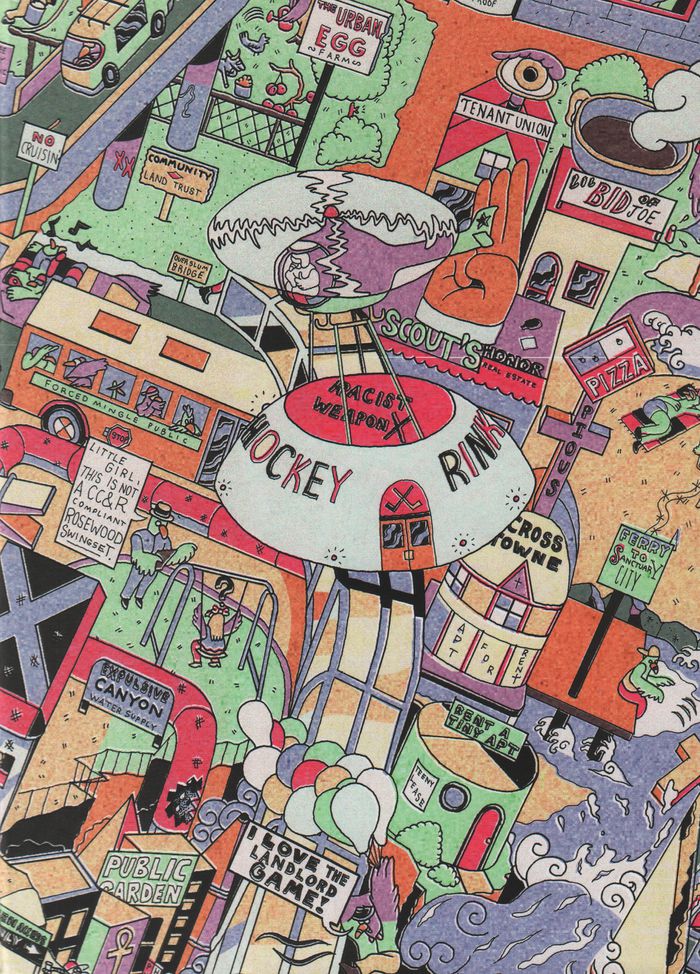
Arsenal of exclusion/inclusion: 101 things that open and close the city
Actions:
Price:
$66.95
(available to order)
Summary:
101 Things that Open and Close the City. 50 leading experts provide tools for analyzing how the Open City is made and unmade. Urban History 101 teaches us that the built environment is not the product of invisible, uncontrollable market forces, but of human-made tools that could have been used differently (or not at all). The Arsenal of Exclusion & Inclusion is an encyclopedia of the human-made tools used by architects, planners, policy-makers, developers, real estate brokers, activists, and other urban actors in the United States to restrict or increase access to the spaces of our cities and suburbs. The Arsenal of Exclusion & Inclusion inventories these tools—or what we call weapons—examines how they have been used, and speculates about how they might be deployed (or retired) to make more open cities in which more people feel welcome in more spaces.
Form:
books
books
Publication:
June 2017
June 2017
Form:
books
books
Price:
$90.00
(available to order)
Summary:
In this view of London, Farrell looks beyond the contribution of individual buildings to the city. He creates a larger, more exciting frame, charting how the capital’s messy and complex shape has been hewn out of a series of layers – natural and manmade, so the Thames and the natural landscape gets as much attention as the railway infrastructure, the roads and the canals.(...)
Title:
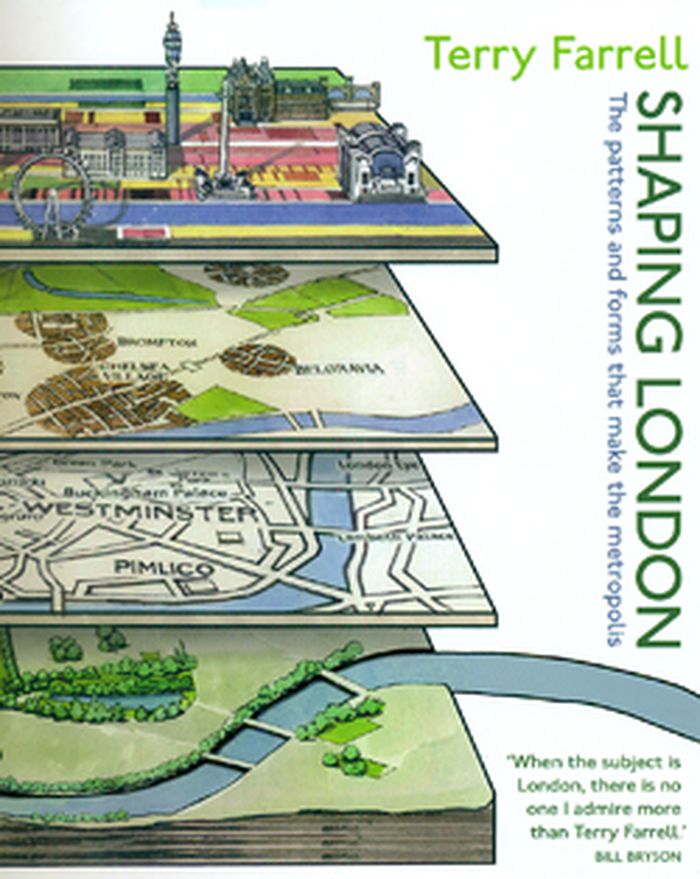
Shaping London: The patterns and forms that make the metropolis
Actions:
Price:
$90.00
(available to order)
Summary:
In this view of London, Farrell looks beyond the contribution of individual buildings to the city. He creates a larger, more exciting frame, charting how the capital’s messy and complex shape has been hewn out of a series of layers – natural and manmade, so the Thames and the natural landscape gets as much attention as the railway infrastructure, the roads and the canals. This provides a whole series of revelations that allow us to see the city afresh: How might the natural bends in the river have impacted where and what was built? How have the Thames’ tributaries affected historic boundaries and development, played out in the estates of Mayfair? How is the Roman plan for the city of London still discernible in today’s street patterns? Illustrated with original sketches, maps, archive photographs and paintings, this book provides a collage of London’s patterns and its history.
Form:
books
books
Publication:
December 2009
December 2009
Subject:
History until 1900, Great Britain
History until 1900, Great Britain
Form:
books
books
Title:
Technics & civilization
Technics & civilization
Actions:
Price:
$45.95
(available to order)
Summary:
Technics and Civilization first presented its compelling history of the machine and critical study of its effects on civilization in 1934 —before television, the personal computer, and the Internet even appeared on our periphery. Drawing upon art, science, philosophy, and the history of culture, Lewis Mumford explained the origin of the machine age and traced its(...)
Title:
Technics & civilization
Actions:
Price:
$45.95
(available to order)
Summary:
Technics and Civilization first presented its compelling history of the machine and critical study of its effects on civilization in 1934 —before television, the personal computer, and the Internet even appeared on our periphery. Drawing upon art, science, philosophy, and the history of culture, Lewis Mumford explained the origin of the machine age and traced its social results, asserting that the development of modern technology had its roots in the Middle Ages rather than the Industrial Revolution. Mumford sagely argued that it was the moral, economic, and political choices we made, not the machines that we used, that determined our then industrially driven economy. Equal parts powerful history and polemic criticism, this book was the first comprehensive attempt in English to portray the development of the machine age over the last thousand years — and to predict the pull the technological still holds over us today.
Form:
books
books
Publication:
October 2010
October 2010
Subject:
Architectural Theory
Architectural Theory
Form:
books
books
Actions:
Price:
$47.00
(available in store)
Summary:
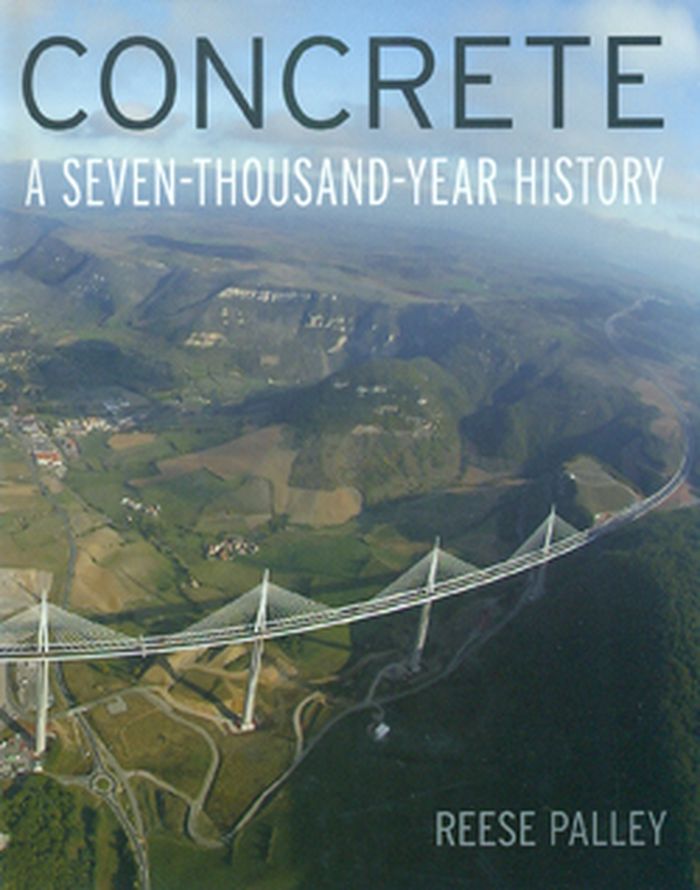
For seven thousand years concrete has periodically shaped the path of human progress. Reese Palley's fascinating history of this ubiquitous and versatile material chronicles the repeated and often centuries-long losses of the technology and its many reemergences and the cultural, scientific, and engineering accomplishments it has enabled. Palley takes us from concrete's(...)
Title:
Concrete : a seven-thousand-year history
Actions:
Price:
$47.00
(available in store)
Summary:
For seven thousand years concrete has periodically shaped the path of human progress. Reese Palley's fascinating history of this ubiquitous and versatile material chronicles the repeated and often centuries-long losses of the technology and its many reemergences and the cultural, scientific, and engineering accomplishments it has enabled. Palley takes us from concrete's earliest beginnings, including the startling proof that at least one of the pyramids was partially poured, through the building of the Eddystone Light, to the dramatic building explosion in the use of concrete during the twentieth century and the start of the twenty-first century. He discusses the environmental impact of the production of concrete and attempts to find substitutes for the burning of lime. He ends by contemplating outer space, where almost all of the elements needed to build extraterrestrial communities already exist in the chemical makeup of the moon and Mars.
Form:
books
books
Publication:
October 2010
October 2010
Subject:
Materials and Lighting
Materials and Lighting
Form:
books
books

Title:
Emiliano Ponzi: 10 X 10
Emiliano Ponzi: 10 X 10
Actions:
Price:
$27.00
(available to order)
Summary:
10x10 is an account of 10 years of Emiliano Ponzi’s work, spent designing ideas whilst comfortably seated in a 10x10 sq m room in Milan - the illustrator’s home and office. Four walls, a white screen and a window, the only means of escape through which the artist’s images, like carrier pigeons, fly away to editors and art directors. Some of these modern visual metaphors(...)
Title:
Emiliano Ponzi: 10 X 10
Actions:
Price:
$27.00
(available to order)
Summary:
10x10 is an account of 10 years of Emiliano Ponzi’s work, spent designing ideas whilst comfortably seated in a 10x10 sq m room in Milan - the illustrator’s home and office. Four walls, a white screen and a window, the only means of escape through which the artist’s images, like carrier pigeons, fly away to editors and art directors. Some of these modern visual metaphors are lost in space, while others return to the window-sill, bringing welcome and, sometimes, unwelcome replies. With an introduction by Nicholas Blechman (art director of the New York Times Book Review), this publication brings us a collection of these images with four different cover choices and a selection of e-mails, sent as Emiliano Ponzi received them. Some amusing, some scathing, but all anonymous. Vividly illustrated for the international press and advertising companies, Ponzi’s sharp accounts record the joys and sorrows of his captivating profession.
Form:
books
books
Publication:
October 2011
October 2011
Subject:
Illustration
Illustration
Form:
books
books

Title:
Taewon jang : stained ground
Taewon jang : stained ground
Actions:
Price:
$55.00
(available to order)
Summary:
Ominous, overwhelming, and harshly lit at night—Korean photographer Taewon Jang (1976 in Seoul) puts industrial plants at the center of his work. He documented abandoned steel factories, nuclear reactors, cooling towers, storage containers, or briskly working oil refineries to depict the traces of humans’ effort to survive in modern era. Residential buildings seem tiny(...)
Title:
Taewon jang : stained ground
Actions:
Price:
$55.00
(available to order)
Summary:
Ominous, overwhelming, and harshly lit at night—Korean photographer Taewon Jang (1976 in Seoul) puts industrial plants at the center of his work. He documented abandoned steel factories, nuclear reactors, cooling towers, storage containers, or briskly working oil refineries to depict the traces of humans’ effort to survive in modern era. Residential buildings seem tiny in comparison, and the overall scale has obviously shifted. Jang prefers to show us these industrial landscapes in the gray of the dawn, or the red of dusk, by moonlight, in fog or snow; sometimes he shifts a gnarled tree into the foreground, but despite—or perhaps precisely because of—these potentially romantic, idyllic topoi, the viewer senses an uncanny, apocalyptic mood. Large, apparently deserted industrial plants dominate the horizon, yet moving backhoes, cranes, and conveyor belts give the impression they might have a hazardous life of their own.
Form:
books
books
Publication:
August 2014
August 2014
Subject:
Photography monographs
Photography monographs
Form:
books
books
Title:
Limber: essays
Limber: essays
Actions:
Price:
$19.95
(available to order)
Summary:
Angela Pelster's startling essay collection charts the world's history through its trees: roots in the ground, rings across wood, topiaries, wind-sculpted pines, the skinny poplars of her youth in Canada, and a desert in Niger, where "The Loneliest Tree in the World" once grew. In her backyard, a squirrel's decomposing body below a towering maple prompts a discussion of(...)
Title:
Limber: essays
Actions:
Price:
$19.95
(available to order)
Summary:
Angela Pelster's startling essay collection charts the world's history through its trees: roots in the ground, rings across wood, topiaries, wind-sculpted pines, the skinny poplars of her youth in Canada, and a desert in Niger, where "The Loneliest Tree in the World" once grew. In her backyard, a squirrel's decomposing body below a towering maple prompts a discussion of the science of rot, as well as a metaphor for the ways in which nature programs us to consume ourselves. Pelster is a writer who looks and listens closely: She watches tree frogs and questions how long we can love one another, she listens to the music of an artist who places paper-thin slices of sectioned tree trunks on his record player and hears the sounds’ mourning. Beautiful, deeply thoughtful, and wholly original, Limber valiantly asks what it means to sustain life on this planet we've inherited.
Form:
books
books
Publication:
June 2014
June 2014
Subject:
Landscape Theory
Landscape Theory
Form:
books
books

Actions:
Price:
$51.95
(available to order)
Summary:
It is an often heard cliché that the world is getting smaller. No. 235 / Encyclopaedia of an allotment rather proves the opposite. With a meticulous photographic study, Anne Geene gives us an insight into the surprising wealth of flora and fauna in an allotment garden of one of the Netherlands most urbanized areas. Hundreds of plant and animal species, remarkable(...)
Title:
No. 235 Encyclopaedia of an allotment
Actions:
Price:
$51.95
(available to order)
Summary:
It is an often heard cliché that the world is getting smaller. No. 235 / Encyclopaedia of an allotment rather proves the opposite. With a meticulous photographic study, Anne Geene gives us an insight into the surprising wealth of flora and fauna in an allotment garden of one of the Netherlands most urbanized areas. Hundreds of plant and animal species, remarkable behaviour and particular observations are represented with appropriate photographic techniques varying from saltprinting to microphotography. No. 235 / encyclopaedia of an allotment is inspired by science but has no scientific pretentions whatsoever. Although her observations are completely personal, they are selected and captured with the precision of a scientist and with a similar attention to detail. The book aims to be a complete visual representation of everything that grows, blossoms, swims, crawls and flies in the exact 245 square meters of allotment nr. 235 of garden complex 'eigen hof' in Rotterdam.
Form:
books
books
Publication:
January 2015
January 2015
Subject:
Gardens
Gardens
Form:
books
books
Actions:
Price:
$37.95
(available to order)
Summary:
What can we learn about nationalism by looking at a country’s cultural institutions? How do the history and culture of particular cities help explain how museums represent diversity? Artifacts and Allegiances takes us around the world to tell the compelling story of how museums today are making sense of immigration and globalization. Based on firsthand conversations with(...)
Title:
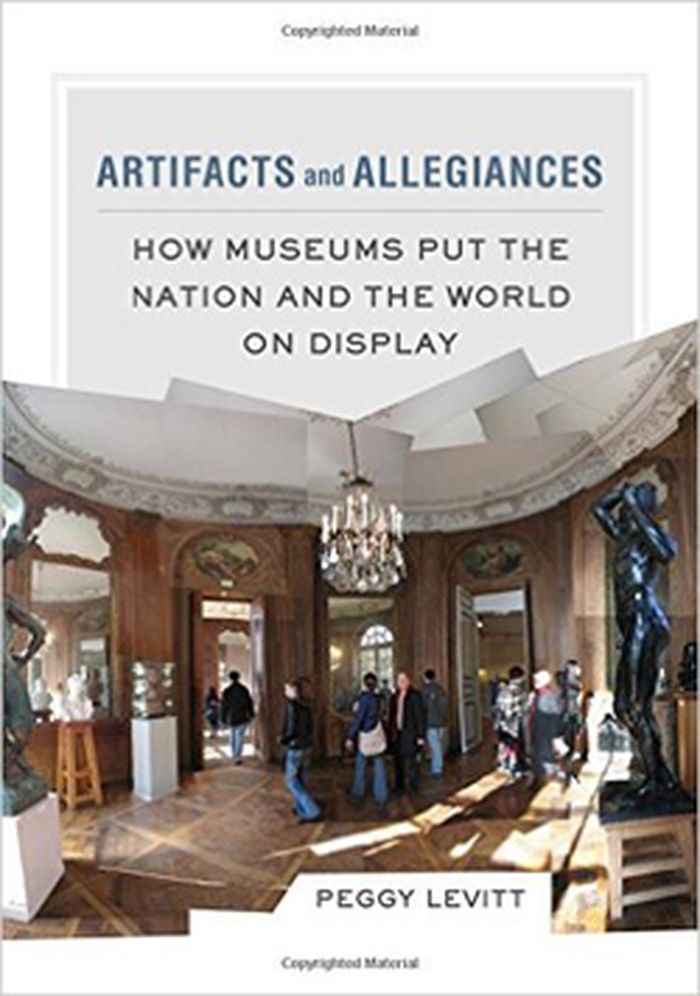
Artifacts and allegiances: how museums put the nation and the world on display
Actions:
Price:
$37.95
(available to order)
Summary:
What can we learn about nationalism by looking at a country’s cultural institutions? How do the history and culture of particular cities help explain how museums represent diversity? Artifacts and Allegiances takes us around the world to tell the compelling story of how museums today are making sense of immigration and globalization. Based on firsthand conversations with museum directors, curators, and policymakers; descriptions of current and future exhibitions; and inside stories about the famous paintings and iconic objects that define collections across the globe, this work provides a close-up view of how different kinds of institutions balance nationalism and cosmopolitanism. By comparing museums in Europe, the United States, Asia, and the Middle East, Peggy Levitt offers a fresh perspective on the role of the museum in shaping citizens. Taken together, these accounts tell the fascinating story of a sea change underway in the museum world at large.
Form:
books
books
Publication:
July 2015
July 2015
Subject:
Museology
Museology


