


4749 Results
Form:
books
books
Actions:
Price:
$59.95
(available to order)
Summary:
"Architecture of the nineteenth century", issued in the "History of world Architecture" series, offers a complete survey of European architecture during the eighteenth and nineteenth centuries, examining in particular the influence of the cultural trends of the period on the architects’ works. The first section of the book deals with the history of eighteenth-century(...)
$59.95
(available to order)
Summary:
"Architecture of the nineteenth century", issued in the "History of world Architecture" series, offers a complete survey of European architecture during the eighteenth and nineteenth centuries, examining in particular the influence of the cultural trends of the period on the architects’ works. The first section of the book deals with the history of eighteenth-century(...)
Title:
Architecture of the nineteenth century
Actions:
Price:
$59.95
(available to order)
Summary:
"Architecture of the nineteenth century", issued in the "History of world Architecture" series, offers a complete survey of European architecture during the eighteenth and nineteenth centuries, examining in particular the influence of the cultural trends of the period on the architects’ works. The first section of the book deals with the history of eighteenth-century architecture in France and England, countries where Cartesian-school philosophical speculation and Anglo-Saxon philosophical empiricism wielded a determining influence. After analysing the developments of the classical tradition and its propagation throughout Europe, the book studies in depth the history of architectural movements, comprising neo-classicism, neo-Renaissance and neo-Gothic architecture. The outstanding, forerunning personalities of this brilliant artistic period who, in the course of the nineteenth century, offered fecund theoretic and stylistic contributions, include Gottfried Semper, John Ruskin and Eugène Viollet-le Duc.
Architecture of the nineteenth century
Actions:
Price:
$59.95
(available to order)
Summary:
"Architecture of the nineteenth century", issued in the "History of world Architecture" series, offers a complete survey of European architecture during the eighteenth and nineteenth centuries, examining in particular the influence of the cultural trends of the period on the architects’ works. The first section of the book deals with the history of eighteenth-century architecture in France and England, countries where Cartesian-school philosophical speculation and Anglo-Saxon philosophical empiricism wielded a determining influence. After analysing the developments of the classical tradition and its propagation throughout Europe, the book studies in depth the history of architectural movements, comprising neo-classicism, neo-Renaissance and neo-Gothic architecture. The outstanding, forerunning personalities of this brilliant artistic period who, in the course of the nineteenth century, offered fecund theoretic and stylistic contributions, include Gottfried Semper, John Ruskin and Eugène Viollet-le Duc.
Form:
books
books
Publication:
July 2002, Milan
July 2002, Milan
Subject:
History until 1900
History until 1900
Form:
books
books
Title:
Rebâtir Notre-Dame de Paris
Rebâtir Notre-Dame de Paris
Actions:
Price:
$97.95
(available in store)
Summary:
Le 15 avril 2019, sous les yeux incrédules du monde entier, la charpente et la flèche de Notre-Dame de Paris se transforment en brasier ardent, avant de disparaître du paysage parisien, entièrement consumées après avoir ouvert des brèches béantes dans les voûtes de la cathédrale. L’émotion est immense. Du monument profondément meurtri à sa renaissance en cinq ans, ce(...)
$97.95
(available in store)
Summary:
Le 15 avril 2019, sous les yeux incrédules du monde entier, la charpente et la flèche de Notre-Dame de Paris se transforment en brasier ardent, avant de disparaître du paysage parisien, entièrement consumées après avoir ouvert des brèches béantes dans les voûtes de la cathédrale. L’émotion est immense. Du monument profondément meurtri à sa renaissance en cinq ans, ce(...)
Title:
Rebâtir Notre-Dame de Paris
Actions:
Price:
$97.95
(available in store)
Summary:
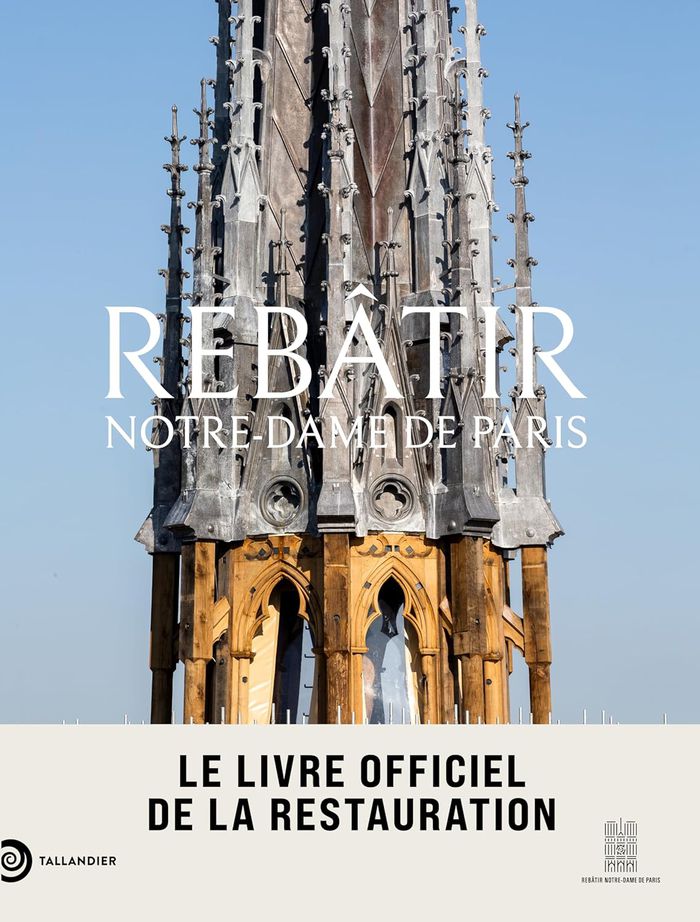
Le 15 avril 2019, sous les yeux incrédules du monde entier, la charpente et la flèche de Notre-Dame de Paris se transforment en brasier ardent, avant de disparaître du paysage parisien, entièrement consumées après avoir ouvert des brèches béantes dans les voûtes de la cathédrale. L’émotion est immense. Du monument profondément meurtri à sa renaissance en cinq ans, ce livre raconte l’histoire de l’un des plus fascinants chantiers du xxi e siècle. C’est aussi un prodigieux défi, relevé dans l’enthousiasme et la fierté, au cœur de la cathédrale et dans des ateliers partout en France. Rebâtir Notre-Dame de Paris est le livre officiel de cette formidable aventure humaine, illustré par plus de 250 photographies et plans, enrichi de témoignages exclusifs des compagnons, artisans d’art, architectes et ingénieurs qui ont œuvré, ensemble, à relever Notre-Dame de Paris.
Rebâtir Notre-Dame de Paris
Actions:
Price:
$97.95
(available in store)
Summary:
Le 15 avril 2019, sous les yeux incrédules du monde entier, la charpente et la flèche de Notre-Dame de Paris se transforment en brasier ardent, avant de disparaître du paysage parisien, entièrement consumées après avoir ouvert des brèches béantes dans les voûtes de la cathédrale. L’émotion est immense. Du monument profondément meurtri à sa renaissance en cinq ans, ce livre raconte l’histoire de l’un des plus fascinants chantiers du xxi e siècle. C’est aussi un prodigieux défi, relevé dans l’enthousiasme et la fierté, au cœur de la cathédrale et dans des ateliers partout en France. Rebâtir Notre-Dame de Paris est le livre officiel de cette formidable aventure humaine, illustré par plus de 250 photographies et plans, enrichi de témoignages exclusifs des compagnons, artisans d’art, architectes et ingénieurs qui ont œuvré, ensemble, à relever Notre-Dame de Paris.
Form:
books
books
Publication:
November 2024
November 2024
Subject:
History until 1900, France
History until 1900, France
Form:
journals and magazines
journals and magazines
Actions:
Price:
$23.50
(available to order)
Summary:
Sommaire : "Zones de montagne d’Europe... et de Wallonie" de Philippe De Boe, Thérèse Hanquet, Luc Maréchal; "La voirie vicinale, des chemins pour une mobilité douce" de Michel Van Der Meerschen et Isabelle Dullaert; "Pour une prospective de la politique du rail en Wallonie" de Philippe Destatte; "Planification d’une ville universitaire nouvelle et adaptation au(...)
$23.50
(available to order)
Summary:
Sommaire : "Zones de montagne d’Europe... et de Wallonie" de Philippe De Boe, Thérèse Hanquet, Luc Maréchal; "La voirie vicinale, des chemins pour une mobilité douce" de Michel Van Der Meerschen et Isabelle Dullaert; "Pour une prospective de la politique du rail en Wallonie" de Philippe Destatte; "Planification d’une ville universitaire nouvelle et adaptation au(...)
Title:
Les cahiers de l'urbanisme - décembre 2005 - no. 57
Actions:
Price:
$23.50
(available to order)
Summary:
Sommaire : "Zones de montagne d’Europe... et de Wallonie" de Philippe De Boe, Thérèse Hanquet, Luc Maréchal; "La voirie vicinale, des chemins pour une mobilité douce" de Michel Van Der Meerschen et Isabelle Dullaert; "Pour une prospective de la politique du rail en Wallonie" de Philippe Destatte; "Planification d’une ville universitaire nouvelle et adaptation au changement d’échelle : le cas de Louvain-la-Neuve" de Pierre Laconte; "Une réglementation plus appréciée qu’il n’y paraît" de Jean-Alexandre Pouleur et Nicolas Rochet; "L’atlas transfrontalier" de Ghislain Géron; "Histoire et archéologie du beffroi de Gembloux, patrimoine mondial (2005)" de Jean Plumier, Olivier Berckmans et S. Plumier-Torfs; "La maison “espagnole” à Soignies" de Jacques Deveseleer; "Des Bains de la Sauvenière à Mnema, Cité Miroir" de Flavio Di Campli; et "Le tourisme culturel, moteur de la renaissance urbaine ? " de Jacques Teller.
Les cahiers de l'urbanisme - décembre 2005 - no. 57
Actions:
Price:
$23.50
(available to order)
Summary:
Sommaire : "Zones de montagne d’Europe... et de Wallonie" de Philippe De Boe, Thérèse Hanquet, Luc Maréchal; "La voirie vicinale, des chemins pour une mobilité douce" de Michel Van Der Meerschen et Isabelle Dullaert; "Pour une prospective de la politique du rail en Wallonie" de Philippe Destatte; "Planification d’une ville universitaire nouvelle et adaptation au changement d’échelle : le cas de Louvain-la-Neuve" de Pierre Laconte; "Une réglementation plus appréciée qu’il n’y paraît" de Jean-Alexandre Pouleur et Nicolas Rochet; "L’atlas transfrontalier" de Ghislain Géron; "Histoire et archéologie du beffroi de Gembloux, patrimoine mondial (2005)" de Jean Plumier, Olivier Berckmans et S. Plumier-Torfs; "La maison “espagnole” à Soignies" de Jacques Deveseleer; "Des Bains de la Sauvenière à Mnema, Cité Miroir" de Flavio Di Campli; et "Le tourisme culturel, moteur de la renaissance urbaine ? " de Jacques Teller.
Form:
journals and magazines
journals and magazines
Publication:
December 2005, Namur
December 2005, Namur
Subject:
Magazines
Magazines
Form:
books
books
Title:
Eccentric spaces
Eccentric spaces
Actions:
Price:
$36.00
(available to order)
Summary:
Like all of Robert Harbison's works, "Eccentric Spaces" is a hybrid, informed by the author's interests in art, architecture, fiction, poetry, landscape, geography, history, and philosophy. The subject is the human imagination and the mysterious interplay between the (...)
$36.00
(available to order)
Summary:
Like all of Robert Harbison's works, "Eccentric Spaces" is a hybrid, informed by the author's interests in art, architecture, fiction, poetry, landscape, geography, history, and philosophy. The subject is the human imagination and the mysterious interplay between the (...)
Title:
Eccentric spaces
Actions:
Price:
$36.00
(available to order)
Summary:
Like all of Robert Harbison's works, "Eccentric Spaces" is a hybrid, informed by the author's interests in art, architecture, fiction, poetry, landscape, geography, history, and philosophy. The subject is the human imagination and the mysterious interplay between the imagination and the spaces it has made for itself to live in: gardens, rooms, buildings, streets, museums and maps, fictional topographies, and architectures. The book is a lesson in seeing and sensing the manifold forms created by the mind for its own pleasure. Palaces and haunted houses, Victorian parlors, Renaissance sculpture gardens, factories, hill-towns, ruins, cities, even novels and paintings constructed around such environments: these are the spaces over which the author broods. Brilliantly learned, deliberately remote in form from conventional scholarship, "Eccentric Spaces" is a magical book, an intellectual adventure, a celebration. Originally published in 1977.
Eccentric spaces
Actions:
Price:
$36.00
(available to order)
Summary:
Like all of Robert Harbison's works, "Eccentric Spaces" is a hybrid, informed by the author's interests in art, architecture, fiction, poetry, landscape, geography, history, and philosophy. The subject is the human imagination and the mysterious interplay between the imagination and the spaces it has made for itself to live in: gardens, rooms, buildings, streets, museums and maps, fictional topographies, and architectures. The book is a lesson in seeing and sensing the manifold forms created by the mind for its own pleasure. Palaces and haunted houses, Victorian parlors, Renaissance sculpture gardens, factories, hill-towns, ruins, cities, even novels and paintings constructed around such environments: these are the spaces over which the author broods. Brilliantly learned, deliberately remote in form from conventional scholarship, "Eccentric Spaces" is a magical book, an intellectual adventure, a celebration. Originally published in 1977.
Form:
books
books
Publication:
April 2000, Cambridge, Mass.
April 2000, Cambridge, Mass.
Subject:
Architectural Theory
Architectural Theory
Form:
books
books
Price:
$42.95
(available to order)
Summary:
In this book, Anthony Vidler examines the work of four historians of architectural modernism and the ways in which their histories were constructed as more or less overt programs for the theory and practice of design in a contemporary context. Vidler looks at the historical approaches of Emil Kaufmann, Colin Rowe, Reyner Banham, and Manfredo Tafuri, and the specific(...)
$42.95
(available to order)
Summary:
In this book, Anthony Vidler examines the work of four historians of architectural modernism and the ways in which their histories were constructed as more or less overt programs for the theory and practice of design in a contemporary context. Vidler looks at the historical approaches of Emil Kaufmann, Colin Rowe, Reyner Banham, and Manfredo Tafuri, and the specific(...)
Title:
Histories of the immediate present: inventing architectural modernism
Actions:
Price:
$42.95
(available to order)
Summary:
In this book, Anthony Vidler examines the work of four historians of architectural modernism and the ways in which their histories were constructed as more or less overt programs for the theory and practice of design in a contemporary context. Vidler looks at the historical approaches of Emil Kaufmann, Colin Rowe, Reyner Banham, and Manfredo Tafuri, and the specific versions of modernism advanced by their historical narratives. Vidler shows that the modernism conceived by Kaufmann was, like the late Enlightenment projects he revered, one of pure, geometrical forms and elemental composition; that of Rowe saw mannerist ambiguity and complexity in contemporary design; Banham's modernism took its cue from the aspirations of the futurists; and the "Renaissance modernism" of Tafuri found its source in the division between the technical experimentation of Brunelleschi and the cultural nostalgia of Alberti.
Histories of the immediate present: inventing architectural modernism
Actions:
Price:
$42.95
(available to order)
Summary:
In this book, Anthony Vidler examines the work of four historians of architectural modernism and the ways in which their histories were constructed as more or less overt programs for the theory and practice of design in a contemporary context. Vidler looks at the historical approaches of Emil Kaufmann, Colin Rowe, Reyner Banham, and Manfredo Tafuri, and the specific versions of modernism advanced by their historical narratives. Vidler shows that the modernism conceived by Kaufmann was, like the late Enlightenment projects he revered, one of pure, geometrical forms and elemental composition; that of Rowe saw mannerist ambiguity and complexity in contemporary design; Banham's modernism took its cue from the aspirations of the futurists; and the "Renaissance modernism" of Tafuri found its source in the division between the technical experimentation of Brunelleschi and the cultural nostalgia of Alberti.
Form:
books
books
Publication:
March 2008, Cambridge
March 2008, Cambridge
Subject:
Architectural Theory
Architectural Theory
Form:
books
books
Actions:
Price:
$46.00
(available in store)
Summary:
''Architectural styles'' is an incomparable guide to architectural styles across the centuries and around the world. Modeled after an architect's plein air sketchbook, the volume features hundreds of detailed drawings by esteemed architectural illustrator Robbie Polley alongside incisive and informative descriptions. This unique guidebook takes readers from Europe and the(...)
$46.00
(available in store)
Summary:
''Architectural styles'' is an incomparable guide to architectural styles across the centuries and around the world. Modeled after an architect's plein air sketchbook, the volume features hundreds of detailed drawings by esteemed architectural illustrator Robbie Polley alongside incisive and informative descriptions. This unique guidebook takes readers from Europe and the(...)
Title:
Architectural styles: a visual guide
Actions:
Price:
$46.00
(available in store)
Summary:
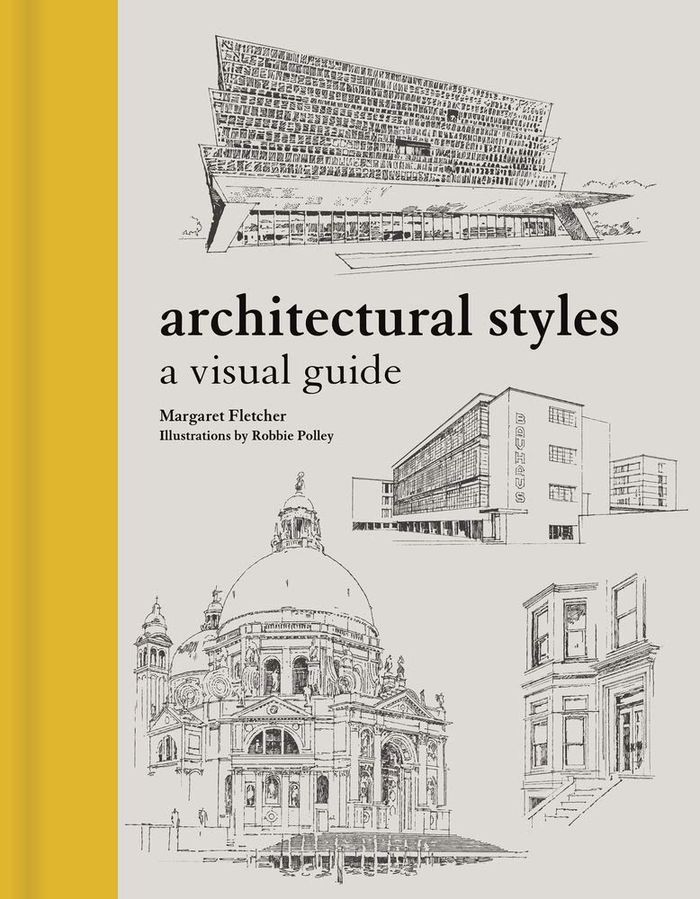
''Architectural styles'' is an incomparable guide to architectural styles across the centuries and around the world. Modeled after an architect's plein air sketchbook, the volume features hundreds of detailed drawings by esteemed architectural illustrator Robbie Polley alongside incisive and informative descriptions. This unique guidebook takes readers from Europe and the Americas to Egypt, China, and India. It covers a host of historical and contemporary architectural styles, from ancient and classical to Pre-Columbian, Romanesque, Renaissance, Palladian, art nouveau, Brutalist, and biomorphic. It describes the histories and characteristics of the building traditions of each era and region of the world, and looks at key architectural elements such as buttresses, spandrels, curtain walls, and oculi. The book also includes a section on building parts- from domes and columns to towers, arches, roofs, and vaulting- along with a detailed glossary and bibliography.
Architectural styles: a visual guide
Actions:
Price:
$46.00
(available in store)
Summary:
''Architectural styles'' is an incomparable guide to architectural styles across the centuries and around the world. Modeled after an architect's plein air sketchbook, the volume features hundreds of detailed drawings by esteemed architectural illustrator Robbie Polley alongside incisive and informative descriptions. This unique guidebook takes readers from Europe and the Americas to Egypt, China, and India. It covers a host of historical and contemporary architectural styles, from ancient and classical to Pre-Columbian, Romanesque, Renaissance, Palladian, art nouveau, Brutalist, and biomorphic. It describes the histories and characteristics of the building traditions of each era and region of the world, and looks at key architectural elements such as buttresses, spandrels, curtain walls, and oculi. The book also includes a section on building parts- from domes and columns to towers, arches, roofs, and vaulting- along with a detailed glossary and bibliography.
Form:
books
books
Publication:
December 2020
December 2020
Subject:
Guides
Guides
Form:
books
books
Title:
Hans Hollein
Hans Hollein
Actions:
Price:
$145.00
(available to order)
Summary:
The only Austrian winner of the Pritzker Prize (1985) and president of the architecture biennale in Venice, the Viennese architect Hans Hollein (born 1934) has been a leading exponent of postmodernism in architecture. Yet his global stature as an architect has overshadowed his design work of the 1970s and 1980s and his artistic work of the 1960s and 1970s, despite past(...)
$145.00
(available to order)
Summary:
The only Austrian winner of the Pritzker Prize (1985) and president of the architecture biennale in Venice, the Viennese architect Hans Hollein (born 1934) has been a leading exponent of postmodernism in architecture. Yet his global stature as an architect has overshadowed his design work of the 1970s and 1980s and his artistic work of the 1960s and 1970s, despite past(...)
Title:
Hans Hollein
Actions:
Price:
$145.00
(available to order)
Summary:
The only Austrian winner of the Pritzker Prize (1985) and president of the architecture biennale in Venice, the Viennese architect Hans Hollein (born 1934) has been a leading exponent of postmodernism in architecture. Yet his global stature as an architect has overshadowed his design work of the 1970s and 1980s and his artistic work of the 1960s and 1970s, despite past exhibitions at The Museum of Modern Art, New York and the Centre Pompidou in Paris. This richly illustrated, comprehensive catalogue, and the exhibition it accompanies at the Neue Galerie in Graz, is the first retrospective of Hollein as a truly universal artist and a renaissance man for the digital age. It is also the first to present Hollein's oeuvre as a whole: his work as artist, designer and architect, but also as theoretician, curator, teacher and collaborator with such artists as Christo and Claes Oldenburg.
Hans Hollein
Actions:
Price:
$145.00
(available to order)
Summary:
The only Austrian winner of the Pritzker Prize (1985) and president of the architecture biennale in Venice, the Viennese architect Hans Hollein (born 1934) has been a leading exponent of postmodernism in architecture. Yet his global stature as an architect has overshadowed his design work of the 1970s and 1980s and his artistic work of the 1960s and 1970s, despite past exhibitions at The Museum of Modern Art, New York and the Centre Pompidou in Paris. This richly illustrated, comprehensive catalogue, and the exhibition it accompanies at the Neue Galerie in Graz, is the first retrospective of Hollein as a truly universal artist and a renaissance man for the digital age. It is also the first to present Hollein's oeuvre as a whole: his work as artist, designer and architect, but also as theoretician, curator, teacher and collaborator with such artists as Christo and Claes Oldenburg.
Form:
books
books
Publication:
April 2012
April 2012
Form:
books
books
Actions:
Price:
$67.95
(available to order)
Summary:
Where is the space for dreaming in the twenty-first century? Lofty thoughts, like dreams, are born and live overhead, just as they have been represented in Renaissance paintings and modern cartoons. Ceilings are often repositories of stories, events and otherwise invisible oneiric narratives. Yet environments that inspire innovative thinking are dwindling as our world(...)
$67.95
(available to order)
Summary:
Where is the space for dreaming in the twenty-first century? Lofty thoughts, like dreams, are born and live overhead, just as they have been represented in Renaissance paintings and modern cartoons. Ceilings are often repositories of stories, events and otherwise invisible oneiric narratives. Yet environments that inspire innovative thinking are dwindling as our world(...)
Subject:
Architectural Theory
Architectural Theory
Publication:
August 2019
August 2019
Title:
Ceilings and dreams: the architecture of levity
Actions:
Price:
$67.95
(available to order)
Summary:
Where is the space for dreaming in the twenty-first century? Lofty thoughts, like dreams, are born and live overhead, just as they have been represented in Renaissance paintings and modern cartoons. Ceilings are often repositories of stories, events and otherwise invisible oneiric narratives. Yet environments that inspire innovative thinking are dwindling as our world confronts enormous challenges, and almost all of our thinking, debating and decision-making takes place under endless ceiling grids. Quantitative research establishes that spaces with taller ceilings elicit broader, more creative thoughts. Today, ceilings are usually squat conduits of technology: they have become the blind spot of modern architecture. The twenty essays in this book look across cultures, places and ceilings over time to discover their potential to uplift the human spirit. Not just one building element among many, the ceiling is a key to unlock the architectural imagination.
Ceilings and dreams: the architecture of levity
Actions:
Price:
$67.95
(available to order)
Summary:
Where is the space for dreaming in the twenty-first century? Lofty thoughts, like dreams, are born and live overhead, just as they have been represented in Renaissance paintings and modern cartoons. Ceilings are often repositories of stories, events and otherwise invisible oneiric narratives. Yet environments that inspire innovative thinking are dwindling as our world confronts enormous challenges, and almost all of our thinking, debating and decision-making takes place under endless ceiling grids. Quantitative research establishes that spaces with taller ceilings elicit broader, more creative thoughts. Today, ceilings are usually squat conduits of technology: they have become the blind spot of modern architecture. The twenty essays in this book look across cultures, places and ceilings over time to discover their potential to uplift the human spirit. Not just one building element among many, the ceiling is a key to unlock the architectural imagination.
Form:
books
books
Publication:
August 2019
August 2019
Subject:
Architectural Theory
Architectural Theory
Form:
books
books
Actions:
Price:
$68.95
(available to order)
Summary:
An ancient building method that has experienced a renaissance in recent years as people seek greener and more sustainable building materials and construction methods, rammed earth is a wall building technique that uses earth, chalk, lime and gravel as raw materials. Naturally insulating, non-combustible, and durable, they can be labor intensive to construct without(...)
$68.95
(available to order)
Summary:
An ancient building method that has experienced a renaissance in recent years as people seek greener and more sustainable building materials and construction methods, rammed earth is a wall building technique that uses earth, chalk, lime and gravel as raw materials. Naturally insulating, non-combustible, and durable, they can be labor intensive to construct without(...)
Title:
Down to earth: Rammed earth architecture
Actions:
Price:
$68.95
(available to order)
Summary:
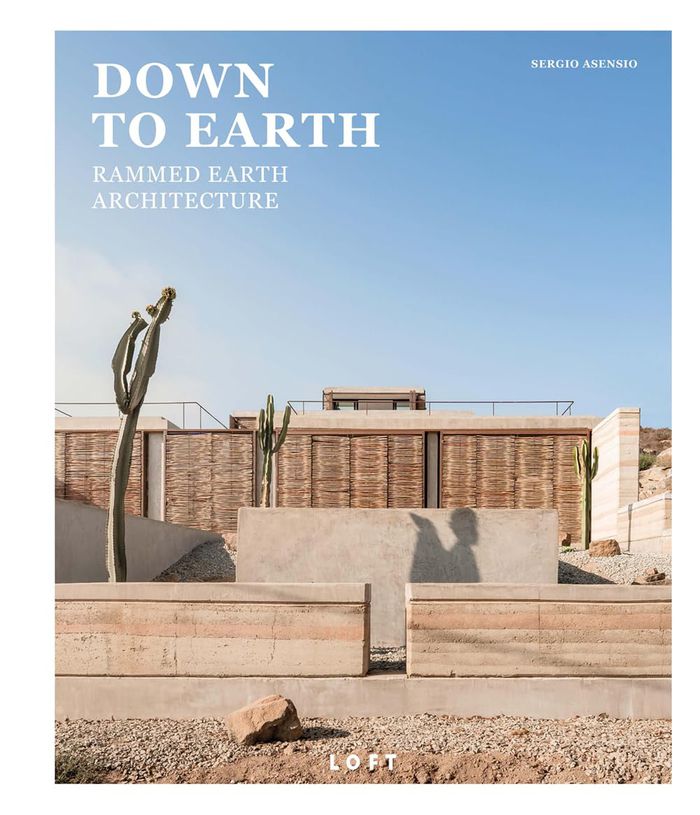
An ancient building method that has experienced a renaissance in recent years as people seek greener and more sustainable building materials and construction methods, rammed earth is a wall building technique that uses earth, chalk, lime and gravel as raw materials. Naturally insulating, non-combustible, and durable, they can be labor intensive to construct without machinery and are susceptible to water damage if not properly protected or maintained. Nevertheless, rammed earth buildings are found on almost every continent, in a range of environments from the humid, to the semi-arid and temperate – from simple single-family dwellings to large and complex multistory buildings. Alongside green building considerations, the availability of the natural components and a design suited to local climatic conditions are key factors which favor their use. "Down to earth" is a compilation of some of the most interesting recent examples of this interesting and unusual building technique.
Down to earth: Rammed earth architecture
Actions:
Price:
$68.95
(available to order)
Summary:
An ancient building method that has experienced a renaissance in recent years as people seek greener and more sustainable building materials and construction methods, rammed earth is a wall building technique that uses earth, chalk, lime and gravel as raw materials. Naturally insulating, non-combustible, and durable, they can be labor intensive to construct without machinery and are susceptible to water damage if not properly protected or maintained. Nevertheless, rammed earth buildings are found on almost every continent, in a range of environments from the humid, to the semi-arid and temperate – from simple single-family dwellings to large and complex multistory buildings. Alongside green building considerations, the availability of the natural components and a design suited to local climatic conditions are key factors which favor their use. "Down to earth" is a compilation of some of the most interesting recent examples of this interesting and unusual building technique.
Form:
books
books
Publication:
October 2023
October 2023
Subject:
Green Architecture
Green Architecture
Form:
books
books
Price:
$61.95
(available to order)
Summary:
Taking a critical look at how new urbanism has lived up to its ideals, the author asks whether new urban approaches offer a viable path to creating good communities. With examples drawn principally from North America, Europe and Japan, "Planning the good community" explores new urban approaches in a wide range of settings. It compares the movement for urban renaissance(...)
$61.95
(available to order)
Summary:
Taking a critical look at how new urbanism has lived up to its ideals, the author asks whether new urban approaches offer a viable path to creating good communities. With examples drawn principally from North America, Europe and Japan, "Planning the good community" explores new urban approaches in a wide range of settings. It compares the movement for urban renaissance(...)
Title:
Planning the good community : new urbanism in theory and practice
Actions:
Price:
$61.95
(available to order)
Summary:
Taking a critical look at how new urbanism has lived up to its ideals, the author asks whether new urban approaches offer a viable path to creating good communities. With examples drawn principally from North America, Europe and Japan, "Planning the good community" explores new urban approaches in a wide range of settings. It compares the movement for urban renaissance in Europe with the New Urbanism of the United States and Canada, and asks whether the concerns that drive today’s planning theory – issues like power, democracy, spatial patterns and globalisation - receive adequate attention in new urban approaches. The issue of aesthetics is also raised, as the author questions whether communities must be more than just attractive in order to be good. With the benefit of twenty years’ hindsight and a world-wide perspective, this book offers the reader unparalleled insight as well as a rigorous and considered critical analysis.
Planning the good community : new urbanism in theory and practice
Actions:
Price:
$61.95
(available to order)
Summary:
Taking a critical look at how new urbanism has lived up to its ideals, the author asks whether new urban approaches offer a viable path to creating good communities. With examples drawn principally from North America, Europe and Japan, "Planning the good community" explores new urban approaches in a wide range of settings. It compares the movement for urban renaissance in Europe with the New Urbanism of the United States and Canada, and asks whether the concerns that drive today’s planning theory – issues like power, democracy, spatial patterns and globalisation - receive adequate attention in new urban approaches. The issue of aesthetics is also raised, as the author questions whether communities must be more than just attractive in order to be good. With the benefit of twenty years’ hindsight and a world-wide perspective, this book offers the reader unparalleled insight as well as a rigorous and considered critical analysis.
Form:
books
books
Publication:
January 2006, New York
January 2006, New York
Subject:
Urban Theory
Urban Theory


