


5194 Results
Form:
books
books
Actions:
Price:
$46.95
(available in store)
Summary:
''De architectura'', written by Vitruvius in the first century BCE, is revered as the first treatise on architectural theory. Since its Renaissance resurrection, the enigmatic text has been adapted, refined, and redefined in subsequent iterations. ''Vitruvius without text'' bypasses critical interpretations to focus on the material history of the printed editions that(...)
$46.95
(available in store)
Summary:
''De architectura'', written by Vitruvius in the first century BCE, is revered as the first treatise on architectural theory. Since its Renaissance resurrection, the enigmatic text has been adapted, refined, and redefined in subsequent iterations. ''Vitruvius without text'' bypasses critical interpretations to focus on the material history of the printed editions that(...)
Title:
Vitruvius without text: the biography of a book
Actions:
Price:
$46.95
(available in store)
Summary:
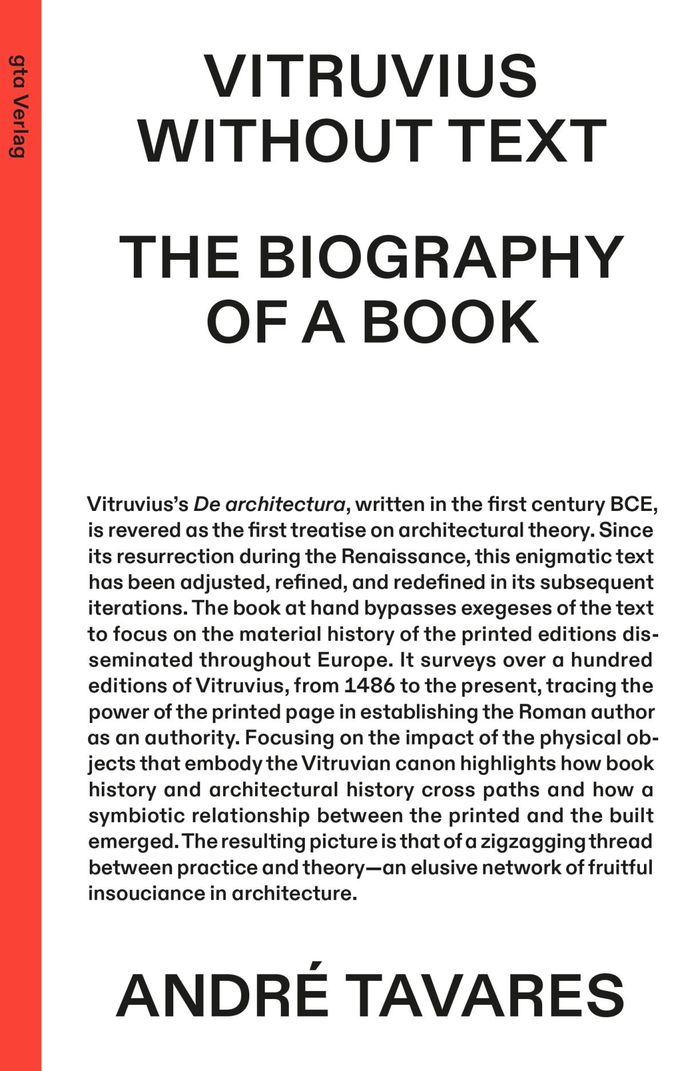
''De architectura'', written by Vitruvius in the first century BCE, is revered as the first treatise on architectural theory. Since its Renaissance resurrection, the enigmatic text has been adapted, refined, and redefined in subsequent iterations. ''Vitruvius without text'' bypasses critical interpretations to focus on the material history of the printed editions that appeared throughout Europe. It surveys over 100 editions from 1486 to the present, tracing the power of the printed page in establishing the Roman author as an authority. By focusing on the impact of the physical objects of the Vitruvian canon, it highlights how the history of printing and architecture intersect to form a symbiotic relationship.
Vitruvius without text: the biography of a book
Actions:
Price:
$46.95
(available in store)
Summary:
''De architectura'', written by Vitruvius in the first century BCE, is revered as the first treatise on architectural theory. Since its Renaissance resurrection, the enigmatic text has been adapted, refined, and redefined in subsequent iterations. ''Vitruvius without text'' bypasses critical interpretations to focus on the material history of the printed editions that appeared throughout Europe. It surveys over 100 editions from 1486 to the present, tracing the power of the printed page in establishing the Roman author as an authority. By focusing on the impact of the physical objects of the Vitruvian canon, it highlights how the history of printing and architecture intersect to form a symbiotic relationship.
Form:
books
books
Publication:
July 2022
July 2022
Subject:
Architectural Theory
Architectural Theory
Form:
books
books
Title:
Conflict in my Outlook
Conflict in my Outlook
Actions:
Price:
$45.00
(available to order)
Summary:
We live in a hyper-mediated world, drowning in an ocean of images and information. ''Conflict in my outlook'' gathers contemporary artworks and new texts that shed light on human experience in an era of ubiquitous networked technologies. From digital intimacies and the weaponization of social media to invisible power structures, clickwork, and the 'gig' economy,(...)
$45.00
(available to order)
Summary:
We live in a hyper-mediated world, drowning in an ocean of images and information. ''Conflict in my outlook'' gathers contemporary artworks and new texts that shed light on human experience in an era of ubiquitous networked technologies. From digital intimacies and the weaponization of social media to invisible power structures, clickwork, and the 'gig' economy,(...)
Publication:
June 2022
June 2022
Title:
Conflict in my Outlook
Actions:
Price:
$45.00
(available to order)
Summary:
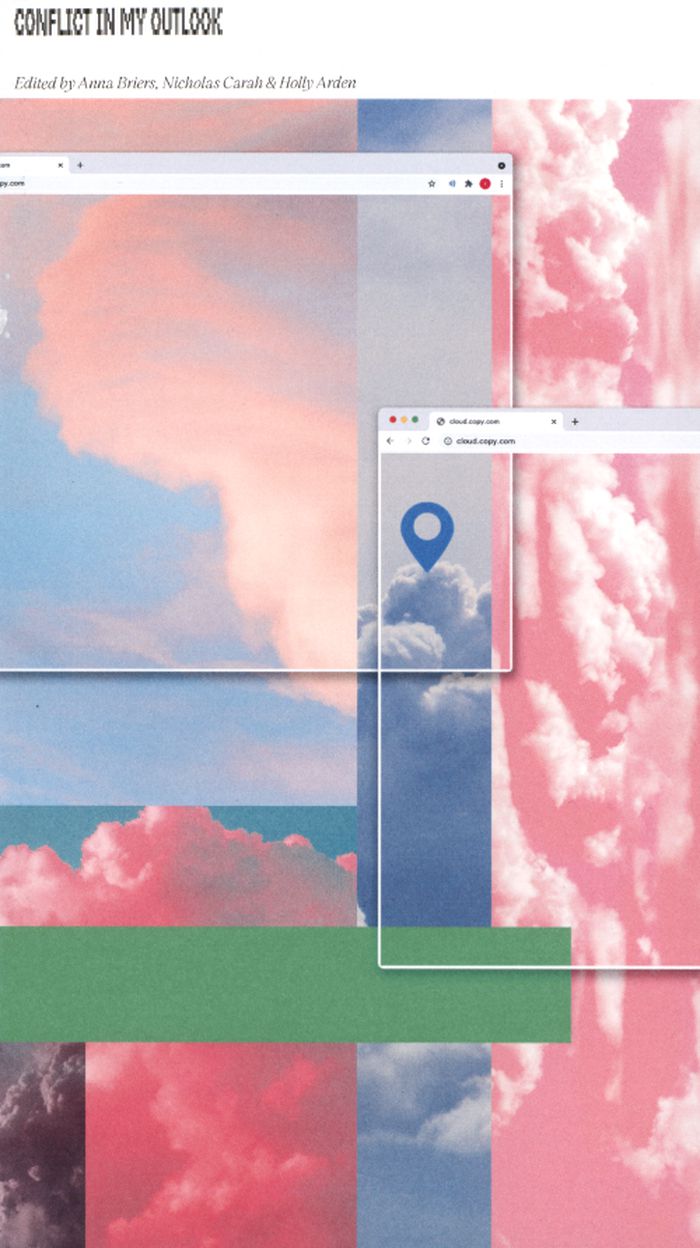
We live in a hyper-mediated world, drowning in an ocean of images and information. ''Conflict in my outlook'' gathers contemporary artworks and new texts that shed light on human experience in an era of ubiquitous networked technologies. From digital intimacies and the weaponization of social media to invisible power structures, clickwork, and the 'gig' economy, contributors seek a better future in the context of algorithmic racism, machine learning, and the new colonial frontiers of surveillance capitalism. The anthology, which is published on the occasion of a two-part exhibition series at UQ Art Museum, focuses on art as a means to explore the techno-politics that define our age.
Conflict in my Outlook
Actions:
Price:
$45.00
(available to order)
Summary:
We live in a hyper-mediated world, drowning in an ocean of images and information. ''Conflict in my outlook'' gathers contemporary artworks and new texts that shed light on human experience in an era of ubiquitous networked technologies. From digital intimacies and the weaponization of social media to invisible power structures, clickwork, and the 'gig' economy, contributors seek a better future in the context of algorithmic racism, machine learning, and the new colonial frontiers of surveillance capitalism. The anthology, which is published on the occasion of a two-part exhibition series at UQ Art Museum, focuses on art as a means to explore the techno-politics that define our age.
Form:
books
books
Publication:
June 2022
June 2022
Form:
books
books

Actions:
Price:
$96.00
(available to order)
Summary:
The first series ever realised by Italian photographer Olivo Barbieri, Flippers derives from his discovery of an abandoned, derelict pinball machine factory, and marks the starting point of his observations on visualising the superficial, which would lead to his artistic engagement with the uncertainty of the world’s surface. The fragmented pinball machines act as a(...)
$96.00
(available to order)
Summary:
The first series ever realised by Italian photographer Olivo Barbieri, Flippers derives from his discovery of an abandoned, derelict pinball machine factory, and marks the starting point of his observations on visualising the superficial, which would lead to his artistic engagement with the uncertainty of the world’s surface. The fragmented pinball machines act as a(...)
Title:
Olivo Barbieri: flippers 1977-1978
Actions:
Price:
$96.00
(available to order)
Summary:
The first series ever realised by Italian photographer Olivo Barbieri, Flippers derives from his discovery of an abandoned, derelict pinball machine factory, and marks the starting point of his observations on visualising the superficial, which would lead to his artistic engagement with the uncertainty of the world’s surface. The fragmented pinball machines act as a cultural reminder, a throwback to the flashing momentum of the 1960s and ’70s, with rock music, science fiction, movie stars, and flower power. Published in its entirety for the first time, the pinball project was a formative experience for the photographer in his early years. Includes an interview with Barbieri and Francesco Zanot.
Olivo Barbieri: flippers 1977-1978
Actions:
Price:
$96.00
(available to order)
Summary:
The first series ever realised by Italian photographer Olivo Barbieri, Flippers derives from his discovery of an abandoned, derelict pinball machine factory, and marks the starting point of his observations on visualising the superficial, which would lead to his artistic engagement with the uncertainty of the world’s surface. The fragmented pinball machines act as a cultural reminder, a throwback to the flashing momentum of the 1960s and ’70s, with rock music, science fiction, movie stars, and flower power. Published in its entirety for the first time, the pinball project was a formative experience for the photographer in his early years. Includes an interview with Barbieri and Francesco Zanot.
Form:
books
books
Publication:
October 2015
October 2015
Subject:
Photography monographs
Photography monographs
Form:
books
books
Actions:
Price:
$25.95
(available to order)
Summary:
"This is a book about science, technology, and love," writes Sherry Turkle. In it, we learn how a love for science can start with a love for an object--a microscope, a modem, a mud pie, a pair of dice, a fishing rod. Objects fire imagination and set young people on a path to a career in science. In this collection, distinguished scientists, engineers, and designers as(...)
$25.95
(available to order)
Summary:
"This is a book about science, technology, and love," writes Sherry Turkle. In it, we learn how a love for science can start with a love for an object--a microscope, a modem, a mud pie, a pair of dice, a fishing rod. Objects fire imagination and set young people on a path to a career in science. In this collection, distinguished scientists, engineers, and designers as(...)
Title:
Falling for science: objects in mind
Actions:
Price:
$25.95
(available to order)
Summary:
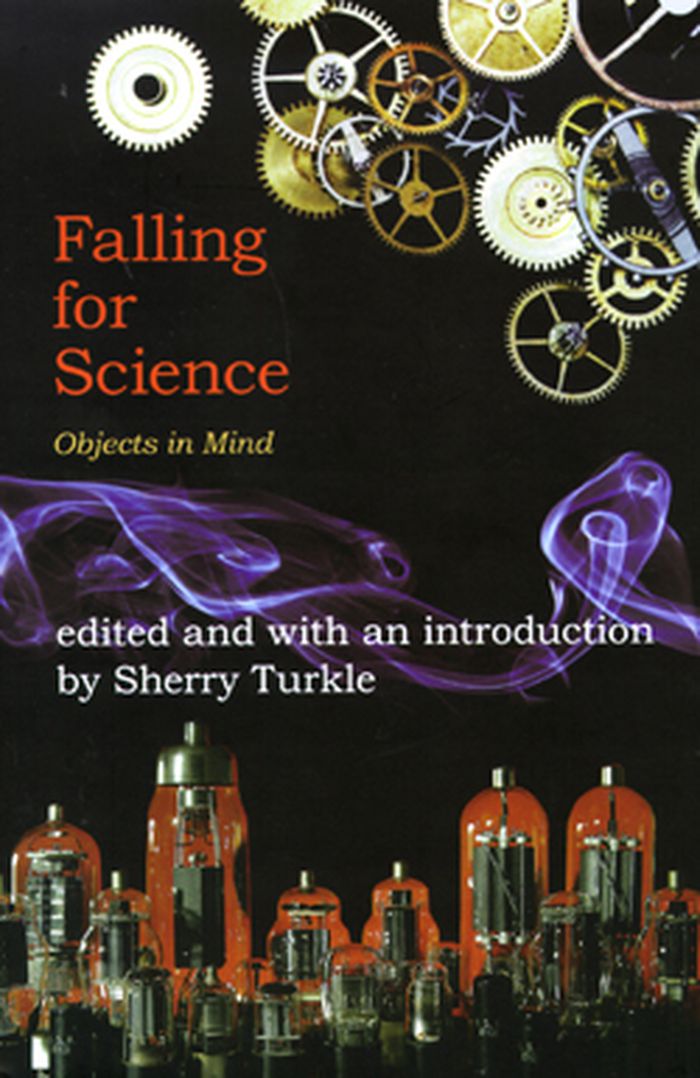
"This is a book about science, technology, and love," writes Sherry Turkle. In it, we learn how a love for science can start with a love for an object--a microscope, a modem, a mud pie, a pair of dice, a fishing rod. Objects fire imagination and set young people on a path to a career in science. In this collection, distinguished scientists, engineers, and designers as well as twenty-five years of MIT students describe how objects encountered in childhood became part of the fabric of their scientific selves. In two major essays that frame the collection, Turkle tells a story of inspiration and connection through objects that is often neglected in standard science education and in our preoccupation with the virtual. The senior scientists' essays trace the arc of a life: the gears of a toy car introduce the chain of cause and effect to artificial intelligence pioneer Seymour Papert; microscopes disclose the mystery of how things work to MIT President and neuroanatomist Susan Hockfield; architect Moshe Safdie describes how his boyhood fascination with steps, terraces, and the wax hexagons of beehives lead him to a life immersed in the complexities of design. The student essays tell stories that echo these narratives: plastic eggs in an Easter basket reveal the power of centripetal force; experiments with baking illuminate the geology of planets; LEGO bricks model worlds, carefully engineered and colonized. All of these voices--students and mentors-testify to the power of objects to awaken and inform young scientific minds. This is a truth that is simple, intuitive, and easily overlooked.
Falling for science: objects in mind
Actions:
Price:
$25.95
(available to order)
Summary:
"This is a book about science, technology, and love," writes Sherry Turkle. In it, we learn how a love for science can start with a love for an object--a microscope, a modem, a mud pie, a pair of dice, a fishing rod. Objects fire imagination and set young people on a path to a career in science. In this collection, distinguished scientists, engineers, and designers as well as twenty-five years of MIT students describe how objects encountered in childhood became part of the fabric of their scientific selves. In two major essays that frame the collection, Turkle tells a story of inspiration and connection through objects that is often neglected in standard science education and in our preoccupation with the virtual. The senior scientists' essays trace the arc of a life: the gears of a toy car introduce the chain of cause and effect to artificial intelligence pioneer Seymour Papert; microscopes disclose the mystery of how things work to MIT President and neuroanatomist Susan Hockfield; architect Moshe Safdie describes how his boyhood fascination with steps, terraces, and the wax hexagons of beehives lead him to a life immersed in the complexities of design. The student essays tell stories that echo these narratives: plastic eggs in an Easter basket reveal the power of centripetal force; experiments with baking illuminate the geology of planets; LEGO bricks model worlds, carefully engineered and colonized. All of these voices--students and mentors-testify to the power of objects to awaken and inform young scientific minds. This is a truth that is simple, intuitive, and easily overlooked.
Form:
books
books
Publication:
May 2008, Cambridge, London
May 2008, Cambridge, London
Subject:
Design Theory
Design Theory
Form:
books
books
Title:
Reclaiming travel
Reclaiming travel
Actions:
Price:
$36.95
(available to order)
Summary:
Based on a controversial opinion piece originally published in the New York Times, Reclaiming Travel is a provocative meditation on the meaning of travel from ancient times to the twenty-first century. Ilan Stavans and Joshua Ellison seek to understand why we travel and what has come to be missing from our contemporary understanding of travel. Engaging with canonical and(...)
$36.95
(available to order)
Summary:
Based on a controversial opinion piece originally published in the New York Times, Reclaiming Travel is a provocative meditation on the meaning of travel from ancient times to the twenty-first century. Ilan Stavans and Joshua Ellison seek to understand why we travel and what has come to be missing from our contemporary understanding of travel. Engaging with canonical and(...)
Subject:
Transportation, Tourism, Migration
Transportation, Tourism, Migration
Publication:
December 2014
December 2014
Title:
Reclaiming travel
Actions:
Price:
$36.95
(available to order)
Summary:
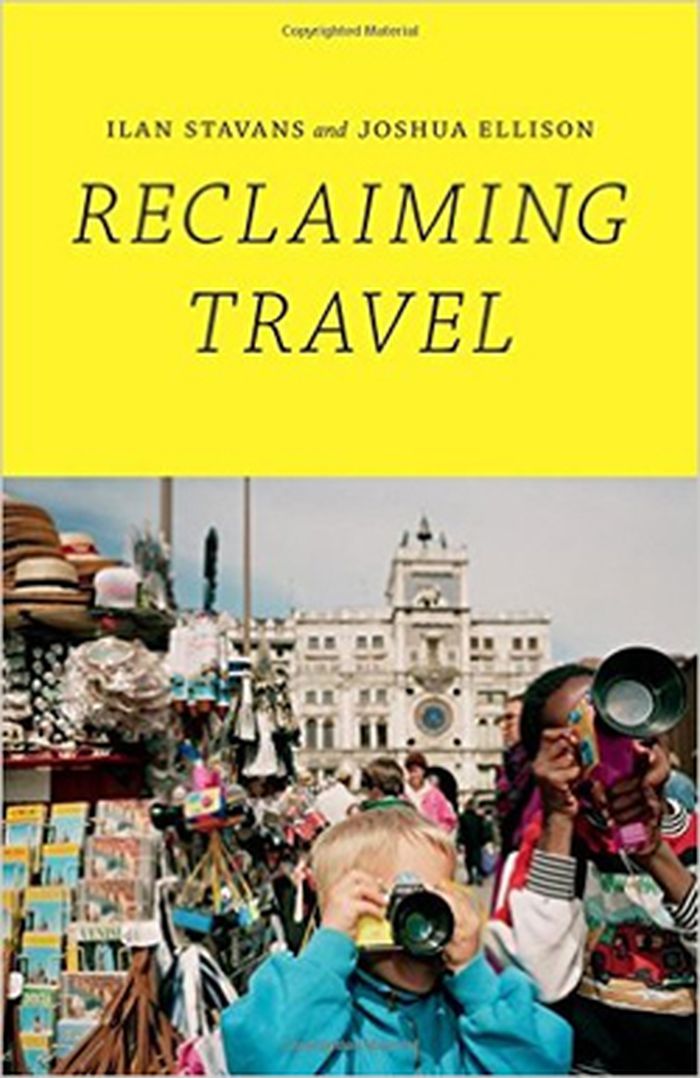
Based on a controversial opinion piece originally published in the New York Times, Reclaiming Travel is a provocative meditation on the meaning of travel from ancient times to the twenty-first century. Ilan Stavans and Joshua Ellison seek to understand why we travel and what has come to be missing from our contemporary understanding of travel. Engaging with canonical and contemporary texts, they explore the differences between travel and tourism, the relationship between travel and memory, the genre of travel writing, and the power of mapmaking, Stavans and Ellison call for a rethinking of the art of travel, which they define as a transformative quest that gives us deeper access to ourselves.
Reclaiming travel
Actions:
Price:
$36.95
(available to order)
Summary:
Based on a controversial opinion piece originally published in the New York Times, Reclaiming Travel is a provocative meditation on the meaning of travel from ancient times to the twenty-first century. Ilan Stavans and Joshua Ellison seek to understand why we travel and what has come to be missing from our contemporary understanding of travel. Engaging with canonical and contemporary texts, they explore the differences between travel and tourism, the relationship between travel and memory, the genre of travel writing, and the power of mapmaking, Stavans and Ellison call for a rethinking of the art of travel, which they define as a transformative quest that gives us deeper access to ourselves.
Form:
books
books
Publication:
December 2014
December 2014
Subject:
Transportation, Tourism, Migration
Transportation, Tourism, Migration
Form:
books
books
Title:
Résolument contemporaine
Résolument contemporaine
Actions:
Price:
$64.95
(available to order)
Summary:
Ce livre de décoration exceptionnel de par la beauté stupéfiante des habitats présentés, propose un tour du monde des intérieurs de style contemporain les plus étonnants, les plus achevés, les plus séduisants, du Brésil à la Californie, de la Scandinavie à l'Australie.
$64.95
(available to order)
Summary:
Ce livre de décoration exceptionnel de par la beauté stupéfiante des habitats présentés, propose un tour du monde des intérieurs de style contemporain les plus étonnants, les plus achevés, les plus séduisants, du Brésil à la Californie, de la Scandinavie à l'Australie.
Title:
Résolument contemporaine
Actions:
Price:
$64.95
(available to order)
Summary:
Ce livre de décoration exceptionnel de par la beauté stupéfiante des habitats présentés, propose un tour du monde des intérieurs de style contemporain les plus étonnants, les plus achevés, les plus séduisants, du Brésil à la Californie, de la Scandinavie à l'Australie.
Résolument contemporaine
Actions:
Price:
$64.95
(available to order)
Summary:
Ce livre de décoration exceptionnel de par la beauté stupéfiante des habitats présentés, propose un tour du monde des intérieurs de style contemporain les plus étonnants, les plus achevés, les plus séduisants, du Brésil à la Californie, de la Scandinavie à l'Australie.
Form:
books
books
Publication:
September 2010
September 2010
Subject:
Interior Design
Interior Design
Form:
books
books
Title:
The overstory
The overstory
Actions:
Price:
$24.95
(available to order)
Summary:
The Overstory, winner of the 2019 Pulitzer Prize in Fiction, is a sweeping, impassioned work of activism and resistance that is also a stunning evocation of — and paean to — the natural world. From the roots to the crown and back to the seeds, Richard Powers’s twelfth novel unfolds in concentric rings of interlocking fables that range from antebellum New York to the late(...)
$24.95
(available to order)
Summary:
The Overstory, winner of the 2019 Pulitzer Prize in Fiction, is a sweeping, impassioned work of activism and resistance that is also a stunning evocation of — and paean to — the natural world. From the roots to the crown and back to the seeds, Richard Powers’s twelfth novel unfolds in concentric rings of interlocking fables that range from antebellum New York to the late(...)
Title:
The overstory
Actions:
Price:
$24.95
(available to order)
Summary:
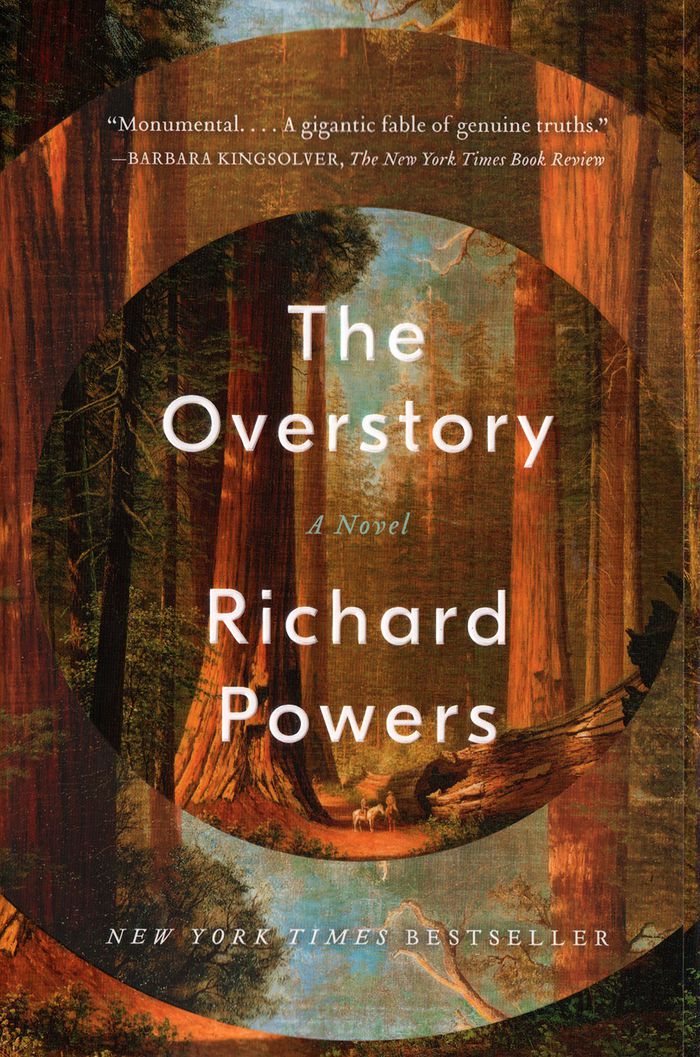
The Overstory, winner of the 2019 Pulitzer Prize in Fiction, is a sweeping, impassioned work of activism and resistance that is also a stunning evocation of — and paean to — the natural world. From the roots to the crown and back to the seeds, Richard Powers’s twelfth novel unfolds in concentric rings of interlocking fables that range from antebellum New York to the late twentieth-century Timber Wars of the Pacific Northwest and beyond.
The overstory
Actions:
Price:
$24.95
(available to order)
Summary:
The Overstory, winner of the 2019 Pulitzer Prize in Fiction, is a sweeping, impassioned work of activism and resistance that is also a stunning evocation of — and paean to — the natural world. From the roots to the crown and back to the seeds, Richard Powers’s twelfth novel unfolds in concentric rings of interlocking fables that range from antebellum New York to the late twentieth-century Timber Wars of the Pacific Northwest and beyond.
Form:
books
books
Publication:
April 2019
April 2019
Subject:
Literature and poetry
Literature and poetry
Form:
books
books
Description:
1 online resource.
Author:
Subject:
Publication:
Falmouth, UK : Urbanomic Media, 2025.
Falmouth, UK : Urbanomic Media, 2025.
Title:
Revenge of reason [electronic resource] / Peter Wolfendale.
Actions:
Description:
1 online resource.
Revenge of reason [electronic resource] / Peter Wolfendale.
Actions:
Description:
1 online resource.
Form:
books
books
Publication:
Falmouth, UK : Urbanomic Media, 2025.
Falmouth, UK : Urbanomic Media, 2025.
Author:
Subject:
Form:
books
books
Actions:
Price:
$45.95
(available in store)
Summary:
Establishing an ethics of spatial justice to lead architecture forward, Dana Cuff shows why the discipline requires critical examination—in relation to not only buildings and the capital required to realize them but privilege, power, aesthetics, and sociality. The book draws on studies of architectural projects from around the world, with instructive case studies from(...)
$45.95
(available in store)
Summary:
Establishing an ethics of spatial justice to lead architecture forward, Dana Cuff shows why the discipline requires critical examination—in relation to not only buildings and the capital required to realize them but privilege, power, aesthetics, and sociality. The book draws on studies of architectural projects from around the world, with instructive case studies from(...)
Title:
Architectures of spatial justice
Actions:
Price:
$45.95
(available in store)
Summary:
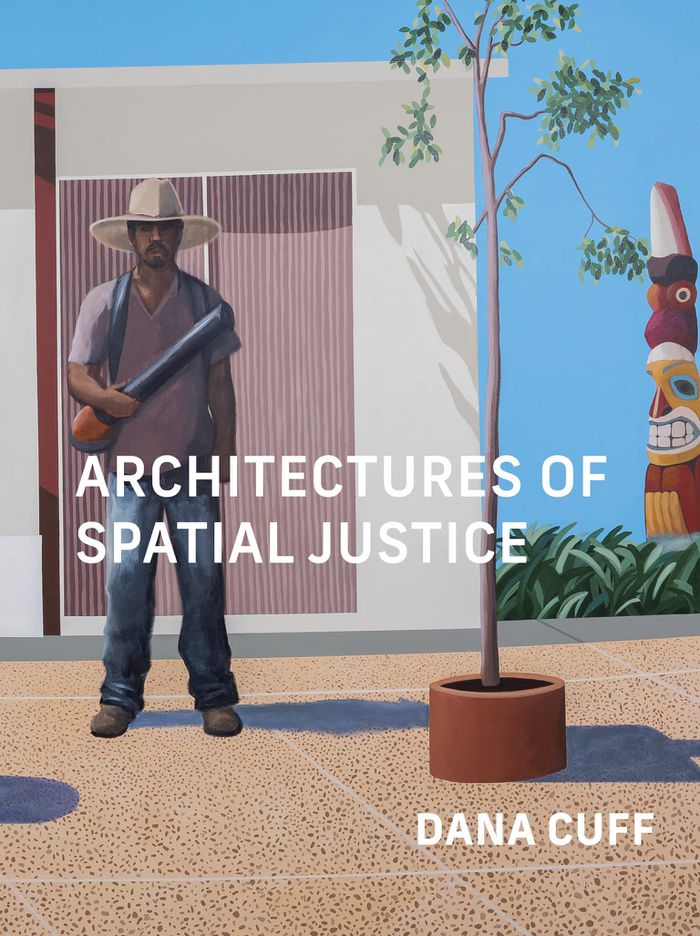
Establishing an ethics of spatial justice to lead architecture forward, Dana Cuff shows why the discipline requires critical examination—in relation to not only buildings and the capital required to realize them but privilege, power, aesthetics, and sociality. The book draws on studies of architectural projects from around the world, with instructive case studies from Chile, Mexico, Japan, and the United States that focus in particular on urban centers, where architecture is most directly engaged with social justice issues. Emerging from more than two decades of the author's own project-based research, the volume examines ethically driven practices that break with professional conventions to correct long-standing inequities in the built environment, uncovering architecture's limits—and its potential.
Architectures of spatial justice
Actions:
Price:
$45.95
(available in store)
Summary:
Establishing an ethics of spatial justice to lead architecture forward, Dana Cuff shows why the discipline requires critical examination—in relation to not only buildings and the capital required to realize them but privilege, power, aesthetics, and sociality. The book draws on studies of architectural projects from around the world, with instructive case studies from Chile, Mexico, Japan, and the United States that focus in particular on urban centers, where architecture is most directly engaged with social justice issues. Emerging from more than two decades of the author's own project-based research, the volume examines ethically driven practices that break with professional conventions to correct long-standing inequities in the built environment, uncovering architecture's limits—and its potential.
Form:
books
books
Publication:
April 2023
April 2023
Form:
books
books
Title:
Going public: e-flux journal
Going public: e-flux journal
Actions:
Price:
$19.95
(available to order)
Summary:
If all things in the world can be considered as sources of aesthetic experience, then art no longer holds a privileged position. Rather, art comes between the subject and the world, and any aesthetic discourse used to legitimize art must also necessarily serve to undermine it. Following his recent books Art Power and The Communist Postscript, in Going Public Boris Groys(...)
$19.95
(available to order)
Summary:
If all things in the world can be considered as sources of aesthetic experience, then art no longer holds a privileged position. Rather, art comes between the subject and the world, and any aesthetic discourse used to legitimize art must also necessarily serve to undermine it. Following his recent books Art Power and The Communist Postscript, in Going Public Boris Groys(...)
Title:
Going public: e-flux journal
Actions:
Price:
$19.95
(available to order)
Summary:
If all things in the world can be considered as sources of aesthetic experience, then art no longer holds a privileged position. Rather, art comes between the subject and the world, and any aesthetic discourse used to legitimize art must also necessarily serve to undermine it. Following his recent books Art Power and The Communist Postscript, in Going Public Boris Groys looks to escape entrenched aesthetic and sociological understandings of art — which always assume the position of the spectator, of the consumer. Let us instead consider art from the position of the producer, who does not ask what it looks like or where it comes from, but why it exists in the first place.
Going public: e-flux journal
Actions:
Price:
$19.95
(available to order)
Summary:
If all things in the world can be considered as sources of aesthetic experience, then art no longer holds a privileged position. Rather, art comes between the subject and the world, and any aesthetic discourse used to legitimize art must also necessarily serve to undermine it. Following his recent books Art Power and The Communist Postscript, in Going Public Boris Groys looks to escape entrenched aesthetic and sociological understandings of art — which always assume the position of the spectator, of the consumer. Let us instead consider art from the position of the producer, who does not ask what it looks like or where it comes from, but why it exists in the first place.
Form:
books
books
Publication:
November 2010
November 2010
Subject:
Art Theory
Art Theory


