


5194 Results
Form:
books
books
Title:
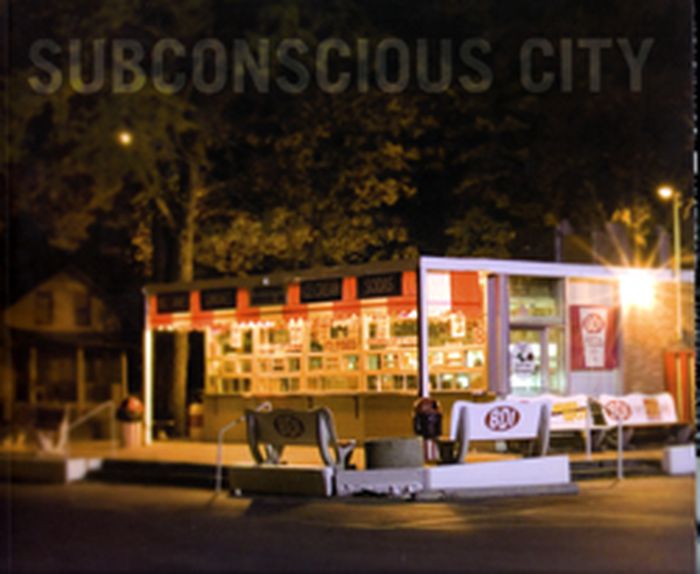
Subconscious city
Subconscious city
Actions:
Price:
$30.00
(available to order)
Summary:
"Subsconscious city" examines the often hidden underpinnings of Winnipeg - its myths, its vacant lots, its forgotten communities, its hidden gems - and reveals a complicated picture of place. Created as a companion to the contemporary art exhibition of the same name curated by Shawna Dempsey and Lori Millan, this publication delves into the nature of our urban social and(...)
$30.00
(available to order)
Summary:
"Subsconscious city" examines the often hidden underpinnings of Winnipeg - its myths, its vacant lots, its forgotten communities, its hidden gems - and reveals a complicated picture of place. Created as a companion to the contemporary art exhibition of the same name curated by Shawna Dempsey and Lori Millan, this publication delves into the nature of our urban social and(...)
Subject:
Architecture in Canada
Architecture in Canada
Publication:
March 2008, Winnipeg
March 2008, Winnipeg
Title:
Subconscious city
Actions:
Price:
$30.00
(available to order)
Summary:
"Subsconscious city" examines the often hidden underpinnings of Winnipeg - its myths, its vacant lots, its forgotten communities, its hidden gems - and reveals a complicated picture of place. Created as a companion to the contemporary art exhibition of the same name curated by Shawna Dempsey and Lori Millan, this publication delves into the nature of our urban social and physical landscape, and its power to shape identity. This volume includes poetry and lyrics by John K. Samson, new fiction by Guy Maddin, creative meditations by Jeanne Randolph and Marvin Francis, and essays by Sigrid Dahle, Molly Johnson and Richard Milgrom, Claudine Majzels, and Dempsey and Millan, ranging in topics from the benefits of zero growth to the Aboriginal urban experience. Artworks of KC Adams, Keith Berens, Simon Hughes' Bonnie Marin, Diana Thorneycroft and many others.
Subconscious city
Actions:
Price:
$30.00
(available to order)
Summary:
"Subsconscious city" examines the often hidden underpinnings of Winnipeg - its myths, its vacant lots, its forgotten communities, its hidden gems - and reveals a complicated picture of place. Created as a companion to the contemporary art exhibition of the same name curated by Shawna Dempsey and Lori Millan, this publication delves into the nature of our urban social and physical landscape, and its power to shape identity. This volume includes poetry and lyrics by John K. Samson, new fiction by Guy Maddin, creative meditations by Jeanne Randolph and Marvin Francis, and essays by Sigrid Dahle, Molly Johnson and Richard Milgrom, Claudine Majzels, and Dempsey and Millan, ranging in topics from the benefits of zero growth to the Aboriginal urban experience. Artworks of KC Adams, Keith Berens, Simon Hughes' Bonnie Marin, Diana Thorneycroft and many others.
Form:
books
books
Publication:
March 2008, Winnipeg
March 2008, Winnipeg
Subject:
Architecture in Canada
Architecture in Canada
Form:
books
books
Title:
Reinventing daily life
Reinventing daily life
Actions:
Price:
$25.95
(available to order)
Summary:
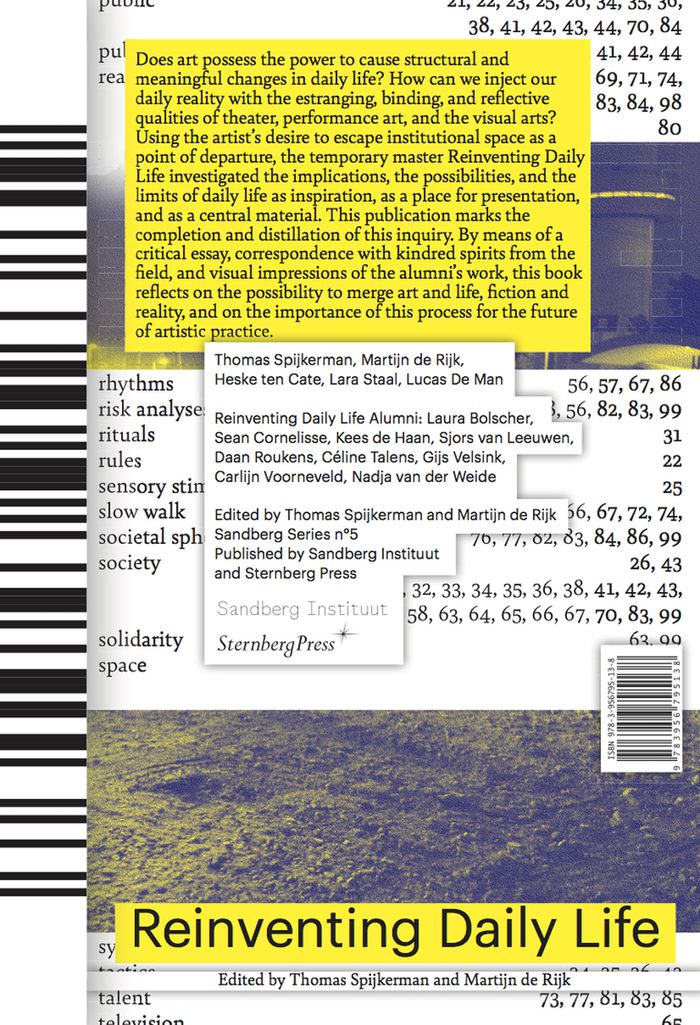
Does art possess the power to cause structural and meaningful changes in daily life? How can we inject our daily reality with the estranging, binding, and reflective qualities of theater, performance art, and the visual arts? Using the artist’s desire to escape institutional space as a point of departure, the temporary master 'Reinventing Daily Life' investigated the(...)
$25.95
(available to order)
Summary:
Does art possess the power to cause structural and meaningful changes in daily life? How can we inject our daily reality with the estranging, binding, and reflective qualities of theater, performance art, and the visual arts? Using the artist’s desire to escape institutional space as a point of departure, the temporary master 'Reinventing Daily Life' investigated the(...)
Title:
Reinventing daily life
Actions:
Price:
$25.95
(available to order)
Summary:
Does art possess the power to cause structural and meaningful changes in daily life? How can we inject our daily reality with the estranging, binding, and reflective qualities of theater, performance art, and the visual arts? Using the artist’s desire to escape institutional space as a point of departure, the temporary master 'Reinventing Daily Life' investigated the implications, the possibilities, and the limits of daily life as inspiration, as a place for presentation, and as a central material. This publication marks the completion and distillation of this inquiry. By means of a critical essay, correspondence with kindred spirits from the field, and visual impressions of the alumni’s work, this book reflects on the possibility to merge art and life, fiction and reality, and on the importance of this process for the future of artistic practice.
Reinventing daily life
Actions:
Price:
$25.95
(available to order)
Summary:
Does art possess the power to cause structural and meaningful changes in daily life? How can we inject our daily reality with the estranging, binding, and reflective qualities of theater, performance art, and the visual arts? Using the artist’s desire to escape institutional space as a point of departure, the temporary master 'Reinventing Daily Life' investigated the implications, the possibilities, and the limits of daily life as inspiration, as a place for presentation, and as a central material. This publication marks the completion and distillation of this inquiry. By means of a critical essay, correspondence with kindred spirits from the field, and visual impressions of the alumni’s work, this book reflects on the possibility to merge art and life, fiction and reality, and on the importance of this process for the future of artistic practice.
Form:
books
books
Publication:
February 2020
February 2020
Subject:
Art Theory
Art Theory
Form:
books
books

Title:
The parameters of our cage
The parameters of our cage
Actions:
Price:
$16.95
(available to order)
Summary:
In January 2020, Alec Soth received a letter from Chris Fausto Cabrera, an inmate of the Minnesota Correctional Facility in Rush City, in which he asked the photographer to engage in a dialogue. This sparked an expansive and insightful correspondence over the following nine months which, set against the backdrop of the COVID-19 pandemic, Black Lives Matter Movement and(...)
$16.95
(available to order)
Summary:
In January 2020, Alec Soth received a letter from Chris Fausto Cabrera, an inmate of the Minnesota Correctional Facility in Rush City, in which he asked the photographer to engage in a dialogue. This sparked an expansive and insightful correspondence over the following nine months which, set against the backdrop of the COVID-19 pandemic, Black Lives Matter Movement and(...)
Title:
The parameters of our cage
Actions:
Price:
$16.95
(available to order)
Summary:
In January 2020, Alec Soth received a letter from Chris Fausto Cabrera, an inmate of the Minnesota Correctional Facility in Rush City, in which he asked the photographer to engage in a dialogue. This sparked an expansive and insightful correspondence over the following nine months which, set against the backdrop of the COVID-19 pandemic, Black Lives Matter Movement and growing unrest, reaches to the heart of contemporary America. In amongst their exchanges of personal histories and shared influences – from Ralph Ellison’s The Invisible Man and André 3000, to Robert Frank’s The Americans and Rilke’s 'Letters to a Young Poet' – developed a searing investigation of the redemptive power of art and the imagination, justice and accountability, life inside America’s prisons, and the astonishing capacity of empathy and curiosity to bring two people together.
The parameters of our cage
Actions:
Price:
$16.95
(available to order)
Summary:
In January 2020, Alec Soth received a letter from Chris Fausto Cabrera, an inmate of the Minnesota Correctional Facility in Rush City, in which he asked the photographer to engage in a dialogue. This sparked an expansive and insightful correspondence over the following nine months which, set against the backdrop of the COVID-19 pandemic, Black Lives Matter Movement and growing unrest, reaches to the heart of contemporary America. In amongst their exchanges of personal histories and shared influences – from Ralph Ellison’s The Invisible Man and André 3000, to Robert Frank’s The Americans and Rilke’s 'Letters to a Young Poet' – developed a searing investigation of the redemptive power of art and the imagination, justice and accountability, life inside America’s prisons, and the astonishing capacity of empathy and curiosity to bring two people together.
Form:
books
books
Publication:
October 2020
October 2020
Subject:
Theory of Photography
Theory of Photography
Form:
books
books
Actions:
Price:
$25.99
(available to order)
Summary:
From Keith Haring to Extinction Rebellion, the civil rights movement to Black Lives Matter, what does a revolution look like? Discover the power of words and images in this thought-provoking look at protest art by acclaimed artivist De Nichols. From the psychedelic typography used in “Make Love Not War” posters of the ’60s to the solitary raised fist, some of the most(...)
$25.99
(available to order)
Summary:
From Keith Haring to Extinction Rebellion, the civil rights movement to Black Lives Matter, what does a revolution look like? Discover the power of words and images in this thought-provoking look at protest art by acclaimed artivist De Nichols. From the psychedelic typography used in “Make Love Not War” posters of the ’60s to the solitary raised fist, some of the most(...)
Title:
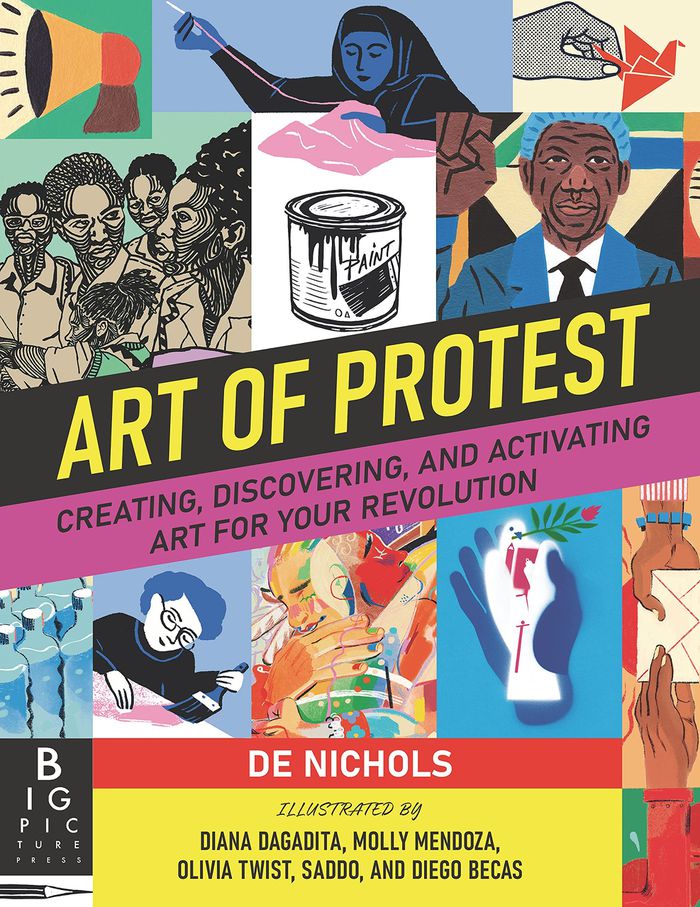
Art of protest: creating, discovering, and activating art for your revolution
Actions:
Price:
$25.99
(available to order)
Summary:
From Keith Haring to Extinction Rebellion, the civil rights movement to Black Lives Matter, what does a revolution look like? Discover the power of words and images in this thought-provoking look at protest art by acclaimed artivist De Nichols. From the psychedelic typography used in “Make Love Not War” posters of the ’60s to the solitary raised fist, some of the most memorable and striking protest artwork from across the world and throughout history deserves a long, hard look. Readers can explore each piece of art to understand how color, symbolism, technique, and typography play an important role in communication. Guided by activist, lecturer, and speaker De Nichols’s powerful narrative and stunningly illustrated by a collaboration of young artists, this volume also has plenty of tips and ideas for creating your own revolutionary designs.
Art of protest: creating, discovering, and activating art for your revolution
Actions:
Price:
$25.99
(available to order)
Summary:
From Keith Haring to Extinction Rebellion, the civil rights movement to Black Lives Matter, what does a revolution look like? Discover the power of words and images in this thought-provoking look at protest art by acclaimed artivist De Nichols. From the psychedelic typography used in “Make Love Not War” posters of the ’60s to the solitary raised fist, some of the most memorable and striking protest artwork from across the world and throughout history deserves a long, hard look. Readers can explore each piece of art to understand how color, symbolism, technique, and typography play an important role in communication. Guided by activist, lecturer, and speaker De Nichols’s powerful narrative and stunningly illustrated by a collaboration of young artists, this volume also has plenty of tips and ideas for creating your own revolutionary designs.
Form:
books
books
Publication:
November 2021
November 2021
Subject:
Illustration
Illustration
Form:
books
books
Title:
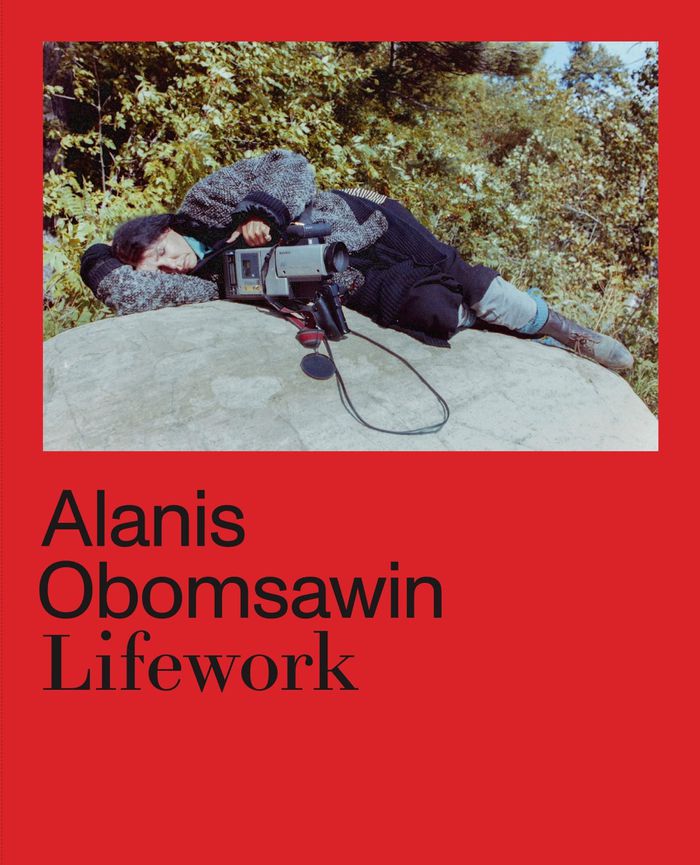
Alanis Obomsawin: Lifework
Alanis Obomsawin: Lifework
Actions:
Price:
$79.00
(available to order)
Summary:
Never shying away from controversy, Obomsawin’s films have played a critical role in exposing ongoing systemic bias towards Indigenous populations—from fishing rights and education to health care and treaty violations. Obomsawin is also a graphic artist, and she incorporates her often dream-inspired etchings and prints into many of her films. This volume includes(...)
$79.00
(available to order)
Summary:
Never shying away from controversy, Obomsawin’s films have played a critical role in exposing ongoing systemic bias towards Indigenous populations—from fishing rights and education to health care and treaty violations. Obomsawin is also a graphic artist, and she incorporates her often dream-inspired etchings and prints into many of her films. This volume includes(...)
Title:
Alanis Obomsawin: Lifework
Actions:
Price:
$79.00
(available to order)
Summary:
Never shying away from controversy, Obomsawin’s films have played a critical role in exposing ongoing systemic bias towards Indigenous populations—from fishing rights and education to health care and treaty violations. Obomsawin is also a graphic artist, and she incorporates her often dream-inspired etchings and prints into many of her films. This volume includes illuminating essays exploring Obomsawin’s practice and mission as well as personal commentary from collaborators, archival materials, and photographs from the filmmaker’s personal life and professional exploits. As Obomsawin closes in on her ninth decade of life—and fifth decade behind the camera—this beautifully illustrated record of her astounding body of work and tireless efforts on behalf of Indigenous peoples and culture is an inspiring celebration of the power of film to dramatically change the course of history.
Alanis Obomsawin: Lifework
Actions:
Price:
$79.00
(available to order)
Summary:
Never shying away from controversy, Obomsawin’s films have played a critical role in exposing ongoing systemic bias towards Indigenous populations—from fishing rights and education to health care and treaty violations. Obomsawin is also a graphic artist, and she incorporates her often dream-inspired etchings and prints into many of her films. This volume includes illuminating essays exploring Obomsawin’s practice and mission as well as personal commentary from collaborators, archival materials, and photographs from the filmmaker’s personal life and professional exploits. As Obomsawin closes in on her ninth decade of life—and fifth decade behind the camera—this beautifully illustrated record of her astounding body of work and tireless efforts on behalf of Indigenous peoples and culture is an inspiring celebration of the power of film to dramatically change the course of history.
Form:
books
books
Publication:
May 2022
May 2022
Subject:
Canadian art
Canadian art
Form:
books
books
Price:
$25.50
(available to order)
Summary:
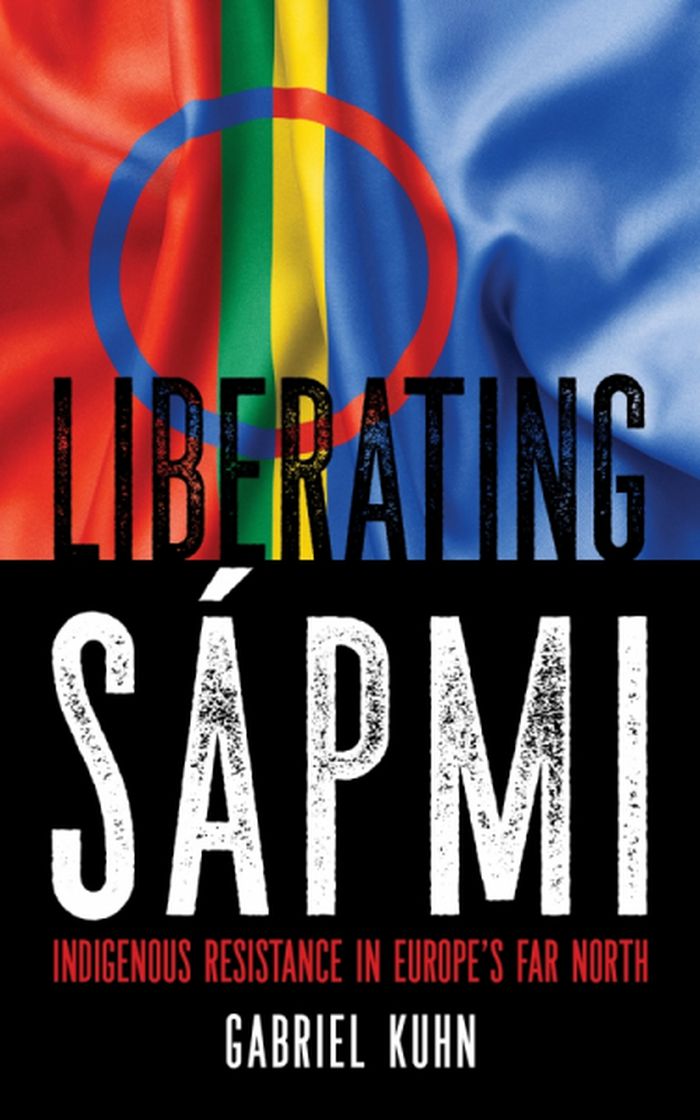
This book is a stunning journey through Sápmi and includes in-depth interviews with Sámi artists, activists, and scholars boldly standing up for the rights of their people. In this illustrated work, Gabriel Kuhn, author of over a dozen books and interpreter of global social justice movements, aims to raise awareness of the ongoing fight of the Sámi for justice and(...)
$25.50
(available to order)
Summary:
This book is a stunning journey through Sápmi and includes in-depth interviews with Sámi artists, activists, and scholars boldly standing up for the rights of their people. In this illustrated work, Gabriel Kuhn, author of over a dozen books and interpreter of global social justice movements, aims to raise awareness of the ongoing fight of the Sámi for justice and(...)
Title:
Liberating Sapmi: Indigenous resistance in Europe's Far North
Actions:
Price:
$25.50
(available to order)
Summary:
This book is a stunning journey through Sápmi and includes in-depth interviews with Sámi artists, activists, and scholars boldly standing up for the rights of their people. In this illustrated work, Gabriel Kuhn, author of over a dozen books and interpreter of global social justice movements, aims to raise awareness of the ongoing fight of the Sámi for justice and self-determination. The first accessible English-language introduction to the history of the Sámi people and the first account that focuses on their political resistance, this provocative work gives irrefutable evidence of the important role the Sámi play in the resistance of indigenous people against an economic and political system whose power to destroy all life on earth has reached a scale unprecedented in the history of humanity.
Liberating Sapmi: Indigenous resistance in Europe's Far North
Actions:
Price:
$25.50
(available to order)
Summary:
This book is a stunning journey through Sápmi and includes in-depth interviews with Sámi artists, activists, and scholars boldly standing up for the rights of their people. In this illustrated work, Gabriel Kuhn, author of over a dozen books and interpreter of global social justice movements, aims to raise awareness of the ongoing fight of the Sámi for justice and self-determination. The first accessible English-language introduction to the history of the Sámi people and the first account that focuses on their political resistance, this provocative work gives irrefutable evidence of the important role the Sámi play in the resistance of indigenous people against an economic and political system whose power to destroy all life on earth has reached a scale unprecedented in the history of humanity.
Form:
books
books
Publication:
March 2020
March 2020
Subject:
indigenous
indigenous
Form:
books
books
Actions:
Holdings:
Description:
xii, 272 pages : illustrations ; 25 cm
Description:
xii, 272 pages : illustrations ; 25 cm
Author:
Subject:
Publication:
Manchester, UK ; New York : Manchester University Press ; New York, NY, USA : Distributed exclusively in the USA by St. Martin's Press, ©1998.
Manchester, UK ; New York : Manchester University Press ; New York, NY, USA : Distributed exclusively in the USA by St. Martin's Press, ©1998.
Title:
Renaissance women patrons : wives and widows in Italy c. 1300-c. 1550 / Catherine King.
Actions:
Holdings:
Description:
xii, 272 pages : illustrations ; 25 cm
Renaissance women patrons : wives and widows in Italy c. 1300-c. 1550 / Catherine King.
Actions:
Holdings:
Description:
xii, 272 pages : illustrations ; 25 cm
Form:
books
books
Publication:
Manchester, UK ; New York : Manchester University Press ; New York, NY, USA : Distributed exclusively in the USA by St. Martin's Press, ©1998.
Manchester, UK ; New York : Manchester University Press ; New York, NY, USA : Distributed exclusively in the USA by St. Martin's Press, ©1998.
Author:
Subject:
Form:
books
books
Actions:
Holdings:
Description:
xix, 202 pages
Description:
xix, 202 pages
Author:
Subject:
Publication:
Newcastle upon Tyne : Riba Publishing, [2015], ©2015
Newcastle upon Tyne : Riba Publishing, [2015], ©2015
Title:
Radical pedagogies : architectural education and the British tradition / edited by Daisy Froud & Harriet Harriss.
Actions:
Holdings:
Description:
xix, 202 pages
Radical pedagogies : architectural education and the British tradition / edited by Daisy Froud & Harriet Harriss.
Actions:
Holdings:
Description:
xix, 202 pages
Form:
books
books
Publication:
Newcastle upon Tyne : Riba Publishing, [2015], ©2015
Newcastle upon Tyne : Riba Publishing, [2015], ©2015
Author:
Subject:
Form:
books
books
Actions:
Price:
$39.95
(available to order)
Summary:
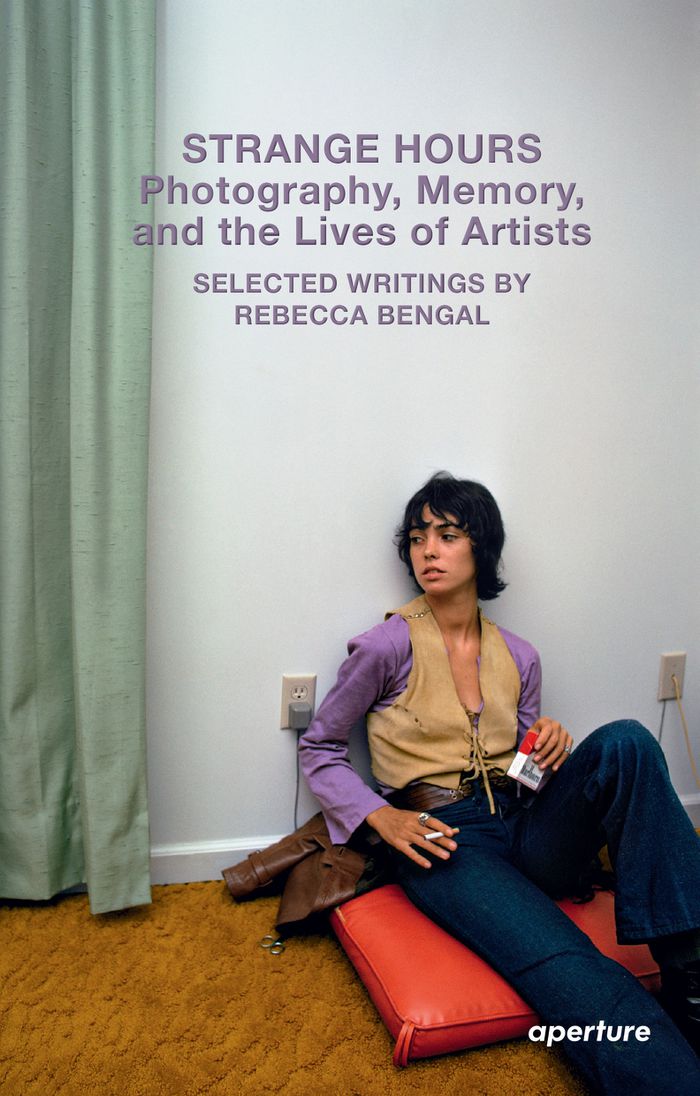
In this book, Rebecca Bengal considers the photographers who have defined our relationship to the medium. Through generous essays and interviews, she contemplates photography’s narrative power, from the radical intimacy of Nan Goldin’s New York demimonde to Justine Kurland’s pictures of rebel girls on the open road. Bengal brings us closer to pioneering artists and the(...)
$39.95
(available to order)
Summary:
In this book, Rebecca Bengal considers the photographers who have defined our relationship to the medium. Through generous essays and interviews, she contemplates photography’s narrative power, from the radical intimacy of Nan Goldin’s New York demimonde to Justine Kurland’s pictures of rebel girls on the open road. Bengal brings us closer to pioneering artists and the(...)
Title:
Strange hours: Photography, memory and the lives of artists
Actions:
Price:
$39.95
(available to order)
Summary:
In this book, Rebecca Bengal considers the photographers who have defined our relationship to the medium. Through generous essays and interviews, she contemplates photography’s narrative power, from the radical intimacy of Nan Goldin’s New York demimonde to Justine Kurland’s pictures of rebel girls on the open road. Bengal brings us closer to pioneering artists and the personal and political stories surrounding their images. She travels with Alec Soth in Minneapolis, searching for the houses where Prince once lived, and revisits Chauncey Hare’s 1979 protest against the Museum of Modern Art. She speaks with Dawoud Bey about his evocative portraits and explores Diana Markosian’s cinematic take on her family’s immigration to the US. Throughout Strange Hours, Bengal’s prose is attuned to the alchemy of experience, chance, and vision that has always pushed photography’s potential for unforgettable storytelling.
Strange hours: Photography, memory and the lives of artists
Actions:
Price:
$39.95
(available to order)
Summary:
In this book, Rebecca Bengal considers the photographers who have defined our relationship to the medium. Through generous essays and interviews, she contemplates photography’s narrative power, from the radical intimacy of Nan Goldin’s New York demimonde to Justine Kurland’s pictures of rebel girls on the open road. Bengal brings us closer to pioneering artists and the personal and political stories surrounding their images. She travels with Alec Soth in Minneapolis, searching for the houses where Prince once lived, and revisits Chauncey Hare’s 1979 protest against the Museum of Modern Art. She speaks with Dawoud Bey about his evocative portraits and explores Diana Markosian’s cinematic take on her family’s immigration to the US. Throughout Strange Hours, Bengal’s prose is attuned to the alchemy of experience, chance, and vision that has always pushed photography’s potential for unforgettable storytelling.
Form:
books
books
Publication:
June 2023
June 2023
Subject:
Theory of Photography
Theory of Photography
Form:
books
books
Actions:
Holdings:
Description:
470 pages : illustrations ; 26 cm
Description:
470 pages : illustrations ; 26 cm
Author:
Subject:
Publication:
New York : Harper & Row Publishers, [1981], ©1981
New York : Harper & Row Publishers, [1981], ©1981
Title:
The magic of obelisks / Peter Tompkins.
Actions:
Holdings:
Description:
470 pages : illustrations ; 26 cm
The magic of obelisks / Peter Tompkins.
Actions:
Holdings:
Description:
470 pages : illustrations ; 26 cm
Form:
books
books
Publication:
New York : Harper & Row Publishers, [1981], ©1981
New York : Harper & Row Publishers, [1981], ©1981
Author:
Subject:


