


497 Results
Form:
books
books
Actions:
Price:
$40.95
(available to order)
Summary:
Jerusalem currently stands at the center of a violent controversy that threatens the stability of both the Middle East and the world. This volatility, observes Annabel Jane Wharton, is only the most recent manifestation of a centuries-old obsession with the control of the Holy City—military occupation and pilgrimage being two familiar forms of “ownership.” Wharton makes(...)
$40.95
(available to order)
Summary:
Jerusalem currently stands at the center of a violent controversy that threatens the stability of both the Middle East and the world. This volatility, observes Annabel Jane Wharton, is only the most recent manifestation of a centuries-old obsession with the control of the Holy City—military occupation and pilgrimage being two familiar forms of “ownership.” Wharton makes(...)
Subject:
Arch Southwest Asia & North Africa
Arch Southwest Asia & North Africa
Publication:
January 1900, Chicago
January 1900, Chicago
Title:
Selling Jerusalem : relics, replicas, theme parks
Actions:
Price:
$40.95
(available to order)
Summary:
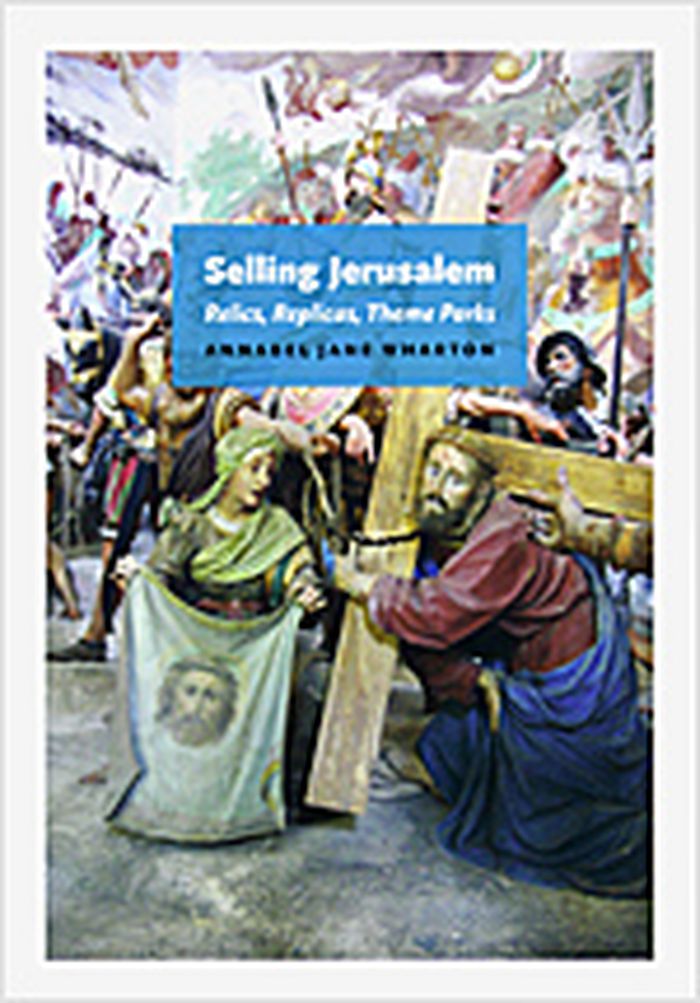
Jerusalem currently stands at the center of a violent controversy that threatens the stability of both the Middle East and the world. This volatility, observes Annabel Jane Wharton, is only the most recent manifestation of a centuries-old obsession with the control of the Holy City—military occupation and pilgrimage being two familiar forms of “ownership.” Wharton makes the innovative argument here that the West has also sought to possess Jerusalem by acquiring its representations. From relics of the True Cross and Templar replicas of the Holy Sepulchre to Franciscan recreations of the Passion to nineteenth-century mass-produced prints and contemporary theme parks, Wharton describes the evolving forms by which the city has been possessed in the West. She also maps those changing embodiments of the Holy City against shifts in the western market. From the gift-and-barter economy of the early Middle Ages to contemporary globalization, both money and the representations of Jerusalem have become progressively incorporeal, abstract, illusionistic, and virtual.
Selling Jerusalem : relics, replicas, theme parks
Actions:
Price:
$40.95
(available to order)
Summary:
Jerusalem currently stands at the center of a violent controversy that threatens the stability of both the Middle East and the world. This volatility, observes Annabel Jane Wharton, is only the most recent manifestation of a centuries-old obsession with the control of the Holy City—military occupation and pilgrimage being two familiar forms of “ownership.” Wharton makes the innovative argument here that the West has also sought to possess Jerusalem by acquiring its representations. From relics of the True Cross and Templar replicas of the Holy Sepulchre to Franciscan recreations of the Passion to nineteenth-century mass-produced prints and contemporary theme parks, Wharton describes the evolving forms by which the city has been possessed in the West. She also maps those changing embodiments of the Holy City against shifts in the western market. From the gift-and-barter economy of the early Middle Ages to contemporary globalization, both money and the representations of Jerusalem have become progressively incorporeal, abstract, illusionistic, and virtual.
Form:
books
books
Publication:
January 1900, Chicago
January 1900, Chicago
Subject:
Arch Southwest Asia & North Africa
Arch Southwest Asia & North Africa
Form:
books
books
Price:
$27.95
(available to order)
Summary:
"Do It Yourself" investigates the history behind the current do-it-yourself craze in home repair and remodeling. The origins of home improvement can be traced to the early part of the century, when (...)
$27.95
(available to order)
Summary:
"Do It Yourself" investigates the history behind the current do-it-yourself craze in home repair and remodeling. The origins of home improvement can be traced to the early part of the century, when (...)
Subject:
Graphic Design and Typography
Graphic Design and Typography
Publication:
April 1998, New York
April 1998, New York
Title:
Do it yourself : home improvement in twentieth century America
Actions:
Price:
$27.95
(available to order)
Summary:
"Do It Yourself" investigates the history behind the current do-it-yourself craze in home repair and remodeling. The origins of home improvement can be traced to the early part of the century, when government loan programmes placed home ownership within the reach of growing numbers of families, mass-circulation magazines began providing their readers with information about home renovation, and increasing numbers of Americans turned to the manual arts and handicrafts as leisure-time pursuits. World War II provided many Americans with the skills and confidence to undertake home-improvement projects on their own, and after the war, changes in the manufacturing and retailing of tools and equipment created new possibilities for transforming one's home. The text of "Do It Yourself", which investigates topics ranging from women's roles in home repair to historic preservation, is a lively mix of illustrations--including period photographs, magazine spreads, and advertisements--and clearly written analysis of the trends
Do it yourself : home improvement in twentieth century America
Actions:
Price:
$27.95
(available to order)
Summary:
"Do It Yourself" investigates the history behind the current do-it-yourself craze in home repair and remodeling. The origins of home improvement can be traced to the early part of the century, when government loan programmes placed home ownership within the reach of growing numbers of families, mass-circulation magazines began providing their readers with information about home renovation, and increasing numbers of Americans turned to the manual arts and handicrafts as leisure-time pursuits. World War II provided many Americans with the skills and confidence to undertake home-improvement projects on their own, and after the war, changes in the manufacturing and retailing of tools and equipment created new possibilities for transforming one's home. The text of "Do It Yourself", which investigates topics ranging from women's roles in home repair to historic preservation, is a lively mix of illustrations--including period photographs, magazine spreads, and advertisements--and clearly written analysis of the trends
Form:
books
books
Publication:
April 1998, New York
April 1998, New York
Subject:
Graphic Design and Typography
Graphic Design and Typography
Form:
books
books

Actions:
Price:
$16.00
(available in store)
Summary:
''Raum'' simply affirms an undefined 'space' and with this work for Angle the Japanese photographer Hayahisa Tomiyasu selects a tiny slice of the richness of public space. An observation of a lizard basking in the sun on a summer’s day in Zürich has led to a photographic sequence in black and white – in portrait as well as landscape format. The demarcation of the(...)
$16.00
(available in store)
Summary:
''Raum'' simply affirms an undefined 'space' and with this work for Angle the Japanese photographer Hayahisa Tomiyasu selects a tiny slice of the richness of public space. An observation of a lizard basking in the sun on a summer’s day in Zürich has led to a photographic sequence in black and white – in portrait as well as landscape format. The demarcation of the(...)
Title:
Angle 26° : Hayahisa Tomiyasu, Raum
Actions:
Price:
$16.00
(available in store)
Summary:
''Raum'' simply affirms an undefined 'space' and with this work for Angle the Japanese photographer Hayahisa Tomiyasu selects a tiny slice of the richness of public space. An observation of a lizard basking in the sun on a summer’s day in Zürich has led to a photographic sequence in black and white – in portrait as well as landscape format. The demarcation of the photographic space – the extremely limited detail – is consistently kept low, around ground level. Through the sequential and the serial, with a point of departure in the close surroundings, Tomiyasu is preoccupied with new views of various territories in the shared space where we are separated from others’ invisible boundaries. Here the animals are subject to an alternative, instinct-driven logic. But humans too operate with distance, marking and ownership. An urge for invisibility and camouflage can appear on the radar at any time, and make us want to scuttle away like a lizard.
Angle 26° : Hayahisa Tomiyasu, Raum
Actions:
Price:
$16.00
(available in store)
Summary:
''Raum'' simply affirms an undefined 'space' and with this work for Angle the Japanese photographer Hayahisa Tomiyasu selects a tiny slice of the richness of public space. An observation of a lizard basking in the sun on a summer’s day in Zürich has led to a photographic sequence in black and white – in portrait as well as landscape format. The demarcation of the photographic space – the extremely limited detail – is consistently kept low, around ground level. Through the sequential and the serial, with a point of departure in the close surroundings, Tomiyasu is preoccupied with new views of various territories in the shared space where we are separated from others’ invisible boundaries. Here the animals are subject to an alternative, instinct-driven logic. But humans too operate with distance, marking and ownership. An urge for invisibility and camouflage can appear on the radar at any time, and make us want to scuttle away like a lizard.
Form:
books
books
Publication:
October 2023
October 2023
Subject:
Photography monographs
Photography monographs
Form:
books
books
Actions:
Price:
$29.95
(available in store)
Summary:
''Spatializing justice'' calls for architects and urban designers to do more than design buildings and physical systems. Architects should take a position against inequality and practice accordingly. With these thirty short, manifesto-like texts—building blocks for a new kind of architecture—Spatializing Justice offers a practical handbook for confronting social and(...)
$29.95
(available in store)
Summary:
''Spatializing justice'' calls for architects and urban designers to do more than design buildings and physical systems. Architects should take a position against inequality and practice accordingly. With these thirty short, manifesto-like texts—building blocks for a new kind of architecture—Spatializing Justice offers a practical handbook for confronting social and(...)
Publication:
October 2022
October 2022
Title:
Spatializing justice: Building blocks
Actions:
Price:
$29.95
(available in store)
Summary:
''Spatializing justice'' calls for architects and urban designers to do more than design buildings and physical systems. Architects should take a position against inequality and practice accordingly. With these thirty short, manifesto-like texts—building blocks for a new kind of architecture—Spatializing Justice offers a practical handbook for confronting social and economic inequality and uneven urban growth in architectural and planning practice, urging practitioners to adopt approaches that range from redefining infrastructure to retrofitting McMansions. These building blocks call for expanded modes of practice, through which architects can imagine new spatial procedures, political and economic strategies, and modalities of sociability. Challenging existing exclusionary policies can advance a more experimental architecture not bound by formal parameters. Architects must think of themselves as designers not only of things but of civic processes, complicate the ideas of ownership and property, and imagine new sites of research, pedagogy, and intervention. As one of the texts advises, ''The questions must be different questions if we want different answers.''
Spatializing justice: Building blocks
Actions:
Price:
$29.95
(available in store)
Summary:
''Spatializing justice'' calls for architects and urban designers to do more than design buildings and physical systems. Architects should take a position against inequality and practice accordingly. With these thirty short, manifesto-like texts—building blocks for a new kind of architecture—Spatializing Justice offers a practical handbook for confronting social and economic inequality and uneven urban growth in architectural and planning practice, urging practitioners to adopt approaches that range from redefining infrastructure to retrofitting McMansions. These building blocks call for expanded modes of practice, through which architects can imagine new spatial procedures, political and economic strategies, and modalities of sociability. Challenging existing exclusionary policies can advance a more experimental architecture not bound by formal parameters. Architects must think of themselves as designers not only of things but of civic processes, complicate the ideas of ownership and property, and imagine new sites of research, pedagogy, and intervention. As one of the texts advises, ''The questions must be different questions if we want different answers.''
Form:
books
books
Publication:
October 2022
October 2022
Form:
books
books

Title:
The Immaterial
The Immaterial
Actions:
Price:
$23.95
(available to order)
Summary:
In ''The Immaterial'', French social philosopher André Gorz (1923–2007) argues that the economic boom that accelerated in the 1990s and crashed so spectacularly in 2008 was based largely on an immaterial consumption of symbols and ideas, as capitalism tried to overcome the crisis of the formally industrial regime by throwing itself into a new, so-called knowledge economy.(...)
$23.95
(available to order)
Summary:
In ''The Immaterial'', French social philosopher André Gorz (1923–2007) argues that the economic boom that accelerated in the 1990s and crashed so spectacularly in 2008 was based largely on an immaterial consumption of symbols and ideas, as capitalism tried to overcome the crisis of the formally industrial regime by throwing itself into a new, so-called knowledge economy.(...)
Title:
The Immaterial
Actions:
Price:
$23.95
(available to order)
Summary:
In ''The Immaterial'', French social philosopher André Gorz (1923–2007) argues that the economic boom that accelerated in the 1990s and crashed so spectacularly in 2008 was based largely on an immaterial consumption of symbols and ideas, as capitalism tried to overcome the crisis of the formally industrial regime by throwing itself into a new, so-called knowledge economy. In this volume, Gorz argues instead for the creation of a true knowledge economy. This economy would be based on zero-cost exchange and pooled resources, and knowledge would be treated as humanity's common property. Currently, in order to exploit knowledge and turn it into capital, the capitalist enterprise privatizes specialized knowledge and claims ownership through private licenses and copyright. But as Gorz shows, the traditional foundations of such capitalist economics have begun to crumble because of the immaterial nature of this new form of product, which makes it almost impossible to measure in monetary terms.
The Immaterial
Actions:
Price:
$23.95
(available to order)
Summary:
In ''The Immaterial'', French social philosopher André Gorz (1923–2007) argues that the economic boom that accelerated in the 1990s and crashed so spectacularly in 2008 was based largely on an immaterial consumption of symbols and ideas, as capitalism tried to overcome the crisis of the formally industrial regime by throwing itself into a new, so-called knowledge economy. In this volume, Gorz argues instead for the creation of a true knowledge economy. This economy would be based on zero-cost exchange and pooled resources, and knowledge would be treated as humanity's common property. Currently, in order to exploit knowledge and turn it into capital, the capitalist enterprise privatizes specialized knowledge and claims ownership through private licenses and copyright. But as Gorz shows, the traditional foundations of such capitalist economics have begun to crumble because of the immaterial nature of this new form of product, which makes it almost impossible to measure in monetary terms.
Form:
books
books
Publication:
December 2010
December 2010
Subject:
Art Theory
Art Theory
Form:
books
books
Actions:
Price:
$79.00
(available to order)
Summary:
Research on multifamily housing and its impact on the daily lives of ordinary people, from a leading Canadian architectural firm. These four slipcased volumes build on 5468796 Architecture’s housing manifesto "Add via Edit: A Decade in Housing", the symposium "platform.MIDDLE: Architecture for Housing the 99%" hosted at Illinois Institute of Technology and examples by(...)
$79.00
(available to order)
Summary:
Research on multifamily housing and its impact on the daily lives of ordinary people, from a leading Canadian architectural firm. These four slipcased volumes build on 5468796 Architecture’s housing manifesto "Add via Edit: A Decade in Housing", the symposium "platform.MIDDLE: Architecture for Housing the 99%" hosted at Illinois Institute of Technology and examples by(...)
Subject:
Architecture Monographs
Architecture Monographs
Publication:
February 2024
February 2024
Title:
5468796 Architecture: Platform. MIDDLE
Actions:
Price:
$79.00
(available to order)
Summary:
Research on multifamily housing and its impact on the daily lives of ordinary people, from a leading Canadian architectural firm. These four slipcased volumes build on 5468796 Architecture’s housing manifesto "Add via Edit: A Decade in Housing", the symposium "platform.MIDDLE: Architecture for Housing the 99%" hosted at Illinois Institute of Technology and examples by practice-related offices. The work and research of the Winnipeg-based firm 5468796 Architecture (described as "one of the most talented young design firms worldwide") has focused on "missing middle" and midrise housing in its many forms and ownership models, from refugee and social housing to market-rate condominiums. With the condominium boom taking hold across North America, the number of residential units passing across architects’ desks is unprecedented. As a result of the typology’s inherent repetition and potentially banal program—as well as the private sector’s pursuit of profit, often at the expense of quality and livability—the margin in which architecture can operate is very narrow. Architects must respond to the challenges of this typology with the rigor it deserves.
5468796 Architecture: Platform. MIDDLE
Actions:
Price:
$79.00
(available to order)
Summary:
Research on multifamily housing and its impact on the daily lives of ordinary people, from a leading Canadian architectural firm. These four slipcased volumes build on 5468796 Architecture’s housing manifesto "Add via Edit: A Decade in Housing", the symposium "platform.MIDDLE: Architecture for Housing the 99%" hosted at Illinois Institute of Technology and examples by practice-related offices. The work and research of the Winnipeg-based firm 5468796 Architecture (described as "one of the most talented young design firms worldwide") has focused on "missing middle" and midrise housing in its many forms and ownership models, from refugee and social housing to market-rate condominiums. With the condominium boom taking hold across North America, the number of residential units passing across architects’ desks is unprecedented. As a result of the typology’s inherent repetition and potentially banal program—as well as the private sector’s pursuit of profit, often at the expense of quality and livability—the margin in which architecture can operate is very narrow. Architects must respond to the challenges of this typology with the rigor it deserves.
Form:
books
books
Publication:
February 2024
February 2024
Subject:
Architecture Monographs
Architecture Monographs
Form:
books
books
Price:
$39.00
(available to order)
Summary:
Le Colloque international de Montréal : une quarantaine de spécialistes nord-américains et européens analysent les expériences vécues et formulent des propositions concernant l’avenir et la propriété de ces nobles bâtiments, leur vocation et leur usage. Ils évaluent également les défis que posent la planification urbaine et la gestion de tels édifices et explorent de(...)
$39.00
(available to order)
Summary:
Le Colloque international de Montréal : une quarantaine de spécialistes nord-américains et européens analysent les expériences vécues et formulent des propositions concernant l’avenir et la propriété de ces nobles bâtiments, leur vocation et leur usage. Ils évaluent également les défis que posent la planification urbaine et la gestion de tels édifices et explorent de(...)
Subject:
Architecture du Québec
Architecture du Québec
Publication:
April 2006, Québec
April 2006, Québec
Title:
Quel avenir pour quelles églises ? What future for which churches ?
Actions:
Price:
$39.00
(available to order)
Summary:
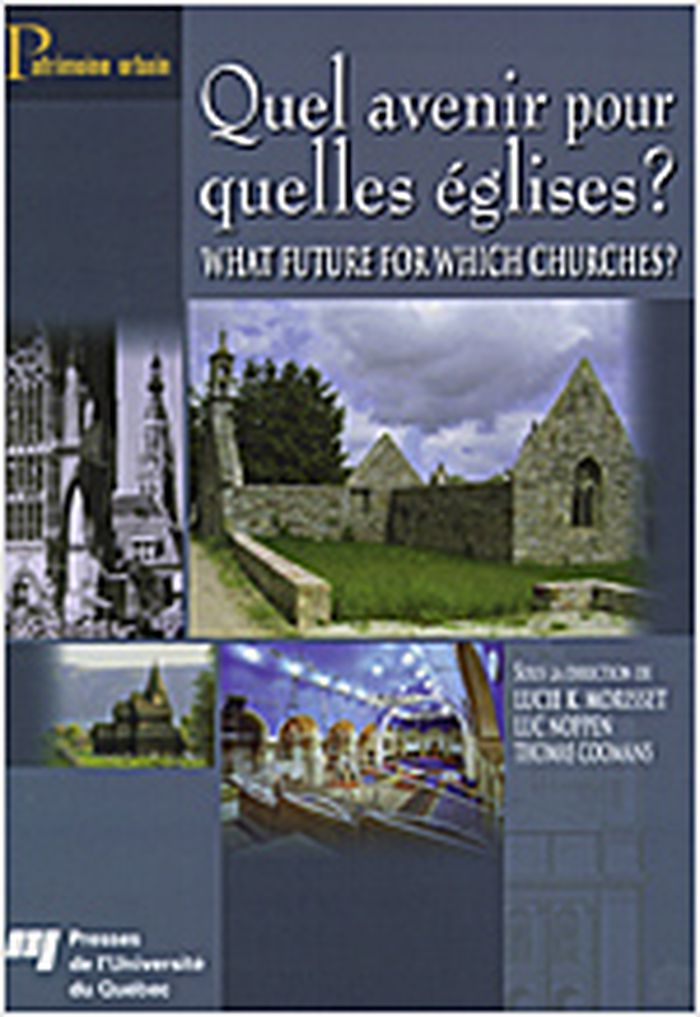
Le Colloque international de Montréal : une quarantaine de spécialistes nord-américains et européens analysent les expériences vécues et formulent des propositions concernant l’avenir et la propriété de ces nobles bâtiments, leur vocation et leur usage. Ils évaluent également les défis que posent la planification urbaine et la gestion de tels édifices et explorent de nouvelles approches qui permettront d’assurer la survie des églises dans la cité, en redéfinissant leur vocation communautaire et leur statut au sein de la collectivité. Il s’agit, en somme, de saisir comment l’église peut aujourd’hui redevenir le patrimoine de la collectivité entière. / The Montreal International Conference : forty-odd North American and European specialists share their experiences and make suggestions regarding the future and ownership of these noble buildings, as well as their purpose and use. They also describe the challenges of urban planning and managing such buildings, and explore new approaches that will help churches survive by redefining their purpose and status within the community. In the end, the issue is one of understanding how churches can again become the heritage of the entire community.
Quel avenir pour quelles églises ? What future for which churches ?
Actions:
Price:
$39.00
(available to order)
Summary:
Le Colloque international de Montréal : une quarantaine de spécialistes nord-américains et européens analysent les expériences vécues et formulent des propositions concernant l’avenir et la propriété de ces nobles bâtiments, leur vocation et leur usage. Ils évaluent également les défis que posent la planification urbaine et la gestion de tels édifices et explorent de nouvelles approches qui permettront d’assurer la survie des églises dans la cité, en redéfinissant leur vocation communautaire et leur statut au sein de la collectivité. Il s’agit, en somme, de saisir comment l’église peut aujourd’hui redevenir le patrimoine de la collectivité entière. / The Montreal International Conference : forty-odd North American and European specialists share their experiences and make suggestions regarding the future and ownership of these noble buildings, as well as their purpose and use. They also describe the challenges of urban planning and managing such buildings, and explore new approaches that will help churches survive by redefining their purpose and status within the community. In the end, the issue is one of understanding how churches can again become the heritage of the entire community.
Form:
books
books
Publication:
April 2006, Québec
April 2006, Québec
Subject:
Architecture du Québec
Architecture du Québec
Form:
books
books
Price:
$25.00
(available to order)
Summary:
New York City is home to some of the most recognizable places in the world. As familiar as the sight of New Year’s Eve in Times Square or a protest in front of City Hall may be to us, do we understand who controls what happens there? Kristine Miller delves into six of New York’s most important public spaces to trace how design influences their complicated lives. Miller(...)
$25.00
(available to order)
Summary:
New York City is home to some of the most recognizable places in the world. As familiar as the sight of New Year’s Eve in Times Square or a protest in front of City Hall may be to us, do we understand who controls what happens there? Kristine Miller delves into six of New York’s most important public spaces to trace how design influences their complicated lives. Miller(...)
Title:
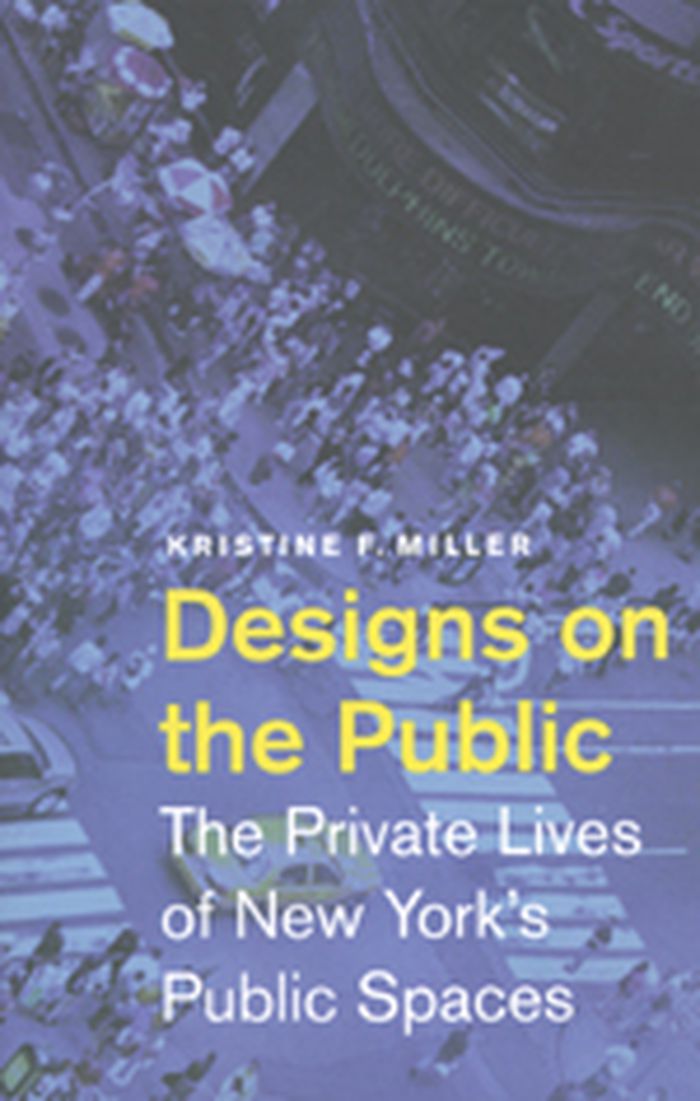
Designs on the Public : The private lives of New York's public spaces
Actions:
Price:
$25.00
(available to order)
Summary:
New York City is home to some of the most recognizable places in the world. As familiar as the sight of New Year’s Eve in Times Square or a protest in front of City Hall may be to us, do we understand who controls what happens there? Kristine Miller delves into six of New York’s most important public spaces to trace how design influences their complicated lives. Miller chronicles controversies in the histories of New York locations including Times Square, Trump Tower, the IBM Atrium, and Sony Plaza. The story of each location reveals that public space is not a concrete or fixed reality, but rather a constantly changing situation open to the forces of law, corporations, bureaucracy, and government. The qualities of public spaces we consider essential, including accessibility, public ownership, and ties to democratic life, are, at best, temporary conditions and often completely absent. Design is, in Miller’s view, complicit in regulation of public spaces in New York City to exclude undesirables, restrict activities, and privilege commercial interests, and in this work she shows how design can reactivate public space and public life.
Designs on the Public : The private lives of New York's public spaces
Actions:
Price:
$25.00
(available to order)
Summary:
New York City is home to some of the most recognizable places in the world. As familiar as the sight of New Year’s Eve in Times Square or a protest in front of City Hall may be to us, do we understand who controls what happens there? Kristine Miller delves into six of New York’s most important public spaces to trace how design influences their complicated lives. Miller chronicles controversies in the histories of New York locations including Times Square, Trump Tower, the IBM Atrium, and Sony Plaza. The story of each location reveals that public space is not a concrete or fixed reality, but rather a constantly changing situation open to the forces of law, corporations, bureaucracy, and government. The qualities of public spaces we consider essential, including accessibility, public ownership, and ties to democratic life, are, at best, temporary conditions and often completely absent. Design is, in Miller’s view, complicit in regulation of public spaces in New York City to exclude undesirables, restrict activities, and privilege commercial interests, and in this work she shows how design can reactivate public space and public life.
Form:
books
books
Publication:
December 2007, Minneapolis
December 2007, Minneapolis
Subject:
Urban Theory
Urban Theory
Form:
books
books
Price:
$67.50
(available to order)
Summary:
Architect Charles Moore (1925-1993) was not only celebrated for his designs; he was also an admired writer and teacher. Though he wrote clearly and passionately about places, he was perhaps unique in avoiding the tone and stance of the personal manifesto. Through his buildings, books, and travels, Moore consistently sought insights into the questions that always underlie(...)
$67.50
(available to order)
Summary:
Architect Charles Moore (1925-1993) was not only celebrated for his designs; he was also an admired writer and teacher. Though he wrote clearly and passionately about places, he was perhaps unique in avoiding the tone and stance of the personal manifesto. Through his buildings, books, and travels, Moore consistently sought insights into the questions that always underlie(...)
Title:
You have to pay for the private life : selected essays by Charles W. Moore
Actions:
Price:
$67.50
(available to order)
Summary:
Architect Charles Moore (1925-1993) was not only celebrated for his designs; he was also an admired writer and teacher. Though he wrote clearly and passionately about places, he was perhaps unique in avoiding the tone and stance of the personal manifesto. Through his buildings, books, and travels, Moore consistently sought insights into the questions that always underlie architecture and design: What does it mean to make a place, and how do we inhabit those places? How do we continue to build upon but respect the landscape? How do we reconcile democracy and private land ownership? What is original? What is taste? What is the relationship between past and present? How do we involve inhabitants in making places? Finally, what is public life? As the world becomes smaller, and the uniqueness of places and landscapes gives way to sameness, Moore's celebration of the vernacular and of the surprising are more relevant than ever. The pieces in this book span the years 1952 to 1993 and engage a myriad of topics and movements, such as contextualism, community participation, collaboration, environmentally sensitive design, and historic preservation. The essays in this book reflect as well Moore's scholarship, humanism, urbanity, and great wit.
You have to pay for the private life : selected essays by Charles W. Moore
Actions:
Price:
$67.50
(available to order)
Summary:
Architect Charles Moore (1925-1993) was not only celebrated for his designs; he was also an admired writer and teacher. Though he wrote clearly and passionately about places, he was perhaps unique in avoiding the tone and stance of the personal manifesto. Through his buildings, books, and travels, Moore consistently sought insights into the questions that always underlie architecture and design: What does it mean to make a place, and how do we inhabit those places? How do we continue to build upon but respect the landscape? How do we reconcile democracy and private land ownership? What is original? What is taste? What is the relationship between past and present? How do we involve inhabitants in making places? Finally, what is public life? As the world becomes smaller, and the uniqueness of places and landscapes gives way to sameness, Moore's celebration of the vernacular and of the surprising are more relevant than ever. The pieces in this book span the years 1952 to 1993 and engage a myriad of topics and movements, such as contextualism, community participation, collaboration, environmentally sensitive design, and historic preservation. The essays in this book reflect as well Moore's scholarship, humanism, urbanity, and great wit.
Form:
books
books
Publication:
November 2000, Cambridge, Mass.
November 2000, Cambridge, Mass.
Subject:
Architectural Theory
Architectural Theory
Form:
books
books

Title:
Movements & moments
Movements & moments
Actions:
Price:
$34.95
(available to order)
Summary:
In 1930s Bolivia, self-described Anarchist Cholas form a libertarian trade union. In the Northern Highlands of Vietnam, the songs of one girl’s youth lead her to a life of activism. In the Philippines, female elders from Kalinga blaze a trail when pushed into impromptu protest. Equally striking accounts from Brazil, Chile, Ecuador, India, Nepal, Peru and Thailand weave a(...)
$34.95
(available to order)
Summary:
In 1930s Bolivia, self-described Anarchist Cholas form a libertarian trade union. In the Northern Highlands of Vietnam, the songs of one girl’s youth lead her to a life of activism. In the Philippines, female elders from Kalinga blaze a trail when pushed into impromptu protest. Equally striking accounts from Brazil, Chile, Ecuador, India, Nepal, Peru and Thailand weave a(...)
Title:
Movements & moments
Actions:
Price:
$34.95
(available to order)
Summary:
In 1930s Bolivia, self-described Anarchist Cholas form a libertarian trade union. In the Northern Highlands of Vietnam, the songs of one girl’s youth lead her to a life of activism. In the Philippines, female elders from Kalinga blaze a trail when pushed into impromptu protest. Equally striking accounts from Brazil, Chile, Ecuador, India, Nepal, Peru and Thailand weave a tapestry of trauma and triumph, shedding light on not-too-distant histories otherwise overlooked. Indigenous Peoples all over the world have always had to stand their ground in the face of colonialism. While the details may differ, what these stories have in common is their commitment to resistance in a world that puts profit before respect, and western notions of progress before their own. Movements and Moments is an introductory glimpse into how Indegenous Peoples tell these stories in their own words. From Southeast Asia to South America, vibrant communities must grapple with colonial realities to assert ownership over their lands and traditions. This project was undertaken in cooperation with the Goethe-Institut Indonesien in Jakarta. These stories were selected from an open call across 42 countries to spotlight feminist movements and advocacies in the Global South.
Movements & moments
Actions:
Price:
$34.95
(available to order)
Summary:
In 1930s Bolivia, self-described Anarchist Cholas form a libertarian trade union. In the Northern Highlands of Vietnam, the songs of one girl’s youth lead her to a life of activism. In the Philippines, female elders from Kalinga blaze a trail when pushed into impromptu protest. Equally striking accounts from Brazil, Chile, Ecuador, India, Nepal, Peru and Thailand weave a tapestry of trauma and triumph, shedding light on not-too-distant histories otherwise overlooked. Indigenous Peoples all over the world have always had to stand their ground in the face of colonialism. While the details may differ, what these stories have in common is their commitment to resistance in a world that puts profit before respect, and western notions of progress before their own. Movements and Moments is an introductory glimpse into how Indegenous Peoples tell these stories in their own words. From Southeast Asia to South America, vibrant communities must grapple with colonial realities to assert ownership over their lands and traditions. This project was undertaken in cooperation with the Goethe-Institut Indonesien in Jakarta. These stories were selected from an open call across 42 countries to spotlight feminist movements and advocacies in the Global South.
Form:
books
books
Publication:
November 2022
November 2022
Subject:
Illustration
Illustration


