


6917 Results
Form:
exhibitions
exhibitions
Description:
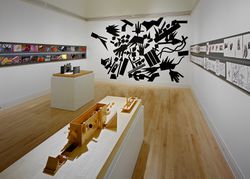
Other Soundings: Selected Works by John Hejduk, 1954–1997, the first major retrospective of Hejduk’s work, explores the themes that have always preoccupied him: architecture as a social act, the wall, the house, the church, passage and transformation, the experience of the city. The importance of John Hejduk rests on his teaching and on the originality of his vision of(...)
Other Soundings: Selected Works by John Hejduk, 1954–1997, the first major retrospective of Hejduk’s work, explores the themes that have always preoccupied him: architecture as a social act, the wall, the house, the church, passage and transformation, the experience of the city. The importance of John Hejduk rests on his teaching and on the originality of his vision of(...)
Location:
Main galleries
Main galleries
Date:
22 October 1997 to 15 February 1998
22 October 1997 to 15 February 1998
Title:
Other Soundings: Selected Works by John Hejduk, 1954-1997
Actions:
Description:
Other Soundings: Selected Works by John Hejduk, 1954–1997, the first major retrospective of Hejduk’s work, explores the themes that have always preoccupied him: architecture as a social act, the wall, the house, the church, passage and transformation, the experience of the city. The importance of John Hejduk rests on his teaching and on the originality of his vision of(...)
Other Soundings: Selected Works by John Hejduk, 1954-1997
Actions:
Description:
Other Soundings: Selected Works by John Hejduk, 1954–1997, the first major retrospective of Hejduk’s work, explores the themes that have always preoccupied him: architecture as a social act, the wall, the house, the church, passage and transformation, the experience of the city. The importance of John Hejduk rests on his teaching and on the originality of his vision of(...)
Form:
exhibitions
exhibitions
Date:
22 October 1997 to
15 February 1998
22 October 1997 to
15 February 1998
Location:
Main galleries
Main galleries
Form:
events
events

Title:
Mapping Rural Montréal
Mapping Rural Montréal
Actions:
Description:
On a tour of downtown Montréal, San Francisco-based artist Amy Franceschini shows participants ‘rural’ sites and activities and questions the dichotomy of country and city. Franceschini founded Futurefarmers, a collaborative and experimental studio that addresses ecological issues, as well as the online magazine, Atlas. Inspired by the exhibition Actions: What You Can Do(...)
On a tour of downtown Montréal, San Francisco-based artist Amy Franceschini shows participants ‘rural’ sites and activities and questions the dichotomy of country and city. Franceschini founded Futurefarmers, a collaborative and experimental studio that addresses ecological issues, as well as the online magazine, Atlas. Inspired by the exhibition Actions: What You Can Do(...)
Date:
4 April 2009
4 April 2009
Title:
Mapping Rural Montréal
Actions:
Description:
On a tour of downtown Montréal, San Francisco-based artist Amy Franceschini shows participants ‘rural’ sites and activities and questions the dichotomy of country and city. Franceschini founded Futurefarmers, a collaborative and experimental studio that addresses ecological issues, as well as the online magazine, Atlas. Inspired by the exhibition Actions: What You Can Do(...)
Mapping Rural Montréal
Actions:
Description:
On a tour of downtown Montréal, San Francisco-based artist Amy Franceschini shows participants ‘rural’ sites and activities and questions the dichotomy of country and city. Franceschini founded Futurefarmers, a collaborative and experimental studio that addresses ecological issues, as well as the online magazine, Atlas. Inspired by the exhibition Actions: What You Can Do(...)
Form:
events
events
Date:
4 April 2009
4 April 2009
Form:
events
events
Title:
Foraging in Montréal
Foraging in Montréal
Actions:
Description:
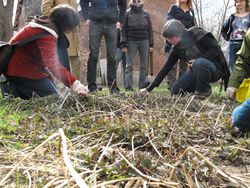
Chicago-based artist and forager Nance Klehm leads a foraging and tea-making expedition. Foraging is the practice of collecting plants that grow wild in urban and rural areas. Participants identify and collect edible plants growing in Montreal and then make tea from the foraged ingredients. Inspired by the exhibition Actions: What You Can Do With the City (2008), the CCA(...)
Chicago-based artist and forager Nance Klehm leads a foraging and tea-making expedition. Foraging is the practice of collecting plants that grow wild in urban and rural areas. Participants identify and collect edible plants growing in Montreal and then make tea from the foraged ingredients. Inspired by the exhibition Actions: What You Can Do With the City (2008), the CCA(...)
Date:
18 April 2009
18 April 2009
Title:
Foraging in Montréal
Actions:
Description:
Chicago-based artist and forager Nance Klehm leads a foraging and tea-making expedition. Foraging is the practice of collecting plants that grow wild in urban and rural areas. Participants identify and collect edible plants growing in Montreal and then make tea from the foraged ingredients. Inspired by the exhibition Actions: What You Can Do With the City (2008), the CCA(...)
Foraging in Montréal
Actions:
Description:
Chicago-based artist and forager Nance Klehm leads a foraging and tea-making expedition. Foraging is the practice of collecting plants that grow wild in urban and rural areas. Participants identify and collect edible plants growing in Montreal and then make tea from the foraged ingredients. Inspired by the exhibition Actions: What You Can Do With the City (2008), the CCA(...)
Form:
events
events
Date:
18 April 2009
18 April 2009
Form:
events
events
Title:
Bas Princen: Volcano Walks
Bas Princen: Volcano Walks
Actions:
Description:
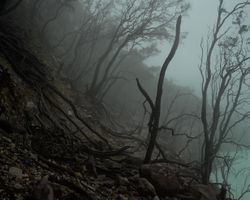
In this artist’s talk, Bas Princen will discuss the current status of the 17 Volcanoes project and explore the resonances between the works of Franz Wilhelm Junghuhn, works by early-twentieth-century Dutch photographers in Java (like van Nieuwenhuis), and his own practice. Although discovering new places seems impossible today, the talk takes as a point of departure the(...)
In this artist’s talk, Bas Princen will discuss the current status of the 17 Volcanoes project and explore the resonances between the works of Franz Wilhelm Junghuhn, works by early-twentieth-century Dutch photographers in Java (like van Nieuwenhuis), and his own practice. Although discovering new places seems impossible today, the talk takes as a point of departure the(...)
Date:
15 October 2016, 3pm
15 October 2016, 3pm
Title:
Bas Princen: Volcano Walks
Actions:
Description:
In this artist’s talk, Bas Princen will discuss the current status of the 17 Volcanoes project and explore the resonances between the works of Franz Wilhelm Junghuhn, works by early-twentieth-century Dutch photographers in Java (like van Nieuwenhuis), and his own practice. Although discovering new places seems impossible today, the talk takes as a point of departure the(...)
Bas Princen: Volcano Walks
Actions:
Description:
In this artist’s talk, Bas Princen will discuss the current status of the 17 Volcanoes project and explore the resonances between the works of Franz Wilhelm Junghuhn, works by early-twentieth-century Dutch photographers in Java (like van Nieuwenhuis), and his own practice. Although discovering new places seems impossible today, the talk takes as a point of departure the(...)
Form:
events
events
Date:
15 October 2016
3pm
15 October 2016
3pm
Form:
archives
Level of archival description:
Fonds
archives
Level of archival description:
Fonds
Title:
Joseph Rykwert fonds
Joseph Rykwert fonds
Reference number:
AP209
Synopsis:
The Joseph Rykwert fonds, 1928-2022, documents Joseph Rykwert’s career as an architectural historian, author and professor. The fonds includes the records for over a dozen monographs written between the mid-1960s and the mid-2010s as well as edited works and articles, and details his teaching and lecturing activities from the 1960s onwards in universities in Europe and the United States. The records highlight Joseph Rykwert’s multidisciplinary approach, which involved archaeology, anthropology and psychoanalysis in his study of the history and theory of architecture and of the urban form. The fonds is composed of textual records, publications and ephemera, and of photographs including multiple albums and a large number of slides; the fonds also documents Joseph Rykwert’s career as an independent designer through drawings realized between the late 1940s and the late 1970s.
AP209
Synopsis:
The Joseph Rykwert fonds, 1928-2022, documents Joseph Rykwert’s career as an architectural historian, author and professor. The fonds includes the records for over a dozen monographs written between the mid-1960s and the mid-2010s as well as edited works and articles, and details his teaching and lecturing activities from the 1960s onwards in universities in Europe and the United States. The records highlight Joseph Rykwert’s multidisciplinary approach, which involved archaeology, anthropology and psychoanalysis in his study of the history and theory of architecture and of the urban form. The fonds is composed of textual records, publications and ephemera, and of photographs including multiple albums and a large number of slides; the fonds also documents Joseph Rykwert’s career as an independent designer through drawings realized between the late 1940s and the late 1970s.
People:
Date:
1928-2022
1928-2022
Title:
Joseph Rykwert fonds
Actions:
AP209
Synopsis:
The Joseph Rykwert fonds, 1928-2022, documents Joseph Rykwert’s career as an architectural historian, author and professor. The fonds includes the records for over a dozen monographs written between the mid-1960s and the mid-2010s as well as edited works and articles, and details his teaching and lecturing activities from the 1960s onwards in universities in Europe and the United States. The records highlight Joseph Rykwert’s multidisciplinary approach, which involved archaeology, anthropology and psychoanalysis in his study of the history and theory of architecture and of the urban form. The fonds is composed of textual records, publications and ephemera, and of photographs including multiple albums and a large number of slides; the fonds also documents Joseph Rykwert’s career as an independent designer through drawings realized between the late 1940s and the late 1970s.
Joseph Rykwert fonds
Actions:
AP209
Synopsis:
The Joseph Rykwert fonds, 1928-2022, documents Joseph Rykwert’s career as an architectural historian, author and professor. The fonds includes the records for over a dozen monographs written between the mid-1960s and the mid-2010s as well as edited works and articles, and details his teaching and lecturing activities from the 1960s onwards in universities in Europe and the United States. The records highlight Joseph Rykwert’s multidisciplinary approach, which involved archaeology, anthropology and psychoanalysis in his study of the history and theory of architecture and of the urban form. The fonds is composed of textual records, publications and ephemera, and of photographs including multiple albums and a large number of slides; the fonds also documents Joseph Rykwert’s career as an independent designer through drawings realized between the late 1940s and the late 1970s.
Form:
archives
Level of archival description:
Fonds
archives
Level of archival description:
Fonds
Date:
1928-2022
1928-2022
People:
Form:
exhibitions
exhibitions
Actions:
Description:
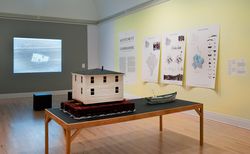
Although immigration is a dominant topic in contemporary culture, its discussion is often limited to the human experience, such as the crossing of borders and issues about national identity. Journeys takes a different perspective: how movements impact the environment. Examples range from the coconut that can drift freely on the ocean current and re-seed wherever it finds(...)
Although immigration is a dominant topic in contemporary culture, its discussion is often limited to the human experience, such as the crossing of borders and issues about national identity. Journeys takes a different perspective: how movements impact the environment. Examples range from the coconut that can drift freely on the ocean current and re-seed wherever it finds(...)
Location:
Main galleries
Main galleries
Date:
20 October 2010 to 13 March 2011
20 October 2010 to 13 March 2011
Title:
Journeys: How travelling fruit, ideas and buildings rearrange our environment
Actions:
Description:
Although immigration is a dominant topic in contemporary culture, its discussion is often limited to the human experience, such as the crossing of borders and issues about national identity. Journeys takes a different perspective: how movements impact the environment. Examples range from the coconut that can drift freely on the ocean current and re-seed wherever it finds(...)
Journeys: How travelling fruit, ideas and buildings rearrange our environment
Actions:
Description:
Although immigration is a dominant topic in contemporary culture, its discussion is often limited to the human experience, such as the crossing of borders and issues about national identity. Journeys takes a different perspective: how movements impact the environment. Examples range from the coconut that can drift freely on the ocean current and re-seed wherever it finds(...)
Form:
exhibitions
exhibitions
Date:
20 October 2010 to
13 March 2011
20 October 2010 to
13 March 2011
Location:
Main galleries
Main galleries
Form:
exhibitions
exhibitions
Title:
125 Kilos of Books
125 Kilos of Books
Actions:
Description:
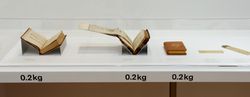
125 Kilos of Books presents a selection of printed architectural works from the CCA collection dating from the fifteenth century to the present in order to provoke thought about what seems, at first sight, the most banal fact of any book: its size. With dimensions ranging from 10 centimetres to 1 metre, the works are explored through such themes as Buildings are Bigger(...)
125 Kilos of Books presents a selection of printed architectural works from the CCA collection dating from the fifteenth century to the present in order to provoke thought about what seems, at first sight, the most banal fact of any book: its size. With dimensions ranging from 10 centimetres to 1 metre, the works are explored through such themes as Buildings are Bigger(...)
Location:
Octagonal gallery
Octagonal gallery
Date:
23 March 2006 to 30 April 2006
23 March 2006 to 30 April 2006
Title:
125 Kilos of Books
Actions:
Description:
125 Kilos of Books presents a selection of printed architectural works from the CCA collection dating from the fifteenth century to the present in order to provoke thought about what seems, at first sight, the most banal fact of any book: its size. With dimensions ranging from 10 centimetres to 1 metre, the works are explored through such themes as Buildings are Bigger(...)
125 Kilos of Books
Actions:
Description:
125 Kilos of Books presents a selection of printed architectural works from the CCA collection dating from the fifteenth century to the present in order to provoke thought about what seems, at first sight, the most banal fact of any book: its size. With dimensions ranging from 10 centimetres to 1 metre, the works are explored through such themes as Buildings are Bigger(...)
Form:
exhibitions
exhibitions
Date:
23 March 2006 to
30 April 2006
23 March 2006 to
30 April 2006
Location:
Octagonal gallery
Octagonal gallery
Form:
exhibitions
exhibitions
Title:
Melvin Charney 1935–2012
Melvin Charney 1935–2012
Actions:
Description:
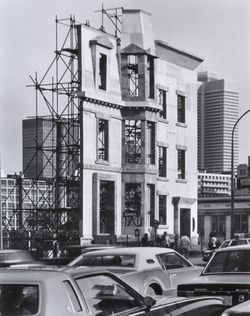
The artist and theorist Melvin Charney, who died earlier this year, made significant contributions to the CCA and the city of Montreal as a whole. Throughout a long and varied career, Charney championed the public role of the architect in the wider built environment, enforcing the idea that the street is the primary resource of the city. The CCA is celebrating Charney’s(...)
The artist and theorist Melvin Charney, who died earlier this year, made significant contributions to the CCA and the city of Montreal as a whole. Throughout a long and varied career, Charney championed the public role of the architect in the wider built environment, enforcing the idea that the street is the primary resource of the city. The CCA is celebrating Charney’s(...)
Location:
Hall cases
Hall cases
Date:
24 October 2012 to 14 April 2013
24 October 2012 to 14 April 2013
Title:
Melvin Charney 1935–2012
Actions:
Description:
The artist and theorist Melvin Charney, who died earlier this year, made significant contributions to the CCA and the city of Montreal as a whole. Throughout a long and varied career, Charney championed the public role of the architect in the wider built environment, enforcing the idea that the street is the primary resource of the city. The CCA is celebrating Charney’s(...)
Melvin Charney 1935–2012
Actions:
Description:
The artist and theorist Melvin Charney, who died earlier this year, made significant contributions to the CCA and the city of Montreal as a whole. Throughout a long and varied career, Charney championed the public role of the architect in the wider built environment, enforcing the idea that the street is the primary resource of the city. The CCA is celebrating Charney’s(...)
Form:
exhibitions
exhibitions
Date:
24 October 2012 to
14 April 2013
24 October 2012 to
14 April 2013
Location:
Hall cases
Hall cases
Form:
articles
articles
Title:
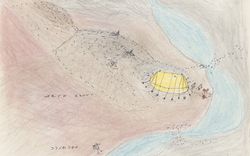
Documenting Inuit Life
Documenting Inuit Life
Actions:
Olivia Lya Thomassie explores the drawings of Tuumasi Kudluk
Form:
textual records
textual records
Actions:
Reference number:
ARCH203944
Description:
Contient : - Soulie, Jean-Paul. "La vie noctune de Montréal trouvera un nouveau cadre dans le complexe Desjardins" (La Presse, 24 mars 1973) ; - "Dévoilement de la maquette de l'hôtel Méridien-Montréal" ([vers 1974]); - "Un hôtel à saveur québécoise" ([vers 1974]) ; - "A search for perfection - in project big..." (The Montreal Star, 17 août 1974) ; - Marsan, Jean-Claude. "Le Complexe Desjardins -2 : La première véritable place" (Le Devoir, 20 mars 1976) ; - "Pour fêter l'ouverture du Complexe" (La Presse, 25 mars 1976) : présentation du programme des activités socioculturelles marquant l'ouverture du Complexe, 3 au 18 avril 1976) ; - Nadeau, Michel. "Le Complexe Desjardins aura coûté deux fois plus que prévu : $206 millions" (Le Devoir, 2 avril 1976) ; - "Alfred Rouleau : Briser la frontière entre l'est et l'ouest" (La Presse, 5 avril 1976) ; - Ryan, Claude. "Le complexe Desjardins, et après" (Le Devoir, 5 avril 1976) ; - Ensemble! Journal d'information coopérative, 22 avril 1976 (numéro entièrement consacré au Complexe Desjardins peu après son inauguration) ; - "Le Complexe Desjardins", supplément, (Le Devoir, 14 mai 1976) ; - London, Mark. "Lessons to learn in giant Complexe" (The Montreal Star, 12 mars 1977) ; - Pomerantz, Richard. "Not all city plazas meet expectations" (The Montreal Star, 18 août 1979) ; - "Début des travaux au Palais des congrès" (Le Devoir, 19 octobre 1979) [Photographie avec le Complexe Desjardins en arrière-plan] ; - Beaudry, Pierre. "Le plus beau miracle du frère André" (Le Devoir, 13 novembre 1985) ; - Bonhomme, Jean-Pierre. "Après dix années, le Complexe Desjardins se porte très bien" (La Presse, 12 avril 1986) ; - Turcotte, Claude. "La coopération au milieu de la tourmente" (Le Devoir, 9-10 mars 1996) ; - Turcotte, Claude. "Tout commence à Lévis" (Le Devoir, 18-19 mars 2000) ; - Beaudry, Pierre. "Lettre ouverte au maire de Montréal (II)" (Le Devoir. n.d.) ; - Ouellet, Jean. "Le complexe de la place" (Source non identifiée, n.d.).
ARCH203944
Description:
Contient : - Soulie, Jean-Paul. "La vie noctune de Montréal trouvera un nouveau cadre dans le complexe Desjardins" (La Presse, 24 mars 1973) ; - "Dévoilement de la maquette de l'hôtel Méridien-Montréal" ([vers 1974]); - "Un hôtel à saveur québécoise" ([vers 1974]) ; - "A search for perfection - in project big..." (The Montreal Star, 17 août 1974) ; - Marsan, Jean-Claude. "Le Complexe Desjardins -2 : La première véritable place" (Le Devoir, 20 mars 1976) ; - "Pour fêter l'ouverture du Complexe" (La Presse, 25 mars 1976) : présentation du programme des activités socioculturelles marquant l'ouverture du Complexe, 3 au 18 avril 1976) ; - Nadeau, Michel. "Le Complexe Desjardins aura coûté deux fois plus que prévu : $206 millions" (Le Devoir, 2 avril 1976) ; - "Alfred Rouleau : Briser la frontière entre l'est et l'ouest" (La Presse, 5 avril 1976) ; - Ryan, Claude. "Le complexe Desjardins, et après" (Le Devoir, 5 avril 1976) ; - Ensemble! Journal d'information coopérative, 22 avril 1976 (numéro entièrement consacré au Complexe Desjardins peu après son inauguration) ; - "Le Complexe Desjardins", supplément, (Le Devoir, 14 mai 1976) ; - London, Mark. "Lessons to learn in giant Complexe" (The Montreal Star, 12 mars 1977) ; - Pomerantz, Richard. "Not all city plazas meet expectations" (The Montreal Star, 18 août 1979) ; - "Début des travaux au Palais des congrès" (Le Devoir, 19 octobre 1979) [Photographie avec le Complexe Desjardins en arrière-plan] ; - Beaudry, Pierre. "Le plus beau miracle du frère André" (Le Devoir, 13 novembre 1985) ; - Bonhomme, Jean-Pierre. "Après dix années, le Complexe Desjardins se porte très bien" (La Presse, 12 avril 1986) ; - Turcotte, Claude. "La coopération au milieu de la tourmente" (Le Devoir, 9-10 mars 1996) ; - Turcotte, Claude. "Tout commence à Lévis" (Le Devoir, 18-19 mars 2000) ; - Beaudry, Pierre. "Lettre ouverte au maire de Montréal (II)" (Le Devoir. n.d.) ; - Ouellet, Jean. "Le complexe de la place" (Source non identifiée, n.d.).
People:
Date:
1973-2000
1973-2000
Title:
Coupures de journaux et cahiers spéciaux, Complexe Desjardins, Montréal, Québec
Actions:
ARCH203944
Description:
Contient : - Soulie, Jean-Paul. "La vie noctune de Montréal trouvera un nouveau cadre dans le complexe Desjardins" (La Presse, 24 mars 1973) ; - "Dévoilement de la maquette de l'hôtel Méridien-Montréal" ([vers 1974]); - "Un hôtel à saveur québécoise" ([vers 1974]) ; - "A search for perfection - in project big..." (The Montreal Star, 17 août 1974) ; - Marsan, Jean-Claude. "Le Complexe Desjardins -2 : La première véritable place" (Le Devoir, 20 mars 1976) ; - "Pour fêter l'ouverture du Complexe" (La Presse, 25 mars 1976) : présentation du programme des activités socioculturelles marquant l'ouverture du Complexe, 3 au 18 avril 1976) ; - Nadeau, Michel. "Le Complexe Desjardins aura coûté deux fois plus que prévu : $206 millions" (Le Devoir, 2 avril 1976) ; - "Alfred Rouleau : Briser la frontière entre l'est et l'ouest" (La Presse, 5 avril 1976) ; - Ryan, Claude. "Le complexe Desjardins, et après" (Le Devoir, 5 avril 1976) ; - Ensemble! Journal d'information coopérative, 22 avril 1976 (numéro entièrement consacré au Complexe Desjardins peu après son inauguration) ; - "Le Complexe Desjardins", supplément, (Le Devoir, 14 mai 1976) ; - London, Mark. "Lessons to learn in giant Complexe" (The Montreal Star, 12 mars 1977) ; - Pomerantz, Richard. "Not all city plazas meet expectations" (The Montreal Star, 18 août 1979) ; - "Début des travaux au Palais des congrès" (Le Devoir, 19 octobre 1979) [Photographie avec le Complexe Desjardins en arrière-plan] ; - Beaudry, Pierre. "Le plus beau miracle du frère André" (Le Devoir, 13 novembre 1985) ; - Bonhomme, Jean-Pierre. "Après dix années, le Complexe Desjardins se porte très bien" (La Presse, 12 avril 1986) ; - Turcotte, Claude. "La coopération au milieu de la tourmente" (Le Devoir, 9-10 mars 1996) ; - Turcotte, Claude. "Tout commence à Lévis" (Le Devoir, 18-19 mars 2000) ; - Beaudry, Pierre. "Lettre ouverte au maire de Montréal (II)" (Le Devoir. n.d.) ; - Ouellet, Jean. "Le complexe de la place" (Source non identifiée, n.d.).
Coupures de journaux et cahiers spéciaux, Complexe Desjardins, Montréal, Québec
Actions:
ARCH203944
Description:
Contient : - Soulie, Jean-Paul. "La vie noctune de Montréal trouvera un nouveau cadre dans le complexe Desjardins" (La Presse, 24 mars 1973) ; - "Dévoilement de la maquette de l'hôtel Méridien-Montréal" ([vers 1974]); - "Un hôtel à saveur québécoise" ([vers 1974]) ; - "A search for perfection - in project big..." (The Montreal Star, 17 août 1974) ; - Marsan, Jean-Claude. "Le Complexe Desjardins -2 : La première véritable place" (Le Devoir, 20 mars 1976) ; - "Pour fêter l'ouverture du Complexe" (La Presse, 25 mars 1976) : présentation du programme des activités socioculturelles marquant l'ouverture du Complexe, 3 au 18 avril 1976) ; - Nadeau, Michel. "Le Complexe Desjardins aura coûté deux fois plus que prévu : $206 millions" (Le Devoir, 2 avril 1976) ; - "Alfred Rouleau : Briser la frontière entre l'est et l'ouest" (La Presse, 5 avril 1976) ; - Ryan, Claude. "Le complexe Desjardins, et après" (Le Devoir, 5 avril 1976) ; - Ensemble! Journal d'information coopérative, 22 avril 1976 (numéro entièrement consacré au Complexe Desjardins peu après son inauguration) ; - "Le Complexe Desjardins", supplément, (Le Devoir, 14 mai 1976) ; - London, Mark. "Lessons to learn in giant Complexe" (The Montreal Star, 12 mars 1977) ; - Pomerantz, Richard. "Not all city plazas meet expectations" (The Montreal Star, 18 août 1979) ; - "Début des travaux au Palais des congrès" (Le Devoir, 19 octobre 1979) [Photographie avec le Complexe Desjardins en arrière-plan] ; - Beaudry, Pierre. "Le plus beau miracle du frère André" (Le Devoir, 13 novembre 1985) ; - Bonhomme, Jean-Pierre. "Après dix années, le Complexe Desjardins se porte très bien" (La Presse, 12 avril 1986) ; - Turcotte, Claude. "La coopération au milieu de la tourmente" (Le Devoir, 9-10 mars 1996) ; - Turcotte, Claude. "Tout commence à Lévis" (Le Devoir, 18-19 mars 2000) ; - Beaudry, Pierre. "Lettre ouverte au maire de Montréal (II)" (Le Devoir. n.d.) ; - Ouellet, Jean. "Le complexe de la place" (Source non identifiée, n.d.).
Form:
textual records
textual records
Date:
1973-2000
1973-2000
People:


