


5088 Results
Form:
books
books
Title:
History's shadow
History's shadow
Actions:
Price:
$85.00
(available to order)
Summary:
Maisel’s work has always been concerned with processes of memory, excavation, and transformation. These themes are given new form in his latest work, History’s Shadow. In this series, Maisel re-photographs x-rays from museum archives that depict artifacts from antiquity, scanning and digitally manipulating the selected source material. X-rays have historically been used(...)
Title:
History's shadow
Actions:
Price:
$85.00
(available to order)
Summary:
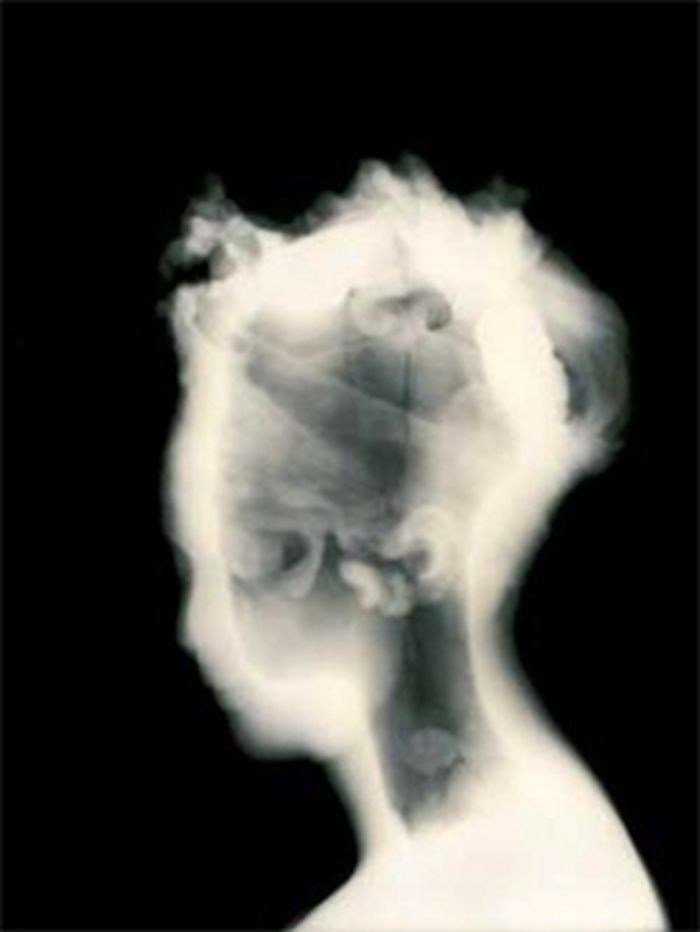
Maisel’s work has always been concerned with processes of memory, excavation, and transformation. These themes are given new form in his latest work, History’s Shadow. In this series, Maisel re-photographs x-rays from museum archives that depict artifacts from antiquity, scanning and digitally manipulating the selected source material. X-rays have historically been used by art conservators for structural examination of art and artifacts much as physicians examine bones and internal organs; they reveal losses, replacements, construction methods, and internal trauma invisible to the naked eye. By transcribing both the inner and outer surfaces of their subjects simultaneously, they form spectral images of indeterminate space, depth, and scale. The resulting photographs seem like transmissions from the distant past, both spanning and collapsing time. They express – through feeling and art, as well as science and reason – the shape-shifting nature of time itself, and the continuous presence of the past contained within us. The book contains an original short story by Jonathan Lethem that was inspired by Maisel’s images.
Form:
books
books
Publication:
September 2011
September 2011
Subject:
Photography monographs
Photography monographs
Form:
books
books
Actions:
Price:
$37.50
(available to order)
Summary:
In A Guide to the New Ruins of Great Britain, Owen Hatherley skewered New Labour’s architectural legacy in all its witless swagger. Now, in the year of the Diamond Jubilee and the London Olympics, he sets out to describe what the Coalition’s altogether different approach to economic mismanagement and civic irresponsibility is doing to the places where the British live. (...)
Title:
A new kind of bleak : journeys through urban Britain
Actions:
Price:
$37.50
(available to order)
Summary:
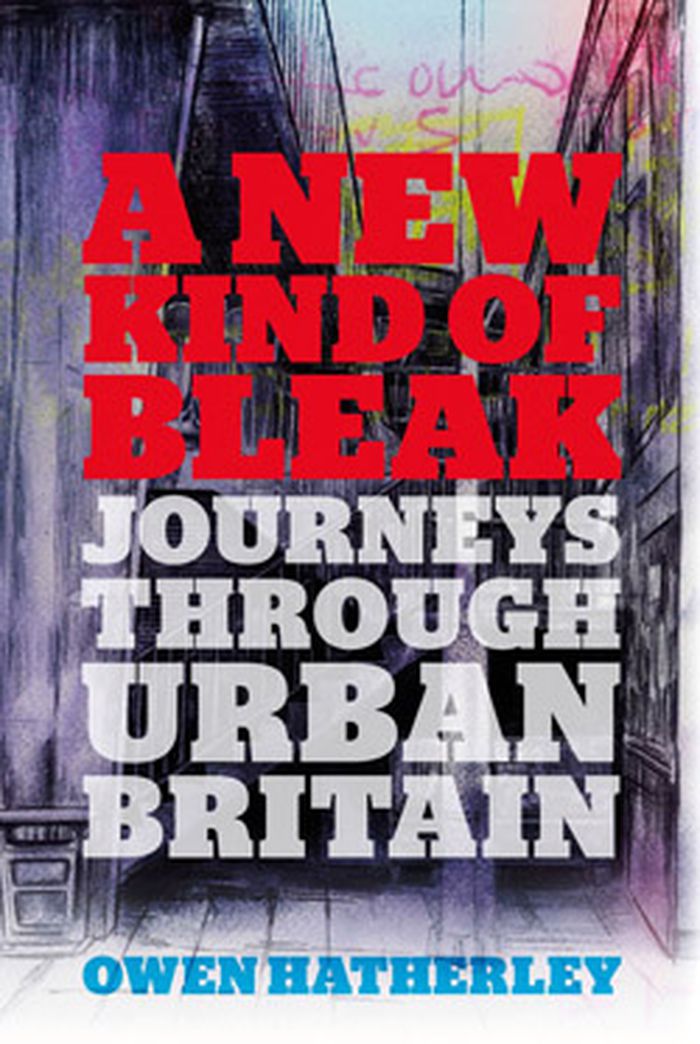
In A Guide to the New Ruins of Great Britain, Owen Hatherley skewered New Labour’s architectural legacy in all its witless swagger. Now, in the year of the Diamond Jubilee and the London Olympics, he sets out to describe what the Coalition’s altogether different approach to economic mismanagement and civic irresponsibility is doing to the places where the British live. In a journey that begins and ends in the capital, Hatherley takes us from Plymouth and Brighton to Belfast and Aberdeen, by way of the eerie urbanism of the Welsh valleys and the much-mocked splendour of modernist Coventry. Everywhere outside the unreal Southeast, the building has stopped in towns and cities, which languish as they wait for the next bout of self-defeating austerity. Hatherley writes with unrivalled aggression about the disarray of modern Britain, and yet this remains a book about possibilities remembered, about unlikely successes in the midst of seemingly inexorable failure. For as well as trash, ancient and modern, Hatherley finds signs of the hopeful country Britain once was and hints of what it might become.
Form:
books
books
Publication:
May 2012
May 2012
Subject:
Urban Theory
Urban Theory
Form:
books
books
Price:
$190.00
(available to order)
Summary:
Architecture is a strange mixture of persistence and flux, an amalgamation of elements - some that have been around for over 5,000 years and others that were (re)invented yesterday. The fact that these elements change independently of each other, according to different cycles and economies, and for different reasons, turns each building into a complex collage of the(...)
Title:
Elements
Actions:
Price:
$190.00
(available to order)
Summary:
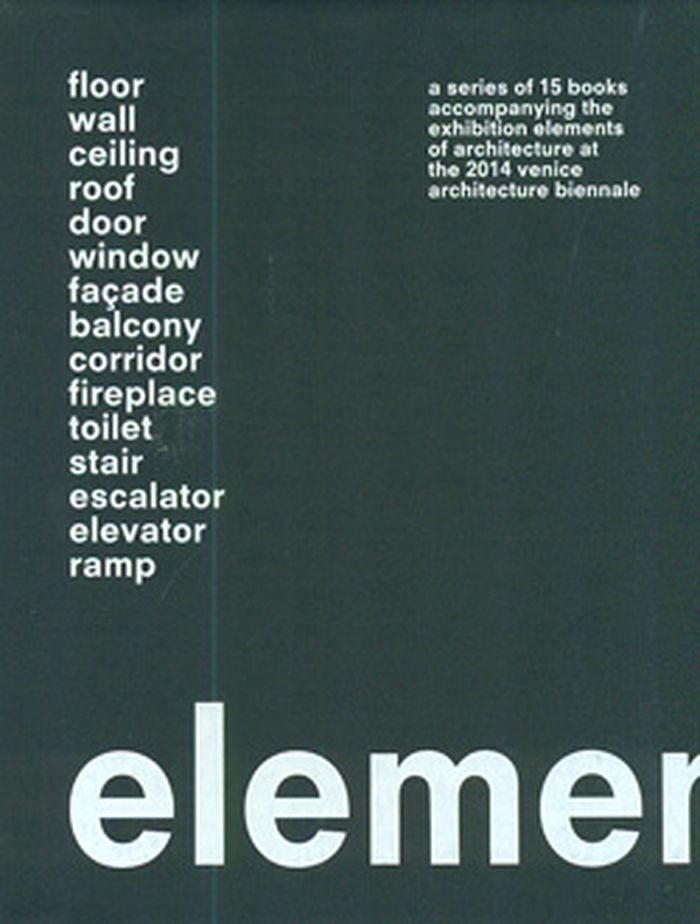
Architecture is a strange mixture of persistence and flux, an amalgamation of elements - some that have been around for over 5,000 years and others that were (re)invented yesterday. The fact that these elements change independently of each other, according to different cycles and economies, and for different reasons, turns each building into a complex collage of the archaic and the current, the site-specific and the standard, mechanical smoothness and the spontaneous. Only by looking at the elements under a wide lens can we recognize the cultural preferences, forgotten symbolism, technological advances, mutations triggered by intensifying global exchange, climatic adaptions, political calculations, regulatory requirements, new digital regimes, and, somewhere in the mix - the ideas of the architect that constitute the practice of architecture today. A collection of these essential elements into 15 books in a package launched at the 2014 Venice Biennale that allows us to look through a microscope at the real fundamentals of our buildings and see again the essential design techniques used by any architect, anywhere, anytime.
Form:
books
books
Publication:
September 2014
September 2014
Subject:
Architecture Monographs
Architecture Monographs
Form:
books
books
Actions:
Price:
$58.95
(available to order)
Summary:
In northwest Russia, in a small village called Alekhovshchina, Nadia Sablin's aunts spend the warmer months together in the family home and live as the family has always lived chopping wood to heat the house, bringing water from the well, planting potatoes, and making their own clothes. Sablin's lyrical and evocative photographs, taken over seven summers, capture the(...)
Publication:
November 2015
November 2015
Title:
Aunties: the seven summers of Alevtina and Ludmila
Actions:
Price:
$58.95
(available to order)
Summary:
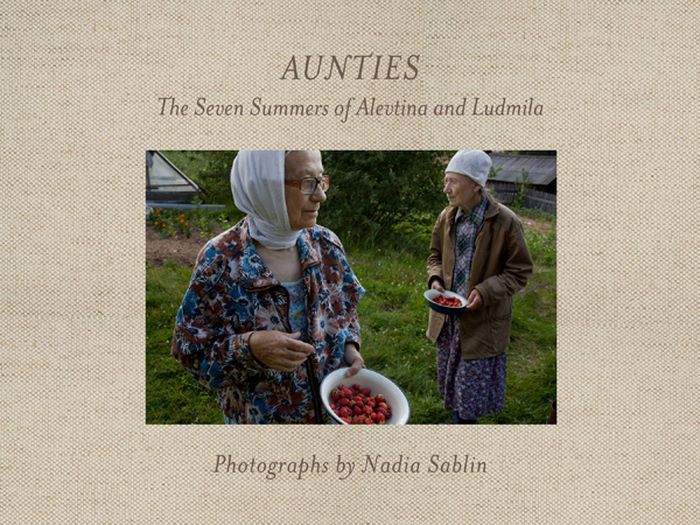
In northwest Russia, in a small village called Alekhovshchina, Nadia Sablin's aunts spend the warmer months together in the family home and live as the family has always lived chopping wood to heat the house, bringing water from the well, planting potatoes, and making their own clothes. Sablin's lyrical and evocative photographs, taken over seven summers, capture the small details and daily rituals of her aunts surprisingly colorful and dreamlike days, taking us not only to another country but to another time. Alevtina and Ludmila, now in their seventies, seem both old and young, as if time itself was as seamless and cyclical as their routines working on puzzles, sewing curtains, tatting lace, picking berries, repairing fences and as full of the same subtle mysteries. Sablin collaborated with her aunts to recreate scenes she remembered from her childhood and to make new images of the patterns of their days. In these photographs, Sablin combines observation and invention, biography and autobiography, to tell the stories of her aunts life together, and in the process, quilts together a thoughtful meditation on memory, aging, and belonging.
Form:
books
books
Publication:
November 2015
November 2015
Form:
books
books
Title:
Other things
Other things
Actions:
Price:
$59.95
(available to order)
Summary:
From the pencil to the puppet to the drone, the humanities and the social sciences continue to ride a wave of interest in material culture and the world of things. How should we understand the force and figure of that wave as it shapes different disciplines? Other Things explores this question by considering a wide assortment of objects—from beach glass to cell phones,(...)
Title:
Other things
Actions:
Price:
$59.95
(available to order)
Summary:
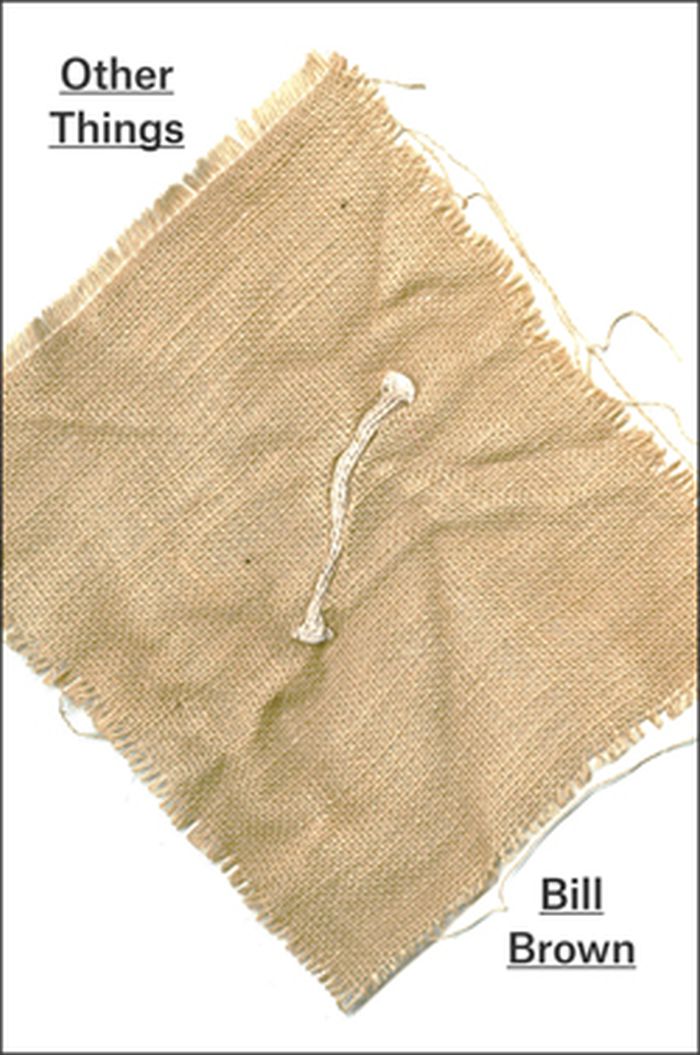
From the pencil to the puppet to the drone, the humanities and the social sciences continue to ride a wave of interest in material culture and the world of things. How should we understand the force and figure of that wave as it shapes different disciplines? Other Things explores this question by considering a wide assortment of objects—from beach glass to cell phones, sneakers to skyscrapers—that have fascinated a range of writers and artists, including Virginia Woolf, Man Ray, Spike Lee, and Don DeLillo. The book ranges across the literary, visual, and plastic arts to depict the curious lives of things. Beginning with Achilles’s Shield, then tracking the object/thing distinction as it appears in the work of Martin Heidegger and Jacques Lacan, Bill Brown ultimately focuses on the thingness disclosed by specific literary and artistic works. Combining history and literature, criticism and theory, Other Things provides a new way of understanding the inanimate object world and the place of the human within it, encouraging us to think anew about what we mean by materiality itself.
Form:
books
books
Publication:
November 2015
November 2015
Subject:
Design Theory
Design Theory
Form:
books
books
Actions:
Price:
$49.00
(available to order)
Summary:
The Anatomy of the Architectural Book examines the relationships between book culture and building culture, making visible the axes along which architectural knowledge circulates through books into buildings and back. Using five conceptual tools—texture, surface, rhythm, structure, and scale—Tavares analyzes the material qualities of a wide range of books in order to(...)
Title:
The anatomy of the architectural book
Actions:
Price:
$49.00
(available to order)
Summary:
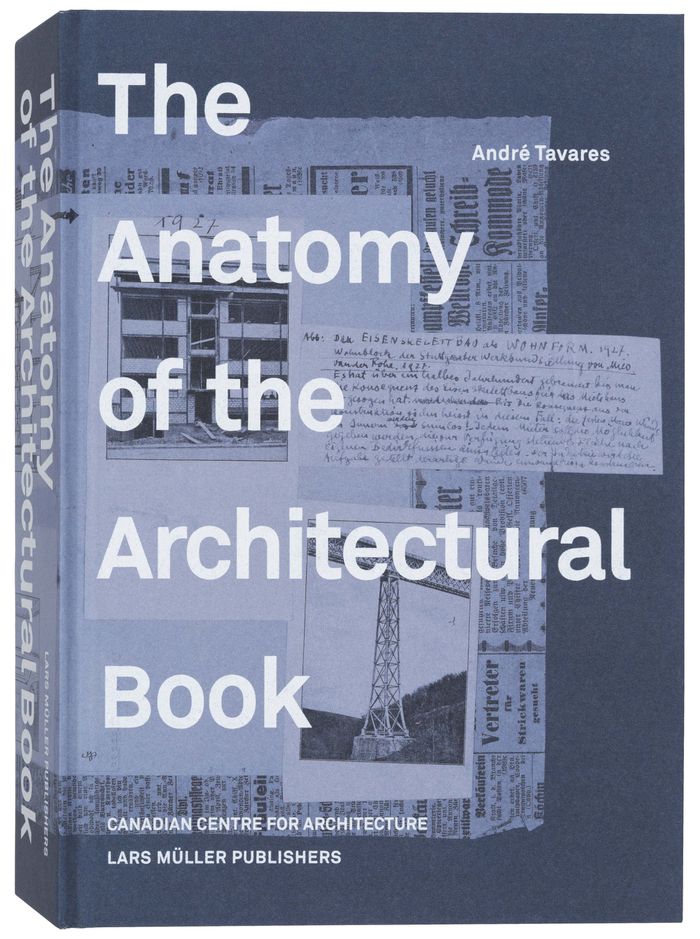
The Anatomy of the Architectural Book examines the relationships between book culture and building culture, making visible the axes along which architectural knowledge circulates through books into buildings and back. Using five conceptual tools—texture, surface, rhythm, structure, and scale—Tavares analyzes the material qualities of a wide range of books in order to assess these dynamics and intersections. This investigation confronts us with the rise of the industrialized book, and thus of the editor as an important intermediary between the author and the printer, as well as with the configuration of the book as a unique visual device (with the designer taking part in a progressively more complex chain of decision-making). Richly illustrated with samples from the CCA library, the volume discusses work by authors including William Morris, Gottfried Semper, El Lissitzky, Le Corbusier, and Frank Lloyd Wright, among others. A large portion of the research for the book was undertaken while Tavares was a Visiting Scholar at the CCA. It is co-published in English by Lars Müller Publishers and in Portuguese by Dafne Editora.
Form:
books
books
Publication:
March 2016
March 2016
Form:
books
books
Actions:
Price:
$69.00
(available to order)
Summary:
Gabriel Orozco visited the old guest apartments of Prince and Princess de Broglie (the last private owners of Château de Chaumont-sur-Loire) for but a few moments when his gaze was drawn straight to the torn wallpaper remains—so discreet that they were no longer noticed. These faded impressions, modest vestiges, extremely fragile traces of a past now behind us,(...)
Subject:
Contemporary Art Monographs
Contemporary Art Monographs
Publication:
October 2016
October 2016
Title:
Gabriel Orozco: fleurs fantômes
Actions:
Price:
$69.00
(available to order)
Summary:
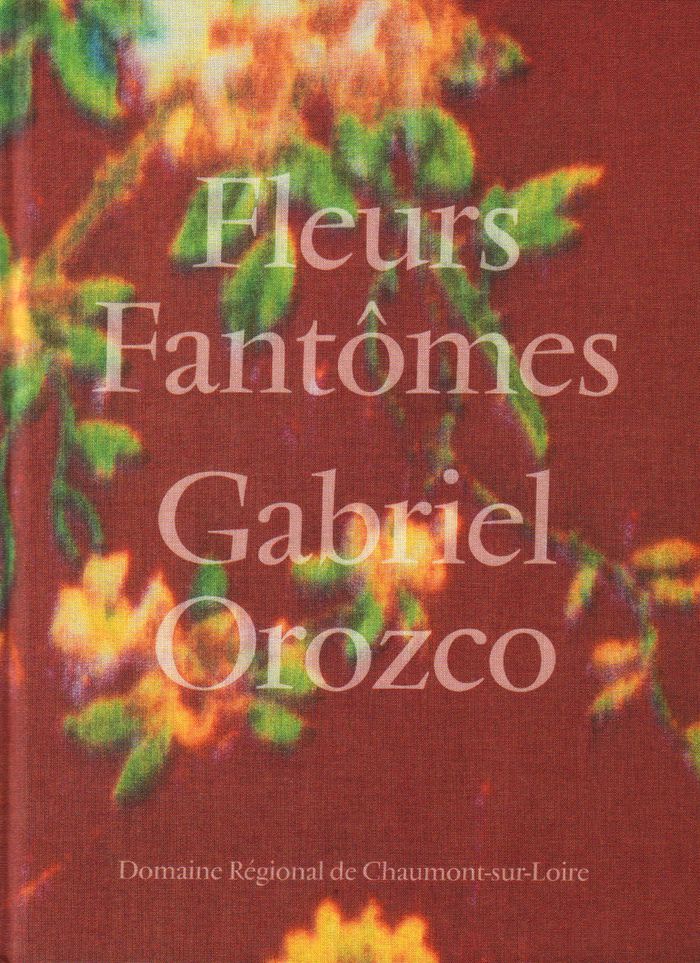
Gabriel Orozco visited the old guest apartments of Prince and Princess de Broglie (the last private owners of Château de Chaumont-sur-Loire) for but a few moments when his gaze was drawn straight to the torn wallpaper remains—so discreet that they were no longer noticed. These faded impressions, modest vestiges, extremely fragile traces of a past now behind us, immediately captured the imagination of this exceptional artist, who had been invited to “take over the château” as part of a special commission for the Centre-Loire Valley region. In his fascination with the remnants of the old tapestries that once graced the walls of these rooms—closed off and forgotten about since 1938—Orozco devoted hours to studying the palimpsest of the floral tapestries, still hanging on these old walls: photographing them over a considerable amount of time whilst listening to the echoes of ages past. For in these very rooms, now consigned to history, kings and queens from all over Europe once spent time and slept—sometimes for just a few hours—at the turn of last century, invited as guests to sumptuous parties and celebrated hunts. The artist, whose work is inspired by the quest for traces, remnants, marks left by men, has chosen an approach that looks back at the history and memory of the château at Chaumont-sur-Loire. In these fragments of old, timeworn, threadbare tapestries, Gabriel Orozco detected traces of these lives now long gone by: a matrix of a subtle meditation on space and time. The works on display in the “guest bedrooms” of the château evoke the details and the damage of the ancient wallpaper, whose elegant floral motifs have been recreated using a unique, time-consuming process of spraying oil onto canvas. The faltering impression mirrors the feeling of unease that grips visitors as they encounter these works and these blemished walls that are now in plain sight. In this way Orozco reveals not just the designs and colors that had until now faded into the background, but also the emotion suspended in the rooms. Through this poetic promenade, along the walls and complex walkways of the west and south wings of two floors of the château, Orozco invites us to partake in a dialogue with the mystery and the memory of a unique environment that is rendered omnipresent.
Form:
books
books
Publication:
October 2016
October 2016
Subject:
Contemporary Art Monographs
Contemporary Art Monographs
Form:
journals and magazines
journals and magazines
Title:
Studies in romanticism.
Studies in romanticism.
Actions:
Description:
1 online resource
Author:
Subject:
Publication:
Boston : Graduate School, Boston University, 1961-
Boston : Graduate School, Boston University, 1961-
Form:
journals and magazines
journals and magazines
Publication:
Boston : Graduate School, Boston University, 1961-
Boston : Graduate School, Boston University, 1961-
Author:
Subject:
Form:
journals and magazines
journals and magazines
Form:
journals and magazines
journals and magazines
Publication:
Lubbock : Texas Tech University
Lubbock : Texas Tech University
Author:
Subject:
Form:
books
books
Price:
$25.00
(available to order)
Summary:
New York City is home to some of the most recognizable places in the world. As familiar as the sight of New Year’s Eve in Times Square or a protest in front of City Hall may be to us, do we understand who controls what happens there? Kristine Miller delves into six of New York’s most important public spaces to trace how design influences their complicated lives. Miller(...)
Title:
Designs on the Public : The private lives of New York's public spaces
Actions:
Price:
$25.00
(available to order)
Summary:
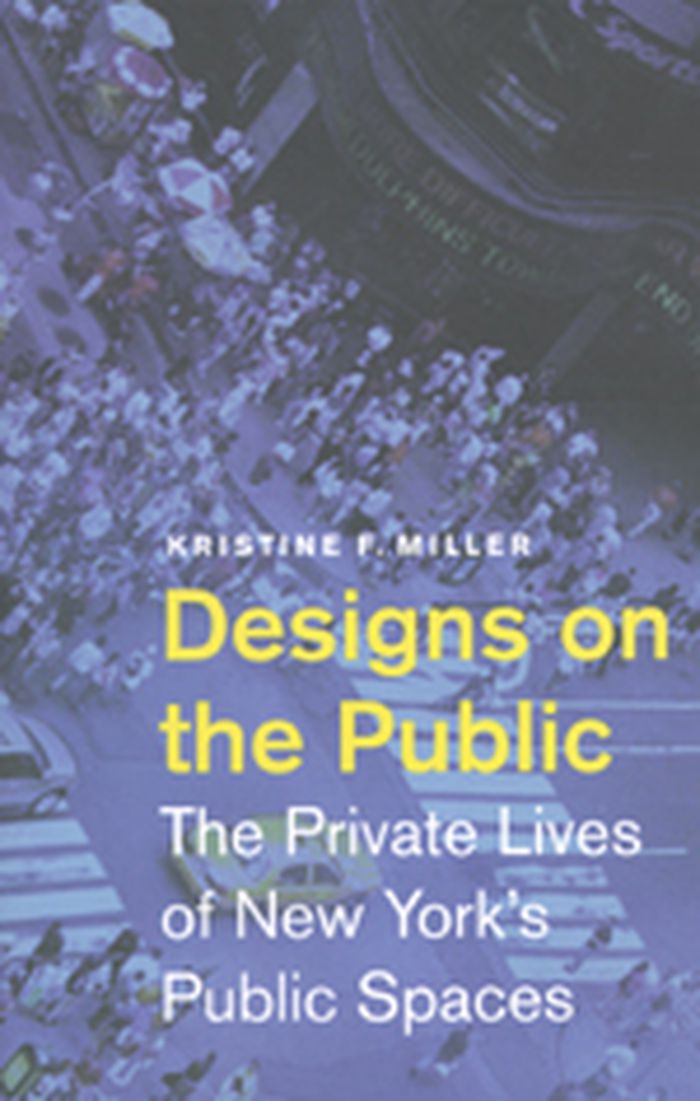
New York City is home to some of the most recognizable places in the world. As familiar as the sight of New Year’s Eve in Times Square or a protest in front of City Hall may be to us, do we understand who controls what happens there? Kristine Miller delves into six of New York’s most important public spaces to trace how design influences their complicated lives. Miller chronicles controversies in the histories of New York locations including Times Square, Trump Tower, the IBM Atrium, and Sony Plaza. The story of each location reveals that public space is not a concrete or fixed reality, but rather a constantly changing situation open to the forces of law, corporations, bureaucracy, and government. The qualities of public spaces we consider essential, including accessibility, public ownership, and ties to democratic life, are, at best, temporary conditions and often completely absent. Design is, in Miller’s view, complicit in regulation of public spaces in New York City to exclude undesirables, restrict activities, and privilege commercial interests, and in this work she shows how design can reactivate public space and public life.
Form:
books
books
Publication:
December 2007, Minneapolis
December 2007, Minneapolis
Subject:
Urban Theory
Urban Theory


