


5194 Results
Form:
books
books
Title:
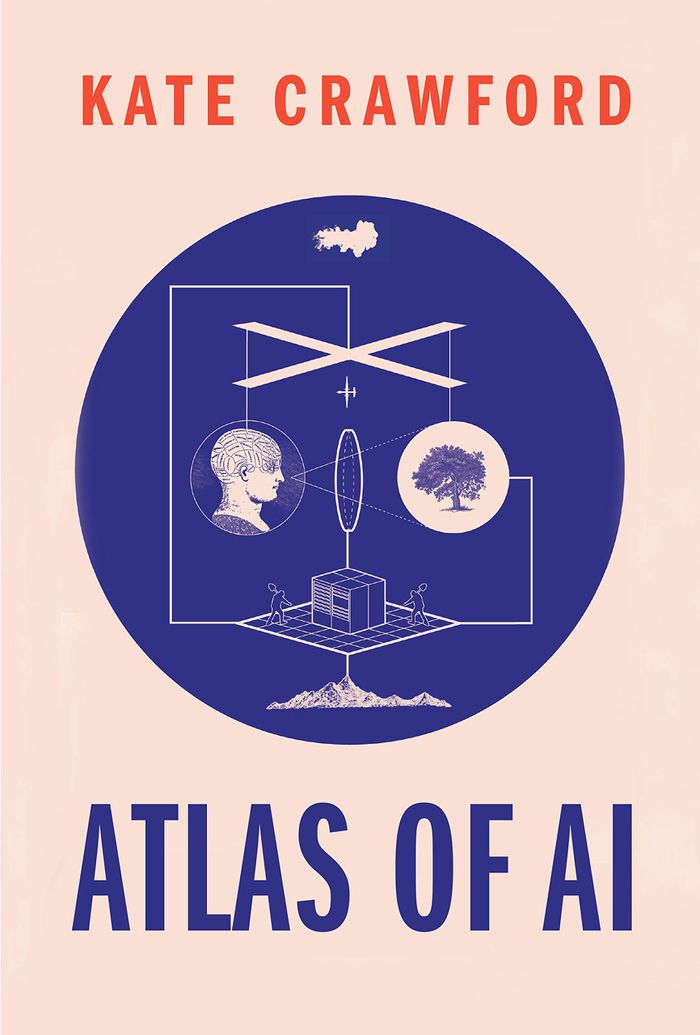
Atlas of AI
Atlas of AI
Actions:
Price:
$39.95
(available to order)
Summary:
What happens when artificial intelligence saturates political life and depletes the planet? How is AI shaping our understanding of ourselves and our societies? Drawing on more than a decade of research, award-winning scholar Kate Crawford reveals how AI is a technology of extraction: from the minerals drawn from the earth, to the labor pulled from low-wage information(...)
$39.95
(available to order)
Summary:
What happens when artificial intelligence saturates political life and depletes the planet? How is AI shaping our understanding of ourselves and our societies? Drawing on more than a decade of research, award-winning scholar Kate Crawford reveals how AI is a technology of extraction: from the minerals drawn from the earth, to the labor pulled from low-wage information(...)
Title:
Atlas of AI
Actions:
Price:
$39.95
(available to order)
Summary:
What happens when artificial intelligence saturates political life and depletes the planet? How is AI shaping our understanding of ourselves and our societies? Drawing on more than a decade of research, award-winning scholar Kate Crawford reveals how AI is a technology of extraction: from the minerals drawn from the earth, to the labor pulled from low-wage information workers, to the data taken from every action and expression. This book reveals how this planetary network is fueling a shift toward undemocratic governance and increased inequity. Rather than taking a narrow focus on code and algorithms, Crawford offers us a material and political perspective on what it takes to make AI and how it centralizes power. This is an urgent account of what is at stake as technology companies use artificial intelligence to reshape the world.
Atlas of AI
Actions:
Price:
$39.95
(available to order)
Summary:
What happens when artificial intelligence saturates political life and depletes the planet? How is AI shaping our understanding of ourselves and our societies? Drawing on more than a decade of research, award-winning scholar Kate Crawford reveals how AI is a technology of extraction: from the minerals drawn from the earth, to the labor pulled from low-wage information workers, to the data taken from every action and expression. This book reveals how this planetary network is fueling a shift toward undemocratic governance and increased inequity. Rather than taking a narrow focus on code and algorithms, Crawford offers us a material and political perspective on what it takes to make AI and how it centralizes power. This is an urgent account of what is at stake as technology companies use artificial intelligence to reshape the world.
Form:
books
books
Publication:
April 2021
April 2021
Form:
books
books

Actions:
Price:
$19.99
(available to order)
Summary:
Whether you simply want to challenge your local shop to reduce their plastic or go big and demand a new law to be passed, this book is the place to start. Full of lessons from the real world, this book contains practical steps and a blueprint anyone can follow - from helping you to pinpoint the fundamentals of what you want to achieve to mobilising supporters and(...)
$19.99
(available to order)
Summary:
Whether you simply want to challenge your local shop to reduce their plastic or go big and demand a new law to be passed, this book is the place to start. Full of lessons from the real world, this book contains practical steps and a blueprint anyone can follow - from helping you to pinpoint the fundamentals of what you want to achieve to mobilising supporters and(...)
Title:
Do something: activism for everyone
Actions:
Price:
$19.99
(available to order)
Summary:
Whether you simply want to challenge your local shop to reduce their plastic or go big and demand a new law to be passed, this book is the place to start. Full of lessons from the real world, this book contains practical steps and a blueprint anyone can follow - from helping you to pinpoint the fundamentals of what you want to achieve to mobilising supporters and harnessing traditional and social media. Having worked as a campaigner for over a decade Kajal Odedra knows the tricks that have typically been held by people in circles of power and believes that everyone should know how to speak up and be heard. Revolution on every scale is happening all around the world - but rather than being led by governments, policy makers or political leaders, it is individuals, communities and collectives who are calling for action.
Do something: activism for everyone
Actions:
Price:
$19.99
(available to order)
Summary:
Whether you simply want to challenge your local shop to reduce their plastic or go big and demand a new law to be passed, this book is the place to start. Full of lessons from the real world, this book contains practical steps and a blueprint anyone can follow - from helping you to pinpoint the fundamentals of what you want to achieve to mobilising supporters and harnessing traditional and social media. Having worked as a campaigner for over a decade Kajal Odedra knows the tricks that have typically been held by people in circles of power and believes that everyone should know how to speak up and be heard. Revolution on every scale is happening all around the world - but rather than being led by governments, policy makers or political leaders, it is individuals, communities and collectives who are calling for action.
Form:
books
books
Publication:
December 2021
December 2021
Subject:
Social
Social
Form:
books
books
Actions:
Price:
$45.50
(available to order)
Summary:
City life has been reconfigured by our use—and our expectations—of communication, data, and sensing technologies. In this book Alison Powell examines the civic use, regulation, and politics of these technologies, looking at how governments, planners, citizens, and activists expect them to enhance life in the city. She argues that the de facto forms of citizenship that(...)
$45.50
(available to order)
Summary:
City life has been reconfigured by our use—and our expectations—of communication, data, and sensing technologies. In this book Alison Powell examines the civic use, regulation, and politics of these technologies, looking at how governments, planners, citizens, and activists expect them to enhance life in the city. She argues that the de facto forms of citizenship that(...)
Title:
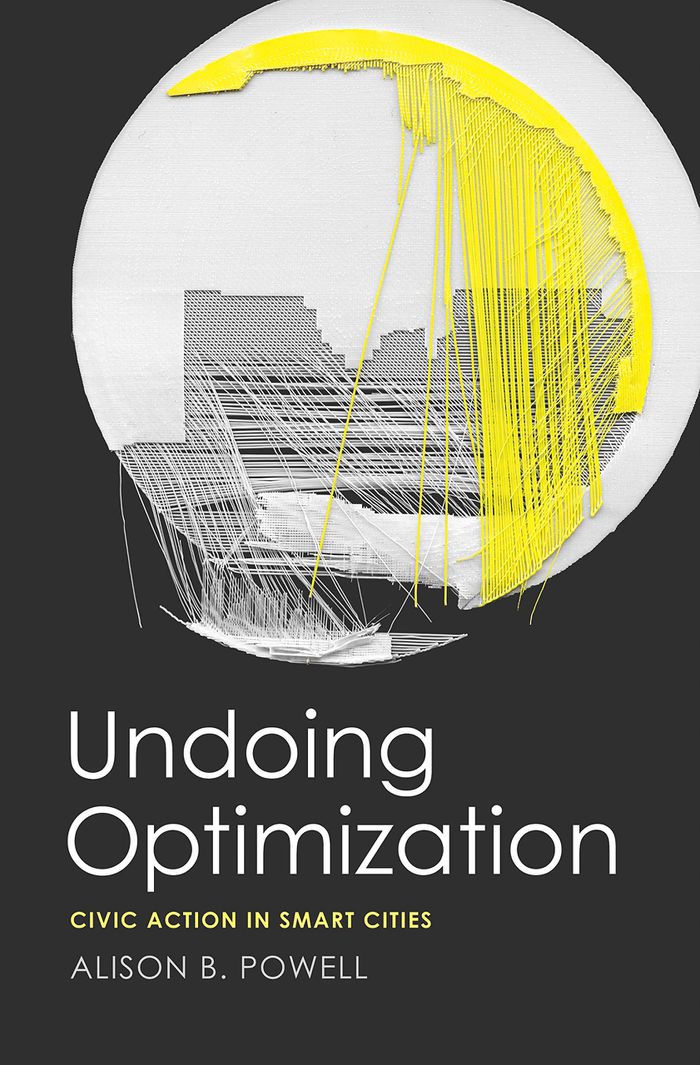
Undoing optimization: civic action in smart ciities
Actions:
Price:
$45.50
(available to order)
Summary:
City life has been reconfigured by our use—and our expectations—of communication, data, and sensing technologies. In this book Alison Powell examines the civic use, regulation, and politics of these technologies, looking at how governments, planners, citizens, and activists expect them to enhance life in the city. She argues that the de facto forms of citizenship that emerge in relation to these technologies represent sites of contention over how governance and civic power should operate. These sites become more significant as an increasingly urbanized and polarized world faces new struggles over local participation and engagement. The author moves past the usual discussion of top-down versus bottom-up civic action and instead explains how citizenship shifts in response to technological change and particularly in response to issues related to pervasive sensing, big data, and surveillance in “smart cities.”
Undoing optimization: civic action in smart ciities
Actions:
Price:
$45.50
(available to order)
Summary:
City life has been reconfigured by our use—and our expectations—of communication, data, and sensing technologies. In this book Alison Powell examines the civic use, regulation, and politics of these technologies, looking at how governments, planners, citizens, and activists expect them to enhance life in the city. She argues that the de facto forms of citizenship that emerge in relation to these technologies represent sites of contention over how governance and civic power should operate. These sites become more significant as an increasingly urbanized and polarized world faces new struggles over local participation and engagement. The author moves past the usual discussion of top-down versus bottom-up civic action and instead explains how citizenship shifts in response to technological change and particularly in response to issues related to pervasive sensing, big data, and surveillance in “smart cities.”
Form:
books
books
Publication:
May 2021
May 2021
Subject:
Urban Theory
Urban Theory
Form:
books
books
Price:
$29.95
(available to order)
Summary:
One common feature of the wave of recent revolutions and revolts around the world is not political but rather architectural: many erupted on inner-city roundabouts. In thinking about the relation between protest and urban form, Eyal Weizman starts with the May 1980 uprising in Gwangju, South Korea, the first of the “roundabout revolutions,” and traces its lineage to the(...)
$29.95
(available to order)
Summary:
One common feature of the wave of recent revolutions and revolts around the world is not political but rather architectural: many erupted on inner-city roundabouts. In thinking about the relation between protest and urban form, Eyal Weizman starts with the May 1980 uprising in Gwangju, South Korea, the first of the “roundabout revolutions,” and traces its lineage to the(...)
Title:
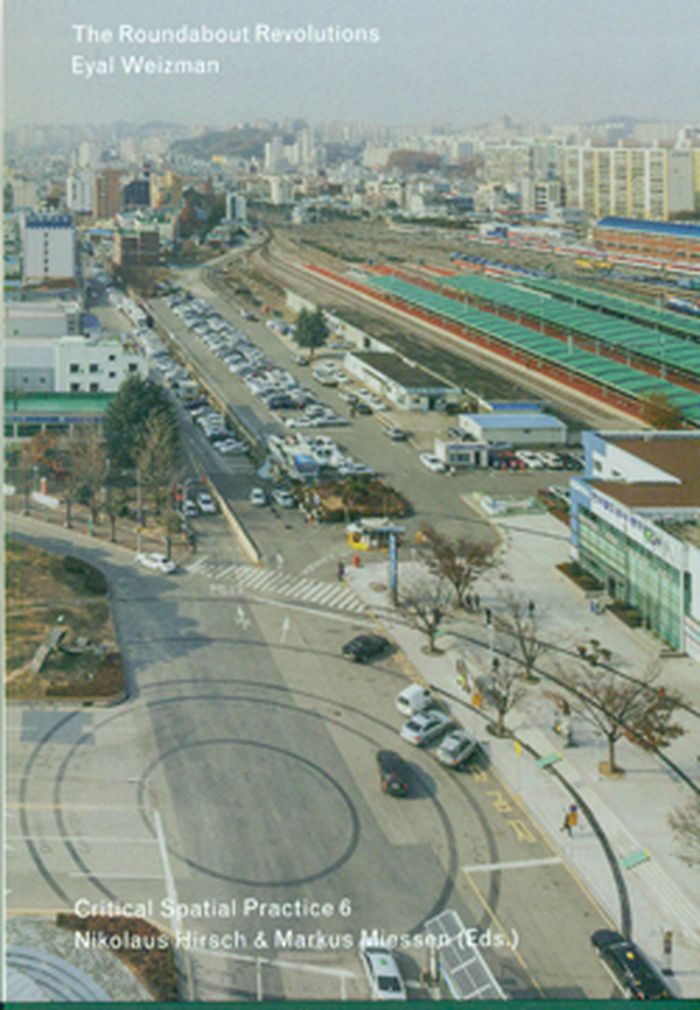
Critical spatial practice 6 : Eyal Weizman, the roundabout revolutions
Actions:
Price:
$29.95
(available to order)
Summary:
One common feature of the wave of recent revolutions and revolts around the world is not political but rather architectural: many erupted on inner-city roundabouts. In thinking about the relation between protest and urban form, Eyal Weizman starts with the May 1980 uprising in Gwangju, South Korea, the first of the “roundabout revolutions,” and traces its lineage to the Arab Spring and its hellish aftermath. Rereading the history of the roundabout through the vortices of history that traverse it, the book follows the development of the roundabout in Europe and North America in the early twentieth century, to its subsequent export to the colonial world in the context of attempts to discipline and police the “chaotic” non-Western city. How did an urban apparatus put in the service of authoritarian power became the locus of its undoing?
Critical spatial practice 6 : Eyal Weizman, the roundabout revolutions
Actions:
Price:
$29.95
(available to order)
Summary:
One common feature of the wave of recent revolutions and revolts around the world is not political but rather architectural: many erupted on inner-city roundabouts. In thinking about the relation between protest and urban form, Eyal Weizman starts with the May 1980 uprising in Gwangju, South Korea, the first of the “roundabout revolutions,” and traces its lineage to the Arab Spring and its hellish aftermath. Rereading the history of the roundabout through the vortices of history that traverse it, the book follows the development of the roundabout in Europe and North America in the early twentieth century, to its subsequent export to the colonial world in the context of attempts to discipline and police the “chaotic” non-Western city. How did an urban apparatus put in the service of authoritarian power became the locus of its undoing?
Form:
books
books
Publication:
October 2015
October 2015
Subject:
Critical Theory
Critical Theory
Form:
books
books
Title:
Japan-ness in architecture
Japan-ness in architecture
Actions:
Price:
$35.95
(available to order)
Summary:
Japanese architect Arata Isozaki sees buildings not as dead objects but as events that encompass the social and historical context -- not to be defined forever by their "everlasting materiality" but as texts to be interpreted and reread continually. In "Japan-ness in architecture", he identifies what is essentially Japanese in architecture from the seventh to the(...)
$35.95
(available to order)
Summary:
Japanese architect Arata Isozaki sees buildings not as dead objects but as events that encompass the social and historical context -- not to be defined forever by their "everlasting materiality" but as texts to be interpreted and reread continually. In "Japan-ness in architecture", he identifies what is essentially Japanese in architecture from the seventh to the(...)
Subject:
History until 1900, Asia
History until 1900, Asia
Publication:
January 1900, Cambridge / London
January 1900, Cambridge / London
Title:
Japan-ness in architecture
Actions:
Price:
$35.95
(available to order)
Summary:
Japanese architect Arata Isozaki sees buildings not as dead objects but as events that encompass the social and historical context -- not to be defined forever by their "everlasting materiality" but as texts to be interpreted and reread continually. In "Japan-ness in architecture", he identifies what is essentially Japanese in architecture from the seventh to the twentieth century. In the opening essay, Isozaki analyzes the struggles of modern Japanese architects, including himself, to create something uniquely Japanese out of modernity. He then circles back in history to find what he calls Japan-ness in the seventh-century Ise shrine, reconstruction of the twelfth-century Todai-ji Temple, and the seventeenth-century Katsura Imperial Villa. He finds the periodic ritual relocation of Ise's precincts a counter to the West's concept of architectural permanence, and the repetition of the ritual an alternative to modernity's anxious quest for origins. He traces the "constructive power" of the Todai-ji Temple to the vision of the director of its reconstruction, the monk Chogen, whose imaginative power he sees as corresponding to the revolutionary turmoil of the times. The Katsura Imperial Villa, with its chimerical spaces, achieved its own Japan-ness as it reinvented the traditional shoin style. And yet, writes Isozaki, what others consider to be the Japanese aesthetic is often the opposite of that essential Japan-ness born in moments of historic self-definition; the purified stylization -- what Isozaki calls "Japanesquization" -- lacks the energy of cultural transformation and reflects an island retrenchment in response to the pressure of other cultures. Combining historical survey, critical analysis, theoretical reflection, and autobiographical account, these essays, written over a period of twenty years, demonstrate Isozaki's standing as one of the world's leading architects and preeminent architectural thinkers. Arata Isosaki is a leading Japanese architect. His works include the Museum of Contemporary Art, Los Angeles, the Olympic Stadium in Barcelona, the Volksbank Center am Postdamer Platz in Berlin, the Team Disney Building in Orlando, and the Tokyo University of Art and Design. Translated by Sabu Kohso. Foreword by Toshiko Mori.
Japan-ness in architecture
Actions:
Price:
$35.95
(available to order)
Summary:
Japanese architect Arata Isozaki sees buildings not as dead objects but as events that encompass the social and historical context -- not to be defined forever by their "everlasting materiality" but as texts to be interpreted and reread continually. In "Japan-ness in architecture", he identifies what is essentially Japanese in architecture from the seventh to the twentieth century. In the opening essay, Isozaki analyzes the struggles of modern Japanese architects, including himself, to create something uniquely Japanese out of modernity. He then circles back in history to find what he calls Japan-ness in the seventh-century Ise shrine, reconstruction of the twelfth-century Todai-ji Temple, and the seventeenth-century Katsura Imperial Villa. He finds the periodic ritual relocation of Ise's precincts a counter to the West's concept of architectural permanence, and the repetition of the ritual an alternative to modernity's anxious quest for origins. He traces the "constructive power" of the Todai-ji Temple to the vision of the director of its reconstruction, the monk Chogen, whose imaginative power he sees as corresponding to the revolutionary turmoil of the times. The Katsura Imperial Villa, with its chimerical spaces, achieved its own Japan-ness as it reinvented the traditional shoin style. And yet, writes Isozaki, what others consider to be the Japanese aesthetic is often the opposite of that essential Japan-ness born in moments of historic self-definition; the purified stylization -- what Isozaki calls "Japanesquization" -- lacks the energy of cultural transformation and reflects an island retrenchment in response to the pressure of other cultures. Combining historical survey, critical analysis, theoretical reflection, and autobiographical account, these essays, written over a period of twenty years, demonstrate Isozaki's standing as one of the world's leading architects and preeminent architectural thinkers. Arata Isosaki is a leading Japanese architect. His works include the Museum of Contemporary Art, Los Angeles, the Olympic Stadium in Barcelona, the Volksbank Center am Postdamer Platz in Berlin, the Team Disney Building in Orlando, and the Tokyo University of Art and Design. Translated by Sabu Kohso. Foreword by Toshiko Mori.
Form:
books
books
Publication:
January 1900, Cambridge / London
January 1900, Cambridge / London
Subject:
History until 1900, Asia
History until 1900, Asia
Form:
audio
audio
Actions:
Description:
1 online resource.
Author:
Subject:
Publication:
[Place of publication not identified] : EBM(T), 2015.
[Place of publication not identified] : EBM(T), 2015.
Form:
audio
audio
Publication:
[Place of publication not identified] : EBM(T), 2015.
[Place of publication not identified] : EBM(T), 2015.
Author:
Subject:
Form:
books
books
Actions:
Holdings:
Description:
213 pages : illustrations (some color) ; 22 cm
Description:
213 pages : illustrations (some color) ; 22 cm
Author:
Subject:
Publication:
New York : ACTAR Publishers, 2014., New York ; Barcelona : Distributed by Actar D
New York : ACTAR Publishers, 2014., New York ; Barcelona : Distributed by Actar D
Title:
Earth, water, air, fire : the four elements and architecture / Josep Lluís Mateo & Florian Sauter (eds.).
Actions:
Holdings:
Description:
213 pages : illustrations (some color) ; 22 cm
Earth, water, air, fire : the four elements and architecture / Josep Lluís Mateo & Florian Sauter (eds.).
Actions:
Holdings:
Description:
213 pages : illustrations (some color) ; 22 cm
Form:
books
books
Publication:
New York : ACTAR Publishers, 2014., New York ; Barcelona : Distributed by Actar D
New York : ACTAR Publishers, 2014., New York ; Barcelona : Distributed by Actar D
Author:
Subject:
Form:
books
books
Title:
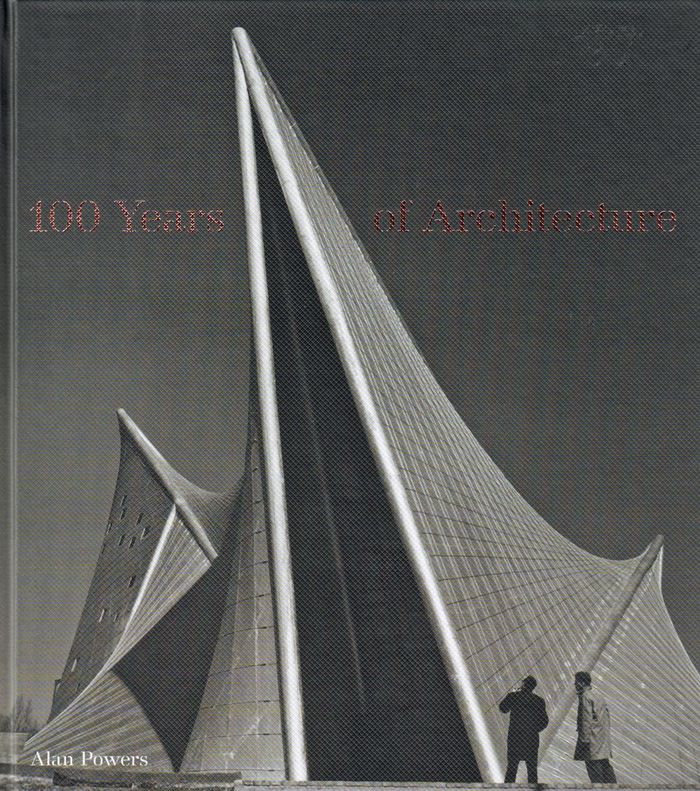
100 Years of Architecture
100 Years of Architecture
Actions:
Price:
$70.00
(available to order)
Summary:
Through archival and full-colour photography, plans and architectural drawings, the book illustrates the changing nature of architecture and its expansion during this period from the early developments of concrete and steel, through the eruption of Modernism to the provocative arguments of Postmodernism in the 1980s, right up to today’s superstars and global brands.
$70.00
(available to order)
Summary:
Through archival and full-colour photography, plans and architectural drawings, the book illustrates the changing nature of architecture and its expansion during this period from the early developments of concrete and steel, through the eruption of Modernism to the provocative arguments of Postmodernism in the 1980s, right up to today’s superstars and global brands.
Publication:
December 2016
December 2016
Title:
100 Years of Architecture
Actions:
Price:
$70.00
(available to order)
Summary:
Through archival and full-colour photography, plans and architectural drawings, the book illustrates the changing nature of architecture and its expansion during this period from the early developments of concrete and steel, through the eruption of Modernism to the provocative arguments of Postmodernism in the 1980s, right up to today’s superstars and global brands.
100 Years of Architecture
Actions:
Price:
$70.00
(available to order)
Summary:
Through archival and full-colour photography, plans and architectural drawings, the book illustrates the changing nature of architecture and its expansion during this period from the early developments of concrete and steel, through the eruption of Modernism to the provocative arguments of Postmodernism in the 1980s, right up to today’s superstars and global brands.
Form:
books
books
Publication:
December 2016
December 2016
Form:
books
books
Actions:
Price:
$65.00
(available in store)
Summary:
For Climate's Sake! sets itself the goal of conveying the knowledge revealed by current climate research in a manner that is both concise and appealing. It differs from other books on climate change principally in the way it is conceived as a visual reader that diliberately uses the effectiveness and power of the image to present the theme in a graphic way. Extensive(...)
$65.00
(available in store)
Summary:
For Climate's Sake! sets itself the goal of conveying the knowledge revealed by current climate research in a manner that is both concise and appealing. It differs from other books on climate change principally in the way it is conceived as a visual reader that diliberately uses the effectiveness and power of the image to present the theme in a graphic way. Extensive(...)
Subject:
Green Architecture
Green Architecture
Publication:
April 2011
April 2011
Title:
For climate's sake! A visual reader of climate change
Actions:
Price:
$65.00
(available in store)
Summary:
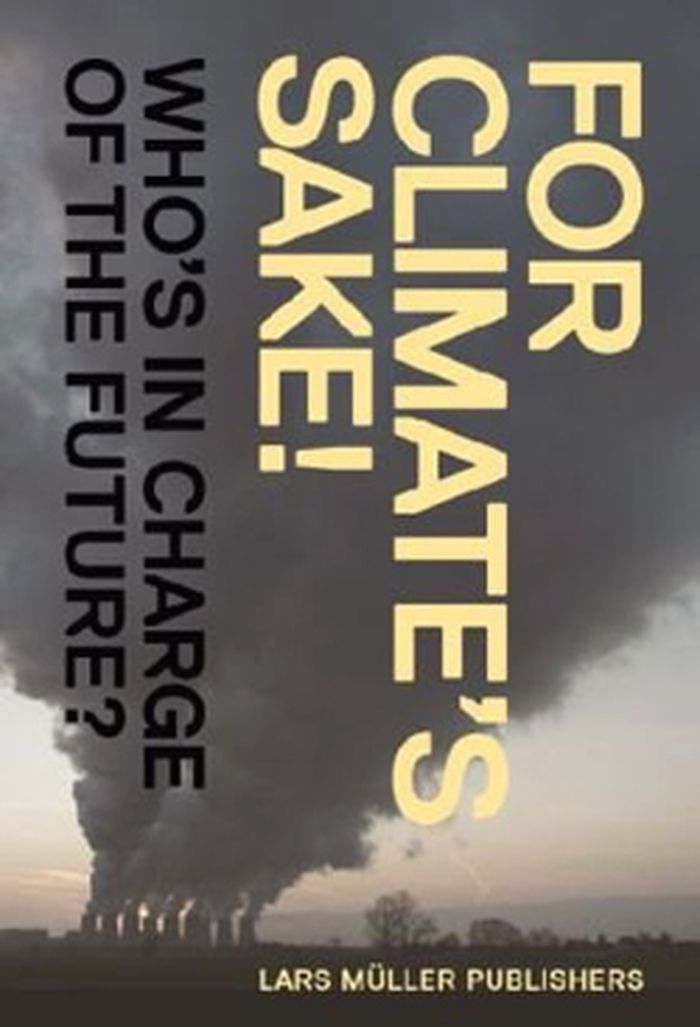
For Climate's Sake! sets itself the goal of conveying the knowledge revealed by current climate research in a manner that is both concise and appealing. It differs from other books on climate change principally in the way it is conceived as a visual reader that diliberately uses the effectiveness and power of the image to present the theme in a graphic way. Extensive series of images with large photographs and informative diagrams accompany well-researched essays on and around the themes of climate history, research and policy and thus offer an in-depth examination. The book provides insights into the history of the earth's climate and reveals the factors that are responsible for climate change. It poses questions and provides answers: why is the earth becoming warmer? What are the consequences we must reckon with? What can we do against this? Who determines the future?
For climate's sake! A visual reader of climate change
Actions:
Price:
$65.00
(available in store)
Summary:
For Climate's Sake! sets itself the goal of conveying the knowledge revealed by current climate research in a manner that is both concise and appealing. It differs from other books on climate change principally in the way it is conceived as a visual reader that diliberately uses the effectiveness and power of the image to present the theme in a graphic way. Extensive series of images with large photographs and informative diagrams accompany well-researched essays on and around the themes of climate history, research and policy and thus offer an in-depth examination. The book provides insights into the history of the earth's climate and reveals the factors that are responsible for climate change. It poses questions and provides answers: why is the earth becoming warmer? What are the consequences we must reckon with? What can we do against this? Who determines the future?
Form:
books
books
Publication:
April 2011
April 2011
Subject:
Green Architecture
Green Architecture
Form:
books
books
Actions:
Price:
$24.95
(available to order)
Summary:
This special issue of Radical History Review historicizes and reconsiders the flaneur - the city stroller - as the iconic bystander to the spectacle of urban life and change, drawing perspectives from urban and public history, museum studies, geography, and sociology. One article analyzes Australian frontier towns, where notions of indigeneity are commodified for white(...)
$24.95
(available to order)
Summary:
This special issue of Radical History Review historicizes and reconsiders the flaneur - the city stroller - as the iconic bystander to the spectacle of urban life and change, drawing perspectives from urban and public history, museum studies, geography, and sociology. One article analyzes Australian frontier towns, where notions of indigeneity are commodified for white(...)
Title:
Radical history review fall 2012: walkers, voyeurs, and the politics of urban space
Actions:
Price:
$24.95
(available to order)
Summary:
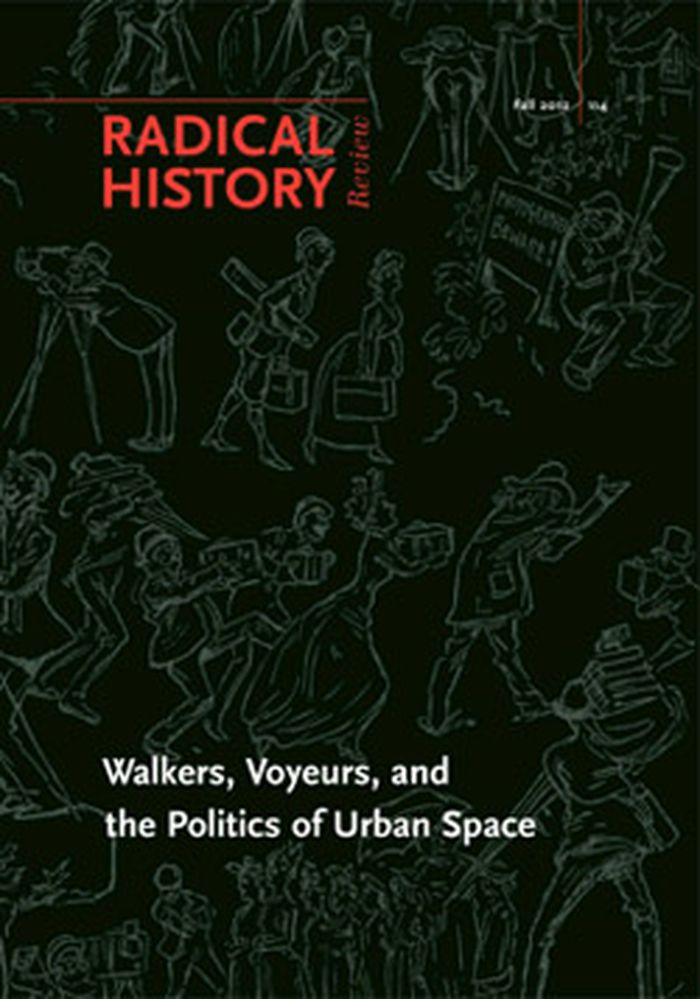
This special issue of Radical History Review historicizes and reconsiders the flaneur - the city stroller - as the iconic bystander to the spectacle of urban life and change, drawing perspectives from urban and public history, museum studies, geography, and sociology. One article analyzes Australian frontier towns, where notions of indigeneity are commodified for white consumers while Aborigines themselves are unwelcome. Another examines the funereal flanerie of protestors in Guatemala who stage scenes of public mourning to engage the radical power of dead bodies in public spaces. Flanerie and drifting are explored as pedagogical tools to draw students out of the controlled settings of college campuses. Contributors to this issue examine the physical experience of city walking - determined by architecture, street signs, traffic lights, and each walker's differently abled body - alongside the subtler class, racial, and historical markers that define who in city spaces is imagined to be respectable and who is dangerous.
Radical history review fall 2012: walkers, voyeurs, and the politics of urban space
Actions:
Price:
$24.95
(available to order)
Summary:
This special issue of Radical History Review historicizes and reconsiders the flaneur - the city stroller - as the iconic bystander to the spectacle of urban life and change, drawing perspectives from urban and public history, museum studies, geography, and sociology. One article analyzes Australian frontier towns, where notions of indigeneity are commodified for white consumers while Aborigines themselves are unwelcome. Another examines the funereal flanerie of protestors in Guatemala who stage scenes of public mourning to engage the radical power of dead bodies in public spaces. Flanerie and drifting are explored as pedagogical tools to draw students out of the controlled settings of college campuses. Contributors to this issue examine the physical experience of city walking - determined by architecture, street signs, traffic lights, and each walker's differently abled body - alongside the subtler class, racial, and historical markers that define who in city spaces is imagined to be respectable and who is dangerous.
Form:
books
books
Publication:
September 2012
September 2012
Subject:
Public Space
Public Space


