


5088 Results
Form:
journals and magazines
journals and magazines
Actions:
Price:
$39.95
(available to order)
Summary:
The relationship between architecture and tourism has been the subject of ample research from the urban point of view, resulting in various theories about the "tourist gaze." Themes like identity and city branding are familiar to us all these days, but the relationship between architecture and the touristic landscape has thus far received much less consideration. Now that(...)
Subject:
Magazines
Magazines
Publication:
November 2004, Rotterdam
November 2004, Rotterdam
Title:
Oase 64 : landscape and mass tourism
Actions:
Price:
$39.95
(available to order)
Summary:
The relationship between architecture and tourism has been the subject of ample research from the urban point of view, resulting in various theories about the "tourist gaze." Themes like identity and city branding are familiar to us all these days, but the relationship between architecture and the touristic landscape has thus far received much less consideration. Now that tourism is occupying the natural landscape en masse, it is no longer possible to safeguard the ideal of pure, untouched nature. By its very definition, the touristic landscape is a construct in which cultural and functional aspects have a role. As far back as the 18th century, the experience of a touristic landscape was become a physical one; an irreversible transformation of the landscape has been the result. This edition of "OASE" focuses on architecture's contribution to the structuring of mass tourism in the context of landscape, on how architecture frames the landscape and regiments the flow of tourists. A variety of interventions and strategies are reviewed, from mega-structures and infrastructure in ski resorts and Mediterranean holiday villages to nostalgic settlements in man-made miniature landscapes.
Form:
journals and magazines
journals and magazines
Publication:
November 2004, Rotterdam
November 2004, Rotterdam
Subject:
Magazines
Magazines
Form:
books
books
Title:
Robert Polidori's metropolis
Robert Polidori's metropolis
Actions:
Price:
$84.50
(available to order)
Summary:
Not only is he one of the world’s preeminent architecture photographers, Robert Polidori is also--as his popular book Havana proved--a master of urban portraiture. The Montreal-born photographer has made haunting studies of bombed-out buildings in Beirut, decaying New York tenements, Versailles rooms in dusty disarray, Brasilia's paean to spare '50s modernism, and, most(...)
Subject:
Photography monographs
Photography monographs
Publication:
November 2004, New York
November 2004, New York
Title:
Robert Polidori's metropolis
Actions:
Price:
$84.50
(available to order)
Summary:
Not only is he one of the world’s preeminent architecture photographers, Robert Polidori is also--as his popular book Havana proved--a master of urban portraiture. The Montreal-born photographer has made haunting studies of bombed-out buildings in Beirut, decaying New York tenements, Versailles rooms in dusty disarray, Brasilia's paean to spare '50s modernism, and, most recently, the abandoned, contaminated cities of Chernobyl and Pripyat. Taken together, they add to his ongoing project: the interpretation of the interrupted urban landscape. This new monograph combines the eye of a celebrated photographer with the distinctive voice of an artist and adventurer. Each breathtaking image--meticulously selected by the photographer from his own personal archive--is accompanied by a compelling first person account, based on interviews conducted by Martin C. Pedersen, executive editor of Metropolis magazine. Polidori tells behind-the-scene stories about the making of his photographs, takes us to war-torn Beirut and Brasilia and other world capitals, talks about what makes a building photogenic, how he shoots buildings he doesn’t like, his favorite architects, and his love of mosques. A look at the world’s great cities as seen through the eyes of a sharp social observer
Form:
books
books
Publication:
November 2004, New York
November 2004, New York
Subject:
Photography monographs
Photography monographs
Form:
books
books
Actions:
Price:
$45.50
(available to order)
Summary:
In the 1960s art fell out of time; both artists and critics lost their temporal bearings in response to what E. M. Cioran called "not being entitled to time." This anxiety and uneasiness about time, which Pamela Lee calls "chronophobia," cut across movements, media, and genres, and was figured in works ranging from kinetic sculptures to Andy Warhol films. Despite its(...)
Title:
Chronophobia : on time in the art of the 1960's
Actions:
Price:
$45.50
(available to order)
Summary:
In the 1960s art fell out of time; both artists and critics lost their temporal bearings in response to what E. M. Cioran called "not being entitled to time." This anxiety and uneasiness about time, which Pamela Lee calls "chronophobia," cut across movements, media, and genres, and was figured in works ranging from kinetic sculptures to Andy Warhol films. Despite its pervasiveness, the subject of time and 1960s art has gone largely unexamined in historical accounts of the period. Chronophobia is the first critical attempt to define this obsession and analyze it in relation to art and technology. Lee discusses the chronophobia of art relative to the emergence of the Information Age in postwar culture. The accompanying rapid technological transformations, including the advent of computers and automation processes, produced for many an acute sense of historical unknowing; the seemingly accelerated pace of life began to outstrip any attempts to make sense of the present. Lee sees the attitude of 1960s art to time as a historical prelude to our current fixation on time and speed within digital culture. Reflecting upon the 1960s cultural anxiety about temporality, she argues, helps us historicize our current relation to technology and time.
Form:
books
books
Publication:
May 2004, Cambridge, Mass.
May 2004, Cambridge, Mass.
Subject:
Contemporary Art Monographs
Contemporary Art Monographs
Form:
books
books

Actions:
Price:
$41.95
(available to order)
Summary:
Did the Romans have rakes? Did the monks get muddy? Did the potato seem really, really weird when it arrived on our shores? This lively 'potted' history of gardening in Britain takes us on a garden tour from the thorn hedges around prehistoric settlements to the rage for decking and ornamental grasses today. It tracks down the ordinary folk who worked the earth - the(...)
Title:
A little history of British gardening
Actions:
Price:
$41.95
(available to order)
Summary:
Did the Romans have rakes? Did the monks get muddy? Did the potato seem really, really weird when it arrived on our shores? This lively 'potted' history of gardening in Britain takes us on a garden tour from the thorn hedges around prehistoric settlements to the rage for decking and ornamental grasses today. It tracks down the ordinary folk who worked the earth - the apprentice boys and weeding women, the florists and nursery gardeners - as well as aristocrats and grand designers and famous plant-hunters. Coloured by Jenny Uglow's own love for plants, and brought to life in the many vivid illustrations, it deals not only with flowery-meads, grottoes and vistas, landscapes and ha-has, parks and allotments, but tells you, for example, how the Tudors made their curious knots; how housewives used herbs to stop freckles; how the suburbs dug for victory in World War II. With a brief guide to particular historic or evocative gardens open to the public, this is a book to put in your pocket when planning a summer day out - but also to read in your deckchair with a glass of cold wine, when dead-heading is simply too much.
Form:
books
books
Publication:
July 2004, London
July 2004, London
Subject:
Gardens
Gardens
Form:
books
books
Title:
Aesthetic subjects
Aesthetic subjects
Actions:
Price:
$37.50
(available to order)
Summary:
Determined to recover the value of aesthetic experience for artistic, cultural, and social analysis, the contributors to this volume-prominent scholars in literature, philosophy, art history, architecture, history, and anthropology-begin from a shared recognition that ideological readings of the aesthetic have provided invaluable insights, in particular, that analyses of(...)
Title:
Aesthetic subjects
Actions:
Price:
$37.50
(available to order)
Summary:
Determined to recover the value of aesthetic experience for artistic, cultural, and social analysis, the contributors to this volume-prominent scholars in literature, philosophy, art history, architecture, history, and anthropology-begin from a shared recognition that ideological readings of the aesthetic have provided invaluable insights, in particular, that analyses of aesthetics within historical and social contexts tell us a great deal about the experience of aesthetic encounters. From multiple and complementary perspectives, the contributors address topics as varied as Nabokov and Dickens, Caravaggio and Shelley Winters, gender and sexuality, advertising and AIDS. Taken together, their essays constitute a sustained and multifarious effort to resituate aesthetic pleasure in the mixed, impure conditions characteristic of every social practice and experience, however privileged or marginalized, and to ask what happens to the aesthetic if we consider it apart from-or at least in tension with-its historically dominant discursive formulations. Contributors : Leo Bersani, Susan Bordo, Bill Brown, Beatriz Colomina, Ulysse Dutoit, Lee Edelman, Maureen Harkin, Howard Horwitz, Audrey Jaffe, Martin Jay, Kay Bea Jones, Robert Kaufman, Alphonso Lingis, Joseph Litvak, Douglas Mao, Barbara Stafford, Kathleen Stewart, Kathryn Bond Stockton, Judith Stoddart, Michael Taussig.
Form:
books
books
Publication:
April 2003, Minneapolis
April 2003, Minneapolis
Subject:
Art Theory
Art Theory
Form:
books
books
Title:
Botanical sketchbooks
Botanical sketchbooks
Actions:
Price:
$57.00
(available to order)
Summary:
Recording the world of plant and animal life and documenting the strange beauty of the natural world have been human passions ever since the first cave paintings. While there are many histories of botanical art featuring beautiful paintings and finished drawings, the artists' preparatory sketches, first impressions, and scribbled notes on paper are rarely seen. But it is(...)
Title:
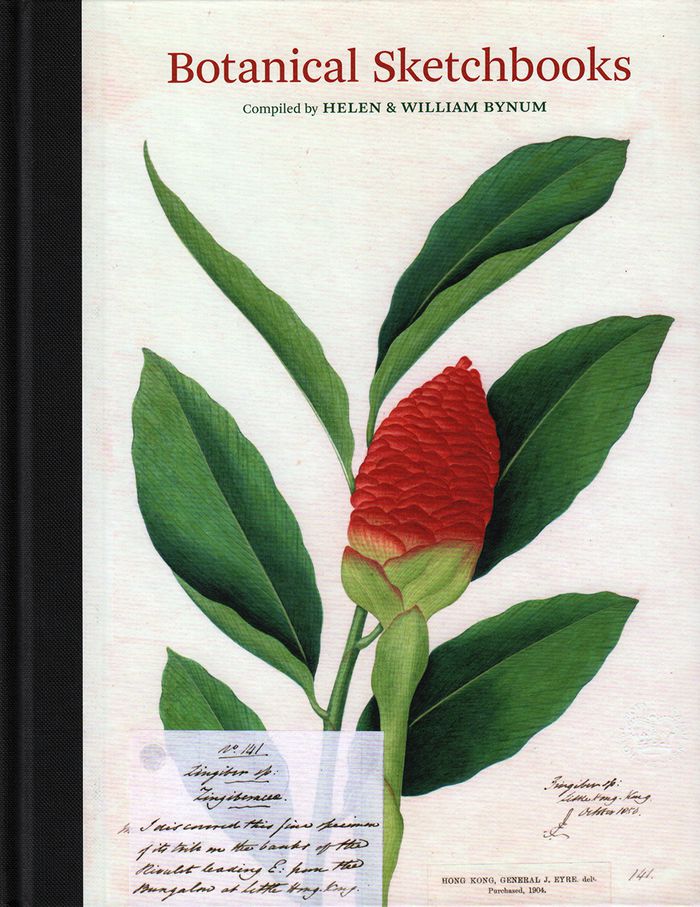
Botanical sketchbooks
Actions:
Price:
$57.00
(available to order)
Summary:
Recording the world of plant and animal life and documenting the strange beauty of the natural world have been human passions ever since the first cave paintings. While there are many histories of botanical art featuring beautiful paintings and finished drawings, the artists' preparatory sketches, first impressions, and scribbled notes on paper are rarely seen. But it is often these early attempts that give us real insight into the firsthand experiences and adventures of the botanists,artists, collectors, and explorers behind them. This exquisite visual compendium of botanical sketches by eighty artists from around the world brings these personal and vividly spontaneous records back into the light. Filled with remarkable images from the fifteenth to the twentieth centuries, sourced from the unparalleled collections of the Royal Botanic Gardens, Kew Library, Art & Archives, and other libraries, museums, and archives, Botanical Sketchbooks also provides fascinating biographical portraits of the intriguing characters featured within, including such renowned artists, scientists, and amateur botanists as Leonardo da Vinci, Georg Dionysius Ehret, Carl Linnaeus, Maria Sibylla Merian, Mark Catesby, and Helen and Margaret Shelley (sisters of the novelist Mary Shelley), among many others.
Form:
books
books
Publication:
May 2017
May 2017
Subject:
Illustration
Illustration
Form:
books
books
Actions:
Price:
$33.95
(available to order)
Summary:
In "Art Can Help", the internationally acclaimed American photographer Robert Adams offers over two dozen meditations on the purpose of art and the responsibility of the artist. In particular, Adams advocates art that evokes beauty without irony or sentimentality, art that “encourages us to gratitude and engagement, and is of both personal and civic consequence.”(...)
Title:
Art can help : new and selected essays
Actions:
Price:
$33.95
(available to order)
Summary:
In "Art Can Help", the internationally acclaimed American photographer Robert Adams offers over two dozen meditations on the purpose of art and the responsibility of the artist. In particular, Adams advocates art that evokes beauty without irony or sentimentality, art that “encourages us to gratitude and engagement, and is of both personal and civic consequence.” Following an introduction, the book begins with two short essays on the works of the American painter Edward Hopper, an artist venerated by Adams. The rest of this compilation contains texts—more than half of which have never before been published—that contemplate one or two works by an individual artist. The pictures discussed are by noted photographers such as Julia Margaret Cameron, Emmet Gowin, Dorothea Lange, Abelardo Morell, Edward Ranney, Judith Joy Ross, John Szarkowski, and Garry Winogrand. Several essays summon the words of literary figures, including Virginia Woolf and Czeslaw Milosz. Adams’s voice is at once intimate and accessible, and is imbued with the accumulated wisdom of a long career devoted to making and viewing art. This eloquent and moving book champions art that fights against disillusionment and despair.
Form:
books
books
Publication:
September 2017
September 2017
Subject:
Art Theory
Art Theory
Form:
books
books
Actions:
Price:
$35.95
(available to order)
Summary:
Borrowing its title from Gregg Araki’s 2005 film, in which the camera’s contemplation of the male body encourages us to feel that body, and covering a broad span of subjects and films, Mysterious Skin offers a wider, more representative picture of the depiction of the male body in contemporary world cinemas than has hitherto been attempted. An international array of(...)
Title:
Mysterious skin: male bodies in contemporary cinema
Actions:
Price:
$35.95
(available to order)
Summary:
Borrowing its title from Gregg Araki’s 2005 film, in which the camera’s contemplation of the male body encourages us to feel that body, and covering a broad span of subjects and films, Mysterious Skin offers a wider, more representative picture of the depiction of the male body in contemporary world cinemas than has hitherto been attempted. An international array of major experts explore the treatment of masculinity and the male body in the cinemas of Africa, Australia, China, France, Germany, Great Britain, India, North America, Spain, Taiwan and Vietnam, as well as Hollywood. Their common concern is to reveal how the representation of the male body is used in films to convey a country’s anxieties about its national identity and history, as well as how it engages with questions of racial, sexual or gender politics. They discuss key actors, directors and films of these countries, from Ewan MacGregor in Peter Greenaway’s The Pillow Book, through the films of Wong Kar Wai, to Paul Hogan as Mick Dundee in Crocodile Dundee. In so doing, Mysterious Skin also provides a strong overview of important cinema produced around the world in the last twenty years.
Form:
books
books
Publication:
January 1900
January 1900
Subject:
Contemporary Art Monographs
Contemporary Art Monographs
Form:
books
books
Actions:
Price:
$48.00
(available in store)
Summary:
'Lee and I have shared a number of unconventionally interesting friends during our five decades together, people who show us an unusual way of living a life. I would put Raoul Hague on that list, maybe at the top. Beginning in the mid 1960s and continuing for more than 25 years, Lee and I and our children visited him at the Woodstock, New York, cabin where he lived and(...)
Title:
Lee Friedlander: witness number six
Actions:
Price:
$48.00
(available in store)
Summary:
'Lee and I have shared a number of unconventionally interesting friends during our five decades together, people who show us an unusual way of living a life. I would put Raoul Hague on that list, maybe at the top. Beginning in the mid 1960s and continuing for more than 25 years, Lee and I and our children visited him at the Woodstock, New York, cabin where he lived and worked. To enter Hague's cabin was entering his universe. It was not simply a dwelling and a studio but a carefully organized way of life, a reflection of an esthetic ideal. All he did, whether work or pleasure, was driven by this ideal, which he created for himself and carried out without compromise. Hague was the quintessential storybook artist'. - from the text by Maria Friedlander. Witness Number 6 provides a portrait - in 157 photographs by Lee Friedlander, and accompanying essay by Maria Friedlander - of the sculptor Raoul Hague. The Friedlanders knew Hague for over two and a half decades, and their deep fondness for, and mutual trust with, the Armenian-born sculptor comes through in every image and word of this gorgeous addition to JGS s Witness series.
Form:
books
books
Publication:
January 2009
January 2009
Subject:
Photography monographs
Photography monographs
Form:
books
books
Title:
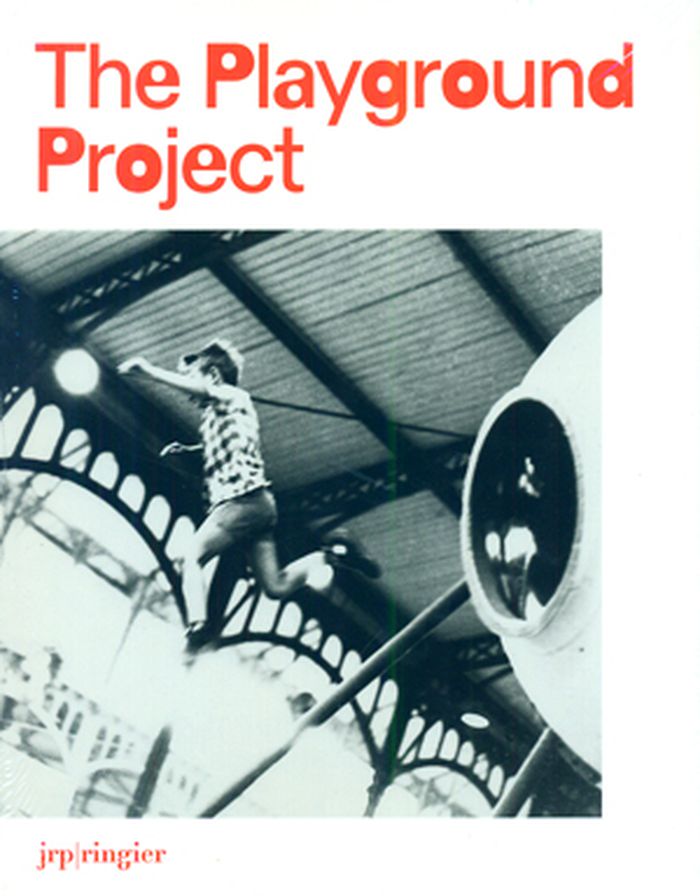
The Playground Project
The Playground Project
Actions:
Price:
$67.50
(available to order)
Summary:
Until sometime in the 1980s, playgrounds were places for social experiments, risky projects and spectacular sculptures. Architects, urban planners, artists, parents and children were invited to leave their comfort zones and to venture something new in the design and use of playgrounds. The Playground Project explores these exemplary initiatives, pioneering acts and(...)
Title:
The Playground Project
Actions:
Price:
$67.50
(available to order)
Summary:
Until sometime in the 1980s, playgrounds were places for social experiments, risky projects and spectacular sculptures. Architects, urban planners, artists, parents and children were invited to leave their comfort zones and to venture something new in the design and use of playgrounds. The Playground Project explores these exemplary initiatives, pioneering acts and adventures in designing modern childhood. Examples from Europe, the US, Japan and India are discussed in depth and illustrated with numerous images. Truly a comprehensive overview, this volume includes works by artists, architects and landscape architects such as Marjory Allen, Joseph Brown, Riccardo Dalisi, Richard Dattner, Aldo van Eyck, M. Paul Friedberg, Group Ludic (Xavier de la Salle, Simon Koszel, David Roditi), Alfred Ledermann and Alfred Trachsel, Palle Nielsen, Egon Møller-Nielsen, Isamu Noguchi, Joseph Schagerl, Mitsuru Senda and Carl Theodor Sørensen. Swiss political scientist and urban planner Gabriela Burkhalter contributes an introduction, and essays by Xavier de la Salle, Sreejata Roy and Vincent Romagny investigate the stakes of the architectural and artistic experiments surveyed. The first comprehensive overview of this kind, The Playground Project addresses laymen as well as experts who want to do more on the playground than just seesaw and swing.
Form:
books
books
Publication:
May 2016
May 2016
Subject:
Commercial interiors, Building types
Commercial interiors, Building types


