


5194 Results
Form:
books
books
Title:
Alex Katz: this is now
Alex Katz: this is now
Actions:
Price:
$62.00
(available to order)
Summary:
This publication takes a fresh look at his landscape paintings through the themes of nature, perception, the passage of time, and contemporary notions of the sublime. These works reveal the American painter’s virtuosic control of materials and the absolute clarity and power of his vision, made evident by stripping away unnecessary information to capture the essence of his(...)
$62.00
(available to order)
Summary:
This publication takes a fresh look at his landscape paintings through the themes of nature, perception, the passage of time, and contemporary notions of the sublime. These works reveal the American painter’s virtuosic control of materials and the absolute clarity and power of his vision, made evident by stripping away unnecessary information to capture the essence of his(...)
Title:
Alex Katz: this is now
Actions:
Price:
$62.00
(available to order)
Summary:
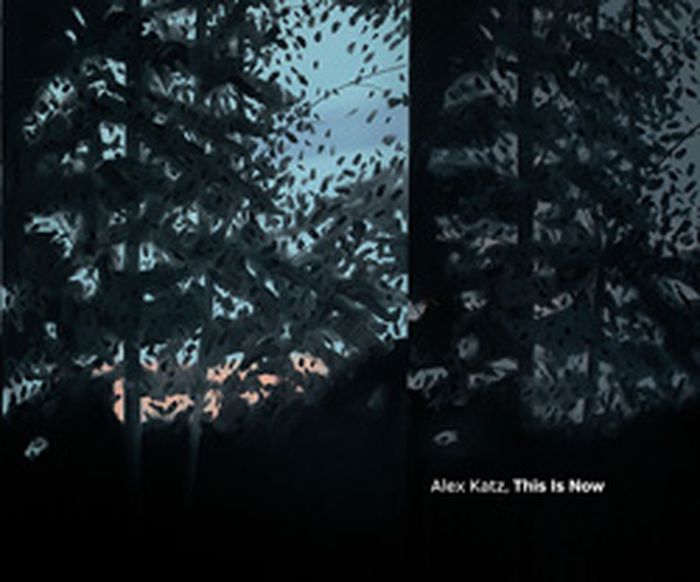
This publication takes a fresh look at his landscape paintings through the themes of nature, perception, the passage of time, and contemporary notions of the sublime. These works reveal the American painter’s virtuosic control of materials and the absolute clarity and power of his vision, made evident by stripping away unnecessary information to capture the essence of his subjects. Featuring works of art from the 1950s to today, Alex Katz: This Is Now is the most extensive look at Katz’s treatment of landscape in nearly 20 years. The book includes essays by curator Michael Rooks, art critic Margaret Graham, and David Salle—an artist whose own work is influenced by Katz—and poems by John Godfrey and Vincent Katz, who is an art critic as well as the artist's son, providing a timely and important new assessment of the work of this renowned artist.
Alex Katz: this is now
Actions:
Price:
$62.00
(available to order)
Summary:
This publication takes a fresh look at his landscape paintings through the themes of nature, perception, the passage of time, and contemporary notions of the sublime. These works reveal the American painter’s virtuosic control of materials and the absolute clarity and power of his vision, made evident by stripping away unnecessary information to capture the essence of his subjects. Featuring works of art from the 1950s to today, Alex Katz: This Is Now is the most extensive look at Katz’s treatment of landscape in nearly 20 years. The book includes essays by curator Michael Rooks, art critic Margaret Graham, and David Salle—an artist whose own work is influenced by Katz—and poems by John Godfrey and Vincent Katz, who is an art critic as well as the artist's son, providing a timely and important new assessment of the work of this renowned artist.
Form:
books
books
Publication:
August 2015
August 2015
Subject:
Contemporary Art Monographs
Contemporary Art Monographs
Form:
books
books
Actions:
Price:
$128.95
(available to order)
Summary:
If participation has been an ideal in politics since ancient democracy, in art it became central only with the avant-gardes emerging from WWI and the Russian Revolution. Politics and aesthetics are still catching up with each other. In the 21st Century, since the revolutionary unrest of the 1960s, participation in art and architecture has lost its utopian glow and become(...)
$128.95
(available to order)
Summary:
If participation has been an ideal in politics since ancient democracy, in art it became central only with the avant-gardes emerging from WWI and the Russian Revolution. Politics and aesthetics are still catching up with each other. In the 21st Century, since the revolutionary unrest of the 1960s, participation in art and architecture has lost its utopian glow and become(...)
Title:
Participation in art and architecture: spaces of interaction and occupation
Actions:
Price:
$128.95
(available to order)
Summary:
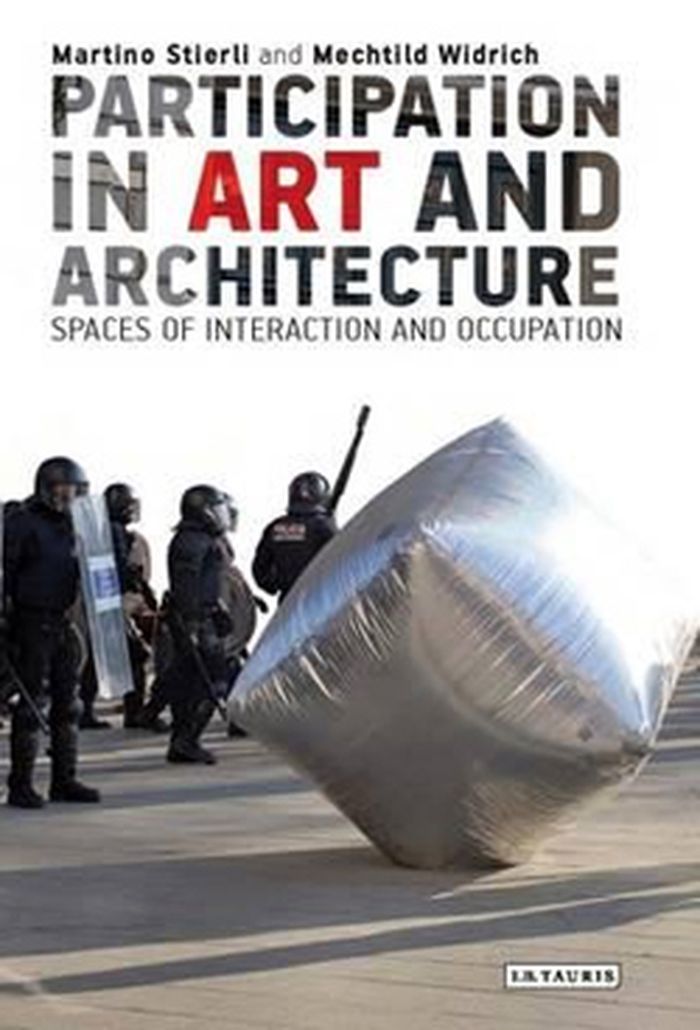
If participation has been an ideal in politics since ancient democracy, in art it became central only with the avant-gardes emerging from WWI and the Russian Revolution. Politics and aesthetics are still catching up with each other. In the 21st Century, since the revolutionary unrest of the 1960s, participation in art and architecture has lost its utopian glow and become the focus of a fierce debate: does ‘participatory’ art and architecture shape social reality, or is it shaped by it?Contemporary critics see in participation only technocratic control, while others embrace it as a viable politics in an era of global capitalism. This volume breaks the impasse by looking at how participants themselves exert power, rather than being victimized or liberated from it. From artists hijacking Google Earth to protesters setting up a museum of the revolution in Cairo, art, architecture, and daily life are explored in their participatory dimension.
Participation in art and architecture: spaces of interaction and occupation
Actions:
Price:
$128.95
(available to order)
Summary:
If participation has been an ideal in politics since ancient democracy, in art it became central only with the avant-gardes emerging from WWI and the Russian Revolution. Politics and aesthetics are still catching up with each other. In the 21st Century, since the revolutionary unrest of the 1960s, participation in art and architecture has lost its utopian glow and become the focus of a fierce debate: does ‘participatory’ art and architecture shape social reality, or is it shaped by it?Contemporary critics see in participation only technocratic control, while others embrace it as a viable politics in an era of global capitalism. This volume breaks the impasse by looking at how participants themselves exert power, rather than being victimized or liberated from it. From artists hijacking Google Earth to protesters setting up a museum of the revolution in Cairo, art, architecture, and daily life are explored in their participatory dimension.
Form:
books
books
Publication:
October 2015
October 2015
Subject:
Architectural Theory
Architectural Theory
Form:
books
books

Actions:
Price:
$61.00
(available in store)
Summary:
The concept "Formula New Ljubljana" is used as a means to explore the city's development as a constant and dynamic process. Rather than being in a state of frozen identity, Slovenia's capital inspires new visions. Formulas state concepts applied to architectural products. They are used as the communication tool in the office while developing a particular product, in(...)
$61.00
(available in store)
Summary:
The concept "Formula New Ljubljana" is used as a means to explore the city's development as a constant and dynamic process. Rather than being in a state of frozen identity, Slovenia's capital inspires new visions. Formulas state concepts applied to architectural products. They are used as the communication tool in the office while developing a particular product, in(...)
Subject:
Architecture since 1900, Europe
Architecture since 1900, Europe
Publication:
October 2006, Barcelona
October 2006, Barcelona
Title:
Sadar Vuga Arhitekti : Formula new ljubljana
Actions:
Price:
$61.00
(available in store)
Summary:
The concept "Formula New Ljubljana" is used as a means to explore the city's development as a constant and dynamic process. Rather than being in a state of frozen identity, Slovenia's capital inspires new visions. Formulas state concepts applied to architectural products. They are used as the communication tool in the office while developing a particular product, in discussions with the client and presentations to the public. More than one product can be defined by one formula. Formulas exist regardless of typologies, program, location, budget, time of execution symbolic power, or any other parameter that outline the "uniqueness" of an architectural product. Formulas aim to become generic phrases and to provide a user friendly tool for communicating architectural products. Formulas communicate architectural products away from their technical or typological categories. A formula captures the character of an architectural product and its effect on the observer and the user.
Sadar Vuga Arhitekti : Formula new ljubljana
Actions:
Price:
$61.00
(available in store)
Summary:
The concept "Formula New Ljubljana" is used as a means to explore the city's development as a constant and dynamic process. Rather than being in a state of frozen identity, Slovenia's capital inspires new visions. Formulas state concepts applied to architectural products. They are used as the communication tool in the office while developing a particular product, in discussions with the client and presentations to the public. More than one product can be defined by one formula. Formulas exist regardless of typologies, program, location, budget, time of execution symbolic power, or any other parameter that outline the "uniqueness" of an architectural product. Formulas aim to become generic phrases and to provide a user friendly tool for communicating architectural products. Formulas communicate architectural products away from their technical or typological categories. A formula captures the character of an architectural product and its effect on the observer and the user.
Form:
books
books
Publication:
October 2006, Barcelona
October 2006, Barcelona
Subject:
Architecture since 1900, Europe
Architecture since 1900, Europe
Form:
journals and magazines
journals and magazines
Title:
Open 12 : Freedom of culture
Open 12 : Freedom of culture
Actions:
Price:
$42.00
(available to order)
Summary:
The contemporary public domain, the "free" space where culture is produced and exchanged, is under pressure. The exchange and distribution of cultural products ("content" in the form of music, image or text) is easier in digital society, but increasingly hemmed in by corresponding moves towards greater regulation and control, new copyright laws and intellectual property(...)
$42.00
(available to order)
Summary:
The contemporary public domain, the "free" space where culture is produced and exchanged, is under pressure. The exchange and distribution of cultural products ("content" in the form of music, image or text) is easier in digital society, but increasingly hemmed in by corresponding moves towards greater regulation and control, new copyright laws and intellectual property(...)
Title:
Open 12 : Freedom of culture
Actions:
Price:
$42.00
(available to order)
Summary:
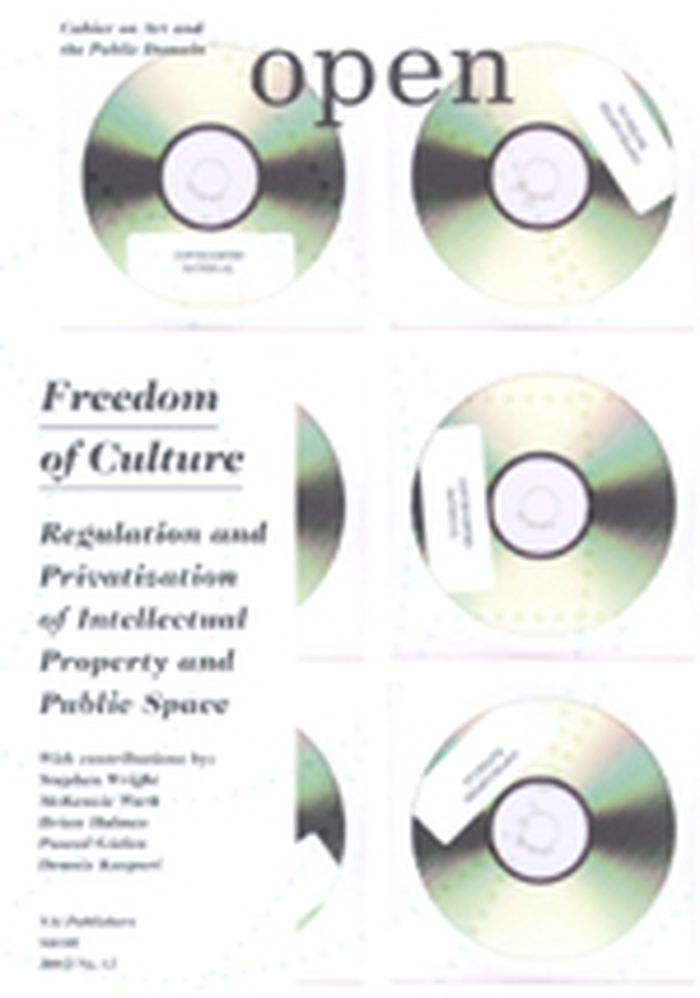
The contemporary public domain, the "free" space where culture is produced and exchanged, is under pressure. The exchange and distribution of cultural products ("content" in the form of music, image or text) is easier in digital society, but increasingly hemmed in by corresponding moves towards greater regulation and control, new copyright laws and intellectual property policy. Instead of enjoying a "free culture," we are watching the emergence of what Lawrence Lessig calls "a permission culture." Simultaneously, as an aspect of broader privatization and regulation processes, private entities are appropriating more and more of public culture, and deciding what is made available or publicly accessible. This issue of the Dutch architectural journal, Open, investigates the root causes of these developments, how they interrelate and what the implications are for the "free" production and practice of culture, as well as for the internal dynamics and balance of power in the public domain.
Open 12 : Freedom of culture
Actions:
Price:
$42.00
(available to order)
Summary:
The contemporary public domain, the "free" space where culture is produced and exchanged, is under pressure. The exchange and distribution of cultural products ("content" in the form of music, image or text) is easier in digital society, but increasingly hemmed in by corresponding moves towards greater regulation and control, new copyright laws and intellectual property policy. Instead of enjoying a "free culture," we are watching the emergence of what Lawrence Lessig calls "a permission culture." Simultaneously, as an aspect of broader privatization and regulation processes, private entities are appropriating more and more of public culture, and deciding what is made available or publicly accessible. This issue of the Dutch architectural journal, Open, investigates the root causes of these developments, how they interrelate and what the implications are for the "free" production and practice of culture, as well as for the internal dynamics and balance of power in the public domain.
Form:
journals and magazines
journals and magazines
Publication:
August 2007, Rotterdam
August 2007, Rotterdam
Subject:
Magazines
Magazines
Form:
books
books
Price:
$54.00
(available to order)
Summary:
The churches in this book demonstrate the diverse range of denominations and sects that form the Charismatic Evangelical movement today. Materially and architecturally, the buildings reflect a Spiritualist church movement reacting against secular Material Rationalism and consumerism. They feature none of the monumental architecture or symbols of status and power of the(...)
$54.00
(available to order)
Summary:
The churches in this book demonstrate the diverse range of denominations and sects that form the Charismatic Evangelical movement today. Materially and architecturally, the buildings reflect a Spiritualist church movement reacting against secular Material Rationalism and consumerism. They feature none of the monumental architecture or symbols of status and power of the(...)
Title:
Churches
Actions:
Price:
$54.00
(available to order)
Summary:
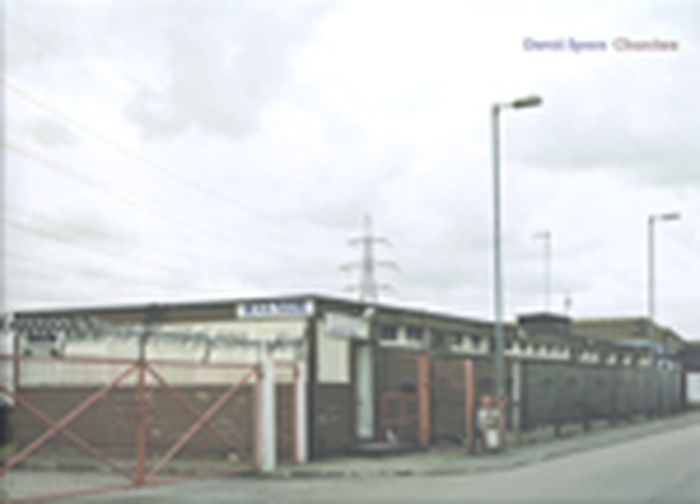
The churches in this book demonstrate the diverse range of denominations and sects that form the Charismatic Evangelical movement today. Materially and architecturally, the buildings reflect a Spiritualist church movement reacting against secular Material Rationalism and consumerism. They feature none of the monumental architecture or symbols of status and power of the historically dominant denominations like Roman Catholicism. The buildings were never designed to be churches, and this random collection of architectural structures is the result of numerous acts of faith. Often temporary, semi-permanent or unconsecrated, they are sometimes anonymous and almost invisible. They are usually located where we would least expect to find them: in industrial estates, shopping malls, houses, garages, cinemas, above commercial properties and even pubs. Spero's work acknowledges that the divine may exist in the most unlikely places, and testifies to our enduring need to seek out a state of grace.
Churches
Actions:
Price:
$54.00
(available to order)
Summary:
The churches in this book demonstrate the diverse range of denominations and sects that form the Charismatic Evangelical movement today. Materially and architecturally, the buildings reflect a Spiritualist church movement reacting against secular Material Rationalism and consumerism. They feature none of the monumental architecture or symbols of status and power of the historically dominant denominations like Roman Catholicism. The buildings were never designed to be churches, and this random collection of architectural structures is the result of numerous acts of faith. Often temporary, semi-permanent or unconsecrated, they are sometimes anonymous and almost invisible. They are usually located where we would least expect to find them: in industrial estates, shopping malls, houses, garages, cinemas, above commercial properties and even pubs. Spero's work acknowledges that the divine may exist in the most unlikely places, and testifies to our enduring need to seek out a state of grace.
Form:
books
books
Publication:
January 2007, Göttingen
January 2007, Göttingen
Subject:
Photography monographs
Photography monographs
Form:
books
books
Title:
Asmara, the frozen city
Asmara, the frozen city
Actions:
Price:
$24.99
(available to order)
Summary:
Asmara, capital of the state of Eritrea, located in North Eastern Africa, is considered to be an impressive example of European urban construction of the 20th century. To this day, the influence of the former colonial power of Italy on the architecture of the city from the early 20th century to the 1940’s remains visible. Many of the buildings, erected in the futuristic,(...)
$24.99
(available to order)
Summary:
Asmara, capital of the state of Eritrea, located in North Eastern Africa, is considered to be an impressive example of European urban construction of the 20th century. To this day, the influence of the former colonial power of Italy on the architecture of the city from the early 20th century to the 1940’s remains visible. Many of the buildings, erected in the futuristic,(...)
Title:
Asmara, the frozen city
Actions:
Price:
$24.99
(available to order)
Summary:
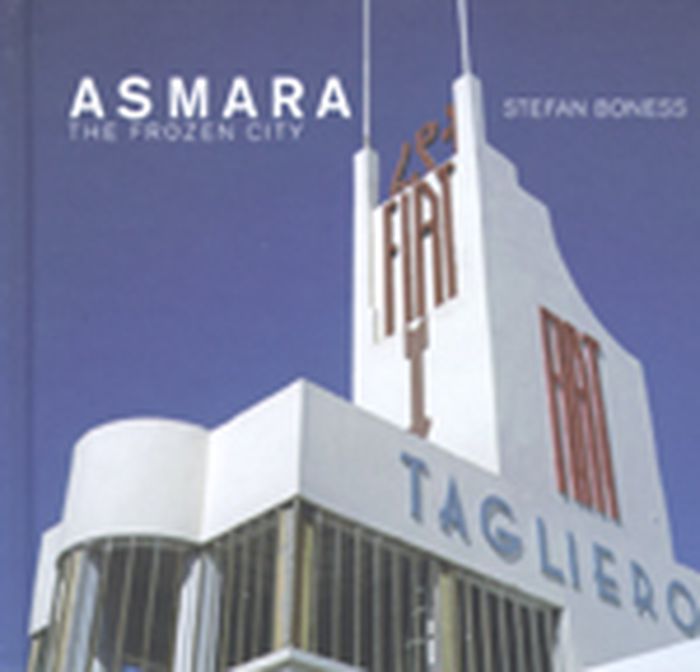
Asmara, capital of the state of Eritrea, located in North Eastern Africa, is considered to be an impressive example of European urban construction of the 20th century. To this day, the influence of the former colonial power of Italy on the architecture of the city from the early 20th century to the 1940’s remains visible. Many of the buildings, erected in the futuristic, monumentalist or rationalistic style have been preserved and dominate the cityscape of Asmara. In particular, architectural projects dating back to the late 1930’s and early 1940’s are the focal point of the work of photographer Stefan Boness. These include private, public and industrial buildings, which he photographed over the course of several months and which he staged incorporating their urban surroundings. Through his photographs, Stefan Boness has succeeded in expressing the unique atmosphere of Asmara, where time seemingly is standing still.
Asmara, the frozen city
Actions:
Price:
$24.99
(available to order)
Summary:
Asmara, capital of the state of Eritrea, located in North Eastern Africa, is considered to be an impressive example of European urban construction of the 20th century. To this day, the influence of the former colonial power of Italy on the architecture of the city from the early 20th century to the 1940’s remains visible. Many of the buildings, erected in the futuristic, monumentalist or rationalistic style have been preserved and dominate the cityscape of Asmara. In particular, architectural projects dating back to the late 1930’s and early 1940’s are the focal point of the work of photographer Stefan Boness. These include private, public and industrial buildings, which he photographed over the course of several months and which he staged incorporating their urban surroundings. Through his photographs, Stefan Boness has succeeded in expressing the unique atmosphere of Asmara, where time seemingly is standing still.
Form:
books
books
Publication:
July 2007, Berlin
July 2007, Berlin
Subject:
History until 1900, Middle East
History until 1900, Middle East
Form:
books
books
Price:
$61.95
(available to order)
Summary:
Taking a critical look at how new urbanism has lived up to its ideals, the author asks whether new urban approaches offer a viable path to creating good communities. With examples drawn principally from North America, Europe and Japan, "Planning the good community" explores new urban approaches in a wide range of settings. It compares the movement for urban renaissance(...)
$61.95
(available to order)
Summary:
Taking a critical look at how new urbanism has lived up to its ideals, the author asks whether new urban approaches offer a viable path to creating good communities. With examples drawn principally from North America, Europe and Japan, "Planning the good community" explores new urban approaches in a wide range of settings. It compares the movement for urban renaissance(...)
Title:
Planning the good community : new urbanism in theory and practice
Actions:
Price:
$61.95
(available to order)
Summary:
Taking a critical look at how new urbanism has lived up to its ideals, the author asks whether new urban approaches offer a viable path to creating good communities. With examples drawn principally from North America, Europe and Japan, "Planning the good community" explores new urban approaches in a wide range of settings. It compares the movement for urban renaissance in Europe with the New Urbanism of the United States and Canada, and asks whether the concerns that drive today’s planning theory – issues like power, democracy, spatial patterns and globalisation - receive adequate attention in new urban approaches. The issue of aesthetics is also raised, as the author questions whether communities must be more than just attractive in order to be good. With the benefit of twenty years’ hindsight and a world-wide perspective, this book offers the reader unparalleled insight as well as a rigorous and considered critical analysis.
Planning the good community : new urbanism in theory and practice
Actions:
Price:
$61.95
(available to order)
Summary:
Taking a critical look at how new urbanism has lived up to its ideals, the author asks whether new urban approaches offer a viable path to creating good communities. With examples drawn principally from North America, Europe and Japan, "Planning the good community" explores new urban approaches in a wide range of settings. It compares the movement for urban renaissance in Europe with the New Urbanism of the United States and Canada, and asks whether the concerns that drive today’s planning theory – issues like power, democracy, spatial patterns and globalisation - receive adequate attention in new urban approaches. The issue of aesthetics is also raised, as the author questions whether communities must be more than just attractive in order to be good. With the benefit of twenty years’ hindsight and a world-wide perspective, this book offers the reader unparalleled insight as well as a rigorous and considered critical analysis.
Form:
books
books
Publication:
January 2006, New York
January 2006, New York
Subject:
Urban Theory
Urban Theory
Form:
books
books

Title:
On Cosmogonic Eros
On Cosmogonic Eros
Actions:
Price:
$19.00
(available in store)
Summary:
Ludwig Klages' 1922 book, ''On Cosmogonic Eros'' ( ''Vom kosmogonischen Eros''), delves into the realms of mythology, the esotericism of ancient mystery cults, and the science of consciousness to construct a profound metaphysics of life. At its core, Klages presents Eros as an "Eros of distance," from which springs forth the essence of ecstasy and de-selfing. This(...)
$19.00
(available in store)
Summary:
Ludwig Klages' 1922 book, ''On Cosmogonic Eros'' ( ''Vom kosmogonischen Eros''), delves into the realms of mythology, the esotericism of ancient mystery cults, and the science of consciousness to construct a profound metaphysics of life. At its core, Klages presents Eros as an "Eros of distance," from which springs forth the essence of ecstasy and de-selfing. This(...)
Title:
On Cosmogonic Eros
Actions:
Price:
$19.00
(available in store)
Summary:
Ludwig Klages' 1922 book, ''On Cosmogonic Eros'' ( ''Vom kosmogonischen Eros''), delves into the realms of mythology, the esotericism of ancient mystery cults, and the science of consciousness to construct a profound metaphysics of life. At its core, Klages presents Eros as an "Eros of distance," from which springs forth the essence of ecstasy and de-selfing. This intriguing concept suggests that experiencing separation and distance can lead to extraordinary states of transcendent bliss and a dissolution of the self. Furthermore, Klages argues that this ecstatic experience serves as the foundation for the emergence of symbolism, the cult of the dead, ancestor worship, as well as the creation of original poetry and art. Klages' work offers a concise and engaging exploration of these key concepts, intertwining mythology, esoteric knowledge, and the study of consciousness to illuminate the enigmatic nature of life and the transformative power of Eros.
On Cosmogonic Eros
Actions:
Price:
$19.00
(available in store)
Summary:
Ludwig Klages' 1922 book, ''On Cosmogonic Eros'' ( ''Vom kosmogonischen Eros''), delves into the realms of mythology, the esotericism of ancient mystery cults, and the science of consciousness to construct a profound metaphysics of life. At its core, Klages presents Eros as an "Eros of distance," from which springs forth the essence of ecstasy and de-selfing. This intriguing concept suggests that experiencing separation and distance can lead to extraordinary states of transcendent bliss and a dissolution of the self. Furthermore, Klages argues that this ecstatic experience serves as the foundation for the emergence of symbolism, the cult of the dead, ancestor worship, as well as the creation of original poetry and art. Klages' work offers a concise and engaging exploration of these key concepts, intertwining mythology, esoteric knowledge, and the study of consciousness to illuminate the enigmatic nature of life and the transformative power of Eros.
Form:
books
books
Publication:
June 2025
June 2025
Subject:
Critical Theory
Critical Theory
Form:
books
books
Actions:
Price:
$78.00
(available in store)
Summary:
Since his first visit to Japan in 1987, British photographer Michael Kenna (born 1953) has returned time and again to capture Asia's landscapes. The poetic power of Kenna's photographs and their ability to extract emotion from the landscape—from the dignity of a tree or a rock—has led some commentators to describe them as visual haikus. "Silver Haikus" provides a(...)
$78.00
(available in store)
Summary:
Since his first visit to Japan in 1987, British photographer Michael Kenna (born 1953) has returned time and again to capture Asia's landscapes. The poetic power of Kenna's photographs and their ability to extract emotion from the landscape—from the dignity of a tree or a rock—has led some commentators to describe them as visual haikus. "Silver Haikus" provides a(...)
Title:
Michael Kenna: Silver haikus. Asia photographed.
Actions:
Price:
$78.00
(available in store)
Summary:
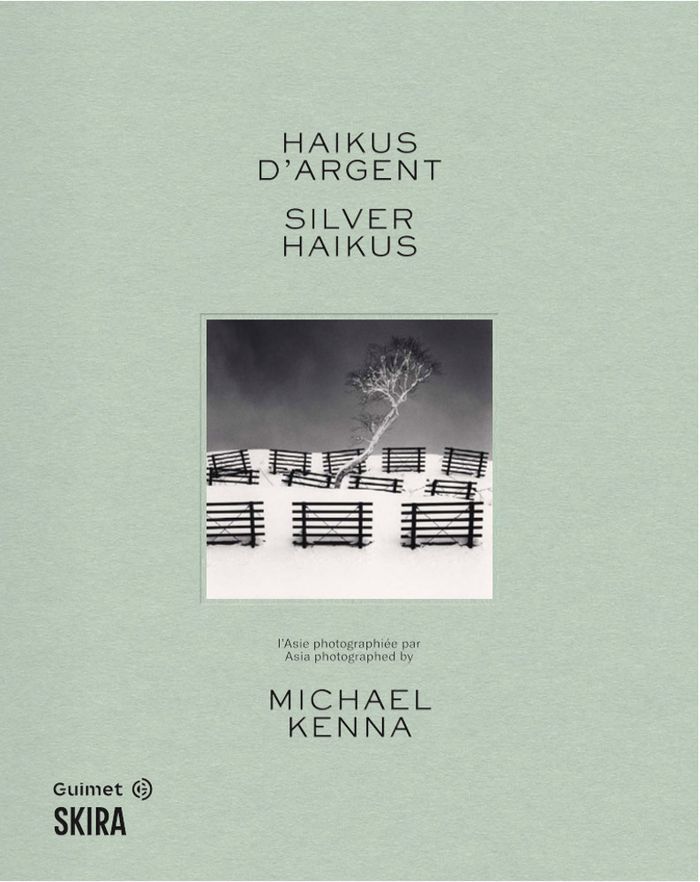
Since his first visit to Japan in 1987, British photographer Michael Kenna (born 1953) has returned time and again to capture Asia's landscapes. The poetic power of Kenna's photographs and their ability to extract emotion from the landscape—from the dignity of a tree or a rock—has led some commentators to describe them as visual haikus. "Silver Haikus" provides a thematic retrospective of his work in Asia over the last 40 years. It explores the connection between his aesthetic and Asian art through formal dialogues between his photographs and works from the Chinese, Korean and Japanese collections of the Musée Guimet. More specifically, this book observes the influence of Asian arts in Kenna's work: the choice of monochrome, the economy of means, the use of emptiness and the desire to suggest rather than describe evoke the ink paintings of Chinese scholars and Japanese Zen monks.
Michael Kenna: Silver haikus. Asia photographed.
Actions:
Price:
$78.00
(available in store)
Summary:
Since his first visit to Japan in 1987, British photographer Michael Kenna (born 1953) has returned time and again to capture Asia's landscapes. The poetic power of Kenna's photographs and their ability to extract emotion from the landscape—from the dignity of a tree or a rock—has led some commentators to describe them as visual haikus. "Silver Haikus" provides a thematic retrospective of his work in Asia over the last 40 years. It explores the connection between his aesthetic and Asian art through formal dialogues between his photographs and works from the Chinese, Korean and Japanese collections of the Musée Guimet. More specifically, this book observes the influence of Asian arts in Kenna's work: the choice of monochrome, the economy of means, the use of emptiness and the desire to suggest rather than describe evoke the ink paintings of Chinese scholars and Japanese Zen monks.
Form:
books
books
Publication:
July 2025
July 2025
Subject:
Photography monographs
Photography monographs
Form:
journals and magazines
journals and magazines
Actions:
Price:
$32.95
(available in store)
Summary:
The editorial/imaginative centre of the ninth issue of Errant Journal is located in the regions that have experienced Russian imperial aggression from where it makes connections across times, geographies, and ontologies to explore the radical potential of companionship. Companionship is understood not as agreement, but as a shared responsibility across unequal histories.(...)
$32.95
(available in store)
Summary:
The editorial/imaginative centre of the ninth issue of Errant Journal is located in the regions that have experienced Russian imperial aggression from where it makes connections across times, geographies, and ontologies to explore the radical potential of companionship. Companionship is understood not as agreement, but as a shared responsibility across unequal histories.(...)
Title:
Errant Journal #9: Companions
Actions:
Price:
$32.95
(available in store)
Summary:
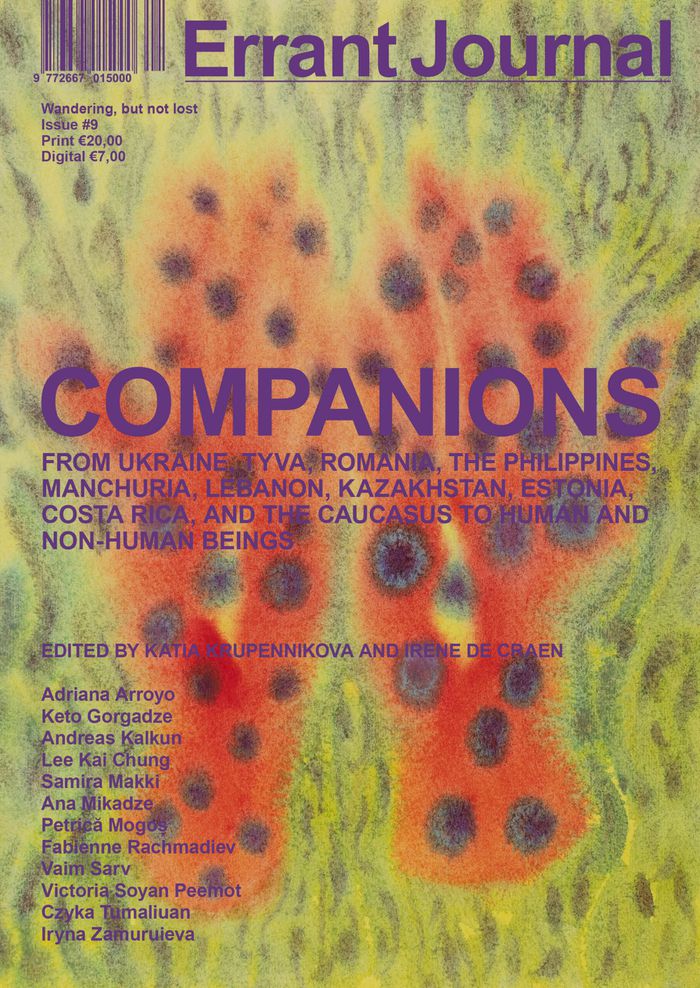
The editorial/imaginative centre of the ninth issue of Errant Journal is located in the regions that have experienced Russian imperial aggression from where it makes connections across times, geographies, and ontologies to explore the radical potential of companionship. Companionship is understood not as agreement, but as a shared responsibility across unequal histories. It means not being full without the other. While forms of imperial and colonial violence might differ in places and through times, the issue recognizes how colonial mechanisms are sustained, how they present themselves as if they were past while shapeshifting and continuing in new forms and places in the present. By bringing these contexts in relation, this issue aims to show how certain borders, biases, clichés, and power structures travel, mutate, and shape both human and non-human lives and landscapes. Ultimately, companionship is about prioritizing life and about insisting that no oppression is singular.
Errant Journal #9: Companions
Actions:
Price:
$32.95
(available in store)
Summary:
The editorial/imaginative centre of the ninth issue of Errant Journal is located in the regions that have experienced Russian imperial aggression from where it makes connections across times, geographies, and ontologies to explore the radical potential of companionship. Companionship is understood not as agreement, but as a shared responsibility across unequal histories. It means not being full without the other. While forms of imperial and colonial violence might differ in places and through times, the issue recognizes how colonial mechanisms are sustained, how they present themselves as if they were past while shapeshifting and continuing in new forms and places in the present. By bringing these contexts in relation, this issue aims to show how certain borders, biases, clichés, and power structures travel, mutate, and shape both human and non-human lives and landscapes. Ultimately, companionship is about prioritizing life and about insisting that no oppression is singular.
Form:
journals and magazines
journals and magazines
Publication:
June 2026
June 2026
Subject:
Magazines
Magazines


