


496 Results
Form:
books
books
Actions:
Price:
$80.00
(available in store)
Summary:
Modernism, characterized by geometric shapes and flat roofs, is one of the defining architectural styles of the twentieth century throughout the world. And nowhere is it more in abundance than in Faro, capital of Portugal’s Algarve region. There are over 500 Modernist buildings in Faro, the highest concentration of these types of buildings in Southern Europe. The city now(...)
$80.00
(available in store)
Summary:
Modernism, characterized by geometric shapes and flat roofs, is one of the defining architectural styles of the twentieth century throughout the world. And nowhere is it more in abundance than in Faro, capital of Portugal’s Algarve region. There are over 500 Modernist buildings in Faro, the highest concentration of these types of buildings in Southern Europe. The city now(...)
Title:
Faro Modernism: Buildings, heritage, culture
Actions:
Price:
$80.00
(available in store)
Summary:
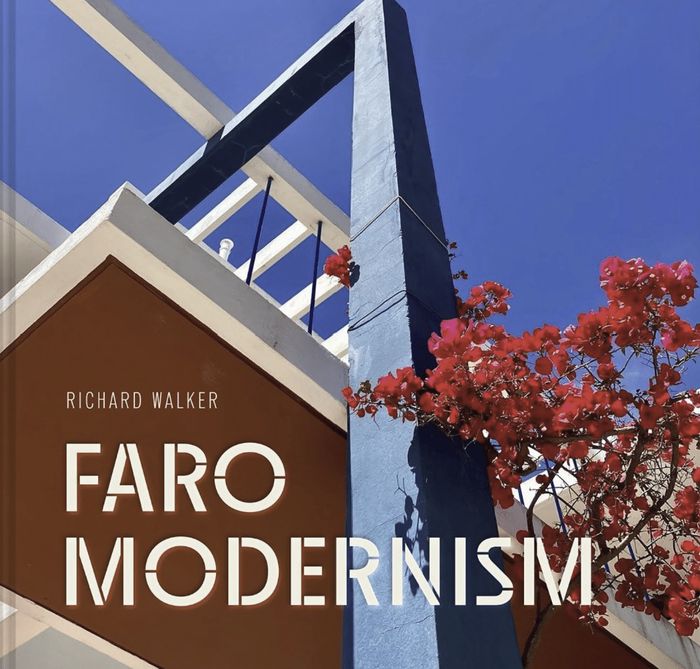
Modernism, characterized by geometric shapes and flat roofs, is one of the defining architectural styles of the twentieth century throughout the world. And nowhere is it more in abundance than in Faro, capital of Portugal’s Algarve region. There are over 500 Modernist buildings in Faro, the highest concentration of these types of buildings in Southern Europe. The city now has a specific Modernist buildings area, through which guided tours show the full range of detached and semidetached grand houses, large-scale apartment blocks, and little roads of terraced houses that are in fact cleverly disguised maisonettes. The architectural ringleader was Manuel Gomes da Costa, an Algarvian by birth, who had gone to South America in search of work but came back in the 1950s to transform the city. Inspired by the work of earlier architects, including Le Corbusier and Oscar Niemeyer, Costa and his colleagues set about creating a Modernist paradise in the southern sun. This book will give fans of inspirational architecture the first real opportunity to delve deep into Southern Europe’s "Palm Springs."
Faro Modernism: Buildings, heritage, culture
Actions:
Price:
$80.00
(available in store)
Summary:
Modernism, characterized by geometric shapes and flat roofs, is one of the defining architectural styles of the twentieth century throughout the world. And nowhere is it more in abundance than in Faro, capital of Portugal’s Algarve region. There are over 500 Modernist buildings in Faro, the highest concentration of these types of buildings in Southern Europe. The city now has a specific Modernist buildings area, through which guided tours show the full range of detached and semidetached grand houses, large-scale apartment blocks, and little roads of terraced houses that are in fact cleverly disguised maisonettes. The architectural ringleader was Manuel Gomes da Costa, an Algarvian by birth, who had gone to South America in search of work but came back in the 1950s to transform the city. Inspired by the work of earlier architects, including Le Corbusier and Oscar Niemeyer, Costa and his colleagues set about creating a Modernist paradise in the southern sun. This book will give fans of inspirational architecture the first real opportunity to delve deep into Southern Europe’s "Palm Springs."
Form:
books
books
Publication:
May 2026
May 2026
Subject:
Modernism
Modernism
Form:
books
books
Actions:
Price:
$76.00
(available to order)
Summary:
The first book to look back on Gautherot’s entire career, Marcel Gautherot: The Monograph takes readers through the architect and photographer’s time as an apprentice in Paris, where he attended evening classes and took an ardent interest in Esprit Nouveau and the Bauhaus, as well as their proponents, including Walter Gropius, Ludwig Mies van der Rohe, and Le Corbusier.(...)
$76.00
(available to order)
Summary:
The first book to look back on Gautherot’s entire career, Marcel Gautherot: The Monograph takes readers through the architect and photographer’s time as an apprentice in Paris, where he attended evening classes and took an ardent interest in Esprit Nouveau and the Bauhaus, as well as their proponents, including Walter Gropius, Ludwig Mies van der Rohe, and Le Corbusier.(...)
Title:
Marcel Gautherot: the monograph
Actions:
Price:
$76.00
(available to order)
Summary:
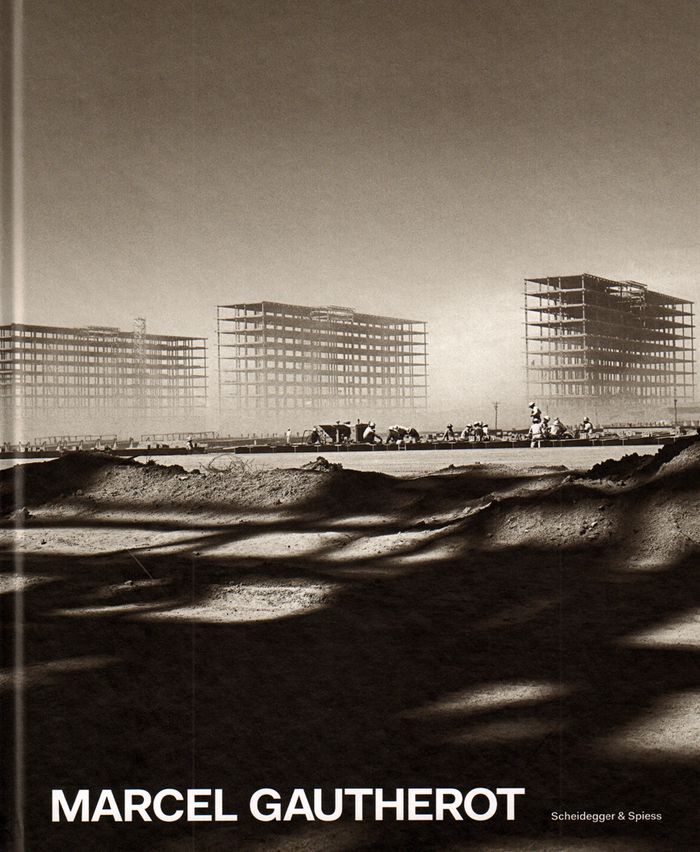
The first book to look back on Gautherot’s entire career, Marcel Gautherot: The Monograph takes readers through the architect and photographer’s time as an apprentice in Paris, where he attended evening classes and took an ardent interest in Esprit Nouveau and the Bauhaus, as well as their proponents, including Walter Gropius, Ludwig Mies van der Rohe, and Le Corbusier. In the 1930s, Gautherot abandoned his studies in architecture to follow his passion for photography. This led him to travel extensively, and he eventually came to live and work in the city of Rio de Janeiro, where he was welcomed by a circle of artists and intellectuals who became important figures in Brazilian culture, including the architects Oscar Niemeyer and Roberto Burle Marx. With 150 superbly reproduced photographs, the book also includes essays by art and photography historians Jacques Leenhardt, Michel Frizot, and Samuel Titan on Gautherot’s affinity for modern architecture and his contribution to the history of photography. It will make the perfect book to reintroduce this important Franco-Brazilian photographer.
Marcel Gautherot: the monograph
Actions:
Price:
$76.00
(available to order)
Summary:
The first book to look back on Gautherot’s entire career, Marcel Gautherot: The Monograph takes readers through the architect and photographer’s time as an apprentice in Paris, where he attended evening classes and took an ardent interest in Esprit Nouveau and the Bauhaus, as well as their proponents, including Walter Gropius, Ludwig Mies van der Rohe, and Le Corbusier. In the 1930s, Gautherot abandoned his studies in architecture to follow his passion for photography. This led him to travel extensively, and he eventually came to live and work in the city of Rio de Janeiro, where he was welcomed by a circle of artists and intellectuals who became important figures in Brazilian culture, including the architects Oscar Niemeyer and Roberto Burle Marx. With 150 superbly reproduced photographs, the book also includes essays by art and photography historians Jacques Leenhardt, Michel Frizot, and Samuel Titan on Gautherot’s affinity for modern architecture and his contribution to the history of photography. It will make the perfect book to reintroduce this important Franco-Brazilian photographer.
Form:
books
books
Publication:
November 2016
November 2016
Subject:
Photography monographs
Photography monographs
Form:
books
books
Actions:
Price:
$38.95
(available in store)
Summary:
Should the Director’s House Gropius in Dessau, a masterpiece of modernism, be rebuilt? Is there any reason from a cultural-historical viewpoint for such a conservative approach? Should an attempt be made to continue the traditions of Bauhaus, or should we be discussing whether contemporary tasks and aims are commensurate to those of the past? What role do modern(...)
$38.95
(available in store)
Summary:
Should the Director’s House Gropius in Dessau, a masterpiece of modernism, be rebuilt? Is there any reason from a cultural-historical viewpoint for such a conservative approach? Should an attempt be made to continue the traditions of Bauhaus, or should we be discussing whether contemporary tasks and aims are commensurate to those of the past? What role do modern(...)
Title:
UmBauhaus : updating modernism
Actions:
Price:
$38.95
(available in store)
Summary:
Should the Director’s House Gropius in Dessau, a masterpiece of modernism, be rebuilt? Is there any reason from a cultural-historical viewpoint for such a conservative approach? Should an attempt be made to continue the traditions of Bauhaus, or should we be discussing whether contemporary tasks and aims are commensurate to those of the past? What role do modern principles play in today’s architecture? What is our attitude towards reconstruction? What can be expected from alternative approaches such as manipulation, collage, neutralization, redefinition, reinterpretation or entirely new design? The book „UmBauhaus – Aktualisierung der Moderne“ examines these and other questions, seeking to introduce and continue the debate concerning the Director’s House that was destroyed during the Second World War. At the peak of the debate on the reconstruction of the Gropius Director's House, the Bauhaus pulled out and decided to take a trip to record interviews. This became a lengthy, inspirational journey through current affairs, and a search for the future of modernism. With contribution from Rem Koolhaas, Dan Wieden, Oscar Niemeyer, Jonathan Park, Hans Kollhoff, Walter de'Silva, colleagues of the Bauhaus Dessau Foundation and many others.
UmBauhaus : updating modernism
Actions:
Price:
$38.95
(available in store)
Summary:
Should the Director’s House Gropius in Dessau, a masterpiece of modernism, be rebuilt? Is there any reason from a cultural-historical viewpoint for such a conservative approach? Should an attempt be made to continue the traditions of Bauhaus, or should we be discussing whether contemporary tasks and aims are commensurate to those of the past? What role do modern principles play in today’s architecture? What is our attitude towards reconstruction? What can be expected from alternative approaches such as manipulation, collage, neutralization, redefinition, reinterpretation or entirely new design? The book „UmBauhaus – Aktualisierung der Moderne“ examines these and other questions, seeking to introduce and continue the debate concerning the Director’s House that was destroyed during the Second World War. At the peak of the debate on the reconstruction of the Gropius Director's House, the Bauhaus pulled out and decided to take a trip to record interviews. This became a lengthy, inspirational journey through current affairs, and a search for the future of modernism. With contribution from Rem Koolhaas, Dan Wieden, Oscar Niemeyer, Jonathan Park, Hans Kollhoff, Walter de'Silva, colleagues of the Bauhaus Dessau Foundation and many others.
Form:
books
books
Publication:
March 2005, Berlin
March 2005, Berlin
Subject:
Modernism
Modernism
Form:
books
books
Title:
Hansaviertel portraits
Hansaviertel portraits
Actions:
Price:
$65.00
(available to order)
Summary:
A former debris-strewn wasteland in the inner city—some 300 out of 343 residential buildings were destroyed during the Second World War—the Hansaviertel is one of the most defining architecture projects of the postwar period in Berlin. In 1952, an international ideas competition was held under the title die stadt von morgen (the city of tomorrow); more than fifty(...)
$65.00
(available to order)
Summary:
A former debris-strewn wasteland in the inner city—some 300 out of 343 residential buildings were destroyed during the Second World War—the Hansaviertel is one of the most defining architecture projects of the postwar period in Berlin. In 1952, an international ideas competition was held under the title die stadt von morgen (the city of tomorrow); more than fifty(...)
Subject:
Architecture since 1900, Europe
Architecture since 1900, Europe
Publication:
October 2024
October 2024
Title:
Hansaviertel portraits
Actions:
Price:
$65.00
(available to order)
Summary:
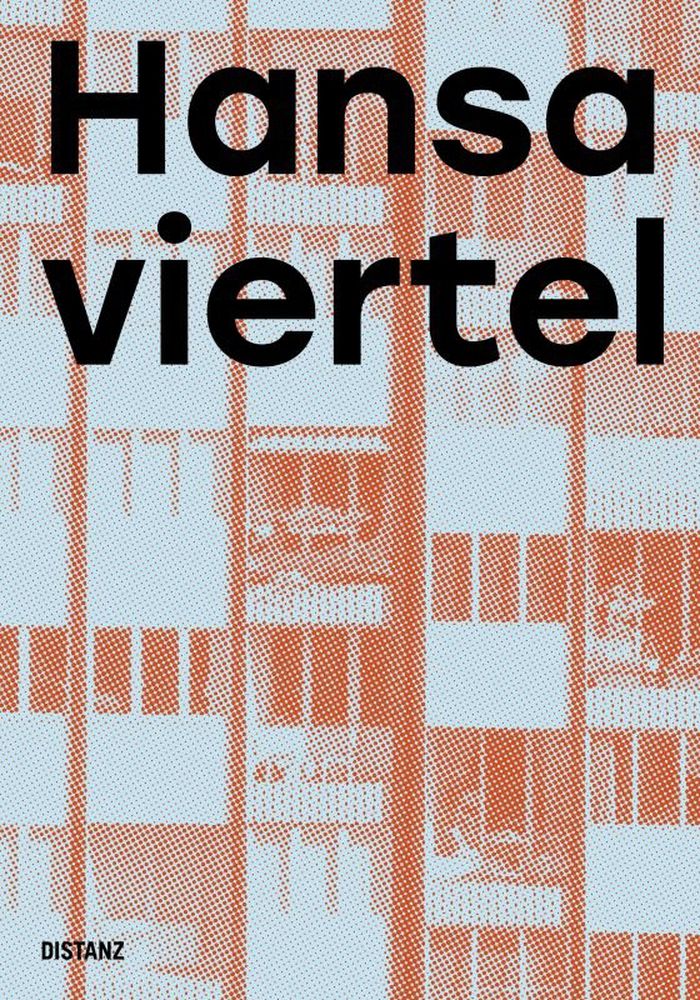
A former debris-strewn wasteland in the inner city—some 300 out of 343 residential buildings were destroyed during the Second World War—the Hansaviertel is one of the most defining architecture projects of the postwar period in Berlin. In 1952, an international ideas competition was held under the title die stadt von morgen (the city of tomorrow); more than fifty architects presented plans for the rebuilding of West Berlin, including leading practitioners of Western modernist architecture like Alvar Aalto, Werner Düttmann, Egon Eiermann, Walter Gropius, Arne Jacobsen, Oscar Niemeyer, and Max Taut. Construction based on their designs in the redevelopment area began in 1956. The result was a neighborhood designed for people and their needs—largely without predetermined paths, with lots of greenery, flexible floor plans, space for small businesses, and facilities for everyday needs. Visiting the area and its people today, one can still feel the designers’ visionary resolve to establish new ways of residential living. Locals are united by their fascination with architecture and design and their love for their neighborhood, which over the decades has developed an authentic patina and now stands as witness to a key chapter in the city’s more recent history.
Hansaviertel portraits
Actions:
Price:
$65.00
(available to order)
Summary:
A former debris-strewn wasteland in the inner city—some 300 out of 343 residential buildings were destroyed during the Second World War—the Hansaviertel is one of the most defining architecture projects of the postwar period in Berlin. In 1952, an international ideas competition was held under the title die stadt von morgen (the city of tomorrow); more than fifty architects presented plans for the rebuilding of West Berlin, including leading practitioners of Western modernist architecture like Alvar Aalto, Werner Düttmann, Egon Eiermann, Walter Gropius, Arne Jacobsen, Oscar Niemeyer, and Max Taut. Construction based on their designs in the redevelopment area began in 1956. The result was a neighborhood designed for people and their needs—largely without predetermined paths, with lots of greenery, flexible floor plans, space for small businesses, and facilities for everyday needs. Visiting the area and its people today, one can still feel the designers’ visionary resolve to establish new ways of residential living. Locals are united by their fascination with architecture and design and their love for their neighborhood, which over the decades has developed an authentic patina and now stands as witness to a key chapter in the city’s more recent history.
Form:
books
books
Publication:
October 2024
October 2024
Subject:
Architecture since 1900, Europe
Architecture since 1900, Europe
Form:
books
books
Actions:
Price:
$73.95
(available to order)
Summary:
A member of the famous artist-owned photo agency Magnum Photos, Swiss photographer René Burri (1933–2014) found himself wherever history was happening during the late twentieth century. His countless travels took him across Europe and the Americas to the Middle East to Japan and China to document the twentieth century’s major events. His extraordinary sense for people and(...)
$73.95
(available to order)
Summary:
A member of the famous artist-owned photo agency Magnum Photos, Swiss photographer René Burri (1933–2014) found himself wherever history was happening during the late twentieth century. His countless travels took him across Europe and the Americas to the Middle East to Japan and China to document the twentieth century’s major events. His extraordinary sense for people and(...)
Title:
René Burri: explosions of sight
Actions:
Price:
$73.95
(available to order)
Summary:
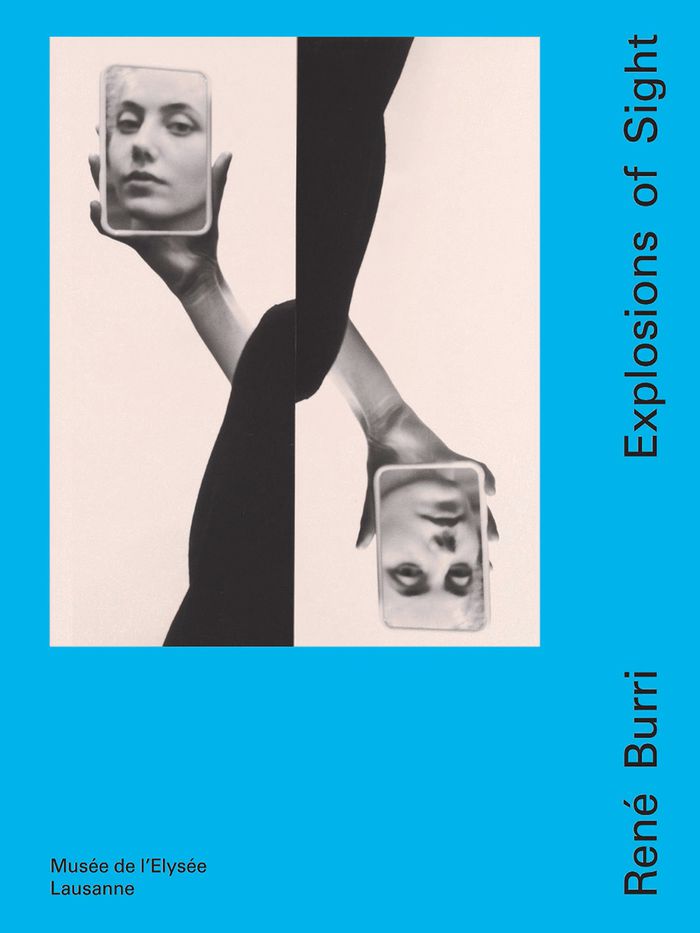
A member of the famous artist-owned photo agency Magnum Photos, Swiss photographer René Burri (1933–2014) found himself wherever history was happening during the late twentieth century. His countless travels took him across Europe and the Americas to the Middle East to Japan and China to document the twentieth century’s major events. His extraordinary sense for people and their personalities resulted in remarkably candid portraits of celebrities, such as architects Le Corbusier, Oscar Niemeyer, and Luis Barragán; artists Alberto Giacometti, Pablo Picasso, and Jean Tinguely; and Che Guevara, whose 1963 portrait with a cigar is one of the world’s most famous and widely reproduced photographic portraits. Published to coincide with a major exhibition at Musée de l’Elysée, Lausanne, 'René Burri: Explosions of Sight' draws from Burri’s vast archive. With the museum, Burri staged both his first exhibition and his first major retrospective and maintained a close relationship throughout his life, entrusting it also with the conservation of his estate. The book brings together for the first time Burri’s entire body of work, both photographic and nonphotographic, including previously unpublished archival documents, as well as book designs, exhibition projects, travel diaries, collages, watercolors, and objects Burri collected. In doing so, it offers a new and uniquely intimate view of one of the world’s greatest photographers.
René Burri: explosions of sight
Actions:
Price:
$73.95
(available to order)
Summary:
A member of the famous artist-owned photo agency Magnum Photos, Swiss photographer René Burri (1933–2014) found himself wherever history was happening during the late twentieth century. His countless travels took him across Europe and the Americas to the Middle East to Japan and China to document the twentieth century’s major events. His extraordinary sense for people and their personalities resulted in remarkably candid portraits of celebrities, such as architects Le Corbusier, Oscar Niemeyer, and Luis Barragán; artists Alberto Giacometti, Pablo Picasso, and Jean Tinguely; and Che Guevara, whose 1963 portrait with a cigar is one of the world’s most famous and widely reproduced photographic portraits. Published to coincide with a major exhibition at Musée de l’Elysée, Lausanne, 'René Burri: Explosions of Sight' draws from Burri’s vast archive. With the museum, Burri staged both his first exhibition and his first major retrospective and maintained a close relationship throughout his life, entrusting it also with the conservation of his estate. The book brings together for the first time Burri’s entire body of work, both photographic and nonphotographic, including previously unpublished archival documents, as well as book designs, exhibition projects, travel diaries, collages, watercolors, and objects Burri collected. In doing so, it offers a new and uniquely intimate view of one of the world’s greatest photographers.
Form:
books
books
Publication:
April 2020
April 2020
Subject:
Photography monographs
Photography monographs
Form:
books
books
Actions:
Price:
$49.50
(available to order)
Summary:
Qui ne connaît pas la Sagrada Familia à Barcelone ? C'est actuelle-ment l'un des monuments les plus visités d'Espagne. À la fin du XIXe siècle, dans cette Catalogne qui cherche un nouveau souffle artistique, l'architecture s'englue dans des constructions traditionnelles. Les architectes pastichent les édifices médiévaux ou surchargent les structures, poussés par de(...)
$49.50
(available to order)
Summary:
Qui ne connaît pas la Sagrada Familia à Barcelone ? C'est actuelle-ment l'un des monuments les plus visités d'Espagne. À la fin du XIXe siècle, dans cette Catalogne qui cherche un nouveau souffle artistique, l'architecture s'englue dans des constructions traditionnelles. Les architectes pastichent les édifices médiévaux ou surchargent les structures, poussés par de(...)
Title:
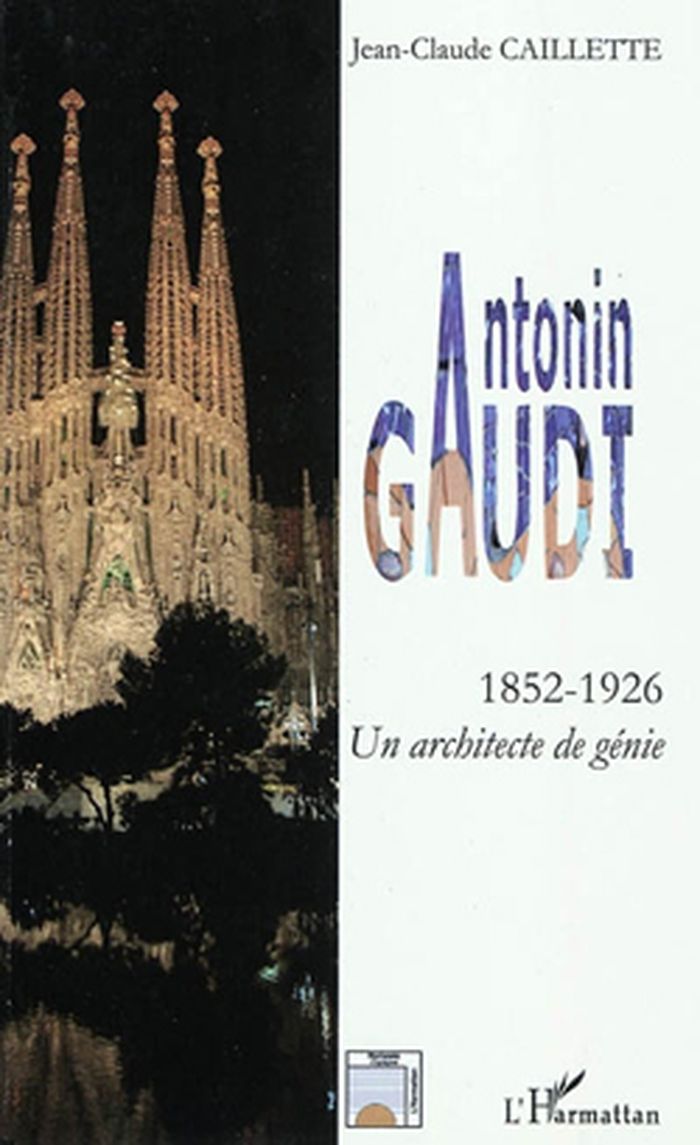
Antonin Gaudi 1852-1926: Un architecte de génie
Actions:
Price:
$49.50
(available to order)
Summary:
Qui ne connaît pas la Sagrada Familia à Barcelone ? C'est actuelle-ment l'un des monuments les plus visités d'Espagne. À la fin du XIXe siècle, dans cette Catalogne qui cherche un nouveau souffle artistique, l'architecture s'englue dans des constructions traditionnelles. Les architectes pastichent les édifices médiévaux ou surchargent les structures, poussés par de nouveaux riches aux goûts ostentatoires. La Catalogne dans laquelle va créer Gaudi est celle de la révolution industrielle, d'une expansion économique et culturelle sans précédent ; c'est aussi une période de troubles civils. Gaudi (1852-1926), d'origine modeste, est un homme ingénu, timide, mais à l'intelligence hors du commun, aux connaissances universelles et à l'imagination sans limites. Sa dévotion en fera un créateur ascétique inspiré. Représentant essentiel du modernisme catalan, il trouve dans les éléments son inspiration architectonique autant qu'ornementale_ Sa capacité d'observation lui permet de saisir les lois que lui enseigne la nature, qu'il transpose et transforme en oeuvres d'art. Et l'ensemble créatif de ce géant de l'" Art nouveau " dépasse toute tentative de classification. Cet homme paradoxal en bien des domaines, qui n'a pas créé d'école et qui a laissé peu d'écrits, est méconnu. Cependant peu d'architectes peuvent s'enorgueillir d'avoir sept oeuvres classées par l'UNESCO au Patrimoine mondial de l'humanité. Admiré par Le Corbusier, Friedensreich Hundertwasser ou Oscar Niemeyer, Gaudi est un immense créateur que cette biographie vous invite à découvrir.
Antonin Gaudi 1852-1926: Un architecte de génie
Actions:
Price:
$49.50
(available to order)
Summary:
Qui ne connaît pas la Sagrada Familia à Barcelone ? C'est actuelle-ment l'un des monuments les plus visités d'Espagne. À la fin du XIXe siècle, dans cette Catalogne qui cherche un nouveau souffle artistique, l'architecture s'englue dans des constructions traditionnelles. Les architectes pastichent les édifices médiévaux ou surchargent les structures, poussés par de nouveaux riches aux goûts ostentatoires. La Catalogne dans laquelle va créer Gaudi est celle de la révolution industrielle, d'une expansion économique et culturelle sans précédent ; c'est aussi une période de troubles civils. Gaudi (1852-1926), d'origine modeste, est un homme ingénu, timide, mais à l'intelligence hors du commun, aux connaissances universelles et à l'imagination sans limites. Sa dévotion en fera un créateur ascétique inspiré. Représentant essentiel du modernisme catalan, il trouve dans les éléments son inspiration architectonique autant qu'ornementale_ Sa capacité d'observation lui permet de saisir les lois que lui enseigne la nature, qu'il transpose et transforme en oeuvres d'art. Et l'ensemble créatif de ce géant de l'" Art nouveau " dépasse toute tentative de classification. Cet homme paradoxal en bien des domaines, qui n'a pas créé d'école et qui a laissé peu d'écrits, est méconnu. Cependant peu d'architectes peuvent s'enorgueillir d'avoir sept oeuvres classées par l'UNESCO au Patrimoine mondial de l'humanité. Admiré par Le Corbusier, Friedensreich Hundertwasser ou Oscar Niemeyer, Gaudi est un immense créateur que cette biographie vous invite à découvrir.
Form:
books
books
Publication:
January 2011
January 2011
Subject:
Architecture Monographs
Architecture Monographs


