


493 Results
Form:
books
books
Title:
Jeff Wall: the crooked path
Jeff Wall: the crooked path
Actions:
Price:
$55.00
(available to order)
Summary:
The photography of Jeff Wall (born 1946) is consciously and profoundly saturated in the social: in the Vancouver art community from which he first emerged, fully formed, in the late 1970s; in the racial and gender politics of our times, which he analyses with marvelous clarity in his huge photographic light boxes that declare an equal status with painting through their(...)
$55.00
(available to order)
Summary:
The photography of Jeff Wall (born 1946) is consciously and profoundly saturated in the social: in the Vancouver art community from which he first emerged, fully formed, in the late 1970s; in the racial and gender politics of our times, which he analyses with marvelous clarity in his huge photographic light boxes that declare an equal status with painting through their(...)
Title:
Jeff Wall: the crooked path
Actions:
Price:
$55.00
(available to order)
Summary:
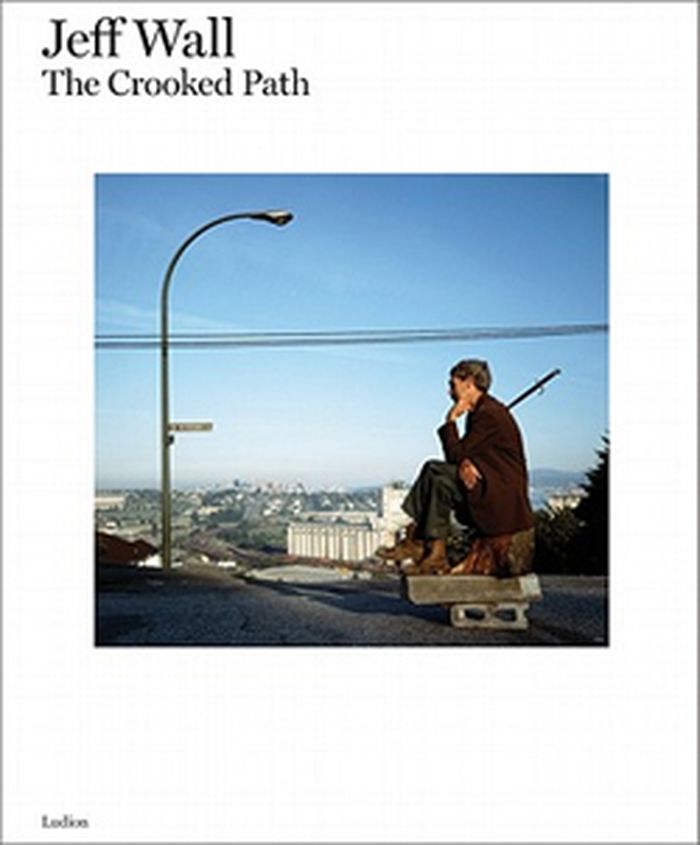
The photography of Jeff Wall (born 1946) is consciously and profoundly saturated in the social: in the Vancouver art community from which he first emerged, fully formed, in the late 1970s; in the racial and gender politics of our times, which he analyses with marvelous clarity in his huge photographic light boxes that declare an equal status with painting through their scale and their carefully plotted depth and grandeur; in the art history pantheon that informs his staged compositions, from Hokusai to Velásquez and Manet; and in his influence on at least two generations of photographers, most notably the Düsseldorf school (Andreas Gursky once cited Wall as “a great model for me” ). This publication examines the cultural context for Wall's tremendous achievement in photography. Wall himself has chosen 25 of his own photographs, taken between the late 1970s and the present, and has constellated them among the visionary company his work keeps, alongside reproductions of works by Marcel Duchamp, Diane Arbus, Eugene Atget, Wols, Andreas Gursky, David Claerbout, Thomas Struth, Frank Stella, Robert Smithson, Rodney Graham, Ian Wallace, Lawrence Wiener and R.W. Fassbinder. This book orients Wall's photography across ten themed chapters, each of which is prefaced with an interview with Wall by Hans De Wolf. Also included are testimonies and essays by fellow artists and art historians, such as Luc Tuymans, Lawrence Weiner, Michael Fried and David Campany.
Jeff Wall: the crooked path
Actions:
Price:
$55.00
(available to order)
Summary:
The photography of Jeff Wall (born 1946) is consciously and profoundly saturated in the social: in the Vancouver art community from which he first emerged, fully formed, in the late 1970s; in the racial and gender politics of our times, which he analyses with marvelous clarity in his huge photographic light boxes that declare an equal status with painting through their scale and their carefully plotted depth and grandeur; in the art history pantheon that informs his staged compositions, from Hokusai to Velásquez and Manet; and in his influence on at least two generations of photographers, most notably the Düsseldorf school (Andreas Gursky once cited Wall as “a great model for me” ). This publication examines the cultural context for Wall's tremendous achievement in photography. Wall himself has chosen 25 of his own photographs, taken between the late 1970s and the present, and has constellated them among the visionary company his work keeps, alongside reproductions of works by Marcel Duchamp, Diane Arbus, Eugene Atget, Wols, Andreas Gursky, David Claerbout, Thomas Struth, Frank Stella, Robert Smithson, Rodney Graham, Ian Wallace, Lawrence Wiener and R.W. Fassbinder. This book orients Wall's photography across ten themed chapters, each of which is prefaced with an interview with Wall by Hans De Wolf. Also included are testimonies and essays by fellow artists and art historians, such as Luc Tuymans, Lawrence Weiner, Michael Fried and David Campany.
Form:
books
books
Publication:
September 2011
September 2011
Subject:
Photography monographs
Photography monographs
Form:
books
books
Title:
Rachel Harrison If I did it
Rachel Harrison If I did it
Actions:
Price:
$56.00
(available to order)
Summary:
Gracing the cover jacket of Rachel Harrison's highly anticipated second monograph is an informal monument to the man who holds the Americas' namesake. The only hint to this memorial for the 15th century Italian explorer, Amerigo Vespucci, is an apple resting on an outcropping of neon-green cement; of course the fact that the apple is not only artificial but has a bite(...)
$56.00
(available to order)
Summary:
Gracing the cover jacket of Rachel Harrison's highly anticipated second monograph is an informal monument to the man who holds the Americas' namesake. The only hint to this memorial for the 15th century Italian explorer, Amerigo Vespucci, is an apple resting on an outcropping of neon-green cement; of course the fact that the apple is not only artificial but has a bite(...)
Subject:
Contemporary Art Monographs
Contemporary Art Monographs
Publication:
March 2008, Zurich
March 2008, Zurich
Title:
Rachel Harrison If I did it
Actions:
Price:
$56.00
(available to order)
Summary:
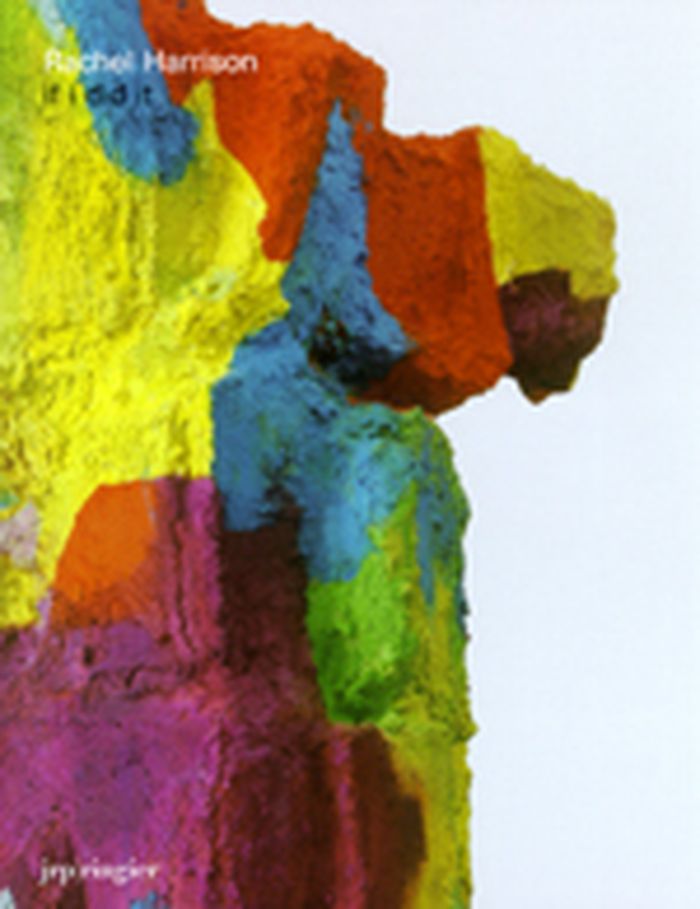
Gracing the cover jacket of Rachel Harrison's highly anticipated second monograph is an informal monument to the man who holds the Americas' namesake. The only hint to this memorial for the 15th century Italian explorer, Amerigo Vespucci, is an apple resting on an outcropping of neon-green cement; of course the fact that the apple is not only artificial but has a bite taken out of it suggests otherwise to the discovery of these "Edenic" continents. This slight yet important fact raises the basic concept of if i did it: the active disavowal of art's political function as a museological testament to the "progress" of social history. By tossing off this monumental propensity, Harrison builds "antimonuments;" not so much sculptures but lumpen aggregates of pop psychology. In addition to Vespucci, throughout the book, one finds that celebrities Johnny Depp and Tiger Woods are included in a pantheon with John Locke and 18th century Corsican revolutionary Pasquale Paoli, meanwhile Al Gore checks the temperature, Claude Levi-Strauss checks the door with a taxidermied hen and rooster and a bi-curious Alexander the Great is the master of ceremonies. The title, taken from O.J. Simpson's infamous "hypothetical" account of his murder of Nicole Brown Simpson and Donald Goldman, groups this role call of high- and low- brow idols into a nonhierarchical tableau where cultural and political value are allotted only where one sees fit.
Rachel Harrison If I did it
Actions:
Price:
$56.00
(available to order)
Summary:
Gracing the cover jacket of Rachel Harrison's highly anticipated second monograph is an informal monument to the man who holds the Americas' namesake. The only hint to this memorial for the 15th century Italian explorer, Amerigo Vespucci, is an apple resting on an outcropping of neon-green cement; of course the fact that the apple is not only artificial but has a bite taken out of it suggests otherwise to the discovery of these "Edenic" continents. This slight yet important fact raises the basic concept of if i did it: the active disavowal of art's political function as a museological testament to the "progress" of social history. By tossing off this monumental propensity, Harrison builds "antimonuments;" not so much sculptures but lumpen aggregates of pop psychology. In addition to Vespucci, throughout the book, one finds that celebrities Johnny Depp and Tiger Woods are included in a pantheon with John Locke and 18th century Corsican revolutionary Pasquale Paoli, meanwhile Al Gore checks the temperature, Claude Levi-Strauss checks the door with a taxidermied hen and rooster and a bi-curious Alexander the Great is the master of ceremonies. The title, taken from O.J. Simpson's infamous "hypothetical" account of his murder of Nicole Brown Simpson and Donald Goldman, groups this role call of high- and low- brow idols into a nonhierarchical tableau where cultural and political value are allotted only where one sees fit.
Form:
books
books
Publication:
March 2008, Zurich
March 2008, Zurich
Subject:
Contemporary Art Monographs
Contemporary Art Monographs
Form:
books
books
Price:
$62.50
(available to order)
Summary:
The avant-garde movements of Central Europe were an integral part of modernism’s evolution as it reached its peak throughout the continent during the 1920s. Written documents--manifestoes, artists’ statements, and reviews--were the lifeblood of these movements and, during the periods when political events conspired to isolate them, one of their few means of communication(...)
$62.50
(available to order)
Summary:
The avant-garde movements of Central Europe were an integral part of modernism’s evolution as it reached its peak throughout the continent during the 1920s. Written documents--manifestoes, artists’ statements, and reviews--were the lifeblood of these movements and, during the periods when political events conspired to isolate them, one of their few means of communication(...)
Subject:
Modernism
Modernism
Publication:
September 2002, Cambridge, Mass.
September 2002, Cambridge, Mass.
Title:
Between worlds : a sourcebook of Central European avant-garde, 1910-1930
Actions:
Price:
$62.50
(available to order)
Summary:
The avant-garde movements of Central Europe were an integral part of modernism’s evolution as it reached its peak throughout the continent during the 1920s. Written documents--manifestoes, artists’ statements, and reviews--were the lifeblood of these movements and, during the periods when political events conspired to isolate them, one of their few means of communication and exchange. Much of this crucial evidence has become lost to us, and the artistic avant-gardes of Central Europe have been a blind spot of modernist studies. Until their narratives have been recovered, the story of modernism will remain incomplete. In this book an international team of scholars has selected an essential compendium of documents that take an important step toward regaining this lost perspective. "Between worlds" contains primary documents of the avant-gardes in Austria, the Czech lands, Germany, Hungary, Poland, Romania, and Yugoslavia from 1910 to 1930. The manifestoes and magazines of Western European radical art circles are well known to Western scholars, but few have researched the pages of magazines such as Zenit, Integral, Punct, 75 HP, Tank, and Ma. We know about Italian Futurism but not about Polish Futurism. Few Westerners are aware that French surrealist magazines drew much of their inspiration from Czech publications. The hundreds of documents in the book, almost all of them translated into English for the first time, bring back into circulation landmark texts by the major writers, editors, artists, magazines, and movements of Central Europe. With this publication they are restored to their rightful place in the pantheon of modernism.
Between worlds : a sourcebook of Central European avant-garde, 1910-1930
Actions:
Price:
$62.50
(available to order)
Summary:
The avant-garde movements of Central Europe were an integral part of modernism’s evolution as it reached its peak throughout the continent during the 1920s. Written documents--manifestoes, artists’ statements, and reviews--were the lifeblood of these movements and, during the periods when political events conspired to isolate them, one of their few means of communication and exchange. Much of this crucial evidence has become lost to us, and the artistic avant-gardes of Central Europe have been a blind spot of modernist studies. Until their narratives have been recovered, the story of modernism will remain incomplete. In this book an international team of scholars has selected an essential compendium of documents that take an important step toward regaining this lost perspective. "Between worlds" contains primary documents of the avant-gardes in Austria, the Czech lands, Germany, Hungary, Poland, Romania, and Yugoslavia from 1910 to 1930. The manifestoes and magazines of Western European radical art circles are well known to Western scholars, but few have researched the pages of magazines such as Zenit, Integral, Punct, 75 HP, Tank, and Ma. We know about Italian Futurism but not about Polish Futurism. Few Westerners are aware that French surrealist magazines drew much of their inspiration from Czech publications. The hundreds of documents in the book, almost all of them translated into English for the first time, bring back into circulation landmark texts by the major writers, editors, artists, magazines, and movements of Central Europe. With this publication they are restored to their rightful place in the pantheon of modernism.
Form:
books
books
Publication:
September 2002, Cambridge, Mass.
September 2002, Cambridge, Mass.
Subject:
Modernism
Modernism


