


5194 Results
Form:
books
books

Title:
Fear, reverence, terror
Fear, reverence, terror
Actions:
Price:
$55.50
(available to order)
Summary:
We are surrounded by images, fairly drowning in them. From our cell phones to our computers, from our televisions at home to the screens that light up while we wait in the grocery store checkout line, images of all kinds are seducing us, commanding us to buy!, scaring us, dazzling us. "Fear, reverence, terror" invites us to look at images slowly, with the help of a few(...)
$55.50
(available to order)
Summary:
We are surrounded by images, fairly drowning in them. From our cell phones to our computers, from our televisions at home to the screens that light up while we wait in the grocery store checkout line, images of all kinds are seducing us, commanding us to buy!, scaring us, dazzling us. "Fear, reverence, terror" invites us to look at images slowly, with the help of a few(...)
Title:
Fear, reverence, terror
Actions:
Price:
$55.50
(available to order)
Summary:
We are surrounded by images, fairly drowning in them. From our cell phones to our computers, from our televisions at home to the screens that light up while we wait in the grocery store checkout line, images of all kinds are seducing us, commanding us to buy!, scaring us, dazzling us. "Fear, reverence, terror" invites us to look at images slowly, with the help of a few examples: Picasso’s Guernica, the “Lord Kitchener wants you” World War I recruitment poster, Jacques-Louis David’s Marat, the frontispiece of Thomas Hobbes’s Leviathan, a cup of gilded silver with scenes from the conquest of the New World. Are these political images, Carlo Ginzburg asks? Yes, because every image is, in a sense, political—an instrument of power. Tacitus once wrote, unforgettably, that we are enslaved by lies of which we ourselves are the authors. Is it possible to break this bond? Fear, Reverence, Terror will answer this question.
Fear, reverence, terror
Actions:
Price:
$55.50
(available to order)
Summary:
We are surrounded by images, fairly drowning in them. From our cell phones to our computers, from our televisions at home to the screens that light up while we wait in the grocery store checkout line, images of all kinds are seducing us, commanding us to buy!, scaring us, dazzling us. "Fear, reverence, terror" invites us to look at images slowly, with the help of a few examples: Picasso’s Guernica, the “Lord Kitchener wants you” World War I recruitment poster, Jacques-Louis David’s Marat, the frontispiece of Thomas Hobbes’s Leviathan, a cup of gilded silver with scenes from the conquest of the New World. Are these political images, Carlo Ginzburg asks? Yes, because every image is, in a sense, political—an instrument of power. Tacitus once wrote, unforgettably, that we are enslaved by lies of which we ourselves are the authors. Is it possible to break this bond? Fear, Reverence, Terror will answer this question.
Form:
books
books
Publication:
August 2017
August 2017
Subject:
Art Theory
Art Theory
Form:
books
books
Actions:
Price:
$30.70
(available to order)
Summary:
'Television: Technology and Cultural Form' was first published in 1974, long before the dawn of multi-channel TV, or the reality and celebrity shows that now pack the schedules. Yet Williams' analysis of television's history, its institutions, programmes and practices, and its future prospects, remains remarkably prescient. Williams stresses the importance of(...)
$30.70
(available to order)
Summary:
'Television: Technology and Cultural Form' was first published in 1974, long before the dawn of multi-channel TV, or the reality and celebrity shows that now pack the schedules. Yet Williams' analysis of television's history, its institutions, programmes and practices, and its future prospects, remains remarkably prescient. Williams stresses the importance of(...)
Title:
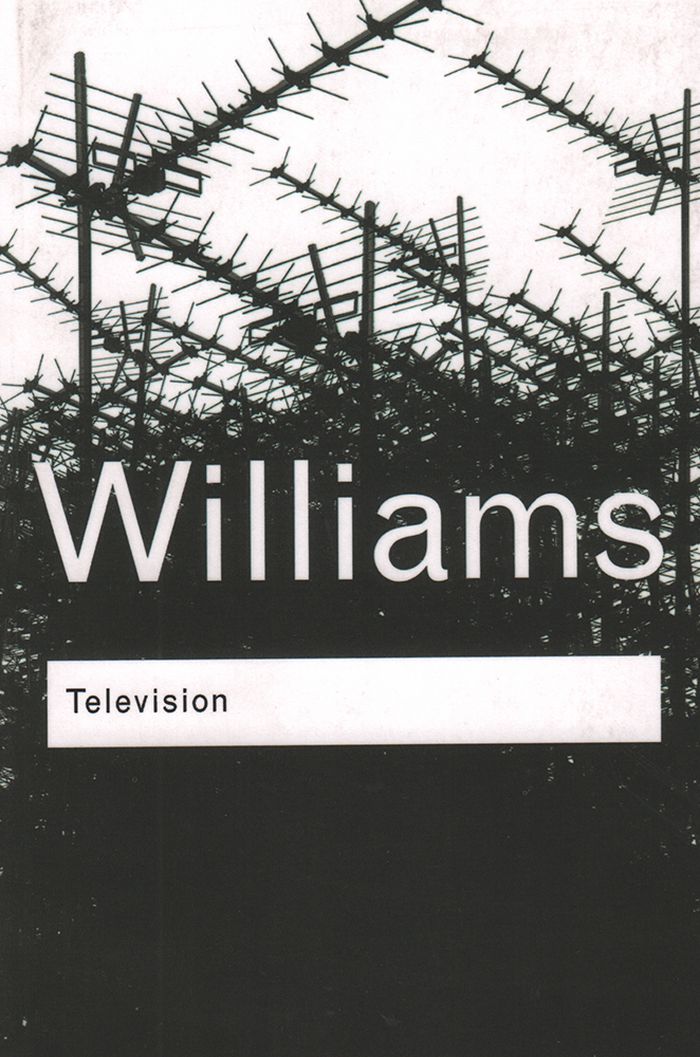
Television: technology and cultural form
Actions:
Price:
$30.70
(available to order)
Summary:
'Television: Technology and Cultural Form' was first published in 1974, long before the dawn of multi-channel TV, or the reality and celebrity shows that now pack the schedules. Yet Williams' analysis of television's history, its institutions, programmes and practices, and its future prospects, remains remarkably prescient. Williams stresses the importance of technology in shaping the cultural form of television, while always resisting the determinism of McLuhan's dictum that 'the medium is the message'. If the medium really is the message, Williams asks, what is left for us to do or say? Williams argues that, on the contrary, we as viewers have the power to disturb, disrupt and to distract the otherwise cold logic of history and technology - not just because television is part of the fabric of our daily lives, but because new technologies continue to offer opportunities, momentarily outside the sway of transnational corporations or the grasp of media moguls, for new forms of self and political expression.
Television: technology and cultural form
Actions:
Price:
$30.70
(available to order)
Summary:
'Television: Technology and Cultural Form' was first published in 1974, long before the dawn of multi-channel TV, or the reality and celebrity shows that now pack the schedules. Yet Williams' analysis of television's history, its institutions, programmes and practices, and its future prospects, remains remarkably prescient. Williams stresses the importance of technology in shaping the cultural form of television, while always resisting the determinism of McLuhan's dictum that 'the medium is the message'. If the medium really is the message, Williams asks, what is left for us to do or say? Williams argues that, on the contrary, we as viewers have the power to disturb, disrupt and to distract the otherwise cold logic of history and technology - not just because television is part of the fabric of our daily lives, but because new technologies continue to offer opportunities, momentarily outside the sway of transnational corporations or the grasp of media moguls, for new forms of self and political expression.
Form:
books
books
Publication:
June 2003
June 2003
Subject:
Critical Theory
Critical Theory
Form:
books
books
Actions:
Price:
$34.95
(available to order)
Summary:
“That’s what we do really: we do miracles,” said Anne-Marie Nyiranshimiyimana, who learned masonry in helping to build the Butaro Hospital, a project designed for and with the people of Rwanda using local materials. This, and other projects designed with dignity, show the power of good design. Almost nothing influences the quality of our lives more than the design of our(...)
$34.95
(available to order)
Summary:
“That’s what we do really: we do miracles,” said Anne-Marie Nyiranshimiyimana, who learned masonry in helping to build the Butaro Hospital, a project designed for and with the people of Rwanda using local materials. This, and other projects designed with dignity, show the power of good design. Almost nothing influences the quality of our lives more than the design of our(...)
Title:
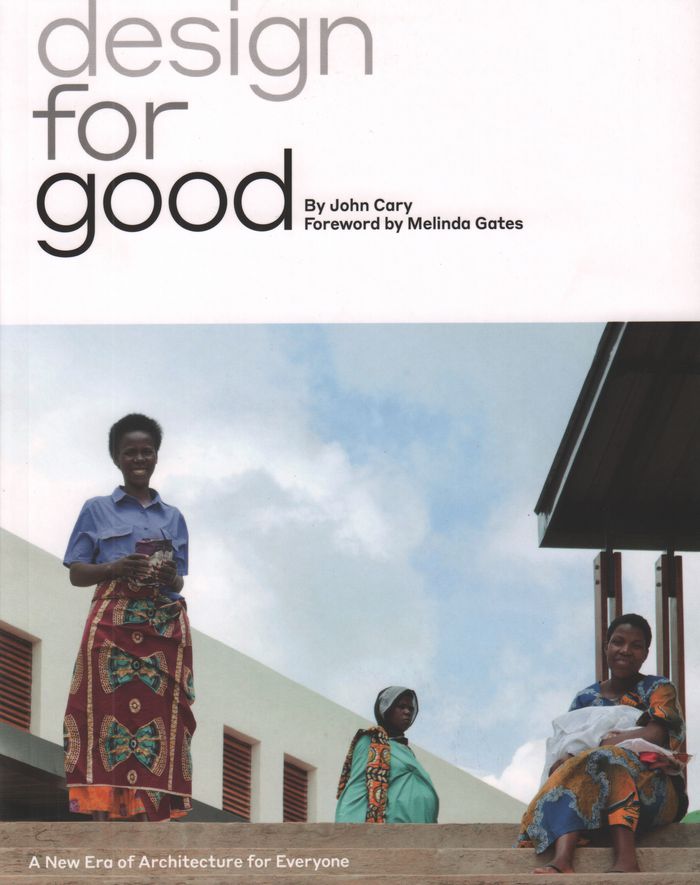
Design for good: a new era of architecture for everyone
Actions:
Price:
$34.95
(available to order)
Summary:
“That’s what we do really: we do miracles,” said Anne-Marie Nyiranshimiyimana, who learned masonry in helping to build the Butaro Hospital, a project designed for and with the people of Rwanda using local materials. This, and other projects designed with dignity, show the power of good design. Almost nothing influences the quality of our lives more than the design of our homes, our schools, our workplaces, and our public spaces. Yet, design is often taken for granted and people don’t realize that they deserve better, or that better is even possible. In Design for Good, John Cary offers character-driven, real-world stories about projects around the globe that offer more—buildings that are designed and created with and for the people who will use them. The book reveals a new understanding of the ways that design shapes our lives and gives professionals and interested citizens the tools to seek out and demand designs that dignify.
Design for good: a new era of architecture for everyone
Actions:
Price:
$34.95
(available to order)
Summary:
“That’s what we do really: we do miracles,” said Anne-Marie Nyiranshimiyimana, who learned masonry in helping to build the Butaro Hospital, a project designed for and with the people of Rwanda using local materials. This, and other projects designed with dignity, show the power of good design. Almost nothing influences the quality of our lives more than the design of our homes, our schools, our workplaces, and our public spaces. Yet, design is often taken for granted and people don’t realize that they deserve better, or that better is even possible. In Design for Good, John Cary offers character-driven, real-world stories about projects around the globe that offer more—buildings that are designed and created with and for the people who will use them. The book reveals a new understanding of the ways that design shapes our lives and gives professionals and interested citizens the tools to seek out and demand designs that dignify.
Form:
books
books
Publication:
November 2017
November 2017
Form:
books
books
Title:
The photographic I
The photographic I
Actions:
Price:
$38.00
(available to order)
Summary:
Catalog accompanying the first part of a diptych exhibition in S.M.A.K., Ghent, spread over two years, curated by Martin Germann with Tanja Boon and Steven Humblet. The exhibition comprises new and existing work by artists and photographers including Lewis Baltz, Tina Barney, Mohamed Bourouissa, Moyra Davey, Marc De Blieck, Sara Deraedt, Patrick Faigenbaum, Peter Fraser,(...)
$38.00
(available to order)
Summary:
Catalog accompanying the first part of a diptych exhibition in S.M.A.K., Ghent, spread over two years, curated by Martin Germann with Tanja Boon and Steven Humblet. The exhibition comprises new and existing work by artists and photographers including Lewis Baltz, Tina Barney, Mohamed Bourouissa, Moyra Davey, Marc De Blieck, Sara Deraedt, Patrick Faigenbaum, Peter Fraser,(...)
Subject:
Photography Collections
Photography Collections
Publication:
December 2017
December 2017
Title:
The photographic I
Actions:
Price:
$38.00
(available to order)
Summary:
Catalog accompanying the first part of a diptych exhibition in S.M.A.K., Ghent, spread over two years, curated by Martin Germann with Tanja Boon and Steven Humblet. The exhibition comprises new and existing work by artists and photographers including Lewis Baltz, Tina Barney, Mohamed Bourouissa, Moyra Davey, Marc De Blieck, Sara Deraedt, Patrick Faigenbaum, Peter Fraser, Alair Gomes, Jitka Hanzlová, Roni Horn, Stephanie Kiwitt, Aglaia Konrad, Jochen Lempert, Zoe Leonard, Jean-Luc Moulène, Zanele Muholi, Jean-Luc Mylayne, Trevor Paglen, Doug Rickard, Torbjørn Rødland, Michael Schmidt, Arne Schmitt, Allan Sekula, Ahlam Shibli, Malick Sidibé, Dayanita Singh, Wolfgang Tillmans, Marc Trivier and Tobias Zielony. The selection, ranging from the 1960s to the present, demonstrates a lively interest in the power of the still image as a means of examining the world. It concentrates on indefinable images with an open view, whose multi-layering requires slow reading. With an introduction by Martin Germann and Philippe Van Cauteren, and an essay by Steven Humblet in Dutch and English.
The photographic I
Actions:
Price:
$38.00
(available to order)
Summary:
Catalog accompanying the first part of a diptych exhibition in S.M.A.K., Ghent, spread over two years, curated by Martin Germann with Tanja Boon and Steven Humblet. The exhibition comprises new and existing work by artists and photographers including Lewis Baltz, Tina Barney, Mohamed Bourouissa, Moyra Davey, Marc De Blieck, Sara Deraedt, Patrick Faigenbaum, Peter Fraser, Alair Gomes, Jitka Hanzlová, Roni Horn, Stephanie Kiwitt, Aglaia Konrad, Jochen Lempert, Zoe Leonard, Jean-Luc Moulène, Zanele Muholi, Jean-Luc Mylayne, Trevor Paglen, Doug Rickard, Torbjørn Rødland, Michael Schmidt, Arne Schmitt, Allan Sekula, Ahlam Shibli, Malick Sidibé, Dayanita Singh, Wolfgang Tillmans, Marc Trivier and Tobias Zielony. The selection, ranging from the 1960s to the present, demonstrates a lively interest in the power of the still image as a means of examining the world. It concentrates on indefinable images with an open view, whose multi-layering requires slow reading. With an introduction by Martin Germann and Philippe Van Cauteren, and an essay by Steven Humblet in Dutch and English.
Form:
books
books
Publication:
December 2017
December 2017
Subject:
Photography Collections
Photography Collections
Form:
books
books
Price:
$42.99
(available to order)
Summary:
Western Canada's natural environment faces intensifying threats from industrialization in agriculture and resource development, social and cultural complicity in these destructive practices, and most recently the negative effects of global climate change. The complex nature of the problems being addressed calls for productive interdisciplinary solutions. In this book,(...)
$42.99
(available to order)
Summary:
Western Canada's natural environment faces intensifying threats from industrialization in agriculture and resource development, social and cultural complicity in these destructive practices, and most recently the negative effects of global climate change. The complex nature of the problems being addressed calls for productive interdisciplinary solutions. In this book,(...)
Subject:
Environment and environmental theory
Environment and environmental theory
Publication:
September 2014
September 2014
Title:
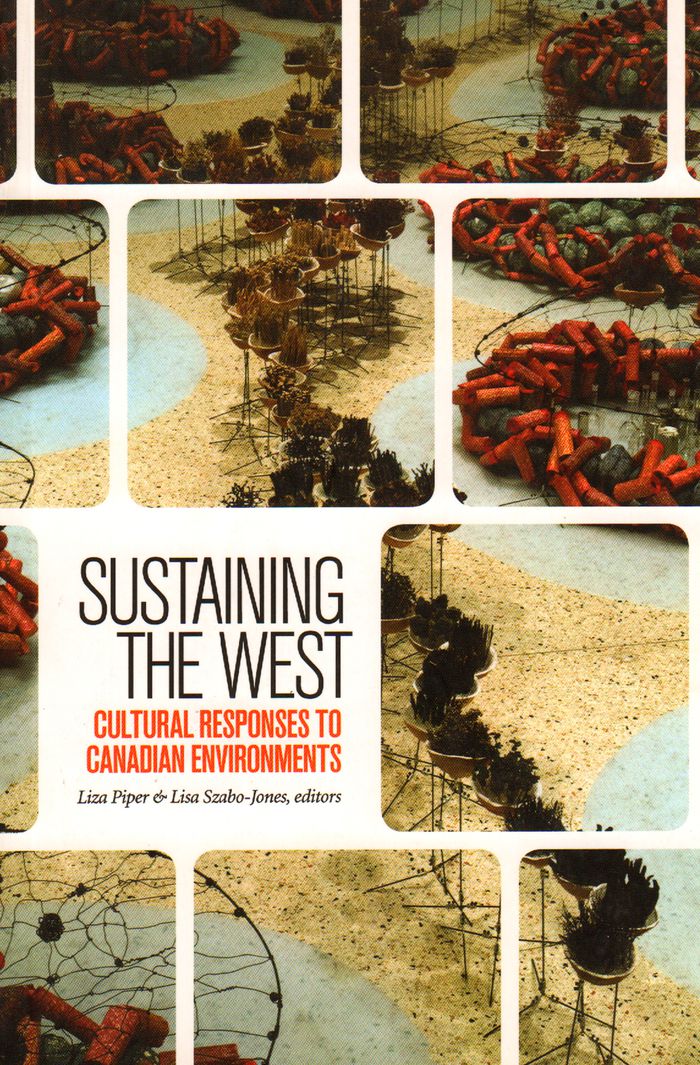
Sustaining the west: cultural responses to Canadian environments
Actions:
Price:
$42.99
(available to order)
Summary:
Western Canada's natural environment faces intensifying threats from industrialization in agriculture and resource development, social and cultural complicity in these destructive practices, and most recently the negative effects of global climate change. The complex nature of the problems being addressed calls for productive interdisciplinary solutions. In this book, arts and humanities scholars and literary and visual artists tackle these pressing environmental issues in provocative and transformative ways. Their commitment to environmental causes emerges through the fields of environmental history, environmental and ecocriticism, ecofeminism, ecoart, ecopoetry, and environmental journalism. This indispensable and timely resource constitutes a sustained cross-pollinating conversation across the environmental humanities about forms of representation and activism that enable ecological knowledge and ethical action on behalf of Western Canadian environments, yet have global reach. Among the developments in the contributors' construction of environmental knowledge are a focus on the power of sentiment in linking people to the fate of nature, and the need to decolonize social and environmental relations and assumptions in the West.
Sustaining the west: cultural responses to Canadian environments
Actions:
Price:
$42.99
(available to order)
Summary:
Western Canada's natural environment faces intensifying threats from industrialization in agriculture and resource development, social and cultural complicity in these destructive practices, and most recently the negative effects of global climate change. The complex nature of the problems being addressed calls for productive interdisciplinary solutions. In this book, arts and humanities scholars and literary and visual artists tackle these pressing environmental issues in provocative and transformative ways. Their commitment to environmental causes emerges through the fields of environmental history, environmental and ecocriticism, ecofeminism, ecoart, ecopoetry, and environmental journalism. This indispensable and timely resource constitutes a sustained cross-pollinating conversation across the environmental humanities about forms of representation and activism that enable ecological knowledge and ethical action on behalf of Western Canadian environments, yet have global reach. Among the developments in the contributors' construction of environmental knowledge are a focus on the power of sentiment in linking people to the fate of nature, and the need to decolonize social and environmental relations and assumptions in the West.
Form:
books
books
Publication:
September 2014
September 2014
Subject:
Environment and environmental theory
Environment and environmental theory
Form:
journals and magazines
journals and magazines
Actions:
Price:
$32.00
(available to order)
Summary:
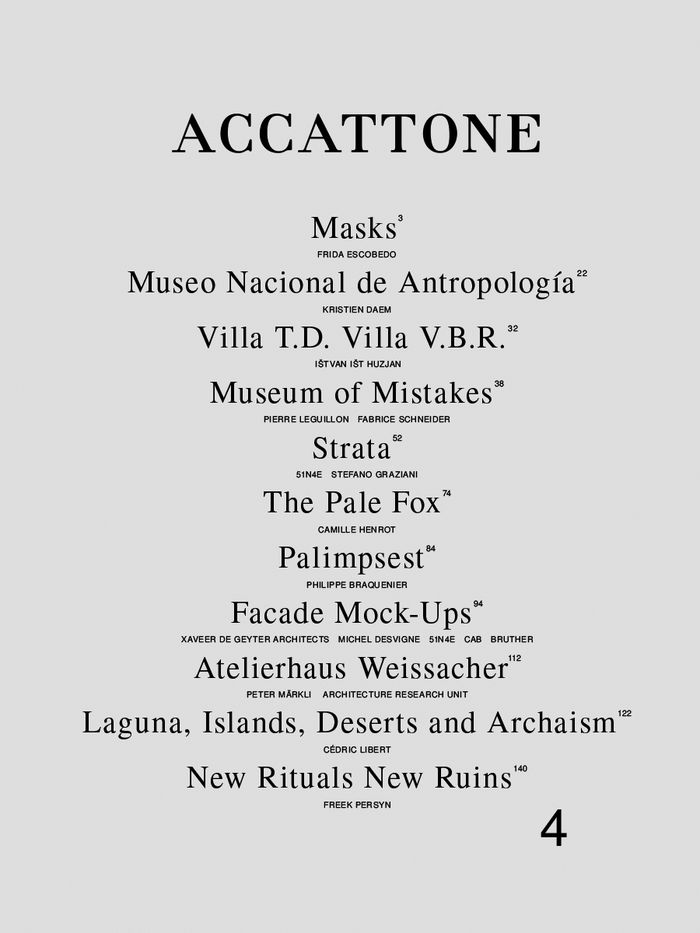
Accattone #4 draws on the idea of collection to explore mythical methods and visual ethnographies in contemporary practices, with an interest in the compression, into a single artefact, of long periods of history, power relations, memories and everyday experience. It features anthropology museums, underground data centres and minor collections performed in private houses,(...)
$32.00
(available to order)
Summary:
Accattone #4 draws on the idea of collection to explore mythical methods and visual ethnographies in contemporary practices, with an interest in the compression, into a single artefact, of long periods of history, power relations, memories and everyday experience. It features anthropology museums, underground data centres and minor collections performed in private houses,(...)
Title:
ACCATTONE 4, Magazine on architecture 2016
Actions:
Price:
$32.00
(available to order)
Summary:
Accattone #4 draws on the idea of collection to explore mythical methods and visual ethnographies in contemporary practices, with an interest in the compression, into a single artefact, of long periods of history, power relations, memories and everyday experience. It features anthropology museums, underground data centres and minor collections performed in private houses, double-sided masks and architectural strata in a floor slab or a facade, totemic mock-ups on a 1:1 scale and metaphors in the desert. Invited contributions include words and documents by Frida Escobedo, photos by Kristien Daem, Philippe Braquenier and Stefano Graziani, a return on an installation by Ištvan Išt Huzjan with Sam Steverlynck, Frank Tuytschaever and Jurgen Vergotte, our visit to Pierre Leguillon’s Museum of Mistakes and ARU’s visit to an house by Peter Märkli, an interview with 51N4E, photos of Camille Henrot’s installation The Pale Fox, essays by Cédric Libert and Freek Persyn, models and mock-ups by Bruther, XDGA, CAB, Barthélémy-Griño, Michel Desvigne.
ACCATTONE 4, Magazine on architecture 2016
Actions:
Price:
$32.00
(available to order)
Summary:
Accattone #4 draws on the idea of collection to explore mythical methods and visual ethnographies in contemporary practices, with an interest in the compression, into a single artefact, of long periods of history, power relations, memories and everyday experience. It features anthropology museums, underground data centres and minor collections performed in private houses, double-sided masks and architectural strata in a floor slab or a facade, totemic mock-ups on a 1:1 scale and metaphors in the desert. Invited contributions include words and documents by Frida Escobedo, photos by Kristien Daem, Philippe Braquenier and Stefano Graziani, a return on an installation by Ištvan Išt Huzjan with Sam Steverlynck, Frank Tuytschaever and Jurgen Vergotte, our visit to Pierre Leguillon’s Museum of Mistakes and ARU’s visit to an house by Peter Märkli, an interview with 51N4E, photos of Camille Henrot’s installation The Pale Fox, essays by Cédric Libert and Freek Persyn, models and mock-ups by Bruther, XDGA, CAB, Barthélémy-Griño, Michel Desvigne.
Form:
journals and magazines
journals and magazines
Publication:
September 2016
September 2016
Subject:
Magazines
Magazines
Form:
books
books

Actions:
Price:
$55.00
(available to order)
Summary:
A feminist silkscreen poster collective founded in London in 1974 by three former art students, the See Red Women’s Workshop grew out of a shared desire to combat sexist images of women and to create positive and challenging alternatives. Women from different backgrounds came together to make posters and calendars that tackled issues of sexuality, identity and oppression.(...)
$55.00
(available to order)
Summary:
A feminist silkscreen poster collective founded in London in 1974 by three former art students, the See Red Women’s Workshop grew out of a shared desire to combat sexist images of women and to create positive and challenging alternatives. Women from different backgrounds came together to make posters and calendars that tackled issues of sexuality, identity and oppression.(...)
Title:
See Red Women's Workshop: feminist posters 1974-1990
Actions:
Price:
$55.00
(available to order)
Summary:
A feminist silkscreen poster collective founded in London in 1974 by three former art students, the See Red Women’s Workshop grew out of a shared desire to combat sexist images of women and to create positive and challenging alternatives. Women from different backgrounds came together to make posters and calendars that tackled issues of sexuality, identity and oppression. With humor and bold, colorful graphics, See Red expressed the personal experiences of women as well as their role in wider struggles for change. Written by See Red members, detailing the group’s history up until the closure of the workshop in 1990, and with a foreword by celebrated feminist historian Sheila Rowbotham, See Red Women’s Workshop features all of the collective’s original screenprints and posters. Confronting negative stereotypes, questioning the role of women in society, and promoting women’s self-determination, the power and energy of these images reflect an important and dynamic era of women’s liberation—with continued relevance for today.
See Red Women's Workshop: feminist posters 1974-1990
Actions:
Price:
$55.00
(available to order)
Summary:
A feminist silkscreen poster collective founded in London in 1974 by three former art students, the See Red Women’s Workshop grew out of a shared desire to combat sexist images of women and to create positive and challenging alternatives. Women from different backgrounds came together to make posters and calendars that tackled issues of sexuality, identity and oppression. With humor and bold, colorful graphics, See Red expressed the personal experiences of women as well as their role in wider struggles for change. Written by See Red members, detailing the group’s history up until the closure of the workshop in 1990, and with a foreword by celebrated feminist historian Sheila Rowbotham, See Red Women’s Workshop features all of the collective’s original screenprints and posters. Confronting negative stereotypes, questioning the role of women in society, and promoting women’s self-determination, the power and energy of these images reflect an important and dynamic era of women’s liberation—with continued relevance for today.
Form:
books
books
Publication:
February 2017
February 2017
Subject:
Printed Matter
Printed Matter
Form:
books
books

Actions:
Price:
$29.95
(available to order)
Summary:
In the late 1980s, Japan was awash in seemingly unlimited wealth and rising toward what would be the peak of its modern economic success, power, and influence. In 1991 the same lethal combination of risky loans, inflated stocks, and real estate speculation that created this "bubble economy" caused it to burst, plunging the country into its worst recession since World War(...)
$29.95
(available to order)
Summary:
In the late 1980s, Japan was awash in seemingly unlimited wealth and rising toward what would be the peak of its modern economic success, power, and influence. In 1991 the same lethal combination of risky loans, inflated stocks, and real estate speculation that created this "bubble economy" caused it to burst, plunging the country into its worst recession since World War(...)
Title:
After the crash: architecture in post-bubble Japan
Actions:
Price:
$29.95
(available to order)
Summary:
In the late 1980s, Japan was awash in seemingly unlimited wealth and rising toward what would be the peak of its modern economic success, power, and influence. In 1991 the same lethal combination of risky loans, inflated stocks, and real estate speculation that created this "bubble economy" caused it to burst, plunging the country into its worst recession since World War II. New Zealand–born architect Thomas Daniell arrived in Japan at the dawn of this turbulent decade. After the Crash is an anthology of essays that draw on first-hand observations of the built environment and architectural culture that emerged from the economically sober post-bubble period of the 1990s. Daniell uses projects and installations by architects such as Atelier Bow Wow, Toyo Ito, and the metabolists to illustrate the new relationships forged, most of necessity, between architecture and society in Japan. Tom Daniell is a practicing architect, critic, and educator who has based himself in Kyoto, Japan since the early 1990s.
After the crash: architecture in post-bubble Japan
Actions:
Price:
$29.95
(available to order)
Summary:
In the late 1980s, Japan was awash in seemingly unlimited wealth and rising toward what would be the peak of its modern economic success, power, and influence. In 1991 the same lethal combination of risky loans, inflated stocks, and real estate speculation that created this "bubble economy" caused it to burst, plunging the country into its worst recession since World War II. New Zealand–born architect Thomas Daniell arrived in Japan at the dawn of this turbulent decade. After the Crash is an anthology of essays that draw on first-hand observations of the built environment and architectural culture that emerged from the economically sober post-bubble period of the 1990s. Daniell uses projects and installations by architects such as Atelier Bow Wow, Toyo Ito, and the metabolists to illustrate the new relationships forged, most of necessity, between architecture and society in Japan. Tom Daniell is a practicing architect, critic, and educator who has based himself in Kyoto, Japan since the early 1990s.
Form:
books
books
Publication:
October 2008, New York
October 2008, New York
Subject:
Contemporary Asian Architecture
Contemporary Asian Architecture
Form:
books
books
Actions:
Price:
$35.00
(available to order)
Summary:
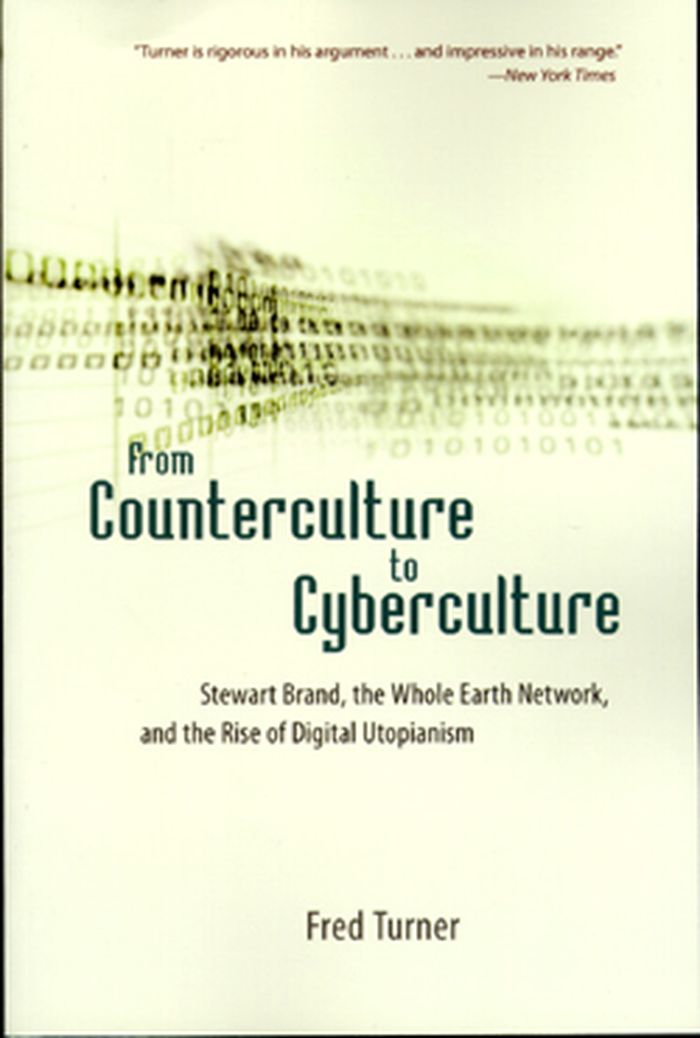
In "From Counterculture to Cyberculture", Fred Turner details the previously untold story of a highly influential group of San Francisco Bay Area entrepreneurs: Stewart Brand and the Whole Earth network. Between 1968 and 1998, via such familiar venues as the National Book Award - winning "Whole Earth Catalog", the computer-conferencing system known as WELL, and,(...)
$35.00
(available to order)
Summary:
In "From Counterculture to Cyberculture", Fred Turner details the previously untold story of a highly influential group of San Francisco Bay Area entrepreneurs: Stewart Brand and the Whole Earth network. Between 1968 and 1998, via such familiar venues as the National Book Award - winning "Whole Earth Catalog", the computer-conferencing system known as WELL, and,(...)
Title:
From counterculture to cyberculture
Actions:
Price:
$35.00
(available to order)
Summary:
In "From Counterculture to Cyberculture", Fred Turner details the previously untold story of a highly influential group of San Francisco Bay Area entrepreneurs: Stewart Brand and the Whole Earth network. Between 1968 and 1998, via such familiar venues as the National Book Award - winning "Whole Earth Catalog", the computer-conferencing system known as WELL, and, ultimately, the launch of the wildly successful Wired magazine, Brand and his colleagues brokered a long-running collaboration between San Francisco flower power and the emerging technological hub of Silicon Valley. Thanks to their vision, counterculturalists and technologists alike joined together to reimagine computers as tools for personal liberation, the building of virtual and decidedly alternative communities, and the exploration of bold new social frontiers.While tracing the extraordinary transformation of how our networked culture came to be, Turner's fascinating book reminds us that the distance between the Grateful Dead and Google, between Ken Kesey and the computer itself, is not as great as we might think.
From counterculture to cyberculture
Actions:
Price:
$35.00
(available to order)
Summary:
In "From Counterculture to Cyberculture", Fred Turner details the previously untold story of a highly influential group of San Francisco Bay Area entrepreneurs: Stewart Brand and the Whole Earth network. Between 1968 and 1998, via such familiar venues as the National Book Award - winning "Whole Earth Catalog", the computer-conferencing system known as WELL, and, ultimately, the launch of the wildly successful Wired magazine, Brand and his colleagues brokered a long-running collaboration between San Francisco flower power and the emerging technological hub of Silicon Valley. Thanks to their vision, counterculturalists and technologists alike joined together to reimagine computers as tools for personal liberation, the building of virtual and decidedly alternative communities, and the exploration of bold new social frontiers.While tracing the extraordinary transformation of how our networked culture came to be, Turner's fascinating book reminds us that the distance between the Grateful Dead and Google, between Ken Kesey and the computer itself, is not as great as we might think.
Form:
books
books
Publication:
April 2008, Chicago
April 2008, Chicago
Subject:
Epistemology
Epistemology
Form:
books
books

Actions:
Price:
$81.50
(available to order)
Summary:
The years around 1700 were marked by transformations in European and colonial capital cities. This era saw the creation not only of palatial complexes and urban spaces appropriate to autocratic power, but also of essential infrastructure such as roads, ports, and fortifications. In addition, many of the civic structures and background buildings that form the familiar(...)
$81.50
(available to order)
Summary:
The years around 1700 were marked by transformations in European and colonial capital cities. This era saw the creation not only of palatial complexes and urban spaces appropriate to autocratic power, but also of essential infrastructure such as roads, ports, and fortifications. In addition, many of the civic structures and background buildings that form the familiar(...)
Title:
Circa 1700 : architecture in Europe and the Americas
Actions:
Price:
$81.50
(available to order)
Summary:
The years around 1700 were marked by transformations in European and colonial capital cities. This era saw the creation not only of palatial complexes and urban spaces appropriate to autocratic power, but also of essential infrastructure such as roads, ports, and fortifications. In addition, many of the civic structures and background buildings that form the familiar urban images of the eighteenth century date from this period. In all of this activity, architects and architectural ideas, formed mostly in Italy and influenced by the baroque architecture of Rome, especially the late works of Francesco Borromini and Gian Lorenzo Bernini, played a central role. Twelve contributors provide a comprehensive look at the design, renewal, and expansion of capitals and countries including Naples, Rome, Vienna, Stockholm, Saint Petersburg, England, Amsterdam, Cádiz, Lisbon, Quebec City, and Lima. The result is a fascinating cross section that allows a comparative reading of baroque architecture: from country to country, from region to region, and from the Old World to the New.
Circa 1700 : architecture in Europe and the Americas
Actions:
Price:
$81.50
(available to order)
Summary:
The years around 1700 were marked by transformations in European and colonial capital cities. This era saw the creation not only of palatial complexes and urban spaces appropriate to autocratic power, but also of essential infrastructure such as roads, ports, and fortifications. In addition, many of the civic structures and background buildings that form the familiar urban images of the eighteenth century date from this period. In all of this activity, architects and architectural ideas, formed mostly in Italy and influenced by the baroque architecture of Rome, especially the late works of Francesco Borromini and Gian Lorenzo Bernini, played a central role. Twelve contributors provide a comprehensive look at the design, renewal, and expansion of capitals and countries including Naples, Rome, Vienna, Stockholm, Saint Petersburg, England, Amsterdam, Cádiz, Lisbon, Quebec City, and Lima. The result is a fascinating cross section that allows a comparative reading of baroque architecture: from country to country, from region to region, and from the Old World to the New.
Form:
books
books
Publication:
January 1900, Washington
January 1900, Washington
Subject:
History until 1900
History until 1900


