


5194 Results
Form:
books
books

Actions:
Price:
$30.00
(available to order)
Summary:
Compiled here for the first time, the selected writings of Aria Dean (b. 1993, Los Angeles) mount a trenchant critique of representational systems. A visual artist and filmmaker, Dean has also emerged as one of the leading critical voices of her generation through a body of writing that maps the forces of aesthetic theory, image regimes, and visibility onto questions of(...)
$30.00
(available to order)
Summary:
Compiled here for the first time, the selected writings of Aria Dean (b. 1993, Los Angeles) mount a trenchant critique of representational systems. A visual artist and filmmaker, Dean has also emerged as one of the leading critical voices of her generation through a body of writing that maps the forces of aesthetic theory, image regimes, and visibility onto questions of(...)
Title:
Bad infinity: Selected writings
Actions:
Price:
$30.00
(available to order)
Summary:
Compiled here for the first time, the selected writings of Aria Dean (b. 1993, Los Angeles) mount a trenchant critique of representational systems. A visual artist and filmmaker, Dean has also emerged as one of the leading critical voices of her generation through a body of writing that maps the forces of aesthetic theory, image regimes, and visibility onto questions of race and power. Dean’s work across media has long been defined by what she calls a “fixation on the subject and its borders,” and the texts collected here filter that inquiry through digital networks, art history, and Black radical thought. Equally at home discussing artists who embrace difficulty—from Robert Morris to David Hammons, Lorna Simpson, and Ulysses Jenkins—and conceptual frameworks such as Afropessimism, Dean often contends with how theoretical positions brush against the grain of lived reality: how the Structuralism handed down from the academy, for instance, can be commingled with critiques of structural racism, or how Georges Bataille’s notion of base matter transforms through an encounter with Blackness.
Bad infinity: Selected writings
Actions:
Price:
$30.00
(available to order)
Summary:
Compiled here for the first time, the selected writings of Aria Dean (b. 1993, Los Angeles) mount a trenchant critique of representational systems. A visual artist and filmmaker, Dean has also emerged as one of the leading critical voices of her generation through a body of writing that maps the forces of aesthetic theory, image regimes, and visibility onto questions of race and power. Dean’s work across media has long been defined by what she calls a “fixation on the subject and its borders,” and the texts collected here filter that inquiry through digital networks, art history, and Black radical thought. Equally at home discussing artists who embrace difficulty—from Robert Morris to David Hammons, Lorna Simpson, and Ulysses Jenkins—and conceptual frameworks such as Afropessimism, Dean often contends with how theoretical positions brush against the grain of lived reality: how the Structuralism handed down from the academy, for instance, can be commingled with critiques of structural racism, or how Georges Bataille’s notion of base matter transforms through an encounter with Blackness.
Form:
books
books
Publication:
May 2023
May 2023
Subject:
Art Theory
Art Theory
Form:
books
books
Actions:
Price:
$24.50
(available to order)
Summary:
In Evocative Objects, Turkle collects writings by scientists, humanists, artists, and designers that trace the power of everyday things. These essays reveal objects as emotional and intellectual companions that anchor memory, sustain relationships, and provoke new ideas. These days, scholars show new interest in the importance of the concrete. This volume's special(...)
$24.50
(available to order)
Summary:
In Evocative Objects, Turkle collects writings by scientists, humanists, artists, and designers that trace the power of everyday things. These essays reveal objects as emotional and intellectual companions that anchor memory, sustain relationships, and provoke new ideas. These days, scholars show new interest in the importance of the concrete. This volume's special(...)
Title:
Evocative objects : things we think with
Actions:
Price:
$24.50
(available to order)
Summary:
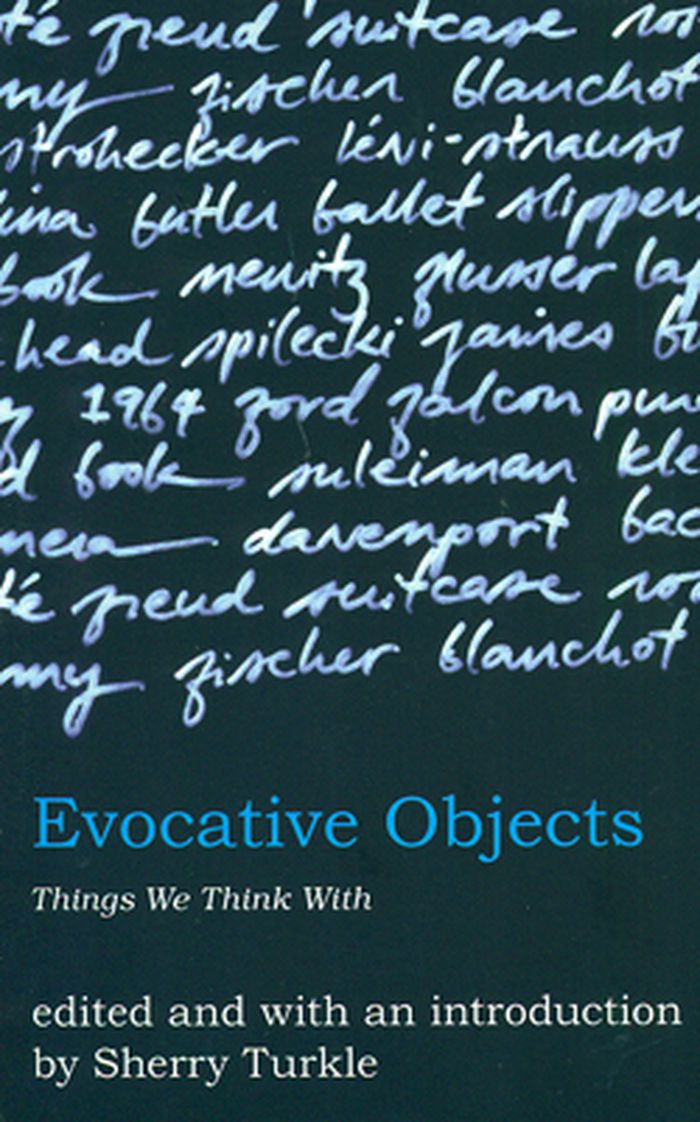
In Evocative Objects, Turkle collects writings by scientists, humanists, artists, and designers that trace the power of everyday things. These essays reveal objects as emotional and intellectual companions that anchor memory, sustain relationships, and provoke new ideas. These days, scholars show new interest in the importance of the concrete. This volume's special contribution is its focus on everyday riches: the simplest of objects - an apple, a datebook, a laptop computer - are shown to bring philosophy down to earth. The poet contends, "No ideas but in things." The notion of evocative objects goes further: objects carry both ideas and passions. In our relations to things, thought and feeling are inseparable. Whether it's a student's beloved 1964 Ford Falcon (left behind for a station wagon and motherhood), or a cello that inspires a meditation on fatherhood, the intimate objects in this collection are used to reflect on larger themes - the role of objects in design and play, discipline and desire, history and exchange, mourning and memory, transition and passage, meditation and new vision.
Evocative objects : things we think with
Actions:
Price:
$24.50
(available to order)
Summary:
In Evocative Objects, Turkle collects writings by scientists, humanists, artists, and designers that trace the power of everyday things. These essays reveal objects as emotional and intellectual companions that anchor memory, sustain relationships, and provoke new ideas. These days, scholars show new interest in the importance of the concrete. This volume's special contribution is its focus on everyday riches: the simplest of objects - an apple, a datebook, a laptop computer - are shown to bring philosophy down to earth. The poet contends, "No ideas but in things." The notion of evocative objects goes further: objects carry both ideas and passions. In our relations to things, thought and feeling are inseparable. Whether it's a student's beloved 1964 Ford Falcon (left behind for a station wagon and motherhood), or a cello that inspires a meditation on fatherhood, the intimate objects in this collection are used to reflect on larger themes - the role of objects in design and play, discipline and desire, history and exchange, mourning and memory, transition and passage, meditation and new vision.
Form:
books
books
Publication:
July 2011
July 2011
Subject:
Design Theory
Design Theory
Form:
books
books
Title:
Tokyo vertigo: extreme-city
Tokyo vertigo: extreme-city
Actions:
Price:
$27.00
(available to order)
Summary:
From the narrow alleyways of the Golden Gai to the flashing ads and jumbotrons of the Shibuya street crossings to the skyscrapers of Shinjuku and the cartoon billboards of the Akiba, Tokyo is an intensely visual and mesmerizing city. In Tokyo Vertigo, Stephen Barber focuses upon filmic, photographic, and media cultures as well as its urban history of destruction and(...)
$27.00
(available to order)
Summary:
From the narrow alleyways of the Golden Gai to the flashing ads and jumbotrons of the Shibuya street crossings to the skyscrapers of Shinjuku and the cartoon billboards of the Akiba, Tokyo is an intensely visual and mesmerizing city. In Tokyo Vertigo, Stephen Barber focuses upon filmic, photographic, and media cultures as well as its urban history of destruction and(...)
Title:
Tokyo vertigo: extreme-city
Actions:
Price:
$27.00
(available to order)
Summary:
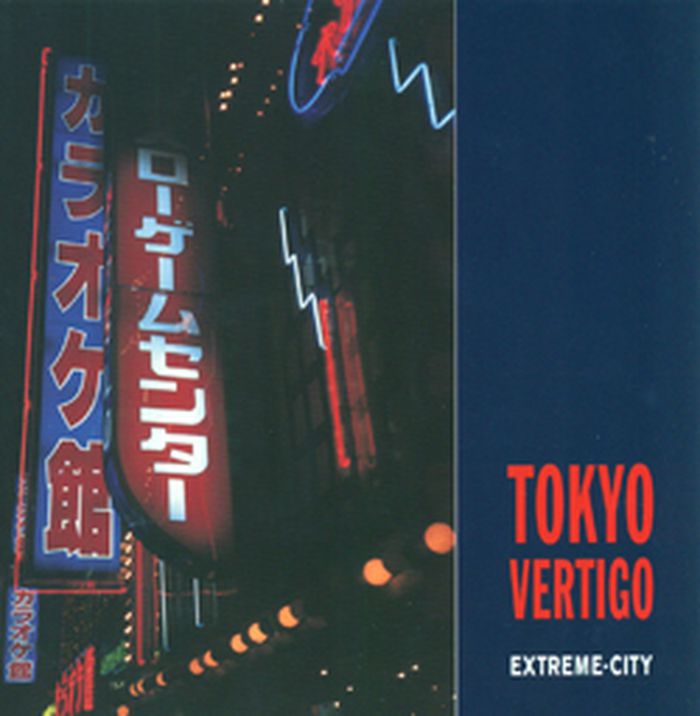
From the narrow alleyways of the Golden Gai to the flashing ads and jumbotrons of the Shibuya street crossings to the skyscrapers of Shinjuku and the cartoon billboards of the Akiba, Tokyo is an intensely visual and mesmerizing city. In Tokyo Vertigo, Stephen Barber focuses upon filmic, photographic, and media cultures as well as its urban history of destruction and reconfiguration. Dividing his analysis into three parts, Barber first interrogates the disparate urban zones of Tokyo, from the districts of Shinjuku and Shibuya to the desolate peripheries where the megalopolis falls apart. He then examines Tokyo's sexual and media cultures, through which the city's compulsive fascinations and obsessions exert their power. Finally, he looks at the ways in which European culture collides with Tokyo's urban formations, often generating unprecedented hybrid images and texts. An anti-guidebook that intimately reveals the visual culture of this city in constant flux, Tokyo Vertigo includes original photographs by Romain Slocombe and a range of photographic art-works from the 1950s to the 2010s that exemplify the intensity and spectacle of the city.
Tokyo vertigo: extreme-city
Actions:
Price:
$27.00
(available to order)
Summary:
From the narrow alleyways of the Golden Gai to the flashing ads and jumbotrons of the Shibuya street crossings to the skyscrapers of Shinjuku and the cartoon billboards of the Akiba, Tokyo is an intensely visual and mesmerizing city. In Tokyo Vertigo, Stephen Barber focuses upon filmic, photographic, and media cultures as well as its urban history of destruction and reconfiguration. Dividing his analysis into three parts, Barber first interrogates the disparate urban zones of Tokyo, from the districts of Shinjuku and Shibuya to the desolate peripheries where the megalopolis falls apart. He then examines Tokyo's sexual and media cultures, through which the city's compulsive fascinations and obsessions exert their power. Finally, he looks at the ways in which European culture collides with Tokyo's urban formations, often generating unprecedented hybrid images and texts. An anti-guidebook that intimately reveals the visual culture of this city in constant flux, Tokyo Vertigo includes original photographs by Romain Slocombe and a range of photographic art-works from the 1950s to the 2010s that exemplify the intensity and spectacle of the city.
Form:
books
books
Publication:
September 2011
September 2011
Subject:
Urban Theory
Urban Theory
Form:
books
books
Actions:
Price:
$45.00
(available to order)
Summary:
Of the fifty religious buildings discussed in this book, only a precious few remain standing despite the fact that Montreal boasts one of the largest and most eclectic groupings of Georgian and Victorian structures of any city in North America. Following the British conquest of New France in 1759 a remarkable series of transformations took place in the small,(...)
$45.00
(available to order)
Summary:
Of the fifty religious buildings discussed in this book, only a precious few remain standing despite the fact that Montreal boasts one of the largest and most eclectic groupings of Georgian and Victorian structures of any city in North America. Following the British conquest of New France in 1759 a remarkable series of transformations took place in the small,(...)
Title:
Montréal, city of spires: church architecture during the British colonial period 1760-1860
Actions:
Price:
$45.00
(available to order)
Summary:
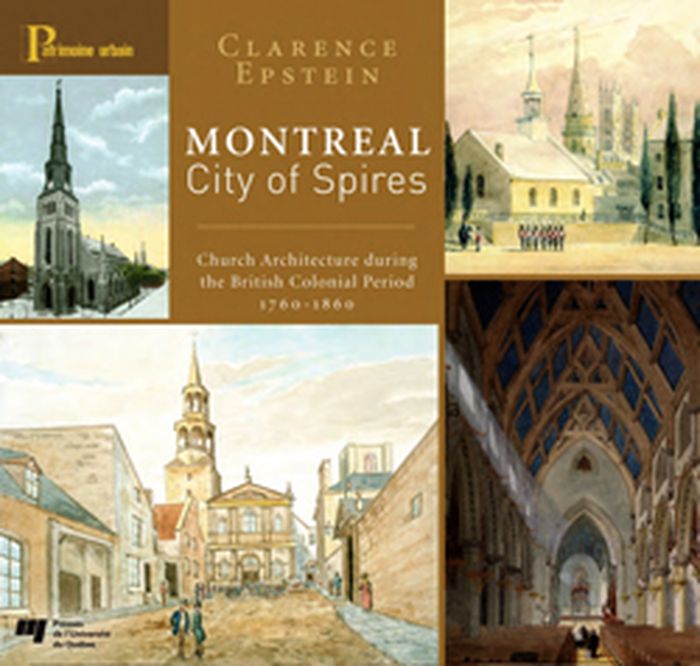
Of the fifty religious buildings discussed in this book, only a precious few remain standing despite the fact that Montreal boasts one of the largest and most eclectic groupings of Georgian and Victorian structures of any city in North America. Following the British conquest of New France in 1759 a remarkable series of transformations took place in the small, Catholic trading town of Montreal. Given the diversity of settlers forced to live side by side, the new church buildings that were to rise became strategic public spaces, meeting places as well as power bases. It was no wonder that by the time Mark Twain toured Canada’s first metropolis in the 1880s, he found that one could not throw a brick in the place without breaking a church window. By addressing the social, religious and architectural issues surrounding these colonial-era structures, it will become apparent that Montreal was at once a shining jewel in England’s imperial crown, a chief outpost of Catholicism in the New World, as well as the British North American headquarters for more than a dozen independent congregations.
Montréal, city of spires: church architecture during the British colonial period 1760-1860
Actions:
Price:
$45.00
(available to order)
Summary:
Of the fifty religious buildings discussed in this book, only a precious few remain standing despite the fact that Montreal boasts one of the largest and most eclectic groupings of Georgian and Victorian structures of any city in North America. Following the British conquest of New France in 1759 a remarkable series of transformations took place in the small, Catholic trading town of Montreal. Given the diversity of settlers forced to live side by side, the new church buildings that were to rise became strategic public spaces, meeting places as well as power bases. It was no wonder that by the time Mark Twain toured Canada’s first metropolis in the 1880s, he found that one could not throw a brick in the place without breaking a church window. By addressing the social, religious and architectural issues surrounding these colonial-era structures, it will become apparent that Montreal was at once a shining jewel in England’s imperial crown, a chief outpost of Catholicism in the New World, as well as the British North American headquarters for more than a dozen independent congregations.
Form:
books
books
Publication:
April 2012
April 2012
Subject:
Architecture de Montréal
Architecture de Montréal
Form:
books
books
Actions:
Price:
$49.95
(available to order)
Summary:
The ruins of war have long held the power to stupefy and appall. Can such ruins ever be persuasively depicted and comprehended? Can images of them force us to identify with the suffering of the enemy and raise uncomfortable questions about forgiveness and revenge? Françoise Meltzer explores those questions in Dark Lens, which uses the images of war ruins in Nazi(...)
$49.95
(available to order)
Summary:
The ruins of war have long held the power to stupefy and appall. Can such ruins ever be persuasively depicted and comprehended? Can images of them force us to identify with the suffering of the enemy and raise uncomfortable questions about forgiveness and revenge? Françoise Meltzer explores those questions in Dark Lens, which uses the images of war ruins in Nazi(...)
Title:
Dark lens: imaging Germany, 1945
Actions:
Price:
$49.95
(available to order)
Summary:
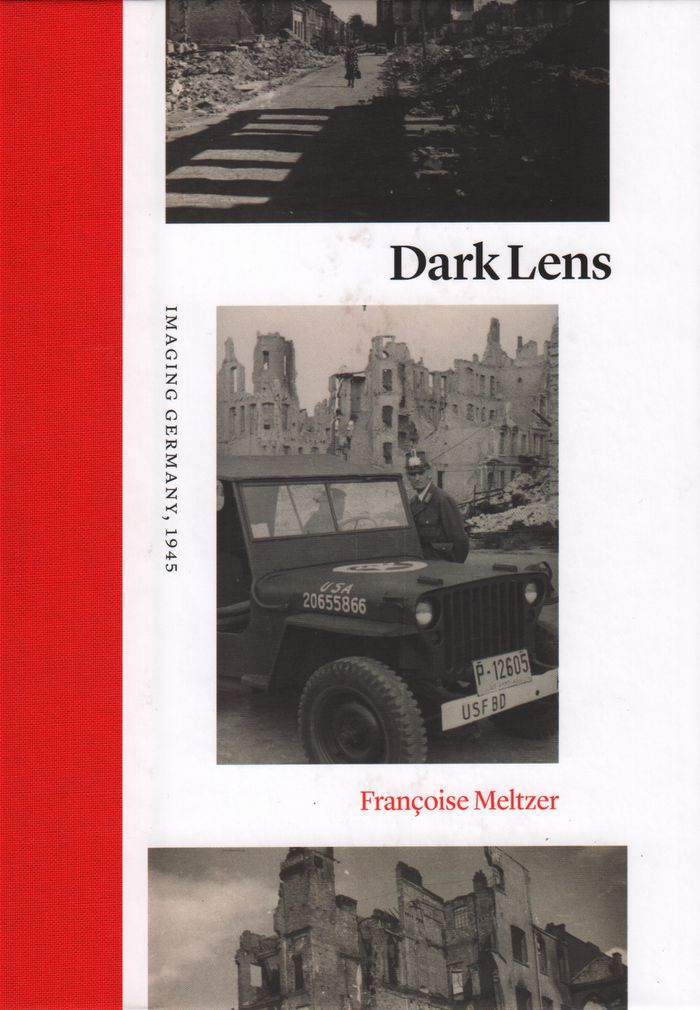
The ruins of war have long held the power to stupefy and appall. Can such ruins ever be persuasively depicted and comprehended? Can images of them force us to identify with the suffering of the enemy and raise uncomfortable questions about forgiveness and revenge? Françoise Meltzer explores those questions in Dark Lens, which uses the images of war ruins in Nazi Germany to investigate problems of aestheticization, the representation of catastrophe, and the targeting of civilians in war. Through texts that give accounts of bombed-out towns in Germany in the last years of the war, painters’ attempts to depict the destruction, and her own mother’s photographs taken in Berlin and other cities in 1945, Meltzer asks if any medium offers a direct experience of war ruins for the viewer. Ultimately, she concludes that while the viewer cannot help reimaging the devastation through the lenses of history, aestheticization, or voyeurism, these images at least allow us to approach the reality of ruins and grasp the larger issue of targeting civilians in modern warfare for what it is.
Dark lens: imaging Germany, 1945
Actions:
Price:
$49.95
(available to order)
Summary:
The ruins of war have long held the power to stupefy and appall. Can such ruins ever be persuasively depicted and comprehended? Can images of them force us to identify with the suffering of the enemy and raise uncomfortable questions about forgiveness and revenge? Françoise Meltzer explores those questions in Dark Lens, which uses the images of war ruins in Nazi Germany to investigate problems of aestheticization, the representation of catastrophe, and the targeting of civilians in war. Through texts that give accounts of bombed-out towns in Germany in the last years of the war, painters’ attempts to depict the destruction, and her own mother’s photographs taken in Berlin and other cities in 1945, Meltzer asks if any medium offers a direct experience of war ruins for the viewer. Ultimately, she concludes that while the viewer cannot help reimaging the devastation through the lenses of history, aestheticization, or voyeurism, these images at least allow us to approach the reality of ruins and grasp the larger issue of targeting civilians in modern warfare for what it is.
Form:
books
books
Publication:
September 2019
September 2019
Subject:
Theory of Photography
Theory of Photography
Form:
books
books
Actions:
Price:
$44.95
(available to order)
Summary:
The objects of architecture are not simply inert assemblies of material - they are complex entities that unfold their potential agencies (whether political, social, or environmental) in equally complex ways. Exploring these forms of architectural agency has in recent years been a central aspect of the work of Andrés Jaque and the Office for Political Innovation, who, in(...)
$44.95
(available to order)
Summary:
The objects of architecture are not simply inert assemblies of material - they are complex entities that unfold their potential agencies (whether political, social, or environmental) in equally complex ways. Exploring these forms of architectural agency has in recent years been a central aspect of the work of Andrés Jaque and the Office for Political Innovation, who, in(...)
Title:
Superpowers of scale: Office for Political Innovation
Actions:
Price:
$44.95
(available to order)
Summary:
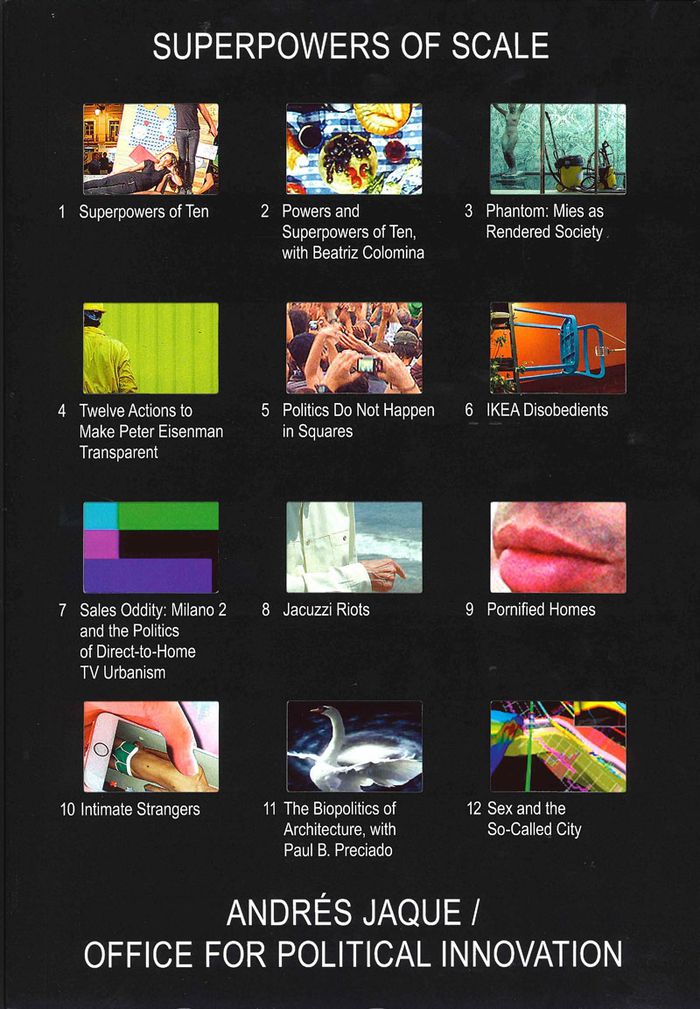
The objects of architecture are not simply inert assemblies of material - they are complex entities that unfold their potential agencies (whether political, social, or environmental) in equally complex ways. Exploring these forms of architectural agency has in recent years been a central aspect of the work of Andrés Jaque and the Office for Political Innovation, who, in addition to their built works, pursue a research practice through the many other media of architectural production. Their projects are reactive, intervening on what already exists to demonstrate how design, politics, and criticality operate across different scales and at the intersection of multiple realities. Jaque’s performances, videos, and installations—and this book, which collects a range of recent research projects—bring new subjects into the fold of architecture, focusing on alternative actors, distributions of power and representation, and the sociocultural effects of architecture. These episodes address ideas like genetic manipulation, the necessary requeering of dequeered spaces of online interaction, and the selling of modern architectural comforts in order to subvert the field from within and to contest capitalism's flattening-out of public life.
Superpowers of scale: Office for Political Innovation
Actions:
Price:
$44.95
(available to order)
Summary:
The objects of architecture are not simply inert assemblies of material - they are complex entities that unfold their potential agencies (whether political, social, or environmental) in equally complex ways. Exploring these forms of architectural agency has in recent years been a central aspect of the work of Andrés Jaque and the Office for Political Innovation, who, in addition to their built works, pursue a research practice through the many other media of architectural production. Their projects are reactive, intervening on what already exists to demonstrate how design, politics, and criticality operate across different scales and at the intersection of multiple realities. Jaque’s performances, videos, and installations—and this book, which collects a range of recent research projects—bring new subjects into the fold of architecture, focusing on alternative actors, distributions of power and representation, and the sociocultural effects of architecture. These episodes address ideas like genetic manipulation, the necessary requeering of dequeered spaces of online interaction, and the selling of modern architectural comforts in order to subvert the field from within and to contest capitalism's flattening-out of public life.
Form:
books
books
Publication:
March 2020
March 2020
Subject:
Architecture Monographs
Architecture Monographs
Form:
books
books
Actions:
Price:
$50.00
(available to order)
Summary:
The exhilarating and at times unsettling work featured in this book suggests an alternative view of natural processes and ecosystems and their relationships to human society and architecture. R's Mosquito Bottleneck house in Trinidad uses a skin that actually attracts mosquitoes and moves them through the building, while keeping them separate from the occupants. In his(...)
$50.00
(available to order)
Summary:
The exhilarating and at times unsettling work featured in this book suggests an alternative view of natural processes and ecosystems and their relationships to human society and architecture. R's Mosquito Bottleneck house in Trinidad uses a skin that actually attracts mosquitoes and moves them through the building, while keeping them separate from the occupants. In his(...)
Title:
Subnature, architecture's other environments
Actions:
Price:
$50.00
(available to order)
Summary:
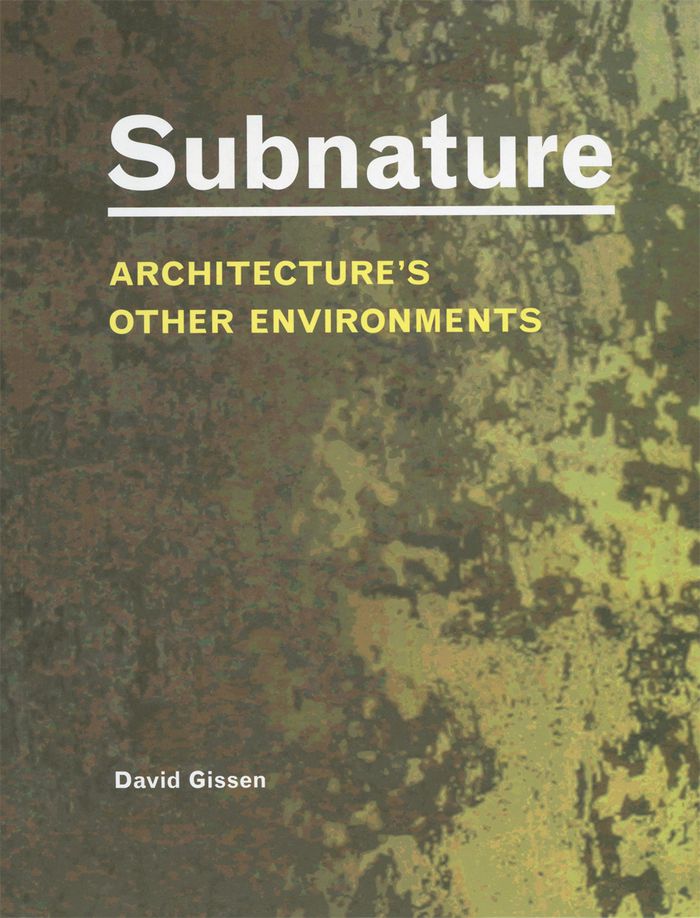
The exhilarating and at times unsettling work featured in this book suggests an alternative view of natural processes and ecosystems and their relationships to human society and architecture. R's Mosquito Bottleneck house in Trinidad uses a skin that actually attracts mosquitoes and moves them through the building, while keeping them separate from the occupants. In his building designs the architect Philippe Rahm draws the dank air from the earth and the gasses and moisture from our breath to define new forms of spatial experience. In his Underground House, Mollier House, and Omnisport Hall, Rahm forces us to consider the odor of soil and the emissions from our body as the natural context of a future architecture. [Cero 9]'s design for the Magic Mountain captures excess heat emitted from a power generator in Ames, Iowa, to fuel a rose garden that embellishes the industrial site and creates a natural mountain rising above the city's skyline. Subnature looks beyond leed ratings, green roofs, and solar panels toward a progressive architecture based on a radical new conception of nature.
Subnature, architecture's other environments
Actions:
Price:
$50.00
(available to order)
Summary:
The exhilarating and at times unsettling work featured in this book suggests an alternative view of natural processes and ecosystems and their relationships to human society and architecture. R's Mosquito Bottleneck house in Trinidad uses a skin that actually attracts mosquitoes and moves them through the building, while keeping them separate from the occupants. In his building designs the architect Philippe Rahm draws the dank air from the earth and the gasses and moisture from our breath to define new forms of spatial experience. In his Underground House, Mollier House, and Omnisport Hall, Rahm forces us to consider the odor of soil and the emissions from our body as the natural context of a future architecture. [Cero 9]'s design for the Magic Mountain captures excess heat emitted from a power generator in Ames, Iowa, to fuel a rose garden that embellishes the industrial site and creates a natural mountain rising above the city's skyline. Subnature looks beyond leed ratings, green roofs, and solar panels toward a progressive architecture based on a radical new conception of nature.
Form:
books
books
Publication:
November 2009
November 2009
Subject:
Green Architecture
Green Architecture
Form:
books
books
Title:
David Hartt : stray light
David Hartt : stray light
Actions:
Price:
$68.95
(available to order)
Summary:
When the Johnson Publishing Company, best known for Jet and Ebony, moved into its iconic building on Michigan Avenue, the structure symbolized a bold entry into both the Chicago skyline and the city’s cultural environment. This emblematic building was the first in Chicago designed and owned by African Americans, a modernist masterpiece that in 1980 the Washington Post(...)
$68.95
(available to order)
Summary:
When the Johnson Publishing Company, best known for Jet and Ebony, moved into its iconic building on Michigan Avenue, the structure symbolized a bold entry into both the Chicago skyline and the city’s cultural environment. This emblematic building was the first in Chicago designed and owned by African Americans, a modernist masterpiece that in 1980 the Washington Post(...)
Title:
David Hartt : stray light
Actions:
Price:
$68.95
(available to order)
Summary:
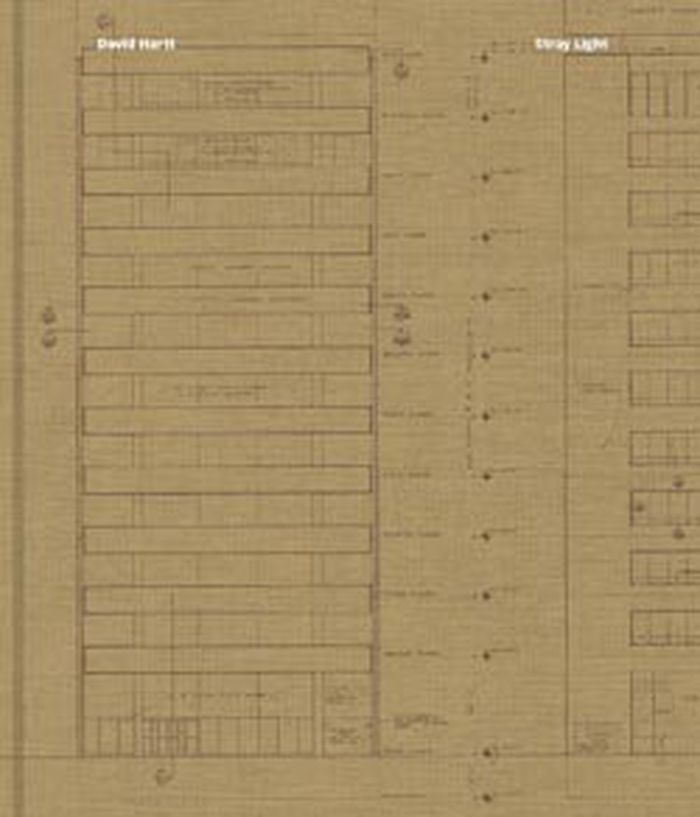
When the Johnson Publishing Company, best known for Jet and Ebony, moved into its iconic building on Michigan Avenue, the structure symbolized a bold entry into both the Chicago skyline and the city’s cultural environment. This emblematic building was the first in Chicago designed and owned by African Americans, a modernist masterpiece that in 1980 the Washington Post called, “practically a monument—sometimes an ostentatious one—to black success.” David Hartt was given unprecedented access to the building, much of which retains its ’70s design, from bright gold accents to vintage see-through furniture. His resulting photographs take viewers on a rich and revealing tour. They capture the distinct physical characteristics while also illuminating the power structures and ideological purposes they once represented. Hartt’s collection also serves as an unexpected final documentation. Not long after Hartt captured these images, the Johnson Publishing Company announced it was selling its building and moving north. Stray Light is a time capsule of a historic building that once symbolized a bright future.
David Hartt : stray light
Actions:
Price:
$68.95
(available to order)
Summary:
When the Johnson Publishing Company, best known for Jet and Ebony, moved into its iconic building on Michigan Avenue, the structure symbolized a bold entry into both the Chicago skyline and the city’s cultural environment. This emblematic building was the first in Chicago designed and owned by African Americans, a modernist masterpiece that in 1980 the Washington Post called, “practically a monument—sometimes an ostentatious one—to black success.” David Hartt was given unprecedented access to the building, much of which retains its ’70s design, from bright gold accents to vintage see-through furniture. His resulting photographs take viewers on a rich and revealing tour. They capture the distinct physical characteristics while also illuminating the power structures and ideological purposes they once represented. Hartt’s collection also serves as an unexpected final documentation. Not long after Hartt captured these images, the Johnson Publishing Company announced it was selling its building and moving north. Stray Light is a time capsule of a historic building that once symbolized a bright future.
Form:
books
books
Publication:
September 2013
September 2013
Subject:
Photography monographs
Photography monographs
Form:
books
books
Title:
Can't and won't
Can't and won't
Actions:
Price:
$30.00
(available to order)
Summary:
Her stories may be literal one-liners: the entirety of “Bloomington” reads, “Now that I have been here for a little while, I can say with confidence that I have never been here before.” Or they may be lengthier investigations of the havoc wreaked by the most mundane disruptions to routine: in “A Small Story About a Small Box of Chocolates,” a professor receives a gift of(...)
$30.00
(available to order)
Summary:
Her stories may be literal one-liners: the entirety of “Bloomington” reads, “Now that I have been here for a little while, I can say with confidence that I have never been here before.” Or they may be lengthier investigations of the havoc wreaked by the most mundane disruptions to routine: in “A Small Story About a Small Box of Chocolates,” a professor receives a gift of(...)
Title:
Can't and won't
Actions:
Price:
$30.00
(available to order)
Summary:
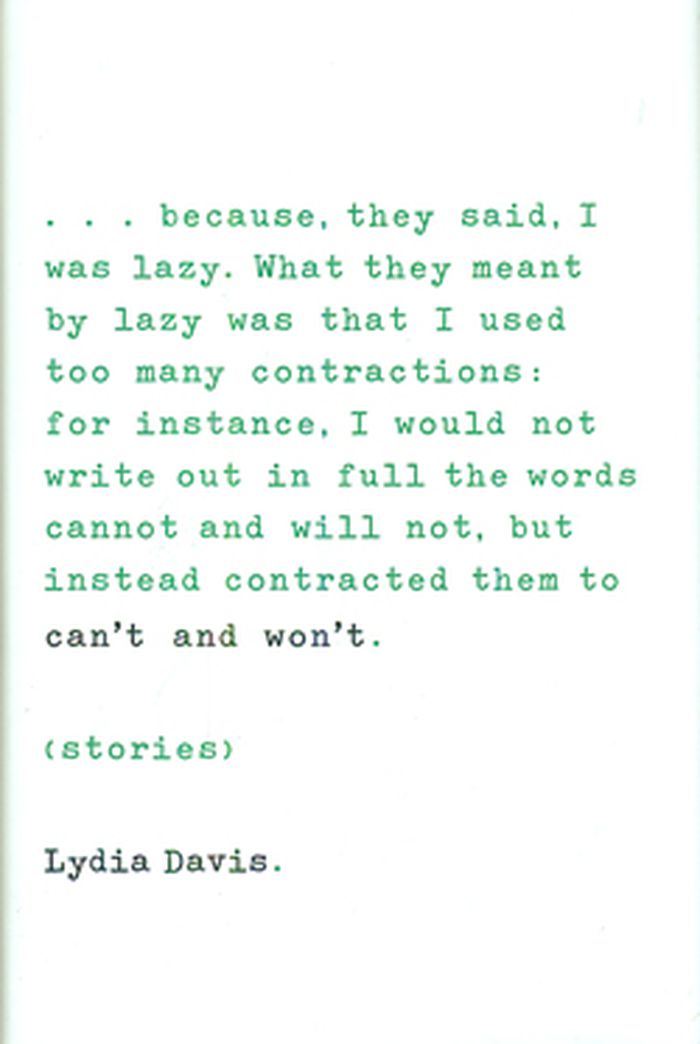
Her stories may be literal one-liners: the entirety of “Bloomington” reads, “Now that I have been here for a little while, I can say with confidence that I have never been here before.” Or they may be lengthier investigations of the havoc wreaked by the most mundane disruptions to routine: in “A Small Story About a Small Box of Chocolates,” a professor receives a gift of thirty-two small chocolates and is paralyzed by the multitude of options she imagines for their consumption. The stories may appear in the form of letters of complaint; they may be extracted from Flaubert’s correspondence; or they may be inspired by the author’s own dreams, or the dreams of friends. What does not vary throughout Can’t and Won’t, Lydia Davis’s fifth collection of stories, is the power of her finely honed prose. Davis is sharply observant; she is wry or witty or poignant. Above all, she is refreshing. Davis writes with bracing candor and sly humor about the quotidian, revealing the mysterious, the foreign, the alienating, and the pleasurable within the predictable patterns of daily life.
Can't and won't
Actions:
Price:
$30.00
(available to order)
Summary:
Her stories may be literal one-liners: the entirety of “Bloomington” reads, “Now that I have been here for a little while, I can say with confidence that I have never been here before.” Or they may be lengthier investigations of the havoc wreaked by the most mundane disruptions to routine: in “A Small Story About a Small Box of Chocolates,” a professor receives a gift of thirty-two small chocolates and is paralyzed by the multitude of options she imagines for their consumption. The stories may appear in the form of letters of complaint; they may be extracted from Flaubert’s correspondence; or they may be inspired by the author’s own dreams, or the dreams of friends. What does not vary throughout Can’t and Won’t, Lydia Davis’s fifth collection of stories, is the power of her finely honed prose. Davis is sharply observant; she is wry or witty or poignant. Above all, she is refreshing. Davis writes with bracing candor and sly humor about the quotidian, revealing the mysterious, the foreign, the alienating, and the pleasurable within the predictable patterns of daily life.
Form:
books
books
Publication:
March 2014
March 2014
Subject:
Architecture and the imaginary
Architecture and the imaginary
Form:
books
books

Actions:
Price:
$38.95
(available to order)
Summary:
In August 1968, the Pakistani foreign minister visited Beijing and presented Chairman Mao Zedong with a crate of mangoes as a diplomatic gesture. The next day, Mao sent the mangoes to the “Worker-Peasant Mao Zedong though Propaganda Teams,” who had been stationed at Quinghua University to put down warring factions of Red Guards ten days previously. The message of this(...)
$38.95
(available to order)
Summary:
In August 1968, the Pakistani foreign minister visited Beijing and presented Chairman Mao Zedong with a crate of mangoes as a diplomatic gesture. The next day, Mao sent the mangoes to the “Worker-Peasant Mao Zedong though Propaganda Teams,” who had been stationed at Quinghua University to put down warring factions of Red Guards ten days previously. The message of this(...)
Title:
Mao's Golden Mangoes, and the cultural revolution
Actions:
Price:
$38.95
(available to order)
Summary:
In August 1968, the Pakistani foreign minister visited Beijing and presented Chairman Mao Zedong with a crate of mangoes as a diplomatic gesture. The next day, Mao sent the mangoes to the “Worker-Peasant Mao Zedong though Propaganda Teams,” who had been stationed at Quinghua University to put down warring factions of Red Guards ten days previously. The message of this gift was to dismiss the Student Red Guards, who had been leaders of the proletarian movement in China, and in their stead to install workers as the permanent guardians of China’s education system. During the following weeks, the mangoes were distributed to several factories, where they were treated as though they were religious relics. The golden mango was thus a powerful emblem of the power and respect accorded to the proletariat under Mao’s rule. Mao’s Gold Mangoes and the Cultural Revolution is the catalog for an exhibition of the same title at the Museum Rietberg in Zürich, which explores the golden mangoes’ reverberations throughout Chinese culture for years to come.
Mao's Golden Mangoes, and the cultural revolution
Actions:
Price:
$38.95
(available to order)
Summary:
In August 1968, the Pakistani foreign minister visited Beijing and presented Chairman Mao Zedong with a crate of mangoes as a diplomatic gesture. The next day, Mao sent the mangoes to the “Worker-Peasant Mao Zedong though Propaganda Teams,” who had been stationed at Quinghua University to put down warring factions of Red Guards ten days previously. The message of this gift was to dismiss the Student Red Guards, who had been leaders of the proletarian movement in China, and in their stead to install workers as the permanent guardians of China’s education system. During the following weeks, the mangoes were distributed to several factories, where they were treated as though they were religious relics. The golden mango was thus a powerful emblem of the power and respect accorded to the proletariat under Mao’s rule. Mao’s Gold Mangoes and the Cultural Revolution is the catalog for an exhibition of the same title at the Museum Rietberg in Zürich, which explores the golden mangoes’ reverberations throughout Chinese culture for years to come.
Form:
books
books
Publication:
May 2013
May 2013


