


5088 Results
Form:
books
books
Actions:
Price:
$34.95
(available to order)
Summary:
For as long as humans have gathered in cities, those cities have had their shining—or shadowy—counterparts. Imaginary cities, potential cities, future cities, perfect cities. It is as if the city itself, its inescapable gritty reality and elbow-to-elbow nature, demands we call into being some alternative, yearned-for better place. This book is about those cities. It’s(...)
Title:
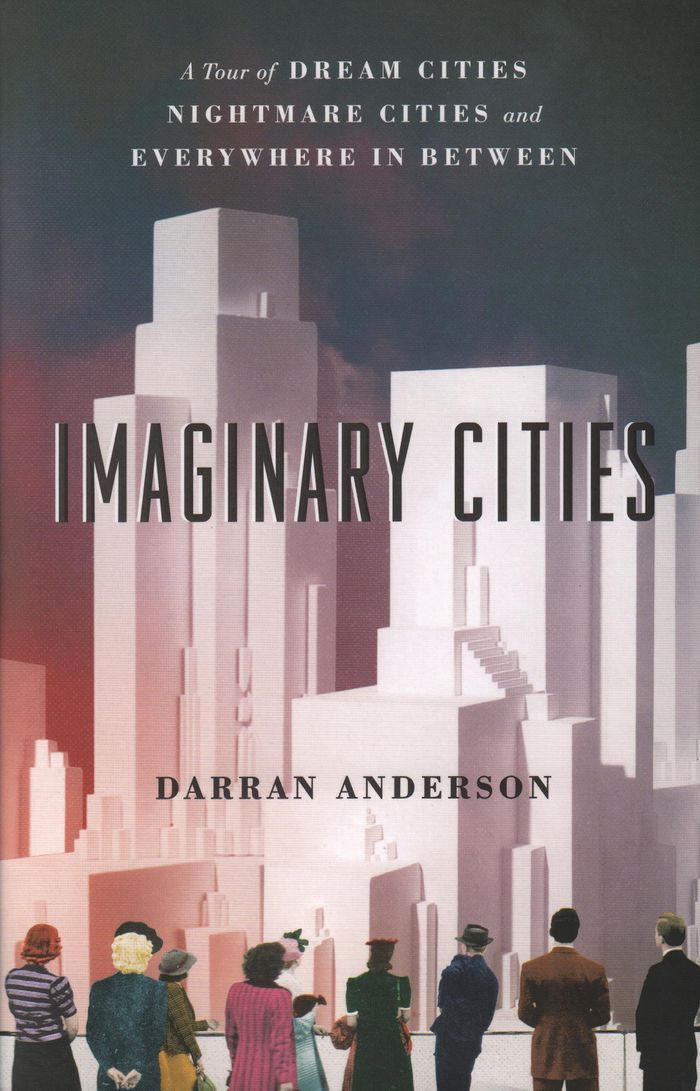
Imaginary cities: a tour of dream cities, nightmare cities and everywhere in between
Actions:
Price:
$34.95
(available to order)
Summary:
For as long as humans have gathered in cities, those cities have had their shining—or shadowy—counterparts. Imaginary cities, potential cities, future cities, perfect cities. It is as if the city itself, its inescapable gritty reality and elbow-to-elbow nature, demands we call into being some alternative, yearned-for better place. This book is about those cities. It’s neither a history of grand plans nor a literary exploration of the utopian impulse, but rather something different, hybrid, idiosyncratic. It’s a magpie’s book, full of characters and incidents and ideas drawn from cities real and imagined around the globe and throughout history. Thomas More’s allegorical island shares space with Soviet mega-planning; Marco Polo links up with James Joyce’s meticulously imagined Dublin; the medieval land of Cockaigne meets the hopeful future of Star Trek. With Darran Anderson as our guide, we find common themes and recurring dreams, tied to the seemingly ineluctable problems of our actual cities, of poverty and exclusion and waste and destruction. And that’s where Imaginary Cities becomes more than a mere—if ecstatically entertaining—intellectual exercise: for, as Anderson says, “If a city can be imagined into being, it can be re-imagined.” Every architect, philosopher, artist, writer, planner, or citizen who dreams up an imaginary city offers lessons for our real ones; harnessing those flights of hopeful fancy can help us improve the streets where we live.
Form:
books
books
Publication:
April 2017
April 2017
Subject:
Urban Theory
Urban Theory
Form:
books
books
Actions:
Price:
$45.00
(available to order)
Summary:
"The Canadians" playfully and affectionately reimagines one of the most revered photography books of the 20th century, Robert Frank’s The Americans. The source for the imagery is the print archive of The Globe and Mail, which contains more than 500,000 prints—24,000 of which have been donated to the newly formed Canadian Institute of Photography, housed within the(...)
Subject:
Photography Collections
Photography Collections
Publication:
September 2017
September 2017
Title:
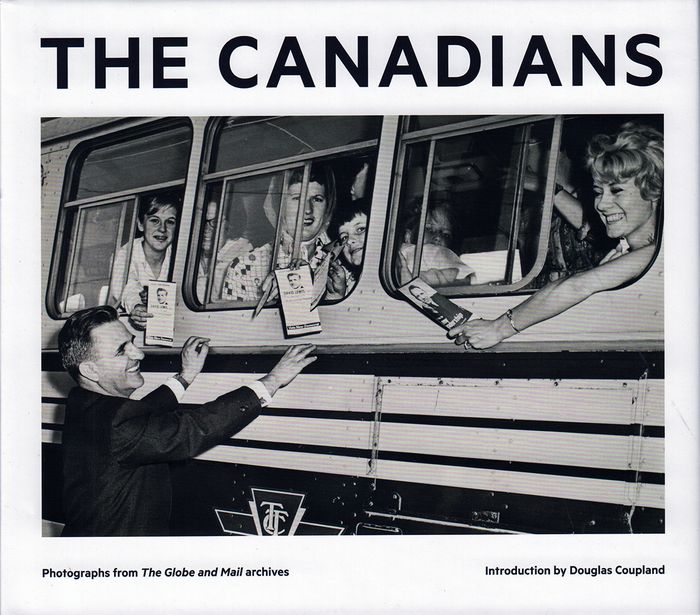
The Canadians: photographs from the Globe and Mail archives
Actions:
Price:
$45.00
(available to order)
Summary:
"The Canadians" playfully and affectionately reimagines one of the most revered photography books of the 20th century, Robert Frank’s The Americans. The source for the imagery is the print archive of The Globe and Mail, which contains more than 500,000 prints—24,000 of which have been donated to the newly formed Canadian Institute of Photography, housed within the National Gallery of Canada. Nearly 80 of these photographs have been selected for this book, and also form the basis for a national touring exhibition. These functionary press photographs, made to illustrate news stories—the state of the roads after a severe winter; a politician on the campaign trail; the opening of a new laundromat—hold no pretentions to be works of photographic art. However, taken together, they describe Canadian culture during an era of great transformation. Published in association with the Archive of Modern Conflict, the book begins with an insightful and irreverent introduction by Douglas Coupland, bringing together themes illuminated in these photographs, and taking us on a guided tour of a Canada gone, but not forgotten. "How strange it is to look at these photos of a Canada that was almost dead when I was a child," he writes, "the Canada of my parents and my grandparents, the Canada of the late 1950s and early ‘60s, a country in which, it would seem, people were born, became teenagers, and then, magically, at the age of 21, turned into chain-smoking 50-year olds with undiagnosed cancers."
Form:
books
books
Publication:
September 2017
September 2017
Subject:
Photography Collections
Photography Collections
Form:
books
books
Title:
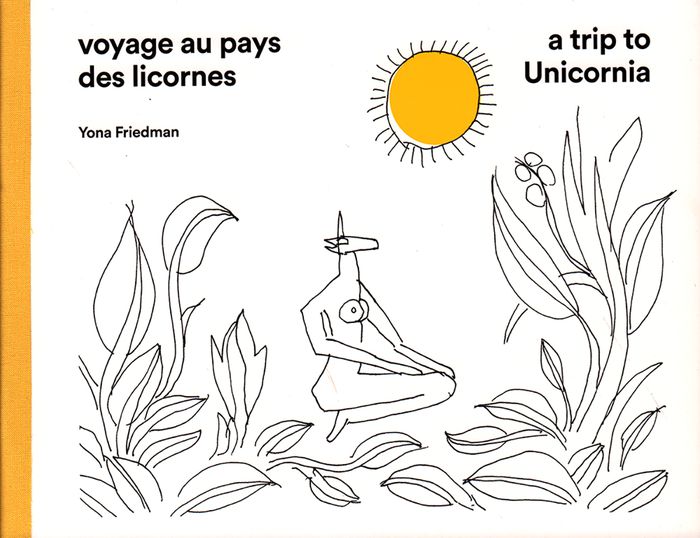
Voyage au pays des licornes
Voyage au pays des licornes
Actions:
Price:
$16.95
(available in store)
Summary:
"Voyage au pays des licornes" est la description en 16 planche des us et coutumes des licornes. Ce monde est une projection des utopies que Yona Friedman a imaginées tout au long de sa vie : un pays où l’on vit en paix, où l’on construit son propre abri, où la mort et la propriété n’existent pas, où l’on danse, célèbre, et se suffit de peu. Ces dessins ont été réalisés il(...)
Title:
Voyage au pays des licornes
Actions:
Price:
$16.95
(available in store)
Summary:
"Voyage au pays des licornes" est la description en 16 planche des us et coutumes des licornes. Ce monde est une projection des utopies que Yona Friedman a imaginées tout au long de sa vie : un pays où l’on vit en paix, où l’on construit son propre abri, où la mort et la propriété n’existent pas, où l’on danse, célèbre, et se suffit de peu. Ces dessins ont été réalisés il y a plusieurs années par Yona Friedman pour sa petite-fille. En matière de bandes dessinées, l’artiste s’y connaît : lorsqu’il a construit en Inde, ne pouvant pas donner de dessins techniques aux ouvriers, il leur a expliqué son idée au moyen d’une BD. De même, afin que les non-professionnels puissent comprendre et appliquer sa méthode, il a traduit en BD son livre-manifeste Pour l’architecture scientifique. Ce livre est à colorier... ou pas et l’enfant peut suivre l’histoire en français ou en anglais. à ce titre, ce petit album peut même faire figure de cours de langue ! Yona Friedman, né 1923 à Budapest, a étudié l’architecture en Hongrie et en Israël, avant de s’installer à Paris en 1957. Sa vision de l’architecture, de l’urbanisme, de l’art et de la société est totalement visionnaire et anticipe la plupart des mutations que le monde traverse actuellement. Entre utopie créative et réalité concrète, il prône en priorité l’autonomie, l’épanouissement de l’individu et la qualité des relations sociales.
Form:
books
books
Publication:
August 2017
August 2017
Subject:
Children's Books
Children's Books
Form:
books
books
Actions:
Price:
$36.00
(available to order)
Summary:
Riverside, Illinois, was designed in 1869 by landscape architect Frederick Law Olmsted and his architect partner Calvert Vaux. Their unique design, which followed the contours of the landscape and emphasized open spaces, inspired the greatest architects of the time to undertake projects in Riverside. Among those projects was the Avery Coonley Estate, a rare joint effort(...)
Title:
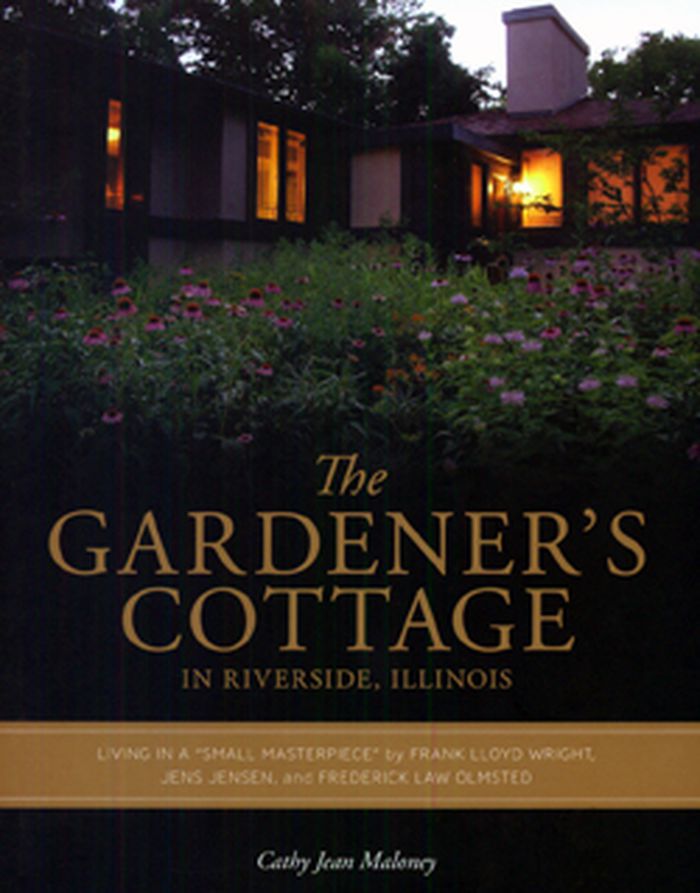
The gardener's cottage in Riverside, Illinois: Living in a
Actions:
Price:
$36.00
(available to order)
Summary:
Riverside, Illinois, was designed in 1869 by landscape architect Frederick Law Olmsted and his architect partner Calvert Vaux. Their unique design, which followed the contours of the landscape and emphasized open spaces, inspired the greatest architects of the time to undertake projects in Riverside. Among those projects was the Avery Coonley Estate, a rare joint effort by Frank Lloyd Wright and landscape architect Jens Jensen. At the center of the estate, itself a National Historic Landmark, sits the Gardener’s Cottage, a small but unassuming masterpiece built for the estate’s gardener and his wife. The cottage matches the architectural aesthetic of the estate, and its naturalistic, stunning gardens reflect the overall emphasis on landscape and nature in Riverside. But what is it truly like to live within a historic work of architectural art? Current owner and gardening writer Cathy Jean Maloney here records her discoveries and personal reflections on living in the Gardener’s Cottage with her family. In The Gardener’s Cottage in Riverside, Illinois, Maloney describes the cottage’s beginnings, providing biographical background and design insight into the house itself and Riverside’s key creators. She also highlights the often overlooked beauty of the cottage and illustrates how it is emblematic of Wright and Jensen’s holistic Prairie Style approach to building and landscape architecture. The size of the Gardener’s Cottage allows us to witness Wright’s aesthetic concerns in small detail and to understand his ideas on a more accessible and livable scale.
Form:
books
books
Publication:
February 2009
February 2009
Subject:
Architecture Monographs
Architecture Monographs
Form:
books
books
Price:
$38.99
(available in store)
Summary:
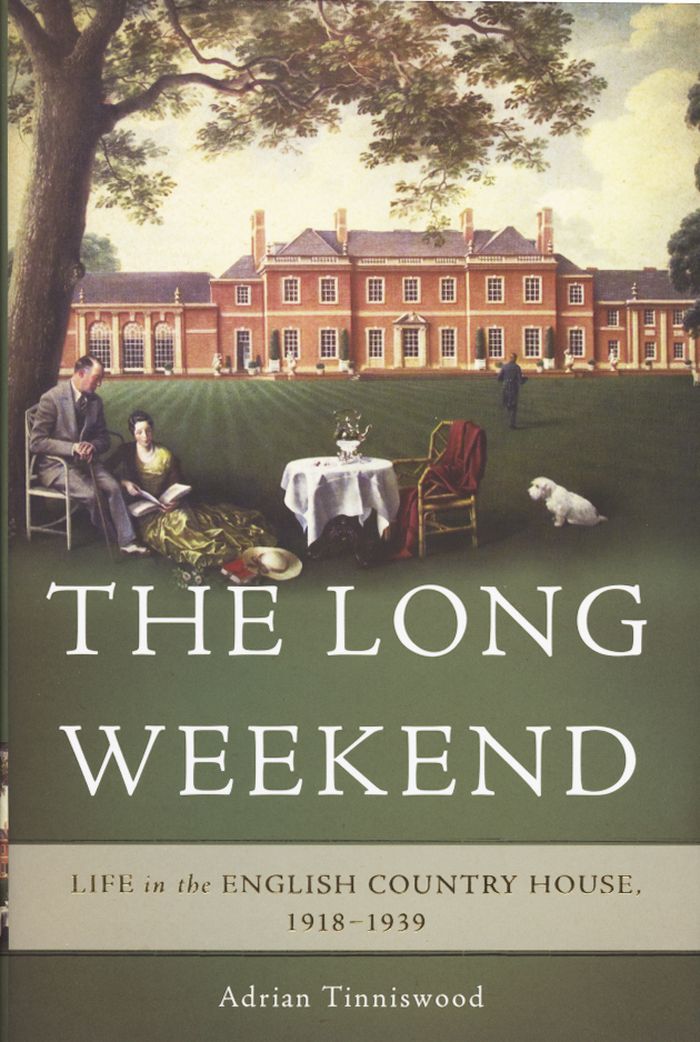
As WWI drew to a close, change reverberated through the halls of England’s country homes. As the sun set slowly on the British Empire, the shadows lengthened on the lawns of a thousand stately homes. In The Long Weekend, historian Adrian Tinniswood introduces us to the tumultuous, scandalous and glamourous history of English country houses during the years between(...)
Title:
The long weekend: life in the English country house 1918-1939
Actions:
Price:
$38.99
(available in store)
Summary:
As WWI drew to a close, change reverberated through the halls of England’s country homes. As the sun set slowly on the British Empire, the shadows lengthened on the lawns of a thousand stately homes. In The Long Weekend, historian Adrian Tinniswood introduces us to the tumultuous, scandalous and glamourous history of English country houses during the years between World Wars. As estate taxes and other challenges forced many of these venerable houses onto the market, new sectors of British and American society were seduced by the dream of owning a home in the English countryside. Drawing on thousands of memoirs, letters, and diaries, as well as the eye-witness testimonies of belted earls and bibulous butlers, Tinniswood brings the stately homes of England to life as never before, opening the door to a world by turns opulent and ordinary, noble and vicious, and forever wrapped in myth. We are drawn into the intrigues of legendary families such as the Astors, the Churchills and the Devonshires as they hosted hunting parties and balls that attracted the likes of Charlie Chaplin, T.E. Lawrence, and royals such as Edward VIII and Wallis Simpson. We waltz through aristocratic soirées, and watch as the upper crust struggle to fend off rising taxes and underbred outsiders, property speculators and poultry farmers. We gain insight into the guilt and the gingerbread, and see how the image of the country house was carefully protected by its occupants above and below stairs.
Form:
books
books
Publication:
May 2016
May 2016
Subject:
History until 1900, Great Britain
History until 1900, Great Britain
Form:
books
books
Actions:
Price:
$29.50
(available to order)
Summary:
Instead of treating art as a unique creation that requires reason and refined taste to appreciate, Elizabeth Grosz argues that art-especially architecture, music, and painting-is born from the disruptive forces of sexual selection. She approaches art as a form of erotic expression connecting sensory richness with primal desire, and in doing so, finds that the meaning of(...)
Title:
Chaos, territory, art, Deleuze and the framing of the earth
Actions:
Price:
$29.50
(available to order)
Summary:
Instead of treating art as a unique creation that requires reason and refined taste to appreciate, Elizabeth Grosz argues that art-especially architecture, music, and painting-is born from the disruptive forces of sexual selection. She approaches art as a form of erotic expression connecting sensory richness with primal desire, and in doing so, finds that the meaning of art comes from the intensities and sensations it inspires, not just its intention and aesthetic. By regarding our most cultured human accomplishments as the result of the excessive, nonfunctional forces of sexual attraction and seduction, Grosz encourages us to see art as a kind of bodily enhancement or mode of sensation enabling living bodies to experience and transform the universe. Art can be understood as a way for bodies to augment themselves and their capacity for perception and affection-a way to grow and evolve through sensation. Through this framework, which knits together the theories of Charles Darwin, Henri Bergson, Gilles Deleuze, FA(c)lix Guattari, and Jakob von UexkA1/4ll, we are able to grasp art's deep animal lineage. Grosz argues that art is not tied to the predictable and known but to new futures not contained in the present. Its animal affiliations ensure that art is intensely political and charged with the creation of new worlds and new forms of living. According to Grosz, art is the way in which life experiments with materiality, or nature, in order to bring about change.
Form:
books
books
Publication:
August 2008, New York
August 2008, New York
Subject:
Critical Theory
Critical Theory
Form:
books
books
Actions:
Price:
$89.99
(available to order)
Summary:
Written by the chair of the LEED-Neighborhood Development (LEED-ND) initiative, Sustainable Urbanism: Urban Design with Nature is both an urgent call to action and a comprehensive introduction to "sustainable urbanism"--the emerging and growing design reform movement that combines the creation and enhancement of walkable and diverse places with the need to build(...)
Title:
Sustainable urbanism: urban design with nature
Actions:
Price:
$89.99
(available to order)
Summary:
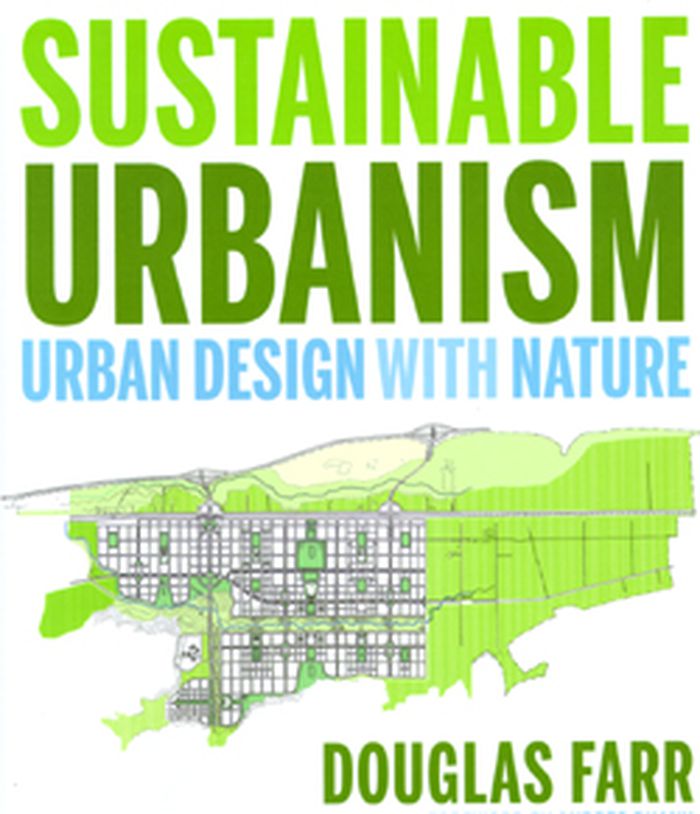
Written by the chair of the LEED-Neighborhood Development (LEED-ND) initiative, Sustainable Urbanism: Urban Design with Nature is both an urgent call to action and a comprehensive introduction to "sustainable urbanism"--the emerging and growing design reform movement that combines the creation and enhancement of walkable and diverse places with the need to build high-performance infrastructure and buildings. Providing a historic perspective on the standards and regulations that got us to where we are today in terms of urban lifestyle and attempts at reform, Douglas Farr makes a powerful case for sustainable urbanism, showing where we went wrong, and where we need to go. He then explains how to implement sustainable urbanism through leadership and communication in cities, communities, and neighborhoods. Essays written by Farr and others delve into such issues as: Increasing sustainability through density. Integrating transportation and land use. Creating sustainable neighborhoods, including housing, car-free areas, locally-owned stores, walkable neighborhoods, and universal accessibility. The health and environmental benefits of linking humans to nature, including walk-to open spaces, neighborhood stormwater systems and waste treatment, and food production. High performance buildings and district energy systems. Enriching the argument are in-depth case studies in sustainable urbanism, from BedZED in London, England and Newington in Sydney, Australia, to New Railroad Square in Santa Rosa, California and Dongtan, Shanghai, China. An epilogue looks to the future of sustainable urbanism over the next 200 years.
Form:
books
books
Publication:
November 2007, Hoboken, New Jersey
November 2007, Hoboken, New Jersey
Subject:
Urban Theory
Urban Theory
Form:
books
books
Title:
Capital and language
Capital and language
Actions:
Price:
$14.95
(available to order)
Summary:
The Swiss-Italian economist Christian Marazzi is one of the core theorists of the Italian postfordist movement, along with Antonio Negri, Paolo Virno, and Bifo (Franco Berardi). But although his work is often cited by scholars (particularly by those in the field of "Cognitive Capitalism"), his writing has never appeared in English. This translation of his most recent(...)
Title:
Capital and language
Actions:
Price:
$14.95
(available to order)
Summary:
The Swiss-Italian economist Christian Marazzi is one of the core theorists of the Italian postfordist movement, along with Antonio Negri, Paolo Virno, and Bifo (Franco Berardi). But although his work is often cited by scholars (particularly by those in the field of "Cognitive Capitalism"), his writing has never appeared in English. This translation of his most recent work, Capital and Language (published in Italian in 2002), finally makes Marazzi's work available to an English-speaking audience. Capital and Language takes as its starting point the fact that the extreme volatility of financial markets is generally attributed to the discrepancy between the "real economy" (that of material goods produced and sold) and the more speculative monetary-financial economy. But this distinction has long ceased to apply in the postfordist New Economy, in which both spheres are structurally affected by language and communication. In Capital and Language Marazzi argues that the changes in financial markets and the transformation of labor into immaterial labor (that is, its reliance on abstract knowledge, general intellect, and social cooperation) are just two sides of the same coin. Capital and Language focuses on the causes behind the international economic and financial depression of 2001, and on the primary instrument that the U.S. government has since been using to face them: war. Marazzi points to capitalism’s fourth stage (after mercantilism, industrialism, and the postfordist culmination of the New Economy): the "War Economy" that is already upon us.
Form:
books
books
Publication:
September 2008, Los Angeles
September 2008, Los Angeles
Subject:
Critical Theory
Critical Theory
Form:
books
books
Actions:
Price:
$20.95
(available to order)
Summary:
In 1950, only 30 percent of the world's population lived in cities. By 2007, the planet's population has doubled, and today, as many people live in cities as populated the entire planet in 1950. Eighty percent of the planet's greenhouse gases are created by these energy-intensive urban centers. Thus, the key to creating climate change solutions resides with cities.(...)
Title:
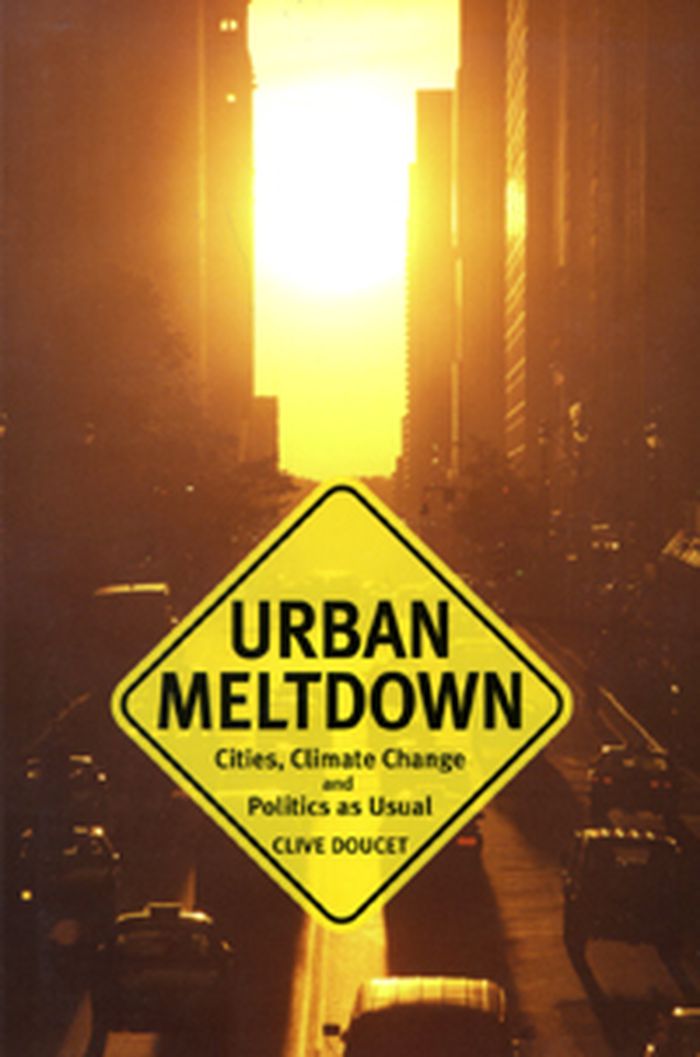
Urban meltdown: cities, climate change and politics as usual
Actions:
Price:
$20.95
(available to order)
Summary:
In 1950, only 30 percent of the world's population lived in cities. By 2007, the planet's population has doubled, and today, as many people live in cities as populated the entire planet in 1950. Eighty percent of the planet's greenhouse gases are created by these energy-intensive urban centers. Thus, the key to creating climate change solutions resides with cities. Author and Ottawa city councilor Clive Doucet provides a razor-sharp insider's perspective, stating his central theme: "It's not about planning. It's about politics." Climate change is proceeding so quickly not for lack of knowledge, but because politicians who deviate from the car-based sprawl model cannot get elected. Urban Meltdown describes how we got here, why we got here, and what can be done about it, as evidenced by the author's observations that: Economic growth has no built-in environmental accountability. Until the political thinking about growth and the progress model itself is changed, our environmental concerns will never be properly addressed. We need a new governance paradigm at all three levels. The cautionary tale of how the 1960s tried to take us down a different route failed, not for lack of leadership but because the system didn't permit it. Urban Meltdown reveals, castigates, and inspires. This is an important book for anyone who cares about thinking differently, acting differently, and making a difference. Clive Doucet is an urban activist, well-known journalist, best-selling author, and the first poet ever elected to Ottawa City Council.
Form:
books
books
Publication:
October 2007, Gabriola Island
October 2007, Gabriola Island
Subject:
Green Architecture
Green Architecture
Form:
books
books
Price:
$40.00
(available to order)
Summary:
One of the delights of life is the discovery and rediscovery of patterns of order and beauty in nature—designs revealed by slicing through a head of cabbage or an orange, the forms of shells and butterfly wings. These images are awesome not just for their beauty alone, but because they suggest an order underlying their growth, a harmony existing in nature. What does it(...)
Publication:
January 1900, Boston, London
January 1900, Boston, London
Title:
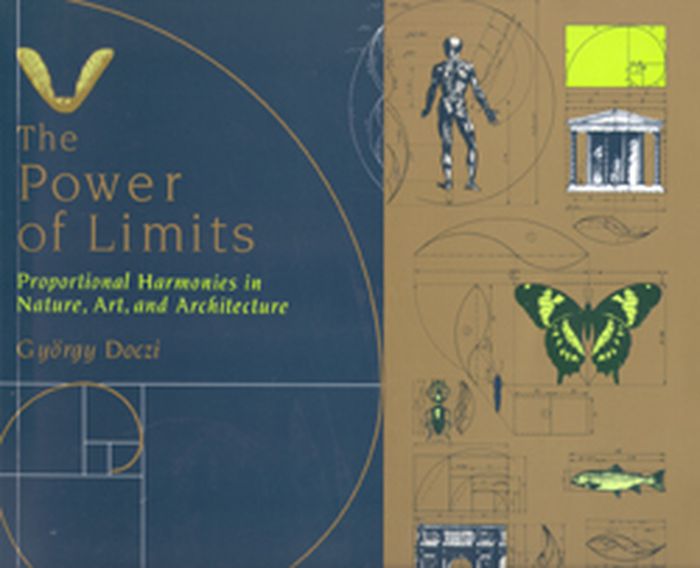
Power of limits: Proportional harmonies in nature, art and architecture
Actions:
Price:
$40.00
(available to order)
Summary:
One of the delights of life is the discovery and rediscovery of patterns of order and beauty in nature—designs revealed by slicing through a head of cabbage or an orange, the forms of shells and butterfly wings. These images are awesome not just for their beauty alone, but because they suggest an order underlying their growth, a harmony existing in nature. What does it mean that such an order exists; how far does it extend? The Power of Limits was inspired by those simple discoveries of harmony. The author went on to investigate and measure hundreds of patterns—ancient and modern, minute and vast. His discovery, vividly illustrated here, is that certain proportions occur over and over again in all these forms. Patterns are also repeated in how things grow and are made—by the dynamic union of opposites—as demonstrated by the spirals that move in opposite directions in the growth of a plant. The joining of unity and diversity in the discipline of proportional limitations creates forms that are beautiful to us because they embody the principles of the cosmic order of which we are a part; conversely, the limitlessness of that order is revealed by the strictness of its forms. The author shows how we, as humans, are included in the universal harmony of form, and suggests that the union of complementary opposites may be a way to extend that harmony to the psychological and social realms as well.
Form:
books
books
Publication:
January 1900, Boston, London
January 1900, Boston, London


