


504 Results
Form:
books
books
Actions:
Price:
$51.90
(available to order)
Summary:
Urban gardening has become recently popular. We only have to think of the riverbanks restored to their natural state, the urban gardening and urban farming projects springing up all over the world, the green skyscrapers (prospective and actually built) such as, for instance, the utopian farmscrapers of Vincent Callebout, the conversion of former high rail lines into green(...)
Title:
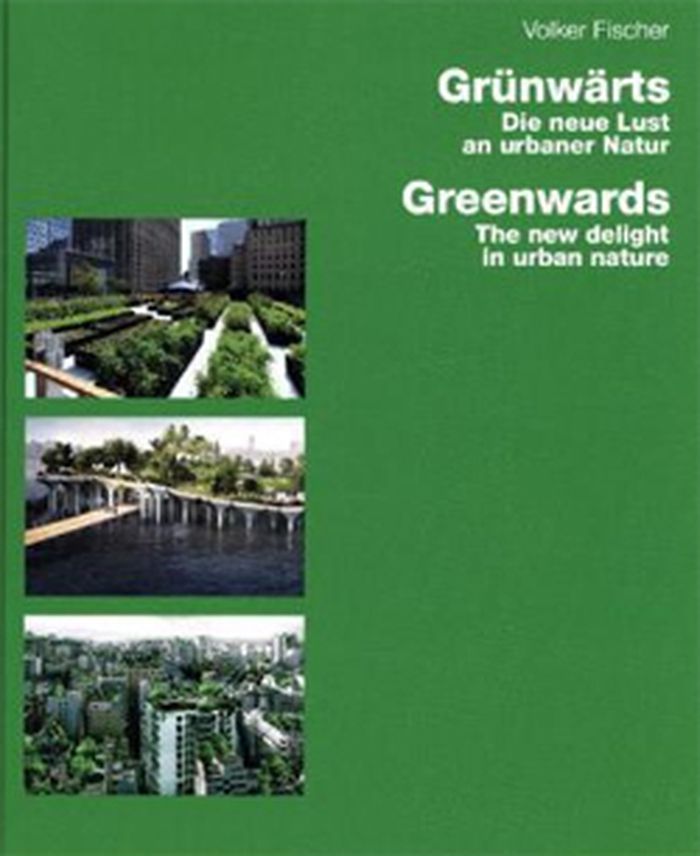
Greenwards: the new delight in urban nature
Actions:
Price:
$51.90
(available to order)
Summary:
Urban gardening has become recently popular. We only have to think of the riverbanks restored to their natural state, the urban gardening and urban farming projects springing up all over the world, the green skyscrapers (prospective and actually built) such as, for instance, the utopian farmscrapers of Vincent Callebout, the conversion of former high rail lines into green recreation spaces, the meditation gardens of Piet Oudolf, and the vertical gardens of Patrick Blanc. These days, we feel close to greenery, just as we feel close to our pets. We tend and nurture the seeds and stalks, the leaves and flowers, the shrubs and grasses, the bushes and trees, with a matchless solicitude. These culturally coded natural phenomena also have therapeutic qualities, because they offer us self-determination and the possibility to share in social development. This is nothing less than the reintegration of the first, primal nature into the context of the conditions that have become ubiquitous today into the context of what has, today, become 'second nature'. For some people, such as the campaigners of 'Guerilla Gardening', these plants, wild and domestic, provide a way of criticizing the system; others, such as vertical planners of wall gardens like Ken Yeang, utopia-infatuated and bitten by the green bug, presumably see themselves as an avant-garde working in harmony with the system. Volker Fischer was deputy director of the Deutsches Architekturmuseum in Frankfurt am Main for over ten years. From 1994 to 2012 he has built up a new design department at the Museum for Applied Arts in Frankfurt. At the same time, he taught on the history of architecture and design at the Hochschule fur Gestaltung in Offenbach.
Form:
books
books
Publication:
January 2015
January 2015
Subject:
Urban Landscapes
Urban Landscapes
Form:
journals and magazines
journals and magazines
Title:
Future anterior
Future anterior
Actions:
Price:
$14.95
(available to order)
Summary:
Historic preservation is at an important moment of rethinking. The field has grown exponentially in America since its first academic program was founded at Columbia University in 1965. Although initially concerned only with buildings, preservation has recently expanded to include the protection and creative interpretation of entire urban environments, landscapes,(...)
Title:
Future anterior
Actions:
Price:
$14.95
(available to order)
Summary:
Historic preservation is at an important moment of rethinking. The field has grown exponentially in America since its first academic program was founded at Columbia University in 1965. Although initially concerned only with buildings, preservation has recently expanded to include the protection and creative interpretation of entire urban environments, landscapes, highways, cultural traditions, artistic practices, and even specific “experiences” such as historic view sheds. Most importantly, historic preservation is beginning a significant re-clarification of its purposes, sharpening and deepening its focus on the contributions old architecture and artifacts make to our understanding of the human condition and how we should address and live in it. Future Anterior is the first and only journal in American academia to be devoted to the study and advancement of preservation, which brings together the interests of scholars and professionals in multiple disciplines such as architecture, art, history, philosophy, law, planning, materials science, cultural anthropology, conservation, and others. Future Anterior establishes an important and much needed forum for the critical examination of this expanding discipline, to spur challenges of its motives, goals, forms of practice and results. The appearance of Future Anterior signals the maturation of the field of preservation and a shift away from nostalgic antiquarianism towards an active involvement in the understanding and creative transformation of human environments. This turn in preservation is reflected in an increased interest in historic architecture and artifacts as expressive resources of great public importance. The destruction of patrimony, from the colossal Buddhas in Afghanistan to New York’s World Trade Center, is seen not just as barbarism but as sources of understanding about where we are going wrong and what we need to do next. In response, architects, planners, urban designers, and artists have been producing works which engage the public in new ways of reflecting and taking on the past not as constraint but as provocation.
Form:
journals and magazines
journals and magazines
Publication:
October 2004, New York
October 2004, New York
Subject:
Magazines
Magazines
Form:
books
books
Actions:
Price:
$31.50
(available to order)
Summary:
In this long-awaited work, Dalibor Vesely proposes an alternative to the narrow vision of contemporary architecture as a discipline that can be treated as an instrument or commodity. In doing so, he offers an account of the ontological and cultural foundations of modern architecture and, consequently, of the nature and cultural role of architecture through history.(...)
Subject:
Architectural Theory
Architectural Theory
Publication:
October 2006, Cambridge (MA), London
October 2006, Cambridge (MA), London
Title:
Architecture in the age of divided representation : the question of creativity in the shadow of production
Actions:
Price:
$31.50
(available to order)
Summary:
In this long-awaited work, Dalibor Vesely proposes an alternative to the narrow vision of contemporary architecture as a discipline that can be treated as an instrument or commodity. In doing so, he offers an account of the ontological and cultural foundations of modern architecture and, consequently, of the nature and cultural role of architecture through history. Vesely's argument, structured as a critical dialogue, discovers the first plausible anticipation of modernity in the formation of Renaissance perspective. Understanding this notion of perspective against the background of the medieval philosophy of light, he argues, leads to an understanding of architectural space as formed by typical human situations and by light before it is structured geometrically. The central part of the book addresses the question of divided representation - the tension between the instrumental and the communicative roles of architecture - in the period of the baroque, when architectural thinking was seriously challenged by the emergence of modern science. Vesely argues that to resolve the dilemma of modernity - reconciling the inventions and achievements of modern technology with the human condition and the natural world - we can turn to architecture and its latent capacity to reconcile different levels of reality, its ability to relate abstract ideas and conceptual structures to the concrete situations of everyday life. Vesely sees the restoration of this communicative role of architecture as the key to the restoration of architecture as the topological and corporeal foundation of culture; what the book is to our literacy, he argues, architecture is to culture as a whole. He concludes by proposing a new poetics of architecture that will serve as a framework for the restoration of the humanistic role of architecture in the age of technology.
Form:
books
books
Publication:
October 2006, Cambridge (MA), London
October 2006, Cambridge (MA), London
Subject:
Architectural Theory
Architectural Theory
Form:
books
books
Actions:
Price:
$62.50
(available to order)
Summary:
Dalibor Vesely proposes an alternative to the narrow vision of contemporary architecture as a discipline that can be treated as an instrument or commodity. In doing so, he offers nothing less than an account of the ontological and cultural foundations of modern architecture and, consequently, of the nature and cultural role of architecture through history. Vesely's(...)
Title:
Architecture in the age of divided representation : the question of creativity in the shadow of production
Actions:
Price:
$62.50
(available to order)
Summary:
Dalibor Vesely proposes an alternative to the narrow vision of contemporary architecture as a discipline that can be treated as an instrument or commodity. In doing so, he offers nothing less than an account of the ontological and cultural foundations of modern architecture and, consequently, of the nature and cultural role of architecture through history. Vesely's argument, structured as a critical dialogue, discovers the first plausible anticipation of modernity in the formation of Renaissance perspective. Understanding this notion of perspective against the background of the medieval philosophy of light, he argues, leads to an understanding of architectural space as formed by typical human situations and by light before it is structured geometrically. The central part of the book addresses the question of divided representation - the tension between the instrumental and the communicative roles of architecture - in the period of the baroque, when architectural thinking was seriously challenged by the emergence of modern science. Vesely argues that to resolve the dilemma of modernity - reconciling the inventions and achievements of modern technology with the human condition and the natural world - we can turn to architecture and its latent capacity to reconcile different levels of reality, its ability to relate abstract ideas and conceptual structures to the concrete situations of everyday life. Vesely sees the restoration of this communicative role of architecture as the key to the restoration of architecture as the topological and corporeal foundation of culture; what the book is to our literacy, he argues, architecture is to culture as a whole. He concludes by proposing a new poetics of architecture that will serve as a framework for the restoration of the humanistic role of architecture in the age of technology.
Form:
books
books
Publication:
June 2004, Cambridge, Mass.
June 2004, Cambridge, Mass.
Subject:
Architectural Theory
Architectural Theory


