


5088 Results
Form:
books
books
Actions:
Price:
$31.00
(available to order)
Summary:
Today on almost every desk in every office sits a computer. Eighty years ago, desktops were equipped with a nonelectronic data processing machine: a card file. In this publication, Markus Krajewski traces the evolution of this proto-computer of rearrangeable parts (file cards) that became ubiquitous in offices between the world wars. The story begins with Konrad(...)
Title:
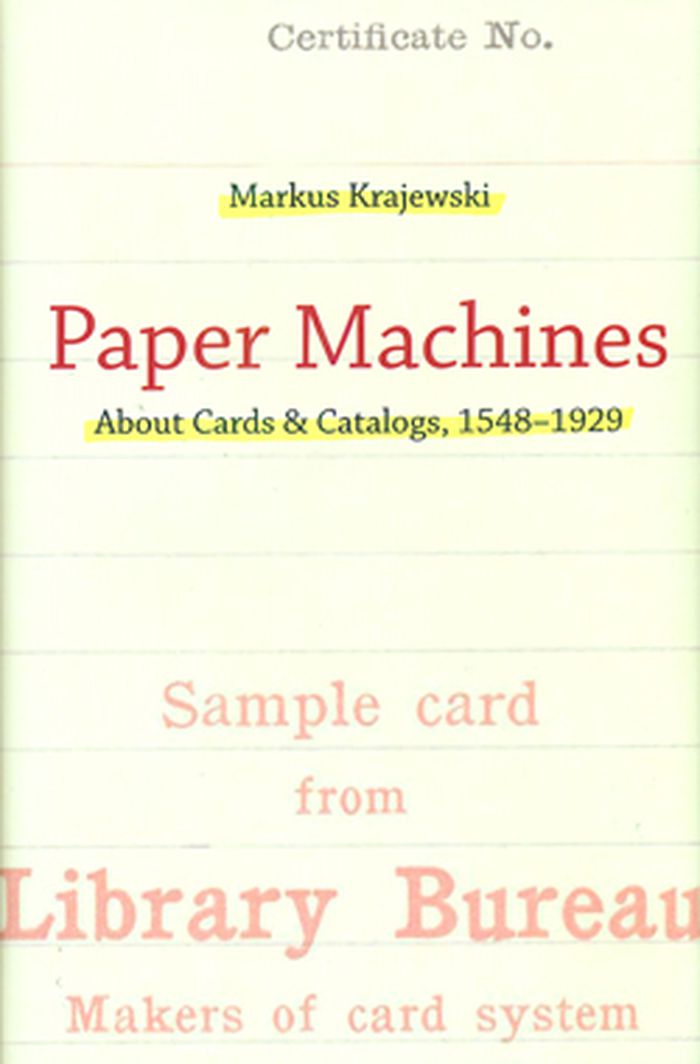
Paper machines : about cards & catalogs, 1548-1929
Actions:
Price:
$31.00
(available to order)
Summary:
Today on almost every desk in every office sits a computer. Eighty years ago, desktops were equipped with a nonelectronic data processing machine: a card file. In this publication, Markus Krajewski traces the evolution of this proto-computer of rearrangeable parts (file cards) that became ubiquitous in offices between the world wars. The story begins with Konrad Gessner, a sixteenth-century Swiss polymath who described a new method of processing data: to cut up a sheet of handwritten notes into slips of paper, with one fact or topic per slip, and arrange as desired. In the late eighteenth century, the card catalog became the librarian's answer to the threat of information overload. Then, at the turn of the twentieth century, business adopted the technology of the card catalog as a bookkeeping tool. Krajewski explores this conceptual development and casts the card file as a "universal paper machine" that accomplishes the basic operations of Turing's universal discrete machine: storing, processing, and transferring data. In telling his story, Krajewski takes the reader on a number of illuminating detours, telling us, for example, that the card catalog and the numbered street address emerged at the same time in the same city (Vienna), and that Harvard University's home-grown cataloging system grew out of a librarian's laziness; and that Melvil Dewey (originator of the Dewey Decimal System) helped bring about the technology transfer of card files to business.
Form:
books
books
Publication:
October 2011
October 2011
Subject:
Archive, library and the digital
Archive, library and the digital
Form:
books
books
Actions:
Price:
$48.00
(available to order)
Summary:
The Space Race was an exhilirating moment in history, alternately frighten-ing, thrilling, awe-inspiring, and ultimately, sublime. Its most enigmatic element was the competition. The Soviets seemed less technologically sophisticated (at least from the American perspective) but in fact won many of the races: first satellite to orbit the earth; first man in space; first(...)
Title:
Kosmos: a portrait of the Russian Space Age
Actions:
Price:
$48.00
(available to order)
Summary:
The Space Race was an exhilirating moment in history, alternately frighten-ing, thrilling, awe-inspiring, and ultimately, sublime. Its most enigmatic element was the competition. The Soviets seemed less technologically sophisticated (at least from the American perspective) but in fact won many of the races: first satellite to orbit the earth; first man in space; first unmanned landings on Mars, Venus, and the Moon; first woman in space; most powerful rockets; and, until its recent fiery death, the most long-lived space station to name but a few. The inherent contradictions of the age--the mixture of technologies high and low, of nostalgia and progress, of pathos and promise--are revealed in Kosmos, Adam Bartos's astonishing photographic survey of the Soviet space program. Bartos' fascination with this subject led him to seek out places like the bedroom where Yuri Gagarian slept the night before his history-making flight into space, located in the Baiknour Cosmodrome, the one-time top-secret space complex in the Kazakh desert. Bartos also takes us inside the cockpit of the Merkur space capsule, used to ferry crew members and supplies to the super-secret Almaz orbital space stations, and behind the changing screens cosmonauts used before being fitted for their space suits at Zvezda, the chief manufacturer of Soviet life-support systems. In total, Kosmos presents over 100 of Bartos's photographs, rich with the incongruities of the history, science, culture, and politics of the Space Age.
Form:
books
books
Publication:
November 2001
November 2001
Subject:
Photography monographs
Photography monographs
Form:
books
books
Price:
$39.95
(available to order)
Summary:
Since the 1990s, critics and curators have broadly accepted the notion that participatory art is the ultimate political art: that by encouraging an audience to take part an artist can promote new emancipatory social relations. Around the world, the champions of this form of expression are numerous, ranging from art historians such as Grant Kester, curators such as Nicolas(...)
Title:
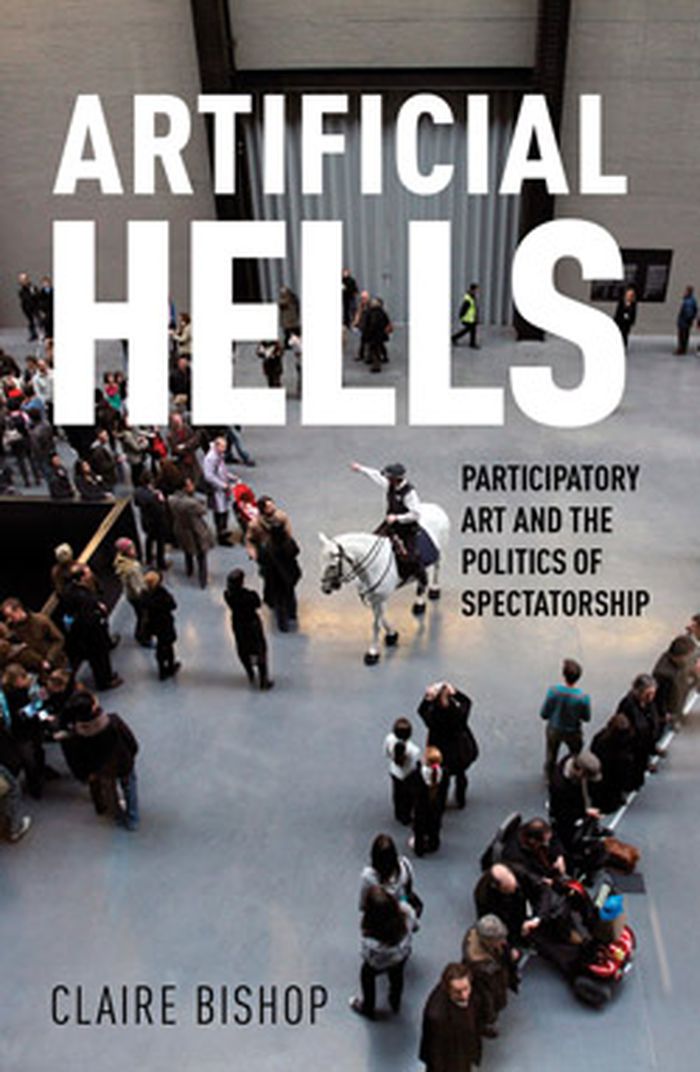
Artificial hells : participatory art and the politics of spectatorship
Actions:
Price:
$39.95
(available to order)
Summary:
Since the 1990s, critics and curators have broadly accepted the notion that participatory art is the ultimate political art: that by encouraging an audience to take part an artist can promote new emancipatory social relations. Around the world, the champions of this form of expression are numerous, ranging from art historians such as Grant Kester, curators such as Nicolas Bourriaud and Nato Thompson, to performance theorists such as Shannon Jackson. Artificial Hells is the first historical and theoretical overview of socially engaged participatory art, known in the US as “social practice.” Claire Bishop follows the trajectory of twentieth-century art and examines key moments in the development of a participatory aesthetic. This itinerary takes in Futurism and Dada; the Situationist International; Happenings in Eastern Europe, Argentina and Paris; the 1970s Community Arts Movement; and the Artists Placement Group. It concludes with a discussion of long-term educational projects by contemporary artists such as Thomas Hirschhorn, Tania Bruguera, Pawe Althamer and Paul Chan. Since her controversial essay in Artforum in 2006, Claire Bishop has been one of the few to challenge the political and aesthetic ambitions of participatory art. In Artificial Hells, she not only scrutinizes the emancipatory claims made for these projects, but also provides an alternative to the ethical (rather than artistic) criteria invited by such artworks. Artificial Hells calls for a less prescriptive approach to art and politics, and for more compelling, troubling and bolder forms of participatory art and criticism.
Form:
books
books
Publication:
July 2012
July 2012
Form:
books
books
Actions:
Price:
$34.95
(available to order)
Summary:
In 2007, Orkin, a middle-aged Jewish guy from Long Island, did something crazy. In the food-zealous, insular megalopolis of Tokyo, Ivan opened a ramen shop. He was a "gaijin" (foreigner), trying to make his name in a place that is fiercely opinionated about ramen. At first, customers came because they were curious, but word spread quickly about Ivan’s handmade noodles,(...)
Title:
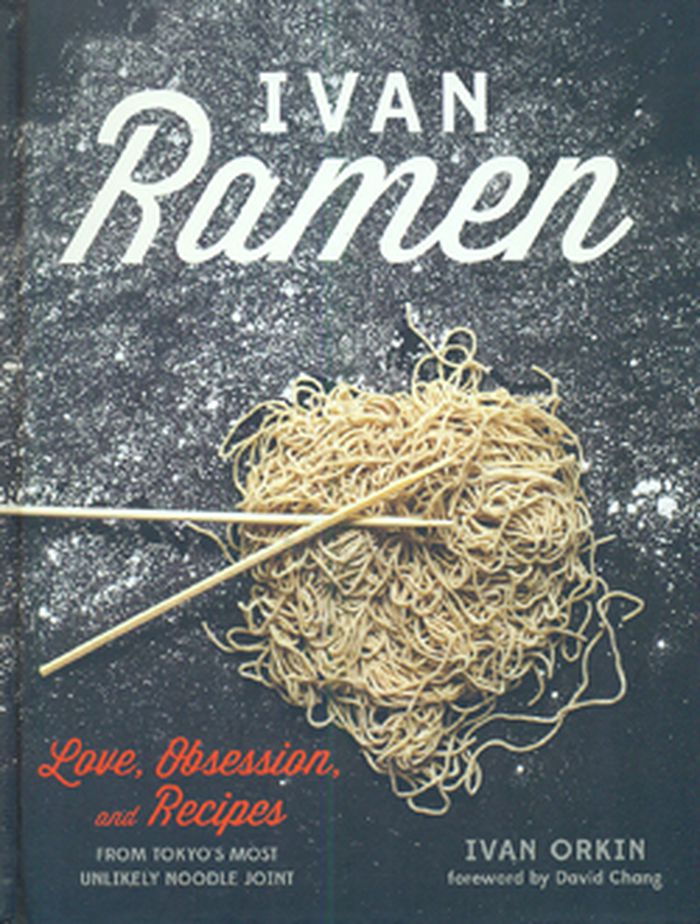
Ivan Ramen: love, obsession, and recipes from Tokyo's most unlikely noodle joint
Actions:
Price:
$34.95
(available to order)
Summary:
In 2007, Orkin, a middle-aged Jewish guy from Long Island, did something crazy. In the food-zealous, insular megalopolis of Tokyo, Ivan opened a ramen shop. He was a "gaijin" (foreigner), trying to make his name in a place that is fiercely opinionated about ramen. At first, customers came because they were curious, but word spread quickly about Ivan’s handmade noodles, clean and complex broth, and thoughtfully prepared toppings. Soon enough, Ivan became a celebrity—a fixture of Japanese TV programs and the face of his own best-selling brand of instant ramen. Ivan opened a second location in Tokyo, and has now returned to New York City to open his first US branch. Ivan Ramen is essentially two books in one: a memoir and a cookbook. In these pages, Ivan tells the story of his ascent from wayward youth to a star of the Tokyo restaurant scene. He also shares more than forty recipes, including the complete, detailed recipe for his signature Shio Ramen; creative ways to use extra ramen components; and some of his most popular ramen variations. Written with equal parts candor, humor, gratitude, and irreverence, Ivan Ramen is the only English-language book that offers a look inside the cultish world of ramen making in Japan. It will inspire you to forge your own path, give you insight into Japanese culture, and leave you with a deep appreciation for what goes into a seemingly simple bowl of noodles.
Form:
books
books
Publication:
October 2013
October 2013
Subject:
Food
Food
Form:
books
books
Actions:
Price:
$130.00
(available to order)
Summary:
For five decades, photographer Gianfranco Gorgoni (1941-2019) built his reputation as the premier documentarian of Land Art in the US and beyond. After leaving Italy, Gorgoni started making portraits of the major artists of the New York scene, including Michael Heizer, Robert Smithson, Nancy Holt, Walter De Maria, Carl Andre, and Richard Serra. It was not long before he(...)
Title:
Gianfranco Gorgoni: Land Art photographs
Actions:
Price:
$130.00
(available to order)
Summary:
For five decades, photographer Gianfranco Gorgoni (1941-2019) built his reputation as the premier documentarian of Land Art in the US and beyond. After leaving Italy, Gorgoni started making portraits of the major artists of the New York scene, including Michael Heizer, Robert Smithson, Nancy Holt, Walter De Maria, Carl Andre, and Richard Serra. It was not long before he was traveling with Heizer, Smithson, and De Maria to the American West in the late 1960s to plot the works that would famously break art practice out of the confines of the gallery world. In Nevada, New Mexico, and Utah, these artists embarked on major Land Art installations that would redefine contemporary art practice of the era. In many cases, Gorgoni was the only photographer on the ground to document their projects, and his images often serve as the definitive photographic record of the planning and creation of these groundbreaking works. Published to coincide with the first major exhibition of Gorgoni's photographic Land Art images at the Nevada Museum of Art, featuring over fifty of his large-scale photographs, "Gianfranco Gorgoni: Land Art Photographs" includes an introduction by Ann M. Wolfe, Andrea and John C. Deane Family senior curator and deputy director at the Nevada Museum of Art, an essay by the late art historian and critic Germano Celant, whose contribution here is among the last he wrote before his death in 2020, and William L. Fox, the Peter E. Pool Director of the Center for Art + Environment.
Form:
books
books
Publication:
August 2021
August 2021
Subject:
Photography monographs
Photography monographs
Form:
books
books
Actions:
Price:
$74.95
(available to order)
Summary:
In an era of globalisation, there is an unprecedented scale and nature of contemporary migrant flows, as well as the flow of goods, capital, ideas, images and technology. This sheer number and mobility of contemporary migrants clearly has massively disruptive effects on traditional modes of dwelling however they were manifest in everyday life. But contemporary migrancy(...)
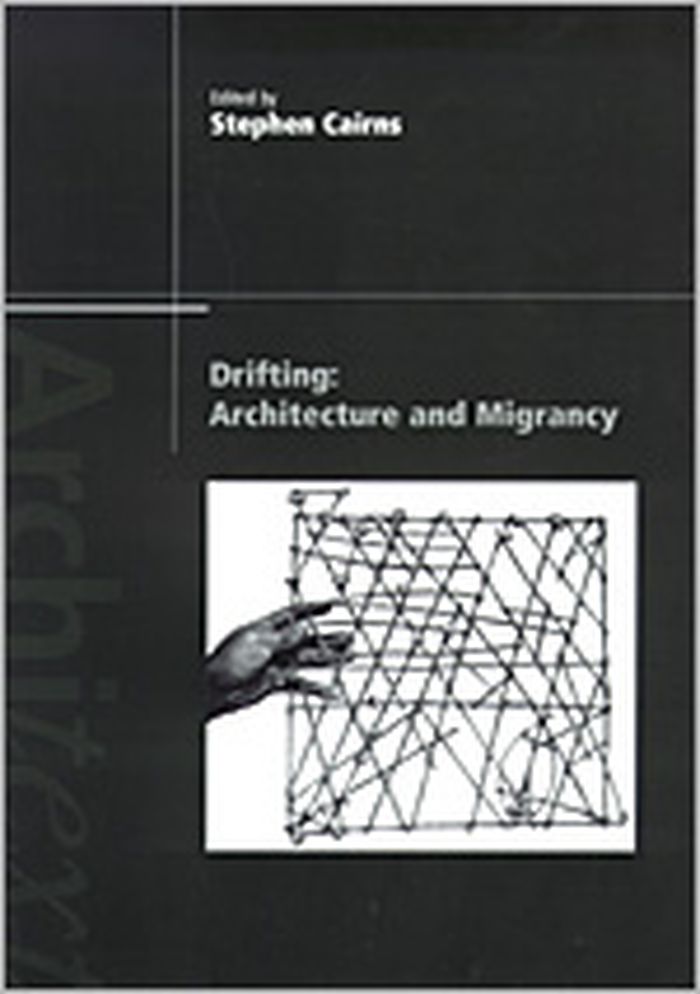
Title:
Drifting : architecture and migrancy
Actions:
Price:
$74.95
(available to order)
Summary:
In an era of globalisation, there is an unprecedented scale and nature of contemporary migrant flows, as well as the flow of goods, capital, ideas, images and technology. This sheer number and mobility of contemporary migrants clearly has massively disruptive effects on traditional modes of dwelling however they were manifest in everyday life. But contemporary migrancy also has important consequences for the way dwelling is conceptualised more generally. This book is concerned with the modes of dwelling that emerge through migrancy; it is also concerned with the effects these modes of dwelling have for dominant conceptions of space and place; and finally, it is interested in the kinds of architectures that become possible if those effects are taken seriously. This book inspects the intersections between architectures of place and flows of migrancy. It does so without seeking to defend the idea of place, nor lament its passing. Rather, this book is an exploration of the often complex and unorthodox modes of dwelling that are emerging precisely from within the ruins of the idea of place. This exploration is informed by post-structuralist analyses of architecture and urbanism, and their representation in media such as film. It focuses on the Pacific Rim as an intensified zone of global flows. Within the Pacific Rim there are complex tensions between the new economies of Asia and the settler nations of Canada, the US, Australia and New Zealand. These tensions produce difficulties for the narrative of the nation state, and herald conditions that no longer conform to the geo-political norms of the old world.
Form:
books
books
Publication:
September 2003, London / New York
September 2003, London / New York
Subject:
Architectural Theory
Architectural Theory
Form:
books
books
Actions:
Price:
$34.95
(available to order)
Summary:
In this wide-ranging book, renowned philosopher and cultural theorist Peter Sloterdijk examines art in all its rich and varied forms: from music to architecture, light to movement, and design to typography. Moving between the visible and the invisible, the audible and the inaudible, his analyses span the centuries, from ancient civilizations to contemporary Hollywood.(...)
Title:
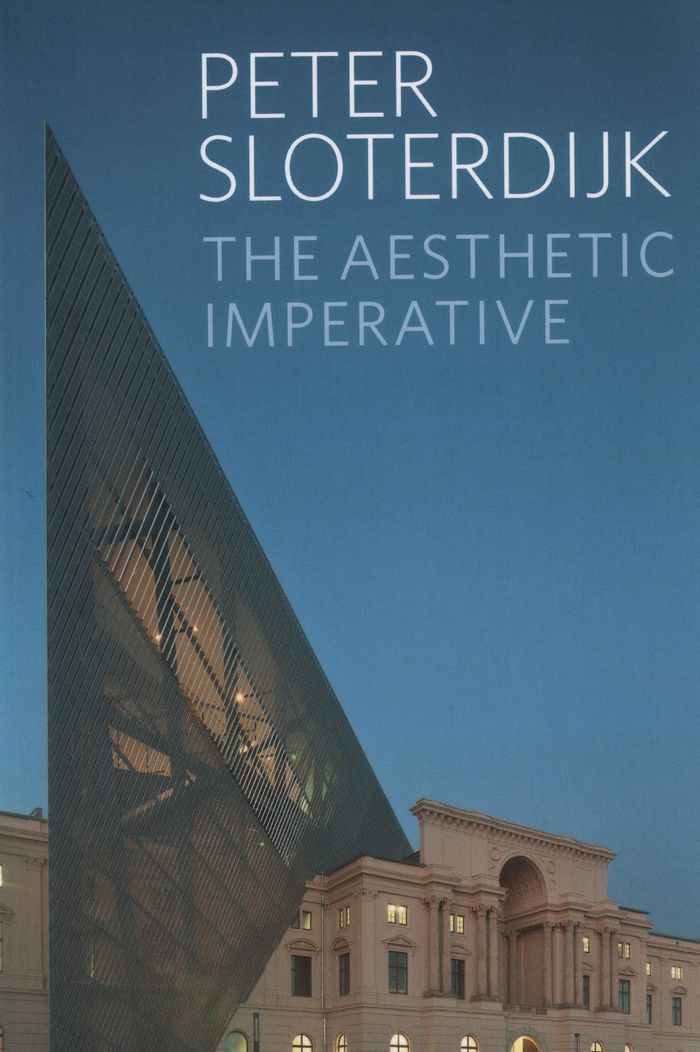
The aesthetic imperative: writings on art
Actions:
Price:
$34.95
(available to order)
Summary:
In this wide-ranging book, renowned philosopher and cultural theorist Peter Sloterdijk examines art in all its rich and varied forms: from music to architecture, light to movement, and design to typography. Moving between the visible and the invisible, the audible and the inaudible, his analyses span the centuries, from ancient civilizations to contemporary Hollywood. With great verve and insight he considers the key issues that have faced thinkers from Aristotle to Adorno, looking at art in its relation to ethics, epistemology, metaphysics, society, politics, anthropology and the subject.Sloterdijk explores a great variety of topics, including the Greek-Roman invention of postcards, medieval barter with purgatory and relics, the capitalist art market, the black boxes and white cubes of modernism, the rise of world’s fairs in the 19th century, the growth of museum and memorial culture, images of the city and the role of creativity. In doing so, Sloterdijk extends his characteristic method of defamiliarisation to transform the way we look at works of art and movements. His bold and original approach leads us away from the well-trodden paths of conventional art history to develop a theory of aesthetics which rejects strict categorisation, emphasising instead the crucial importance of individual subjectivity as a counter to the latent dangers of collective culture.This sustained collection of reflections, at once playful, serious and provocative, goes to the very heart of Sloterdijk’s enduring philosophical preoccupation with the aesthetic. It will be essential reading for students and scholars of philosophy and aesthetics and will appeal to anyone interested in culture and the arts more generally.
Form:
books
books
Publication:
April 2017
April 2017
Subject:
Art Theory
Art Theory
Form:
books
books
Title:
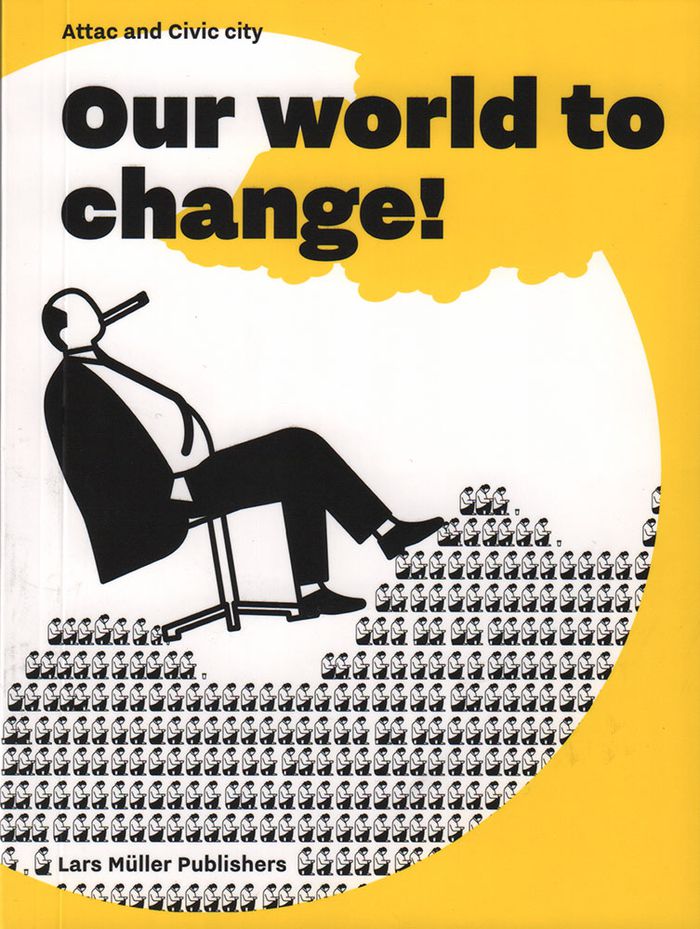
Our world to change!
Our world to change!
Actions:
Price:
$20.00
(available to order)
Summary:
What are the central global issues humanity is facing today? How dire is the future really going to be? And what are possible ways to turn this world into a better one? These are the questions that the book "Our world to change!" adresses. This publication does not only explain figures related to economics, finance, ecology, nutrition and immigration, but also presents(...)
Title:
Our world to change!
Actions:
Price:
$20.00
(available to order)
Summary:
What are the central global issues humanity is facing today? How dire is the future really going to be? And what are possible ways to turn this world into a better one? These are the questions that the book "Our world to change!" adresses. This publication does not only explain figures related to economics, finance, ecology, nutrition and immigration, but also presents suggestions and alternatives from specialists in these fields – a book that every informed citizen should keep under their pillow. The overall goal of "Our world to change!" ! is to visualize the state of our world and possible ways to change it. For this mission the Intégral Ruedi Baur graphic design studio teamed up with the globalization-critical organization Attac, which provided the necessary data. By visualizing facts that concern each and everyone of us, "Our world to change!" ! makes pressing topics visible. This is necessary since issues like inequality and climate change are often viewed as complex, abstract topics.Our World to Change! is a formal homage to the sociologist Otto Neurath and the graphic designer Gerd Arntz, who created the Isotype – an international education system by typographical images – in the 1920s. Graphic designer Ruedi Baur, who also co-founded the institute for critical design research Civic city together with Vera Baur, revived Otto Neuraths iconic Isotype figures to visualize the state of the world today. While these figurines were already part of last years' art biennial Manifesta 11, controversially themed "What people do for money", in "Our world to change!" they take a more radical stance in critizising global inequality.
Form:
books
books
Publication:
January 2017
January 2017
Subject:
Graphic Design and Typography
Graphic Design and Typography
Form:
books
books
Price:
$23.00
(available to order)
Summary:
On a visit to Auschwitz-Birkenau, Georges Didi-Huberman tears three pieces of bark from birch trees on the edge of the site. Looking at these pieces after his return home, he sees them as letters, a flood, a path, time, memory, flesh. The bark serves as a springboard to Didi-Huberman’s meditations on his visit, recorded in this spare, poetic, and powerful book. Bark is a(...)
Title:
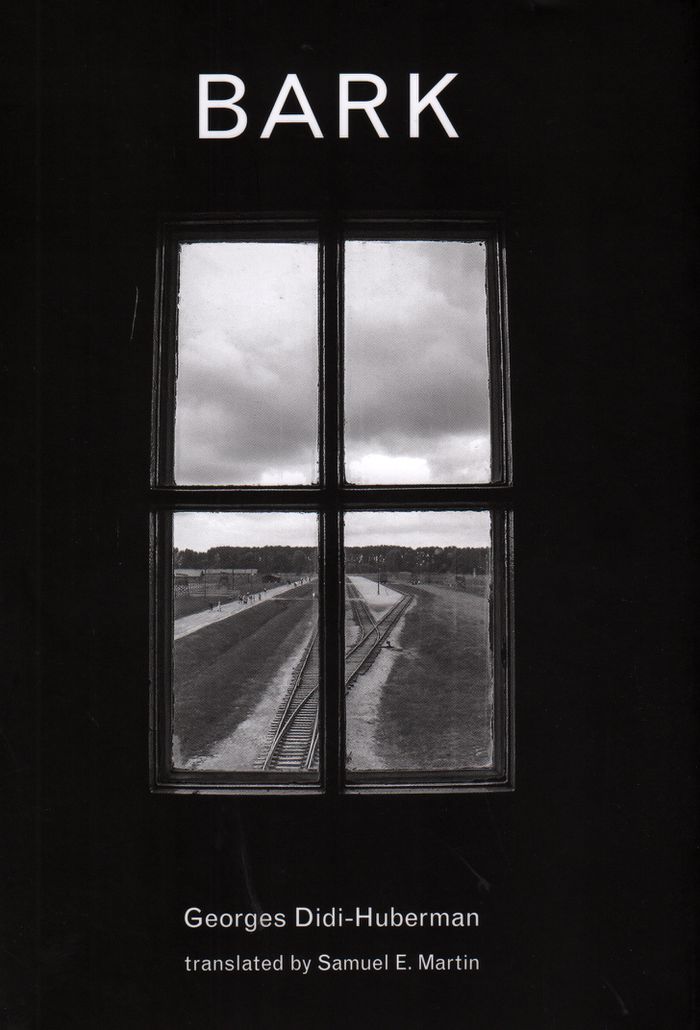
Bark
Actions:
Price:
$23.00
(available to order)
Summary:
On a visit to Auschwitz-Birkenau, Georges Didi-Huberman tears three pieces of bark from birch trees on the edge of the site. Looking at these pieces after his return home, he sees them as letters, a flood, a path, time, memory, flesh. The bark serves as a springboard to Didi-Huberman’s meditations on his visit, recorded in this spare, poetic, and powerful book. Bark is a personal account, drawing not on the theoretical apparatus of scholarship but on Didi-Huberman’s own history, memory, and knowledge. The text proceeds as a series of reflections, accompanied by Didi-Huberman’s photographs of the visit. The photographs are not meant to be art—Didi-Huberman confesses that he “photographed practically everything without looking”—but approach it nevertheless. Didi-Huberman tells us that his grandparents died at Auschwitz, but his account is more universal than biographical. As he walks from place to place, he observes that in German birches are birken; Birkenau designates the meadow where the birches grow. Didi-Huberman sees and photographs the “reconstructed” execution wall; the floors of the crematorium, forgotten witnesses to killing; and the birch trees, lovely but also resembling prison bars. Taking his own photographs, he thinks of the famous photographs taken in 1944 by a member of the Sonderkommando, the only photographic documentation of the camp before the Germans destroyed it, hoping to hide the evidence of their crimes. Didi-Huberman notices a “bizarre proliferation of white flowers on the exact spot of the cremation pits.” The dead are not departed.
Form:
books
books
Publication:
October 2017
October 2017
Subject:
Critical Theory
Critical Theory
Form:
books
books
Title:
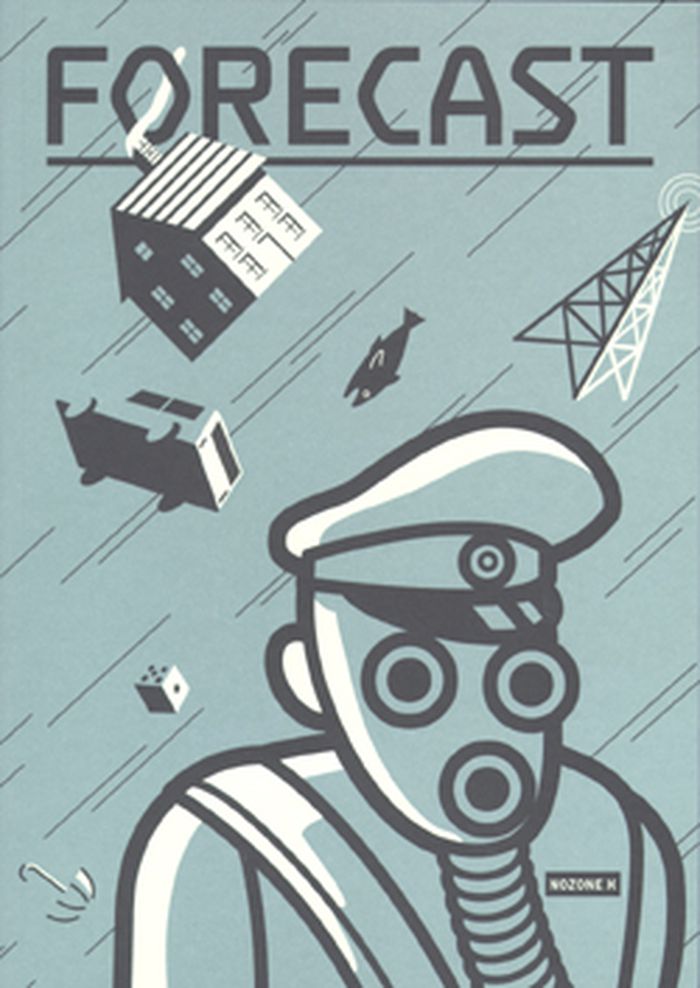
Nozone x: forecast
Nozone x: forecast
Actions:
Price:
$27.95
(available to order)
Summary:
Conspiracy theories, pending Ice Ages, potential revolutions, viral epidemics, and other doomsday prophecies: wherever you look–from the cover of Time magazine to the weird weather outside your window–the message seems universal: the Earth our children inherit will certainly be nothing like the one we currently inhabit. UN reports and newspaper articles are illustrated(...)
Subject:
Graphic Design and Typography
Graphic Design and Typography
Publication:
September 2008, New York
September 2008, New York
Title:
Nozone x: forecast
Actions:
Price:
$27.95
(available to order)
Summary:
Conspiracy theories, pending Ice Ages, potential revolutions, viral epidemics, and other doomsday prophecies: wherever you look–from the cover of Time magazine to the weird weather outside your window–the message seems universal: the Earth our children inherit will certainly be nothing like the one we currently inhabit. UN reports and newspaper articles are illustrated with dry charts and graphs predicting technological, economic, and ecological transformations that are already dramatically altering the way we live. Forecast revisualizes these abstractions about everything from our environment to our waistlines, from the stock market to the Middle East through the eyes of cartoonists and graphic designers who have made comics with a conscience: Ward Sutton imagines a nation divided into a red and a blue zone; Paula Scher maps out the Northern Hemisphere of 2100; Elizabeth Amon interviews New Yorker journalist Elizabeth Kolbert on global warming; and Tom Tomorrow looks back on the legacy of Bush-Cheney. Ultimately, Forecast is an optimistic book: using humor, it encourages all of us to take responsibility for predictions of the future and to take action to affect change. Forecast is the latest installment of Nozone. Featured in the Cooper Hewitt's Design Triennial, Nozone is a decade-old political graphic design and comics zine, edited around a theme. Nicholas Blechman is principal of Knickerbocker Design in New York City and art director of the New York Times Book Review. He is the editor of Empire and co-author of Evil, both published by Princeton Architectural Press. Blechman is publisher of the award-winning political underground magazine Nozone.
Form:
books
books
Publication:
September 2008, New York
September 2008, New York
Subject:
Graphic Design and Typography
Graphic Design and Typography


