


5194 Results
Form:
books
books
Actions:
Price:
$32.95
(available to order)
Summary:
How did a First World urban population come to imagine itself as part of a global anti-colonial movement? This book tackles this and other paradoxes created by the surprising power and influence of Third World decolonization on political activism in 1960s Montreal. In a brilliant history of a turbulent time and place, Mills pulls back the curtain on the decade's(...)
$32.95
(available to order)
Summary:
How did a First World urban population come to imagine itself as part of a global anti-colonial movement? This book tackles this and other paradoxes created by the surprising power and influence of Third World decolonization on political activism in 1960s Montreal. In a brilliant history of a turbulent time and place, Mills pulls back the curtain on the decade's(...)
Title:
The empire within: postcolonial thought and political activism in Sixties Montréal
Actions:
Price:
$32.95
(available to order)
Summary:
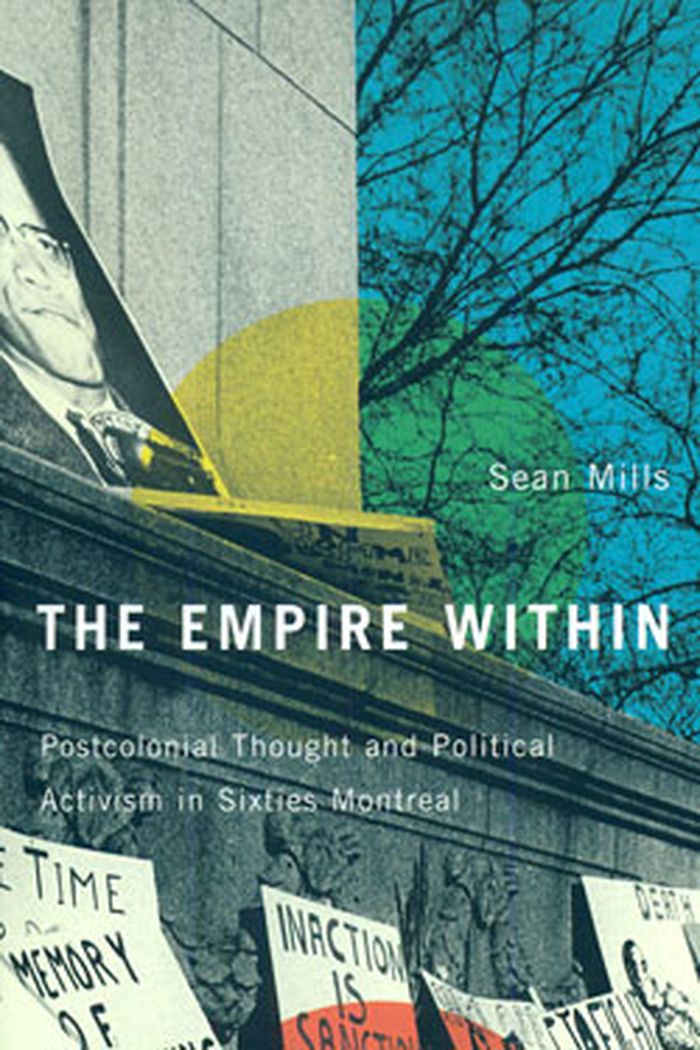
How did a First World urban population come to imagine itself as part of a global anti-colonial movement? This book tackles this and other paradoxes created by the surprising power and influence of Third World decolonization on political activism in 1960s Montreal. In a brilliant history of a turbulent time and place, Mills pulls back the curtain on the decade's activists and intellectuals, showing their engagement both with each other and with people from around the world. He demonstrates how activists of different backgrounds and with different political aims drew on ideas of decolonization to rethink the meanings attached to the politics of sex, race, and class and to imagine themselves as part of a broad transnational movement of anti-colonial and anti-imperialist resistance. The temporary unity forged around ideas of decolonization came undone in the 1970s, however, as many were forced to come to terms with the contradictions and ambiguities of applying ideas of decolonization in Quebec. From linguistic debates to labour unions, and from the political activities of citizens in the city's poorest neighbourhoods to its Caribbean intellectuals, this publication is a political tour of Montreal that reconsiders the meaning and legacy of the city's dissident traditions. It is also a fascinating chapter in the history of postcolonial thought.
The empire within: postcolonial thought and political activism in Sixties Montréal
Actions:
Price:
$32.95
(available to order)
Summary:
How did a First World urban population come to imagine itself as part of a global anti-colonial movement? This book tackles this and other paradoxes created by the surprising power and influence of Third World decolonization on political activism in 1960s Montreal. In a brilliant history of a turbulent time and place, Mills pulls back the curtain on the decade's activists and intellectuals, showing their engagement both with each other and with people from around the world. He demonstrates how activists of different backgrounds and with different political aims drew on ideas of decolonization to rethink the meanings attached to the politics of sex, race, and class and to imagine themselves as part of a broad transnational movement of anti-colonial and anti-imperialist resistance. The temporary unity forged around ideas of decolonization came undone in the 1970s, however, as many were forced to come to terms with the contradictions and ambiguities of applying ideas of decolonization in Quebec. From linguistic debates to labour unions, and from the political activities of citizens in the city's poorest neighbourhoods to its Caribbean intellectuals, this publication is a political tour of Montreal that reconsiders the meaning and legacy of the city's dissident traditions. It is also a fascinating chapter in the history of postcolonial thought.
Form:
books
books
Publication:
August 2010
August 2010
Subject:
Architecture de Montréal
Architecture de Montréal
Form:
books
books
Title:
In praise of copying
In praise of copying
Actions:
Price:
$29.95
(available to order)
Summary:
This book is devoted to a deceptively simple but original argument: that copying is an essential part of being human, that the ability to copy is worthy of celebration, and that, without recognizing how integral copying is to being human, we cannot understand ourselves or the world we live in. In spite of the laws, stigmas, and anxieties attached to it, the word(...)
$29.95
(available to order)
Summary:
This book is devoted to a deceptively simple but original argument: that copying is an essential part of being human, that the ability to copy is worthy of celebration, and that, without recognizing how integral copying is to being human, we cannot understand ourselves or the world we live in. In spite of the laws, stigmas, and anxieties attached to it, the word(...)
Title:
In praise of copying
Actions:
Price:
$29.95
(available to order)
Summary:
This book is devoted to a deceptively simple but original argument: that copying is an essential part of being human, that the ability to copy is worthy of celebration, and that, without recognizing how integral copying is to being human, we cannot understand ourselves or the world we live in. In spite of the laws, stigmas, and anxieties attached to it, the word “copying” permeates contemporary culture, shaping discourse on issues from hip hop to digitization to gender reassignment, and is particularly crucial in legal debates concerning intellectual property and copyright. Yet as a philosophical concept, copying remains poorly understood. Working comparatively across cultures and times, Marcus Boon undertakes an examination of what this word means—historically, culturally, philosophically—and why it fills us with fear and fascination. He argues that the dominant legal-political structures that define copying today obscure much broader processes of imitation that have constituted human communities for ages and continue to shape various subcultures today. Drawing on contemporary art, music and film, the history of aesthetics, critical theory, and Buddhist philosophy and practice, In Praise of Copying seeks to show how and why copying works, what the sources of its power are, and the political stakes of renegotiating the way we value copying in the age of globalization.
In praise of copying
Actions:
Price:
$29.95
(available to order)
Summary:
This book is devoted to a deceptively simple but original argument: that copying is an essential part of being human, that the ability to copy is worthy of celebration, and that, without recognizing how integral copying is to being human, we cannot understand ourselves or the world we live in. In spite of the laws, stigmas, and anxieties attached to it, the word “copying” permeates contemporary culture, shaping discourse on issues from hip hop to digitization to gender reassignment, and is particularly crucial in legal debates concerning intellectual property and copyright. Yet as a philosophical concept, copying remains poorly understood. Working comparatively across cultures and times, Marcus Boon undertakes an examination of what this word means—historically, culturally, philosophically—and why it fills us with fear and fascination. He argues that the dominant legal-political structures that define copying today obscure much broader processes of imitation that have constituted human communities for ages and continue to shape various subcultures today. Drawing on contemporary art, music and film, the history of aesthetics, critical theory, and Buddhist philosophy and practice, In Praise of Copying seeks to show how and why copying works, what the sources of its power are, and the political stakes of renegotiating the way we value copying in the age of globalization.
Form:
books
books
Publication:
October 2010
October 2010
Subject:
Critical Theory
Critical Theory
Form:
books
books
Price:
$27.95
(available to order)
Summary:
This book will be a resource for all who believe in the importance of art in the wider educational realm. Framing the recent "educational turn" in the arts within a broad historical and social context, this anthology raises fundamental questions about how and what should be taught in an era of distributive rather than media-based practices. Among the many sources and(...)
$27.95
(available to order)
Summary:
This book will be a resource for all who believe in the importance of art in the wider educational realm. Framing the recent "educational turn" in the arts within a broad historical and social context, this anthology raises fundamental questions about how and what should be taught in an era of distributive rather than media-based practices. Among the many sources and(...)
Title:
Education
Actions:
Price:
$27.95
(available to order)
Summary:
This book will be a resource for all who believe in the importance of art in the wider educational realm. Framing the recent "educational turn" in the arts within a broad historical and social context, this anthology raises fundamental questions about how and what should be taught in an era of distributive rather than media-based practices. Among the many sources and arguments traced here is second-wave feminism, which questioned dominant notions of personal and institutional freedom as enacted through art teaching and practice. Similarly, education-based responses by the art community to the catastrophes of World War II and postcolonial conflict critically inform contemporary art confronting the interrelationships of education, power, market capitalism, and--as Michael Hardt and Antonio Negri describe it--the global condition of war. These writings by artists, philosophers, educators, poets, and activists center on three recurring and interrelated themes: the notion of "indiscipline" in theories and practices that challenge boundaries of all kinds; the present and future role of the art school; and the turn to pedagogy as medium in a diverse range of recent projects. Other writings address such issues as instrumentalism and control, liberation and equality, the production and the politics of culture, and the roots of research-based practice and experimental participatory works.
Education
Actions:
Price:
$27.95
(available to order)
Summary:
This book will be a resource for all who believe in the importance of art in the wider educational realm. Framing the recent "educational turn" in the arts within a broad historical and social context, this anthology raises fundamental questions about how and what should be taught in an era of distributive rather than media-based practices. Among the many sources and arguments traced here is second-wave feminism, which questioned dominant notions of personal and institutional freedom as enacted through art teaching and practice. Similarly, education-based responses by the art community to the catastrophes of World War II and postcolonial conflict critically inform contemporary art confronting the interrelationships of education, power, market capitalism, and--as Michael Hardt and Antonio Negri describe it--the global condition of war. These writings by artists, philosophers, educators, poets, and activists center on three recurring and interrelated themes: the notion of "indiscipline" in theories and practices that challenge boundaries of all kinds; the present and future role of the art school; and the turn to pedagogy as medium in a diverse range of recent projects. Other writings address such issues as instrumentalism and control, liberation and equality, the production and the politics of culture, and the roots of research-based practice and experimental participatory works.
Form:
books
books
Publication:
September 2011
September 2011
Subject:
Art Theory
Art Theory
Form:
books
books
Actions:
Price:
$9.95
(available in store)
Summary:
Ce catalogue d'exposition, qui comprend un texte du commisaire, Laurier Lacroix, et un projet d'artiste d'Irene F. Whittome, examine les rapports multiples qui existent entre l'art et l'architecure. À partir d'une sélection de pièces tirées des collections du CCA et de nouvelles installations qu'elle a conçues spécialement pour les espaces du musée,(...)
$9.95
(available in store)
Summary:
Ce catalogue d'exposition, qui comprend un texte du commisaire, Laurier Lacroix, et un projet d'artiste d'Irene F. Whittome, examine les rapports multiples qui existent entre l'art et l'architecure. À partir d'une sélection de pièces tirées des collections du CCA et de nouvelles installations qu'elle a conçues spécialement pour les espaces du musée,(...)
Title:
Embarquement pour Katsura : Irene F. Whittome au CCA / Departure for Katsura : Irene F. Whittome at the CCA
Actions:
Price:
$9.95
(available in store)
Summary:
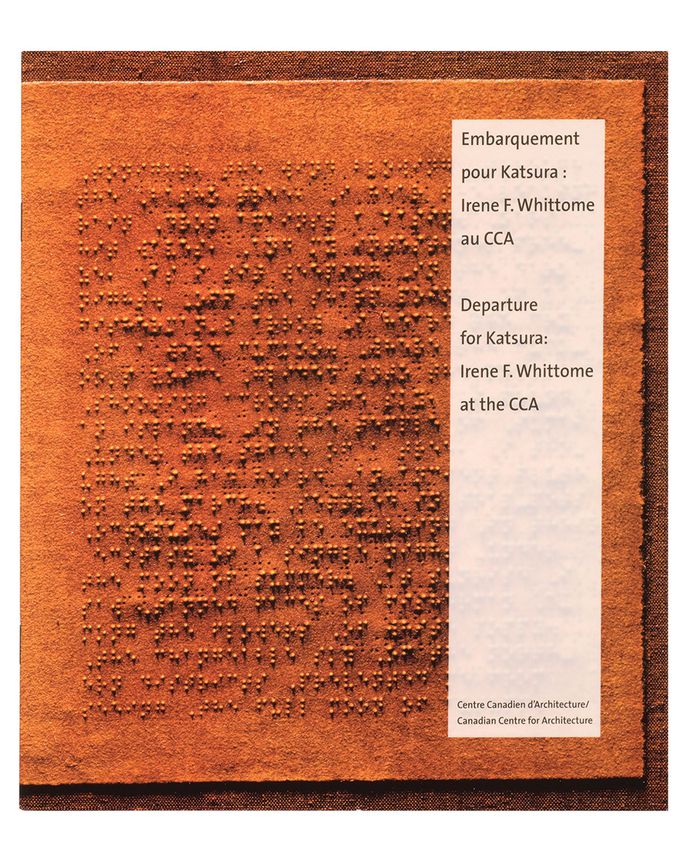
Ce catalogue d'exposition, qui comprend un texte du commisaire, Laurier Lacroix, et un projet d'artiste d'Irene F. Whittome, examine les rapports multiples qui existent entre l'art et l'architecure. À partir d'une sélection de pièces tirées des collections du CCA et de nouvelles installations qu'elle a conçues spécialement pour les espaces du musée, Whittome cherche à en révéler le pouvoir d'évocation et l'intensité contemplative. Laurier Lacroix présente la genèse de l'exposition et propose des interprétations poétiques de oeuvres et des installations. Le projet d'artiste créé pour la publication est constitué de l'impression en braille de 14 haikus de poète japonais Basho. With a text by guest curator Laurier Lacroix, and an aritst’s project by Irene F. Whittome, this exhibition catalogue examines the multifaceted relationships between art and architecture. Through a selection of works drawn from the CCA collections and new works Whittome has created specifically for the spaces of the CCA, the artist has sought to bring out the evocative and contemplative power of each. The text by Laurier Lacroix describes the genesis of the exhibition and offers a series of poetic interpretations of the works. The artist’s project created for the publication consists of 14 haiku by the Japanese poet Basho printed in braille.
Embarquement pour Katsura : Irene F. Whittome au CCA / Departure for Katsura : Irene F. Whittome at the CCA
Actions:
Price:
$9.95
(available in store)
Summary:
Ce catalogue d'exposition, qui comprend un texte du commisaire, Laurier Lacroix, et un projet d'artiste d'Irene F. Whittome, examine les rapports multiples qui existent entre l'art et l'architecure. À partir d'une sélection de pièces tirées des collections du CCA et de nouvelles installations qu'elle a conçues spécialement pour les espaces du musée, Whittome cherche à en révéler le pouvoir d'évocation et l'intensité contemplative. Laurier Lacroix présente la genèse de l'exposition et propose des interprétations poétiques de oeuvres et des installations. Le projet d'artiste créé pour la publication est constitué de l'impression en braille de 14 haikus de poète japonais Basho. With a text by guest curator Laurier Lacroix, and an aritst’s project by Irene F. Whittome, this exhibition catalogue examines the multifaceted relationships between art and architecture. Through a selection of works drawn from the CCA collections and new works Whittome has created specifically for the spaces of the CCA, the artist has sought to bring out the evocative and contemplative power of each. The text by Laurier Lacroix describes the genesis of the exhibition and offers a series of poetic interpretations of the works. The artist’s project created for the publication consists of 14 haiku by the Japanese poet Basho printed in braille.
Form:
books
books
Publication:
November 1998, Montréal
November 1998, Montréal
Subject:
CCA Publications
CCA Publications
Form:
books
books
Actions:
Price:
$31.95
(available to order)
Summary:
On the premise that words have the power to make worlds, each essay in this book follows a word as it travels around the globe and across time. Scholars from five disciplines address thirteen societies to highlight the social and political life of words in Asia, Europe, and the Middle East, from the mid-nineteenth century to the present. The approach is consciously(...)
$31.95
(available to order)
Summary:
On the premise that words have the power to make worlds, each essay in this book follows a word as it travels around the globe and across time. Scholars from five disciplines address thirteen societies to highlight the social and political life of words in Asia, Europe, and the Middle East, from the mid-nineteenth century to the present. The approach is consciously(...)
Subject:
Architectural Theory
Architectural Theory
Publication:
December 2009
December 2009
Title:
Words in motion: toward a global lexicon
Actions:
Price:
$31.95
(available to order)
Summary:
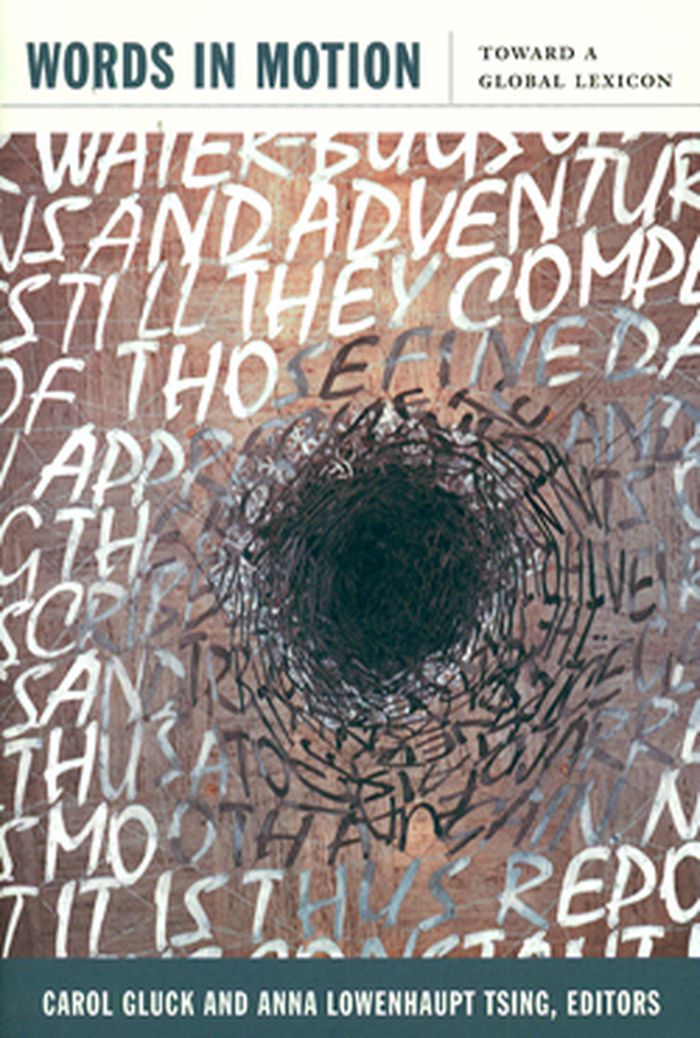
On the premise that words have the power to make worlds, each essay in this book follows a word as it travels around the globe and across time. Scholars from five disciplines address thirteen societies to highlight the social and political life of words in Asia, Europe, and the Middle East, from the mid-nineteenth century to the present. The approach is consciously experimental, in that rigorously tracking a specific word in specific settings frequently leads in unexpected directions and alters conventional depictions of global modernity. Such words as security in Brazil, responsibility in Japan, community in Thailand, and hijb in France changed the societies in which they moved even as they were changed by them. Some words threatened to launch wars, as injury did in imperial Britain's relations with China in the nineteenth century. Others, such as secularism, worked in silence to agitate for political change in twentieth-century Morocco. Words imposed or imported from outside could be transformed by those who wielded them to oppose the very powers that introduced them, as happened in Turkey, Indonesia, and the Philippines. Taken together, this selection of fourteen words reveals commonality as well as distinctiveness in modern societies, making the world look different from the interdisciplinary and transnational perspective of "words in motion."
Words in motion: toward a global lexicon
Actions:
Price:
$31.95
(available to order)
Summary:
On the premise that words have the power to make worlds, each essay in this book follows a word as it travels around the globe and across time. Scholars from five disciplines address thirteen societies to highlight the social and political life of words in Asia, Europe, and the Middle East, from the mid-nineteenth century to the present. The approach is consciously experimental, in that rigorously tracking a specific word in specific settings frequently leads in unexpected directions and alters conventional depictions of global modernity. Such words as security in Brazil, responsibility in Japan, community in Thailand, and hijb in France changed the societies in which they moved even as they were changed by them. Some words threatened to launch wars, as injury did in imperial Britain's relations with China in the nineteenth century. Others, such as secularism, worked in silence to agitate for political change in twentieth-century Morocco. Words imposed or imported from outside could be transformed by those who wielded them to oppose the very powers that introduced them, as happened in Turkey, Indonesia, and the Philippines. Taken together, this selection of fourteen words reveals commonality as well as distinctiveness in modern societies, making the world look different from the interdisciplinary and transnational perspective of "words in motion."
Form:
books
books
Publication:
December 2009
December 2009
Subject:
Architectural Theory
Architectural Theory
Form:
books
books
Actions:
Price:
$64.95
(available to order)
Summary:
At the turn of the twentieth century, Swedish artist Hilma af Klint (1862–1944) created a body of work that left visible reality behind, exploring the radical possibilities of abstraction years before Vasily Kandinsky, Kazimir Malevich, or Piet Mondrian. Many consider her the first trained artist to create abstract paintings. With Hilma af Klint: Notes and Methods, we get(...)
$64.95
(available to order)
Summary:
At the turn of the twentieth century, Swedish artist Hilma af Klint (1862–1944) created a body of work that left visible reality behind, exploring the radical possibilities of abstraction years before Vasily Kandinsky, Kazimir Malevich, or Piet Mondrian. Many consider her the first trained artist to create abstract paintings. With Hilma af Klint: Notes and Methods, we get(...)
Subject:
Contemporary Art Monographs
Contemporary Art Monographs
Publication:
October 2018
October 2018
Title:
Hilma Af Klint: notes and methods
Actions:
Price:
$64.95
(available to order)
Summary:
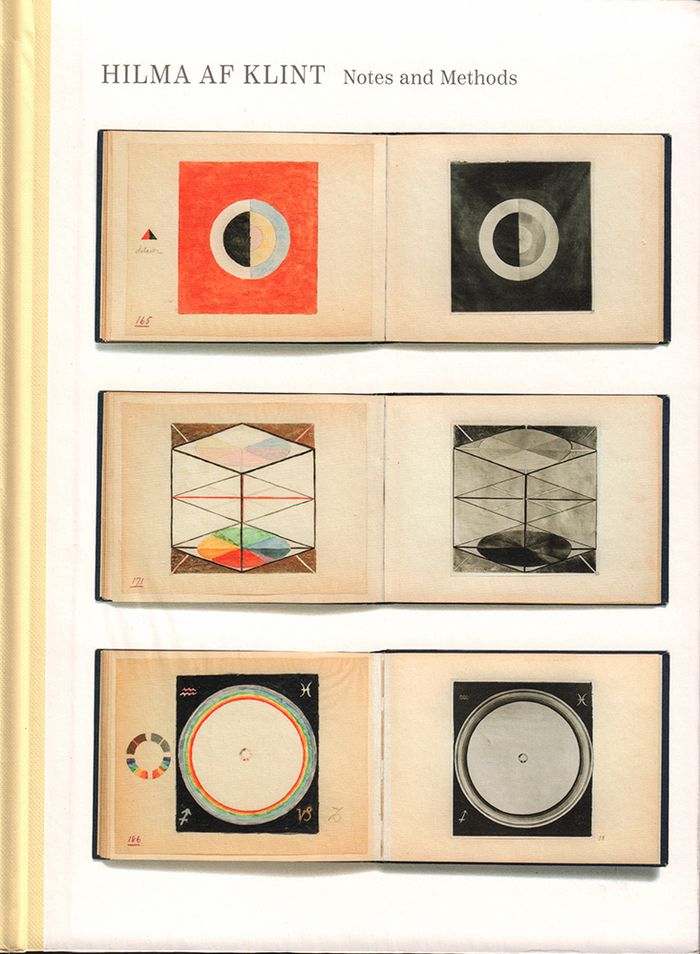
At the turn of the twentieth century, Swedish artist Hilma af Klint (1862–1944) created a body of work that left visible reality behind, exploring the radical possibilities of abstraction years before Vasily Kandinsky, Kazimir Malevich, or Piet Mondrian. Many consider her the first trained artist to create abstract paintings. With Hilma af Klint: Notes and Methods, we get to experience the arc of af Klint’s artistic investigation in her own words. Between 1906 and 1915, purportedly guided by a higher power, af Klint created 193 individual works that, in both scale and scope of imagery, are like no other art created at that time. Botanically inspired images and mystical symbols, diagrams, words, and geometric series, all form part of af Klint’s abstract language. These abstract techniques would not be seen again until years later. Notes and Methods presents facsimile reproductions of a wide array of af Klint’s early notebooks accompanied by the first English translation of af Klint’s extensive writings. It contains the rarely seen “Blue Notebooks,” hand-painted and annotated catalogues af Klint created of her most famous series “Paintings for the Temple,” and a dictionary compiled by af Klint of the words and letters found in her work.
Hilma Af Klint: notes and methods
Actions:
Price:
$64.95
(available to order)
Summary:
At the turn of the twentieth century, Swedish artist Hilma af Klint (1862–1944) created a body of work that left visible reality behind, exploring the radical possibilities of abstraction years before Vasily Kandinsky, Kazimir Malevich, or Piet Mondrian. Many consider her the first trained artist to create abstract paintings. With Hilma af Klint: Notes and Methods, we get to experience the arc of af Klint’s artistic investigation in her own words. Between 1906 and 1915, purportedly guided by a higher power, af Klint created 193 individual works that, in both scale and scope of imagery, are like no other art created at that time. Botanically inspired images and mystical symbols, diagrams, words, and geometric series, all form part of af Klint’s abstract language. These abstract techniques would not be seen again until years later. Notes and Methods presents facsimile reproductions of a wide array of af Klint’s early notebooks accompanied by the first English translation of af Klint’s extensive writings. It contains the rarely seen “Blue Notebooks,” hand-painted and annotated catalogues af Klint created of her most famous series “Paintings for the Temple,” and a dictionary compiled by af Klint of the words and letters found in her work.
Form:
books
books
Publication:
October 2018
October 2018
Subject:
Contemporary Art Monographs
Contemporary Art Monographs
Form:
books
books
Title:
Architecture and dystopia
Architecture and dystopia
Actions:
Price:
$45.00
(available to order)
Summary:
As a response to the profound crisis of Western culture the emerged in the 1960s, radical artists from Italy, Austria, England and Japan called into question the foundations of modernist utopias. They transmuted the difficulties of capitalism into a repertory of startling images that revealed the disturbing realities of consumer society, even in those places still(...)
$45.00
(available to order)
Summary:
As a response to the profound crisis of Western culture the emerged in the 1960s, radical artists from Italy, Austria, England and Japan called into question the foundations of modernist utopias. They transmuted the difficulties of capitalism into a repertory of startling images that revealed the disturbing realities of consumer society, even in those places still(...)
Title:
Architecture and dystopia
Actions:
Price:
$45.00
(available to order)
Summary:
As a response to the profound crisis of Western culture the emerged in the 1960s, radical artists from Italy, Austria, England and Japan called into question the foundations of modernist utopias. They transmuted the difficulties of capitalism into a repertory of startling images that revealed the disturbing realities of consumer society, even in those places still resistant to the penetration of modern architecture, such as Superstudio and Archizoom’s Florence. Their model, though exhausted in the space of experimentation, went on to inspire a generation of architects, from the High Tech movement to Rem Koolhaas.. In the light of these examples, how to define a unified 'dystopian' method of design, i.e. a common ground for an architecture that, by its very nature, seems to resist systematization? Are the most recognizable architectural expressions of this theoretical framework — characterized by brazen displays of technology and structures of overwhelming scale — merely isolated cases, albeit of particular iconic power? Or do they belong to a wider landscape of antirational architectural projects? And to what extent are these disturbing expressions premised on the utopian tradition or, better yet, the conceptual model of 'negative thought'? The goal of this book is to respond to such questions, thus initiating an open dialogue about the legitimacy of this critical category.
Architecture and dystopia
Actions:
Price:
$45.00
(available to order)
Summary:
As a response to the profound crisis of Western culture the emerged in the 1960s, radical artists from Italy, Austria, England and Japan called into question the foundations of modernist utopias. They transmuted the difficulties of capitalism into a repertory of startling images that revealed the disturbing realities of consumer society, even in those places still resistant to the penetration of modern architecture, such as Superstudio and Archizoom’s Florence. Their model, though exhausted in the space of experimentation, went on to inspire a generation of architects, from the High Tech movement to Rem Koolhaas.. In the light of these examples, how to define a unified 'dystopian' method of design, i.e. a common ground for an architecture that, by its very nature, seems to resist systematization? Are the most recognizable architectural expressions of this theoretical framework — characterized by brazen displays of technology and structures of overwhelming scale — merely isolated cases, albeit of particular iconic power? Or do they belong to a wider landscape of antirational architectural projects? And to what extent are these disturbing expressions premised on the utopian tradition or, better yet, the conceptual model of 'negative thought'? The goal of this book is to respond to such questions, thus initiating an open dialogue about the legitimacy of this critical category.
Form:
books
books
Publication:
December 2019
December 2019
Subject:
Architectural Theory
Architectural Theory
Form:
books
books
Title:
In praise of copying
In praise of copying
Actions:
Price:
$24.95
(available to order)
Summary:
This book is devoted to a deceptively simple but original argument : that copying is an essential part of being human, that the ability to copy is worthy of celebration, and that, without recognizing how integral copying is to being human, we cannot understand ourselves or the world we live in. In spite of the laws, stigmas, and anxieties attached to it, the word(...)
$24.95
(available to order)
Summary:
This book is devoted to a deceptively simple but original argument : that copying is an essential part of being human, that the ability to copy is worthy of celebration, and that, without recognizing how integral copying is to being human, we cannot understand ourselves or the world we live in. In spite of the laws, stigmas, and anxieties attached to it, the word(...)
Title:
In praise of copying
Actions:
Price:
$24.95
(available to order)
Summary:
This book is devoted to a deceptively simple but original argument : that copying is an essential part of being human, that the ability to copy is worthy of celebration, and that, without recognizing how integral copying is to being human, we cannot understand ourselves or the world we live in. In spite of the laws, stigmas, and anxieties attached to it, the word “copying” permeates contemporary culture, shaping discourse on issues from hip hop to digitization to gender reassignment, and is particularly crucial in legal debates concerning intellectual property and copyright. Yet as a philosophical concept, copying remains poorly understood. Working comparatively across cultures and times, Marcus Boon undertakes an examination of what this word means — historically, culturally, philosophically — and why it fills us with fear and fascination. He argues that the dominant legal-political structures that define copying today obscure much broader processes of imitation that have constituted human communities for ages and continue to shape various subcultures today. Drawing on contemporary art, music and film, the history of aesthetics, critical theory, and Buddhist philosophy and practice, In Praise of Copying seeks to show how and why copying works, what the sources of its power are, and the political stakes of renegotiating the way we value copying in the age of globalization.
In praise of copying
Actions:
Price:
$24.95
(available to order)
Summary:
This book is devoted to a deceptively simple but original argument : that copying is an essential part of being human, that the ability to copy is worthy of celebration, and that, without recognizing how integral copying is to being human, we cannot understand ourselves or the world we live in. In spite of the laws, stigmas, and anxieties attached to it, the word “copying” permeates contemporary culture, shaping discourse on issues from hip hop to digitization to gender reassignment, and is particularly crucial in legal debates concerning intellectual property and copyright. Yet as a philosophical concept, copying remains poorly understood. Working comparatively across cultures and times, Marcus Boon undertakes an examination of what this word means — historically, culturally, philosophically — and why it fills us with fear and fascination. He argues that the dominant legal-political structures that define copying today obscure much broader processes of imitation that have constituted human communities for ages and continue to shape various subcultures today. Drawing on contemporary art, music and film, the history of aesthetics, critical theory, and Buddhist philosophy and practice, In Praise of Copying seeks to show how and why copying works, what the sources of its power are, and the political stakes of renegotiating the way we value copying in the age of globalization.
Form:
books
books
Publication:
March 2013
March 2013
Subject:
Critical Theory
Critical Theory
Form:
books
books
Price:
$47.50
(available to order)
Summary:
In times where global matters such as the climate, currencies and places of residence become increasingly volatile, the urban public space we live in is an area where power, identity and belonging are negotiated. Cities have always been melting pots of history, society, art and politics, which is why the way a city is shaped tells us a lot about the people who live in it.(...)
$47.50
(available to order)
Summary:
In times where global matters such as the climate, currencies and places of residence become increasingly volatile, the urban public space we live in is an area where power, identity and belonging are negotiated. Cities have always been melting pots of history, society, art and politics, which is why the way a city is shaped tells us a lot about the people who live in it.(...)
Title:
Ethics of the urban: the city and the spaces of the political
Actions:
Price:
$47.50
(available to order)
Summary:
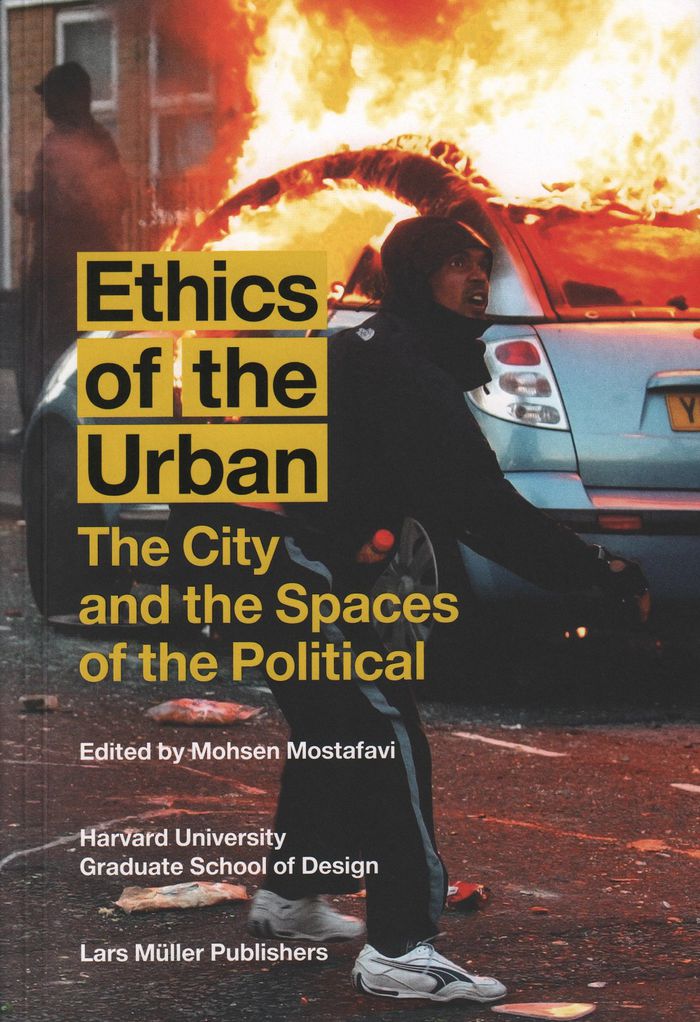
In times where global matters such as the climate, currencies and places of residence become increasingly volatile, the urban public space we live in is an area where power, identity and belonging are negotiated. Cities have always been melting pots of history, society, art and politics, which is why the way a city is shaped tells us a lot about the people who live in it. With contributors from a variety of fields, Ethics of the Urban discusses these urban spaces of the political. "How do we move about the city?", "How does memory of the past inspire the future of cities?" and "What makes a city a home?" are only some of the many questions that Ethics of the Urban addresses. The publication gathers experts from history, sociology, art, political theory, planning, law and design to emphasize the complexity of the meaning that urban space has today. Urban spaces are on one hand political spaces, since buildings, streets and people moving around all mirror political decisions in one way or another. On the other hand, the urban space is also a designed space, conceptualized, planned and sometimes gentrified. Complimented by stunning photography, Ethics of the Urban is a vibrant intellectual journey straight into the bone marrow of every contemporary city around the globe.
Ethics of the urban: the city and the spaces of the political
Actions:
Price:
$47.50
(available to order)
Summary:
In times where global matters such as the climate, currencies and places of residence become increasingly volatile, the urban public space we live in is an area where power, identity and belonging are negotiated. Cities have always been melting pots of history, society, art and politics, which is why the way a city is shaped tells us a lot about the people who live in it. With contributors from a variety of fields, Ethics of the Urban discusses these urban spaces of the political. "How do we move about the city?", "How does memory of the past inspire the future of cities?" and "What makes a city a home?" are only some of the many questions that Ethics of the Urban addresses. The publication gathers experts from history, sociology, art, political theory, planning, law and design to emphasize the complexity of the meaning that urban space has today. Urban spaces are on one hand political spaces, since buildings, streets and people moving around all mirror political decisions in one way or another. On the other hand, the urban space is also a designed space, conceptualized, planned and sometimes gentrified. Complimented by stunning photography, Ethics of the Urban is a vibrant intellectual journey straight into the bone marrow of every contemporary city around the globe.
Form:
books
books
Publication:
March 2017
March 2017
Subject:
Urban Theory
Urban Theory
Form:
books
books
Actions:
Price:
$88.00
(available to order)
Summary:
Although the first universal color slide film came onto the market in 1935, it was reserved for the world of advertising, and as late as the 1980s it was still considered commercial, vulgar and unartistic. Despite this, from the 1960s onward, more and more photographers began to discover the creative possibilities of the medium. William Eggleston, whose career has spanned(...)
$88.00
(available to order)
Summary:
Although the first universal color slide film came onto the market in 1935, it was reserved for the world of advertising, and as late as the 1980s it was still considered commercial, vulgar and unartistic. Despite this, from the 1960s onward, more and more photographers began to discover the creative possibilities of the medium. William Eggleston, whose career has spanned(...)
Title:
William Eggleston: Mystery of the ordinary
Actions:
Price:
$88.00
(available to order)
Summary:
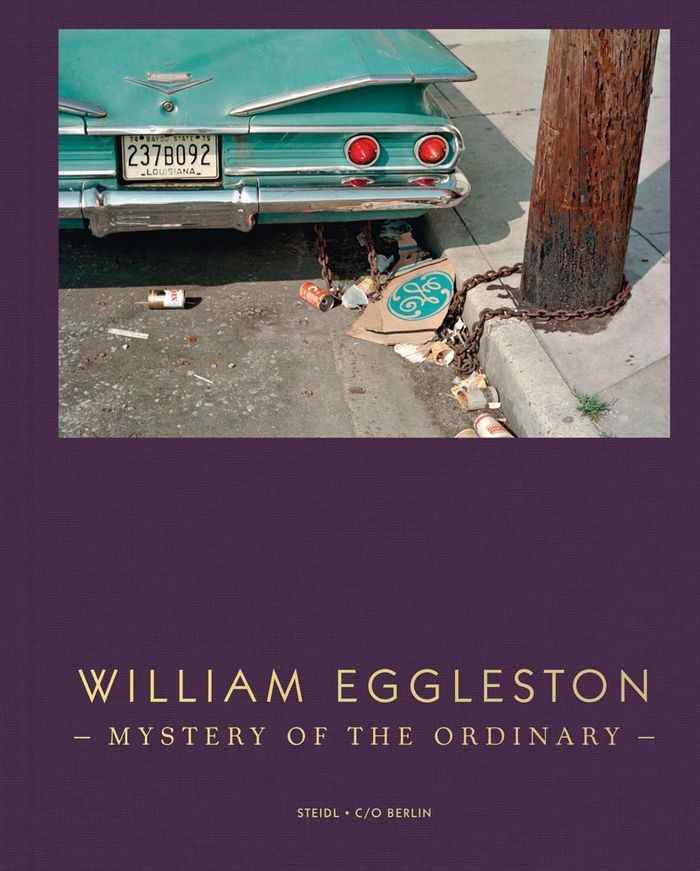
Although the first universal color slide film came onto the market in 1935, it was reserved for the world of advertising, and as late as the 1980s it was still considered commercial, vulgar and unartistic. Despite this, from the 1960s onward, more and more photographers began to discover the creative possibilities of the medium. William Eggleston, whose career has spanned over five decades, not only substantially contributed to this paradigm shift; he also noticeably influenced many subsequent generations. Along with Saul Leiter, Evelyn Hofer and Stephen Shore, Eggleston was one of the first photographers to recognize the distinctive power of color and its unique capacity to create pictures that continuously challenge the everyday. He imbued banality with the uncanny and mysterious, investigating his immediate surroundings again and again—as if he were somehow suspicious of the contents of his freezer, the ketchup bottle on the diner counter, not to mention the guns that appear as if by chance in so many of his pictures. "Mystery of the ordinary" captures the full scope of Eggleston’s evolution and legacy: from the early black-and-white work of the late 1950s, in which we witness his discovery and exploration of themes and unconventional croppings, to some of his most iconic color images.
William Eggleston: Mystery of the ordinary
Actions:
Price:
$88.00
(available to order)
Summary:
Although the first universal color slide film came onto the market in 1935, it was reserved for the world of advertising, and as late as the 1980s it was still considered commercial, vulgar and unartistic. Despite this, from the 1960s onward, more and more photographers began to discover the creative possibilities of the medium. William Eggleston, whose career has spanned over five decades, not only substantially contributed to this paradigm shift; he also noticeably influenced many subsequent generations. Along with Saul Leiter, Evelyn Hofer and Stephen Shore, Eggleston was one of the first photographers to recognize the distinctive power of color and its unique capacity to create pictures that continuously challenge the everyday. He imbued banality with the uncanny and mysterious, investigating his immediate surroundings again and again—as if he were somehow suspicious of the contents of his freezer, the ketchup bottle on the diner counter, not to mention the guns that appear as if by chance in so many of his pictures. "Mystery of the ordinary" captures the full scope of Eggleston’s evolution and legacy: from the early black-and-white work of the late 1950s, in which we witness his discovery and exploration of themes and unconventional croppings, to some of his most iconic color images.
Form:
books
books
Publication:
December 2023
December 2023
Subject:
Photography monographs
Photography monographs


